Naples Italy Map: Neighborhoods, Attractions & How to Navigate the City
Napoli is not a city you can absorb from a single vantage point. This guide breaks down every major neighborhood, plots the key attractions on a logical mental map, and tells you exactly how to move between them, whether on foot, by metro, or by funicular.

Tickets & tours
Live prices and dates from our booking partner. If you book, we may earn a commission at no extra cost to you.
TL;DR
- Naples Italy covers a large, hilly urban area, but most tourist sights cluster in a walkable 3 km corridor between Piazza Garibaldi and Piazza del Plebiscito.
- The city's six core neighborhoods each have a distinct character: use the Centro Storico as your base for sightseeing and branch out to Chiaia or Vomero for a change of pace.
- Naples International Airport (NAP) is just 6 km from the city centre; the Alibus shuttle reaches Piazza Garibaldi in about 15 minutes for €5.
- ANM's metro Line 1 and four funiculars are the smartest tools for navigating hills; the Lungomare promenade is fully walkable at around 3 km end to end.
- April to June and September to October are the best months to explore: cooler temperatures, manageable crowds, and ideal conditions for the city's famous sunset views from Posillipo and Vomero.
Understanding the Naples Map: Geography First

Naples (Napoli in Italian) sits on the Bay of Naples at roughly 40°51′N, 14°15′E, squeezed between two volcanic systems: Mount Vesuvius to the east and the Campi Flegrei caldera to the northwest. That geography is not just trivia. It explains why the city has such dramatic elevation changes, why certain neighborhoods feel like different worlds, and why you cannot simply walk everywhere without encountering a steep climb. The metropolitan area of roughly 3 million people spreads across flatlands, hillsides, and coastal cliffs, but the historic core is dense and compact enough to cover on foot in a single day if you plan your route well.
The city's layout follows a rough east-west axis along the seafront, with neighborhoods stacked uphill toward the north. The ancient Greek and Roman street grid still shapes the Centro Storico, where three parallel decumani (main streets) run east to west. Overlaid on that is centuries of urban expansion: Spanish-era fortifications, Bourbon-era palaces, and post-war residential sprawl. The result is a map that rewards those who understand the layers.
💡 Local tip
Before your trip, download an offline map of Naples on Google Maps or Maps.me. Mobile data can be unreliable in the narrow medieval streets of the Centro Storico, and the alleys of Spaccanapoli can disorient even experienced travelers.
The Six Neighborhoods You Actually Need to Know
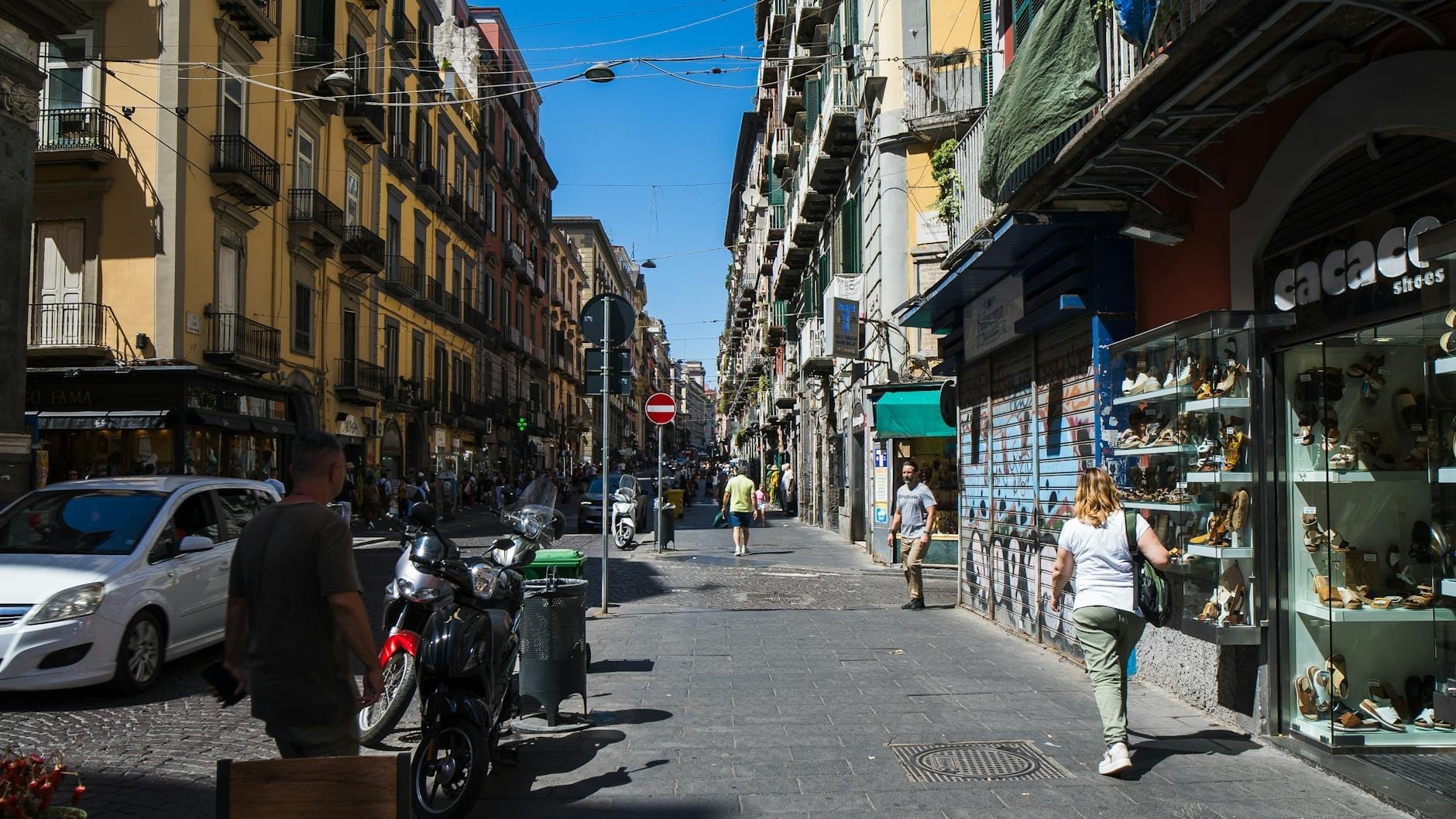
The Centro Storico is the UNESCO-listed heart of Naples, organized around the ancient Greek Neapolis grid. Its main artery is Spaccanapoli, the ruler-straight street that slices the old city in two. Within a 20-minute walk from here you can reach the Duomo, Santa Chiara, the Cappella Sansevero, and the catacombs. It is noisy, chaotic, and genuinely extraordinary. Not ideal for light sleepers, but unmatched for sightseeing density.
Heading southwest along the seafront, you reach Chiaia, Naples' most polished district. This is where upscale boutiques, wine bars, and Liberty-style architecture line broad streets. The Lungomare Caracciolo promenade runs along its edge, stretching roughly 3 km from Castel dell'Ovo to Mergellina. Chiaia borders the Centro Storico directly, making it a practical base for those who want cultural access by day and a calmer evening atmosphere.
Above Chiaia and the city centre, Vomero sits on a hill roughly 250 metres above sea level. It is a residential district with wide streets, a relaxed pace, and two of the city's best viewpoints: the Certosa di San Martino and Castel Sant'Elmo. Families and couples who want the city's culture without the street-level intensity often prefer staying here. The funicular from Via Toledo takes about 7 minutes.
The Quartieri Spagnoli (Spanish Quarters) occupy the grid of streets west of Via Toledo. Built in the 16th century to house Spanish troops, this neighborhood has a reputation that no longer matches reality for most visitors. The main lanes are safe to walk and excellent for street food, laundry-draped alleyways, and graffiti murals including the Diego Maradona murals. Stick to the main east-west streets during daylight and you will have no issues.
Posillipo stretches along the western coastal hill beyond Mergellina. It is one of the most beautiful areas of the city: clifftop villas, sea views toward Capri and Ischia, and a pace that feels almost suburban. Getting here requires a bus or taxi, and the neighborhood has fewer hotels than the centre, but the panoramas are unmatched. The Parco Virgiliano at the tip offers a 360-degree view of the bay, Vesuvius, and the islands.
Finally, Piazza Garibaldi and the eastern gateway district is where most visitors arrive by train. It is not a neighborhood to linger in, but it is the city's main transport hub and the starting point for metro Line 1 and Line 2. From here, the historic centre is a 15-minute walk west along Corso Umberto I.
- Centro Storico Best for: sightseeing density, street food, budget accommodation. Drawbacks: noise, traffic, limited parking.
- Chiaia Best for: waterfront dining, upscale shopping, couples. Drawbacks: pricier hotels, fewer budget options.
- Vomero Best for: families, panoramic views, relaxed pace. Drawbacks: requires funicular or taxi to reach most sights.
- Quartieri Spagnoli Best for: authentic atmosphere, street photography, budget eats. Drawbacks: not ideal late at night off main streets.
- Posillipo Best for: sea views, romantic atmosphere, coastal walks. Drawbacks: limited public transport, fewer accommodation options.
Key Attractions and Where They Sit on the Map

The National Archaeological Museum anchors the northern edge of the Centro Storico. It holds the world's finest collection of Roman artifacts from Pompeii and Herculaneum, and it is genuinely one of the best museums in Italy. Allow at least two to three hours. From here, heading south on Via Toledo brings you to Galleria Umberto I and eventually to Piazza del Plebiscito, Naples' grandest square, flanked by the Royal Palace and the church of San Francesco di Paola.
Along the waterfront, Castel dell'Ovo sits on a small island connected to the seafront promenade, making it impossible to miss. Just inland from Piazza del Plebiscito, the Palazzo Reale and Teatro San Carlo, one of Europe's oldest opera houses, occupy a single historic block. These three landmarks can be visited in a single morning if you move efficiently.
✨ Pro tip
The Toledo metro station, one stop south of Piazza Garibaldi, is worth a detour purely for its architecture. Designed by Oscar Tusquets Blanca, it has been called the most beautiful metro station in Europe. Entry requires a valid metro ticket (around €1.50 for a single ride).
How to Get Around Naples: Transport Explained
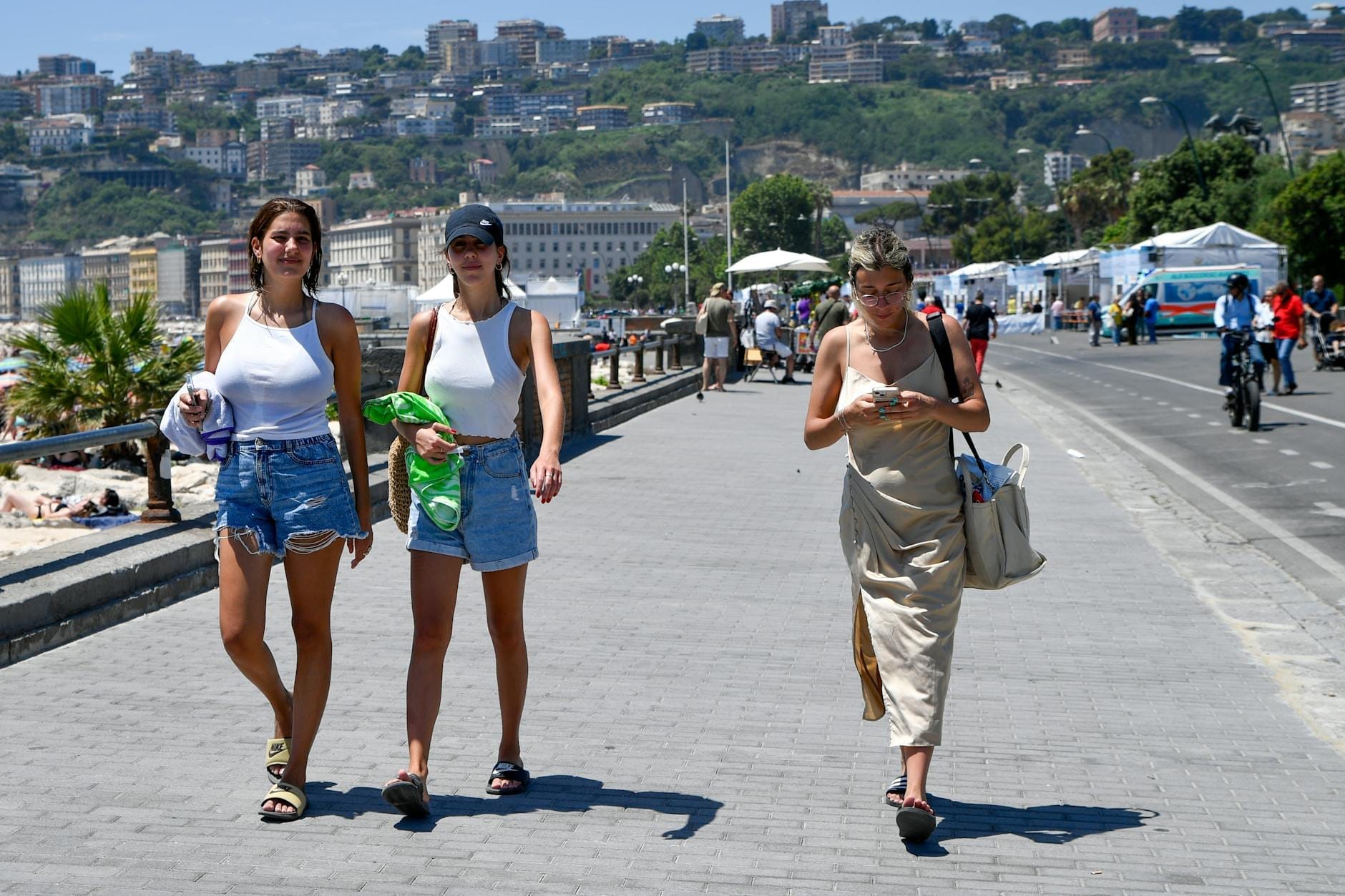
Walking works for most of the historic core. The distance from Piazza Garibaldi to Piazza del Plebiscito is about 2 km along flat ground, passing through the heart of the old city. The Lungomare promenade stretches around 3 km from the port area (Molo Beverello) westward through Chiaia to Mergellina. These routes are almost entirely flat and walkable in comfortable shoes.
For the hills, use the ANM network. The four funiculars connect the lower city to Vomero and the Posillipo area. The Centrale funicular runs from near Piazza del Plebiscito to Vomero in about 7 minutes. Metro Line 1 loops from Garibaldi through the centre and up to Vomero and Piscinola, stopping at major hubs like Toledo, Dante, and Museo. A single ANM ticket covers 90 minutes of travel on metro, funiculars, buses, and trams, and costs around €1.50. Daily passes are available for around €4.50.
Taxis in Naples are metered with fixed supplements for airport runs, luggage, and night travel. The fixed rate from Naples International Airport (Capodichino, IATA: NAP) to the city centre is €25, covering most central neighborhoods. Ridehailing apps including Free Now and itTaxi operate in the city. Uber's availability in Naples is limited compared to northern Italian cities. Rental scooters are popular among locals but require confidence navigating busy intersections.
- Airport to Piazza Garibaldi: Alibus shuttle, €5, about 15 minutes
- Airport to centre by taxi: €25 fixed rate, 20-40 minutes depending on traffic
- Single metro/bus/funicular ticket: around €1.50, valid 90 minutes
- All-day ANM pass: around €4.50, unlimited rides
- Centro Storico to Vomero by funicular: about 7 minutes, included in standard ticket
- Piazza Garibaldi to Piazza del Plebiscito on foot: roughly 20-25 minutes
⚠️ What to skip
Driving in central Naples is not recommended for visitors. The historic centre has restricted traffic zones (ZTL), motorbike traffic is aggressive, and parking is genuinely difficult to find. Leave the car at your hotel or a peripheral car park and use public transport.
Getting Your Bearings: Practical Navigation Tips

The city's topography works as a natural compass. The sea is always to the south. Vesuvius rises to the east, visible from almost any elevated point. Vomero hill dominates the northwest horizon when you are in the lower city. Once you internalize these anchors, getting lost becomes much less likely even in the densest parts of the old city.
The three east-west streets of the ancient Greek grid are still the clearest navigational tool in the Centro Storico. The most famous is Via San Biagio dei Librai, the central decumano, which locals call Spaccanapoli because it literally splits the city. Walk it east to west and you pass the Gesù Nuovo church, Santa Chiara, the Cappella Sansevero, and eventually reach Piazza del Nilo and Via San Gregorio Armeno, the famous street of the nativity craftsmen.
For first-time visitors, the most common disorientation happens when trying to move between the waterfront and the Centro Storico. They are actually very close: Via Toledo connects them directly. Walk north from Piazza del Plebiscito and you will hit the Galleria Umberto I, then Piazza Dante, and eventually the National Archaeological Museum, all on a single north-south axis.
Seasonal Considerations for Planning Your Visit
April to June and September to October are the most practical months to visit Naples. Temperatures sit between 18°C and 26°C, rain is occasional rather than frequent, and the major attractions are open with manageable queues. July and August bring heat (regularly above 30°C), intense tourist pressure at Pompeii and the coastal towns, and higher hotel prices. For full seasonal detail, the best time to visit Naples guide covers each month in detail.
Winter (December to February) is genuinely underrated for city-only visits. Hotel prices drop significantly, the Christmas markets around Piazza del Plebiscito and the nativity workshops on San Gregorio Armeno are atmospheric, and the major indoor museums are far less crowded. The downside is rain: November through February sees the bulk of Naples' annual rainfall, peaking in December and January. Outdoor sights like Pompeii and the waterfront promenades are less enjoyable in wet weather.
The Lungomare promenade changes character by season in a way that reflects the city's personality. Summer evenings from around 8 pm onward see it transformed into a social space, with families, joggers, and groups occupying every bench and sea wall. Off-season evenings are quiet to the point of feeling private, which actually makes for better photography of Vesuvius across the bay at sunset. The view does not change; the crowd around you does.
FAQ
Is Naples Italy easy to navigate without a car?
Yes, for most visitors. The historic core is walkable, and ANM's metro, funiculars, and buses cover the rest. A car is a liability in central Naples due to ZTL restrictions, aggressive traffic, and scarce parking. Only consider renting a car if you plan day trips to the Amalfi Coast or rural Campania.
Which neighborhood in Naples is best for first-time visitors?
The Centro Storico puts you closest to the highest concentration of sights, but it is loud and hectic. Chiaia offers a more comfortable base with easy access to both the waterfront and the historic centre. Vomero is best if you prefer quiet evenings and don't mind taking the funicular to reach sights.
How far is Naples airport from the city centre?
Naples International Airport (Capodichino, NAP) is approximately 6 km north of the city centre. The Alibus shuttle takes around 15-20 minutes to Piazza Garibaldi and costs €5. A fixed-rate taxi is €25 and covers most central neighborhoods.
What is the best way to get from Naples to Pompeii?
The Circumvesuviana train from Napoli Garibaldi station to Pompei Scavi takes about 35-40 minutes and costs around €3 each way. It runs frequently throughout the day. This is the fastest and cheapest option and drops you directly at the archaeological site entrance.
Is the Quartieri Spagnoli safe to visit?
For most tourists, yes. The main streets are busy with locals, visitors, and street food vendors during daylight hours and into the early evening. The neighborhood's reputation for danger is largely historical. Exercise normal urban caution, avoid deserted side streets late at night, and keep valuables secure, as you would anywhere in a large Italian city.
Tickets & tours
Live prices and dates from our booking partner. If you book, we may earn a commission at no extra cost to you.
Planning a trip? Discover personalized activities with the Nomado app.