Parco Virgiliano (Posillipo): Naples' Greatest Free View
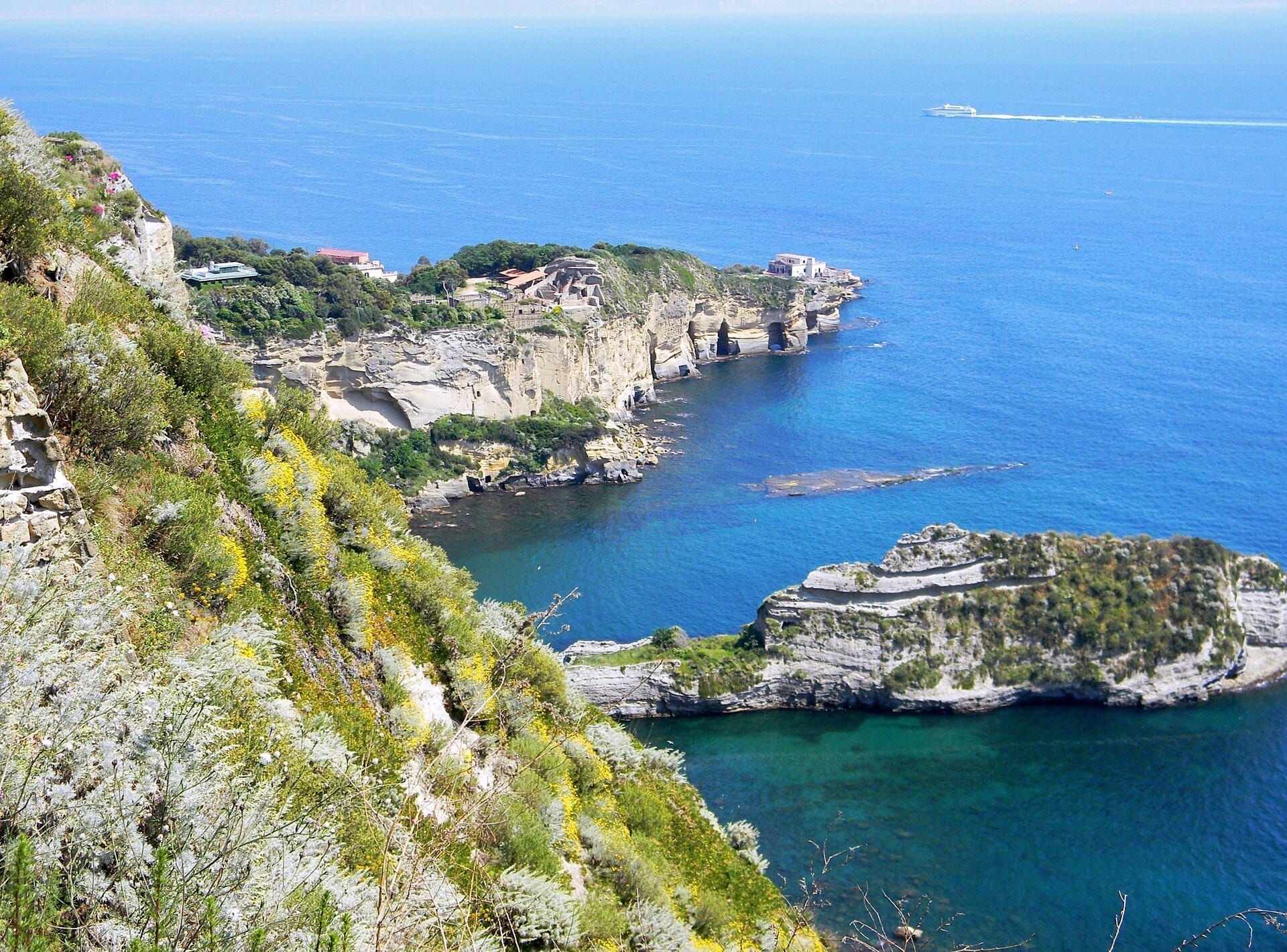
Perched 150 metres above the Bay of Naples on Posillipo hill, Parco Virgiliano is a 9-hectare public park with sweeping views of Vesuvius, Capri, Ischia, and the Sorrentine coast. It is free to enter, open seven days a week, and far less visited than the city's famous landmarks.
Quick Facts
- Location
- Viale Virgilio / Via Tito Lucrezio Caro, Posillipo, Naples
- Getting There
- Bus 140 from Mergellina or Piazza Sannazaro to the park (check current ANM routes)
- Time Needed
- 1.5–3 hours
- Cost
- Free
- Best for
- Panoramic views, afternoon walks, picnics, sunset photography
- Official website
- napoliforme.comune.napoli.it/en/pois/-/poi/Parco-Virgiliano
What Is Parco Virgiliano?
Parco Virgiliano sits at the tip of the Posillipo promontory, occupying 9 hectares of landscaped parkland on a plateau roughly 150 metres above sea level. From its upper terraces and belvedere walkways, you can trace an arc of scenery that few viewpoints in Italy can match: the Bay of Naples spreading south, Mount Vesuvius rising above the eastern shore, and on clear days, the outlines of Capri, Ischia, and Procida floating in the Tyrrhenian Sea.
The park was designed and constructed during the 1920s and 1930s and formally inaugurated in 1931. It was originally named Parco della Vittoria (Victory Park), then renamed Parco della Rimembranza to honour soldiers lost in World War I, and eventually rechristened Parco Virgiliano after the Latin poet Virgil, whose supposed tomb lies nearby at the foot of the Posillipo hill. Italians know it also as the Parco della Bellezza, the Park of Beauty, and in 2019 it ranked ninth in the FAI (Italian Environment Fund) national census of 'places of the heart', voted for by the Italian public. That recognition is not marketing; it reflects a genuine emotional attachment Neapolitans have to this place.
ℹ️ Good to know
Entry is free, every day of the week. Opening hours: typically sunrise to sunset (check current comune di Napoli listings). Private vehicles are not permitted inside the park.
The Views: What You Actually See
The park's most important asset is its panorama, and it works from multiple angles. The main belvedere at the northern edge faces north and east, framing Vesuvius above the Neapolitan skyline and the Sorrentine peninsula curling away to the southeast. Walk to the southern terraces and the perspective shifts: you are looking over the open sea toward Capri, with the island's limestone ridges sharpening in late morning light when the haze has not yet built.
The western side of the park opens onto the Phlegrean Fields coast and the island of Procida in the middle distance, with Ischia beyond. On exceptionally clear winter mornings, after a tramontane wind has swept the air clean, the detail visible from here is remarkable. Sunsets from the western terraces are among the finest in Naples, rivalling those from Castel Sant'Elmo or the Vomero ridge, and with a fraction of the foot traffic.
If you want to understand how the whole bay fits together geographically, Parco Virgiliano gives you a single vantage point that makes sense of it. Pair this visit with a walk along the Posillipo waterfront below for a complete picture of what makes this corner of Naples extraordinary.
💡 Local tip
For photography: arrive 45–60 minutes before sunset and position yourself on the western terraces. The light catches Vesuvius over your left shoulder while the sea turns copper ahead of you. A wide-angle lens covering 24–35mm on a full-frame sensor handles both the foreground terraces and the distant islands in a single frame.
Tickets & tours
Live prices and dates from our booking partner. If you book, we may earn a commission at no extra cost to you.
Pompeii and Mount Vesuvius tour with transportation
From 110 €Instant confirmationFree cancellationOrigins and legends of Naples walking tour
From 28 €Instant confirmationFree cancellationGuided walking tour of Naples city and Naples underground
From 45 €Instant confirmationFree cancellationMount Vesuvius and Herculaneum tour with transportation
From 100 €Instant confirmationFree cancellation
How the Park Changes Through the Day
Early mornings, especially on weekdays, are almost solitary. From 7:00 until around 9:00, the park belongs mainly to joggers on the athletics track, elderly Neapolitans doing their morning walk, and the occasional dog owner. The air at this hour carries a slight salt sharpness from the sea below, mixed with pine resin from the umbrella pines and stone pines that shade the upper paths. The bay is usually calm, and Vesuvius catches the low eastern light on its flank.
From mid-morning through the early afternoon, families with young children claim the playground areas, and the open-air amphitheater occasionally hosts school groups. Weekday afternoons between 14:00 and 16:00 are the quietest window if you want the belvedere largely to yourself. Weekend afternoons in spring and autumn, the park fills considerably. Neapolitan families spread out on the grass, teenagers gather near the refreshment kiosk, and couples occupy every bench with a sea view. It is lively rather than crowded in the way tourist sites get crowded, because the park is large enough to absorb people without the paths ever feeling jammed.
Late evenings in summer, after 19:00, bring a different atmosphere. The heat of the day has dropped, the light is golden, and the park takes on a social, neighbourhood quality. This is a place where Neapolitans actually live alongside it, not just visit it, and that gives the evening hours a texture that purely touristic sites never have.
Getting There: The Honest Picture
Parco Virgiliano is not the easiest place to reach from the city centre without a car, and that is part of why it stays quieter than it deserves. The standard route by public transport requires taking bus 140 from Mergellina or Piazza Sannazaro, alighting near the park entrance. From there, a short uphill walk brings you to the park entrance. Allow 40–55 minutes total from the city centre, and check current ANM timetables before you go, as bus frequency on these routes can vary.
If you are staying in or near Chiaia, a taxi or ride-hail (Free Now, Uber) is the most practical option and keeps the cost reasonable given the distance. The trip from Piazza del Plebiscito typically takes 15–20 minutes outside peak traffic. There is no metro station that brings you close; the nearest metro point is well downhill.
Once you are done at the park, consider walking partway back down through the Posillipo neighbourhood itself rather than retracing the bus route immediately. The residential streets have a quiet elegance that contrasts with the central city, and they eventually connect to the Palazzo Donn'Anna on the shoreline below.
⚠️ What to skip
Private vehicles cannot enter the park. If arriving by car, you will need to park on the surrounding streets of Posillipo and walk in. Street parking in this area can be difficult on weekends.
Facilities and Practical Layout
The park is larger than most visitors expect. Spread across 9 hectares, it includes an athletics track, sports field, children's play areas, a skating rink, a small open-air amphitheater, and refreshment kiosks. The main pedestrian paths are paved and reasonably maintained, though some secondary paths can be uneven. The central areas around the amphitheater and playground are the most frequented; the further viewpoint terraces toward the promontory's edge feel more secluded.
Accessibility is limited by the terrain and the age of the infrastructure. The main entrance and central areas are reachable without significant inclines, but some of the perimeter terraces involve steps or slopes. The prohibition on vehicles inside the park, in place to keep the interior pedestrian-only, keeps the interior calm and pedestrian-friendly, but it does mean anyone with limited mobility should plan accordingly.
There are no major food vendors inside, just basic refreshment points. Bring water, particularly from May through September when temperatures in the exposed upper areas climb steeply. A small picnic works well here and is entirely normal behaviour for local visitors.
Who Should Think Twice
If you have only two or three days in Naples and your priority is museums, churches, and food, Parco Virgiliano requires a meaningful time commitment to reach from the historic centre. The views are genuinely exceptional, but if you are pressed for time, the panoramas from Castel Sant'Elmo or the Vomero funicular area may deliver comparable impressions at lower logistical cost.
Travellers who struggle with hills or uneven paths may find sections of the park challenging, and the bus connections require some planning patience. That said, for anyone staying multiple days, or for those following a three-day Naples itinerary who can dedicate a half-day to Posillipo, this park rewards the effort clearly and consistently.
The park also offers relatively little in the way of historical interpretation or educational material on-site. It is a landscape experience, not an explanatory one. Visitors who need structured narrative to stay engaged may find a long visit thin, while those who are content to walk, sit, and look will be thoroughly satisfied.
The Surrounding Area: Making a Half-Day of It
Posillipo as a neighbourhood deserves more than a quick drop-in. The area along the coastal road below the park passes Pausilypon and the Gaiola Underwater Park, one of Italy's strangest and most evocative coastal archaeological sites, where Roman imperial ruins extend into an underwater marine protected area. It can be reached on foot from the lower roads of the hill.
For the full panoramic sequence in Naples, many visitors pair Parco Virgiliano with a visit to Castel Sant'Elmo on the Vomero ridge, which offers a different angle over the historic centre and port. The two together make an efficient day focused on elevated perspectives across the city.
Closer to the water, the area around Mergellina sits at the base of the Posillipo hill and makes a natural end point for an afternoon that starts at the park: walk or take the bus back downhill, join the seafront promenade, and finish with a coffee or granita at one of the bars overlooking the small port.
Insider Tips
- The western terraces facing Procida and Ischia are less visited than the main northern belvedere facing Vesuvius. On weekend afternoons, the Vesuvius-facing benches fill up; the western side stays quiet and the light there at sunset is equally striking.
- Bring a picnic from the Pignasecca market or one of the Chiaia delis. Eating on the grass here is entirely normal for local families and the setting is considerably better than any restaurant terrace you will find at a comparable price.
- For the clearest long-distance visibility, visit in the days immediately following a tramontane wind event in autumn or winter. The air after a north wind has cleared the haze gives you island outlines you will not see in summer.
- The open-air amphitheater occasionally hosts free evening events in summer. Check the comune di Napoli cultural calendar before your visit: if something is scheduled, it is worth timing your arrival around it.
- The park is a genuine neighbourhood space, not a tourist destination shaped for visitors. Behave accordingly: keep noise down in early morning, avoid taking close-up photos of people without asking, and leave picnic areas clean. The locals who use this park daily are the reason it retains its character.
Who Is Parco Virgiliano (Posillipo) For?
- Travellers spending four or more days in Naples who want to see the city as residents experience it
- Photographers and anyone focused on panoramic seascapes and sunset light
- Families looking for free outdoor space with play facilities and room to spread out
- Visitors who want to understand the full geography of the Bay of Naples from a single vantage point
- Anyone combining a half-day in Posillipo with the coastal archaeological sites below the hill
Nearby Attractions
Other things to see while in Posillipo:
- Palazzo Donn'Anna
Clinging to a tufa cliff above the Bay of Naples, Palazzo Donn'Anna is one of the city's most atmospheric landmarks. The 17th-century Baroque palace was never completed, and its half-finished facades and sea-level arches have fuelled legend ever since. You can't go inside, but the exterior view from the Posillipo waterfront is one of the most striking architectural sights in southern Italy.
- Parco Archeologico del Pausilypon & Gaiola
On the dramatic cliffs of Posillipo, the Parco Archeologico del Pausilypon hides a Roman imperial estate entered through a 770-meter tunnel carved into volcanic rock. Just offshore, the Gaiola Underwater Park preserves the submerged remains of the same ancient coastline. Together, they form one of Naples' most atmospheric and least-crowded archaeological experiences.
Planning a trip? Discover personalized activities with the Nomado app.