Parco Archeologico del Pausilypon & Gaiola: Naples' Roman Ruins Above and Below the Sea
On the dramatic cliffs of Posillipo, the Parco Archeologico del Pausilypon hides a Roman imperial estate entered through a 770-meter tunnel carved into volcanic rock. Just offshore, the Gaiola Underwater Park preserves the submerged remains of the same ancient coastline. Together, they form one of Naples' most atmospheric and least-crowded archaeological experiences.
Quick Facts
- Location
- Discesa Coroglio 36, Posillipo, Naples
- Getting There
- Bus to Coroglio area; limited direct service — check ANM routes before visiting
- Time Needed
- 2–3 hours for the archaeological park; add 1–2 hours for a Gaiola boat tour
- Cost
- Verify current admission via official site or call +39 081 2403235; Gaiola boat tours priced separately
- Best for
- History enthusiasts, snorkelers, photographers, and anyone seeking a break from Naples' crowded centro
- Official website
- www.gaiola.org/pausilypon-eng
What Is Pausilypon, and Why Does It Matter?
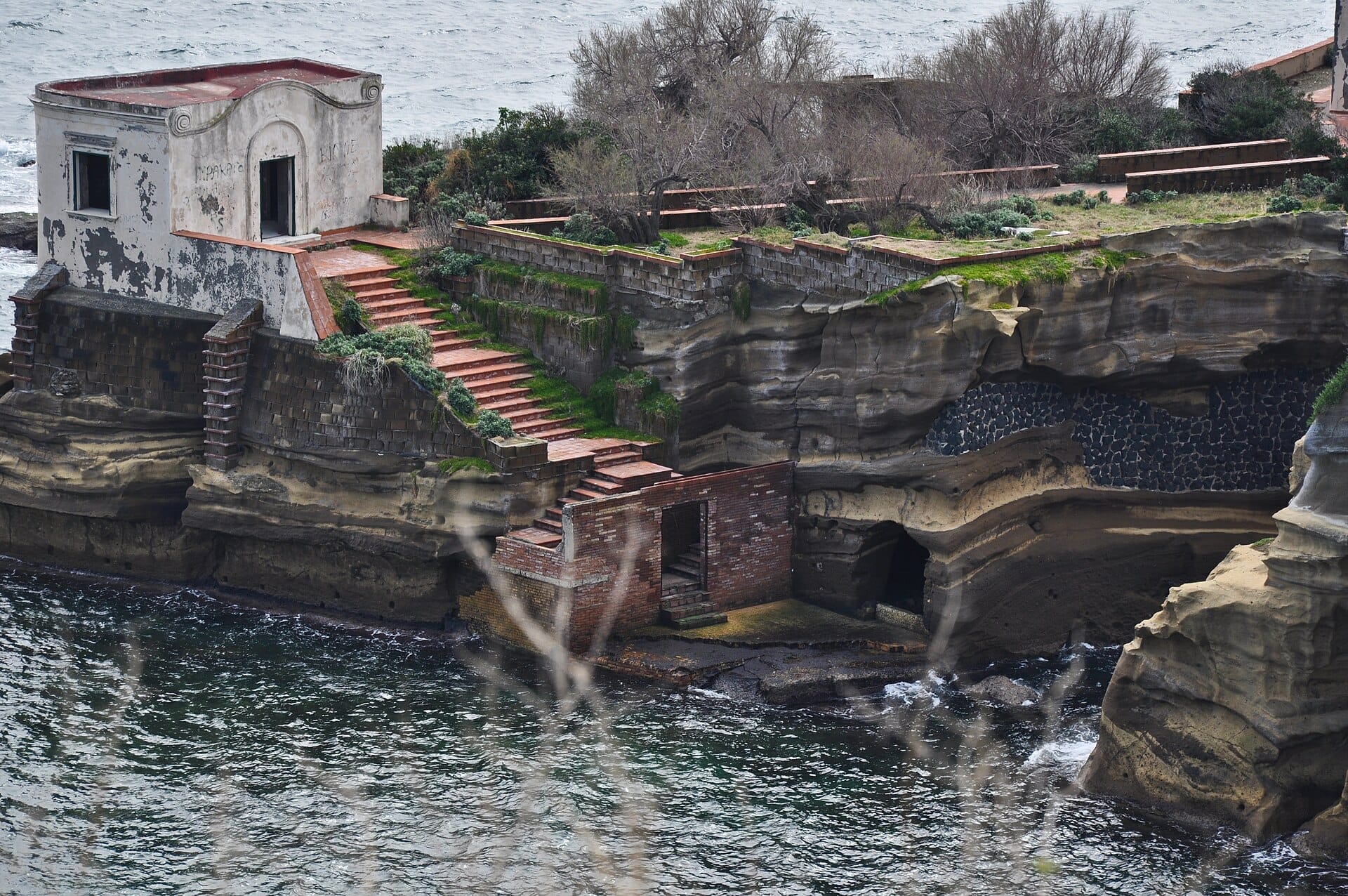
The Parco Archeologico del Pausilypon sits on the Posillipo headland above the Tyrrhenian Sea, roughly 8 kilometers west of Naples' historic center. The name derives from the Greek word meaning 'relief from pain' — an apt description for what was originally a private retreat built by the Roman knight Publius Vedius Pollio in the 1st century BC. When Pollio died in 15 AD, he left the entire estate to Emperor Augustus, who expanded it into a full imperial residence. The villa eventually covered approximately 22 acres of terraced clifftop gardens, performance spaces, and maritime structures.
What makes this site exceptional is not just its Roman pedigree, but the way the landscape has preserved and partially submerged it. The coastal subsidence that has slowly swallowed sections of the ancient shoreline is the same geological process — bradyseism, driven by the Campi Flegrei volcanic system to the northwest — that created the Gaiola Underwater Park just offshore. Above and below water, you are looking at the same continuous Roman estate, split by two millennia of seismic movement.
ℹ️ Good to know
Opening hours and admission prices are not consistently published online. Before visiting, confirm details directly via the official site at gaiola.org/pausilypon-eng or by calling +39 081 2403235. The park sometimes operates on reduced winter schedules.
The Seiano Grotto: Walking Through a Roman Tunnel
Visitors enter the Pausilypon estate through the Grotta di Seiano, a tunnel 770 meters long cut entirely through the volcanic tuff of the Posillipo hill during the Roman period. This is not a reconstructed attraction — the original rock walls, arched vaulting, and carved ventilation shafts are still visible. Walking its length takes around 10 minutes, but the experience is disorienting in a genuinely interesting way: the tunnel is mostly unlit except for shafts of daylight that drop through gaps overhead, and the temperature drops noticeably as soon as you step inside.
The grotto connects the Bagnoli plain on the western side to the valley above Gaiola, and it was the primary access point to the imperial villa complex. Romans would have used it on foot, by horse, and possibly by litter. The scale is unexpectedly grand: the tunnel is wide enough for two carts to pass. Bring a small flashlight or use your phone's torch for the darker central section, and wear closed shoes — the stone floor is uneven and can be damp.
💡 Local tip
Arrive at the grotto entrance early in the morning when the angled light from the ventilation shafts is strongest. Photographing these columns of light against the dark tuff walls is one of the most visually striking moments of the entire visit.
Tickets & tours
Live prices and dates from our booking partner. If you book, we may earn a commission at no extra cost to you.
Pompeii and Mount Vesuvius tour with transportation
From 110 €Instant confirmationFree cancellationOrigins and legends of Naples walking tour
From 28 €Instant confirmationFree cancellationGuided walking tour of Naples city and Naples underground
From 45 €Instant confirmationFree cancellationMount Vesuvius and Herculaneum tour with transportation
From 100 €Instant confirmationFree cancellation
The Villa Ruins: Theater, Odeon, and Terraced Gardens
Once through the tunnel, the site opens onto a series of terraces overlooking the sea. The most impressive structure is the theater, which once seated approximately 2,000 spectators and was used for performances staged for the imperial court. The stone seating tiers, scaena (stage wall) foundation, and orchestra area are all legible, even without a guide. The Odeon — a smaller roofed theater used for musical performances and poetry recitals — sits nearby, its more intimate dimensions suggesting a different kind of court entertainment from the larger venue.
The rest of the villa complex spreads across the terraces in partial ruin: fishponds carved into the rock, which Pollio reportedly used to breed lampreys; foundation walls of residential quarters; and the outlines of garden porticoes. The setting amplifies everything. The Bay of Naples stretches out below, with the silhouette of Vesuvius in the far distance on clear days. There is very little interpretive signage, which is either a frustration or a feature depending on your approach. Consider hiring a guide or joining one of the occasional organized visits coordinated through the park's managing body, the Gaiola Foundation.
For deeper historical context before your visit, the Naples National Archaeological Museum holds artifacts excavated from Roman sites across the Campania region, including objects connected to the imperial villa tradition. Visiting the museum first will make the ruins at Pausilypon more readable.
The Gaiola Underwater Park: Ruins Beneath the Surface
The Parco Sommerso di Gaiola is a protected marine area stretching from the cove of Marechiaro to the Bay of Trentaremi. Its most visible surface feature is two small islets connected by a short stone bridge, which appear scenic from the cliff path above but whose significance lies beneath: the seabed here is covered with Roman-era walls, mosaic floors, columns, and the remains of structures that once formed part of the Pausilypon coastal complex, slowly consumed by the ground shifts of Campi Flegrei.
The Gaiola Foundation organizes glass-bottom boat tours and snorkeling excursions that allow non-divers to observe the submerged ruins directly. Visibility is best in calm conditions, typically May through September, and especially in the morning before afternoon boat traffic disturbs the water. Certified divers can arrange guided dives through the foundation. The underwater site is not a dive-your-own experience — access is regulated to protect the ruins, and unauthorized entry is not permitted within the marine protected area.
⚠️ What to skip
The Gaiola islets have a local reputation for bringing misfortune to their owners — every private owner over the past century reportedly suffered dramatic personal or financial ruin. The story is Naples folklore at its most enjoyable, and locals take visible pleasure in telling it to visitors.
How the Experience Changes by Time of Day and Season
The park sees far fewer visitors than Naples' major museums or Pompeii, so crowd management is rarely an issue. Morning visits offer the best quality of light inside the Seiano Grotto and the calmest sea conditions for Gaiola boat tours. By midday in summer the exposed terraces of the villa become very hot, with little shade, so either come prepared with sun protection and water or plan a late afternoon visit instead.
Spring and early autumn are the most comfortable seasons overall. April to June gives wildflowers on the terraces and clear sea visibility. October still allows outdoor visits without summer heat. In winter the park may operate reduced hours or require advance booking — this is the period to confirm carefully before making the trip out to Posillipo.
Posillipo itself is worth exploring before or after the park. The neighborhood's cliff-edge road offers some of the finest sea views in Naples, and the Parco Virgiliano is a short distance away with panoramic terraces facing Vesuvius and the islands. Posillipo is less visited than the historic center and gives a genuine sense of the wealthier, residential side of the city.
Getting There and What to Expect on Arrival
The park is located at Discesa Coroglio 36 in the Posillipo neighborhood. Public transport connections are limited compared to central Naples attractions — check ANM bus routes to the Coroglio area before visiting, as service can vary by season. By car, the Posillipo hill is accessible via Via Posillipo or from the Bagnoli direction, though parking is street-level only with no dedicated facility. A taxi or rideshare from central Naples takes around 20 minutes outside peak traffic hours.
The entrance through the Seiano Grotto sets expectations correctly from the start: this is a site that rewards curiosity and some physical effort. The terrain inside the park involves uneven stone surfaces, steps, and slopes. It is not easily navigated in wheeled mobility aids, and there is limited accessibility infrastructure throughout. Visitors with mobility limitations should contact the site in advance to assess feasibility.
If you are building a half-day in the western Naples area, the Mergellina waterfront is a natural stopping point between Posillipo and the city center — good for a coffee or a gelato before or after the ruins. For planning a broader Naples itinerary that incorporates outlying sites like this one, the 3-day Naples itinerary offers a useful framework.
Who Should Consider Skipping This
Travelers with very limited time in Naples will likely find that Pompeii, the National Archaeological Museum, or the Cappella Sansevero deliver more concentrated historical impact per hour. Pausilypon rewards visitors who want an atmospheric and uncrowded site over those seeking dense interpretive content — the ruins require some imagination and background knowledge to fully appreciate, since signage is sparse. Anyone expecting the polish of a major heritage site will be disappointed; this is working archaeology, not a curated museum experience.
Young children may find the tunnel exciting but the ruins less engaging than a more interactive attraction. Families with children might be better served combining a Gaiola boat tour — which is visually immediate and enjoyable at any age — with another Posillipo stop rather than spending the full time on the villa complex.
Insider Tips
- Contact the Gaiola Foundation directly (gaiola.org) rather than relying on third-party booking platforms for boat tours — availability is limited and the foundation manages the schedule directly.
- Wear layers for the Seiano Grotto even in summer. The tunnel temperature is significantly cooler than outside, and the contrast can feel sharp if you have been walking in full sun beforehand.
- The cliff path above Gaiola offers a free and excellent view down onto the islets and the turquoise water above the submerged ruins — worthwhile even without a boat tour, and popular with local photographers in the late afternoon.
- If you are interested in the Campi Flegrei volcanic system that created this landscape, the bradyseism process is explained in detail at the Città della Scienza science museum in nearby Bagnoli, which can be combined into the same half-day.
- The park is managed by the Gaiola Onlus foundation rather than a standard state archaeological authority. Donations and tour bookings directly support ongoing excavation and conservation work.
Who Is Parco Archeologico del Pausilypon & Gaiola For?
- Roman history enthusiasts who want an imperial-era site without the crowds of Pompeii
- Snorkelers and divers seeking a legally accessible underwater archaeological experience
- Photographers looking for dramatic tunnel light, cliff scenery, and sea views
- Travelers curious about the geology of the Campi Flegrei volcanic zone and its effect on Roman coastlines
- Anyone who prefers unhurried, independently paced exploration over guided group tourism
Nearby Attractions
Other things to see while in Posillipo:
- Palazzo Donn'Anna
Clinging to a tufa cliff above the Bay of Naples, Palazzo Donn'Anna is one of the city's most atmospheric landmarks. The 17th-century Baroque palace was never completed, and its half-finished facades and sea-level arches have fuelled legend ever since. You can't go inside, but the exterior view from the Posillipo waterfront is one of the most striking architectural sights in southern Italy.
- Parco Virgiliano (Posillipo)
Perched 150 metres above the Bay of Naples on Posillipo hill, Parco Virgiliano is a 9-hectare public park with sweeping views of Vesuvius, Capri, Ischia, and the Sorrentine coast. It is free to enter, open seven days a week, and far less visited than the city's famous landmarks.
Planning a trip? Discover personalized activities with the Nomado app.