Mergellina Harbor: Naples' Waterfront Soul
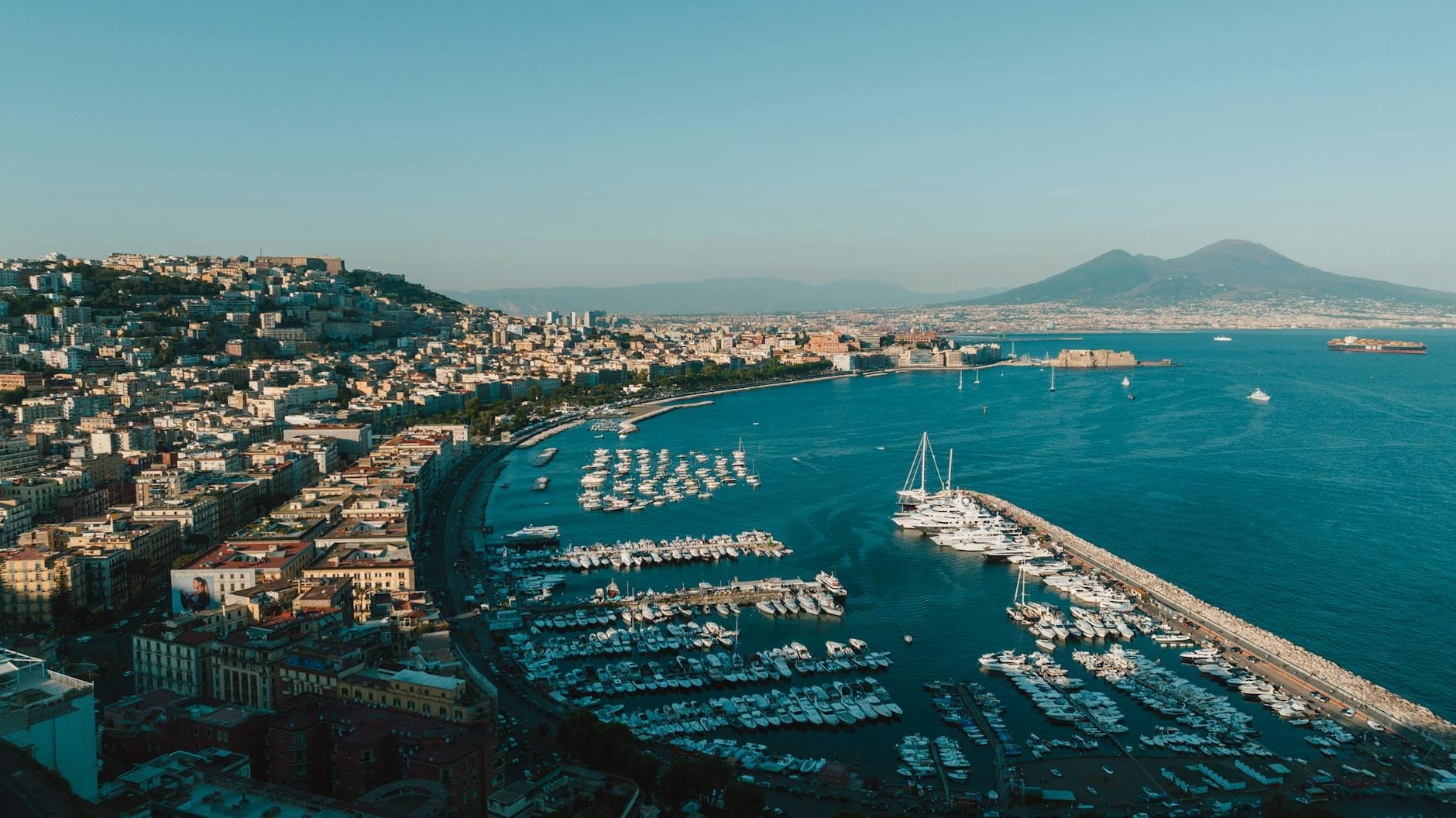
Mergellina Harbor sits at the western edge of the Lungomare Caracciolo, where the city's grand seafront promenade meets Posillipo's rocky hills. It's a free, open harbor serving as both a working ferry port and a beloved local gathering place, best experienced in the early morning or at dusk when the light off the Bay of Naples turns the scene cinematic.
Quick Facts
- Location
- Via Caracciolo, Chiaia district, Naples — western end of the Lungomare
- Getting There
- Metro Line 2, Mergellina station (approx. 20 min from Piazza Garibaldi, €1.50)
- Time Needed
- 1–2 hours for a stroll; longer if catching a ferry or lingering at a café
- Cost
- Free public access; ferry tickets vary by destination and operator
- Best for
- Sunset walks, ferry departures to the islands, seafood snacks, photography
What Mergellina Harbor Actually Is
Mergellina Harbor, officially the Porto di Mergellina, is a small but characterful port tucked at the point where Naples' long seafront promenade surrenders to the slopes of Posillipo. It is not a grand cruise terminal or a polished tourist showcase. It is a working harbor with fishing boats, hydrofoil ferries, a cluster of seafood stalls, and a waterfront promenade lined with the kind of bars where locals actually sit. That combination is precisely what makes it worth your time.
The harbor functions on two levels simultaneously. For travelers, it's a departure point for hydrofoils to Capri, Ischia, and Procida. For Neapolitans, it's a neighborhood anchor: the place where elderly men read newspapers on benches in the morning, teenagers congregate after school, and families stroll in the early evening. You are not visiting a monument here. You are stepping into a piece of ordinary Neapolitan life that happens to have a beautiful backdrop.
💡 Local tip
If you're planning to take a ferry to the islands from Mergellina, check departure times with the specific operator in advance. Services to Capri and Ischia can sell out on summer weekends, and not all routes operate year-round.
A Brief History: From Fishing Village to Olympic Port
Mergellina's origins are those of a small coastal settlement distinct from Naples proper — a fishing community that sat outside the city's walls for centuries. Its gradual absorption into Naples accelerated during the Spanish viceroyalty in the 17th century and continued through the Bourbon era, but the neighborhood retained its maritime identity throughout. The stretch of waterfront you walk today was substantially shaped by urban development between 1880 and 1915, when the Lungomare Caracciolo was built to connect the city's seafront districts.
The harbor earned an unlikely international footnote in 1960, when it served as the venue for sailing events during the Rome Summer Olympics. The regatta courses ran across the Bay of Naples, with Mergellina as the operational base. Little physical trace of that era remains visible to the casual visitor, but the fact gestures at the harbor's capacity to hold more history than its modest scale suggests.
The Chiaia district surrounding Mergellina is one of Naples' more refined quarters, worth exploring beyond the harbor itself. For broader context on the neighborhood and what else to find there, see the guide to Chiaia.
Tickets & tours
Live prices and dates from our booking partner. If you book, we may earn a commission at no extra cost to you.
Pompeii and Mount Vesuvius tour with transportation
From 110 €Instant confirmationFree cancellationOrigins and legends of Naples walking tour
From 28 €Instant confirmationFree cancellationGuided walking tour of Naples city and Naples underground
From 45 €Instant confirmationFree cancellationMount Vesuvius and Herculaneum tour with transportation
From 100 €Instant confirmationFree cancellation
What It Feels Like to Be Here
The sensory experience at Mergellina is dominated by salt air, diesel from the ferries, and the low hum of boat engines idling at the pier. The water here is darker and choppier than the open bay further east, hemmed in by the harbor walls. Fishing boats in faded blues and greens bob against weathered moorings. The smell of grilled seafood arrives before you see the stalls — small operations with plastic seating where a paper cone of fried calamari or a plate of raw clams costs a few euros.
The promenade that runs along the harbor edge connects seamlessly to the car-free Lungomare Caracciolo, which stretches east toward Castel dell'Ovo and the city center. Walking it in either direction from Mergellina gives you unobstructed views across the bay toward Vesuvius. On clear days, the volcano's outline is sharp enough to feel close. On hazy summer afternoons, it dissolves into the horizon like a watercolor wash. Neither version disappoints.
Families with strollers, joggers, couples, and groups of schoolchildren all share the promenade without friction. The pace is relaxed to the point where rushing through feels slightly absurd. This is not a place that rewards speed.
How the Harbor Changes Through the Day
Early morning at Mergellina, roughly 7am to 9am, belongs to the fishermen and the commuters. Fishing boats return or prepare to leave, and the local bars along the harbor serve espresso and sfogliatelle to a crowd that hasn't yet thought about tourists. The light at this hour is low and clear, and the harbor smells most strongly of the sea. Photographers who arrive before 8am will find conditions that the late-morning crowds simply won't experience.
Midday in summer can be uncomfortably hot on the exposed promenade, with very little shade. The harbor itself becomes active with ferry departures, and the seafood stalls are at their busiest. If you're here purely for the atmosphere rather than a ferry, this is the least rewarding window of the day.
Late afternoon into evening is the harbor at its most Neapolitan. The passeggiata begins naturally around 5pm, when the temperature drops and residents emerge. By 7pm, every bench has an occupant. The gelato kiosks do serious business. Vesuvius catches the amber light of the western sun. If you're deciding when to visit and have flexibility, aim for 5:30pm to 7:30pm between April and October.
⚠️ What to skip
The promenade can be very exposed to wind, particularly in autumn and winter. On rough weather days, waves occasionally splash over the harbor walls onto the walkway. Comfortable, non-slip footwear is advisable in wet conditions.
Getting There and Getting Around
The most direct public transport option is Metro Line 2 to Mergellina station, which takes approximately 15 minutes from Piazza Garibaldi and costs around €1.50 per ticket. From the station, the harbor is a short walk downhill toward the sea. Buses also serve the area along Via Caracciolo and the Lungomare, though routes and frequencies change; verify current schedules with ANM.
Because the Lungomare Caracciolo is car-free for much of its length, the harbor is also very walkable from the Chiaia neighborhood and from the area around Castel dell'Ovo to the east. The flat promenade is accessible for most mobility levels, though the harbor itself has some uneven paving and steps near the mooring areas that may present difficulties for wheelchair users.
If you're planning your movement around Naples more broadly, the getting around Naples guide covers metro lines, funiculars, and waterfront transport in detail.
Using Mergellina as a Ferry Departure Point
Mergellina serves as a secondary ferry port for the Bay of Naples islands, complementing the larger Molo Beverello terminal near the city center. Hydrofoil services to Capri, Ischia, and Procida operate from here, though the frequency and operators vary by season. In peak summer months (June through August), the morning departure windows are busiest.
If a day trip to the islands is on your itinerary, check the dedicated guides: Capri Island, Ischia Island, or Procida Island — each has its own character and suits different types of travelers.
One practical note: Mergellina's ferry terminal is smaller and less chaotic than Molo Beverello, which some travelers prefer. Lines tend to be shorter, and the boarding process is generally calmer. If your accommodation is in Chiaia or the western part of the city, departing from Mergellina rather than crossing town to Molo Beverello is often the more sensible choice.
Photography and What to Frame
The harbor's best photographic opportunities depend heavily on light and weather. For the classic shot of Vesuvius reflected in the bay, early morning in autumn or spring gives the clearest atmosphere. The fishing boats against the harbor wall, with the hill of Posillipo rising behind them, make for strong foreground-to-background compositions. Avoid midday in summer, when the light is flat and harsh.
Sunset shots from the promenade west of the harbor can be spectacular, particularly when the sun drops behind Posillipo and sends orange light back across the water. The Lungomare itself, stretching eastward with Castel dell'Ovo in the middle distance, is a classic Naples composition that rewards a wide lens.
For a more systematic look at where to find the best views and light across the city, the best views in Naples guide covers rooftop terraces, hilltop positions, and waterfront vantage points.
Who Should Skip Mergellina
Travelers with very limited time who are prioritizing Naples' major cultural monuments should know that Mergellina offers atmosphere rather than content. There are no artworks to see, no interiors to enter, no ticketed experiences. If you have two days in Naples and haven't yet seen the National Archaeological Museum, Cappella Sansevero, or the historic center, prioritize those first.
Similarly, anyone expecting a photogenic, polished marina with superyachts and restaurant terraces will find Mergellina more weathered and workaday than those expectations suggest. Its appeal is rooted in authenticity, not presentation. If that's not what you're after, the Lungomare walk east toward Castel dell'Ovo may satisfy the scenic waterfront craving with less of the working-port grit.
Insider Tips
- The raw shellfish stalls along the harbor sell clams, sea urchin, and small octopus at prices significantly lower than any restaurant in the area. Look for vendors with high local turnover as a quality signal — if Neapolitans are lining up, that's the stall to choose.
- Metro Line 2 from Mergellina station connects west to Pozzuoli for the Campi Flegrei area, meaning the harbor can serve as a convenient starting point for westward day trips without backtracking through the city center.
- The bar at the harbor end of the Lungomare — look for those with outdoor seating facing the water rather than the road — tends to charge significantly less for coffee and aperitivo than venues on the Via Chiaia shopping strip a few blocks north.
- If you're walking the full Lungomare from the city center to Mergellina, allow 40–50 minutes at a relaxed pace. The walk passes Castel dell'Ovo and Villa Comunale along the way, making it one of the better free half-days in Naples.
- In winter months, the harbor is noticeably quieter and the sea takes on a steel-grey tone that many photographers find more dramatic than the summer blues. Crowds thin substantially from November through February, and the bars feel more like local institutions than tourist stops.
Who Is Mergellina Harbor For?
- Travelers catching early ferries to Capri or Ischia who want to combine the departure with a waterfront walk
- Slow travelers and flâneurs who prioritize atmosphere over itinerary
- Photographers looking for authentic maritime Naples scenes rather than postcard monuments
- Visitors staying in Chiaia who want an easy, rewarding evening walk without spending money
- Anyone who wants to experience the Neapolitan passeggiata tradition in an unpretentious setting
Nearby Attractions
Other things to see while in Chiaia:
- Stazione Zoologica Anton Dohrn (Aquarium)
Founded in 1872 and open to the public since 1874, the Stazione Zoologica Anton Dohrn is the oldest continuously operating aquarium of the 19th century. Set inside the Villa Comunale park in Chiaia, it remains a working marine research station as much as a visitor attraction, dedicated entirely to Mediterranean sea life.
- Villa Comunale
Stretching nearly a mile along the Lungomare Caracciolo waterfront in Chiaia, Villa Comunale is Naples' most beloved public park. Free to enter, lined with century-old trees and classical sculptures, and home to Europe's oldest public aquarium, it rewards visitors at any hour of the day.
Planning a trip? Discover personalized activities with the Nomado app.