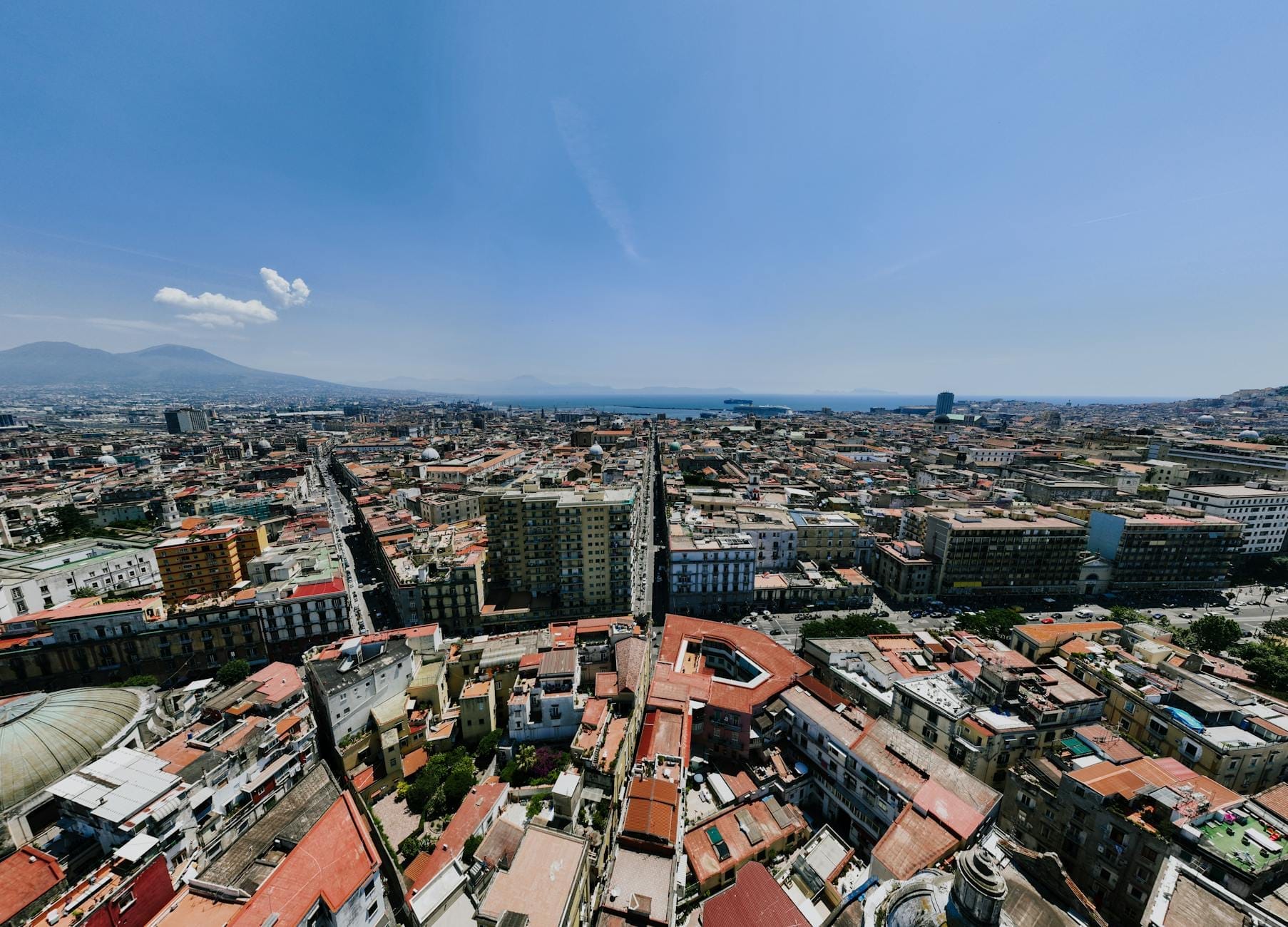
Spaccanapoli follows one of the oldest streets in the Western world, cutting through the heart of Naples' historic center along the original Greek-Roman decumanus inferior. It is the city at its most unfiltered: baroque churches shoulder to shoulder with street food vendors, laundry strung between apartment windows four stories up, and a continuous soundtrack of scooters, market calls, and church bells.
Spaccanapoli is not a neighborhood in the conventional sense but a defining axis: a dead-straight sequence of streets that slices through Naples' centro storico from west to east, following the exact line the ancient Greeks laid down more than 2,500 years ago. Walking it feels like reading the city's entire biography at once, with Roman ruins beneath your feet, medieval bell towers above your head, and Baroque facades competing for your attention every hundred meters.
Orientation
Spaccanapoli is, at its core, a single arrow-straight road that changes names four times as it crosses the historic center. It begins in the west at Piazza del Gesù Nuovo, where it is called Via Benedetto Croce. Moving east it becomes Via San Biagio dei Librai, crosses the important north-south artery of Via Duomo, and continues as Via Vicaria Vecchia toward the Porta Nolana side of the city. The entire walkable length from Piazza del Gesù Nuovo to Via Duomo is roughly 1 km and can be walked in under 15 minutes at a casual pace, though most visitors spend the better part of a day covering that stretch properly.
The street sits within the larger Centro Storico, the UNESCO World Heritage-listed historic center of Naples. To the north, the parallel Decumano Maggiore (Via dei Tribunali) runs along the upper grid. To the south, the third major Roman street leads toward the waterfront and Piazza del Plebiscito. Spaccanapoli occupies the middle band of this ancient Greek grid, the lower decumanus, and its straightness is so pronounced that when viewed from the Certosa di San Martino on the Vomero hill above, it appears to physically cut the city in half. This is precisely what the name means: 'spacca' from the Italian spaccato, split, and 'Napoli', Naples.
Understanding Spaccanapoli's position within the grid helps with navigation. The cross streets, the cardines of the original Greek layout, run perpendicular and are narrow enough that two people with bags struggle to pass each other. These alleys connect Spaccanapoli to Via dei Tribunali above and to the Piazza San Domenico Maggiore squares below. The whole area is largely pedestrian in practice, though technically open to scooters and small vehicles, which makes crossing side streets an exercise in alertness.
Character and Atmosphere
The hours between 7am and 10am belong to the locals. Bars along Via Benedetto Croce fill with residents drinking espresso standing at the counter. Small grocery suppliers push trolleys loaded with produce. The smell of roasting coffee mixes with something faintly damp from the stone walls, which rarely see direct sunlight in the narrower sections. The pace is quick and purposeful: this is still a functioning neighborhood where people live, work, and commute, not a preserved outdoor museum.
By mid-morning the dynamic shifts. Tour groups begin to arrive, moving in organized clusters between the major churches, and the street food vendors set up their stations. The pastry and pizza fritta sellers become a reliable fixture. Light falls differently along Spaccanapoli depending on the hour: in the morning the eastern sections catch the sun low and golden through the narrow cardines; by afternoon the street itself is mostly in shade, which makes summer walking considerably more comfortable. The facades of churches and palazzi, many in weathered tufa stone, take on a particular grey-gold tone that is characteristic of Naples.
After dark the area changes character once more. The streets around Piazza del Gesù Nuovo and Piazza San Domenico Maggiore fill with young Neapolitans in the classic southern Italian ritual of the passeggiata. Students from the nearby Federico II university cluster on the steps of Santa Chiara. Bars and pizzerias stay open late. The cross-street alleys, however, can feel quite dark and isolated, particularly moving east past Via Duomo after 10pm. This is not an area that requires particular caution, but street awareness is sensible, as it would be in any dense urban center. Keep valuables secured and avoid being visibly distracted with expensive camera equipment in the quieter side streets.
ℹ️ Good to know
Spaccanapoli is technically a street, but the surrounding blocks function as a coherent neighborhood experience. When locals refer to 'the Spaccanapoli area,' they mean the several blocks on either side of the main axis, including the surrounding piazzas and the churches set slightly off the main line.
What to See and Do
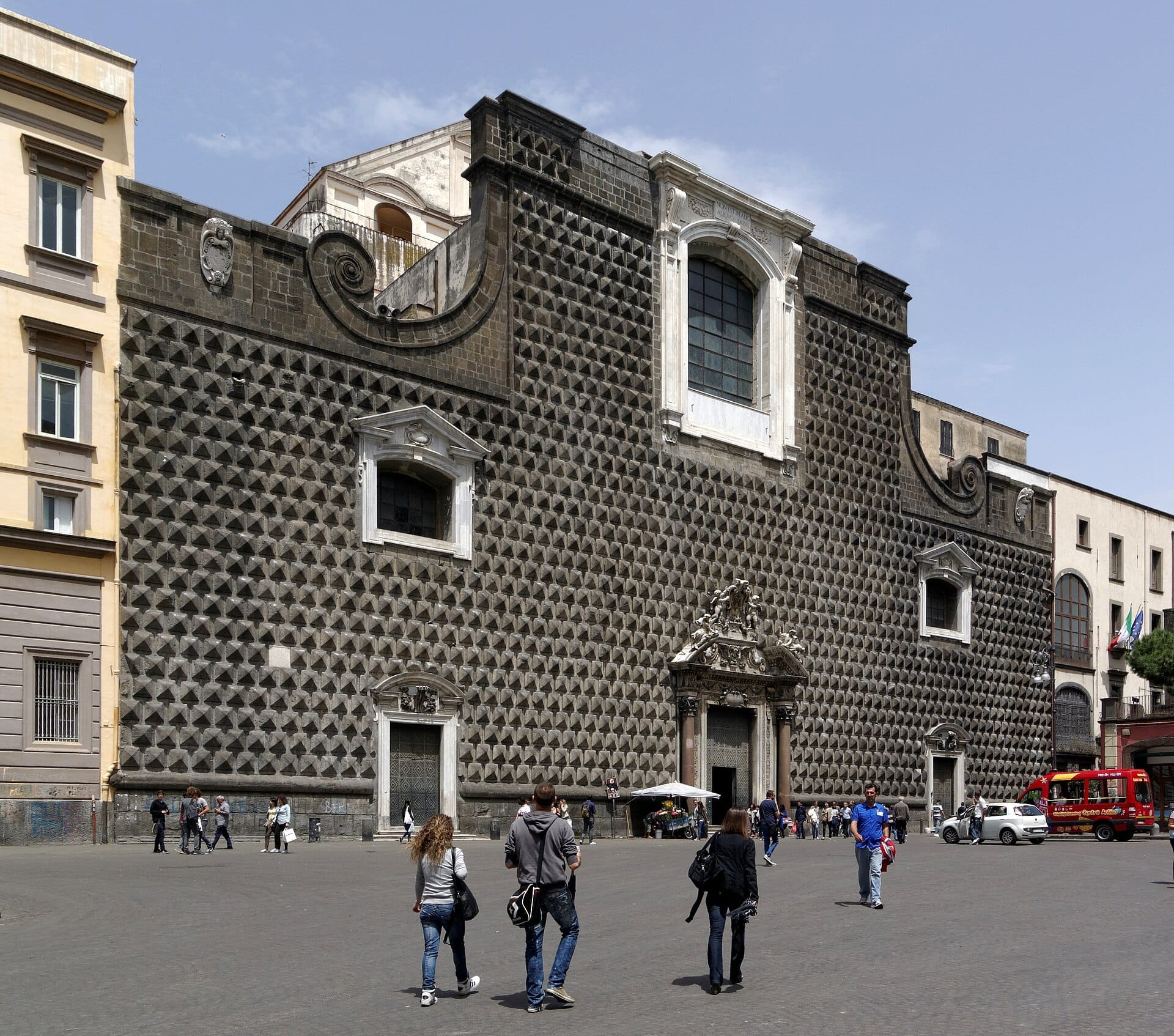
The western anchor of Spaccanapoli is the Gesù Nuovo church, its extraordinary diamond-pointed stone facade rising from the piazza of the same name. The facade dates from a 15th-century palazzo that was converted into a church, giving it an almost fortified appearance that sets it apart from every other baroque church in the city. Step inside and the transition from fortress exterior to gold and fresco interior is genuinely startling.
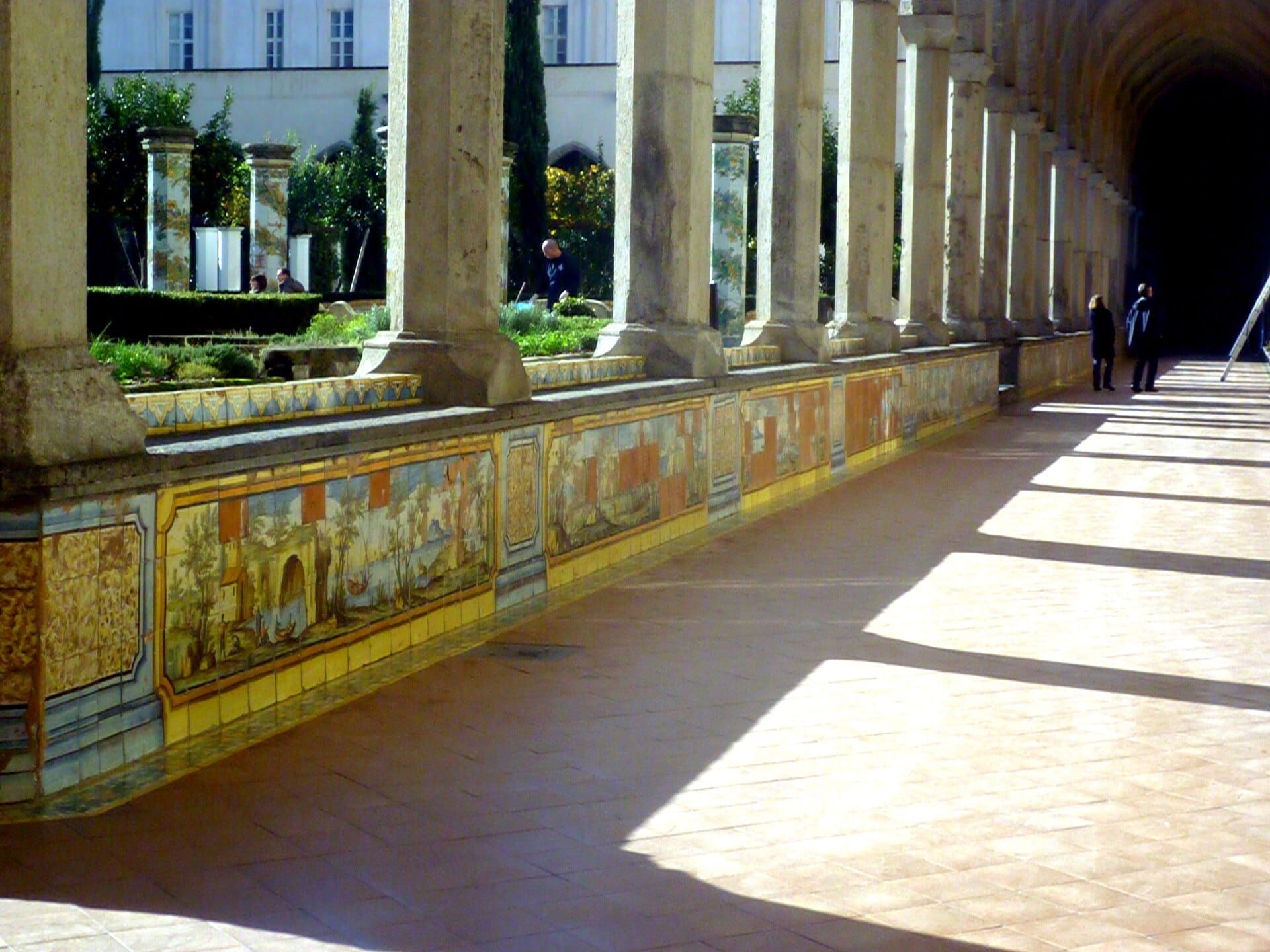
Directly opposite stands the Santa Chiara complex, one of the most important Gothic-Franciscan monuments in southern Italy. The church interior was heavily damaged in World War Two bombing and subsequently restored, but the real draw is the Chiostro delle Clarisse, the cloister decorated with hand-painted 18th-century majolica tiles depicting rural scenes. It is one of the genuinely unexpected spaces in Naples: calm, colorful, and visited by far fewer people than the church itself.
A short detour north from the main street, just off Via San Biagio dei Librai, brings you to the Cappella Sansevero. This small 18th-century funerary chapel belongs in any serious conversation about the greatest single rooms in Europe. It contains Giuseppe Sammartino's 1753 Veiled Christ, a marble sculpture of such technical refinement that many visitors refuse to believe it was carved from stone rather than draped in actual fabric. Booking tickets in advance is essential: the chapel is small, visitor numbers are capped, and walk-up entry is rarely possible in high season.
Continuing east, the street passes Piazza San Domenico Maggiore, a large and relatively open square that provides welcome breathing room. The basilica here is significant, but the square itself functions as a social hub, particularly on warm evenings. Further along, the cross street of Via dei Tribunali intersects the grid near the Duomo, Naples' cathedral, which is a short walk north. The Duomo contains the blood relic of San Gennaro and the extraordinary 4th-century Baptistery of San Giovanni in Fonte, one of the oldest surviving baptisteries in the Western world.
Gesù Nuovo church and piazza: the western entry point and architectural statement
Santa Chiara complex and the majolica-tiled cloister: a genuine highlight often overlooked
Cappella Sansevero: book well in advance, non-negotiable for art-focused visitors
Piazza San Domenico Maggiore: the neighborhood's social square
San Lorenzo Maggiore basilica: Greco-Roman ruins are accessible beneath the church
Via San Gregorio Armeno: the famous street of Christmas crib artisans, running perpendicular off the main axis
Cathedral of Naples (Duomo): just north of the main strip via Via Duomo
One street perpendicular to Spaccanapoli deserves its own mention: Via San Gregorio Armeno, running north from just east of Piazza San Domenico Maggiore. This narrow lane is lined year-round with workshops producing presepe, the elaborate Neapolitan nativity scenes that have been a local craft tradition for centuries. The craftspeople here also produce figures of contemporary celebrities alongside the traditional biblical cast, which gives the street an element of irreverent humor. Even if Christmas nativity scenes are not your interest, the workshop displays are remarkable demonstrations of detailed handcraft.
💡 Local tip
The Cappella Sansevero is technically a few steps north of Spaccanapoli, on Via Francesco De Sanctis. It takes about 3 minutes to walk there from Via San Biagio dei Librai. Do not skip it to save time: it is among the most extraordinary small spaces in southern Italy.
Eating and Drinking
The food scene along Spaccanapoli ranges from serious street food to sit-down restaurants aimed at both locals and tourists, with prices generally lower than the waterfront or Chiaia districts. This is one of the best stretches in the city for eating while walking: pizza fritta (fried pizza), fried cuoppo (a paper cone of mixed fried seafood or vegetables), and sfogliatelle (flaky pastry filled with ricotta and candied citrus) are all available from dedicated street vendors and bakeries. For a more structured account of what to eat in Naples and where, the Naples food guide covers the full picture.
Pizza is, predictably, everywhere. The pizzerias along and just off Spaccanapoli run the full spectrum from tourist-facing establishments with outdoor seating to old-school places where you order at a counter and eat standing up or on a plastic stool. The latter are usually the better option for quality and price. Expect to pay between 4 and 8 euros for a margherita or marinara at most places in this area.
Coffee culture is taken seriously here. The bars along Via Benedetto Croce and Via San Biagio dei Librai operate on the Neapolitan model: espresso is drunk quickly at the counter, prices are low (around 1 euro for a standard espresso), and sitting down at a table adds a table service charge. This is not a neighborhood where the cafe-as-laptop-office culture has much traction. Mornings are the best time to visit the bars; they are at their liveliest and the pastry selection is freshest.
For evening drinks, the piazzas come alive. Piazza del Gesù Nuovo and Piazza San Domenico Maggiore both have bars with outdoor tables that fill from around 6pm onward. The aperitivo culture is not as developed here as in northern Italian cities, but it is present, particularly among the student crowd. Several wine bars in the surrounding lanes offer local Campanian wines by the glass at reasonable prices.
⚠️ What to skip
Restaurants on the main Spaccanapoli strip with menu boards in six languages and aggressive door hosts tend to be tourist-oriented and overpriced relative to quality. Walk one or two streets parallel to find the places where locals actually eat: prices drop and portions increase.
Getting There and Around
The most useful metro stop for the western end of Spaccanapoli is Dante on Line 1, which deposits you at the top of Via Toledo, about a 10-minute walk downhill and south to reach Piazza del Gesù Nuovo. The Università stop on Line 1 is positioned closer to the eastern section of the street near Via San Biagio dei Librai. Line 2 stops at Montesanto to the northwest and Piazza Cavour to the northeast, providing access to the northern edge of the historic center. For an overview of how to navigate the city's transport network, the guide to getting around Naples is the most practical reference.
On foot, Spaccanapoli is directly connected to several other major areas. Walking west along Via Toledo from the Gesù Nuovo end takes you to Piazza del Plebiscito and the waterfront in around 15 minutes. The Quartieri Spagnoli neighborhood begins immediately west of Via Toledo, accessible by any of the narrow alleys (bassi) cutting perpendicular to the main road. Walking north from any point along Spaccanapoli puts you on Via dei Tribunali within a few minutes, where the Archaeological Museum is a further 15-minute walk west.
The street itself is navigated on foot: it is narrow, frequently busy, and not suited for cycling. Scooters and small vehicles do use it, so walk with awareness particularly at intersections. Most of the significant attractions along and off the main axis are within a 5-10 minute walk of each other, making Spaccanapoli the most walkable and concentrated heritage corridor in Naples.
Where to Stay
Staying in the Spaccanapoli area puts you at the center of the historic experience. Hotels, B&Bs, and apartment rentals are available throughout the surrounding streets, with a wide range of prices. The western section around Piazza del Gesù Nuovo and Via Benedetto Croce tends to be the most comfortable base: it is well-connected, safer-feeling after dark, and has good access to both the historic center and the waterfront. For a broader comparison of neighborhoods and accommodation options, the Naples accommodation guide provides a useful framework.
The honest trade-offs of staying here are worth stating plainly. Noise is a constant: church bells, scooters, and the general density of urban life mean light sleepers should look for rooms facing internal courtyards rather than the street. Some of the older buildings have limited elevator access and rooms reached by steep, narrow staircases. Rooms tend to be smaller and older than comparable-priced hotels in newer districts like Chiaia or Vomero.
In exchange, staying here means waking up to an experience that feels genuinely Neapolitan rather than tourist-packaged. The morning markets, the espresso bars, the noise and energy of the street at different hours: these are not things you visit, they are things you live in temporarily. For travelers whose priority is immersion in the city's historic identity, the area around Spaccanapoli is the obvious choice.
Practical Notes
Dress codes apply at all the churches along the route: shoulders and knees must be covered for entry. Light scarves or a spare layer in a bag solve this easily. Most churches are free to enter, though some sections (like the Santa Chiara cloister) require a ticket. The Cappella Sansevero charges admission and requires pre-booked timed entry. For visitors managing a broader itinerary across the city, a three-day Naples itinerary can help structure how Spaccanapoli fits alongside other major areas.
The streets can be congested and overwhelming for visitors who are not used to dense urban environments. If this is a concern, visiting early in the morning (before 9am on weekdays) or on a weekday afternoon in shoulder season significantly improves the experience. For more on planning the timing of a visit, the best time to visit Naples guide covers seasonal considerations in detail.
TL;DR
Spaccanapoli follows an ancient Greek-Roman street through the heart of Naples' historic center, changing names four times as it runs roughly east-west across the city.
Key attractions include the Gesù Nuovo church, the Santa Chiara complex with its majolica cloister, the Cappella Sansevero, and the San Gregorio Armeno artisan street, all within easy walking distance of each other.
The atmosphere is dense and genuinely urban: market noise, church bells, street food, and scooters are part of the experience, not background detail. Noise and crowds are real at peak hours.
Best suited for travelers who want deep immersion in Naples' historic identity, are comfortable navigating a complex urban environment, and prioritize cultural density over convenience or comfort.
Book the Cappella Sansevero in advance, arrive early for the best street food and espresso experience, and stay on the western end near Piazza del Gesù Nuovo for the most comfortable base.
Naples has more historic churches per square kilometer than almost any city in Europe. This guide covers the finest: from the Duomo's blood relic ceremony to Caravaggio's most important altarpiece, and the majolica-tiled cloister that stops every visitor cold.
Naples holds more great art per square kilometer than almost any city in Europe. This guide covers the 14 best museums in Naples, from world-class archaeological collections to intimate chapels hiding the most technically astonishing sculptures ever carved.
Planning a trip to Naples, Italy? This guide breaks down every season honestly — temperatures, crowd levels, prices, and local events — so you can choose the right time for your trip, whether you're chasing warm weather, cultural festivals, or the lowest hotel rates.
Naples is one of Italy's most dramatic cities to look at, and where you stand changes everything. This guide covers the finest viewpoints in the city, from Vomero hilltop fortresses to waterfront promenades, boat trips, and volcanic summits.
Naples sits at the center of one of Italy's richest travel regions. Within two hours you can stand inside a Roman city frozen in time, swim off a glamorous island, or walk past 2,500-year-old Greek temples. These are the best day trips from Naples, organized by type.
Naples is one of Europe's most rewarding cities for budget travelers. From UNESCO-listed streets and free castle ramparts to extraordinary public art in metro stations and chaotic street markets, here's how to experience the best of Napoli without opening your wallet.
Naples has a surprisingly functional public transport network once you know how it works. This guide covers metro lines, funiculars, buses, taxis, the airport Alibus, and everything in between, with current fares, schedules, and honest advice on what to skip.
Naples rewards every traveler differently depending on how much time they give it. This guide breaks down the ideal number of days in Naples based on your pace, interests, and whether you plan day trips to Pompeii, Capri, or the Amalfi Coast.
Naples is one of Italy's most debated destinations: raw, overwhelming, and unlike anywhere else in the country. This guide cuts through the clichés to give you a clear-eyed look at what Naples actually offers, who it suits, and whether it deserves a place on your itinerary.
Naples International Airport (Capodichino, NAP) sits just 6 km from the city center, but knowing which transfer option to take can save you time, money, and frustration. This guide breaks down every option from the €5 Alibus to fixed-rate taxis and private door-to-door transfers, with honest advice on what actually works.
Caravaggio spent two turbulent periods in Naples and left behind three surviving masterpieces that transformed Baroque painting in southern Italy. This guide locates every work, gives you current admission prices, practical visiting tips, and the context to understand why these paintings still matter.
Naples at Christmas is unlike anywhere else in Italy. From the centuries-old presepe workshops of Via San Gregorio Armeno to candlelit piazzas and December markets at Castel dell'Ovo, this guide covers everything you need to experience the city's most theatrical season.
Naples is one of the world's great eating cities, and knowing what to order makes all the difference. This guide covers every dish worth tracking down, from the perfect margherita to street food you won't find anywhere else in Italy, with practical tips on where to eat, what to pay, and what to avoid.
Naples, Italy surprises couples at every turn: candlelit trattorias in the historic centre, golden sunsets over Vesuvius from the waterfront, and ferry rides to islands that feel like a world away. This guide covers the city's most romantic spots, experiences, and seasonal tips so you can plan the perfect couples trip to Napoli.
Naples rewards those who look beyond the obvious. This guide uncovers the city's most overlooked sites, from an ossuary filled with skulls to a metro station voted the most beautiful in Europe. These are the places that make Naples genuinely unlike anywhere else.
Napoli is not a city you can absorb from a single vantage point. This guide breaks down every major neighborhood, plots the key attractions on a logical mental map, and tells you exactly how to move between them, whether on foot, by metro, or by funicular.
Naples frames some of the most dramatic sunsets in Europe, with Vesuvius, the Bay of Naples, and the islands of Capri and Ischia providing a backdrop that few cities can match. Whether you want a hilltop panorama, a waterfront stroll, or a boat ride into the golden hour, this guide covers the best spots.
Three days is enough time to get a real feel for Naples, Italy — one of Europe's oldest, most layered cities. This itinerary covers the UNESCO-listed historic centre, the seafront, the underground city beneath your feet, and the hilltop views that put it all in perspective. No filler, no tourist traps — just a practical day-by-day plan that works.
Naples, Italy rewards luxury travelers with a combination few European cities can match: grand historic hotels overlooking the Bay of Naples, world-class fine dining rooted in one of Italy's most serious food cultures, and private experiences ranging from underground archaeological tours to boat charters beneath Vesuvius. This guide cuts through the noise to identify what genuinely delivers at the top end of Napoli.
Naples, Italy comes alive after dark in ways that few Italian cities can match. From the elegant cocktail bars of Chiaia to the packed dance floors of Bagnoli, this guide breaks down exactly where to go, when to go, and what to expect from Neapolitan nightlife.
Naples is the cheapest major city in Italy to visit, with €1 espressos, €3 street pizza, and a UNESCO historic centre you can explore for free. This guide breaks down real daily costs, the best free attractions, smart transport choices, and exactly how to stretch your euros further in Napoli.
Choosing between Naples and Sorrento as your southern Italy base shapes your entire trip. This guide breaks down the real differences in cost, atmosphere, transport access, and day-trip logistics so you can make the right call for your travel style.
Naples is the birthplace of pizza, and eating it here is nothing like eating it anywhere else. This guide covers the best pizzerias across the city, from legendary institutions to neighbourhood favourites, with honest rankings, practical logistics, and advice on what actually separates great Neapolitan pizza from a tourist-trap imitation.
Naples Italy has a reputation that outpaces its reality. Petty crime exists, but with the right awareness you can explore freely. This guide covers the neighborhoods to know, the scams actually targeting tourists, and the practical habits that make the difference.
The Feast of San Gennaro is the spiritual and cultural heartbeat of Naples, drawing tens of thousands to witness a ritual that has defined the city for over 1,700 years. This guide covers all three annual dates, the blood liquefaction ceremony, crowd logistics, and what the festival reveals about Neapolitan identity.
Naples rewards shoppers who go beyond the tourist trinket stalls. This guide covers the city's best shopping streets by district, its most authentic markets, and the foods and crafts worth carrying home — with honest advice on where not to waste your time or money.
Queues at Naples' top attractions can cost you hours of your trip. This guide breaks down exactly which sites offer genuine skip-the-line access, where to book, what it costs, and which 'skip-the-line' products are misleading marketing.
Naples has one of the great street food cultures in Europe, built on centuries of feeding dock workers, market sellers, and anyone who needed a meal without a table. This guide covers the essential dishes, the best neighborhoods to eat them, and the practical details that separate a great food walk from a disappointing tourist detour.
Getting from Naples to the Amalfi Coast involves more choices than most guides admit. This breakdown covers every realistic option, from the cheapest bus combination to the fastest ferry, with honest assessments of what works in different seasons.
Getting from Naples to Capri is simpler than most visitors expect, but the details matter: which port, which operator, how early to book, and what to do once you arrive. This guide covers all of it, from ferry prices and schedules to practical day trip planning.
Pompeii is 25 kilometers from Naples and one of the most visited archaeological sites in the world. This guide breaks down every transport option, the exact station you need, what tickets cost, and how to make the most of the trip without the usual tourist pitfalls.
Beneath the streets of Naples Italy lies one of Europe's most extraordinary subterranean worlds: 450 kilometers of Greek-carved tunnels, Roman aqueducts, and WWII shelters. This guide covers everything you need to visit Napoli Sotterranea, from ticket prices and tour logistics to what you'll actually see underground.
Choosing between Naples and Rome is one of the most common dilemmas for Italy first-timers. This guide breaks down both cities across food, cost, culture, day trips, and logistics so you can make the right call for your itinerary.
Naples rewards walkers more than almost any city in Italy. This guide covers the best self-guided walking routes through the historic center, royal quarter, and waterfront, with practical details on timing, distances, costs, and what to skip.
Naples, Italy has a Mediterranean climate that rewards visitors who time their trip carefully. This guide breaks down what the weather actually looks like each month, which seasons to avoid, and what to throw in your bag depending on when you arrive.
Naples is a far better family destination than its reputation suggests. From hands-on science museums and underground Roman tunnels to pizza-making workshops and boat trips on the Bay of Naples, this guide covers the best activities for families traveling to Napoli, with honest advice on what works for different ages and how to plan your visit.
Both sites were buried by Mount Vesuvius in 79 AD, but they offer very different experiences. This guide breaks down the key differences in size, preservation, visitor experience, and logistics so you can choose the right one — or make a case for visiting both.
Naples rewards curious travelers with layers of history, art, street food, and coastal scenery that few Italian cities can match. This guide covers the essential experiences, practical logistics, honest advice on what to skip, and how to structure your time in Napoli.
Naples is one of the great eating cities of Italy, and knowing where to go separates a memorable meal from a mediocre tourist trap. This guide covers the best neighborhoods for dining, top restaurant picks across every budget, essential dishes to order, and practical tips for eating like a local.
Choosing where to stay in Naples Italy can make or break your trip. This guide breaks down every major neighbourhood by vibe, price, location, and who it actually suits, so you can book with confidence.