Pompeii vs Herculaneum: Which Ruins Should You Visit?
Both sites were buried by Mount Vesuvius in 79 AD, but they offer very different experiences. This guide breaks down the key differences in size, preservation, visitor experience, and logistics so you can choose the right one — or make a case for visiting both.
Tickets & tours
Live prices and dates from our booking partner. If you book, we may earn a commission at no extra cost to you.
TL;DR
- Pompeii is much larger (163 acres) with grand civic architecture; Herculaneum is compact, more intimate, and better preserved at the detail level.
- Herculaneum has intact upper floors, carbonized wood, and vivid frescoes; Pompeii has the famous body casts and a 12,000-seat amphitheater — see our full Pompeii visitor guide and Herculaneum guide for site-specific details.
- Pompeii needs at least 3-4 hours; Herculaneum can be done thoroughly in 2 hours, making it easier to combine with a half-day in Naples.
- Both sites are accessible as day trips from Naples — Pompeii by Circumvesuviana train in about 35 minutes, Herculaneum (Ercolano) in about 20 minutes.
- If you only have time for one: families and first-timers usually prefer Pompeii; architecture enthusiasts and repeat visitors often find Herculaneum more rewarding.
The Basics: What Are You Actually Comparing?
Both Pompeii and Herculaneum were Roman towns on the Bay of Naples destroyed by the eruption of Mount Vesuvius on 24 August, 79 AD. But the eruption affected them differently, and those differences are exactly what make each site distinct today. Pompeii, located southeast of Vesuvius, was buried under approximately 6 meters of pumice and ash. Herculaneum, to the west, was engulfed by pyroclastic surges and then entombed under around 25 meters of volcanic material. That extra depth is the main reason Herculaneum's preservation is so remarkably detailed.
Pompeii had a population of roughly 11,000-20,000 at the time of the eruption and covered approximately 170 acres — about the size of a medium-sized modern town center. Only around two-thirds have been excavated. Herculaneum was a smaller coastal settlement of around 4,000 people, and only about 20% of it has been uncovered, with the rest lying beneath the modern town of Ercolano. What you see at Herculaneum is essentially a fraction of what existed, which gives the site both its intimacy and its sense of mystery.
ℹ️ Good to know
Both sites are UNESCO World Heritage-listed as part of the 'Archaeological Areas of Pompei, Herculaneum and Torre Annunziata.' Entry is paid at both, with tickets available on-site or in advance online. Advance booking is strongly recommended for Pompeii, especially in peak season.
Preservation: Where the Real Difference Lies
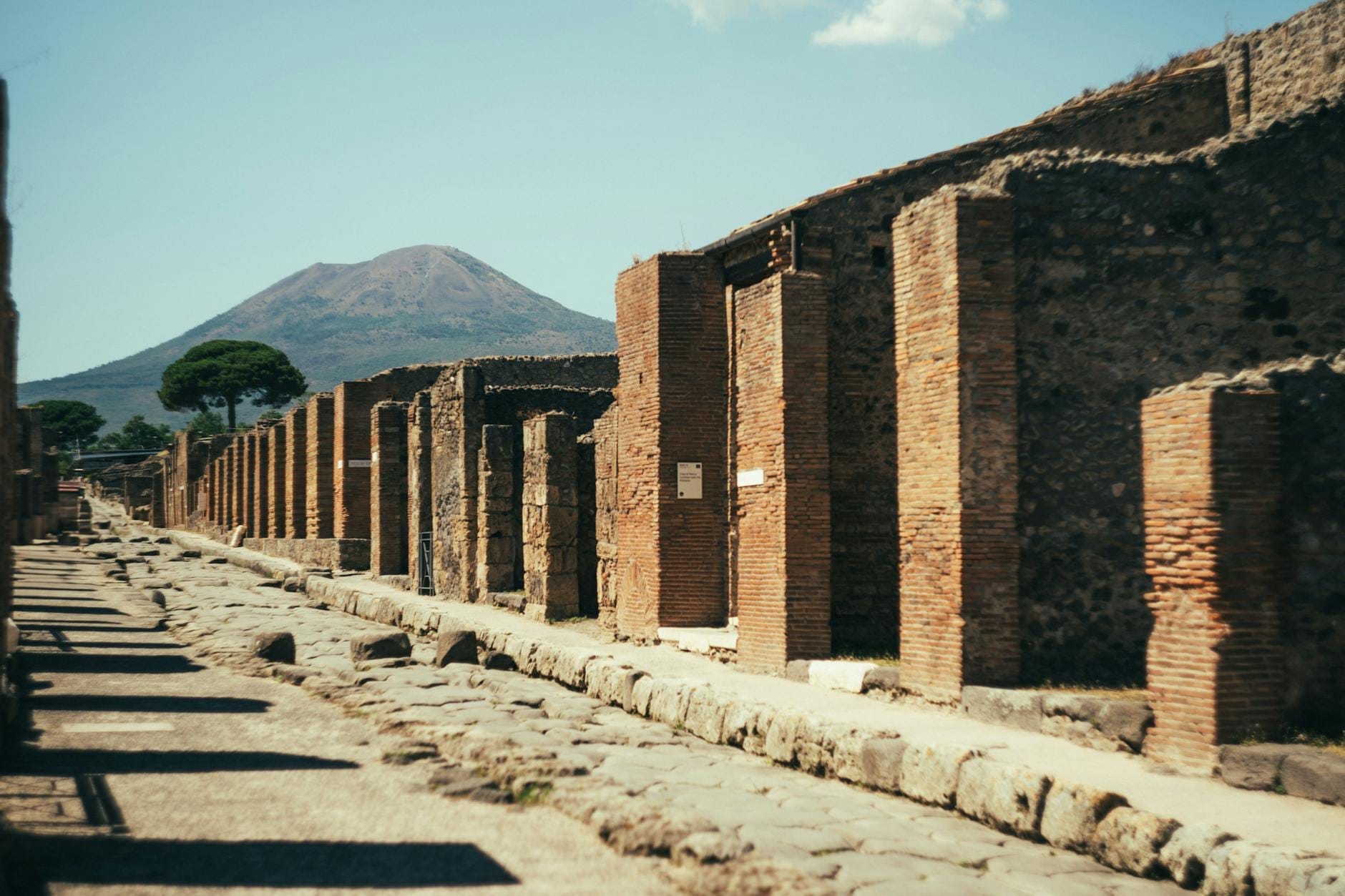
The word 'preserved' gets used loosely when talking about both sites, so it's worth being precise. Pompeii preserves urban scale: you can walk along actual Roman roads, pass through a forum surrounded by temple columns, and grasp the layout of a full city. The spatial experience is unmatched. What Pompeii does not preserve as well is organic material — wood, food, textiles, and painted surfaces deteriorated significantly because the ash that buried it was relatively porous and allowed moisture in over the centuries.
Herculaneum is the opposite case. The sheer mass of volcanic material that sealed it created near-anaerobic conditions. The result: carbonized wooden beams still in place on upper floors, a wooden cradle, rope, food remains, and frescoes so detailed and vivid they look freshly painted. The thermal baths at Herculaneum still have intact changing rooms with wooden shelving. This is a level of preservation that Pompeii simply cannot match at the material level, and it is the main argument for choosing Herculaneum if detail interests you more than scale.
- Pompeii preserves Urban scale, grand civic buildings (Forum, amphitheater, temples), street layouts, and body casts of eruption victims made from plaster injected into ash cavities.
- Herculaneum preserves Organic materials (carbonized wood, food), intact upper floors, vivid frescoes, mosaic floors, and skeletal remains of approximately 300 people in the ancient boathouses.
- Both sites preserve Roman roads, shops, homes, baths, and enough architectural detail to understand daily life in the 1st century AD. Neither is 'ruined' in the way most ancient sites are.
Highlights You Won't Find at the Other Site
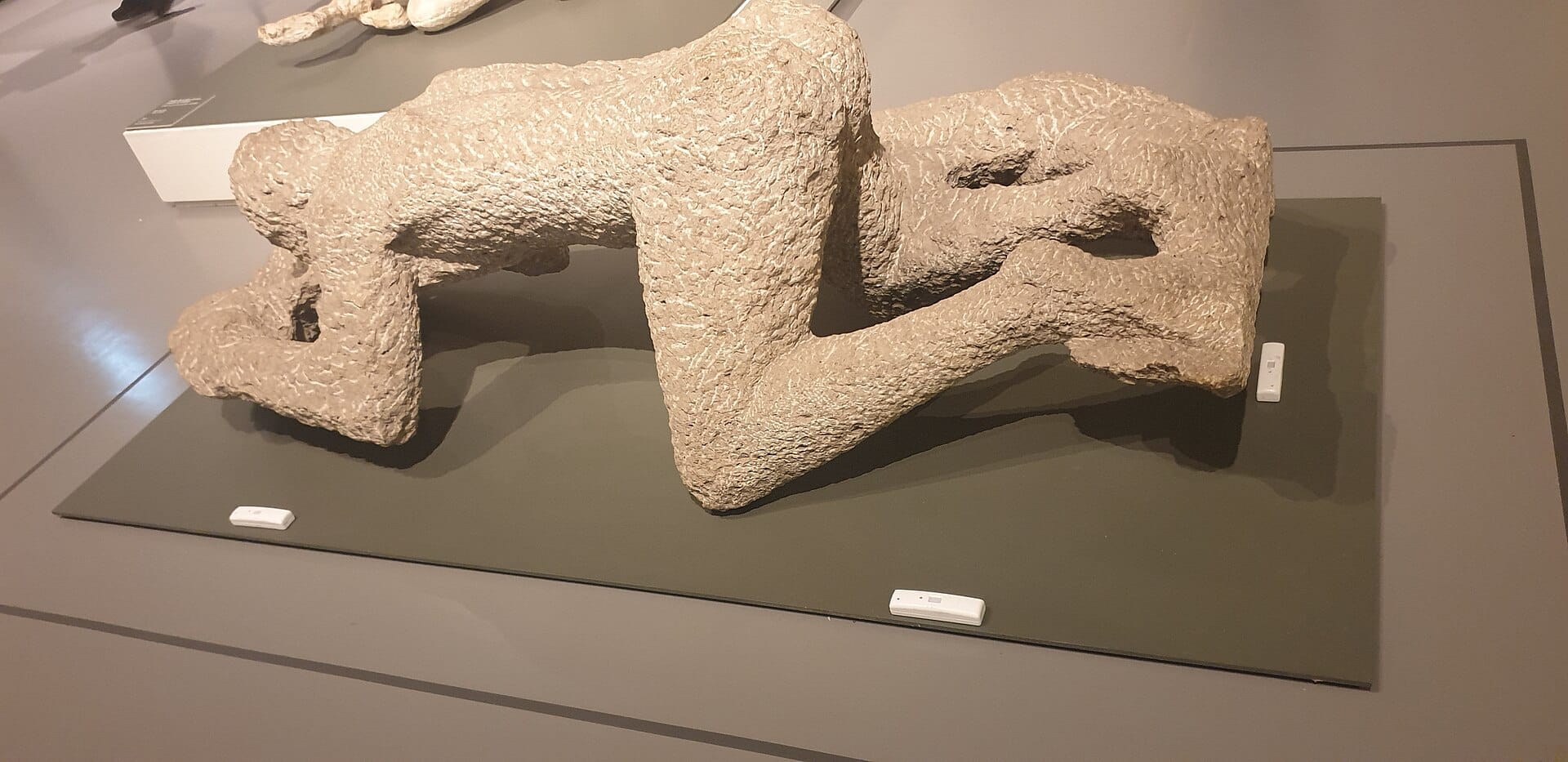
At Pompeii, the body casts are the most emotionally affecting feature on the site. Archaeologists discovered that the ash had hardened around the decomposed bodies of victims, leaving perfect negative molds. By injecting plaster into these cavities, they created haunting three-dimensional figures frozen in their final moments — a dog, a family huddled together, a man shielding his face. These are displayed throughout the site, including in the Garden of the Fugitives where 13 casts remain in situ. No equivalent exists at Herculaneum.
Pompeii's civic scale is also extraordinary. The Teatro Grande seated around 5,000 people; the amphitheater, dating to around 70 BC, held roughly 12,000 and is one of the oldest surviving Roman amphitheaters in existence. The Forum, though roofless, gives a genuine sense of Roman public life. For sheer spectacle, Pompeii wins. If you want a framework for understanding the wider region, consider pairing your visit with a trip up Mount Vesuvius — you can see both sites from the crater rim on a clear day.
At Herculaneum, the standout features are the boathouses along the ancient shoreline, where the skeletons of roughly 300 people were discovered in 1980 — people who had fled to the sea and were killed by the pyroclastic surge. They remain visible. The Hall of the Augustals has some of the finest Roman frescoes you will see anywhere outside a museum. The Casa del Bicentenario contains a cross-shaped impression in an upper room that some scholars believe is evidence of early Christian worship, though the interpretation is debated. These details reward close attention in a way that Pompeii's grand scale does not always allow.
⚠️ What to skip
Many of Pompeii's best artifacts — including erotic art and fine bronzes — have been moved to the Naples National Archaeological Museum. If you visit Pompeii without also visiting the museum, you are seeing only part of the picture. Budget time for both if ancient Roman art matters to you.
Visitor Experience: Crowds, Logistics, and Time
Pompeii receives around 3.5 million visitors per year, making it one of the most visited archaeological sites in the world. In July and August, peak arrival times between 10am and 2pm can feel genuinely overwhelming — long queues at the entrance, tour groups moving through the main streets, and limited shade across the site. The site covers so much ground that fatigue becomes a real factor. Budget a minimum of 3 hours for a basic visit, and 5-6 hours if you want to cover the amphitheater, Forum, Garden of the Fugitives, and the Villa of the Mysteries on the western edge.
Herculaneum is far less crowded. It does not have the same international name recognition, which is part of what keeps visitor numbers manageable. The compact layout means a thorough visit takes around 2 hours, making it a realistic half-day excursion that you can combine with other stops. The site also has more shade due to the protective covering structures built over parts of it. For visitors with mobility concerns, Herculaneum's smaller footprint is significantly less demanding than Pompeii's vast open terrain.
- Pompeii: Circumvesuviana train from Naples Centrale to 'Pompeii Scavi - Villa dei Misteri' station, around 35 minutes. The entrance is a 2-minute walk from the station.
- Herculaneum: Same Circumvesuviana line, exit at 'Ercolano Scavi', around 20 minutes from Naples. Walk downhill approximately 10 minutes to the entrance.
- Combined visit: Entirely possible in one day if you start early. Visit Herculaneum first (it opens at 9am), spend 2 hours, then continue by train to Pompeii for the afternoon. Allow 90 minutes travel and transition time.
- Entry fees: Around €18-22 per adult at each site individually; combination tickets covering both sites plus other Vesuvian sites are available and offer better value.
- Skip-the-line: Essential for Pompeii in peak season. Book online in advance. Herculaneum rarely requires this but it does not hurt.
✨ Pro tip
Visit Pompeii on a weekday in April, May, September, or October and arrive right at 9am opening. The first 90 minutes are dramatically quieter than midday. Bring at least 2 liters of water per person — there are fountains on site but they can be hard to find, and the sun exposure is relentless in summer.
Who Should Visit Which Site
The honest answer is that most people visiting Naples for the first time should go to Pompeii. The scale, the body casts, the amphitheater — these are the images that define the Vesuvius story in the popular imagination, and experiencing them in person is genuinely powerful. For trip planning context, check the full Naples to Pompeii guide which covers transport options, what to skip, and the best routes through the site.
Herculaneum is the better choice for visitors who prioritize quality over quantity, have limited time or energy, or are returning to the region and want a different experience. Architecture students, art historians, and anyone interested in the texture of Roman daily life — what furniture looked like, how kitchens were organized, what colors Romans used on their walls — will find Herculaneum more satisfying. It is also the smarter pick if you are traveling with young children or elderly companions, simply because you can cover it completely without exhaustion.
If your itinerary allows it, visiting both sites on the same day is one of the best day trips you can do from Naples. The contrast between the two makes each site more comprehensible — Pompeii helps you understand the scale of Roman urban life, Herculaneum helps you understand what that life actually looked, smelled, and felt like. Combine either site with a visit to the Naples National Archaeological Museum, which houses the finest artifacts recovered from both sites, and you have one of the most complete encounters with the ancient Roman world available anywhere.
Practical Tips Before You Go
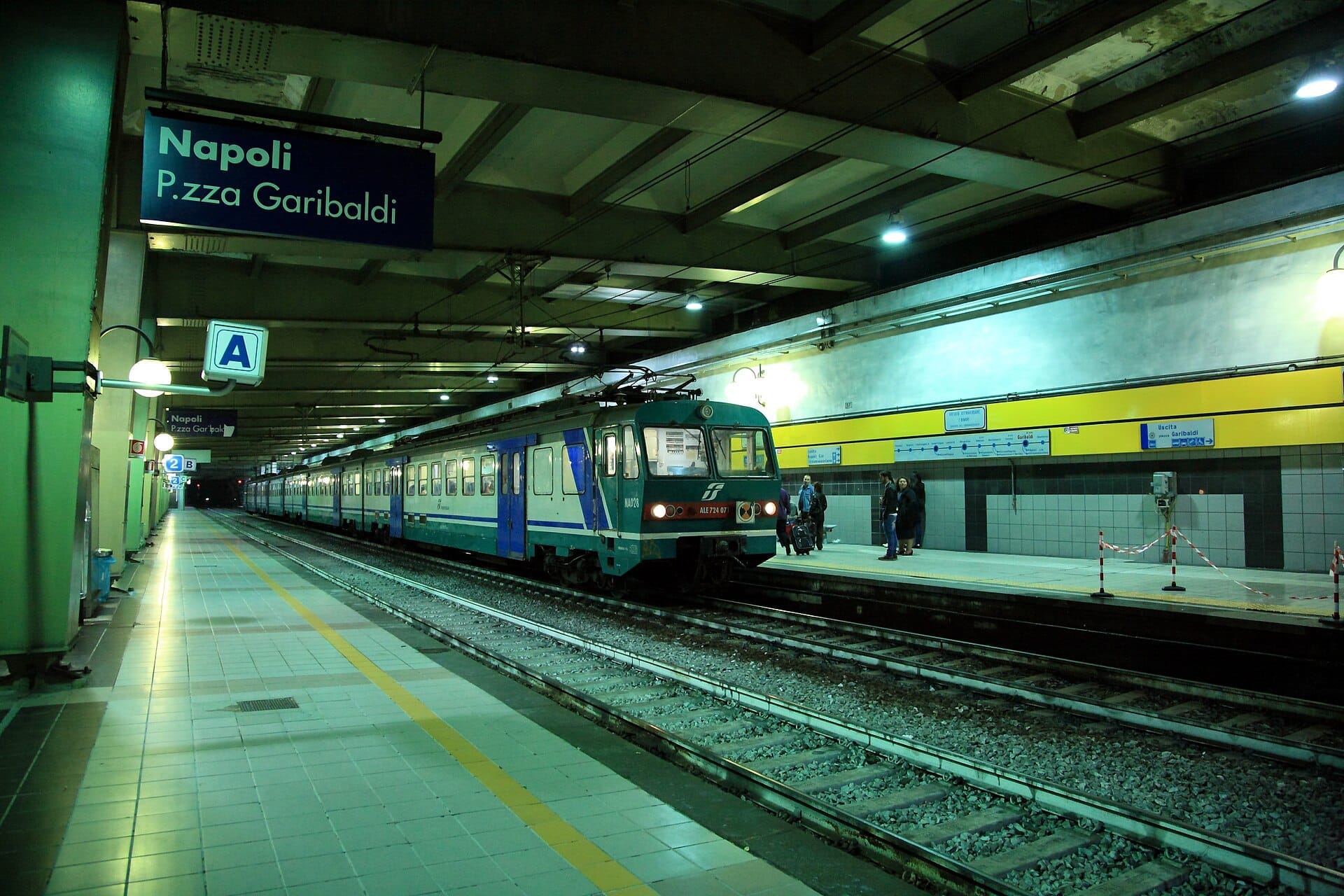
Both sites are accessible as straightforward day trips from Naples. The Circumvesuviana commuter rail line runs from Naples Centrale (Piazza Garibaldi station) with regular departures throughout the day. For broader planning, the day trips from Naples guide covers how to combine both ruins with other Vesuvian destinations including the crater itself.
Wear comfortable shoes — both sites are on uneven ancient cobblestones that are particularly hard on thin soles. Sun protection is non-negotiable from May through September; the sites offer almost no natural shade over large stretches. At Pompeii especially, a hat and sunscreen are as important as your ticket. Many rooms and houses are gated and open only on specific days or with guided tours, so if there are particular buildings you want to see, check the official site before visiting.
For visitors working with a tight schedule, a 3-day Naples itinerary can realistically include one full site visit plus the archaeological museum without feeling rushed. If you want to do justice to both ruins, allow a dedicated fourth day or commit to the early-start combined-day approach described above. Either way, pre-booking your skip-the-line tickets for Pompeii will save you 30-60 minutes at the gate.
FAQ
Is Pompeii or Herculaneum better for a first-time visitor?
Pompeii is typically the better choice for a first visit. It offers more recognizable landmarks — the Forum, amphitheater, body casts — and conveys the full scale of a Roman city. Herculaneum is smaller and in many ways more refined, but its significance is easier to appreciate if you already have some context from Pompeii or the Naples Archaeological Museum.
Can you visit both Pompeii and Herculaneum in one day?
Yes, but it requires an early start. Take the Circumvesuviana from Naples to Ercolano Scavi first, spend 2 hours at Herculaneum, then continue by train to Pompeii Scavi for the afternoon. Allow at least 3 hours at Pompeii. Total travel and transition time between sites is around 40-50 minutes. This makes for a full day but is very doable for most visitors.
Which site has better preservation?
They preserve different things well. Herculaneum has superior preservation of organic materials — wood, food, textiles — and vivid frescoes because it was buried under 25 meters of volcanic material in near-anaerobic conditions. Pompeii better preserves urban scale and civic architecture. Neither is simply 'better' — it depends on what you want to see.
Do you need to book tickets in advance for Pompeii and Herculaneum?
Advance booking is strongly recommended for Pompeii, especially from April through October, when queues at the gate can exceed 45 minutes. Herculaneum rarely has the same queue problem, but pre-booking is still convenient. Both sites sell tickets online through their official portals, and combination tickets covering multiple Vesuvian sites offer better value than buying individually.
How long does each site take to visit?
Herculaneum can be visited thoroughly in about 2 hours for most people. Pompeii requires a minimum of 3 hours for a basic visit covering the main highlights, and 5-6 hours if you want to reach the more distant buildings like the Villa of the Mysteries or the amphitheater. Factor in rest breaks, especially in summer heat.
Tickets & tours
Live prices and dates from our booking partner. If you book, we may earn a commission at no extra cost to you.
Planning a trip? Discover personalized activities with the Nomado app.