Piazza Garibaldi and Forcella form the unfiltered eastern gateway to Naples, where the main railway hub meets one of the oldest continuously inhabited neighborhoods in the city. Ancient Greek street grids, Baroque churches, and a morning market that spills across the pavement make this area a crash course in how Naples actually works.
Piazza Garibaldi is where Naples begins for most visitors, a broad, traffic-heavy square anchored by the Napoli Centrale railway station that deposits you immediately into the city's most unvarnished energy. A short walk south leads into Forcella, a neighborhood so old its very name traces back to a Y-shaped fork in the Greek street plan, and so alive that its market stalls are already in full swing before most of the city has had its first espresso.
Orientation
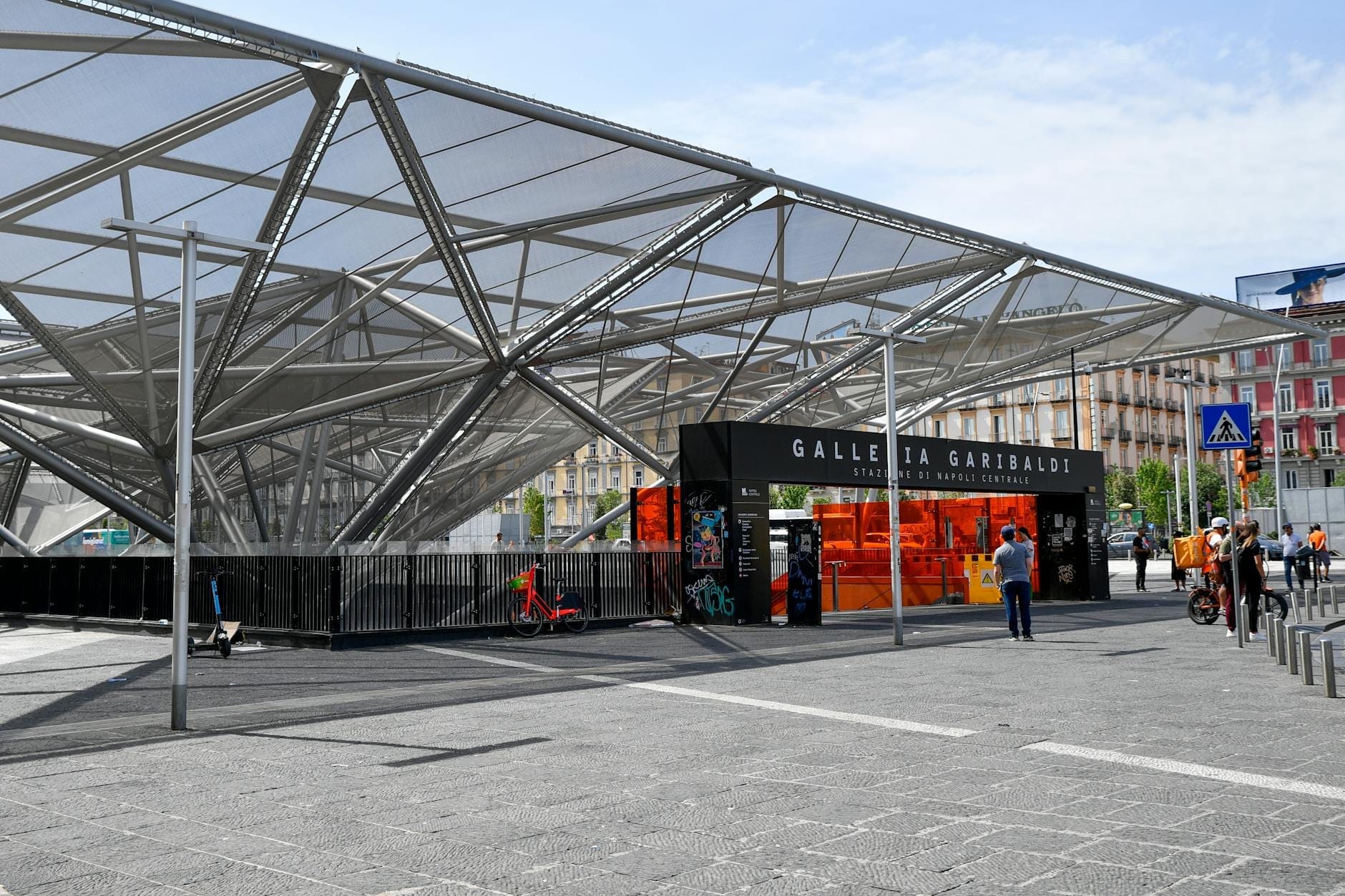
Piazza Garibaldi sits in Naples' Municipalità 4, immediately east of the historic center. The square itself is dominated by the grand facade of Napoli Centrale railway station to the north, with Corso Umberto I stretching southwest toward the city center and the sea. This broad diagonal boulevard, known locally as the Rettifilo, was cut through the old city fabric in the late 19th century and remains the main artery connecting the station area to Piazza Bovio and the port district.
Forcella occupies the wedge of streets south and southeast of Piazza Garibaldi, roughly bounded by Corso Umberto I to the south, Via Carbonara to the north, and the old city walls to the east near Castel Capuano. This is the southeastern edge of the UNESCO-listed Centro Storico, and the street layout still follows the ancient Greek grid of Neapolis: long parallel decumani running east-west, crossed by shorter cardines. Walking west from Forcella, you slide seamlessly into the deeper historic center around Spaccanapoli without any formal boundary marking the transition.
The neighborhood connects to the rest of Naples with unusual efficiency. Metro Line 1 runs from Garibaldi station directly to the historic center, Vomero, and beyond, making this a legitimate base for reaching every major part of the city. The Porta Nolana commuter rail station is roughly an eight-minute walk south, connecting to the Circumvesuviana line for day trips toward Pompeii and the coast.
Character & Atmosphere
Arrive at Piazza Garibaldi at seven in the morning and the square is already in motion. Commuters stream through the underground metro concourse, vendors set up fruit carts along the perimeter, and taxis queue in long lines outside the station exits. The square itself is large and not particularly beautiful: a concrete expanse undergoing periodic renovation, framed by traffic lanes and mid-century commercial blocks. What it lacks in architectural elegance it compensates for in raw, undiluted Neapolitan energy.
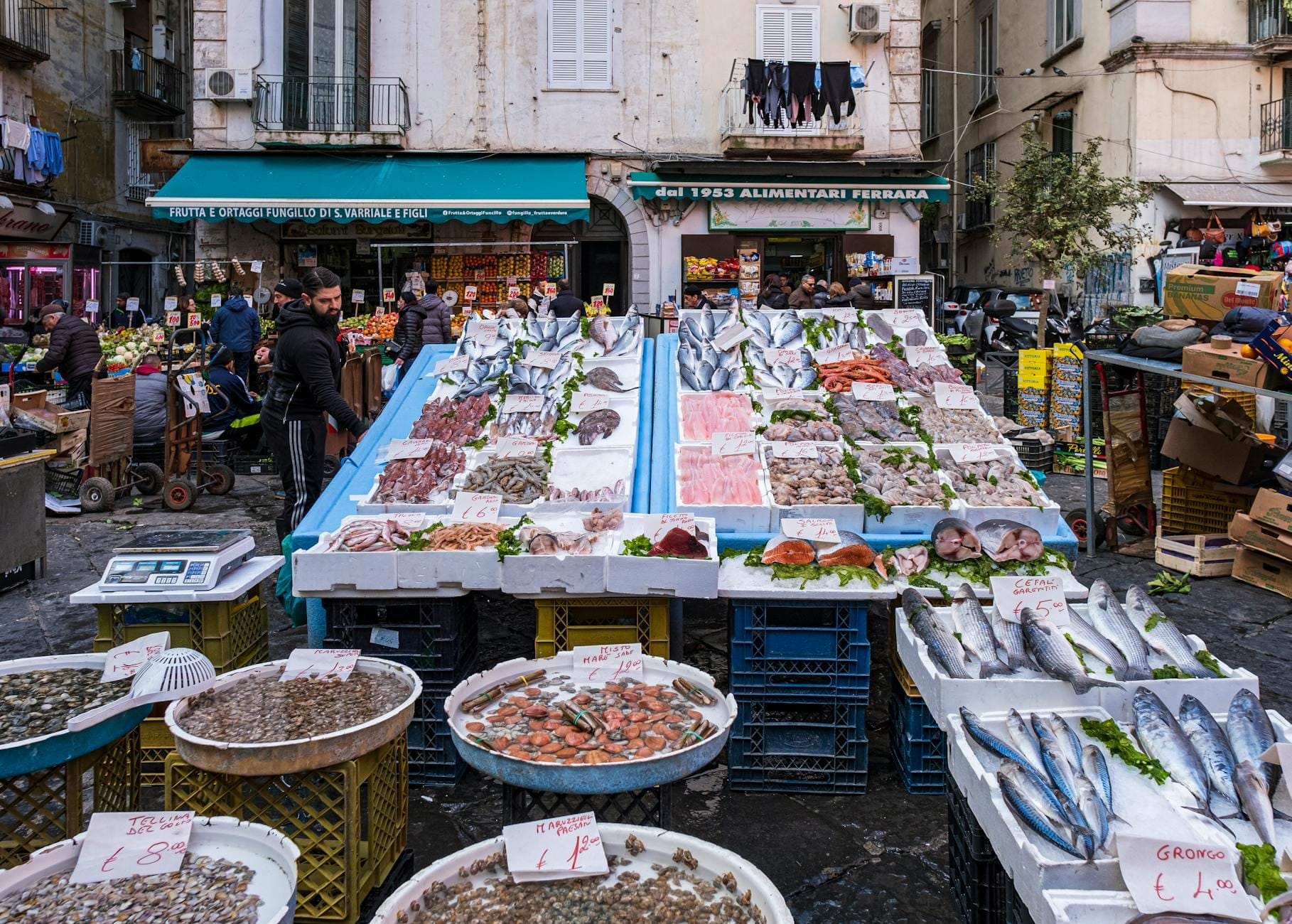
Step south into Forcella and the scale shifts dramatically. The streets narrow to a few meters across, laundry lines connect buildings at the second and third floors, and the sound of the square fades behind you. By nine in the morning, Via Forcella itself is a full street market: clothing, household goods, electronics of uncertain provenance, and food stalls selling taralli, sfogliatelle, and slices of pizza fritta straight from the pan. The smell of frying dough mixes with diesel and the particular damp-stone scent of old Naples buildings.
By afternoon the market thins, children appear in the narrow lanes after school, and older residents occupy chairs in doorways. The light falls steeply in Forcella because the streets are so narrow, creating long shadows even in summer. After dark the character changes again: the market stalls are gone, the streets are quieter but not empty, and the neighborhood settles into a local rhythm that has very little to do with tourism.
⚠️ What to skip
Piazza Garibaldi and the immediate station area attract petty theft, particularly pickpocketing near the taxi rank and in the underground metro concourse. Keep bags in front of you, avoid displaying expensive cameras or phones openly, and be alert in crowds. The deeper streets of Forcella are generally fine during the day but less welcoming to solo travelers at night. Exercise the same caution you would in any dense, low-income urban neighborhood in a major European city.
It is worth being honest: this is not a neighborhood that tries to impress visitors. There is no manicured piazza, no restaurant district polished for tourists. What Forcella offers instead is the texture of a neighborhood that has existed, in some form, for 2,500 years and continues to function entirely on its own terms. Some travelers find this thrilling. Others find Piazza Garibaldi overwhelming and move on to other neighborhoods as quickly as possible. Both responses are reasonable.
What to See & Do
The single most significant cultural site in the immediate area is the Pio Monte della Misericordia, a few minutes' walk west of Forcella on Via dei Tribunali. This small octagonal church contains Caravaggio's celebrated painting 'The Seven Works of Mercy', one of the most important Baroque canvases in Italy. The painting was commissioned specifically for this church in 1607 and has never left it. The upper floor holds an art collection with works by Luca Giordano and other Neapolitan masters. The admission fee is modest and the crowds are nothing compared to the major museums.
Within Forcella itself, the Cippo a Forcella is a fragment of ancient Greek city wall, incorporated into a street corner like a piece of urban archaeology left in plain sight. The Real Casa dell'Annunziata complex on Via dell'Annunziata includes a Baroque basilica and the remains of a historic hospital and foundling home that operated for centuries. The Church of Santa Maria Egiziaca a Forcella is a compact Neapolitan Baroque building worth a few minutes of attention if you pass it. None of these are set-piece attractions with ticket desks. They are simply part of the neighborhood fabric.
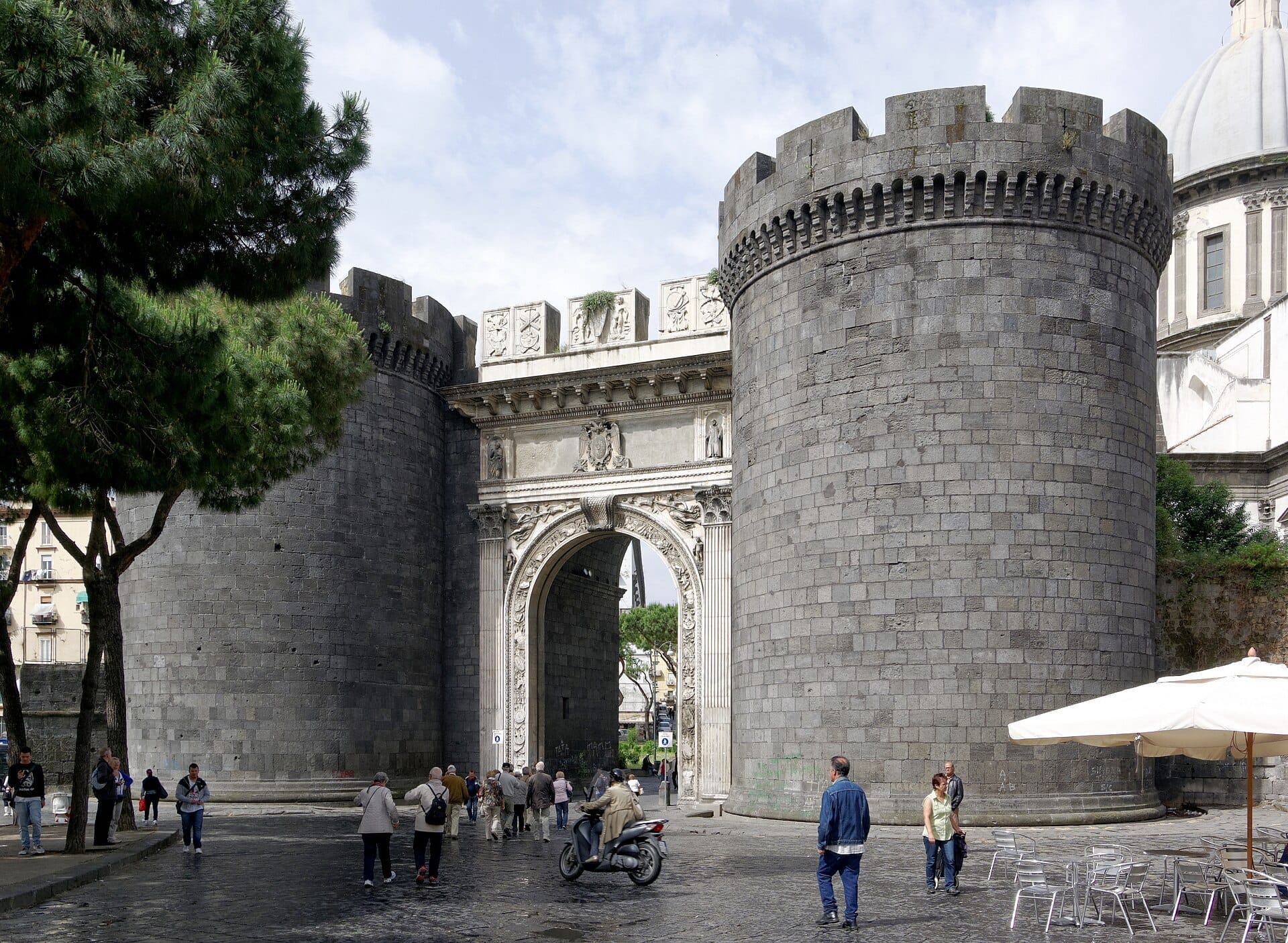
At the eastern edge of the area, Castel Capuano is a Norman-era fortress that later served as the city's courthouse for centuries. The exterior is solid and ancient-looking; the interior has been used for various administrative purposes and access is inconsistent, but the building itself marks the old city gate and is worth pausing at. Nearby, street art by Jorit Agoch appears on building facades near the neighborhood entrance, large-scale portrait murals that have become informal landmarks.
The morning market on Via Forcella runs roughly from dawn to noon. For a broader street food context, the Porta Nolana market is a ten-minute walk south and is one of the best fish and food markets in the city, particularly good early in the morning when the catch is fresh. Combining both markets in a single morning walk is one of the more rewarding things you can do in this part of Naples.
Pio Monte della Misericordia: Caravaggio's Seven Works of Mercy, a short walk west on Via dei Tribunali
Via Forcella market: street stalls selling food, clothing, and goods from dawn to noon
Castel Capuano: Norman fortress marking the old eastern city gate
Real Casa dell'Annunziata: Baroque basilica and historic hospital complex
Cippo a Forcella: visible fragment of the ancient Greek city wall
Jorit Agoch murals: large-scale street art near the neighborhood entrance
Porta Nolana market: fish and produce market, ten minutes south on foot
💡 Local tip
The Pio Monte della Misericordia is often overlooked by visitors who go straight to the National Archaeological Museum or Cappella Sansevero. If you have any interest in Baroque painting, this is one of the most affecting rooms in Naples, and you will rarely share it with more than a handful of people.
Eating & Drinking
Forcella and the streets around Piazza Garibaldi are not where you come for a long restaurant dinner with a curated wine list. This is street food territory, and the standard is high. Pizza fritta, the deep-fried folded pizza that predates the oven-baked version, is available from small shops along Via Forcella and the surrounding streets. For context on the full range of Neapolitan street food, the Naples street food guide covers the neighborhood and the rest of the city in detail.
Sfogliatelle, the ridged shell-shaped pastry filled with ricotta and semolina, are sold from bakeries in the early morning, best eaten hot and slightly greasy from the fryer. Taralli, small ring-shaped crackers glazed with lard and pepper, are a snack you will find at market stalls and small shops throughout the day. The coffee at the bars around Piazza Garibaldi is cheap, strong, and consumed standing at the counter in the Neapolitan manner: order, pay, drink, leave.
For sit-down meals, the streets immediately north of Via dei Tribunali and along the edges of Forcella have a handful of simple trattorias serving pasta, ragù, and daily specials on paper tablecloths. Prices are low by any standard: a full lunch with wine rarely exceeds twelve to fifteen euros. The quality is variable and menus are often in Italian only, which is generally a reliable indicator that the food is aimed at the local population rather than visitors.
For pizza specifically, the neighborhood is close to several well-regarded pizzerias along Via dei Tribunali, which runs through the heart of the Spaccanapoli area a short walk west. The Naples pizza guide covers the best options by area, including this part of the city.
Getting There & Around
Napoli Centrale is the main railway station and the primary entry point for most visitors arriving by train from Rome, Florence, or other Italian cities. High-speed trains (Frecciarossa, Italo) arrive here. The station is located directly on Piazza Garibaldi, so you exit onto the square without any transfer. Metro Line 1 runs from Garibaldi station, which is accessed through the lower levels of the railway station building, connecting directly to Toledo, Municipio, and the funicular interchanges for Vomero.
From Naples Airport, the Alibus shuttle runs directly to Piazza Garibaldi, making this the most straightforward arrival point in the city. The journey takes around twenty to thirty minutes depending on traffic and costs around five euros. For full transport options from the airport, the Naples airport guide covers all routes and current prices.
Napoli Porta Nolana station, about eight minutes south on foot, is the terminus for the Circumvesuviana commuter railway, which runs east along the coast toward Herculaneum, Pompeii, and Sorrento. If you are planning day trips from a base near Piazza Garibaldi, this is a significant practical advantage: you can reach Pompeii in under forty minutes without touching the city center traffic.
Walking into Forcella and the historic center requires no transit at all. Via dei Tribunali, the main decumanus of the old Greek city, begins a few minutes west of Piazza Garibaldi and runs straight through to the National Archaeological Museum in around twenty minutes on foot. The walk is through continuous historic urban fabric: churches, markets, and street life the entire way. For broader orientation around the city, the getting around Naples guide covers all transport modes and ticketing.
ℹ️ Good to know
A single ANM transit ticket covers bus, metro, and funicular travel within a 90-minute window. Buy tickets at the Tabacchi (tobacco shops) around the square or at the station ticket machines rather than trying to buy on board. Validate immediately on entry to any vehicle or metro gate.
Where to Stay
Staying near Piazza Garibaldi makes practical sense for travelers arriving late by train, departing early, or prioritizing easy access to Circumvesuviana day trips. The area has a concentration of budget and mid-range hotels in the streets immediately around the station, and prices are generally lower here than in Chiaia or Vomero. For a full comparison of where to base yourself in Naples, the where to stay in Naples guide covers all neighborhoods by traveler type.
The honest assessment: Piazza Garibaldi is a functional base, not an atmospheric one. If the point of your trip is to be immersed in the daily texture of the city, you will find more pleasant surroundings staying a short metro ride away in the historic center or Chiaia, and returning to Garibaldi only for transport connections. If you are on a tight budget or your itinerary revolves around train and Circumvesuviana connections, the convenience outweighs the aesthetic shortcomings.
For travelers who want the neighborhood experience with reasonable comfort, the streets on the northern side of Corso Umberto I, toward Via dei Tribunali, offer a slightly quieter sleep than the immediate station vicinity while remaining within easy walking distance of the transport hub. Noise from traffic and early morning activity around the square is a consistent issue for light sleepers regardless of which hotel you choose.
History & Context
Forcella is one of the oldest continuously inhabited quarters in Naples, and its name carries a history that stretches back to the ancient Greek city of Neapolis. The prevailing interpretation links the name to the Y-shaped fork, or forcella in Italian, formed by two converging streets in the original Greek grid, a layout associated with the Pythagorean concept of the fork between virtue and vice. Whether the etymological link is strictly accurate matters less than the physical reality: the street plan you walk today in Forcella corresponds, in its basic geometry, to the grid laid out more than 2,500 years ago.
During the medieval and Aragonese periods, Forcella was a neighborhood of significant social complexity, home at different times to nobility, artisans, and the city's Jewish community. Queen Giovanna II of Naples had connections to the area. The Baroque building campaign of the 16th and 17th centuries left the neighborhood with several important churches and the institutional complex of the Annunziata. By the 19th century, Forcella had become a densely populated working-class quarter, and that character has persisted through the 20th century and into the present.
Piazza Garibaldi in its current form is largely a product of post-unification urban planning. The station was built in the 1860s following Italian unification, and the broad Corso Umberto I was cut through the old urban fabric in the 1890s as part of a risanamento, or urban renewal project, that demolished large sections of the old city. The square was named for Giuseppe Garibaldi, the military leader central to Italian unification, and a statue of him stands in the piazza to this day.
TL;DR
Piazza Garibaldi is Naples' main transport gateway: Napoli Centrale railway station, Metro Line 1, and the Alibus airport shuttle all converge here, making it the most connected point in the city.
Forcella is one of the oldest neighborhoods in Naples, built on the original Greek street grid, with Baroque churches, a morning street market, and street art woven into a working-class urban fabric that functions on its own terms.
The Pio Monte della Misericordia, a short walk west, contains Caravaggio's Seven Works of Mercy, one of the most significant Baroque paintings in Italy and rarely crowded.
This area suits transit-focused travelers, budget-conscious visitors, and those who want an unfiltered street-level experience; it is less suited to travelers who prioritize a quiet, polished environment.
Petty theft is a genuine concern around the station and in the market streets: standard city precautions apply, especially with bags and electronics in crowded spaces.
Naples has more historic churches per square kilometer than almost any city in Europe. This guide covers the finest: from the Duomo's blood relic ceremony to Caravaggio's most important altarpiece, and the majolica-tiled cloister that stops every visitor cold.
Naples holds more great art per square kilometer than almost any city in Europe. This guide covers the 14 best museums in Naples, from world-class archaeological collections to intimate chapels hiding the most technically astonishing sculptures ever carved.
Planning a trip to Naples, Italy? This guide breaks down every season honestly — temperatures, crowd levels, prices, and local events — so you can choose the right time for your trip, whether you're chasing warm weather, cultural festivals, or the lowest hotel rates.
Naples is one of Italy's most dramatic cities to look at, and where you stand changes everything. This guide covers the finest viewpoints in the city, from Vomero hilltop fortresses to waterfront promenades, boat trips, and volcanic summits.
Naples sits at the center of one of Italy's richest travel regions. Within two hours you can stand inside a Roman city frozen in time, swim off a glamorous island, or walk past 2,500-year-old Greek temples. These are the best day trips from Naples, organized by type.
Naples is one of Europe's most rewarding cities for budget travelers. From UNESCO-listed streets and free castle ramparts to extraordinary public art in metro stations and chaotic street markets, here's how to experience the best of Napoli without opening your wallet.
Naples has a surprisingly functional public transport network once you know how it works. This guide covers metro lines, funiculars, buses, taxis, the airport Alibus, and everything in between, with current fares, schedules, and honest advice on what to skip.
Naples rewards every traveler differently depending on how much time they give it. This guide breaks down the ideal number of days in Naples based on your pace, interests, and whether you plan day trips to Pompeii, Capri, or the Amalfi Coast.
Naples is one of Italy's most debated destinations: raw, overwhelming, and unlike anywhere else in the country. This guide cuts through the clichés to give you a clear-eyed look at what Naples actually offers, who it suits, and whether it deserves a place on your itinerary.
Naples International Airport (Capodichino, NAP) sits just 6 km from the city center, but knowing which transfer option to take can save you time, money, and frustration. This guide breaks down every option from the €5 Alibus to fixed-rate taxis and private door-to-door transfers, with honest advice on what actually works.
Caravaggio spent two turbulent periods in Naples and left behind three surviving masterpieces that transformed Baroque painting in southern Italy. This guide locates every work, gives you current admission prices, practical visiting tips, and the context to understand why these paintings still matter.
Naples at Christmas is unlike anywhere else in Italy. From the centuries-old presepe workshops of Via San Gregorio Armeno to candlelit piazzas and December markets at Castel dell'Ovo, this guide covers everything you need to experience the city's most theatrical season.
Naples is one of the world's great eating cities, and knowing what to order makes all the difference. This guide covers every dish worth tracking down, from the perfect margherita to street food you won't find anywhere else in Italy, with practical tips on where to eat, what to pay, and what to avoid.
Naples, Italy surprises couples at every turn: candlelit trattorias in the historic centre, golden sunsets over Vesuvius from the waterfront, and ferry rides to islands that feel like a world away. This guide covers the city's most romantic spots, experiences, and seasonal tips so you can plan the perfect couples trip to Napoli.
Naples rewards those who look beyond the obvious. This guide uncovers the city's most overlooked sites, from an ossuary filled with skulls to a metro station voted the most beautiful in Europe. These are the places that make Naples genuinely unlike anywhere else.
Napoli is not a city you can absorb from a single vantage point. This guide breaks down every major neighborhood, plots the key attractions on a logical mental map, and tells you exactly how to move between them, whether on foot, by metro, or by funicular.
Naples frames some of the most dramatic sunsets in Europe, with Vesuvius, the Bay of Naples, and the islands of Capri and Ischia providing a backdrop that few cities can match. Whether you want a hilltop panorama, a waterfront stroll, or a boat ride into the golden hour, this guide covers the best spots.
Three days is enough time to get a real feel for Naples, Italy — one of Europe's oldest, most layered cities. This itinerary covers the UNESCO-listed historic centre, the seafront, the underground city beneath your feet, and the hilltop views that put it all in perspective. No filler, no tourist traps — just a practical day-by-day plan that works.
Naples, Italy rewards luxury travelers with a combination few European cities can match: grand historic hotels overlooking the Bay of Naples, world-class fine dining rooted in one of Italy's most serious food cultures, and private experiences ranging from underground archaeological tours to boat charters beneath Vesuvius. This guide cuts through the noise to identify what genuinely delivers at the top end of Napoli.
Naples, Italy comes alive after dark in ways that few Italian cities can match. From the elegant cocktail bars of Chiaia to the packed dance floors of Bagnoli, this guide breaks down exactly where to go, when to go, and what to expect from Neapolitan nightlife.
Naples is the cheapest major city in Italy to visit, with €1 espressos, €3 street pizza, and a UNESCO historic centre you can explore for free. This guide breaks down real daily costs, the best free attractions, smart transport choices, and exactly how to stretch your euros further in Napoli.
Choosing between Naples and Sorrento as your southern Italy base shapes your entire trip. This guide breaks down the real differences in cost, atmosphere, transport access, and day-trip logistics so you can make the right call for your travel style.
Naples is the birthplace of pizza, and eating it here is nothing like eating it anywhere else. This guide covers the best pizzerias across the city, from legendary institutions to neighbourhood favourites, with honest rankings, practical logistics, and advice on what actually separates great Neapolitan pizza from a tourist-trap imitation.
Naples Italy has a reputation that outpaces its reality. Petty crime exists, but with the right awareness you can explore freely. This guide covers the neighborhoods to know, the scams actually targeting tourists, and the practical habits that make the difference.
The Feast of San Gennaro is the spiritual and cultural heartbeat of Naples, drawing tens of thousands to witness a ritual that has defined the city for over 1,700 years. This guide covers all three annual dates, the blood liquefaction ceremony, crowd logistics, and what the festival reveals about Neapolitan identity.
Naples rewards shoppers who go beyond the tourist trinket stalls. This guide covers the city's best shopping streets by district, its most authentic markets, and the foods and crafts worth carrying home — with honest advice on where not to waste your time or money.
Queues at Naples' top attractions can cost you hours of your trip. This guide breaks down exactly which sites offer genuine skip-the-line access, where to book, what it costs, and which 'skip-the-line' products are misleading marketing.
Naples has one of the great street food cultures in Europe, built on centuries of feeding dock workers, market sellers, and anyone who needed a meal without a table. This guide covers the essential dishes, the best neighborhoods to eat them, and the practical details that separate a great food walk from a disappointing tourist detour.
Getting from Naples to the Amalfi Coast involves more choices than most guides admit. This breakdown covers every realistic option, from the cheapest bus combination to the fastest ferry, with honest assessments of what works in different seasons.
Getting from Naples to Capri is simpler than most visitors expect, but the details matter: which port, which operator, how early to book, and what to do once you arrive. This guide covers all of it, from ferry prices and schedules to practical day trip planning.
Pompeii is 25 kilometers from Naples and one of the most visited archaeological sites in the world. This guide breaks down every transport option, the exact station you need, what tickets cost, and how to make the most of the trip without the usual tourist pitfalls.
Beneath the streets of Naples Italy lies one of Europe's most extraordinary subterranean worlds: 450 kilometers of Greek-carved tunnels, Roman aqueducts, and WWII shelters. This guide covers everything you need to visit Napoli Sotterranea, from ticket prices and tour logistics to what you'll actually see underground.
Choosing between Naples and Rome is one of the most common dilemmas for Italy first-timers. This guide breaks down both cities across food, cost, culture, day trips, and logistics so you can make the right call for your itinerary.
Naples rewards walkers more than almost any city in Italy. This guide covers the best self-guided walking routes through the historic center, royal quarter, and waterfront, with practical details on timing, distances, costs, and what to skip.
Naples, Italy has a Mediterranean climate that rewards visitors who time their trip carefully. This guide breaks down what the weather actually looks like each month, which seasons to avoid, and what to throw in your bag depending on when you arrive.
Naples is a far better family destination than its reputation suggests. From hands-on science museums and underground Roman tunnels to pizza-making workshops and boat trips on the Bay of Naples, this guide covers the best activities for families traveling to Napoli, with honest advice on what works for different ages and how to plan your visit.
Both sites were buried by Mount Vesuvius in 79 AD, but they offer very different experiences. This guide breaks down the key differences in size, preservation, visitor experience, and logistics so you can choose the right one — or make a case for visiting both.
Naples rewards curious travelers with layers of history, art, street food, and coastal scenery that few Italian cities can match. This guide covers the essential experiences, practical logistics, honest advice on what to skip, and how to structure your time in Napoli.
Naples is one of the great eating cities of Italy, and knowing where to go separates a memorable meal from a mediocre tourist trap. This guide covers the best neighborhoods for dining, top restaurant picks across every budget, essential dishes to order, and practical tips for eating like a local.
Choosing where to stay in Naples Italy can make or break your trip. This guide breaks down every major neighbourhood by vibe, price, location, and who it actually suits, so you can book with confidence.