Porta Nolana Fish Market: Naples' Most Unfiltered Morning Ritual
The Mercato di Porta Nolana is Naples at its most uncut: vendors shouting over slabs of glistening tuna, octopus coiled in blue plastic trays, and clams raked into neat piles under the shadow of a medieval gate. Free to enter and operating since the 15th century, it's one of the most authentic food markets in southern Italy.
Quick Facts
- Location
- Via Cesare Carmignano / Piazza Nolana, 80142 Naples
- Getting There
- Metro Line 1/2: Garibaldi (Napoli Centrale); Circumvesuviana: Porta Nolana station
- Time Needed
- 30–60 minutes to browse; longer if you stop to eat
- Cost
- Free entry; seafood prices vary by stall
- Best for
- Food lovers, photographers, early risers, local culture seekers
What Porta Nolana Fish Market Actually Is
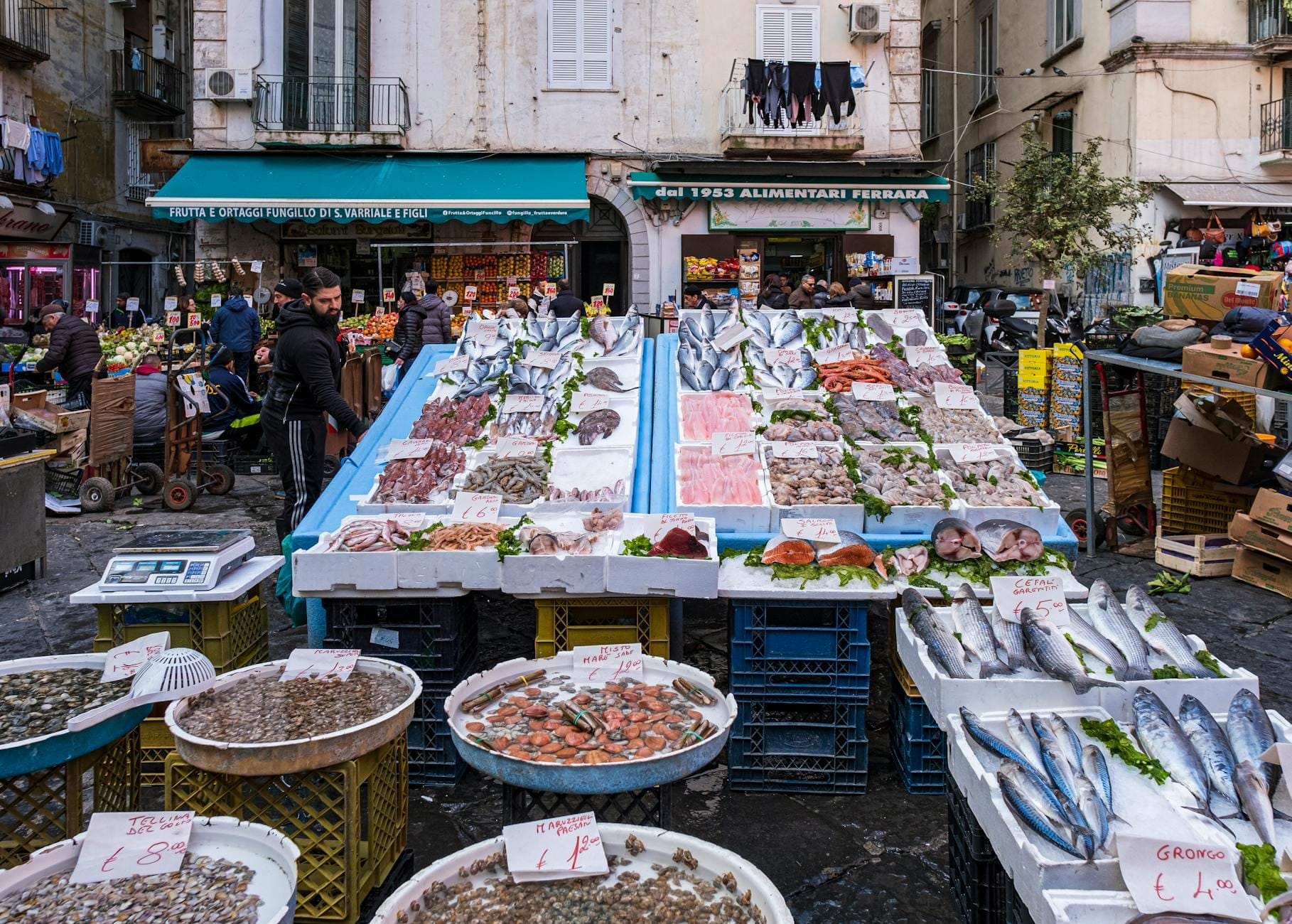
The Mercato di Porta Nolana is not a curated food hall or a sanitized tourist market. It is a working street market that has occupied the same stretch of road near Piazza Nolana since at least the 15th century, and it operates with the same unceremonious energy it always has. Vendors line Via Cesare Carmignano with shallow wooden trays and metal carts piled with whatever the fishing boats brought in: whole sea bream, heaps of mussels, live sea urchins split open on the spot, squid so fresh they still change color.
The market is best understood as part food market, part street theater. The vendors are loud, the pricing is negotiated with hand gestures as often as words, and the smells hit you before you see the stalls. Salt water, iodine, and the faint bite of lemon from the vendors who slice citrus to clean their hands. This is not a place designed for visitors, which is precisely what makes it worth visiting.
💡 Local tip
Arrive before 10am on weekdays for the fullest stalls and most active atmosphere. By midday, the best stock is gone and vendors begin packing down. The market typically wraps up between 1 and 2pm, though Sunday around 1pm.
The Setting: A Medieval Gate and a Five-Century-Old Tradition
The market takes its name from the Porta Nolana gate, a 15th-century Aragonese structure that still stands at the foot of the street. The gate was built during the reign of Ferdinand I of Aragon and features two cylindrical towers named, rather poetically, Faith and Hope. A bas-relief portrait of Ferdinand himself is carved above the arch. Most visitors walking through to the market barely glance at it, but the gate is a genuine piece of Renaissance military architecture, and worth a minute of your attention before you plunge into the stalls.
Markets have operated in this zone since medieval times, fueled by Naples' position as a major Mediterranean port. The city's relationship with seafood is not incidental. Naples sits on the Bay of Naples with direct access to Tyrrhenian fishing grounds, and fish has historically been central to Neapolitan diet across all economic classes. The Porta Nolana market is where that tradition is most visibly alive.
The market sits within the broader Piazza Garibaldi neighborhood, the gritty, high-traffic district around Naples' main train station. It's not the prettiest part of the city, but it is one of the most genuinely Neapolitan.
Tickets & tours
Live prices and dates from our booking partner. If you book, we may earn a commission at no extra cost to you.
Pompeii and Mount Vesuvius tour with transportation
From 110 €Instant confirmationFree cancellationMount Vesuvius and Herculaneum tour with transportation
From 100 €Instant confirmationFree cancellationPompeii Small Group Tour with transportation from Naples
From 65 €Instant confirmationFree cancellationHerculaneum ruins tour with transportation
From 60 €Instant confirmationFree cancellation
How the Market Changes Through the Morning
Between 7am and 9am, the market is at full intensity. Vendors are restocking, shouting prices, and competing for the attention of local shoppers who arrive with empty bags and specific requests. You'll see restaurant buyers negotiating for large quantities of cuttlefish, and older residents selecting single fish with the kind of scrutiny that takes decades to develop. The energy is quick and purposeful.
From 9am to 11am, the pace softens slightly. This is the best window for visitors who want to browse without being swept along by the crowd. There's enough activity to feel the full character of the place, but enough space to actually look at what's on offer and ask questions. Some vendors are patient with curious foreigners; others are not, and that's fine. A pointed finger and raised eyebrows communicate most of what you need.
After 11am, the market begins to thin. Trays that were overflowing at dawn are half-empty by noon. The shouting drops to conversation. By 1pm or 2pm, depending on the day and the season, vendors are hosing down the cobblestones and loading unsold stock. Coming late means you see a quieter version of something designed to be experienced at full volume.
⚠️ What to skip
Watch your belongings. Pickpocketing is reported in this area, particularly in the dense crowds near the gate. Keep bags in front of your body and leave valuables at your accommodation.
What You'll Find at the Stalls
The range of seafood depends on the season and what's running, but expect a broad selection of Mediterranean species. Whole fish including sea bass (branzino), sea bream (orata), red mullet (triglia), and swordfish (pesce spada) are typical. Shellfish stalls carry mussels (cozze), clams (vongole), razor clams, and oysters. Live sea urchins (ricci di mare) appear regularly, often eaten raw with a squeeze of lemon directly at the stall for a coin or two.
Beyond fish, the market spills into adjacent streets with produce vendors, dried legumes, olives, and street food. Fried seafood snacks are sold from small carts nearby, and the surrounding area has simple cafes and tavole calde where you can eat what the market sells, cooked. This is not a market where you browse and move on. It rewards those who eat.
If you want to understand what Neapolitans actually eat and buy, the market is a more honest window than any restaurant menu. For a deeper sense of the city's food culture, the Naples food guide maps out how seafood, pizza, and street food connect across the city.
Photography and Sensory Experience
Visually, the market is exceptional. The color contrast between silver fish, red shellfish, dark cobblestones, and weathered awnings makes for photographs that don't require any styling. Early morning light filtering between buildings creates sharp contrasts on the wet stalls. A 35mm or 50mm lens (or a phone held at waist height without making a production of it) captures the market's texture without interfering with vendors' work.
Ask before photographing people directly. Most vendors will either ignore you entirely or wave you in for a shot once you've bought something, even something small. Buying a bag of mussels you don't intend to cook is a reasonable price for ten minutes of goodwill access.
On the sensory level: the smell is stronger than you expect. This is not a clinical environment. The combination of seawater, fish offal, and warm stone on a summer morning is full-bodied. In winter, the cold air blunts it considerably, and the market takes on a grayer, more subdued character that is less photogenic but no less authentic.
Getting There and Practical Details
The market is easy to reach. Napoli Centrale (the main train station) is roughly a 10-minute walk southeast along Via Cesare Carmignano. The Porta Nolana Circumvesuviana station is effectively at the market's doorstep, making this a natural first stop for anyone arriving from Pompeii or the Sorrentine Peninsula. Metro Line 1 serves Garibaldi station, which is the same complex as Napoli Centrale.
If you're arriving from the airport, the Alibus shuttle drops at Piazza Garibaldi, and the market is a short walk from there. The Naples street food guide outlines other eating stops in this part of the city worth combining with a market visit.
Entry is free. The market operates most mornings, generally from around 7am or 8am until 1pm or 2pm. Hours vary by vendor and day. The market is closed on Monday. No advance planning is needed; simply show up. Wear shoes you don't mind getting wet. The cobblestones are regularly hosed down, and puddles of market water are an occupational hazard.
Wheelchair access is limited. The surface is uneven stone, and the narrow lanes between stalls fill quickly with people, carts, and fish boxes. It is manageable for those with moderate mobility but would be difficult for wheelchair users during peak hours.
Who Should Probably Skip This
The Porta Nolana market is not for everyone, and there's no point pretending otherwise. If strong smells are a problem, if you're uncomfortable in genuinely crowded and unpredictable environments, or if you're looking for a tidy food market with English signage and fixed prices, this will frustrate you. The surrounding neighborhood around Piazza Garibaldi is also the least polished part of central Naples, and visitors expecting the elegance of Chiaia or the historic grandeur of Spaccanapoli will be jarred by the contrast.
Travelers who prefer structured experiences should consider the Naples pizza tour or a guided food experience instead, where the context is provided and the pace is managed.
Insider Tips
- Buy a portion of raw sea urchin (ricci di mare) directly from a vendor. It's eaten on the spot with lemon and a piece of bread, and it costs very little. This is not something most restaurants bother offering.
- The stalls immediately adjacent to the Porta Nolana gate tend to have the most competitive pricing because they're slightly off the main pedestrian flow. Walk the full length before buying anything.
- Bring a small reusable bag if you intend to purchase. Vendors often have plastic bags but not always, and carrying fish through the street in your hands is less enjoyable than it sounds.
- Sunday mornings (9am-1pm) typically bring a larger crowd and a slightly festive mood. If you want the market at its most social and least transactional, Sunday between 9am and 11am is the window.
- The Circumvesuviana train to Pompeii leaves from Porta Nolana station, directly adjacent to the market. An early market visit pairs logically with a day trip to Pompeii without any backtracking.
Who Is Porta Nolana Fish Market For?
- Food-focused travelers who want to see where Neapolitans actually shop, not where they perform for visitors
- Photographers looking for texture, color, and unposed street scenes in early morning light
- Budget travelers: browsing is free, and street food in the area is cheap and good
- Day-trippers arriving by Circumvesuviana from Pompeii or Sorrento who want a genuine first impression of Naples
- Anyone curious about Mediterranean food culture and the relationship between a port city and its seafood
Nearby Attractions
Other things to see while in Piazza Garibaldi & Forcella:
- Porta Capuana
Built in 1484 on the orders of King Ferrante I d'Aragona, Porta Capuana is one of the finest Renaissance city gates in Italy. Flanked by two marble towers and bearing the coat of arms of Charles V, this free-standing arch near Piazza Garibaldi rewards visitors who seek it out with extraordinary architecture and almost no crowds.
Planning a trip? Discover personalized activities with the Nomado app.