Perched high above central Naples, Vomero is the city's most livable quarter: wide pedestrian streets, landmark fortresses, a lush public park, and sweeping views over the Bay of Naples and Mount Vesuvius. It offers a calmer, more affluent counterpoint to the intensity of the historic centre, connected to the rest of the city by three funiculars and a metro line.
Vomero sits on a hill overlooking Naples like a residential balcony above the city's chaos, combining medieval landmarks and tree-lined shopping streets with some of the finest views in southern Italy. It is the Naples that Neapolitans actually live in: orderly, relatively quiet, and proud of it.
Orientation
Vomero occupies a plateau roughly 250 metres above sea level in the western section of Naples, comprising approximately two square kilometres and home to a population of 48,000. It belongs to Municipalità 5 and sits directly above the upscale Chiaia district to the south, with the Quartieri Spagnoli and Montecalvario on its southeastern edge. To the north and west lie the residential districts of Arenella, Soccavo, and Fuorigrotta.
The neighbourhood's heart is Piazza Vanvitelli, a large square surrounded by cafés and flanked by Via Alessandro Scarlatti to the west and Via Luca Giordano to the east. Both streets are pedestrian zones (ZTL), meaning cars are banned during most hours. From Piazza Vanvitelli, Via Cimarosa runs southeast toward Castel Sant'Elmo and the Certosa di San Martino, which mark Vomero's most dramatic southern edge.
To build a mental map: imagine the historic centre spread out on flat ground at sea level, Chiaia along the coastal strip just below the hill, and Vomero sitting above both of them on a terrace. The funiculars are the literal threads connecting these layers. Once you're up on the hill, the grid becomes relatively easy to navigate: the main pedestrian axes run roughly east-west, with the fortress and monastery anchoring the southern promontory.
Character & Atmosphere
The first thing you notice arriving in Vomero is the quiet. After the sensory compression of the centro storico below, the air feels different up here: lighter, less exhaust-laden, with actual pavement width to spare. The streets are broad enough for trees, and Via Scarlatti's pedestrian strip is wide enough for families to walk four abreast on a Sunday afternoon without anyone jostling.
On weekday mornings, the neighbourhood reads as exactly what it is: a prosperous residential district where people are dropping children at school, picking up pastries, and heading to work. The Antignano market, near Piazza Medaglie d'Oro in the northern part of the hill, is the most authentically local experience the neighbourhood offers at this hour: fresh produce, fish, and noise that feels more Neapolitan than anything you'll find on Via Scarlatti. Locals from the surrounding blocks do their weekly shop here, and the vendors are not performing for cameras.
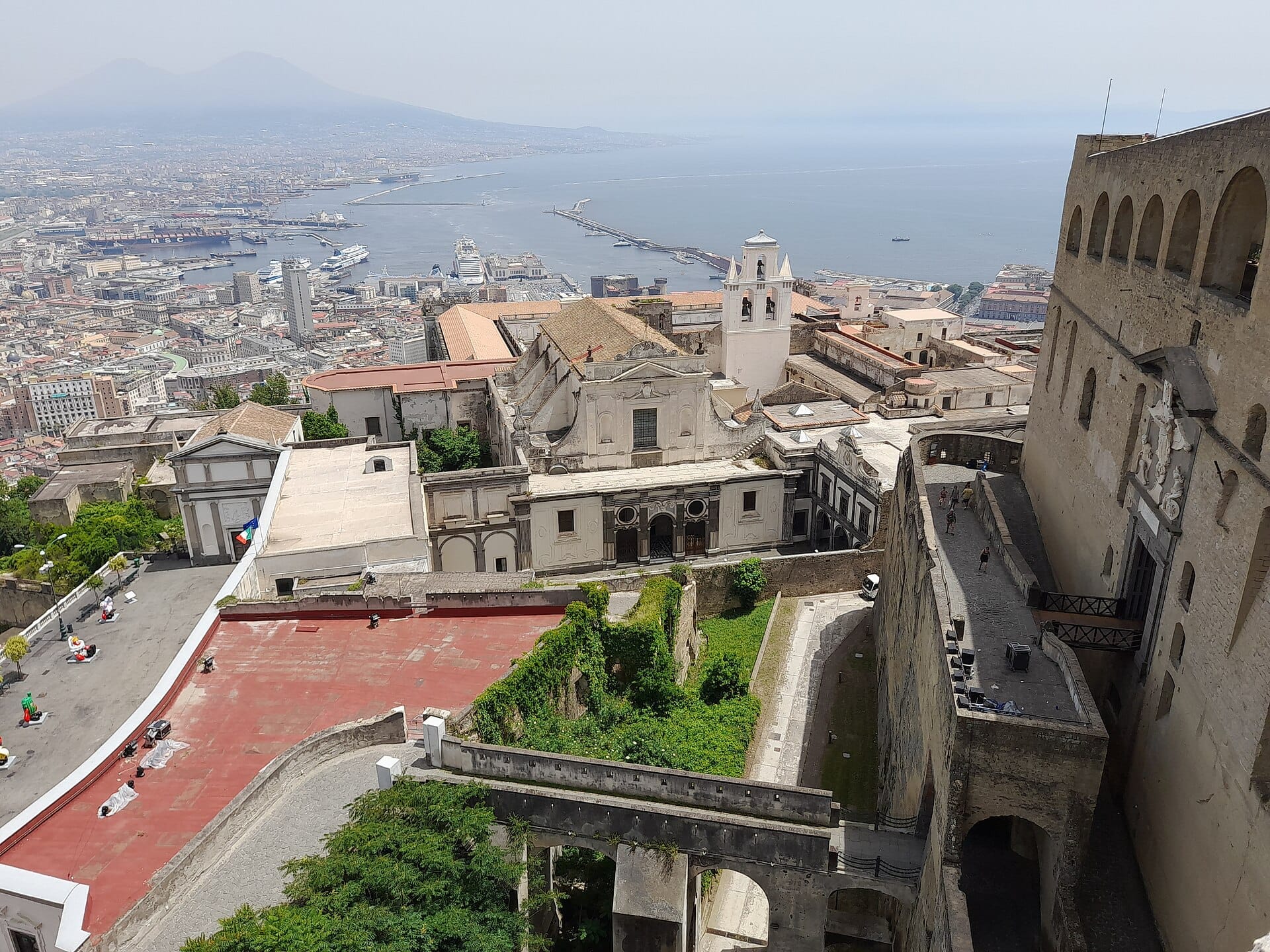
By afternoon, the pedestrian streets fill with a different energy: school-age locals occupying the benches, shoppers moving between the boutiques and chain stores, older residents sitting outside cafés with espressos that cost less than they would in Chiaia. The light in the late afternoon falls across the hill at an angle that makes the pale apartment blocks glow amber, and the views from the terrace near Castel Sant'Elmo become genuinely spectacular.
After dark, Vomero is one of Naples' more reliable nightlife areas for locals rather than tourists. The bars around Piazza Vanvitelli and the side streets between Via Scarlatti and Via Giordano fill with university-age Neapolitans. It is not particularly edgy or experimental but it is genuine, and the absence of tourist bars means prices are reasonable and the atmosphere isn't manufactured. The streets feel safe well into the evening, which is part of why middle-class families have chosen to live here for generations.
ℹ️ Good to know
Vomero is not a tourist neighbourhood. Most visitors come for Castel Sant'Elmo and the Certosa di San Martino and then descend again. Staying or spending a full day here gives you a sense of ordinary Neapolitan bourgeois life that is genuinely different from anything in the historic centre.
What to See & Do
The dominant landmark is Castel Sant'Elmo, a star-shaped medieval fortress built in the 14th century and expanded in the 16th, perched on the highest point of the hill. The views from its ramparts are extraordinary: on a clear day you can see the entire Bay of Naples from Capo Miseno in the northwest to the Sorrentine Peninsula in the south, with Vesuvius looming to the east and Capri as a silhouette on the horizon. The castle hosts rotating art exhibitions and the views alone justify the entrance fee.
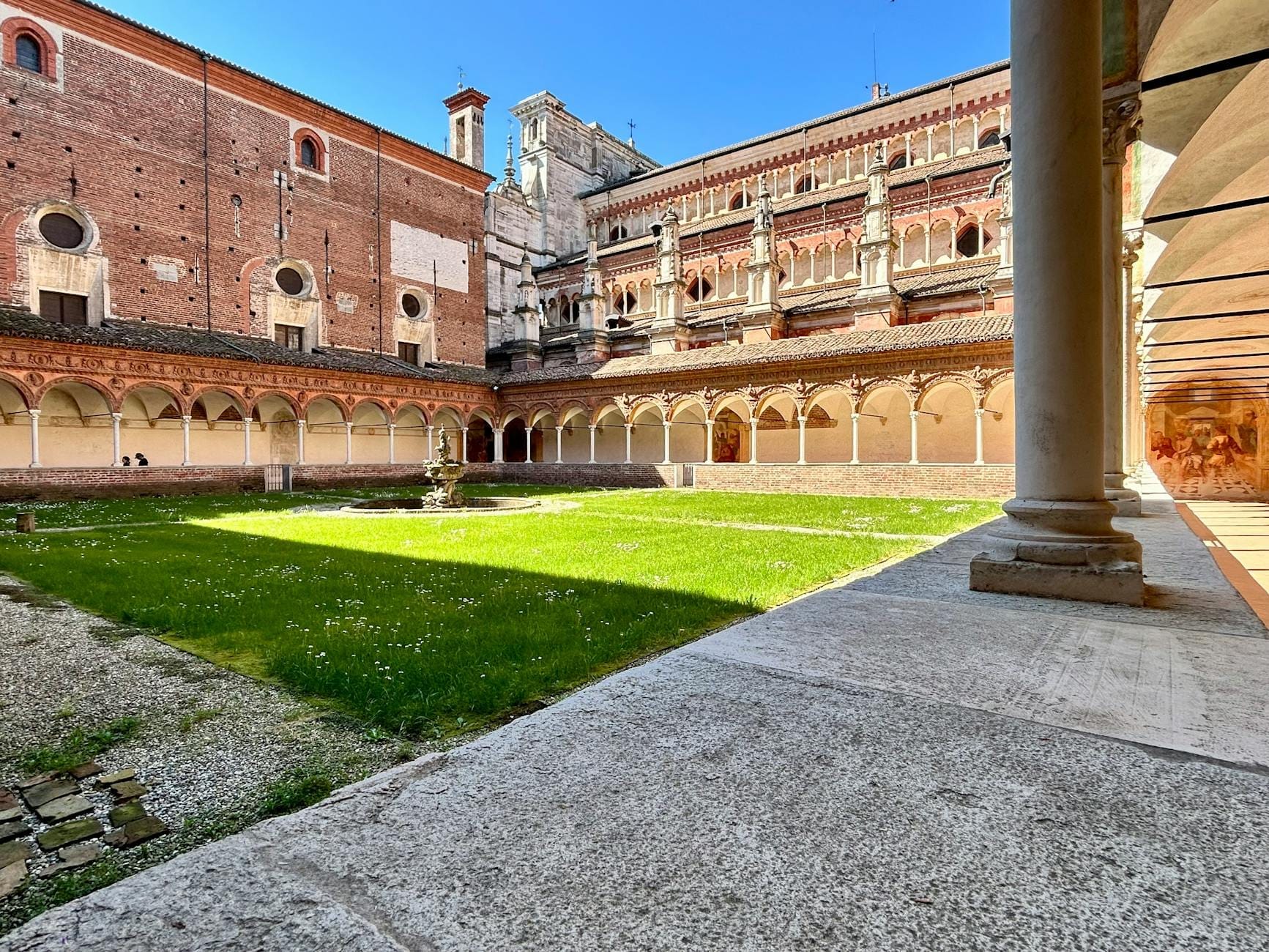
Immediately adjacent to Castel Sant'Elmo is the Certosa di San Martino, a former Carthusian monastery that is now one of the finest museums in southern Italy. The building itself is a Baroque masterpiece, with a cloister that has no obvious right to be as beautiful as it is. Inside, the Museo Nazionale di San Martino holds an exceptional collection of Neapolitan paintings, historic carriages, and the city's famous presepe (nativity scene) tradition, with some of the most elaborate 18th-century examples anywhere. Plan at least two hours; most visitors underestimate it.
On the western edge of the hill, the Villa Floridiana is a neoclassical villa set within a English-style park that offers some of the most peaceful green space in all of Naples. The park is free to enter and is used daily by locals walking dogs, reading on benches, or simply sitting with a view of the bay. The villa itself houses the Duca di Martina Museum, dedicated to decorative arts with a significant collection of porcelain, majolica, and Asian ceramics. It is not widely crowded and is consistently underrated.
Castel Sant'Elmo: medieval fortress with panoramic terraces and exhibition spaces
Certosa di San Martino: Baroque monastery with a major city museum
Villa Floridiana and Floridiana Park: neoclassical villa, ceramics museum, and free public garden
Piazza Vanvitelli: the neighbourhood's social centre, worth sitting in for an hour
Antignano market (near Piazza Medaglie d'Oro): the most local market experience on the hill
Petraio path: an ancient stepped pathway descending from Vomero to Chiaia through terraced gardens
The Petraio deserves special mention. This historic stepped path cuts down the hillside through overgrown gardens, old villas, and unexpected terraces, connecting Vomero to the Chiaia district below. It is not clearly signposted and is not entirely restored, but it gives you a completely different reading of how the city is built. Walking it downhill in the late afternoon is one of the more atmospheric things you can do in Naples.
💡 Local tip
Combine Castel Sant'Elmo and the Certosa di San Martino in a single visit: they are a two-minute walk apart and share the same southern promontory. Save the Villa Floridiana for a separate morning visit when the park is quieter and the light is better.
Eating & Drinking
Vomero's food scene is oriented toward its residents, which is both its limitation and its strength. You will not find the density of street food stalls that define the centro storico, but you will find well-priced neighbourhood restaurants, strong cafés, and excellent pastry shops serving people who actually live nearby and would notice if the quality dropped.
The pedestrian stretch of Via Alessandro Scarlatti is the main café and aperitivo strip. Prices are a notch below what you'd pay in Chiaia and the clientele is overwhelmingly local. For pizza, Vomero has several well-regarded neighbourhood pizzerias, none of them as famous as the pilgrimage sites in the centro storico but consistently good and rarely requiring a queue. If you want to understand the broader Naples food culture, the Naples pizza guide covers the city's styles and key spots in detail.
The bar scene around Piazza Vanvitelli is worth staying for in the evening. This is where Neapolitan twenty-somethings come to meet friends before heading elsewhere, and the aperitivo hour from around 7pm draws a genuine local crowd. Drinks come with snacks, the prices are fair, and nobody is performing for tourists. On the food side, look for restaurants on the quieter cross-streets off the main pedestrian axes for the best value.
For a broader map of what to eat across the city, where to eat in Naples and the Naples food guide are useful companions. Vomero fits best for a relaxed lunch or an evening aperitivo rather than a destination dinner, though the latter is entirely possible.
Getting There & Around
Vomero is served by Metro Line 1 at two stations: Vanvitelli (for Piazza Vanvitelli and the main shopping streets) and Medaglie d'Oro (for the Antignano area and northwestern part of the hill). Line 1 connects directly to the city centre at Toledo, Municipio, and Dante. The Toledo metro station is one of the most architecturally significant in Europe and sits at the bottom of the funicular network, making it a natural switching point.
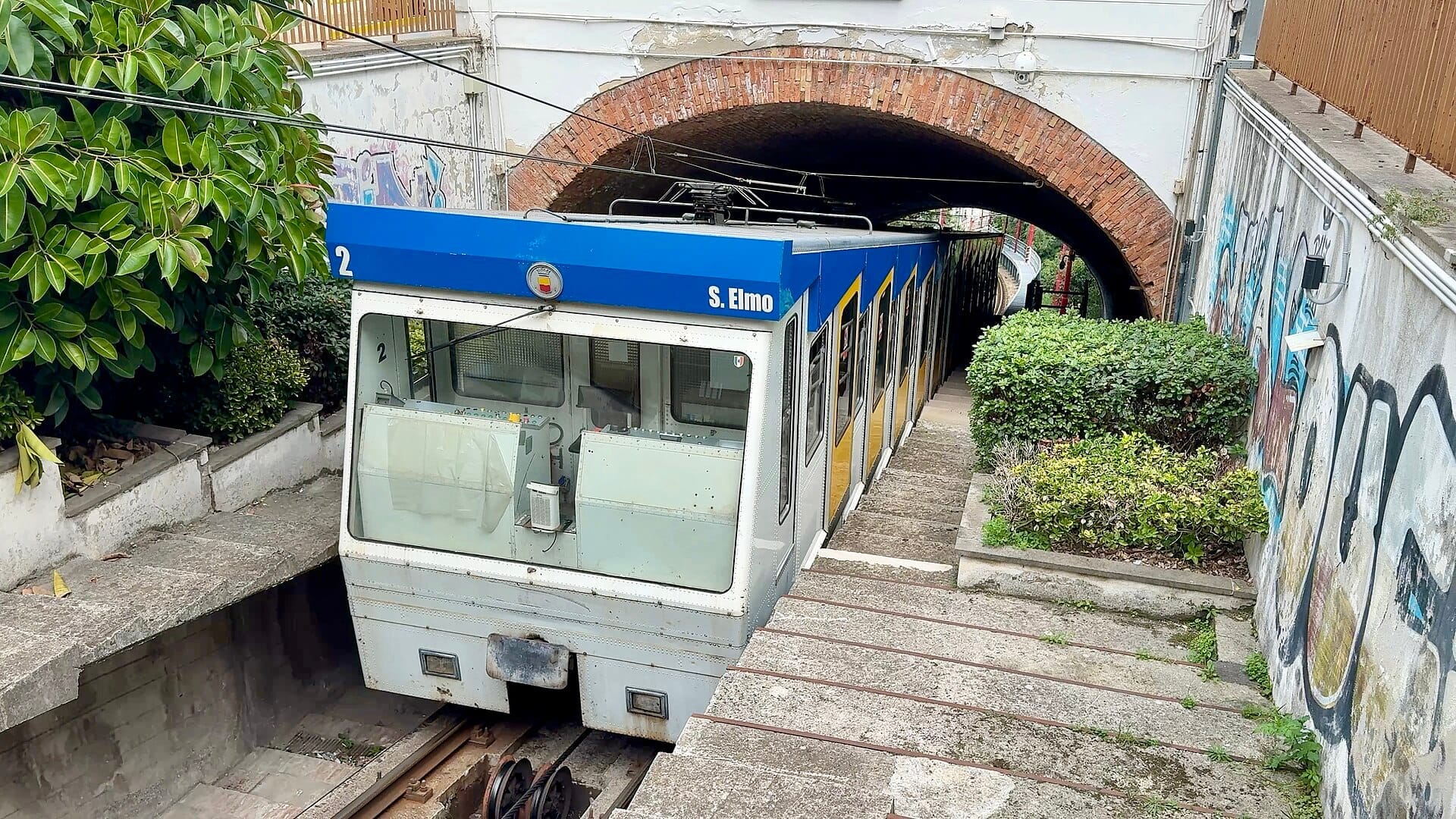
Three funiculars connect Vomero to the lower city. The Funicolare Centrale runs from Via Toledo in the centro storico to Via Cimarosa (closest to Castel Sant'Elmo). The Funicolare di Chiaia runs from Via dei Mille in Chiaia to Via Cimarosa. The Funicolare di Montesanto runs from Piazza Montesanto at the edge of the Quartieri Spagnoli to Piazza Morghen. The funiculars run on standard ANM transit tickets (the same as the metro and bus) and operate from early morning until late at night on most days. The Naples funicular network is the most enjoyable way to arrive in Vomero, especially if you're coming from the centre.
Once on the hill, Vomero is navigable entirely on foot. The main pedestrian zones mean the central streets are pleasant to walk at any time, and the hill is flat enough across the plateau that only the edges, where streets drop steeply toward the funicular stations, require any real effort. Distances between the key sights are short: Piazza Vanvitelli to Castel Sant'Elmo is about a 15-minute walk along Via Cimarosa. The Villa Floridiana is a 10-minute walk west of Piazza Vanvitelli along Via Cimarosa.
⚠️ What to skip
The Funicolare Centrale has historically been subject to maintenance closures, sometimes lasting weeks or months. Check ANM's current schedule before planning your route up. The Vanvitelli metro stop is a reliable alternative in all cases.
Where to Stay
Vomero is not Naples' primary accommodation hub, but it is a legitimate base for certain types of traveller. For those who want to sleep somewhere quiet, wake up without traffic noise, and have a neighbourhood café downstairs rather than a tourist strip, it works well. The trade-off is that you are a funicular ride or metro stop away from the main sights in the centro storico and Chiaia, which adds time to each excursion.
Accommodation in Vomero tends toward apartments, B&Bs, and small guesthouses rather than large hotels, which are more concentrated around Piazza Garibaldi and the waterfront. The area around Piazza Vanvitelli and Via Scarlatti is the best position on the hill: close to the funiculars, close to the metro, and within walking distance of the main sights. For a full overview of accommodation options across the city, the where to stay in Naples guide puts Vomero in context alongside other neighbourhoods.
Vomero suits travellers who prioritise quiet over proximity, families who want more space and a calmer base, and anyone who finds the intensity of the historic centre difficult to rest in. It is not for people who want to step outside their hotel and immediately be in the thick of Neapolitan street life: for that, the centro storico is the right call.
What to Know Before You Go
Vomero is one of the safer, more orderly parts of Naples, and the concerns that occasionally apply to the historic centre (bag snatching on scooters, pickpockets in dense crowds) are less visible here. The neighbourhood is wealthy by Neapolitan standards and functions as a calm residential area. Standard urban awareness still applies, but the overall feel is noticeably calmer than the dense centro storico.
The main practical issue is the climb. If you arrive without using the funicular or metro (for instance, walking up from Chiaia), you will face a significant uphill walk. The Petraio path and the Via Cimarosa route are the main ascent options on foot, and neither is casual. Use the funiculars. For broader safety context in Naples, the Naples safety tips guide covers the city district by district.
Sunday mornings are particularly pleasant in Vomero: the pedestrian streets are quiet, families are out, and both the Villa Floridiana park and the terrace views near Castel Sant'Elmo are at their best with weekend light and no school-day rush. If you are visiting the Certosa di San Martino, check in advance whether it is open: Italian state museum closures on specific days can catch visitors out.
TL;DR
Vomero is Naples' most livable hilltop district: affluent, calm, and genuinely different in character from the historic centre below.
The two unmissable sights are Castel Sant'Elmo (for panoramic views and exhibitions) and the Certosa di San Martino (one of the best museums in southern Italy, consistently underestimated).
Getting here is easy via three funiculars or Metro Line 1 (Vanvitelli stop), but check the Funicolare Centrale's operating status in advance.
Best suited to travellers who want a quiet base, a local café culture, and panoramic views without the sensory intensity of the centro storico.
Not the right choice if you want to be immediately immersed in street food, historic churches, and market chaos: for that, the centro storico and Spaccanapoli are a funicular ride away but a world apart.
Naples has more historic churches per square kilometer than almost any city in Europe. This guide covers the finest: from the Duomo's blood relic ceremony to Caravaggio's most important altarpiece, and the majolica-tiled cloister that stops every visitor cold.
Naples holds more great art per square kilometer than almost any city in Europe. This guide covers the 14 best museums in Naples, from world-class archaeological collections to intimate chapels hiding the most technically astonishing sculptures ever carved.
Planning a trip to Naples, Italy? This guide breaks down every season honestly — temperatures, crowd levels, prices, and local events — so you can choose the right time for your trip, whether you're chasing warm weather, cultural festivals, or the lowest hotel rates.
Naples is one of Italy's most dramatic cities to look at, and where you stand changes everything. This guide covers the finest viewpoints in the city, from Vomero hilltop fortresses to waterfront promenades, boat trips, and volcanic summits.
Naples sits at the center of one of Italy's richest travel regions. Within two hours you can stand inside a Roman city frozen in time, swim off a glamorous island, or walk past 2,500-year-old Greek temples. These are the best day trips from Naples, organized by type.
Naples is one of Europe's most rewarding cities for budget travelers. From UNESCO-listed streets and free castle ramparts to extraordinary public art in metro stations and chaotic street markets, here's how to experience the best of Napoli without opening your wallet.
Naples has a surprisingly functional public transport network once you know how it works. This guide covers metro lines, funiculars, buses, taxis, the airport Alibus, and everything in between, with current fares, schedules, and honest advice on what to skip.
Naples rewards every traveler differently depending on how much time they give it. This guide breaks down the ideal number of days in Naples based on your pace, interests, and whether you plan day trips to Pompeii, Capri, or the Amalfi Coast.
Naples is one of Italy's most debated destinations: raw, overwhelming, and unlike anywhere else in the country. This guide cuts through the clichés to give you a clear-eyed look at what Naples actually offers, who it suits, and whether it deserves a place on your itinerary.
Naples International Airport (Capodichino, NAP) sits just 6 km from the city center, but knowing which transfer option to take can save you time, money, and frustration. This guide breaks down every option from the €5 Alibus to fixed-rate taxis and private door-to-door transfers, with honest advice on what actually works.
Caravaggio spent two turbulent periods in Naples and left behind three surviving masterpieces that transformed Baroque painting in southern Italy. This guide locates every work, gives you current admission prices, practical visiting tips, and the context to understand why these paintings still matter.
Naples at Christmas is unlike anywhere else in Italy. From the centuries-old presepe workshops of Via San Gregorio Armeno to candlelit piazzas and December markets at Castel dell'Ovo, this guide covers everything you need to experience the city's most theatrical season.
Naples is one of the world's great eating cities, and knowing what to order makes all the difference. This guide covers every dish worth tracking down, from the perfect margherita to street food you won't find anywhere else in Italy, with practical tips on where to eat, what to pay, and what to avoid.
Naples, Italy surprises couples at every turn: candlelit trattorias in the historic centre, golden sunsets over Vesuvius from the waterfront, and ferry rides to islands that feel like a world away. This guide covers the city's most romantic spots, experiences, and seasonal tips so you can plan the perfect couples trip to Napoli.
Naples rewards those who look beyond the obvious. This guide uncovers the city's most overlooked sites, from an ossuary filled with skulls to a metro station voted the most beautiful in Europe. These are the places that make Naples genuinely unlike anywhere else.
Napoli is not a city you can absorb from a single vantage point. This guide breaks down every major neighborhood, plots the key attractions on a logical mental map, and tells you exactly how to move between them, whether on foot, by metro, or by funicular.
Naples frames some of the most dramatic sunsets in Europe, with Vesuvius, the Bay of Naples, and the islands of Capri and Ischia providing a backdrop that few cities can match. Whether you want a hilltop panorama, a waterfront stroll, or a boat ride into the golden hour, this guide covers the best spots.
Three days is enough time to get a real feel for Naples, Italy — one of Europe's oldest, most layered cities. This itinerary covers the UNESCO-listed historic centre, the seafront, the underground city beneath your feet, and the hilltop views that put it all in perspective. No filler, no tourist traps — just a practical day-by-day plan that works.
Naples, Italy rewards luxury travelers with a combination few European cities can match: grand historic hotels overlooking the Bay of Naples, world-class fine dining rooted in one of Italy's most serious food cultures, and private experiences ranging from underground archaeological tours to boat charters beneath Vesuvius. This guide cuts through the noise to identify what genuinely delivers at the top end of Napoli.
Naples, Italy comes alive after dark in ways that few Italian cities can match. From the elegant cocktail bars of Chiaia to the packed dance floors of Bagnoli, this guide breaks down exactly where to go, when to go, and what to expect from Neapolitan nightlife.
Naples is the cheapest major city in Italy to visit, with €1 espressos, €3 street pizza, and a UNESCO historic centre you can explore for free. This guide breaks down real daily costs, the best free attractions, smart transport choices, and exactly how to stretch your euros further in Napoli.
Choosing between Naples and Sorrento as your southern Italy base shapes your entire trip. This guide breaks down the real differences in cost, atmosphere, transport access, and day-trip logistics so you can make the right call for your travel style.
Naples is the birthplace of pizza, and eating it here is nothing like eating it anywhere else. This guide covers the best pizzerias across the city, from legendary institutions to neighbourhood favourites, with honest rankings, practical logistics, and advice on what actually separates great Neapolitan pizza from a tourist-trap imitation.
Naples Italy has a reputation that outpaces its reality. Petty crime exists, but with the right awareness you can explore freely. This guide covers the neighborhoods to know, the scams actually targeting tourists, and the practical habits that make the difference.
The Feast of San Gennaro is the spiritual and cultural heartbeat of Naples, drawing tens of thousands to witness a ritual that has defined the city for over 1,700 years. This guide covers all three annual dates, the blood liquefaction ceremony, crowd logistics, and what the festival reveals about Neapolitan identity.
Naples rewards shoppers who go beyond the tourist trinket stalls. This guide covers the city's best shopping streets by district, its most authentic markets, and the foods and crafts worth carrying home — with honest advice on where not to waste your time or money.
Queues at Naples' top attractions can cost you hours of your trip. This guide breaks down exactly which sites offer genuine skip-the-line access, where to book, what it costs, and which 'skip-the-line' products are misleading marketing.
Naples has one of the great street food cultures in Europe, built on centuries of feeding dock workers, market sellers, and anyone who needed a meal without a table. This guide covers the essential dishes, the best neighborhoods to eat them, and the practical details that separate a great food walk from a disappointing tourist detour.
Getting from Naples to the Amalfi Coast involves more choices than most guides admit. This breakdown covers every realistic option, from the cheapest bus combination to the fastest ferry, with honest assessments of what works in different seasons.
Getting from Naples to Capri is simpler than most visitors expect, but the details matter: which port, which operator, how early to book, and what to do once you arrive. This guide covers all of it, from ferry prices and schedules to practical day trip planning.
Pompeii is 25 kilometers from Naples and one of the most visited archaeological sites in the world. This guide breaks down every transport option, the exact station you need, what tickets cost, and how to make the most of the trip without the usual tourist pitfalls.
Beneath the streets of Naples Italy lies one of Europe's most extraordinary subterranean worlds: 450 kilometers of Greek-carved tunnels, Roman aqueducts, and WWII shelters. This guide covers everything you need to visit Napoli Sotterranea, from ticket prices and tour logistics to what you'll actually see underground.
Choosing between Naples and Rome is one of the most common dilemmas for Italy first-timers. This guide breaks down both cities across food, cost, culture, day trips, and logistics so you can make the right call for your itinerary.
Naples rewards walkers more than almost any city in Italy. This guide covers the best self-guided walking routes through the historic center, royal quarter, and waterfront, with practical details on timing, distances, costs, and what to skip.
Naples, Italy has a Mediterranean climate that rewards visitors who time their trip carefully. This guide breaks down what the weather actually looks like each month, which seasons to avoid, and what to throw in your bag depending on when you arrive.
Naples is a far better family destination than its reputation suggests. From hands-on science museums and underground Roman tunnels to pizza-making workshops and boat trips on the Bay of Naples, this guide covers the best activities for families traveling to Napoli, with honest advice on what works for different ages and how to plan your visit.
Both sites were buried by Mount Vesuvius in 79 AD, but they offer very different experiences. This guide breaks down the key differences in size, preservation, visitor experience, and logistics so you can choose the right one — or make a case for visiting both.
Naples rewards curious travelers with layers of history, art, street food, and coastal scenery that few Italian cities can match. This guide covers the essential experiences, practical logistics, honest advice on what to skip, and how to structure your time in Napoli.
Naples is one of the great eating cities of Italy, and knowing where to go separates a memorable meal from a mediocre tourist trap. This guide covers the best neighborhoods for dining, top restaurant picks across every budget, essential dishes to order, and practical tips for eating like a local.
Choosing where to stay in Naples Italy can make or break your trip. This guide breaks down every major neighbourhood by vibe, price, location, and who it actually suits, so you can book with confidence.