Toledo Metro Station: Naples' Underground Art Masterpiece
Stazione Toledo is not just a transit stop. It is one of the most architecturally remarkable underground spaces in Europe, plunging around 38 meters below Via Toledo to reveal a world of light, mosaic, and contemporary art. Whether you are catching a train or exploring it as a destination in its own right, Toledo rewards attention.
Quick Facts
- Location
- Via Toledo / Via Diaz, Pendino, Naples
- Getting There
- This IS the transit: Line 1, Toledo Station
- Time Needed
- 20–45 minutes if visiting as an attraction
- Cost
- Free to enter with a standard metro ticket (approx. €1.50–2)
- Best for
- Architecture lovers, art enthusiasts, curious travelers
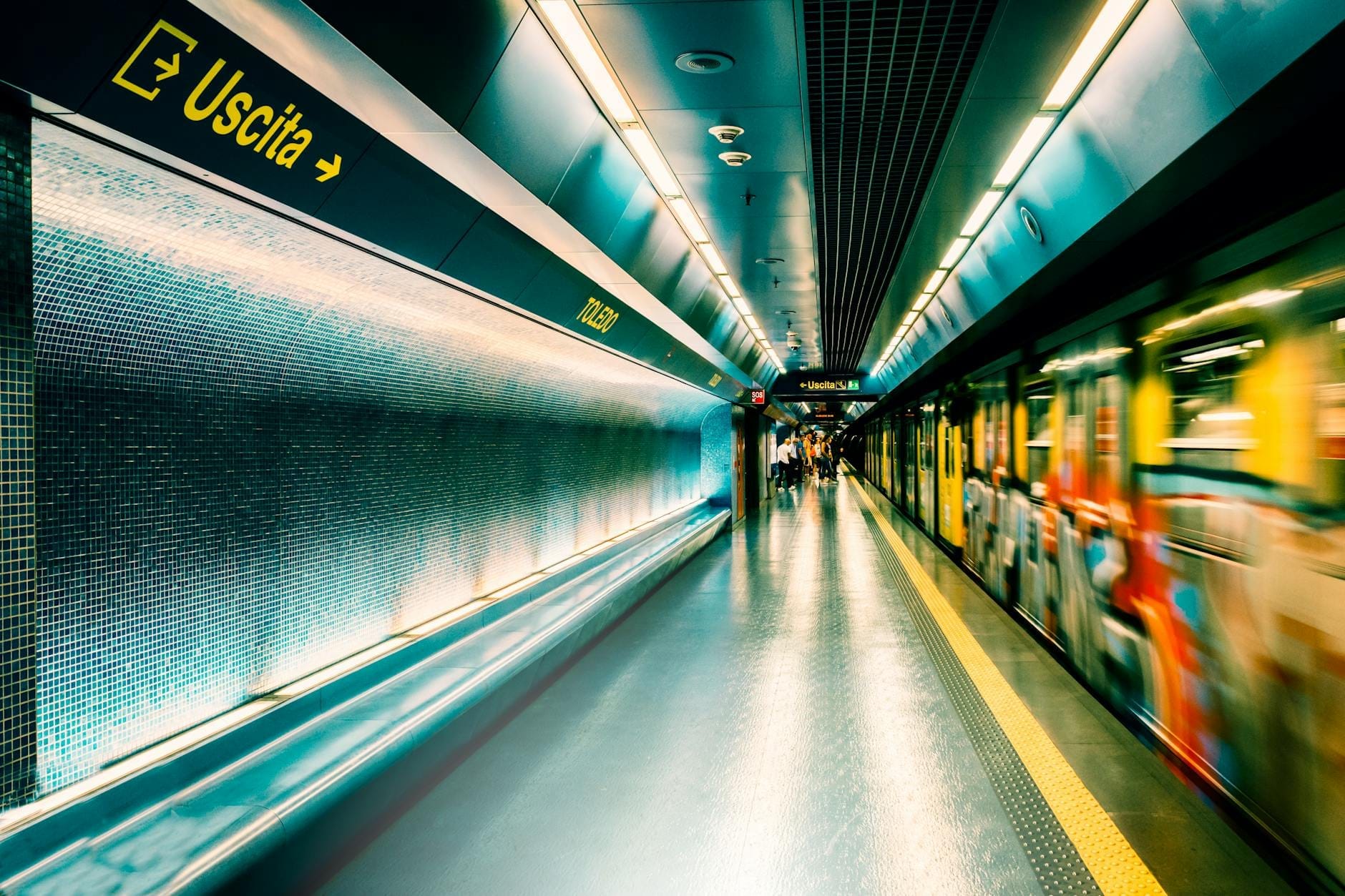
What Toledo Metro Station Actually Is
Toledo Metro Station, officially Stazione Toledo della Metropolitana dell'Arte, opened on September 17, 2012, and has not stopped generating conversation since. CNN and The Daily Telegraph have both called it the most beautiful metro station in Europe. That is a bold claim, but walking into it, you begin to understand why it keeps being made.
The station sits on Line 1 of the Naples Metro, a stop on that line, and descends roughly 38 meters below street level. That depth makes it one of Italy's deepest metro stations. At that depth, the designers had a choice: build something functional and forgettable, or build something that earns its place in the city's cultural fabric. Spanish architect Óscar Tusquets Blanca chose the latter.
Toledo is one of 11 Art Stations on Line 1, a long-running project that has turned Naples' metro into what some describe as a museum below street level. Over 150 site-specific artworks by 80 artists are distributed across these stations. Toledo is the most famous of them.
💡 Local tip
You do not need a separate ticket to visit. A standard metro ticket gives you access. Time your visit outside of rush hour (roughly 8–9 am and 5:30–7 pm) so you can stand still, look up, and actually absorb the space without being shouldered past by commuters.
The Descent: What You See Going Down
The experience begins before you even board a train. From the Via Toledo entrance, the escalators carry you downward through a series of spaces that transition from daylight to something closer to deep-water blue. The deeper you go, the more saturated the color becomes. The ceiling and walls are lined with mosaic tiles in gradients of cobalt and ultramarine, broken up by small circular light apertures that simulate the effect of sunlight filtering through water from the surface.
This is not accidental theatricality. Tusquets Blanca and collaborating artists designed the station around the concept of light traveling from water's surface downward into the ocean depths. The upper levels feel bright and airy. The lower platform level feels genuinely immersive, the kind of space that makes people slow down and look around even when they are running late.
Two significant artworks anchor the station. Robert Wilson's light installation plays in the upper levels, using shifting illumination to alter the mood of the space across the day. William Kentridge, the South African artist known for his charcoal animation work, contributed drawings and text that appear in the station's lower areas. If you know either artist's work, finding their signatures here feels like an unexpected reward. If you do not, the works hold up entirely on their own terms.
Tickets & tours
Live prices and dates from our booking partner. If you book, we may earn a commission at no extra cost to you.
Naples Metro Art Private Guided Tour
From 140 €Instant confirmationFree cancellationPompeii and Mount Vesuvius tour with transportation
From 110 €Instant confirmationFree cancellationOrigins and legends of Naples walking tour
From 28 €Instant confirmationFree cancellationGuided walking tour of Naples city and Naples underground
From 45 €Instant confirmationFree cancellation
History Beneath the History: What Excavation Uncovered
The station is named after Pedro Álvares de Toledo, the first Spanish Viceroy of Naples, who governed from 1532 to 1552 and commissioned the construction of Via Toledo in 1536. The street above became one of the city's main arteries. Centuries later, when workers dug down to build this station, they cut through layers of Naples' compressed history.
Among the discoveries were sections of Aragonese defensive walls from the 15th century. More surprisingly, excavation revealed evidence of ancient Greek and Roman remains, traces of agricultural activity dating back thousands of years before the city existed in any recognizable form. These findings are acknowledged in the station's design rather than buried and ignored. Fragments of the Aragonese walls are preserved and visible within the station structure. The depth of Naples' past is, quite literally, part of the architecture.
This layering of eras is consistent with what you find across the historic centre of Naples. The city rarely discards its past. It tends to build on top of it, and Toledo Station makes that tendency visible in a way that few above-ground sites can.
Visiting by Time of Day
Early morning, around 7 to 8 am, the station is already in use but not overwhelmed. The light installations are at their most noticeable because the ambient conditions are consistent. The mosaics catch the artificial light differently depending on where you stand, and the escalator views reward a slow descent more than a hurried one.
Midday is when most tourists arrive, often passing through as part of a walk along Via Toledo. This is the noisiest window. The acoustics at platform level are interesting because of the tiled surfaces, sounds carry and echo in ways that feel designed rather than accidental. Whether you find this atmospheric or grating depends on your tolerance for echo chambers.
Late afternoon, particularly between 3 and 5 pm on weekdays, is often the most comfortable window for lingering. Commuter flow has not yet picked up, and you can spend several minutes at different points on the escalators or near the platform without blocking anyone. The station staff are accustomed to people photographing the space and generally do not intervene.
⚠️ What to skip
Photography without a flash is generally tolerated, but the station is a working metro stop. Stand to one side if you need to compose a shot. Blocking escalators or platform edges will get you a quick word from staff.
How to Get Here and Navigate the Exits
Toledo Station has three exits, each serving a different part of the surrounding area. Two staircases on Via Toledo bring you up near the intersection that sits between Piazza del Plebiscito to the south and Piazza Carità to the north. This is the busiest exit and the one most visitors use. The Via Diaz exit is equipped with an escalator and an elevator, making it the accessible route for anyone with mobility considerations. The third exit connects via a underground gallery to Piazza Montecalvario, reaching into the Quartieri Spagnoli.
If you are arriving specifically to see the station, take the Via Toledo entrance, descend all the way to the platform, and then take the Via Diaz exit on your way back up. This gives you two different visual experiences of the descent and ascent. If your next stop is Piazza del Plebiscito, the main Via Toledo exit drops you within a 5-minute walk.
The Via Toledo commercial street runs directly above the station, connecting the historic centre with the waterfront area. Coming up from underground onto this street gives you an immediate sense of how deep you actually were.
Guided Tours and Educational Programs
ANM, runs an educational service called Metro Art that offers guided tours of the art stations, including Toledo. These include school group activities, children's workshops, and private tours. If you want to understand the station's artwork in depth rather than simply observe it, a guided visit is worth arranging in advance. Contact ANM directly for current scheduling and availability, as these programs vary seasonally.
The station won the 2013 LEAF Award for public building design, an international architecture prize that recognized its integration of art, infrastructure, and historical context. For travelers who follow architecture, this is not a footnote. It is the kind of project that architecture students cite and professionals reference. Visiting it is, in a quiet way, engaging with a building that genuinely changed how cities think about what metro stations can be.
Who Will Love This, and Who Should Move On
Toledo Station rewards people who are willing to slow down and look carefully. If you appreciate contemporary art, architectural design, or the kind of urban infrastructure that treats commuters as people deserving of beauty, this stop will be a highlight of your Naples visit. It fits naturally into a day that includes walking Via Toledo, visiting the nearby Galleria Umberto I, and exploring the surrounding streets.
Travelers focused on classical antiquities or traditional Neapolitan culture may find this less compelling, particularly if time is short. If you are working through a packed itinerary that includes the National Archaeological Museum or Cappella Sansevero, Toledo Station can be experienced in passing rather than as a dedicated stop.
People with significant claustrophobia may find the lower platform level uncomfortable. The space is architecturally open for a metro station, but it is still 50 meters underground, and some visitors feel that acutely. The station is also a functioning transit point, which means the experience is never fully curated. Trains arrive, noise spikes, crowds move through. If you need quiet for art to register, adjust your timing accordingly.
Insider Tips
- The best single photograph in the station comes from standing on the escalator mid-descent and shooting upward toward the light apertures in the mosaic ceiling. The circular openings create a perspective line that compresses beautifully.
- The Piazza Montecalvario exit via the underground gallery is almost always quieter than the main Via Toledo staircase. If you want to spend time in the connecting passage without foot traffic, use this route late morning on weekdays.
- Toledo is not the only art station worth visiting. Municipio, Dante, and Materdei all have significant commissioned works. If the station architecture interests you, treat Line 1 as a gallery trail rather than just transport.
- The station's depth means phone signal is lost quickly below the upper concourse level. Download any maps or content you need before descending.
- ANM's Metro Art guided tours can be booked for small private groups and are far more informative than reading signage alone. The guides explain specific artist decisions and the excavation discoveries in context.
Who Is Toledo Metro Station For?
- Architecture and design enthusiasts visiting Naples for its built environment
- Contemporary art followers who want to see commissioned site-specific work
- Travelers building a walking route along Via Toledo toward Piazza del Plebiscito
- Anyone curious about how cities can elevate everyday infrastructure
- Families with older children who can engage with immersive spatial design
Nearby Attractions
Other things to see while in Centro Storico:
- Cappella Sansevero
Cappella Sansevero is a small baroque chapel in Naples' historic centre that contains one of the most technically staggering sculptures in the world: the Veiled Christ, a life-sized marble figure so realistically carved it appears draped in real fabric. The chapel is compact, deeply atmospheric, and almost certainly unlike anything else you will see in Italy.
- Naples Cathedral (Duomo di Napoli)
The Cattedrale di Santa Maria Assunta, known to locals simply as the Duomo, is Naples' most historically layered religious site. Built over Greek temples, Roman structures, and early Christian basilicas, it has been the spiritual center of the city for seven centuries. It is also where the famous liquefaction of San Gennaro's blood draws thousands of pilgrims three times a year.
- Naples Botanical Garden (Orto Botanico)
The Orto Botanico di Napoli is one of southern Italy's most significant botanical institutions, covering 12 hectares in the heart of Naples with around 9,000 plant species. Free to enter and largely overlooked by tourists, it offers a genuinely quiet counterpoint to the city's sensory intensity.
- Catacombs of San Gennaro
Carved into the volcanic tuff beneath Rione Sanità, the Catacombs of San Gennaro form one of Southern Italy's most significant early Christian sites. Spanning roughly 5,600 square metres across two levels, they preserve underground basilicas, bishop tombs, and some of the oldest Christian frescoes in the Mediterranean world.
Planning a trip? Discover personalized activities with the Nomado app.