Naples Botanical Garden (Orto Botanico): A Rare Green Escape in the Historic Centre
The Orto Botanico di Napoli is one of southern Italy's most significant botanical institutions, covering 12 hectares in the heart of Naples with around 9,000 plant species. Free to enter and largely overlooked by tourists, it offers a genuinely quiet counterpoint to the city's sensory intensity.
Quick Facts
- Location
- Via Foria, Centro Storico, Naples — adjacent to the Albergo dei Poveri
- Getting There
- Metro Line 1, Museo stop; several ANM bus lines along Via Foria
- Time Needed
- 1 to 2 hours for a relaxed walk; longer if you explore the greenhouses and museum
- Cost
- Free admission; no reservation required
- Best for
- Nature lovers, history buffs, anyone needing a break from the city's pace
- Official website
- www.ortobotaniconapoli.it
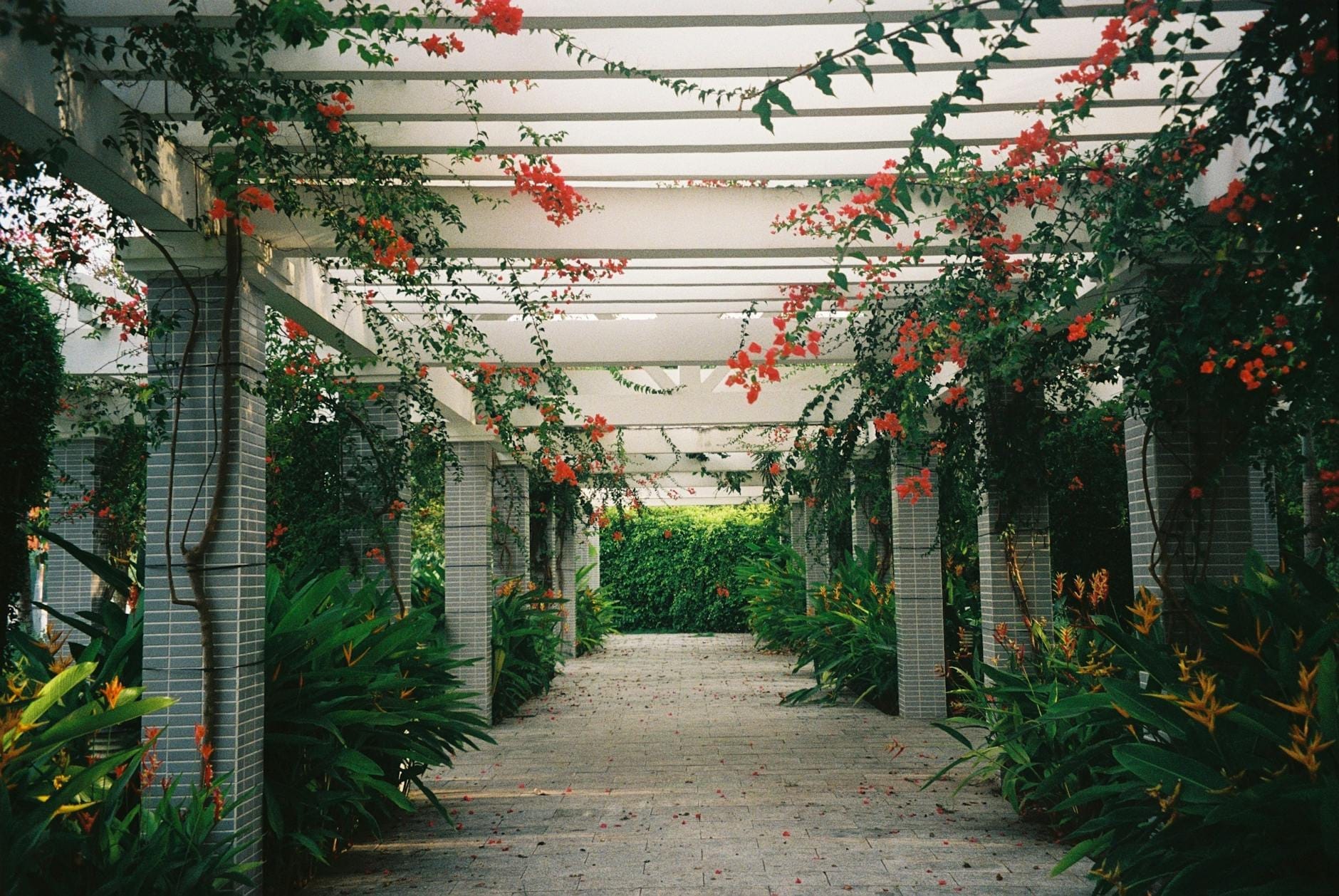
What Is the Orto Botanico di Napoli?
The Real Orto Botanico di Napoli, formally the Royal Botanical Garden of Naples, is one of the largest and oldest botanical gardens in Italy. Founded on December 28, 1807 by decree of Giuseppe Bonaparte and developed under the earlier vision of the Bourbon king Ferdinand IV, the garden today spans approximately 12 hectares and holds around 9,000 plant species represented by roughly 25,000 individual specimens. Those numbers place it among the most species-rich botanical collections in Europe.
Crucially, this is not a public park. The garden operates as a research and teaching facility of the University of Naples Federico II, which means it runs on an academic schedule rather than tourist hours. That distinction shapes everything about a visit, including who you will share it with: primarily students, researchers, and a small number of informed travelers who sought it out specifically. The absence of souvenir stalls, audio guides for hire, or queuing systems is not an oversight — it is the nature of the place.
⚠️ What to skip
The garden is open Monday to Friday, 9 AM to 2 PM, with extended hours to 4 PM on Tuesdays and Thursdays. It is generally closed on weekends, with at least one public weekend opening per month. Confirm current hours on the official website before visiting, as academic calendar closures apply.
History and Significance: From Bourbon Vision to Scientific Institution
The garden's founding in 1807 was part of a broader Napoleonic-era effort to modernize Naples's scientific infrastructure. Ferdinand IV had long pushed for a botanical garden to serve the city, but it was under Bonapartist rule that the project finally moved from ambition to ground-breaking. The site chosen along Via Foria was substantial enough to accommodate serious scientific work alongside ornamental landscaping.
Its real transformation came under Michele Tenore, appointed as first director in 1811. Tenore was not simply an administrator — he was a productive botanist who used the garden as a base for documenting the flora of the entire Italian peninsula. Under his leadership, the Orto Botanico became a genuinely respected European institution, exchanging seeds and specimens with major gardens in Paris, London, and beyond. That tradition of scientific exchange continues today.
For visitors with a wider interest in Naples's intellectual and cultural history, the garden sits naturally alongside institutions like the Naples National Archaeological Museum, which lies within easy walking distance. Both were shaped by the same Bourbon and post-Bourbon ambition to make Naples a serious capital of European learning.
Tickets & tours
Live prices and dates from our booking partner. If you book, we may earn a commission at no extra cost to you.
Origins and legends of Naples walking tour
From 28 €Instant confirmationFree cancellationGuided walking tour of Naples city and Naples underground
From 45 €Instant confirmationFree cancellationCaserta Royal Palace day-trip from Naples
From 100 €Instant confirmationFree cancellationSafe and Convenient 24-7 Luggage Storage in Naples
From 6 €Instant confirmationFree cancellation
What You Will Actually See: The Collections and Layout
Walking through the garden's entrance on Via Foria, the contrast with the street outside is immediate. The noise of the city drops. The air changes. On a warm morning, the smell of soil and foliage is noticeable within the first few meters. The layout is formal in places — long pathways flanked by labeled specimens — and more loosely organized in others, particularly toward the back sections where larger trees dominate.
The greenhouse complex is among the garden's most compelling features. Covering approximately 5,000 square meters of heated space, the greenhouses shelter tropical and subtropical species that would not survive a Neapolitan winter outdoors. The combination of humidity, filtered light, and the dense layering of exotic foliage gives these structures a genuinely different atmosphere from the open-air sections. Visitors who skip the greenhouses miss much of what makes this garden scientifically interesting.
Within the garden's grounds stands a 16th-century castle that houses the Museum of Ethno-botany and Paleo-botany. The museum traces the relationship between human cultures and plant life across deep time, drawing on archaeological and historical collections. It is not a large museum, but the material is specific enough to reward visitors who take it seriously. Informational materials are available in Italian, English, French, and German.
The plant collections themselves are organized thematically and by origin: Mediterranean flora, succulents and cacti, aquatic plants, and specimens organized by taxonomic family. Labels are present throughout, though their detail level varies. Visitors with a genuine interest in botany will find the signage informative; those looking purely for a photogenic stroll will still find much to engage with visually, particularly in the succulent sections and the palm grove.
How the Experience Changes Through the Day
Arriving close to the 9 AM opening means the garden is at its quietest. Morning light in the open-air sections is soft and directional, particularly useful if you plan to photograph the more architecturally striking greenhouse facades or the castle. The air is cooler, which makes the greenhouse environments feel more comfortable by comparison.
By late morning, university students may be present for coursework or supervised study, but foot traffic remains light compared to any of Naples's major tourist sites. On Tuesdays and Thursdays when the garden stays open until 4 PM, the early afternoon hours bring the warmest temperatures but also a stillness that is rare in this city. The garden does not have a cafe or food service, so arriving with water is practical rather than optional in summer months.
💡 Local tip
Visit on a Tuesday or Thursday if you want the full extended hours. This also gives you more flexibility to combine the garden visit with nearby attractions without feeling rushed by an early closing time.
Getting There and Practical Logistics
The garden sits on Via Foria in the Centro Storico, directly adjacent to the Albergo dei Poveri, the enormous 18th-century Royal Hospice for the Poor whose scale makes it an unmistakable landmark. Metro Line 1's Museo stop is the most convenient transit option, leaving roughly a 10 to 15 minute walk along Via Foria. Several ANM bus lines also run along this corridor. The entrance is clearly marked but easy to walk past if you are moving quickly.
There are no bag storage facilities, no lockers, and no gift shop. Admission is free and requires no advance reservation. The ground throughout the garden is a mix of paved paths and compacted earth. Some sections are accessible by wheelchair, but the terrain is not uniformly level and the paths are not all smooth. Visitors with mobility considerations should be aware that the upper sections of the grounds may be more difficult to navigate.
If you are combining this visit with a broader day in the historic centre, the garden pairs logically with a walk along San Gregorio Armeno or a visit to the Cathedral of Naples, both of which are within reasonable walking distance to the south and southwest.
Photography, Seasonality, and Honest Limitations
Spring, specifically March through May, is when the outdoor collections are at their most photogenic. Flowering species are in peak condition, the deciduous trees have full foliage, and the temperature is comfortable enough for extended walking. Summer visits are entirely workable but hot; the greenhouse interiors become genuinely oppressive between noon and 2 PM in July and August. Autumn brings a quieter, slightly melancholy quality to the open sections that some visitors will find appealing.
The garden is not a spectacle in the way that major public parks or grand villa gardens are. It does not have sweeping vistas, monumental fountains, or manicured flower displays designed for social media. What it offers instead is genuine scientific depth, real quietness, and the experience of walking through a serious living collection in the middle of one of Europe's most densely populated historic city centres. That combination is genuinely unusual, but it requires the visitor to bring some curiosity of their own.
Visitors looking for more overtly scenic green spaces in Naples should consider the Villa Comunale along the waterfront, or the parkland of Parco Virgiliano in Posillipo for panoramic views. The Orto Botanico serves a different purpose entirely.
ℹ️ Good to know
Who should skip this: Visitors with very limited time in Naples who are prioritizing major landmarks. The garden rewards slow, curious exploration. If you have fewer than two full days in the city, other historic centre sites will likely compete more directly for your attention.
Combining the Orto Botanico with the Surrounding Area
Via Foria and its surrounding streets are less heavily touristed than the core of the historic centre but are rich with local life. The Porta Capuana gate is a short walk east, and the street markets in the vicinity of Porta Nolana are accessible within a 20-minute walk. A visit to the Orto Botanico can anchor the start or end of a broader exploration of this less-visited part of the historic centre.
For travelers building a full day around the Centro Storico, the Naples 3-day itinerary includes suggestions for sequencing these northern historic centre sites efficiently without doubling back unnecessarily.
Insider Tips
- Check the official website for the specific weekend opening dates before you plan. The garden does open publicly at least once a month on weekends, but the dates are not fixed to a predictable pattern and vary by month.
- The greenhouse complex requires separate attention. Many visitors walk the outdoor paths and leave without ever entering the heated structures, which contain some of the most scientifically interesting specimens in the entire collection.
- Bring water. The garden has no cafe, kiosk, or vending machines, and in summer the combination of sun, humidity in the greenhouses, and a 9-to-2 window can catch visitors off guard.
- The castle and museum are often overlooked because they do not announce themselves dramatically. Look for the 16th-century structure toward the interior of the grounds — the paleo-botany exhibits inside are specific enough to be genuinely interesting rather than decorative.
- If you are visiting in the academic year, late morning on a weekday may coincide with student groups. Arriving at opening time (9 AM) guarantees the quietest experience.
Who Is Naples Botanical Garden (Orto Botanico) For?
- Travelers who want a genuine break from the pace and noise of the historic centre without leaving it
- Anyone with an interest in botany, natural history, or the history of European scientific institutions
- Photographers looking for botanical subjects and architectural detail in a non-commercial setting
- Visitors building a slower, curiosity-driven itinerary around the northern historic centre
- Budget-conscious travelers seeking a high-quality free experience with real depth
Nearby Attractions
Other things to see while in Centro Storico:
- Cappella Sansevero
Cappella Sansevero is a small baroque chapel in Naples' historic centre that contains one of the most technically staggering sculptures in the world: the Veiled Christ, a life-sized marble figure so realistically carved it appears draped in real fabric. The chapel is compact, deeply atmospheric, and almost certainly unlike anything else you will see in Italy.
- Naples Cathedral (Duomo di Napoli)
The Cattedrale di Santa Maria Assunta, known to locals simply as the Duomo, is Naples' most historically layered religious site. Built over Greek temples, Roman structures, and early Christian basilicas, it has been the spiritual center of the city for seven centuries. It is also where the famous liquefaction of San Gennaro's blood draws thousands of pilgrims three times a year.
- Catacombs of San Gennaro
Carved into the volcanic tuff beneath Rione Sanità, the Catacombs of San Gennaro form one of Southern Italy's most significant early Christian sites. Spanning roughly 5,600 square metres across two levels, they preserve underground basilicas, bishop tombs, and some of the oldest Christian frescoes in the Mediterranean world.
- Naples National Archaeological Museum (MANN)
The Museo Archeologico Nazionale di Napoli (MANN) holds one of the most important collections of ancient art on earth, drawing together the treasures of Pompeii, Herculaneum, and the Farnese dynasty. This is not a museum you browse lightly — plan at least two hours and come with a sense of purpose.
Planning a trip? Discover personalized activities with the Nomado app.