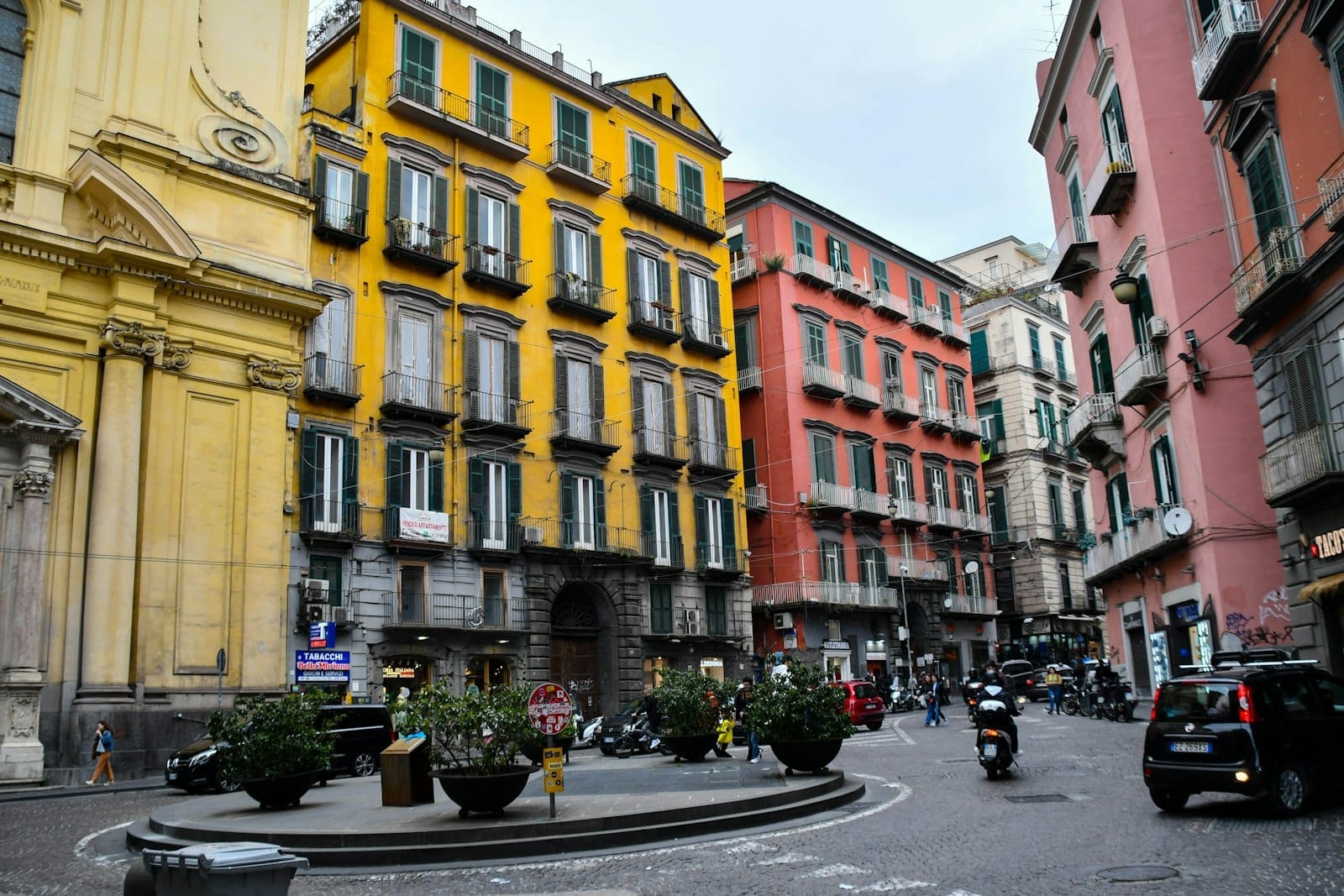
The Quartieri Spagnoli is Naples at its most unfiltered: a tight grid of narrow alleyways climbing the slopes of the San Martino hill, where laundry hangs between balconies, scooters weave between vegetable carts, and the city's working-class soul is still very much intact. Built in the 1530s by Spanish Viceroy Pedro de Toledo, the neighborhood has kept its character across five centuries of Neapolitan history.
The Quartieri Spagnoli is where Naples stops performing for visitors and simply gets on with life. A dense, grid-patterned district of alleyways and balconies wedged between Via Toledo and the San Martino hill, it is the part of the city Neapolitans call 'the belly of Naples' — raw, crowded, and completely authentic.
Orientation
The Quartieri Spagnoli occupies a roughly rectangular patch of Naples' historic center, home to around 14,000 residents. Its eastern boundary is Via Toledo, the city's main commercial artery, which separates the quarter from the historic center proper. The northern edge rises toward Corso Vittorio Emanuele, a broad road that cuts across the hillside and effectively marks where the neighborhood gives way to the quieter residential zones above. To the west, the streets climb steeply toward the San Martino hill and eventually the Vomero plateau.
Administratively, the area spans parts of three historic sub-districts: Montecalvario, San Ferdinando, and Avvocata. In practice, what visitors think of as the Quartieri Spagnoli is the section between Via Toledo and the hillside, south of the Pignasecca market area and north of Piazza del Plebiscito. That makes it an extremely convenient base: the grand Piazza del Plebiscito is a five-minute walk south, while the upscale Chiaia waterfront district lies just beyond.
Geographically, the neighborhood is organized like graph paper. The streets run on a consistent east-west and north-south grid, which is unusual in a city otherwise dominated by organic medieval street patterns. This regularity was deliberate: it was designed for military housing and troop movement, not the chaotic growth of a medieval borgo. Today, that grid is both what makes the neighborhood easy to navigate and what gives it such a distinct visual identity, with long sightlines down narrow alleys that seem to tunnel through the city.
Character & Atmosphere
In the morning, the Quartieri Spagnoli belongs to its residents. By eight o'clock, the bars along the main cross-streets are serving espresso and cornetti to locals standing at the counter. The Pignasecca market, at the northern edge of the quarter near Piazza Montesanto, is already in full swing: fishmongers calling prices over mounds of clams, vegetable sellers stacking blood oranges into pyramids, and butchers unrolling paper on marble slabs. The smell here is of salt water, coffee, and frying dough, all at once.
By midday, the narrow alleys fill with echoing sound. Scooters negotiate the cobblestones with complete confidence, pedestrians press themselves against walls to let them pass, and the upper floors of the buildings block most direct sunlight, keeping the lanes cool and slightly dim even in summer. Laundry lines cross overhead at every level, sheets and shirts creating a shifting canopy between the balconies. This is not atmospheric decoration: it is how people actually live here, and that distinction matters.
The pace shifts again in the late afternoon. Locals pull chairs into doorways and onto the narrow pavements, children chase footballs between parked vespas, and the smells from kitchen windows shift from frying to slow-simmered ragu. This is when the neighborhood has its most relaxed, genuinely local feeling. After dark, especially on weekends, the scene changes once more: the bars around the edges of the quarter, particularly near Via Toledo, fill with students and younger Neapolitans, and the alleys that felt quiet by day carry voices and music late into the night.
ℹ️ Good to know
The Quartieri Spagnoli has a reputation that precedes it, sometimes unfairly. It is not a tourist quarter trying to look authentic — it is a genuinely working-class neighborhood that receives visitors. Come with that understanding and you will find it welcoming. The atmosphere is intense rather than threatening, but it does demand a little confidence from first-time visitors.
History
The Quartieri Spagnoli was built in the 1530s under the direction of Spanish Viceroy Pedro de Toledo, who also gave Via Toledo its name. The original purpose was functional: the Spanish viceregal administration needed housing for its soldiers and minor officials, and the hillside slopes west of the main road provided space away from the existing city fabric. The result was a planned military quarter, laid out on a geometric grid that reflected Spanish urban planning principles of the period rather than the organic growth of Neapolitan neighborhoods.
Over the following centuries, as Spanish military power faded and the quarter's population shifted, the original buildings were subdivided, added to, and transformed into the dense residential fabric visible today. The noble and military families moved elsewhere; working-class Neapolitan families moved in and made the neighborhood their own. By the nineteenth century, the Quartieri Spagnoli had become one of the most densely populated urban areas in Europe, a status that shaped its intense, layered character.
That history gives the neighborhood its particular quality: it looks historical but does not feel preserved. The streets are not kept for tourism. They are worn by daily use, which is exactly what makes walking through them feel different from visiting a museum district.
What to See & Do
The Quartieri Spagnoli is not a neighborhood built around monuments. Its main attraction is the experience of the streets themselves: the layered facade colors, the shrines to San Gennaro tucked into alley corners, the sounds and rhythms of daily Neapolitan life. That said, there are specific anchors worth knowing.
The Pignasecca market, at the northern edge near Piazza Montesanto, is one of Naples' oldest and most energetic street markets. It operates every morning except Sunday and spills across several blocks, mixing fresh produce, fish, cheese, and street food stalls. For anyone wanting to understand how local Neapolitans actually shop and eat, this is far more instructive than any restaurant tour. From the market, it is a short walk down to the Toledo metro station, which is worth a visit in its own right: its platforms are lined with stunning contemporary mosaics and it has been called one of the most beautiful metro stations in Europe.
A short walk south along Via Toledo leads to the grand civic spaces of central Naples. The Galleria Umberto I, Naples' nineteenth-century iron-and-glass arcade, sits just off Via Toledo at its southern end and is worth walking through even if you do not stop. From there, the Teatro San Carlo, one of the oldest and most celebrated opera houses in Europe, is steps away.
Walk the full east-west width of the quarter along any of its parallel alleyways to feel the change in atmosphere from Via Toledo inward
Look for the small street shrines (edicole votive) in alley corners: they mark neighborhood devotion to local saints and are a constant of Neapolitan street life
Visit the Pignasecca market before 11am for the full experience
Note the church of Santa Maria della Mercede a Montecalvario, which gives the northern sub-district its name
Walk south on Via Toledo toward Piazza del Plebiscito to connect the quarter to the city's grander civic scale
The Naples Maradona murals are scattered across the city, but the Quartieri Spagnoli has some of the most significant and photographed tributes to Diego Maradona, who became a deity-level figure here during his years at SSC Napoli. The neighborhood's passion for football is not nostalgia: it is a living part of how residents understand their identity.
💡 Local tip
If you want to explore the wider historic center from the Quartieri Spagnoli, use Via Toledo as your spine. Head north and you reach the Pignasecca market and Piazza Montesanto. Head south and you arrive at Piazza del Plebiscito within ten minutes. The Centro Storico's main sights are a short walk east across Via Toledo.
Eating & Drinking
The food in the Quartieri Spagnoli is not designed for visitors, which is precisely why it is worth eating here. The trattorias tucked into the side streets operate on the assumption that their customers are neighbors, which keeps both quality and value in check. For context on the wider Naples food scene, the Naples food guide covers the city's essential dishes and where to find them.
Street food is the fastest way into the neighborhood's culinary character. The Pignasecca area in particular concentrates vendors selling fried snacks: cuoppo (paper cones of fried seafood or vegetables), frittatina di pasta (fried pasta cakes), and pizza fritta, the fried pizza that predates its oven-baked cousin in Neapolitan history. For the full breakdown of what to eat and where to find it, the Naples street food guide covers the essential stops.
Pizza here follows Neapolitan tradition: wood-fired, soft-centered, and served in proper portions. The pizzerias within the quarter tend to be smaller and less formal than the tourist-facing establishments near the Duomo or Piazza del Plebiscito, but the standard is consistently high. Naples takes its pizza reputation seriously at every level of the market, and the Naples pizza guide explains why.
For drinking, the bars on and near Via Toledo are busiest in the evening, particularly around the Toledo metro station area. The quarter's internal bars are cheaper and more local in feel: stand at the counter (always cheaper than sitting), order a small coffee or an aperitivo, and pay less than you would almost anywhere else in the city center. The neighborhood does not have a nightlife strip in the formal sense, but the energy on weekend evenings is considerable, with groups moving between bars and spilling into the alleys.
Getting There & Around
The most direct entry point is the Toledo metro station on Line 1, which sits directly on the eastern boundary of the quarter at Via Toledo. From here, you simply cross the road and you are in the neighborhood. For Vomero, you have two easy options: take Line 1 directly from Toledo to Vanvitelli, or walk a few minutes south along Via Toledo to Augusteo and ride the Funicolare Centrale up to Piazza Fuga.
From Naples' main port (Molo Beverello, where ferries arrive from Capri, Ischia, and the Amalfi Coast), the Quartieri Spagnoli is roughly a 20-minute walk north via Piazza Municipio and along Via Toledo. This is a flat, straightforward route that passes the Castel Nuovo and the Galleria Umberto I along the way.
Within the Quartieri Spagnoli itself, you move on foot. The alleys are too narrow for cars to pass in most sections, and the cobblestones are uneven enough to make any rolling luggage difficult. Scooters and motorcycles do use the internal streets, so stay aware of movement when walking in the lanes. Walking from one end of the quarter to the other (east to west, Via Toledo to the hillside) takes about fifteen minutes at a normal pace. North to south (Pignasecca to the area near Piazza del Plebiscito) is around twenty minutes.
⚠️ What to skip
The streets inside the Quartieri Spagnoli are narrow enough that two people walking side by side will sometimes need to step single-file to let a scooter pass. If you are arriving with a rolling suitcase, the cobblestones will make it genuinely difficult. Consider luggage storage near Toledo station before exploring, or book accommodation with direct street access at ground level.
For getting around the wider city from here, the getting around Naples guide covers all transport options including the funiculars that connect the lower city to Vomero above.
Where to Stay
Staying in the Quartieri Spagnoli puts you inside the most authentically Neapolitan residential fabric in the city center. This is not the right choice for everyone: the neighborhood is noisy at street level, the alleys can feel intense to those unused to dense urban environments, and access for heavy luggage is awkward. But for travelers who want proximity to both the historic center and the real rhythms of Neapolitan life, it is an excellent base. For a broader comparison of where to stay across the city, the where to stay in Naples guide covers all major neighborhoods.
Accommodation within the quarter tends toward smaller B&Bs, apartment rentals, and family-run guesthouses. There are very few large hotels inside the grid itself, though several larger properties sit on or just off Via Toledo on the eastern edge. Rooms on upper floors with views across the rooftops are worth prioritizing: the views down into the alleys at night, with lights strung between buildings, are genuinely striking.
The best position within the quarter for a hotel base is near the Via Toledo end, which keeps you close to the metro and within easy reach of the Chiaia district and the waterfront to the south. The deeper west end of the quarter, closer to the hillside, is quieter but less convenient for transit connections.
Honest Assessment: Is the Quartieri Spagnoli Right for You?
The Quartieri Spagnoli rewards curiosity and punishes passivity. If you walk its streets with awareness, make eye contact, and treat it as a neighborhood rather than a backdrop, you will find it one of the most compelling urban environments in southern Italy. If you want clean pavements, quiet nights, and predictable tourist infrastructure, it will feel chaotic and exhausting.
It is not the right neighborhood for travelers who prioritize comfort and convenience above atmosphere. The streets are uneven, the noise is constant during daylight hours, and the service at local bars assumes you know how things work. But for the traveler who wants to understand what Naples actually is, not just what it shows to visitors, the Quartieri Spagnoli rewards a dedicated visit.
It also serves as a practical hub. From here, the Centro Storico is across Via Toledo on foot, the Vomero plateau is reachable by funicular from Piazza Montesanto nearby, and major day trip connections for Pompeii, Capri, and the Amalfi Coast all depart from transport hubs within twenty minutes' walk.
TL;DR
The Quartieri Spagnoli is a dense, grid-patterned neighborhood built in the 1530s for Spanish garrison troops and now one of Naples' most characterful working-class districts.
Best for: travelers who want an authentic Neapolitan street experience, proximity to Via Toledo and Piazza del Plebiscito, and access to local markets and trattorias without tourist pricing.
Not ideal for: visitors who want quiet nights, easy luggage access, or a polished hotel environment. The streets are narrow, noisy, and cobblestoned.
Location advantage: directly adjacent to Toledo metro station (Line 1), within walking distance of the historic center, the waterfront, and major ferry connections to Capri and the Amalfi Coast.
The Pignasecca market and the Toledo metro station mosaics are specific highlights worth visiting even on a short stop through the area.
Naples has more historic churches per square kilometer than almost any city in Europe. This guide covers the finest: from the Duomo's blood relic ceremony to Caravaggio's most important altarpiece, and the majolica-tiled cloister that stops every visitor cold.
Naples holds more great art per square kilometer than almost any city in Europe. This guide covers the 14 best museums in Naples, from world-class archaeological collections to intimate chapels hiding the most technically astonishing sculptures ever carved.
Planning a trip to Naples, Italy? This guide breaks down every season honestly — temperatures, crowd levels, prices, and local events — so you can choose the right time for your trip, whether you're chasing warm weather, cultural festivals, or the lowest hotel rates.
Naples is one of Italy's most dramatic cities to look at, and where you stand changes everything. This guide covers the finest viewpoints in the city, from Vomero hilltop fortresses to waterfront promenades, boat trips, and volcanic summits.
Naples sits at the center of one of Italy's richest travel regions. Within two hours you can stand inside a Roman city frozen in time, swim off a glamorous island, or walk past 2,500-year-old Greek temples. These are the best day trips from Naples, organized by type.
Naples is one of Europe's most rewarding cities for budget travelers. From UNESCO-listed streets and free castle ramparts to extraordinary public art in metro stations and chaotic street markets, here's how to experience the best of Napoli without opening your wallet.
Naples has a surprisingly functional public transport network once you know how it works. This guide covers metro lines, funiculars, buses, taxis, the airport Alibus, and everything in between, with current fares, schedules, and honest advice on what to skip.
Naples rewards every traveler differently depending on how much time they give it. This guide breaks down the ideal number of days in Naples based on your pace, interests, and whether you plan day trips to Pompeii, Capri, or the Amalfi Coast.
Naples is one of Italy's most debated destinations: raw, overwhelming, and unlike anywhere else in the country. This guide cuts through the clichés to give you a clear-eyed look at what Naples actually offers, who it suits, and whether it deserves a place on your itinerary.
Naples International Airport (Capodichino, NAP) sits just 6 km from the city center, but knowing which transfer option to take can save you time, money, and frustration. This guide breaks down every option from the €5 Alibus to fixed-rate taxis and private door-to-door transfers, with honest advice on what actually works.
Caravaggio spent two turbulent periods in Naples and left behind three surviving masterpieces that transformed Baroque painting in southern Italy. This guide locates every work, gives you current admission prices, practical visiting tips, and the context to understand why these paintings still matter.
Naples at Christmas is unlike anywhere else in Italy. From the centuries-old presepe workshops of Via San Gregorio Armeno to candlelit piazzas and December markets at Castel dell'Ovo, this guide covers everything you need to experience the city's most theatrical season.
Naples is one of the world's great eating cities, and knowing what to order makes all the difference. This guide covers every dish worth tracking down, from the perfect margherita to street food you won't find anywhere else in Italy, with practical tips on where to eat, what to pay, and what to avoid.
Naples, Italy surprises couples at every turn: candlelit trattorias in the historic centre, golden sunsets over Vesuvius from the waterfront, and ferry rides to islands that feel like a world away. This guide covers the city's most romantic spots, experiences, and seasonal tips so you can plan the perfect couples trip to Napoli.
Naples rewards those who look beyond the obvious. This guide uncovers the city's most overlooked sites, from an ossuary filled with skulls to a metro station voted the most beautiful in Europe. These are the places that make Naples genuinely unlike anywhere else.
Napoli is not a city you can absorb from a single vantage point. This guide breaks down every major neighborhood, plots the key attractions on a logical mental map, and tells you exactly how to move between them, whether on foot, by metro, or by funicular.
Naples frames some of the most dramatic sunsets in Europe, with Vesuvius, the Bay of Naples, and the islands of Capri and Ischia providing a backdrop that few cities can match. Whether you want a hilltop panorama, a waterfront stroll, or a boat ride into the golden hour, this guide covers the best spots.
Three days is enough time to get a real feel for Naples, Italy — one of Europe's oldest, most layered cities. This itinerary covers the UNESCO-listed historic centre, the seafront, the underground city beneath your feet, and the hilltop views that put it all in perspective. No filler, no tourist traps — just a practical day-by-day plan that works.
Naples, Italy rewards luxury travelers with a combination few European cities can match: grand historic hotels overlooking the Bay of Naples, world-class fine dining rooted in one of Italy's most serious food cultures, and private experiences ranging from underground archaeological tours to boat charters beneath Vesuvius. This guide cuts through the noise to identify what genuinely delivers at the top end of Napoli.
Naples, Italy comes alive after dark in ways that few Italian cities can match. From the elegant cocktail bars of Chiaia to the packed dance floors of Bagnoli, this guide breaks down exactly where to go, when to go, and what to expect from Neapolitan nightlife.
Naples is the cheapest major city in Italy to visit, with €1 espressos, €3 street pizza, and a UNESCO historic centre you can explore for free. This guide breaks down real daily costs, the best free attractions, smart transport choices, and exactly how to stretch your euros further in Napoli.
Choosing between Naples and Sorrento as your southern Italy base shapes your entire trip. This guide breaks down the real differences in cost, atmosphere, transport access, and day-trip logistics so you can make the right call for your travel style.
Naples is the birthplace of pizza, and eating it here is nothing like eating it anywhere else. This guide covers the best pizzerias across the city, from legendary institutions to neighbourhood favourites, with honest rankings, practical logistics, and advice on what actually separates great Neapolitan pizza from a tourist-trap imitation.
Naples Italy has a reputation that outpaces its reality. Petty crime exists, but with the right awareness you can explore freely. This guide covers the neighborhoods to know, the scams actually targeting tourists, and the practical habits that make the difference.
The Feast of San Gennaro is the spiritual and cultural heartbeat of Naples, drawing tens of thousands to witness a ritual that has defined the city for over 1,700 years. This guide covers all three annual dates, the blood liquefaction ceremony, crowd logistics, and what the festival reveals about Neapolitan identity.
Naples rewards shoppers who go beyond the tourist trinket stalls. This guide covers the city's best shopping streets by district, its most authentic markets, and the foods and crafts worth carrying home — with honest advice on where not to waste your time or money.
Queues at Naples' top attractions can cost you hours of your trip. This guide breaks down exactly which sites offer genuine skip-the-line access, where to book, what it costs, and which 'skip-the-line' products are misleading marketing.
Naples has one of the great street food cultures in Europe, built on centuries of feeding dock workers, market sellers, and anyone who needed a meal without a table. This guide covers the essential dishes, the best neighborhoods to eat them, and the practical details that separate a great food walk from a disappointing tourist detour.
Getting from Naples to the Amalfi Coast involves more choices than most guides admit. This breakdown covers every realistic option, from the cheapest bus combination to the fastest ferry, with honest assessments of what works in different seasons.
Getting from Naples to Capri is simpler than most visitors expect, but the details matter: which port, which operator, how early to book, and what to do once you arrive. This guide covers all of it, from ferry prices and schedules to practical day trip planning.
Pompeii is 25 kilometers from Naples and one of the most visited archaeological sites in the world. This guide breaks down every transport option, the exact station you need, what tickets cost, and how to make the most of the trip without the usual tourist pitfalls.
Beneath the streets of Naples Italy lies one of Europe's most extraordinary subterranean worlds: 450 kilometers of Greek-carved tunnels, Roman aqueducts, and WWII shelters. This guide covers everything you need to visit Napoli Sotterranea, from ticket prices and tour logistics to what you'll actually see underground.
Choosing between Naples and Rome is one of the most common dilemmas for Italy first-timers. This guide breaks down both cities across food, cost, culture, day trips, and logistics so you can make the right call for your itinerary.
Naples rewards walkers more than almost any city in Italy. This guide covers the best self-guided walking routes through the historic center, royal quarter, and waterfront, with practical details on timing, distances, costs, and what to skip.
Naples, Italy has a Mediterranean climate that rewards visitors who time their trip carefully. This guide breaks down what the weather actually looks like each month, which seasons to avoid, and what to throw in your bag depending on when you arrive.
Naples is a far better family destination than its reputation suggests. From hands-on science museums and underground Roman tunnels to pizza-making workshops and boat trips on the Bay of Naples, this guide covers the best activities for families traveling to Napoli, with honest advice on what works for different ages and how to plan your visit.
Both sites were buried by Mount Vesuvius in 79 AD, but they offer very different experiences. This guide breaks down the key differences in size, preservation, visitor experience, and logistics so you can choose the right one — or make a case for visiting both.
Naples rewards curious travelers with layers of history, art, street food, and coastal scenery that few Italian cities can match. This guide covers the essential experiences, practical logistics, honest advice on what to skip, and how to structure your time in Napoli.
Naples is one of the great eating cities of Italy, and knowing where to go separates a memorable meal from a mediocre tourist trap. This guide covers the best neighborhoods for dining, top restaurant picks across every budget, essential dishes to order, and practical tips for eating like a local.
Choosing where to stay in Naples Italy can make or break your trip. This guide breaks down every major neighbourhood by vibe, price, location, and who it actually suits, so you can book with confidence.