Scarborough stretches across Toronto's eastern flank, covering a wide sweep of residential neighbourhoods, dramatic lakefront cliffs, and some of the city's most diverse commercial streets. Once an independent city, it was amalgamated into Toronto in 1998 and remains a distinct world of its own, best understood not as a single place but as a collection of communities bound together by geography and shared history.
Scarborough is Toronto's eastern frontier: a sprawling former city that traded its independence for amalgamation in 1998 but never quite lost its own identity. Here you will find the dramatic clay cliffs of the Scarborough Bluffs dropping 90 metres to Lake Ontario, one of the city's last expanses of true wilderness at Rouge National Urban Park, and commercial strips that represent some of the most genuinely multicultural eating in Canada.
Orientation
Scarborough occupies the entire eastern portion of the City of Toronto. Its western boundary runs along Victoria Park Avenue, the street that separates it from East York and the older inner city. To the north, Steeles Avenue East marks the divide between Toronto and the suburban municipality of Markham (while Agincourt is a neighbourhood within Scarborough just south of Steeles). The eastern edge follows the Rouge River and the Scarborough-Pickering Townline, where the city gives way to Pickering and Ajax. To the south, the district fronts directly onto Lake Ontario, with the Scarborough Bluffs forming one of the most geologically striking shorelines on the Great Lakes.
The internal geography matters for navigation. Highway 401, running east-west across the middle of the district, acts as a dividing spine: everything below it tilts toward the lakefront and the Bluffs, while everything above it extends into lower-density residential and commercial territory. Key north-south corridors include Morningside Avenue, Midland Avenue, McCowan Road, and Brimley Road. East-west, Kingston Road traces the old lakeshore route through the southern belt, while Eglinton Avenue East and Lawrence Avenue East carry traffic through the mid-district.
For visitors arriving from downtown, Scarborough can feel surprisingly remote. It sits well east of the core attractions clustered around downtown Toronto, and the distance from Union Station to the Scarborough Bluffs by public transit is roughly an hour. That travel time is not a deterrent so much as a framing device: you are not popping in between other errands. Scarborough rewards a dedicated half-day or full-day excursion.
Character & Atmosphere
Scarborough developed as a township long before it became a borough in 1967 and then a city in 1983. The suburban street grid that emerged through the postwar decades gives large parts of the district a different physical texture than the tight Victorian blocks of older Toronto neighbourhoods. Streets are wider, setbacks are deeper, and the commercial strips tend toward plazas rather than walk-up storefronts. None of that makes it less interesting, but it does mean the neighbourhood rewards a different kind of exploration.
The real draw is the human geography layered onto that physical framework. Scarborough absorbed successive waves of immigration from South Asia, Southeast Asia, the Caribbean, East Africa, and China from the 1970s onward, and those communities have built lasting institutions here. On a Saturday morning along Eglinton Avenue East or Lawrence Avenue East, you hear Tamil, Cantonese, Urdu, and Tagalog within a few blocks of each other. The strip malls that might read as anonymous from the highway reveal themselves, up close, as dense clusters of specialty grocery stores, South Indian vegetarian restaurants, Jamaican patty shops, and Vietnamese bánh mì counters.
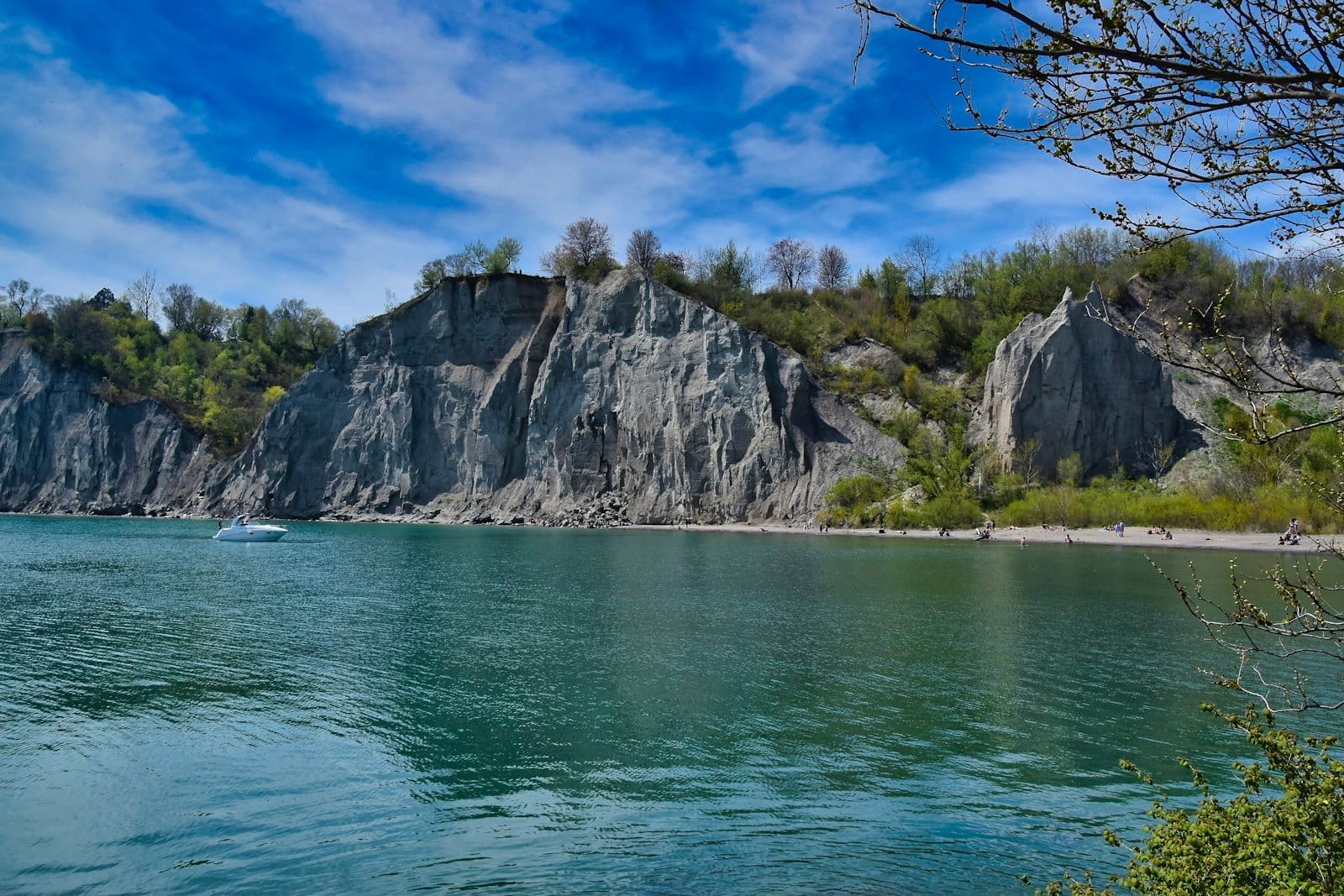
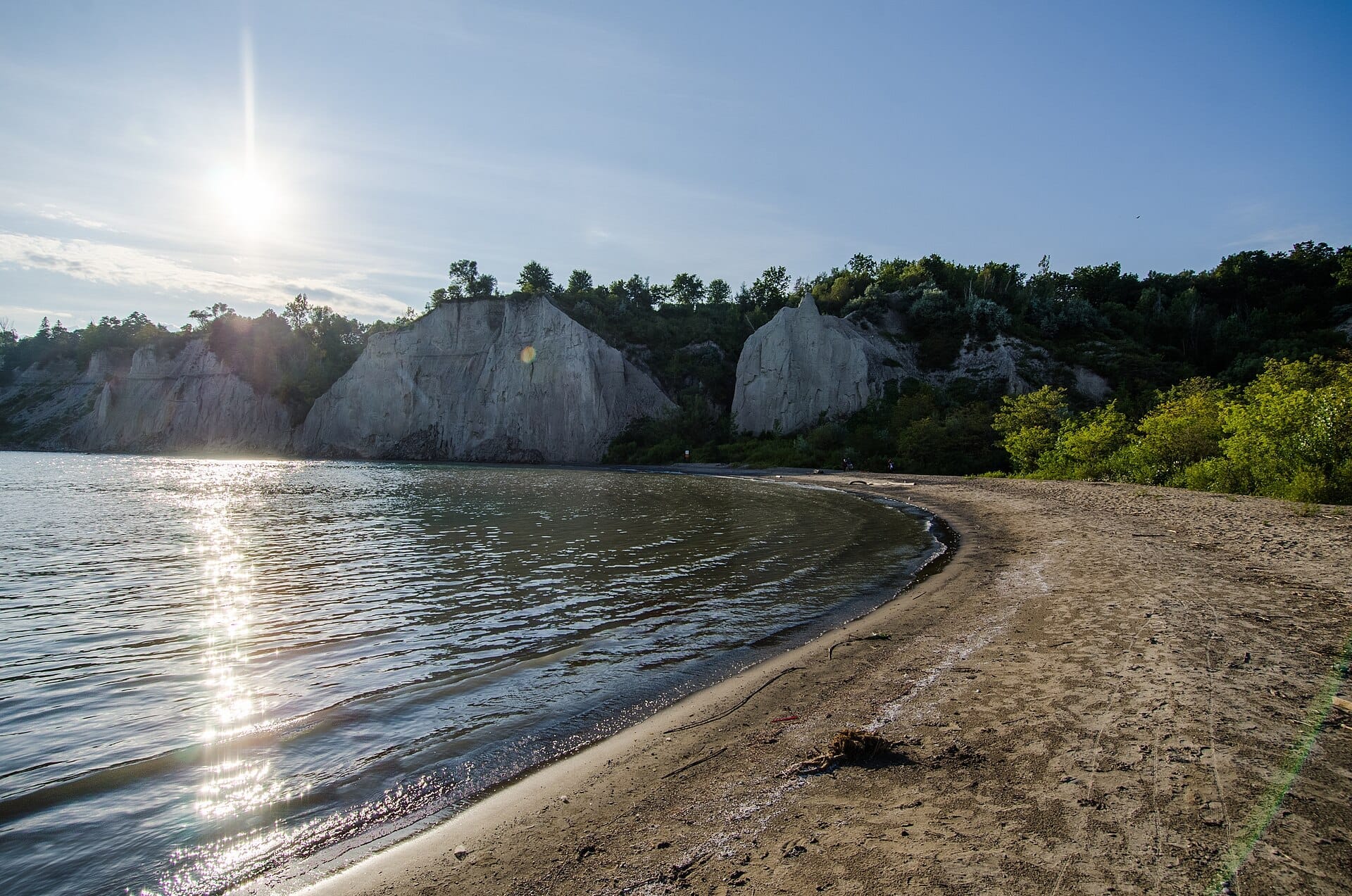
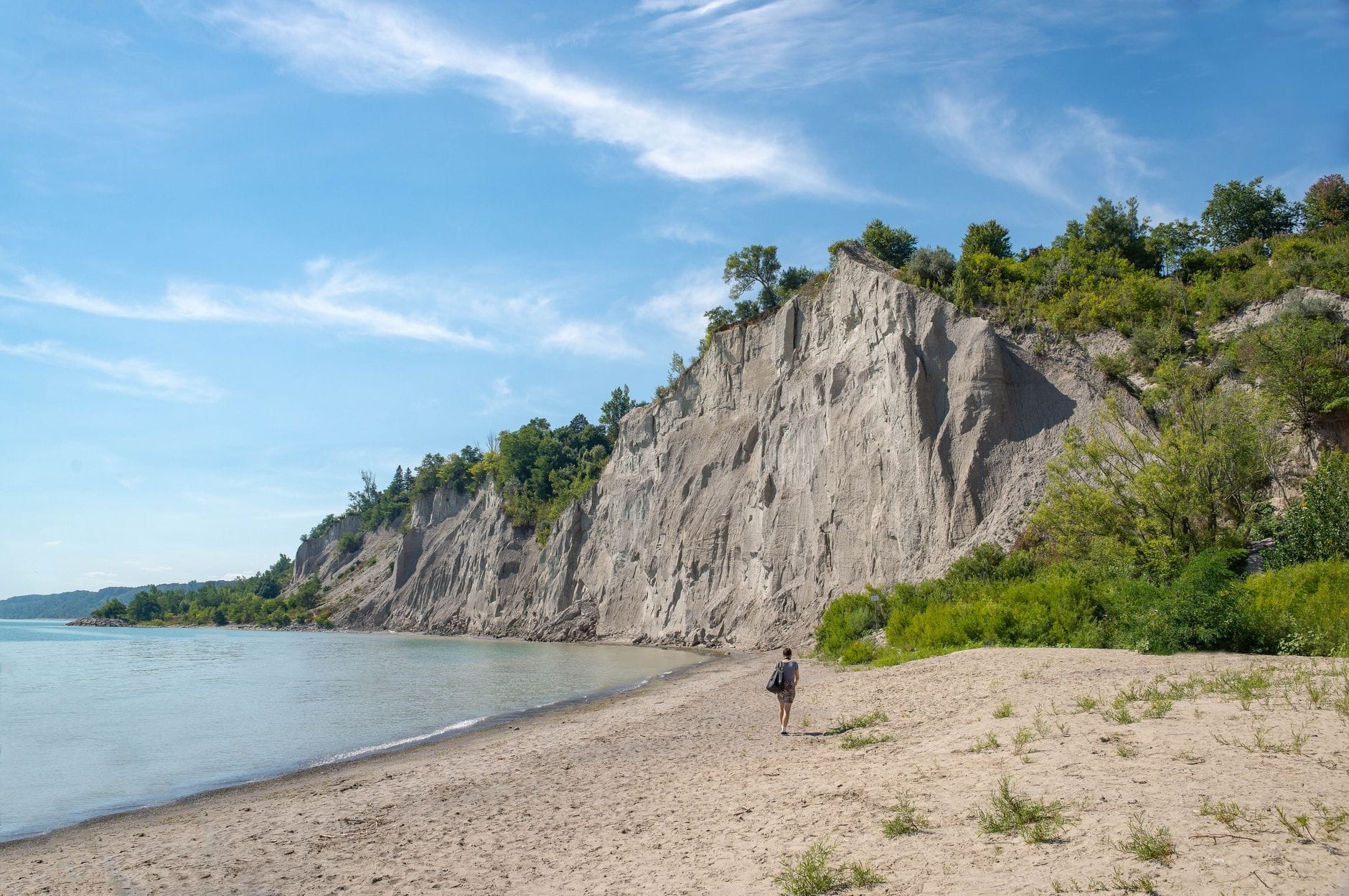
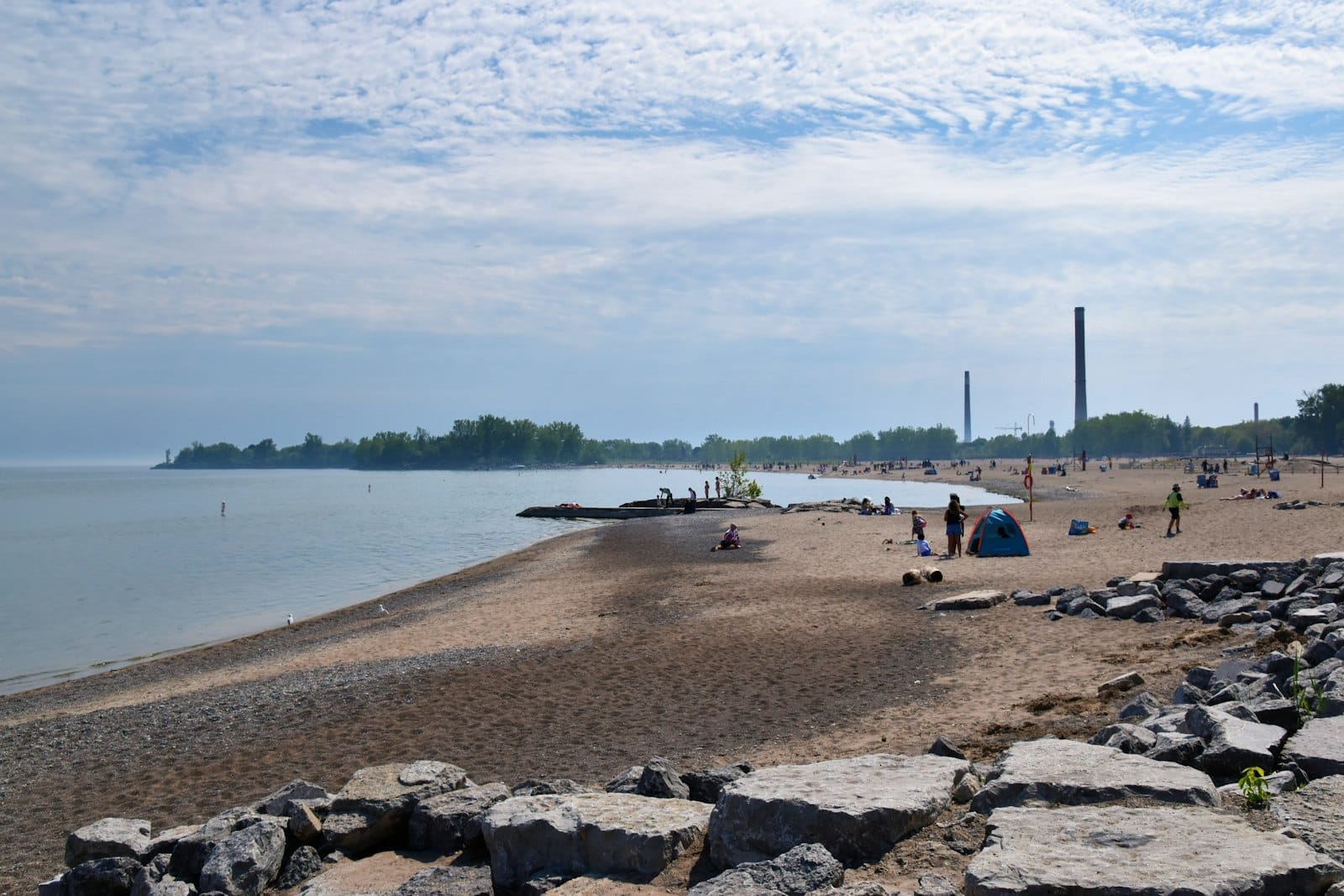
The southern edge of Scarborough has an entirely different character. Down near the lake, the pace slows, the residential streets narrow toward the cliff edge, and the visual drama of the Bluffs takes over. On a clear afternoon, the pale clay cliffs catch the light in a way that looks almost Mediterranean, with the dark blue of Lake Ontario stretching out to the horizon below. In summer, Bluffer's Park beach fills with families and paddlers; on autumn weekday mornings it is close to empty, with just the wind and the sound of the water against the pebble shore.
ℹ️ Good to know
Scarborough is not a single neighbourhood with a central hub. Think of it as a district made up of dozens of distinct communities, each with its own character. Planning your visit around a specific destination, whether the Bluffs, Rouge Park, or a particular food strip, will make the logistics much clearer.
What to See & Do
The Scarborough Bluffs are the single most compelling natural feature in eastern Toronto. The cliffs extend for roughly 15 kilometres along the lakeshore, rising to about 90 metres (approximately 300 feet) at their highest point, and were formed by glacial lake sediments deposited after the last ice age. Scarborough Bluffs can be accessed from several points: Bluffer's Park at the base offers a beach, a marina, and direct views up at the cliff face, while the top-of-bluff parklands like Scarborough Bluffs Park and Cathedral Bluffs Park provide the elevated perspectives across the lake. The two viewpoints are connected by trails, though the descent to the waterfront involves a significant drop in elevation.
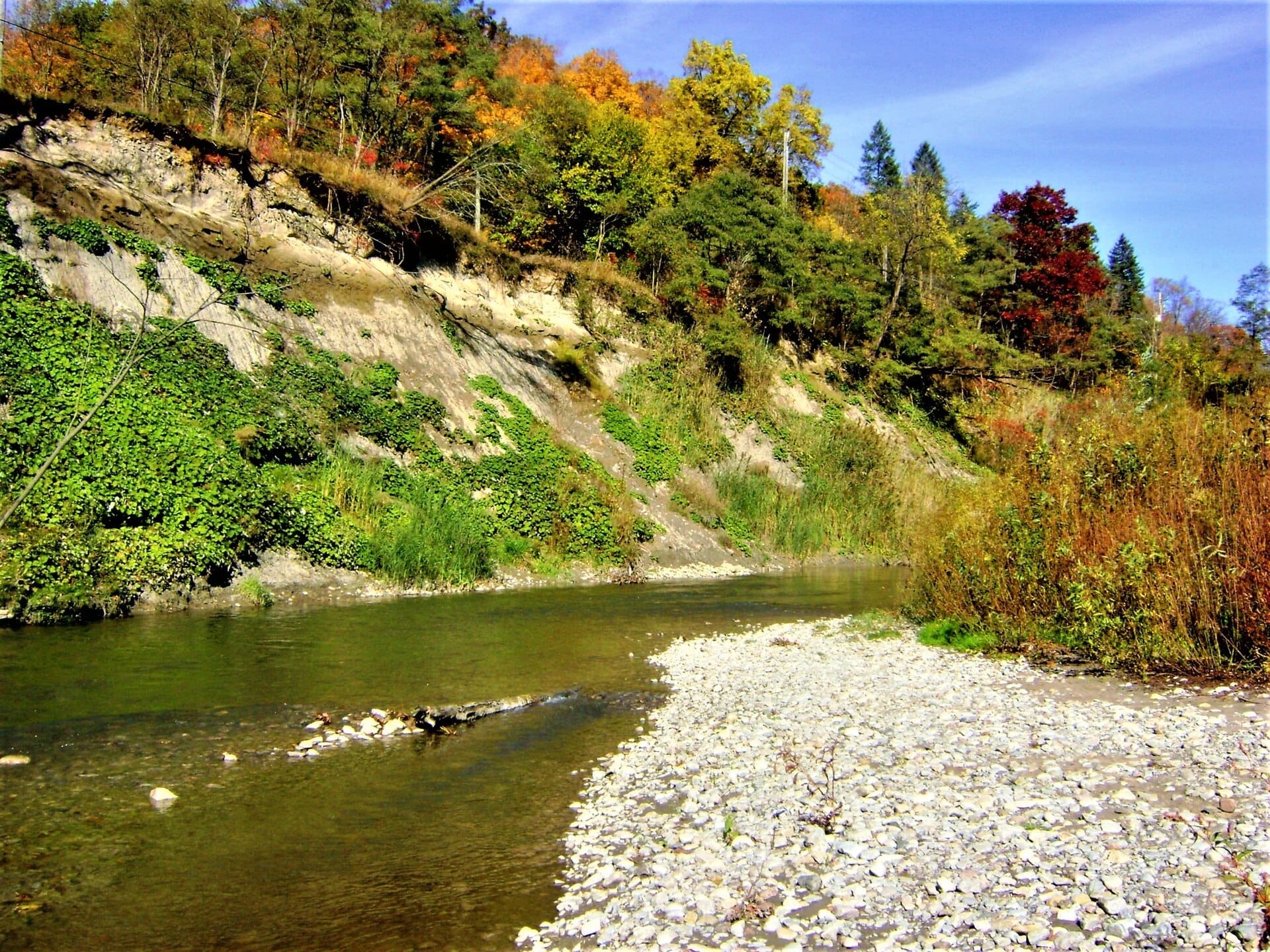
At the far eastern edge of Scarborough, Rouge National Urban Park protects the Rouge River valley and its surrounding lands in one of the most unusual parks in Canada: a functioning national park within the boundaries of a major city. Hiking trails through the Rouge Valley pass through forest, wetland, and river floodplain, and the park supports populations of deer, coyote, and migratory birds. The trails near Twyn Rivers Drive and the Glen Rouge Campground are the most accessible entry points from the south.
For a longer lakeshore walk, the Martin Goodman Trail connects into the Scarborough waterfront at the western boundary near the Beaches neighbourhood and continues east. The lakeside path past Tommy Thompson Park and onward through Scarborough's shoreline parks gives a ground-level perspective on how dramatically the lakeshore changes character as you move east from the urban core.
Bluffer's Park Beach: swim, kayak, or simply sit below the cliff face
Cathedral Bluffs Park: elevated views along the clifftop, best in late afternoon light
Rouge National Urban Park: day hikes and the Glen Rouge Campground for overnight stays
Guild Park and Gardens: outdoor sculpture collection set within a historic estate
Scarborough Town Centre: the district's main commercial hub, useful for orientation
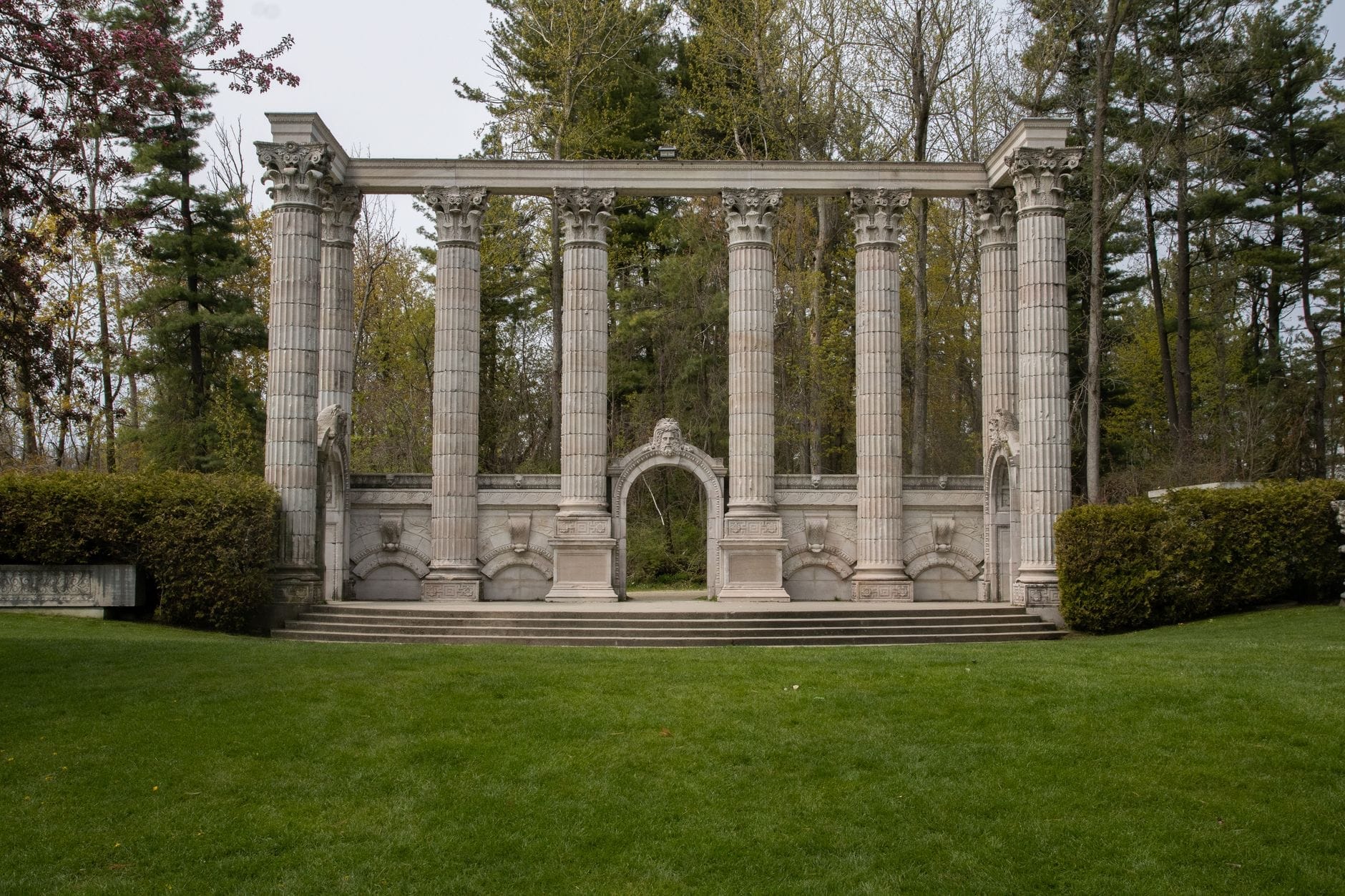
The Guild Park and Gardens is an often-overlooked stop: a public park on Scarborough's southern ridge that doubles as an open-air repository for architectural salvage from demolished Toronto buildings. Greek columns, stone facades, and decorative fragments from buildings torn down in the 20th century stand among formal gardens, creating a quietly surreal afternoon destination.
Eating & Drinking
Scarborough's food scene is one of the strongest arguments for making the trip out here, and it is covered in depth in any serious Toronto food guide. The key point is that this is not fusion or approximation: these are restaurants and takeaways built to serve immigrant communities, not to introduce them to tourists. That distinction is audible in the room and visible on the menu.
Eglinton Avenue East between Kennedy Road and Scarborough Town Centre is one of the densest concentrations of South Indian and Sri Lankan Tamil cuisine in North America. Dosa houses, rice and curry counters, and sweet shops line the strip, and lunch here costs very little. The same corridor turns up Pakistani and Bangladeshi restaurants, Hakka Chinese spots, and Caribbean takeaways within a short stretch.
Lawrence Avenue East through the Woburn and Malvern areas offers a different cross-section, with heavy West African, Somali, and South Asian representation. Indo-Caribbean bakeries selling roti and doubles appear alongside Korean BBQ spots and Vietnamese noodle shops. The Pacific Mall area near Kennedy Road and Steeles, in the adjacent City of Markham, is one of the largest indoor Asian shopping malls in North America and is surrounded by a cluster of restaurants serving Cantonese, Taiwanese bubble tea, Hong Kong-style cafes, and hotpot.
Kingston Road, running through the southern part of the district along the old lakeshore route, has a more mixed character: older diners, pub-style restaurants, and some newer cafes that have moved east from the Beaches. It is a useful strip if you are spending time near the Bluffs and want something unhurried. For broader context on how Scarborough fits into Toronto's eating landscape, see the guide to Toronto's multicultural neighbourhoods.
💡 Local tip
For South Indian food, aim for the stretch of Eglinton Avenue East between Kennedy Road and Midland Avenue around midday on a weekend. Restaurants here tend to offer full rice-and-curry meals at prices significantly below anything you will find closer to downtown.
Getting There & Around
Scarborough is served by the TTC bus network and by Line 2 (Bloor-Danforth) subway, which runs east into the district as far as Kennedy Station. The Scarborough RT that once connected Kennedy Station to Scarborough Centre and McCowan has been decommissioned and replaced by bus rapid transit corridors. Getting to the heart of Scarborough by transit from downtown typically means taking Line 2 east to Kennedy and transferring to a bus.
Highway 401 is the practical backbone of the district for drivers, offering fast east-west movement with exits onto all the major north-south roads. Driving is significantly more convenient than transit for visiting multiple parts of Scarborough in a single day, particularly for the Bluffs, which require either a car or a bus connection from the subway.
The Bluffs specifically are not well served by a single transit route. From Kennedy Station, the 12 Kingston Road bus runs through the southern part of Scarborough and can bring you within walking distance of some clifftop access points, but getting down to Bluffer's Park at the waterfront involves additional bus connections or a longer walk. Most visitors to the Bluffs arrive by car. Taxis and ride-hailing services are a practical alternative for a day trip, especially if you are combining the Bluffs with lunch somewhere along Eglinton or Lawrence.
For Rouge National Urban Park, GO Transit's Lakeshore East line stops at Rouge Hill station near the park's southern entrance, making it one of the more transit-accessible natural areas in the district. The trip from Union Station takes roughly 30 to 35 minutes on the GO train. More detail on navigating Toronto by transit appears in the guide to getting around Toronto.
⚠️ What to skip
Do not assume you can easily walk between Scarborough's main attractions. The distances are suburban in scale: the Bluffs, the food strips along Eglinton, and Pacific Mall near Steeles are several kilometres apart. Plan each destination separately or rent a car for the day.
Where to Stay
Scarborough is not a neighbourhood where most visitors to Toronto would base themselves. The accommodation stock is dominated by mid-range chain hotels near Scarborough Town Centre, along Kingston Road, and near Highway 401 interchanges. These are functional options for travellers arriving from the east, connecting through, or visiting family in the district, but they are a long way from the density of downtown attractions.
Travellers whose primary interest is the Bluffs or Rouge Park might reasonably consider sleeping in Scarborough to be closer to those specific sites, but for a general Toronto visit, staying in the inner city and making Scarborough a day trip is almost always the better call. For accommodation guidance covering the full city, see the overview of where to stay in Toronto.
Honest Assessment: Is Scarborough Worth the Trip?
For first-time visitors to Toronto with limited days, Scarborough is probably not the priority. The inner-city neighbourhoods, the waterfront, and the major museums are more centrally placed and easier to combine. But for anyone who has covered the basics and wants to see a different dimension of the city, or who comes specifically for the food, the cliffs, or the park, Scarborough justifies the journey.
The Scarborough Bluffs in particular are genuinely spectacular and undervisited by international tourists. Combining them with a meal on Eglinton East and a walk through Rouge Park makes for a full and varied day that feels nothing like anything else in Toronto. For context on the broader range of things to do across the city, the things to do in Toronto guide provides a useful framework for prioritising.
On safety: Scarborough has historically carried a reputation, partly deserved and partly amplified by media coverage, for higher crime rates in some of its northern residential areas. As with any large city district, conditions vary significantly by neighbourhood and time of day. The areas visitors are most likely to spend time in, the Bluffs, the waterfront parks, the commercial food strips during daylight hours, are generally straightforward to navigate. Exercise the same situational awareness you would in any urban environment.
TL;DR
Scarborough is Toronto's vast eastern district, best known for the Scarborough Bluffs, Rouge National Urban Park, and some of the city's most authentic multicultural food streets.
It is not a single neighbourhood but a collection of communities: allow a full day, focus on one or two destinations, and plan around transit or a rental car.
The food strips along Eglinton Avenue East offer some of Toronto's best-value South Asian, Tamil, Caribbean, and Hakka Chinese eating, and are the main reason food-focused travellers make the trip.
The Scarborough Bluffs are a genuine natural spectacle and are relatively uncrowded compared to downtown attractions, but reaching the waterfront level requires a car or careful transit planning.
Best suited to: dedicated food explorers, hikers and nature-seekers, travellers on a second or third Toronto visit, and anyone curious about the city beyond its postcard version.
Three days is enough time to cover the best of Toronto's downtown core, historic districts, waterfront, and cultural institutions — if you plan smartly. This itinerary is built around the TTC subway and streetcar network, so you never need a rental car. Expect a mix of landmark sights, neighbourhood wandering, and genuine local texture.
Toronto punches well above its weight for museum culture. Whether you're drawn to ancient civilisations, contemporary art, or the history of hockey, this guide covers the best museums in Toronto across every interest and budget.
Toronto has over 1,500 parks and more than 8,000 hectares of green space, from sweeping urban forests and lakefront trails to formal gardens and island beaches. This guide covers the best of them, organised by type and neighbourhood, so you can find exactly the kind of outdoor escape you're looking for.
Toronto has four genuinely distinct seasons, and the best time to visit depends entirely on what you want from the trip. This guide breaks down weather, crowds, pricing, and events month by month so you can make an informed decision.
Toronto's skyline is one of the most dramatic in North America, dominated by the CN Tower and framed by Lake Ontario. This guide covers the best vantage points in the city, from high-rise observation decks and waterfront parks to island ferry crossings and hilltop lookouts.
Toronto sits at the centre of one of Canada's richest regions for day-tripping. Within two hours in any direction you'll find roaring waterfalls, wine country, historic theatre towns, wilderness beaches, and mountain resorts. This guide covers the top day trips from Toronto, with practical details on how to get there and what to do once you arrive.
Toronto is a surprisingly generous city for budget travellers. From free museum evenings and sprawling parks to street art laneways and historic neighbourhoods, here are the best free things to do in Toronto across every season.
Toronto's transit network spans the TTC subway, streetcars, GO Transit regional rail, the UP Express airport link, ferries, and bike share. This guide breaks down every option with fares, routes, timings, and practical advice on what actually works for visitors.
Toronto is one of the safest major cities in North America, but that doesn't mean risk-free. This guide breaks down real crime patterns, which areas to be aware of, seasonal hazards, and the practical precautions that actually make a difference for visitors.
Toronto sits on the northwestern shore of Lake Ontario, the easternmost and smallest of the Great Lakes by surface area. From the Toronto Islands and the Martin Goodman Trail to the towering Scarborough Bluffs, this guide covers every major way to experience the lake — with seasonal advice, transit details, and honest assessments of what's worth your time.
Toronto is Canada's largest city and one of North America's most genuinely diverse destinations. This guide covers the best things to do in Toronto across every budget, season, and interest — with honest assessments, current prices, and practical logistics.
Five days in Toronto is enough time to cover the iconic landmarks, dig into the city's diverse neighbourhoods, and still squeeze in a day trip to Niagara Falls. This itinerary is structured for efficiency without sacrificing depth, whether you're arriving at Pearson Airport or Billy Bishop.
Everything you need to navigate Toronto Pearson International Airport (YYZ), from terminal layouts and airside connections to the fastest and cheapest ways into downtown Toronto. Covers the UP Express, taxis, ride-hailing, public transit, and key practical details for first-timers and connecting passengers.
Toronto's skyline tells a 200-year story in brick, glass, and concrete. This guide covers the city's most architecturally significant buildings across every era, from Victorian flatirons and Beaux-Arts civic halls to Gehry-designed galleries and record-breaking towers, with practical visiting tips for each.
Toronto Caribbean Carnival, still widely known as Caribana, draws over a million visitors to the city each summer for more than a week of soca music, steelpan competitions, costumed masquerade, and street food. This guide covers everything: dates, the Grand Parade route, ticket prices, what to skip, and how to plan your visit like someone who has been before.
Toronto's sakura season is spectacular but brutally short. This guide covers the exact bloom window, the best viewing locations beyond High Park, how to get there without a car, and what the City's official trackers actually tell you in real time.
Toronto's food scene is one of North America's most diverse, shaped by over 200 ethnic communities and anchored by legendary markets, neighbourhood food districts, and a Michelin Guide earned in 2022. This guide breaks down what to eat, where to eat it, and how to navigate the city's culinary landscape like a local.
Toronto's food market scene ranges from a historic 200-year-old market hall to shipping-container villages and neighbourhood farmers' markets. This guide covers the best places to browse, graze, and stock up across the city.
Toronto delivers a surprising range of romantic experiences, from skyline dining and waterfront ferry rides to candlelit heritage districts and world-class performing arts. This guide breaks down the best date ideas by season, budget, and vibe, with honest assessments of what's worth the effort.
Summer turns Toronto into one of North America's most active outdoor cities. From June jazz on Bloor Street to Caribbean Carnival floats and lakefront beaches with lifeguards on duty until Labour Day, this guide covers every major event, the best swimming spots, and the practical logistics to make the most of the season.
Toronto winters are cold, but the city leans into the season rather than shutting down. From free outdoor skating rinks under the Gardiner Expressway to the glittering Distillery District Christmas Market, this guide covers every practical detail you need to enjoy Toronto from late November through March.
The Toronto International Film Festival is one of the world's most accessible and influential film events, open to the public every September. This guide covers dates, ticket prices, venues, logistics, and how to get the most out of your visit.
The Toronto Islands are a chain of 15 car-free islands just a short ferry ride from downtown, offering beaches, cycling trails, skyline views, and a rare slice of calm in the middle of a major city. This guide covers ferry logistics, the best spots on each island, seasonal realities, and the common mistakes first-time visitors make.
Toronto's upscale travel scene goes well beyond five-star hotels. This guide covers the best luxury hotels in downtown Toronto and Yorkville, premium dining, exclusive experiences, and practical logistics for high-end visitors to Canada's largest city.
Toronto is one of the most diverse cities in the world, with roughly half its population born outside Canada. This guide covers the key ethnic districts, what makes each distinct, how to get there, and what to prioritize on a visit.
Niagara Falls sits about 136 km from downtown Toronto, making it the most popular day trip from the city. This guide covers every transport option, realistic costs, seasonal timing advice, and practical tips on what is worth your time once you arrive.
Toronto nightlife runs deeper than most visitors expect. From the dense bar corridor along King West to indie live music rooms on Queen West and all-night clubs in the Entertainment District, this guide breaks down where to go, what to spend, and how to plan your night like a local.
Nuit Blanche Toronto is a free, city-run all-night contemporary art festival that transforms public spaces across Toronto from dusk to dawn each October. This guide covers the event's history, logistics, what to expect on the night, and how to make the most of 12 hours of outdoor art.
Toronto is Canada's largest city and one of North America's most expensive destinations — but with the right approach, you can experience it without draining your wallet. This guide covers free attractions, affordable transit, budget eats, and the smartest times to visit to keep costs low.
Toronto's PATH is the world's largest underground pedestrian network, stretching more than 30 km through the heart of downtown. This guide covers how to navigate it without getting lost, which routes to use, when it's open, and what to realistically expect from the experience.
Toronto's ravine system is one of the largest urban greenspace networks in North America, threading through neighbourhoods most visitors never see. This guide covers the best trails, how to reach them by transit, what conditions to expect by season, and how to string routes together for a full day outdoors.
Toronto's shopping scene spans luxury boutiques in Yorkville, 230-plus retailers at the Eaton Centre, historic indoor markets, and independent street strips that reward slow browsing. This guide breaks down every major option by category, with transit directions, honest assessments, and seasonal tips.
Toronto is one of North America's most practical cities for solo travel, with an extensive transit network, walkable districts, and a concentration of world-class attractions in the downtown core. This guide covers everything from airport arrivals and neighbourhood logistics to safety realities and the best solo-friendly experiences across Canada's largest city.
Toronto rewards walkers. From the Victorian laneways of the Distillery District to the lakefront trail and Kensington Market's chaotic grid, the city's best stories are told on foot. This guide covers the top guided walking tours, free tip-based options, City-published self-guided routes, and the neighbourhoods worth exploring on your own schedule.
Toronto's waterfront runs approximately 37 kilometres along Lake Ontario, from Etobicoke in the west to the Rouge River in the east. This guide covers the best things to do, how to get around, seasonal conditions, and which parts of the lakeshore are actually worth your time.
From shark tunnels at Ripley's Aquarium to free ferry rides and dinosaur bones at the ROM, Toronto delivers serious options for families with children of all ages. This guide covers the top attractions, practical logistics, honest pricing, and seasonal advice to help you plan a trip that actually works.
Toronto has dozens of distinct neighbourhoods, and choosing the right one to stay in makes a real difference to your trip. This guide breaks down the best areas by location, price range, transit access, and atmosphere — so you can book with confidence.