Scarborough Bluffs: Toronto's Dramatic Lakeside Cliffs
Stretching 15 kilometres along the eastern shore of Lake Ontario, the Scarborough Bluffs are one of Toronto's most striking natural features. Formed from glacial sediment deposited over 12,000 years ago, the chalk-white and ochre cliffs rise more than 90 metres above the water. Entry is free, the views are genuinely impressive, and the contrast with the downtown skyline couldn't be greater.
Quick Facts
- Location
- 1 Brimley Road South, Scarborough, Toronto, Ontario
- Getting There
- TTC Line 2 to Kennedy Station, then bus 12A to Kingston Road at Brimley Road West (weekdays) or bus 201 to Bluffer's Park Loop (weekends/holidays, early May to early October)
- Time Needed
- 2 to 4 hours for a relaxed visit; longer if hiking the full blufftop trail
- Cost
- Free entry; paid parking available at Bluffer's Park and Bluffer's Beach
- Best for
- Landscape photography, scenic walks, geology enthusiasts, families, and anyone escaping the urban core
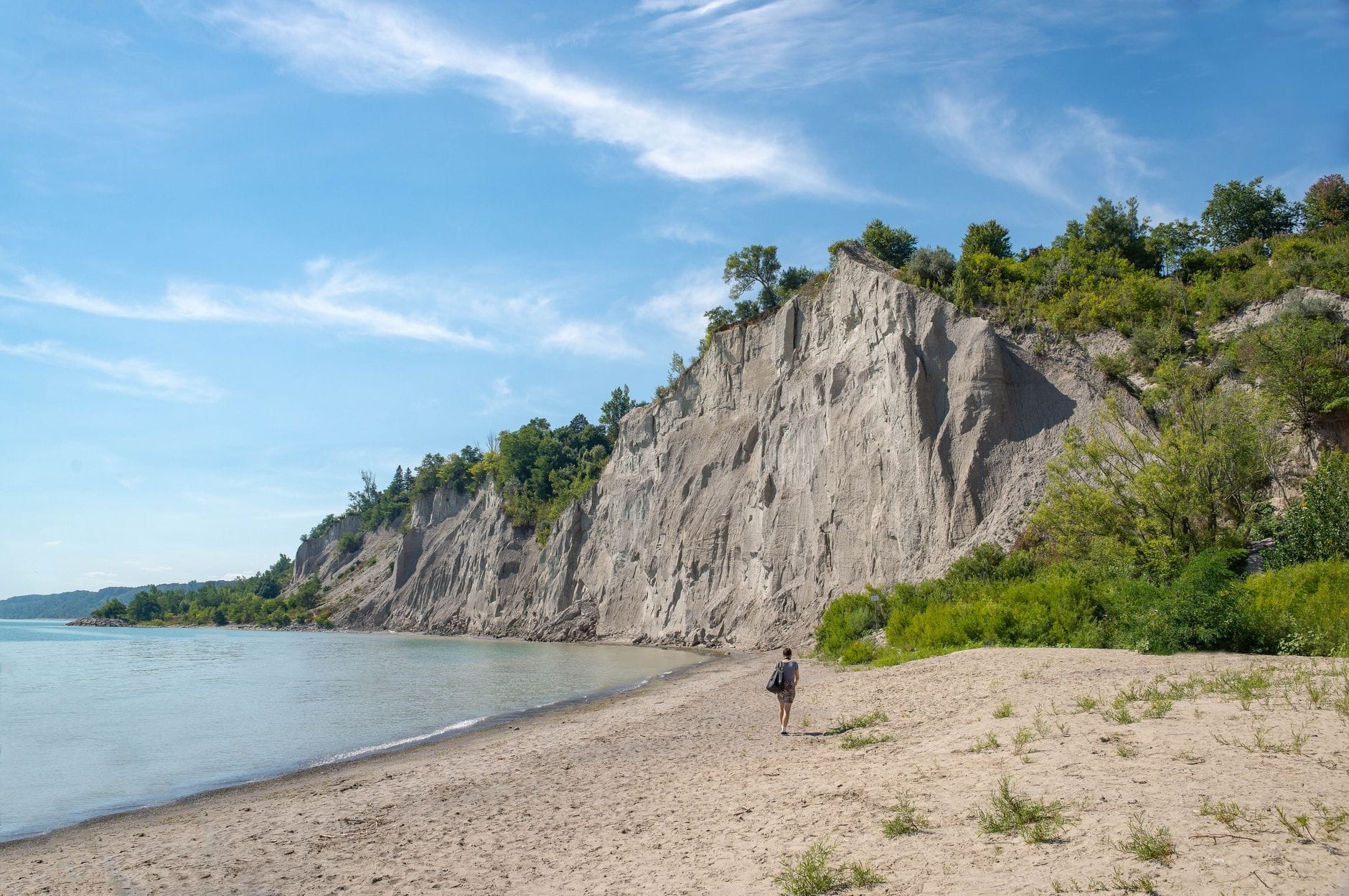
What the Scarborough Bluffs Actually Are
The Scarborough Bluffs are a series of sedimentary cliffs running roughly 15 kilometres along the northern shore of Lake Ontario, entirely within the district of Scarborough in the eastern part of Toronto. The cliffs were carved by glacial meltwater and wave erosion over the past 12,000 years, exposing layered deposits of clay, sand, gravel, and silt that record a detailed geological history of the Great Lakes basin. At their tallest, the bluffs rise more than 90 metres above the lake surface, which puts them among the most significant bluff formations on the entire Great Lakes shoreline.
The exposed face of the cliffs is pale grey and cream with streaks of amber and rust, the colours shifting noticeably depending on weather and time of day. Up close, the layered strata are clearly visible: compressed bands of different materials stacked like pages in a book, each representing a distinct period in the formation of the landscape. It is the kind of place that makes you aware of scale in a way that photographs rarely capture.
The bluffs sit in the Scarborough district of Toronto, roughly 20 to 25 kilometres east of downtown. That distance means most visitors arrive by car or via TTC transit connections, and the relative remoteness keeps crowds smaller than central parks or waterfront attractions. If you are already planning a broader exploration of Toronto's east end, the bluffs pair naturally with a visit to Rouge National Urban Park, which lies further east along the same lakeshore.
The Experience at Ground Level: Bluffer's Park and the Beach
The most accessible entry point is Bluffer's Park, at the bottom of Brimley Road South. The road descends steeply through a gap in the cliffs to reach a flat area of reclaimed land directly on the lakeshore. From here, the scale of the bluffs becomes fully apparent. You are standing at the base looking up at walls of pale sediment that block out the sky to the north. The lake extends south, and on a clear day you can see nothing but water to the horizon.
The park has a marina, picnic tables, public washrooms (seasonal), and a small beach. The beach itself is composed of coarse grey sand mixed with small stones, not the fine white sand of tropical destinations, but reasonably comfortable for sitting and wading. Swimming is possible in summer, though water temperatures in Lake Ontario stay cold well into July. The beach faces south, which means full afternoon sun in summer and a direct view of any storms tracking across the lake.
💡 Local tip
Arrive at Bluffer's Park early in the morning on weekdays if you want the cliff face lit from the east and the parking lot relatively empty. By midday on summer weekends, the lower park fills quickly and the access road can back up.
At the water's edge, the sounds are genuinely distinct from the rest of Toronto: waves against pebbled shore, the creak of sailboat rigging from the marina, and above it all, the occasional boom of a piece of cliff face calving off in the distance. The bluffs are actively eroding, a fact that rangers and signage make clear. You are not permitted to climb the cliff face, and overhangs can shed material without warning.
Tickets & tours
Live prices and dates from our booking partner. If you book, we may earn a commission at no extra cost to you.
Toronto Old Town: Dark Side Exploration Game and Tour
From 12 €Instant confirmationFree cancellationLEGOLAND Discovery Centre Toronto tickets
From 16 €Instant confirmationFree cancellationToronto 'Little Canada' entrance tickets
From 27 €Instant confirmationFree cancellationNiagara Falls evening tour with boat, dinner and Illumination Tower
From 77 €Instant confirmationFree cancellation
The View from the Top: Blufftop Parks and Lookouts
A separate and equally worthwhile experience is the view from the top of the bluffs, accessible through a chain of connected parks along the blufftop: Cathedral Bluffs Park, Scarborough Bluffs Park, and Bluffer's Park East, among others. These parks are accessed by residential streets in the neighbourhood above, rather than from the bottom road, and many visitors overlook them entirely in favour of the lower park.
From the top, the perspective inverts completely. You look down at the lake, far below, and south across open water. The cliff edge is fenced at several lookout points for safety, but the views are unobstructed. Early morning is the best time for photography from the top: the light comes from the east and rakes across the cliff face from the side, emphasising the layers and texture of the sediment. Fog sitting on the lake surface in spring and autumn can create a genuinely unusual visual, with the cliff tops emerging above a grey layer of mist.
⚠️ What to skip
Stay behind all fencing at cliff-edge lookouts. The bluff edge is actively eroding and overhangs can be unstable. Signs in the parks repeat this consistently, and it is not precautionary language: sections of the bluffs collapse regularly.
The blufftop trail system connects several of these parks and offers a genuinely pleasant walk through a mix of open meadow and urban green space. For context on how this fits into Toronto's broader network of natural parkland, the Toronto ravines hiking guide covers the city's interconnected system of wooded corridors and green trails.
How the Experience Changes by Season
Summer, from June to August, is the busiest season and the most social. The beach at Bluffer's Park draws families and picnickers, the marina is active, and the lower park has vendors and more foot traffic. Water temperatures become swimmable by July for most people, though the lake never becomes warm. The light is intense and flat in the middle of the day, making midday the worst time for photography.
Spring and autumn are the most visually dramatic seasons at the Scarborough Bluffs. In early spring, the cliff faces show saturated colour from moisture, and the absence of leaves on the trees along the blufftop means better sightlines to the cliff edge from above. October in particular brings low-angle light that turns the creamy cliff faces gold in the late afternoon. Temperatures are cool but manageable with layers.
Winter visits are possible and reward those willing to make the effort. The beach is deserted, the lower park is quiet, and when lake ice forms near the shore and snow accumulates on the cliff ledges, the visual contrast is sharp. That said, the access road down to Bluffer's Park can be icy and is less reliably plowed than main roads. Check conditions before driving down. For broader seasonal context, the best time to visit Toronto guide covers how weather affects attractions across the city.
Getting There and Practical Logistics
By car, the most direct route to the lower park is south on Brimley Road to Bluffers Park Road. Paid parking is available at Bluffer's Park and Bluffer's Beach lots. On busy summer weekends, these lots fill before noon. Arriving before 9am guarantees a spot; arriving after 11am on a holiday weekend likely means circling or leaving.
By TTC, the options depend on the day. On weekdays, take Line 2 to Kennedy Station and transfer to the 12A bus, which runs along Kingston Road with stops in the Scarborough area. On weekends and holidays from early May to early October, the 201 bus runs directly from Kennedy Station to Bluffer's Park Loop, making transit access considerably more straightforward. Always verify current TTC schedules before travelling, as service patterns can change.
ℹ️ Good to know
The 201 seasonal shuttle bus is the easiest car-free option for reaching the lower park. Outside the May-to-October service window, getting to the blufftop parks by transit requires more planning, but the top-of-bluffs lookouts in Scarborough Bluffs Park are reachable by bus along Kingston Road year-round.
Wear shoes appropriate for uneven surfaces if you plan to walk along the lower beach or any of the unpaved blufftop trails. Sections of the beach involve loose stones and driftwood. The lower park has basic amenities including seasonal washrooms, but there is no food service on site, so bring your own water and snacks for anything longer than a quick visit.
Detailed accessibility information for the Scarborough Bluffs, including step-free routes and accessible facilities, is not comprehensively published in official sources at the time of writing. The lower park area at Bluffer's Park is relatively flat once you reach the bottom, but the steep access road and the nature of the terrain mean that the experience varies considerably depending on mobility needs. For transport options across the city, the getting around Toronto guide covers transit, car, and accessibility considerations in more detail.
Photography and What to Actually Expect
The Scarborough Bluffs photograph well, and the images that circulate online, particularly the sweeping cliff faces reflected in calm water, are accurate representations of what you will see. However, those images are typically taken in specific conditions: low sun, calm lake, and no other visitors in frame. Replicating them requires either golden-hour timing or a weekday visit outside of summer.
From the lower park, the best shots of the cliff face come in early morning when the sun is low and to the east. From the blufftop, late afternoon in autumn gives the richest colour on the cliff tops and the widest sky over the lake. A wide-angle lens makes the most of the vertical scale from below; a telephoto compresses the layers of sediment from the top lookouts.
One honest note: the lower park area, including the marina and the picnic facilities, is functional rather than scenic in its built infrastructure. The parking lot, boat ramp, and chain-link fencing are present and visible. Visitors expecting a pristine, wilderness-style coastal experience should adjust expectations. The bluffs themselves are spectacular; the immediate park amenities are basic municipal facilities.
Who Might Not Enjoy This Visit
Travellers with limited time in Toronto who want concentrated access to multiple attractions should weigh the 20-to-25-kilometre distance from downtown carefully. The bluffs are genuinely impressive, but the round trip including transit time is a half-day commitment at minimum. If your Toronto itinerary is already full with central-city priorities, the bluffs may not make the cut. For a tighter urban schedule, the 3-day Toronto itinerary covers how to prioritise time across the city.
Visitors expecting a manicured park experience with café facilities, paved walkways throughout, and maintained beach amenities will find the Scarborough Bluffs underdeveloped by those standards. The appeal is the natural landscape itself, not the surrounding infrastructure. Similarly, those with significant mobility limitations should research specific accessibility provisions before making the trip, as the terrain is inconsistently navigable.
Insider Tips
- The blufftop lookout in Cathedral Bluffs Park, accessible from Scarborough Crescent off Midland Avenue, is less visited than the lower park and gives a direct vertical view down the cliff face to the lake below. Most visitors to Bluffer's Park never find it.
- On weekday mornings in September and October, the lower beach at Bluffer's Park is often completely empty. The seasonal crowds have thinned, the light is excellent for photography, and the lake surface tends to be calmer than in summer.
- The active erosion of the bluffs means the landscape changes incrementally each year. Fresh cliff exposures after winter freeze-thaw cycles sometimes reveal distinct new strata or unusual formations not visible the previous season.
- Parking at Bluffer's Park fills fast on summer weekends. A useful alternative is to park in the residential neighbourhood at the top of the bluffs and walk the trail down, which also means you experience both the top and bottom perspectives in a single visit.
- Bring layers regardless of the forecast. The waterfront position and the open lake exposure mean wind conditions at the Scarborough Bluffs are regularly cooler and stronger than conditions even a few kilometres inland, particularly in spring and autumn.
Who Is Scarborough Bluffs For?
- Landscape and nature photographers seeking dramatic vertical cliffs and wide lake views
- Geology enthusiasts interested in Great Lakes glacial history and visible sedimentary strata
- Families looking for a free outdoor half-day with beach access in summer
- Hikers and walkers who want substantial green space with genuine natural character
- Visitors who have already covered central Toronto and want to explore something with a different scale and atmosphere
Nearby Attractions
Other things to see while in Scarborough:
- Bluffer's Park & Beach
Bluffer's Park and Beach sits at the base of the Scarborough Bluffs, a towering 15-kilometre stretch of cliffs that rise over 90 metres above Lake Ontario. It is one of Toronto's most geologically dramatic landscapes, offering a free sandy beach, calm harbour waters, and jaw-dropping cliff views that feel far removed from the city above.
- Guild Park and Gardens
Guild Park and Gardens in Scarborough preserves dozens of architectural fragments salvaged from demolished Toronto buildings, set across a blufftop park overlooking Lake Ontario. Free to enter year-round, it combines genuine heritage interest with peaceful walking paths and one of the city's more unusual green spaces.
- Rouge National Urban Park
Spanning over 79 square kilometres across Toronto's eastern edge, Rouge National Urban Park is Canada's first national urban park. Free to enter and open every day of the year, it packs forests, wetlands, agricultural land, beaches, and over 1,700 species of plants and animals into a landscape that feels genuinely removed from the city around it.
- Toronto Zoo
Set on 710 acres beside Rouge National Urban Park in Scarborough, the Toronto Zoo is the largest zoo in Canada, home to over 5,000 animals across 500 species. It rewards a full day of exploration, but the sheer scale demands some planning.
Planning a trip? Discover personalized activities with the Nomado app.