Guild Park and Gardens: Scarborough's Outdoor Museum of Lost Toronto
Guild Park and Gardens in Scarborough preserves dozens of architectural fragments salvaged from demolished Toronto buildings, set across a blufftop park overlooking Lake Ontario. Free to enter year-round, it combines genuine heritage interest with peaceful walking paths and one of the city's more unusual green spaces.
Quick Facts
- Location
- 201 Guildwood Parkway, Scarborough, Toronto, ON M1E 1P5
- Getting There
- TTC Line 2 to Kennedy Station, then Bus 116A (Morningside) to Guildwood Pkwy at Chancery Lane; or drive via Kingston Rd to Guildwood Pkwy
- Time Needed
- 1.5 to 3 hours
- Cost
- Free (City of Toronto public park)
- Best for
- Architecture enthusiasts, history lovers, photographers, quiet walkers
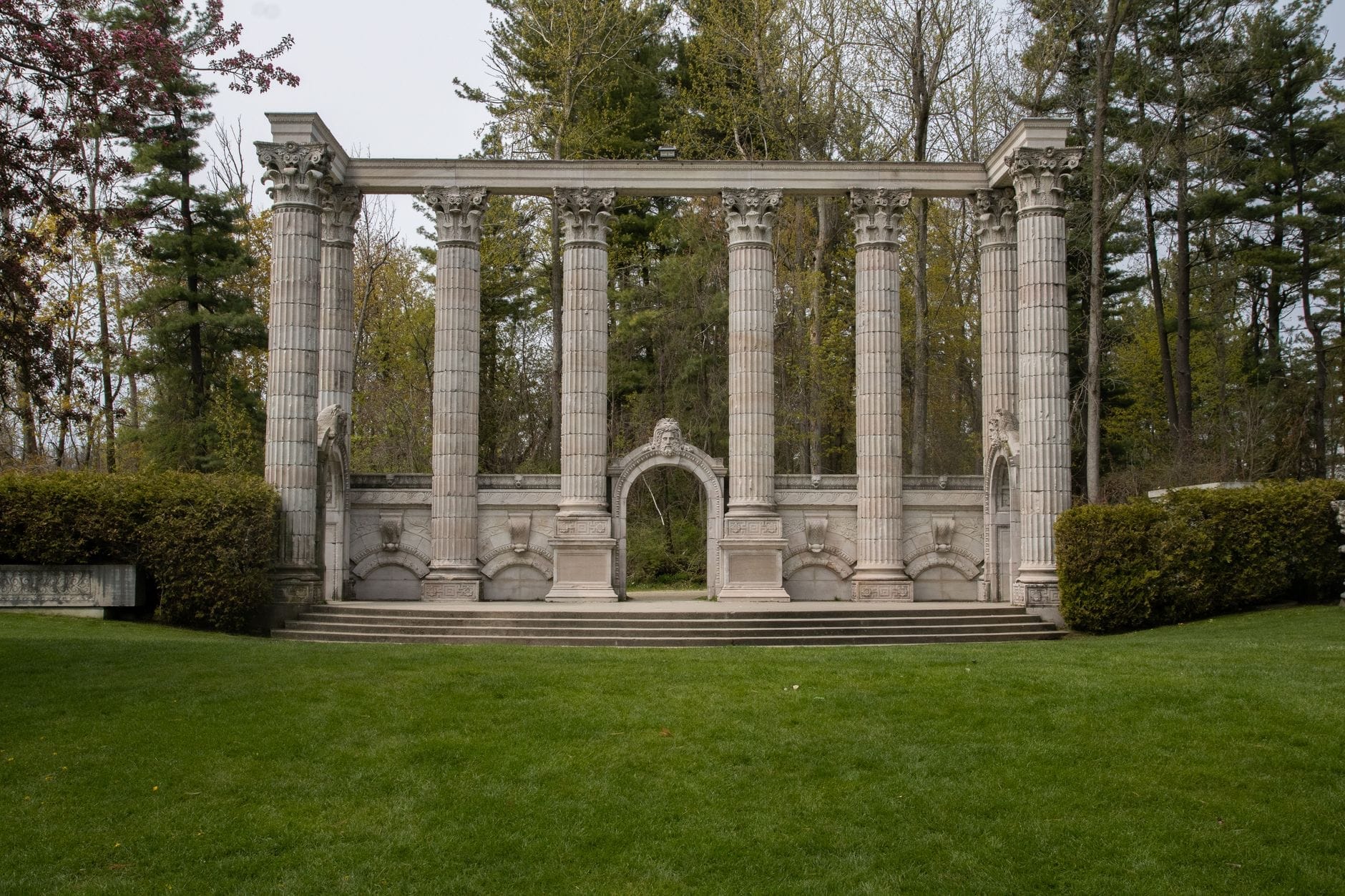
What Guild Park and Gardens Actually Is
Guild Park and Gardens is a City of Toronto public park sitting on the edge of the Scarborough Bluffs, overlooking Lake Ontario. What sets it apart from every other park in the city is a collection of stone columns, cornices, friezes, facades, and sculptural fragments arranged across the grounds like an open-air museum. These are not reproductions. They are pieces of real Toronto buildings that no longer exist: bank headquarters, office towers, and civic institutions that were demolished during the urban renewal waves of the mid-twentieth century.
The park covers roughly 36 hectares (about 88 acres) including woodland and blufftop terrain, with formal garden areas near the entrance and wilder trail sections leading toward the water. Admission is free, the park is open 24 hours a day year-round, and it receives a fraction of the foot traffic of better-known Toronto parks. That combination of genuine historic material and relative quietness is what makes it worth the trip to Scarborough.
ℹ️ Good to know
The architectural fragments are concentrated in the formal garden area near the main entrance off Guildwood Parkway. Head there first before exploring the woodland trails, especially if your time is limited.
The History Behind the Fragments
The story of Guild Park and Gardens begins in 1932, when Rosa and Spencer Clark established the Guild of All Arts on this property. Their intention was to create a working artists' community: painters, sculptors, and writers who could live and work on the estate, supported by the Clarks' patronage. The main building, now known as the Guild Inn Estate, became a hotel and gathering place. Throughout the mid-twentieth century, it hosted artists, cultural figures, and eventually served as a set for film and television productions.
The outdoor sculpture garden took shape through a different impulse. As Toronto demolished many of its Victorian and Edwardian-era buildings through the 1950s, 60s, and 70s, Spencer Clark arranged to salvage architectural elements before the wrecking crews finished their work. Columns from the Bank of Toronto's 1912-era King Street building were reassembled into what is now called the Greek Theatre, a semicircular outdoor performance space framed by tall Corinthian-style columns. Fragments from the Temple Building, which was once Canada's tallest structure when completed in 1895, also found their way here. The result is an outdoor record of what Toronto looked like before modern development erased much of its nineteenth-century built fabric.
For visitors who want architectural context beyond Guild Park itself, the Toronto architecture guide covers the broader story of the city's built environment, from the surviving heritage blocks downtown to contemporary landmarks.
Tickets & tours
Live prices and dates from our booking partner. If you book, we may earn a commission at no extra cost to you.
Toronto Old Town: Dark Side Exploration Game and Tour
From 12 €Instant confirmationFree cancellationLEGOLAND Discovery Centre Toronto tickets
From 16 €Instant confirmationFree cancellationToronto 'Little Canada' entrance tickets
From 27 €Instant confirmationFree cancellationNiagara Falls evening tour with boat, dinner and Illumination Tower
From 77 €Instant confirmationFree cancellation
Walking Through the Grounds
Arriving from Guildwood Parkway, you enter near the Guild Inn Estate building and the formal garden area. The paths here are paved or well-maintained gravel, and the architectural fragments begin almost immediately. Columns rise from grassy clearings. Stone capitals sit on low plinths. Carved figures and decorative panels lean against trees or stand mounted on concrete bases. Each piece has a small identifying marker, though the signage varies in legibility. A site map near the entrance helps orient you.
The Greek Theatre is the centerpiece. A curved row of tall stone columns forms a stage backdrop overlooking a sloped grass seating area with views south toward Lake Ontario. Early morning light catches the limestone and sandstone surfaces well, and the space is genuinely quiet before 10 a.m. on weekdays. On weekend afternoons in summer, the theatre area sees small gatherings and occasional outdoor events, but it rarely feels crowded.
Beyond the formal garden, woodland trails extend toward the bluff edge and down toward the waterfront. These paths are unpaved and can be muddy after rain. The descent toward Lake Ontario involves steep sections, and the terrain is uneven. Sturdy footwear is advisable for anyone planning to explore beyond the main garden. The bluff views at the top, where the land drops away sharply, are striking on clear days, with the lake stretching south to the horizon.
⚠️ What to skip
The trails descending from the bluff to the waterfront involve steep, uneven terrain. They are not suitable for strollers, wheelchairs, or visitors with limited mobility. The main garden area near the entrance is more accessible.
How the Experience Changes by Time of Day and Season
Mornings between 7 and 10 a.m. offer the most peaceful conditions. The light is directional and warm, which matters for a site where surface texture and carved detail are the main visual interest. You will likely share the space with dog walkers and the occasional jogger rather than tour groups. The stone fragments cast long shadows, and the formal garden has a stillness that is harder to find once the day progresses.
Midday visits in summer are comfortable enough in the shaded woodland sections, but the open garden area offers limited shade. Bring water, particularly if you plan to walk the full grounds. The park does not have food vendors or cafes within the site itself.
Autumn is arguably the most rewarding season. The woodland canopy turns from mid-October through early November, and the combination of orange and red foliage with pale stone columns and carved classical details is photogenic in a way that feels specific to this place. Snow in winter creates an unusual atmosphere with the columns half-buried and frost outlining carved reliefs, though paths can be icy. Spring brings mud on the woodland trails but also early green growth around the stone fragments.
If you are planning a Scarborough visit around the Scarborough Bluffs and want to combine both in a single trip, the two sites are within a few kilometres of each other along the blufftop. Allocate a full half-day for both.
Photography at Guild Park
This is one of Toronto's more photogenic and underused locations for architectural photography. The stone fragments offer interesting subjects at any focal length: wide shots capture the surreal quality of classical columns in a park setting, while close details of carved foliage, faces, and geometric patterns reward macro or telephoto work. The varied textures of limestone, sandstone, and granite read well in overcast light, which flattens harsh shadows and brings out surface detail.
The Greek Theatre columns work best in morning light from the east, when the low sun rakes across the fluting and emphasizes depth. The bluff edge, where the land drops toward the lake, offers a wide southern exposure that suits late afternoon and golden hour shooting in both summer and autumn. Drone photography is subject to standard Transport Canada regulations and any specific City of Toronto park rules; check those in advance if you plan to fly.
Practical Details for Your Visit
Guild Park and Gardens is located at 201 Guildwood Parkway in Scarborough, approximately 25 kilometres east of downtown Toronto. Driving is the most practical option for most visitors: parking lots are available on site near the Guild Inn Estate. By public transit, the journey from downtown involves TTC subway and bus connections and takes roughly an hour, making it a meaningful time investment. Check the TTC trip planner for current routing.
The park is in eastern Scarborough, a district that rewards visitors who look beyond the central city. The broader Scarborough neighbourhood guide covers other points of interest in the area, including natural features, markets, and cultural sites.
There are no food options within the park. The surrounding Guildwood area has limited services; plan to bring water and snacks, particularly for longer visits involving the woodland trails. Washroom facilities are available near the main entrance area, though availability and hours may vary seasonally. The park has no admission fee and no booking requirement.
Visitors with mobility limitations should note that the formal garden area near the entrance is reasonably navigable on paved paths, but the woodland and bluff-edge sections involve slopes and unpaved surfaces. The site as a whole is not fully accessible for wheelchair users. Families with young children will find the open garden areas manageable; the fragments are at ground level and can be examined up close, which tends to interest curious children. The trails descending the bluff are not appropriate for young children without close supervision.
💡 Local tip
Combine a Guild Park visit with a stop at Bluffer's Park and Beach, located a short drive west along the blufftop. The two sites together give you both the cultural history of the Scarborough Bluffs area and direct access to the waterfront.
Is It Worth the Trip from Downtown?
That depends on what you are after. If you have a specific interest in Toronto's architectural history, in urban salvage and heritage preservation, or in photography locations that are not overrun with other visitors, the answer is yes, even accounting for the travel time. The Greek Theatre alone is a genuinely striking structure, and the full sculpture garden represents a serious act of cultural preservation that deserves more attention than it typically receives.
If you are a first-time visitor to Toronto with limited days, this is not where you should spend your primary time. It sits far enough from the central city, and its appeal is specific enough, that visitors without a particular interest in heritage or landscape photography are unlikely to rate it highly relative to the journey. It is not the kind of place that impresses through spectacle. Its rewards are quieter and require a degree of engagement with what you are looking at.
First-time visitors prioritizing their time would do better starting with the city's major parks and green spaces covered in the best parks in Toronto guide, then adding Guild Park on a second or third day if the heritage angle appeals.
Insider Tips
- Each architectural fragment has a small identification plaque, but some are worn or partially obscured. Cross-reference with the site map near the entrance to understand which building each piece came from — the context significantly increases the interest of what you are looking at.
- The Greek Theatre is occasionally used for small outdoor events and performances in summer, particularly on weekends. If you want the space to yourself for photographs or quiet reflection, a weekday morning visit is considerably better than a Saturday afternoon.
- The woodland path that runs parallel to the bluff edge (rather than descending to the waterfront) offers glimpses of the lake through the tree canopy without the steep terrain of the descent trails. It is a better option for those who want the bluff atmosphere without committing to a strenuous climb back up.
- The Guild Inn Estate building on the property has had various uses over the years; check current programming in advance, as it has been used for events and banquets. On days with private events, parts of the grounds nearest the building may feel less accessible, though the public park areas remain open.
- Autumn weekday mornings between mid-October and early November offer the rarest combination at this site: peak foliage colour, low-angle morning light, classical stone columns, and almost no other visitors. It is one of the more unusual seasonal photography opportunities in Toronto.
Who Is Guild Park and Gardens For?
- Architecture and heritage enthusiasts interested in Toronto's lost Victorian and Edwardian buildings
- Photographers seeking unusual, uncrowded subjects with strong texture and historical character
- Repeat Toronto visitors who have seen the central city and want to explore Scarborough's less-visited character
- Walkers looking for a quiet blufftop park with woodland trails away from the downtown core
- Families with older children who can engage with the history of the fragments and handle light trail walking
Nearby Attractions
Other things to see while in Scarborough:
- Bluffer's Park & Beach
Bluffer's Park and Beach sits at the base of the Scarborough Bluffs, a towering 15-kilometre stretch of cliffs that rise over 90 metres above Lake Ontario. It is one of Toronto's most geologically dramatic landscapes, offering a free sandy beach, calm harbour waters, and jaw-dropping cliff views that feel far removed from the city above.
- Rouge National Urban Park
Spanning over 79 square kilometres across Toronto's eastern edge, Rouge National Urban Park is Canada's first national urban park. Free to enter and open every day of the year, it packs forests, wetlands, agricultural land, beaches, and over 1,700 species of plants and animals into a landscape that feels genuinely removed from the city around it.
- Scarborough Bluffs
Stretching 15 kilometres along the eastern shore of Lake Ontario, the Scarborough Bluffs are one of Toronto's most striking natural features. Formed from glacial sediment deposited over 12,000 years ago, the chalk-white and ochre cliffs rise more than 90 metres above the water. Entry is free, the views are genuinely impressive, and the contrast with the downtown skyline couldn't be greater.
- Toronto Zoo
Set on 710 acres beside Rouge National Urban Park in Scarborough, the Toronto Zoo is the largest zoo in Canada, home to over 5,000 animals across 500 species. It rewards a full day of exploration, but the sheer scale demands some planning.
Planning a trip? Discover personalized activities with the Nomado app.