Woodbine Beach: Toronto's Best Urban Lakefront Escape
Woodbine Beach is Toronto's largest sandy beach, stretching along Lake Shore Boulevard East beside Ashbridge's Bay. Free to enter year-round, it offers swimming, volleyball, a boardwalk trail, and some of the city's best lake views, all within city limits.
Quick Facts
- Location
- 1675 Lake Shore Blvd E, Toronto, ON M4L 3W6 (Scarborough/Beaches area, eastern lakefront)
- Getting There
- The 92 Woodbine South bus and 501 Queen streetcar serve stops near the beach; check current TTC schedules for exact routing and stop locations
- Time Needed
- 1.5 to 3 hours for a beach visit; allow more time if cycling or walking the Martin Goodman Trail
- Cost
- Free (no admission fee for beach or park access)
- Best for
- Swimmers, sunbathers, cyclists, dog walkers, beach volleyball players, and families on a budget
What Woodbine Beach Actually Is
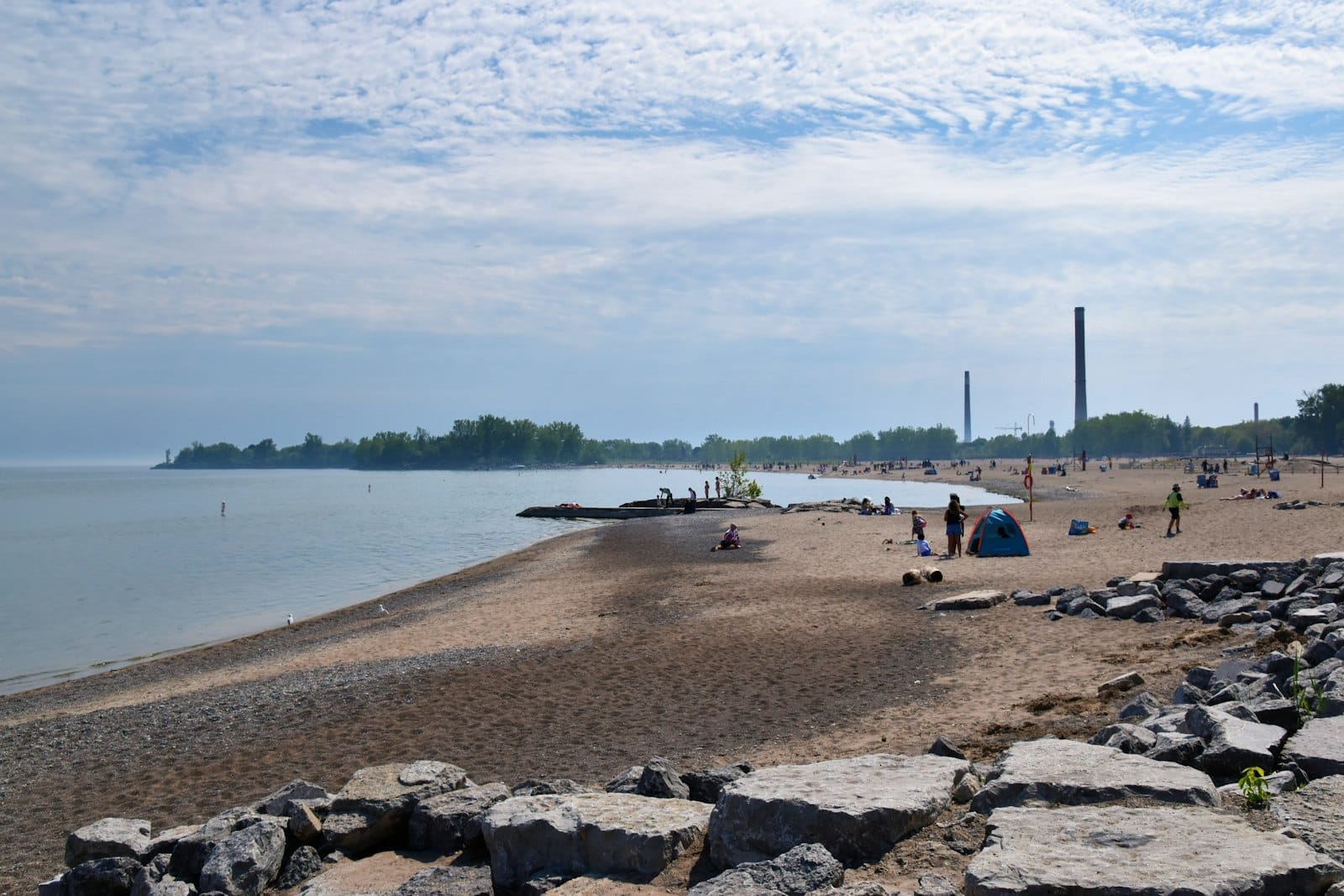
Woodbine Beach Park is the largest of the four beaches in Toronto's eastern lakefront strip, stretching from Ashbridge's Bay eastward toward the RC Harris Water Treatment Plant. It sits along Lake Shore Boulevard East, roughly where Woodbine Avenue meets the lake, and delivers something that surprises first-time visitors: a wide, sandy, genuinely swimmable beach inside a major North American city.
The beach itself is broad enough that even on a warm Saturday in July, you can lay out a towel without feeling squeezed. The sand runs parallel to the Martin Goodman Trail, a multi-use path used by cyclists and runners year-round. Behind the sand, a boardwalk connects the beach to the wider Kew-Balmy Beach neighbourhood to the east, giving the area a relaxed, walkable character.
ℹ️ Good to know
Woodbine Beach holds Blue Flag certification, an international standard for water quality, safety, and environmental management. Blue Flag status has been confirmed through at least the 2025 season. Check current Toronto Public Health water quality advisories before swimming, as conditions can change after heavy rainfall.
A Short History: From 'The Cut' to Blue Flag Beach
Before Lake Shore Avenue was extended to Woodbine in the 1950s, this stretch of shoreline had a wilder reputation. Locally known as 'The Cut,' it was a wooded, semi-isolated strip associated with rum-running during the Prohibition era, when the dense tree cover and easy lake access made it useful for purposes city planners would not have endorsed.
The extension of the road, combined with post-war lakefront development, gradually transformed the site into a public recreation area. Over the following decades, the City of Toronto invested in sand replenishment, water quality monitoring, and the infrastructure that today makes Woodbine one of the better-maintained urban beaches in Canada.
The Blue Flag program, administered internationally by the Foundation for Environmental Education, uses criteria covering water quality, environmental education, safety services, and facilities management. Holding this certification places Woodbine in the same assessment framework as beach destinations in Europe and elsewhere, and it signals that the beach is regularly tested and publicly reported on, not just marketed.
Tickets & tours
Live prices and dates from our booking partner. If you book, we may earn a commission at no extra cost to you.
Toronto Old Town: Dark Side Exploration Game and Tour
From 12 €Instant confirmationFree cancellationLEGOLAND Discovery Centre Toronto tickets
From 16 €Instant confirmationFree cancellationToronto 'Little Canada' entrance tickets
From 27 €Instant confirmationFree cancellationNiagara Falls evening tour with boat, dinner and Illumination Tower
From 77 €Instant confirmationFree cancellation
How the Beach Changes Through the Day
Early mornings are the most atmospheric time to visit, and also the least crowded. Between 7 and 9 a.m., you will typically see dog walkers crossing the sand, joggers on the boardwalk, and cyclists moving along the Martin Goodman Trail. The lake at this hour can be mirror-flat on calm days, and the light from the east hits the water in a way that photographers who arrive mid-afternoon consistently miss.
From mid-morning onward, the character shifts. Beach volleyball courts fill up, families arrive with folding chairs and coolers, and the scent of sunscreen becomes part of the air. By early afternoon on a hot July weekend, the parking area along Lake Shore Blvd E fills quickly, and the sand near the lifeguard stations is noticeably busier than the eastern end toward the water treatment plant.
Late afternoon, roughly 4 to 6 p.m., sees a second wave: people finishing work early or coming from other parts of the city for an evening swim. The light softens, the crowds thin slightly, and the lake temperature, which takes all day to warm, is at its most comfortable. Sunset from Woodbine is worth staying for: Lake Ontario stretches south and west without obstruction, and the sky over the water takes on long horizontal colours.
💡 Local tip
Arrive before 10 a.m. on summer weekends to secure a parking spot. The lot along Lake Shore Blvd E fills fast by mid-morning in July and August. Cycling to the beach via the Martin Goodman Trail is a practical alternative that avoids parking entirely.
Swimming, Water Quality, and What to Know Before You Go In
The official supervised swimming season at Woodbine typically runs from early June to early September. During this period, Toronto Public Health samples the water regularly and posts beach advisories when bacteria levels exceed safe thresholds. These advisories most often occur within 24 to 48 hours after heavy rainfall, when stormwater runoff can temporarily affect water quality. The Swim Guide app and website track current conditions at Woodbine Beach specifically, and checking it before you go takes about 30 seconds.
Lifeguards are present during the supervised season, and the beach is designated as disabled-friendly with accessible water access. Facilities include public restrooms and public parking. Outside the supervised season, the beach remains open, but swimming is unsupervised and not officially recommended.
Lake Ontario is not a warm tropical body of water. Even at peak summer, water temperatures are typically in the low-to-mid 20s Celsius on the best days, and can feel noticeably cool after a stretch of cloudy or windy weather. If you are visiting Toronto primarily for swimming and want warmer water, manage your expectations accordingly. For broader context on what the city's waterfront offers, the Toronto waterfront guide covers the full lakefront stretch and helps set expectations.
The Boardwalk, the Trail, and What's Around the Beach
Woodbine Beach connects directly to the boardwalk that runs through Kew-Balmy Beach to the east, making it part of a continuous lakefront walking route rather than an isolated destination. On foot, it takes about 20 to 30 minutes to walk the full boardwalk section east from Woodbine. The residential streets backing the beach are lined with detached homes and a scattering of low-key cafes, which makes the neighbourhood feel distinctly residential rather than tourist-facing.
To the west, the Martin Goodman Trail connects Woodbine to the broader Toronto waterfront trail network, eventually reaching downtown and the Harbourfront area. For cyclists, this is one of the most rewarding sections of the trail: flat, lake-adjacent, and largely traffic-separated. If you plan to cycle the full waterfront, check the Martin Goodman Trail page for route details and distance planning.
Beach volleyball courts on the sand are used informally and through organized leagues during summer. On weekday evenings in June and July, it is common to see full games in progress as teams practice. The courts are free for casual use when not scheduled, but expect competition for court space on warm weekday evenings.
Getting There and Practical Details
Woodbine Beach is at 1675 Lake Shore Blvd E, accessed from Lake Shore Boulevard at the foot of Woodbine Avenue. The park is listed by the City of Toronto as open year-round, though active facilities and services operate on seasonal schedules. There is no admission fee for beach or park access.
By public transit, the 92 Woodbine South bus and 501 Queen streetcar provide access to stops near the beach. Check the current TTC trip planner for the most accurate routing from your starting point, as specific bus numbers and stop locations are subject to change. By car, parking is available on site along Lake Shore Blvd E, but arrives at capacity quickly on summer weekends, as noted above.
Toronto's eastern beaches are part of the broader Scarborough district. If you are exploring the area and want to extend your time on the water east of Woodbine, the Scarborough Bluffs are roughly 15 minutes by car further east and offer a completely different landscape: dramatic clay cliffs rising from the lake rather than flat sandy shoreline.
⚠️ What to skip
Water quality advisories are posted after heavy rainfall and can remain in effect for 24 to 48 hours. Always check Toronto Public Health's current beach advisory or the Swim Guide before swimming, particularly in late spring and after summer storms.
Photography and What You Can Actually Capture Here
Woodbine faces roughly south over the lake, which means the best light for photography falls in the early morning (golden hour from the east, which catches the sand and boardwalk) and in the late afternoon and evening when the sun descends toward the western horizon over the water. Midday light is flat and high, and the beach typically looks more photogenic at either end of the day.
In winter, when the beach is empty and ice forms along the shoreline, Woodbine offers some of the most distinctive urban landscape shots in the city: the frozen edge of a great lake, backed by a deserted boardwalk, with the city skyline faintly visible to the west. These conditions require cold tolerance and appropriate footwear, but the reward is photographs that look nothing like a standard Toronto postcard.
If skyline photography is a priority, note that the CN Tower and downtown core are visible from Woodbine Beach but at some distance and on the western horizon rather than overhead. Closer and more direct skyline views are available from the Harbourfront and Toronto Islands. See the best views in Toronto guide for a full comparison of vantage points.
Who Should Think Twice Before Coming Here
Woodbine Beach is genuinely worth visiting on its own terms, but it is not the right fit for every traveller. If you are on a short trip to Toronto and weighing whether a beach visit fits your itinerary, be honest about what you want: this is an urban public beach on a cold freshwater lake, not a resort. The water is clear and the sand is real, but the backdrop is a city, not a tropical coast.
Visitors who dislike crowds should avoid Woodbine on summer weekends between 11 a.m. and 4 p.m. The beach is popular with local residents and gets genuinely busy. Anyone visiting Toronto on a two or three day itinerary in a non-summer month should know that the beach experience outside June to August is limited: pleasant for walking, but not for swimming.
Travellers whose primary interest is Toronto's cultural institutions, food scene, or architecture may find that a beach visit competes with limited time better spent elsewhere. The 3 days in Toronto itinerary helps prioritize based on interests and season.
Insider Tips
- The eastern end of Woodbine Beach, near the RC Harris Water Treatment Plant, is consistently less crowded than the main central section near the volleyball courts. If you want space on a summer weekend, walk east past the main cluster.
- After a rainfall event, do not assume the beach is fine because it looks clean. Stormwater advisories can last 24 to 48 hours even in clear weather. Check the Swim Guide app (theswimguide.org) for the exact current status at Woodbine specifically.
- The Martin Goodman Trail runs directly behind the beach and is one of the best cycling routes in the city. Renting a bike and arriving via the trail from downtown avoids all parking issues and adds a worthwhile lakefront ride to the visit.
- Winter visits are underrated. When the lake partially freezes and the beach is empty, Woodbine has a stark, dramatic quality that summer crowds completely obscure. Dress for -10 to -15 Celsius with wind chill and the shoreline is yours.
- Beach volleyball courts are available for casual drop-in use when not booked for organized leagues. Weekday mornings in summer are the most reliable window for getting court time without waiting.
Who Is Woodbine Beach For?
- Families with young children looking for free outdoor activity in summer
- Cyclists using the Martin Goodman Trail as a lakefront route
- Toronto residents seeking an accessible weekend swim without leaving the city
- Photographers after early-morning lakefront light or winter ice shoreline shots
- Budget travellers wanting a full beach day at zero cost
Nearby Attractions
Other things to see while in Scarborough:
- Bluffer's Park & Beach
Bluffer's Park and Beach sits at the base of the Scarborough Bluffs, a towering 15-kilometre stretch of cliffs that rise over 90 metres above Lake Ontario. It is one of Toronto's most geologically dramatic landscapes, offering a free sandy beach, calm harbour waters, and jaw-dropping cliff views that feel far removed from the city above.
- Guild Park and Gardens
Guild Park and Gardens in Scarborough preserves dozens of architectural fragments salvaged from demolished Toronto buildings, set across a blufftop park overlooking Lake Ontario. Free to enter year-round, it combines genuine heritage interest with peaceful walking paths and one of the city's more unusual green spaces.
- Rouge National Urban Park
Spanning over 79 square kilometres across Toronto's eastern edge, Rouge National Urban Park is Canada's first national urban park. Free to enter and open every day of the year, it packs forests, wetlands, agricultural land, beaches, and over 1,700 species of plants and animals into a landscape that feels genuinely removed from the city around it.
- Scarborough Bluffs
Stretching 15 kilometres along the eastern shore of Lake Ontario, the Scarborough Bluffs are one of Toronto's most striking natural features. Formed from glacial sediment deposited over 12,000 years ago, the chalk-white and ochre cliffs rise more than 90 metres above the water. Entry is free, the views are genuinely impressive, and the contrast with the downtown skyline couldn't be greater.
Planning a trip? Discover personalized activities with the Nomado app.