San Telmo is Buenos Aires's most historically layered neighborhood, where cobbled streets lined with 19th-century townhouses lead to tango milongas, antique dealers, and one of the city's great market halls. It sits just south of the city center and draws visitors who want atmosphere over polish.
San Telmo is where Buenos Aires wears its age proudly. Colonial-era buildings, uneven cobblestones, and a Sunday antiques fair that takes over the entire length of Defensa Street give this neighborhood a character unlike anywhere else in the city. It's not the slickest part of town, but that's precisely the point.
Orientation
San Telmo occupies the southern end of Buenos Aires's inner core, sitting in Comuna 1 directly below the Microcentro and just north of La Boca.
Defensa Street is the neighborhood's central artery, running north-south through the heart of San Telmo and connecting the busy northern edge near the city center all the way down to Parque Lezama at the southern boundary. Almost every major point of interest sits within a block or two of Defensa. Plaza Dorrego, the neighborhood's social and geographic center, is about halfway down this street.
San Telmo borders Monserrat and the Microcentro to the north, which means you can walk from Plaza de Mayo into San Telmo in under fifteen minutes without catching any transport. To the east, across Paseo Colón, lies Puerto Madero, Buenos Aires's modern waterfront district. To the south, the neighborhood bleeds into La Boca, though the character changes sharply once you cross Avenida Brasil.
Character & Atmosphere
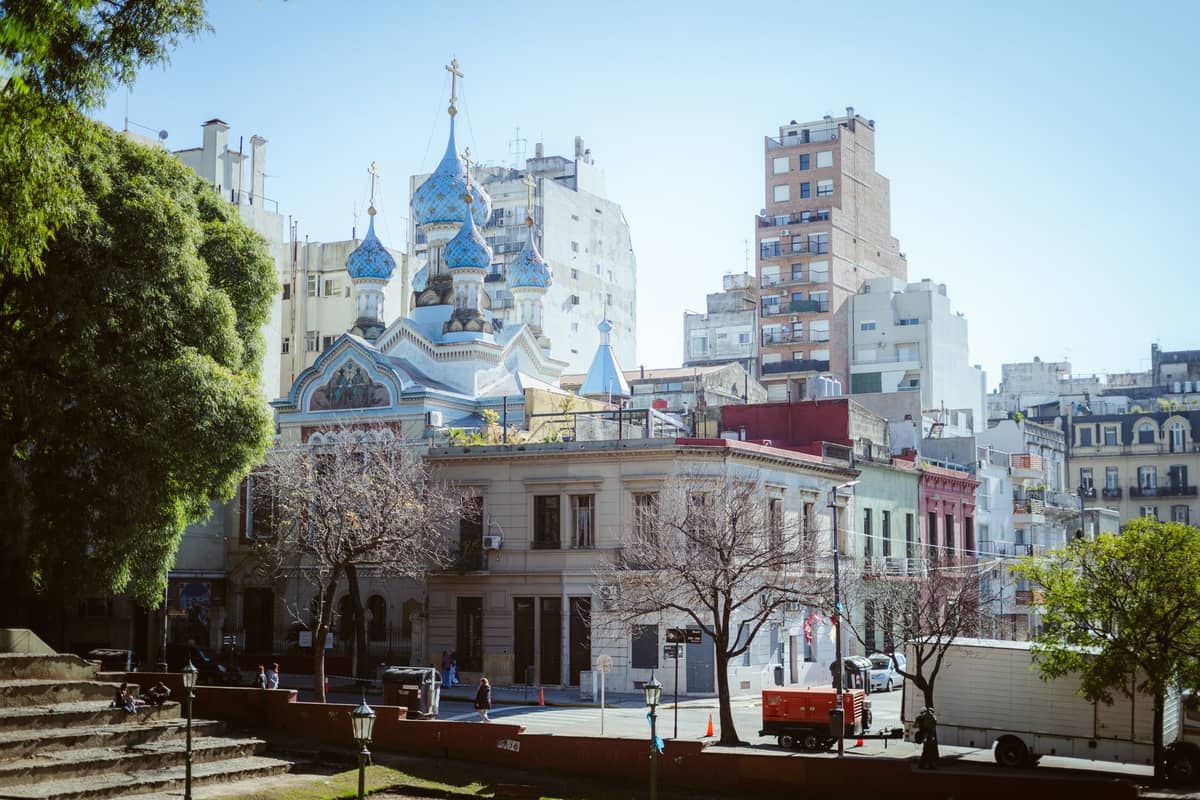
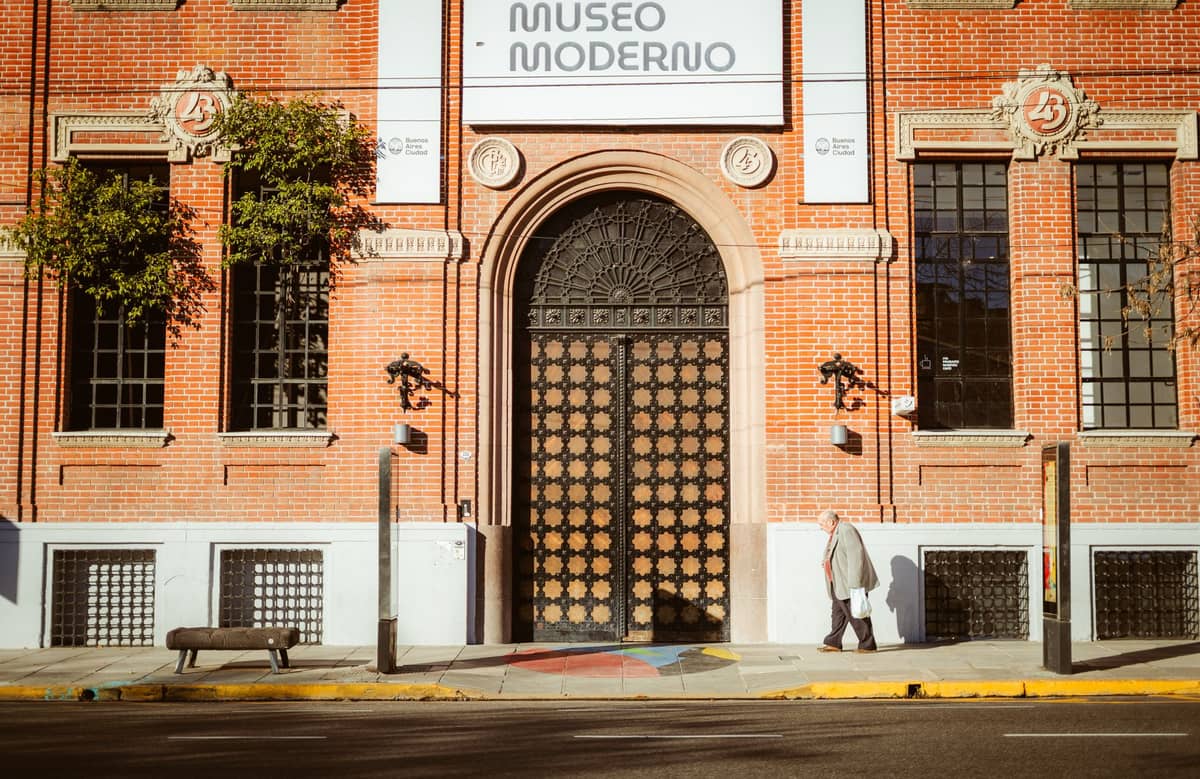
San Telmo is one of Buenos Aires's oldest surviving neighborhoods, and it shows in the best possible way. The streets are narrow and paved with uneven adoquines, the large granite cobblestones that were used as ballast in 19th-century ships arriving from Europe. The buildings on either side are mostly colonial in style, many with ornate facades, wrought-iron balconies, and internal courtyards called patios that you catch glimpses of through open doorways. The general aesthetic is faded grandeur rather than restored shine.
In the mornings, the neighborhood is quiet and unhurried. Café owners drag chairs onto the pavement, shopkeepers roll up metal shutters, and the antique dealers begin arranging their stalls along the edges of Defensa. The light in the early hours hits the old plasterwork at an angle that makes even the crumbling facades look deliberate. Dog walkers are everywhere, which is a reliable indicator that actual residents still live here, not just tourists.
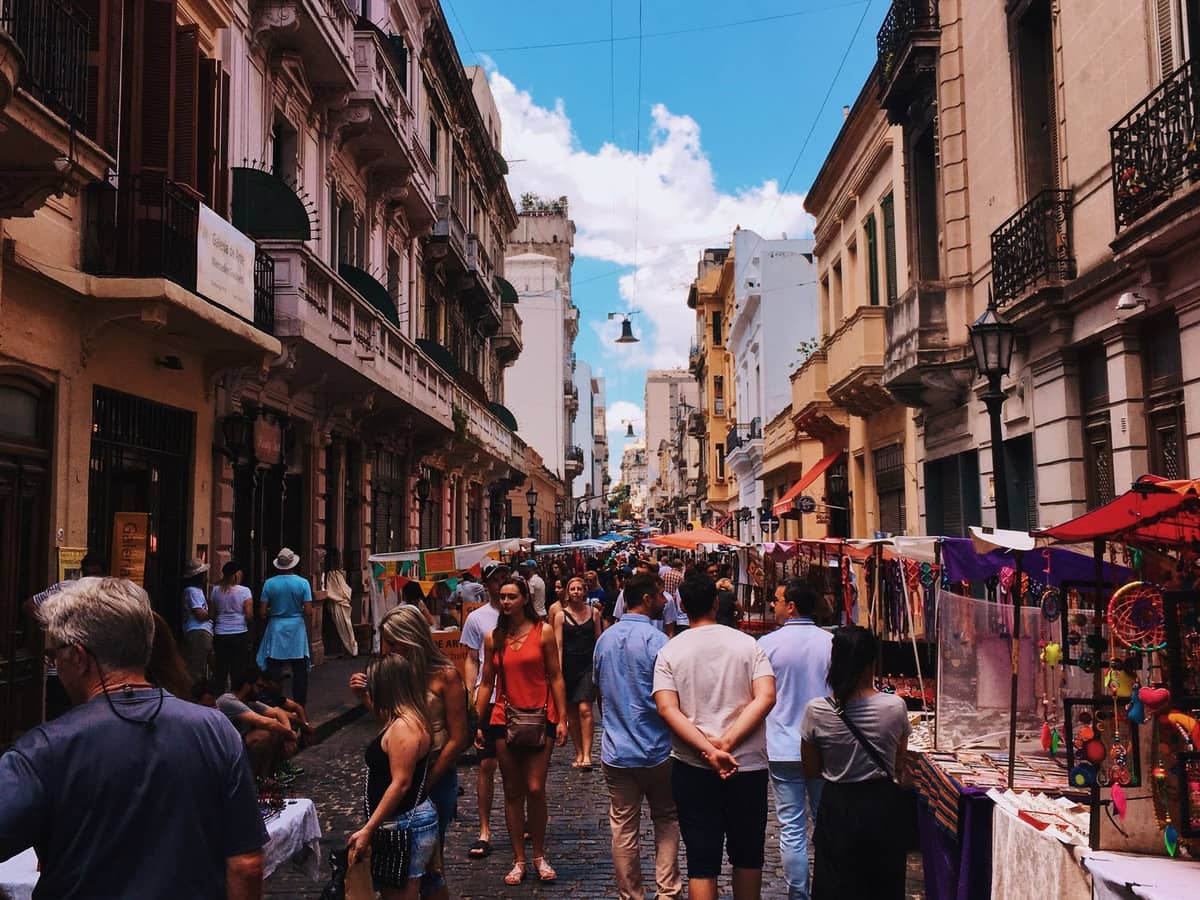
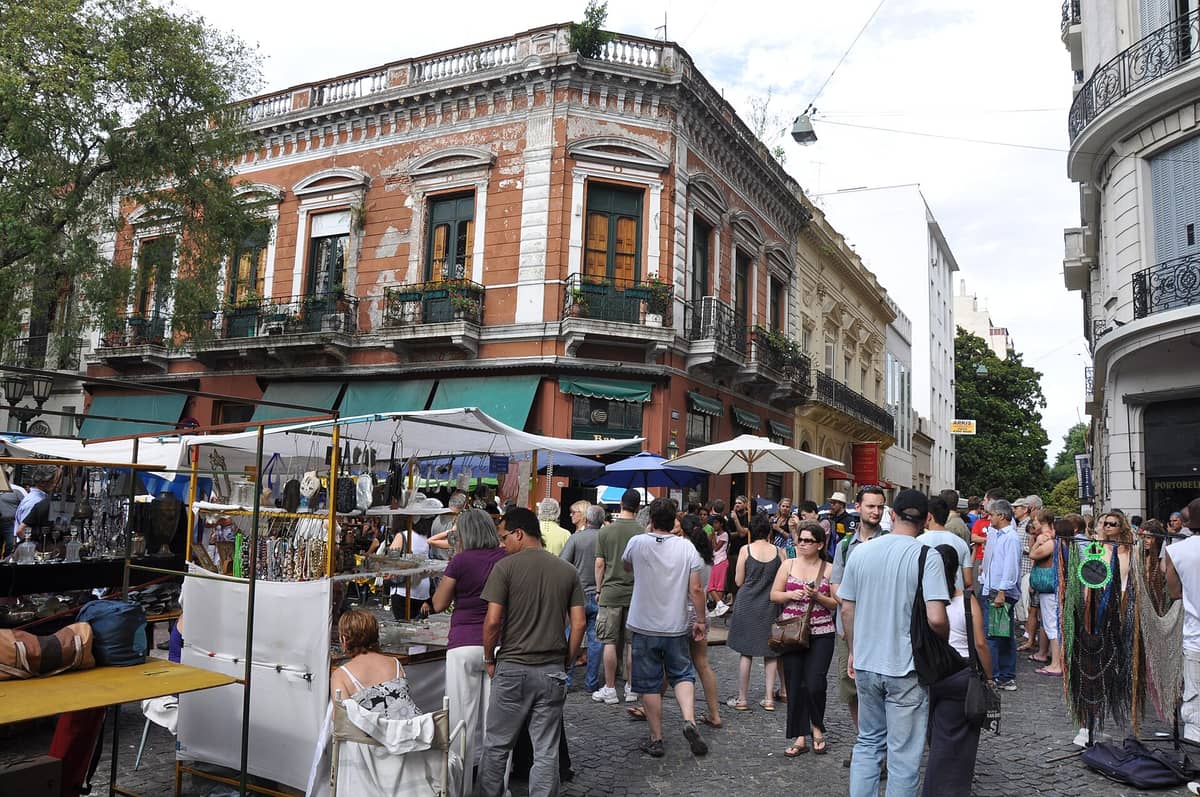
By midday on any day of the week, the main drag fills up. On weekdays this is a mix of locals eating lunch at corner restaurants and visitors working their way through the antique shops and galleries. On Sundays, the entire street transforms: Defensa is closed to traffic through the fair area, and the Feria de San Telmo stretches the full length with hundreds of vendors selling antiques, vintage clothing, leather goods, silverware, records, and Argentine curiosities.
After dark, San Telmo shifts again. The tourist flow thins, the tango venues open their doors, and the bars around Plaza Dorrego fill with a mix of porteños and travelers. The square itself, ringed by café tables and flanked by colonial-era buildings, has a genuinely cinematic quality at night when the lights are low and someone is playing bandoneón nearby. That said, the quieter streets east of Defensa can feel isolated after 10pm, particularly closer to Paseo Colón, where foot traffic drops off sharply.
⚠️ What to skip
Pickpocketing is a real concern in San Telmo, particularly during the Sunday market when crowds are dense. Keep bags in front of you and avoid displaying expensive cameras or phones unnecessarily. The Sunday fair is the most-visited spot in the neighborhood, and opportunistic theft follows accordingly.
What to See & Do
The neighborhood's social core is Plaza Dorrego, a small, tree-lined square that claims to be the second oldest plaza in Buenos Aires. During the week it functions as a relaxed outdoor café space. On Sundays it becomes the anchor point for the Feria de San Telmo, surrounded by tango performers and antique sellers. The scale is intimate compared to the grand plazas elsewhere in the city, which is part of its appeal.
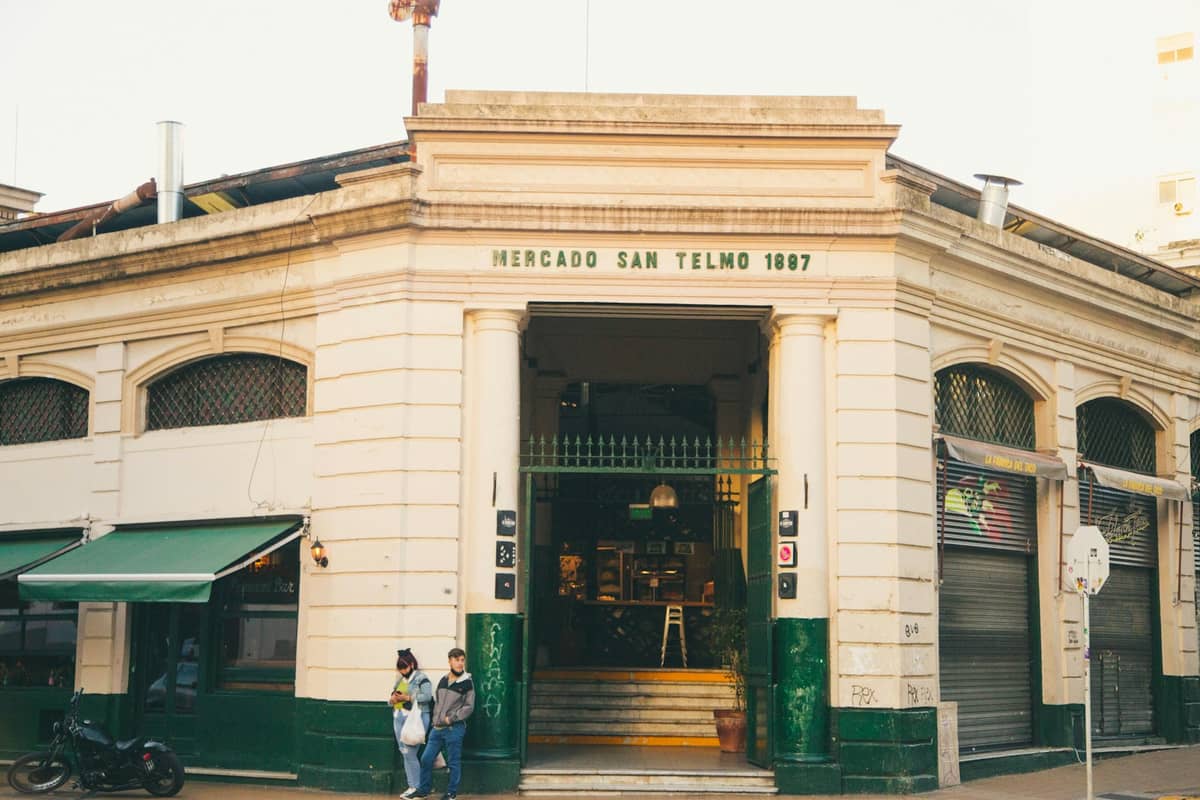
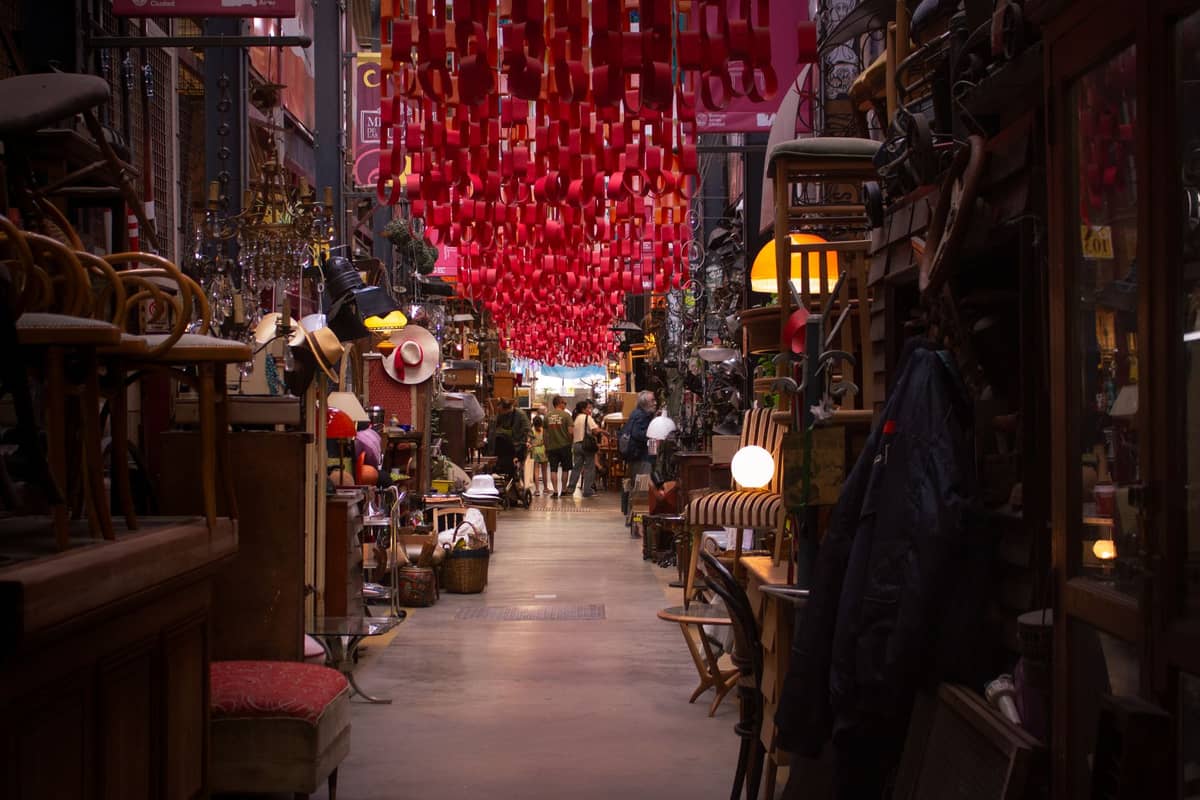
A block north of the square on Defensa sits the Mercado de San Telmo, a covered market hall built in 1897 and designed by Juan Antonio Buschiazzo, the same architect responsible for the Recoleta Cemetery. Inside, the original cast-iron structure has been preserved, and the market combines fresh produce stalls at the edges with a central area of antique dealers, coffee bars, and small food counters. It's one of the better places in the neighborhood to sit down with a coffee and observe the mix of locals and visitors at different times of day.
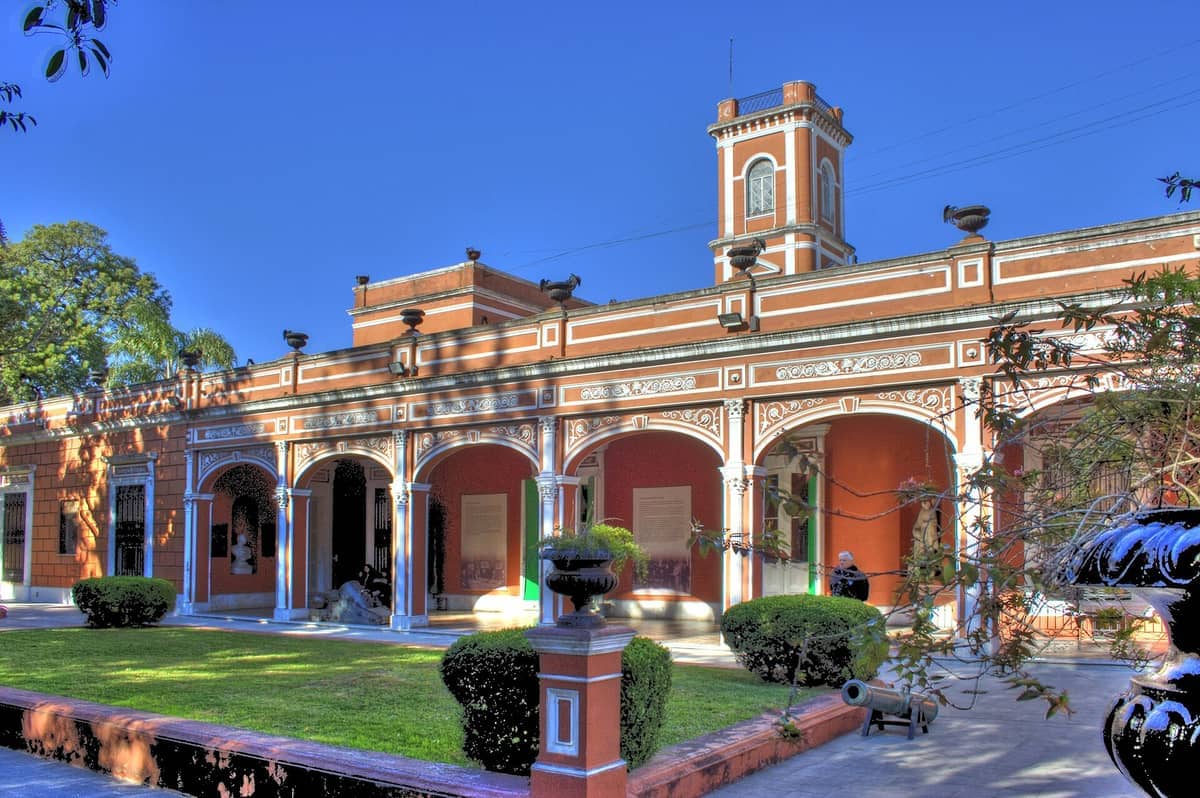
At the southern end of the neighborhood, Parque Lezama marks San Telmo's natural boundary with La Boca. The park sits on a slight hill, which gives it unusual topography for central Buenos Aires, and its mixture of mature trees, benches, and weekend activity makes it a good place to decompress. The Museo Histórico Nacional is located within the park grounds.
The Sunday street fair, the Feria de San Telmo, is the neighborhood's most famous event and runs every Sunday along Defensa Street. It draws large numbers of visitors and is genuinely worth attending, though the goods on offer range from quality antiques and vintage items to low-grade souvenirs. Arriving before 11am gives you a better sense of the fair before the crowds peak around noon.
San Telmo is also strongly associated with tango in Buenos Aires. Several milongas and tango venues operate in the neighborhood, offering both dinner shows for tourists and more authentic milonga nights for those who want to dance or watch. For a broader picture of where tango fits in the city, the tango in Buenos Aires guide covers the options across neighborhoods.
Plaza Dorrego: the neighborhood's central square, best on Sunday mornings
Mercado de San Telmo: 19th-century covered market with antiques and food
Feria de San Telmo: Sunday street fair running the length of Defensa
Parque Lezama: elevated park at the southern boundary, good for a break
Museo Histórico Nacional: inside Parque Lezama, covering Argentine history
Pasaje Defensa and nearby cobbled side streets: a short wander with antique shops and mosaic-covered facades
Milongas and tango shows: several operating within the neighborhood
💡 Local tip
If you're visiting on a Sunday, arrive at the Mercado de San Telmo when it opens in the morning, before the street fair brings the crowds. The market's interior is at its most atmospheric early in the day, and the antique dealers inside are more likely to have time for a proper look and conversation.
Eating & Drinking
San Telmo has a dense concentration of restaurants and bars, but quality is uneven. The blocks closest to Defensa and around Plaza Dorrego skew heavily toward tourist trade, with menus in multiple languages and pricing that reflects the foot traffic. The better eating is usually found one or two blocks off the main drag, where the clientele is more mixed and the kitchens don't rely on passing visitors.
The Mercado de San Telmo is one of the most useful options for a casual meal at any hour. The food counters inside cover coffee and pastries in the morning, choripán and empanadas through the day, and sit-down meals in the evening. It's not the place to come for a long, formal lunch, but it's reliable, atmospheric, and genuinely used by locals as well as visitors.
The neighborhood's bar scene centers on Plaza Dorrego and the streets immediately around it. Several cafés have operated in these buildings for decades and function as informal community living rooms through the day, then become louder and more social once the sun goes down. The surrounding streets have a reasonable selection of bars with outdoor seating, though the noise levels around the square on weekends can be significant.
For a broader sense of what the city's food culture looks like beyond San Telmo's tourist corridor, the Buenos Aires food guide covers Argentine staples, local specialties, and where to find them across the city. San Telmo is particularly good for parrilla restaurants serving traditional Argentine grilled meats, and for the kind of corner cafés that serve cortados and medialunas at any hour.
Getting There & Around
San Telmo does not have a dedicated Subte (subway) station within its core, which surprises some visitors given how central it is. The closest stations are on Line C: Independencia station sits on the northern edge of the neighborhood, and San Juan station is to the south. Both are within comfortable walking distance of Plaza Dorrego.
Several bus routes serve the neighborhood, with Avenida Paseo Colón on the eastern edge being a main corridor for colectivos. The SUBE card is required for all public transport; you cannot pay cash on buses or the Subte. Cards can be purchased and loaded at kiosks across the city.
From the city center and Plaza de Mayo, San Telmo is a walkable fifteen to twenty minutes south along Defensa or Balcarce Street. This walk takes you through Monserrat, the neighborhood immediately north, and is genuinely pleasant on foot during daylight hours. Taxis and ride-hailing apps reach the neighborhood easily, though the narrow cobblestone streets mean drivers will sometimes drop you at the edge of the busiest blocks rather than in the middle of them.
For full transit options across the city, including how to use the Subte network and navigate the colectivo system, see the getting around Buenos Aires guide.
ℹ️ Good to know
On Sundays, Defensa Street is closed to vehicle traffic from roughly Chile down to Avenida San Juan for the weekly fair. This makes it easy and pleasant to walk the length of the neighborhood, but if you're arriving by taxi, tell the driver your specific destination on a parallel street like Bolívar or Perú rather than on Defensa itself.
Where to Stay
San Telmo is a reasonable base for first-time visitors to Buenos Aires who want to be close to the historic center and within walking distance of both the old port area and the Microcentro. The neighborhood has a range of accommodation from small boutique hotels in converted colonial buildings to guesthouses and rental apartments. Prices generally sit below those in Recoleta or Palermo for equivalent quality.
The best location within San Telmo for accommodation is in the blocks west of Defensa and north of Plaza Dorrego, where you get the neighborhood character without the noise concentration of the main square. Streets like Bolívar, Chile, and Estados Unidos have several well-regarded small hotels. Avoid committing to rooms directly on Plaza Dorrego if you're a light sleeper, as the square stays active late on weekends.
San Telmo suits travelers who want atmosphere and history over modern facilities. The neighborhood's older building stock means some hotels have quirks: uneven floors, internal-facing rooms, or limited natural light. It is less suited to families with young children or travelers who want the polished hotel-strip experience. Those priorities are better served by Palermo or Recoleta.
For a broader comparison of Buenos Aires neighborhoods as bases for different types of travelers, the where to stay in Buenos Aires guide covers the trade-offs in detail.
Practical Tips
San Telmo is one of the most visited neighborhoods in Buenos Aires, and it's worth combining with nearby areas on the same day. The walk north through Monserrat to Plaza de Mayo takes under twenty minutes and passes several significant historic buildings. Walking south through Parque Lezama into La Boca is possible but requires more awareness of your surroundings once you move past the park, particularly if you're carrying valuables.
Currency exchange in Buenos Aires involves navigating Argentina's complex peso situation; rates, rules, and options change regularly. Before your trip, read up on how money works in the city to make sure you're not caught short or paying over the odds for transactions.
If San Telmo is your first stop in Buenos Aires, the 3 days in Buenos Aires itinerary is a useful starting point for structuring your time across the main neighborhoods without doubling back unnecessarily.
TL;DR
San Telmo is Buenos Aires's historically atmospheric neighborhood: cobblestone streets, a 19th-century covered market, and colonial-era architecture throughout.
The Sunday Feria de San Telmo on Defensa Street is the neighborhood's most popular event and worth attending early before crowds peak.
No dedicated Subte station at the core, but Line C (Independencia or San Juan) and multiple bus routes serve the area; it's also walkable from the city center in under twenty minutes.
Pickpocketing is a real risk during crowded market days; stay alert and keep valuables secure.
Best suited to travelers who value character and history over polished facilities; less ideal for families with young children or those wanting modern hotel infrastructure.
Eating and drinking quality varies significantly; the blocks off Defensa and inside the Mercado offer more authentic options than the tourist-heavy Plaza Dorrego strip.
Three days is enough to cover Buenos Aires' essential neighborhoods, landmarks, and cultural experiences, if you plan smart. This itinerary breaks the city into logical daily routes, with honest notes on timing, transport, and what the crowd-pleasing options actually deliver.
Buenos Aires delivers more than its size suggests as a museum city. From world-class fine art collections to intimate houses dedicated to Eva Perón and Carlos Gardel, the city's museums cover Argentina's full cultural range. This guide covers the best of them, organised by theme.
Buenos Aires works as a year-round destination, but the timing of your visit shapes everything from comfort to cost to what's actually happening on the street. This guide breaks down every season with real temperature data, crowd realities, and event timing so you can pick the trip that fits your priorities.
Buenos Aires has two airports serving very different purposes. Ezeiza (EZE) handles most long-haul international flights, while Aeroparque (AEP) sits close to downtown and covers domestic and regional routes. This guide breaks down both airports, how to get between them, and the best ways to reach the city center.
Buenos Aires spans more than three centuries of architectural history, from the Spanish colonial Cabildo on Plaza de Mayo to the sweeping art nouveau interiors of El Ateneo Grand Splendid and the glass towers of Puerto Madero. This guide breaks down the city's key styles, neighborhoods, and buildings worth seeking out, with practical tips on timing, logistics, and what to skip.
Buenos Aires takes its café culture seriously. The city has formally designated more than 80 establishments as bares notables, protecting them for their historic, architectural, or cultural significance. This guide covers the best historic cafés, what to order, neighbourhood coffee scenes, and practical advice for experiencing it all like a local.
Managing money in Buenos Aires is more nuanced than in most cities. Argentina's peso, evolving exchange rates, ATM fee structures, and the once-legendary 'blue dollar' all require a clear-headed strategy. This guide breaks down exactly how the Buenos Aires currency system works today, what's changed, and how to avoid the most common financial mistakes visitors make.
Eva Perón shaped Buenos Aires as much as any building or boulevard. This guide maps the key sites tied to her life and legacy, from the Museo Evita in Palermo to the Duarte family tomb in Recoleta Cemetery, with opening hours, entry prices, and a clear take on what is worth your time.
Buenos Aires has a well-earned reputation as one of South America's most romantic cities. This guide covers the best couples experiences, from tango dinner shows with verified pricing to waterfront dining, atmospheric neighborhoods, and practical advice for making your trip feel effortless.
Buenos Aires rewards those who go beyond the postcard. From a bookshop inside a theatre to a mosaic-covered alley in Barracas, these are the experiences that turn a good trip into an unforgettable one.
Buenos Aires nightlife runs on its own clock: dinner at 10 pm, bars filling after midnight, and clubs peaking at 3 am. This guide breaks down the best neighborhoods, venue types, price expectations, and the tango scene so you can stop guessing and start going out.
Buenos Aires offers genuine value for travelers who know the system. This guide covers everything from navigating the SUBE card and free museums to eating well for next to nothing — and where the city actually costs more than expected.
Buenos Aires is a major world city with real risks that are manageable with the right knowledge. This guide breaks down neighbourhood safety, common scams, transport precautions, and official emergency resources so you can travel with confidence.
Buenos Aires offers one of South America's most varied shopping landscapes, from grand European-style galleries and sprawling malls to weekend antique markets and independent designer stores. This guide breaks down where to shop, what to buy, and how to avoid the common tourist pitfalls.
Buenos Aires is one of South America's most rewarding solo destinations, with an extensive metro network, walkable neighborhoods, and a rich cultural scene. This guide covers everything from the safest areas to stay and how to navigate public transport, to money tips and the best times to visit as a solo traveler.
Buenos Aires is one of Latin America's most important cities for public art, with commissioned murals, mosaics, and political works spread across dozens of neighborhoods. This guide covers where to go, how to get there, which tours are worth booking, and what most visitors miss.
The Buenos Aires Tango Festival & World Cup (Tango BA Festival y Mundial) is one of the world's largest free tango events, drawing thousands of dancers and spectators each August. This guide covers how to get tickets, what to expect at the competition finals, which venues to prioritize, and how to make the most of two weeks of non-stop tango across the city.
Buenos Aires rewards those who look up and climb high. From a Dante-inspired skyscraper to a British clock tower overlooking the Río de la Plata, these are the city's finest viewpoints, street-level panoramas, and architectural frames worth seeking out.
Buenos Aires is one of the great walking cities of South America, with distinct neighborhoods close enough to link on foot and rich enough to fill a full day each. This guide breaks down the best self-guided walking routes by barrio, with practical details on duration, what to prioritize, when to go, and where to be careful.
Buenos Aires is a more family-friendly city than most first-time visitors expect. This guide covers the best kid-focused attractions, the most practical neighborhoods for families, how to get around with children, and what to skip — with honest notes on crowds, costs, and seasonal timing.
Buenos Aires delivers world-class culture, food, and architecture at a fraction of European city prices. But it rewards those who plan ahead. This guide breaks down costs, seasons, safety, and the neighborhoods that matter, so you can decide if it belongs on your itinerary.
Buenos Aires rewards slow exploration, but the city also sits within easy reach of some genuinely excellent escapes. This guide covers the top Buenos Aires day trips by distance, difficulty, and what you actually get for your time and money.
Buenos Aires is one of the world's great football cities, home to over 20 professional clubs and two of the most iconic stadiums on the planet. This guide covers everything you need to know: how to get match tickets, what stadium tours cost, when to visit, and how to avoid the most common tourist mistakes.
Buenos Aires rewards travelers who know where to look. The city has free-entry museums, landmark plazas, vast parks, and weekly market days that cost nothing at all. This guide covers 20 of the best free experiences across every corner of the city.
Buenos Aires has one of South America's most comprehensive urban transport networks. This guide covers every practical option for getting around the city, from the Subte metro and colectivo buses to ride-hailing apps, Ecobici bikes, and airport transfers from Ezeiza and Aeroparque.
Seven days is enough time to move through Buenos Aires properly, from the political heart of Plaza de Mayo to the cobblestones of San Telmo, the parks of Palermo, and a night at Teatro Colón. This day-by-day guide covers logistics, timing, and the trade-offs worth knowing before you go.
Buenos Aires is the birthplace of tango, and the city takes that seriously. This guide covers milongas, tango lessons, dinner shows, seasonal events, dress codes, and honest price breakdowns — everything you need to engage with tango culture on your own terms.
Buenos Aires rewards visitors who go beyond the obvious. This guide covers the city's top experiences across culture, history, food, and nightlife, organized by neighborhood and enriched with practical logistics, honest assessments, and local context to help you plan a trip that actually works.
Buenos Aires is one of South America's great eating cities, built on beef, Italian immigrants, and neighborhood traditions that stretch back a century. This guide covers the essential dishes, where to find them by neighborhood, what things actually cost, and how to navigate the city's food scene without wasting a meal.
Choosing where to stay in Buenos Aires shapes your entire trip. This guide covers the top neighborhoods for every travel style, from historic San Telmo to polished Recoleta, with practical advice on transport links, price ranges, and seasonal timing.