Getting Around Buenos Aires: Subte, Buses, Taxis, and More
Buenos Aires has one of South America's most comprehensive urban transport networks. This guide covers every practical option for getting around the city, from the Subte metro and colectivo buses to ride-hailing apps, Ecobici bikes, and airport transfers from Ezeiza and Aeroparque.
Tickets & tours
Live prices and dates from our booking partner. If you book, we may earn a commission at no extra cost to you.
TL;DR
- The SUBE smart card is the standard way to pay for buses, Subte, and commuter trains, but contactless bank cards and mobile payments now work on many routes too.
- Buenos Aires has two airports: Ezeiza (EZE) for international flights, roughly 30-35 km from downtown, and Aeroparque (AEP) on the northern riverfront. See the Buenos Aires airport guide for full transfer details.
- The Subte (metro) is the fastest option for short cross-city trips, but its six lines don't cover every neighborhood. Colectivo buses fill the gaps and run 24 hours on many routes.
- Fares are denominated in Argentine pesos (ARS) and change frequently due to inflation. Always verify current prices locally before travel.
- For orientation, start with where to stay in Buenos Aires to pick a base neighborhood that minimizes your daily transport needs.
The SUBE Card: Your Essential Transport Tool
The SUBE (Sistema Único de Boleto Electrónico) is a rechargeable smart card that covers the Subte, colectivo buses, and suburban rail lines across the Buenos Aires metropolitan area (AMBA). Getting one should be your first transport task after arriving. Cards are sold at Subte stations, kiosks, lottery outlets (quinielas), and dedicated SUBE machines. The purchase price has recently been in the low thousands of pesos (for example, around ARS 2,000 in 2026), though this is subject to change. Load credit at the same locations, via the official SUBE app, or at automated machines.
A registered SUBE card (linked to your ID or passport) unlocks lower fares and transfer discounts. Unregistered cards still work but cost noticeably more per trip. The registration process can be done online or at Subte stations with a passport. For a short visit, the fare difference may be modest, but for a week or more in the city, registration pays off.
ℹ️ Good to know
As of 2026, contactless bank cards and mobile NFC/QR payments are accepted on city buses and all Subte lines. This means you can technically board without a SUBE card, but the SUBE remains cheaper and more reliable across the full network, including commuter trains where card-only access is standard.
Fares shift frequently in line with inflation and government adjustments. As a reference point, 2026 government tables showed urban bus fares for a registered SUBE in the range of roughly ARS 850 to ARS 1,100 depending on distance, with unregistered cards paying substantially more. These figures will be outdated quickly: treat any number as a ballpark and check the official Argentina.gob.ar transport fares page before you travel.
The Subte: Fast But Limited
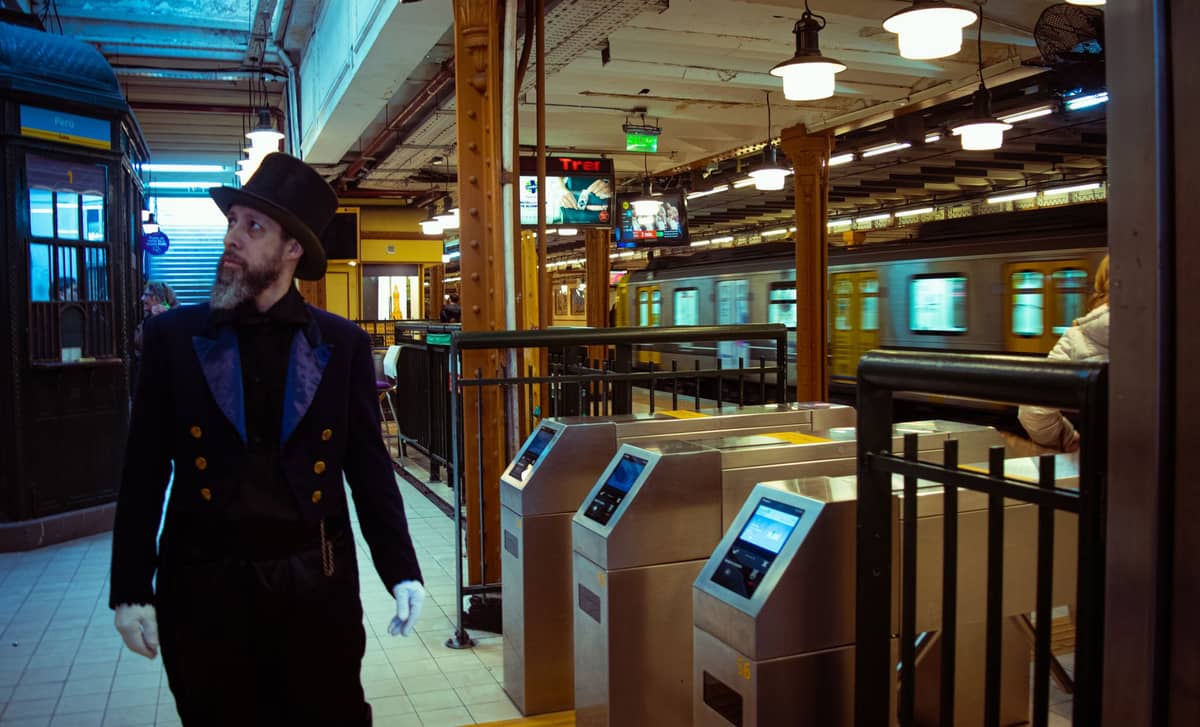
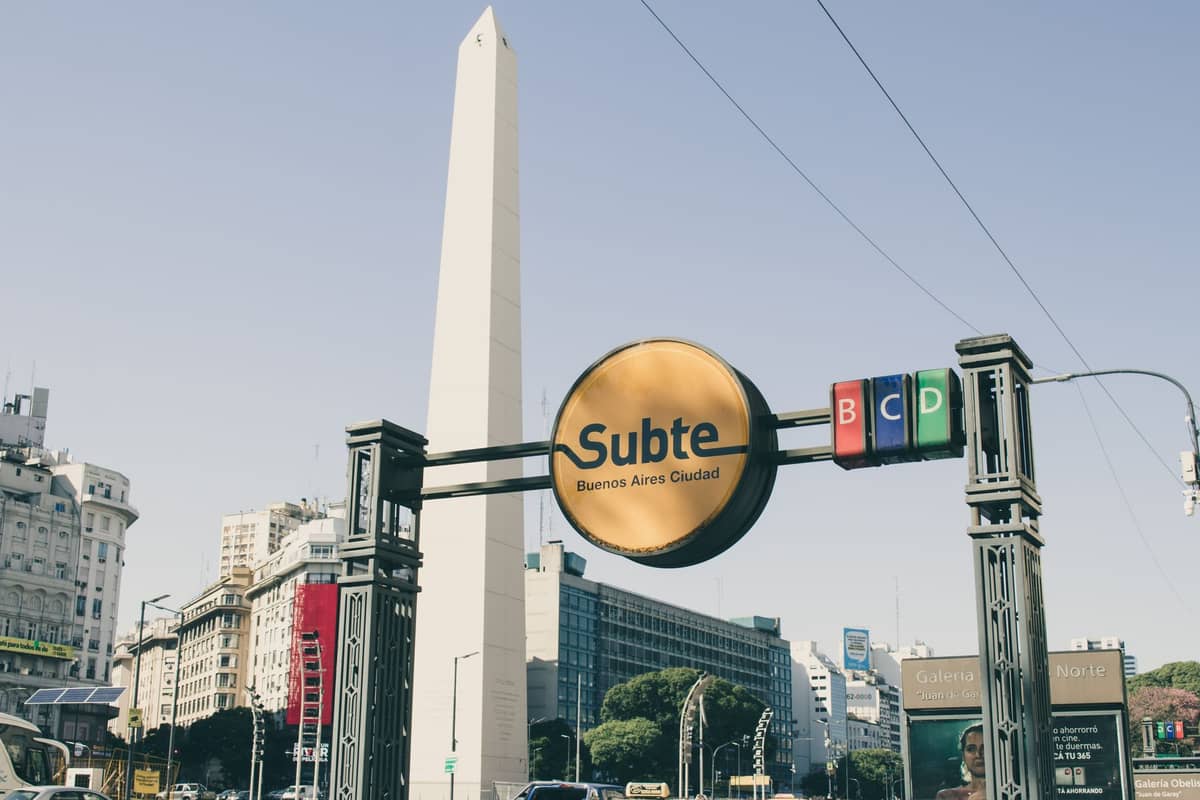
The Subte de Buenos Aires is the oldest metro system in Latin America, with six lines (A through E, plus H) connecting the city centre with neighborhoods to the west, north, and south. Line A runs along Avenida Rivadavia from Plaza de Mayo into the western suburbs. Line D links Catedral (near the Casa Rosada) up through Palermo to Belgrano. Line B crosses the city along Avenida Corrientes. Line H is the newest addition, running north-south and connecting Once with Hospitales.
The Subte is your best option for fast movement between central areas, particularly Microcentro, Recoleta, Palermo, and San Telmo. Rush hours are roughly 7:30-9:30am and 5:30-8pm on weekdays, when carriages are extremely crowded. If you're not in a hurry, the bus is often more comfortable at those times.
⚠️ What to skip
The Subte does not serve La Boca or Puerto Madero directly. For La Boca, take a colectivo (buses 29, 33, 53, 64, or 152 from the centre). For Puerto Madero, the nearest Subte stop is Line B at Leandro N. Alem, then about a 10–15-minute walk east into the dockside district.
Colectivos: The Backbone of the Network
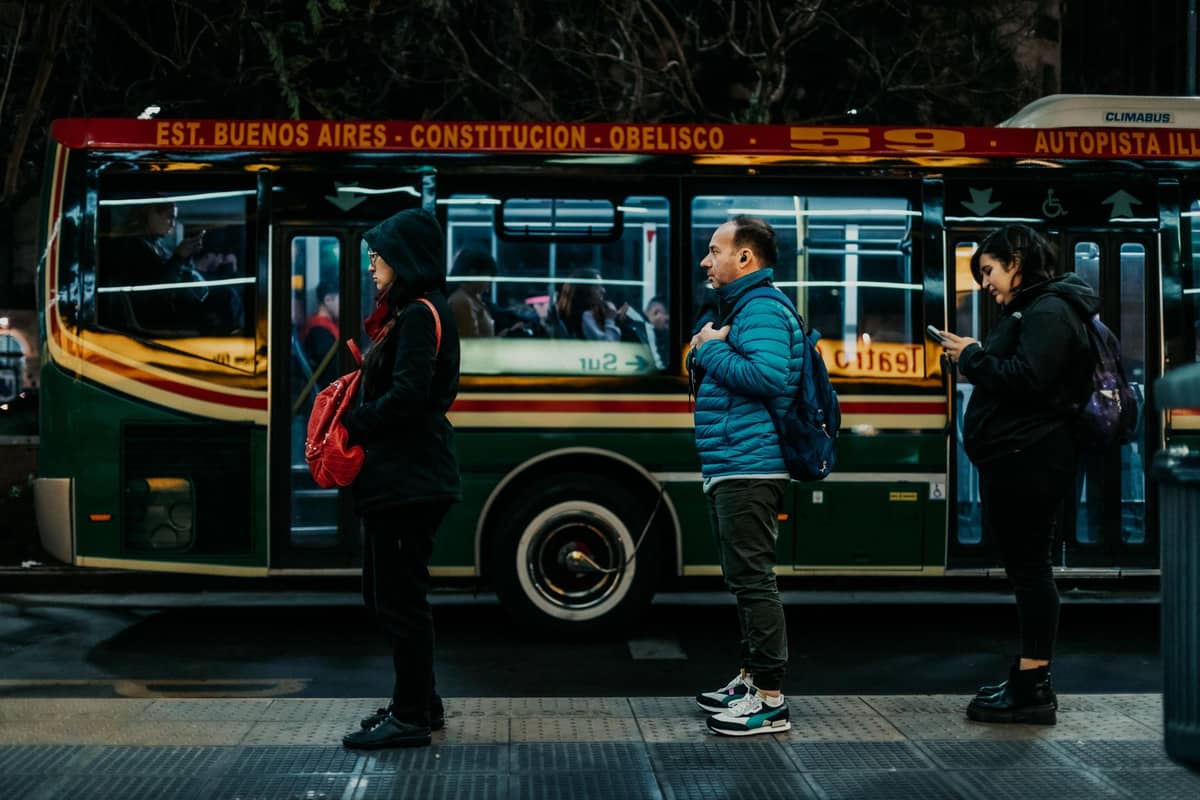
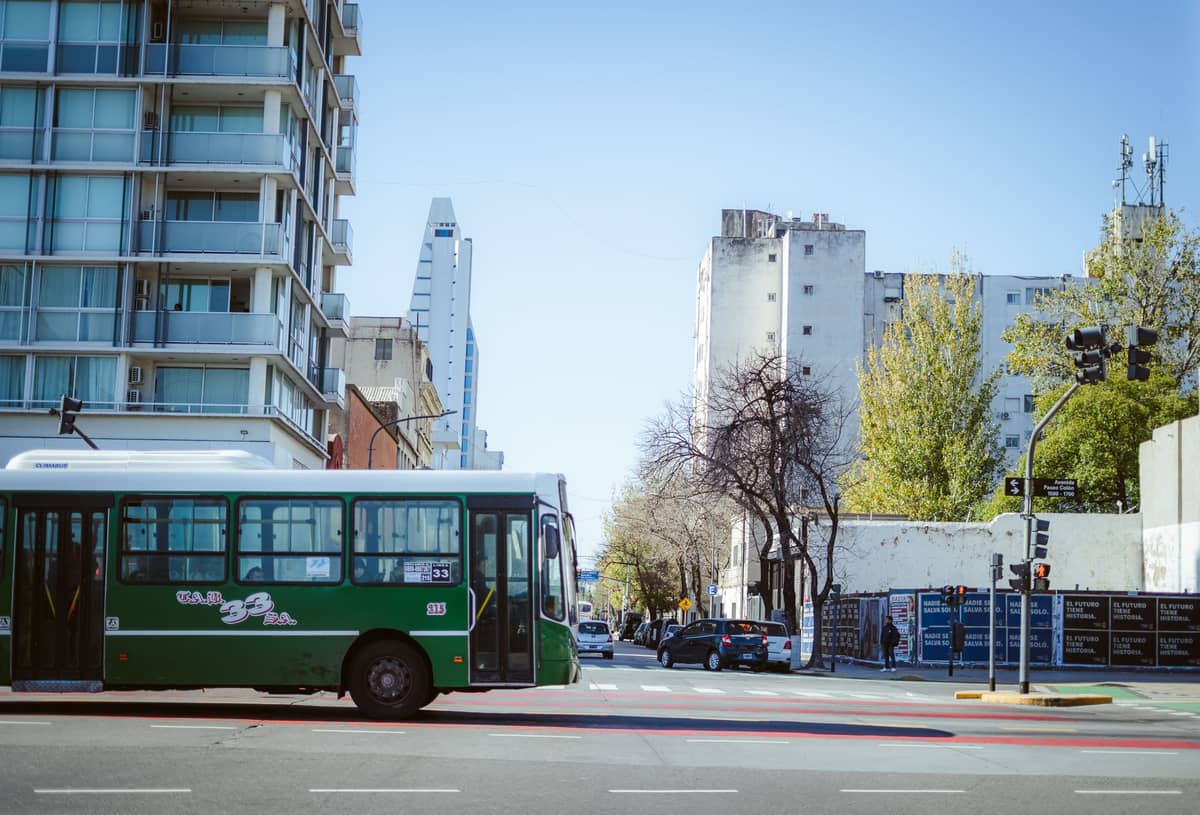
Buenos Aires has over 140 colectivo lines serving the city and Greater Buenos Aires, many of which run 24 hours a day. These are standard city buses, numbered by route, and they reach neighborhoods the Subte never touches. The trade-off is speed: in heavy traffic, a cross-city bus ride can take 40-60 minutes for a journey that takes 15 minutes by metro. On weekends and late nights, buses are often a better option because the Subte runs reduced hours.
The best tool for navigating colectivos as a visitor is the Cómo Llego feature on Google Maps, which has accurate Buenos Aires bus data and will give you the correct line number and stop. Alternatively, the Moovit app is widely used locally. Once you know your route number, look for the bus stop (parada) sign on the footpath. Flag the bus down with your arm, or it will pass without stopping.
- Payment SUBE card, or contactless bank card/mobile on most city routes. Exact cash is not accepted.
- Finding routes Google Maps (Cómo Llego) and the Moovit app are the most reliable tools. Both show real-time arrival estimates on major routes.
- Flagging down Raise your hand clearly as the bus approaches. Drivers will not stop unless signaled.
- Night service Many routes run 24 hours, but frequency drops significantly between 1am and 6am. Budget extra time.
- Transfer discounts (Red SUBE) As of August 2026, the Red SUBE transfer discount applies only to the Subte and a limited set of city bus lines, not the full network. Confirm current rules before assuming you'll save on connections.
Taxis and Ride-Hailing
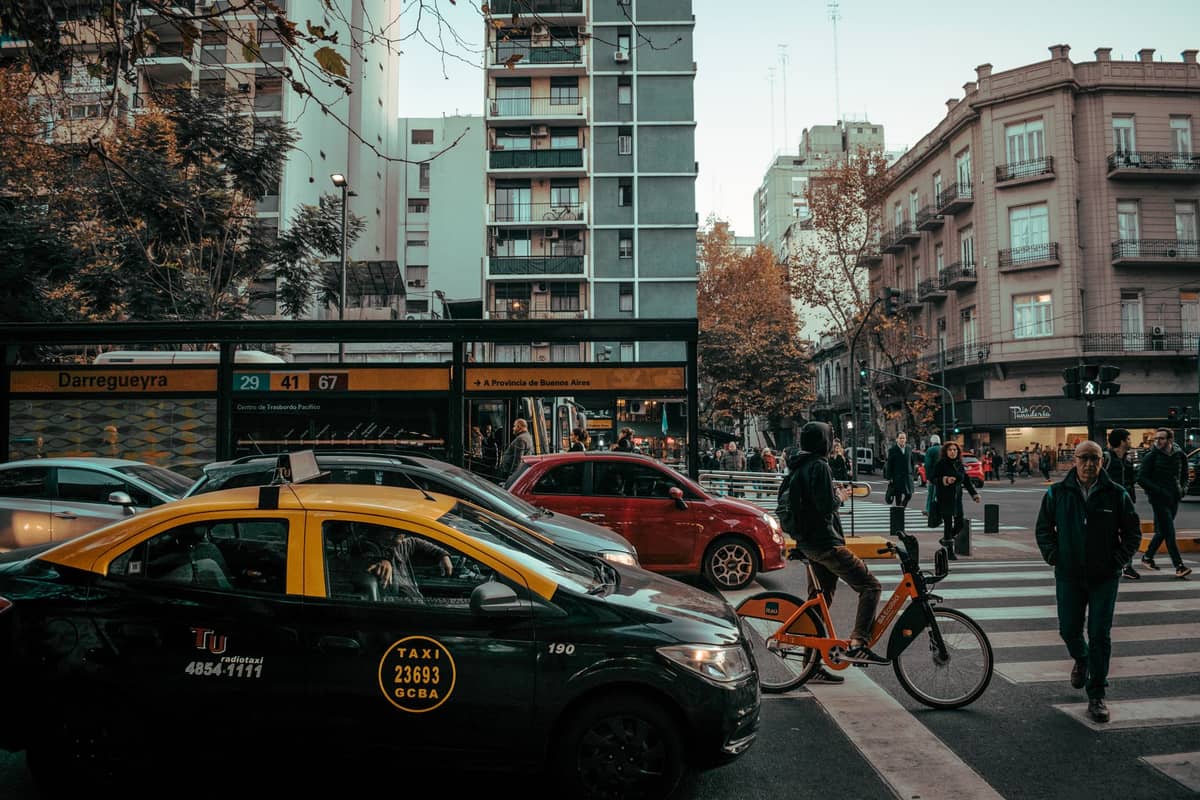
Licensed yellow-and-black taxis are everywhere in Buenos Aires and are the easiest option for short trips when you're carrying luggage or navigating unfamiliar neighborhoods after dark. Meters start running immediately after you enter. Always insist on the meter being used: any driver who offers a fixed price upfront is almost certainly overcharging. Taxis can be hailed on the street or requested through the BA Taxi app, the official city-government taxi platform.
Ride-hailing through apps like Uber, Cabify, and inDriver operates in Buenos Aires, though the legal status has fluctuated over the years. In practice, all three apps function and are widely used by both locals and tourists. App-based rides often work out at a comparable or slightly higher price to metered taxis, but the advantage is knowing the price in advance and paying cashlessly. In Palermo and Recoleta, wait times are typically under five minutes during daytime hours.
💡 Local tip
To avoid taxi scams, use the BA Taxi app to request a licensed cab with your pickup logged, or take a photo of the taxi's license plate before getting in. If paying cash, confirm you have small bills: some drivers claim not to have change for large notes.
Ecobici and Cycling
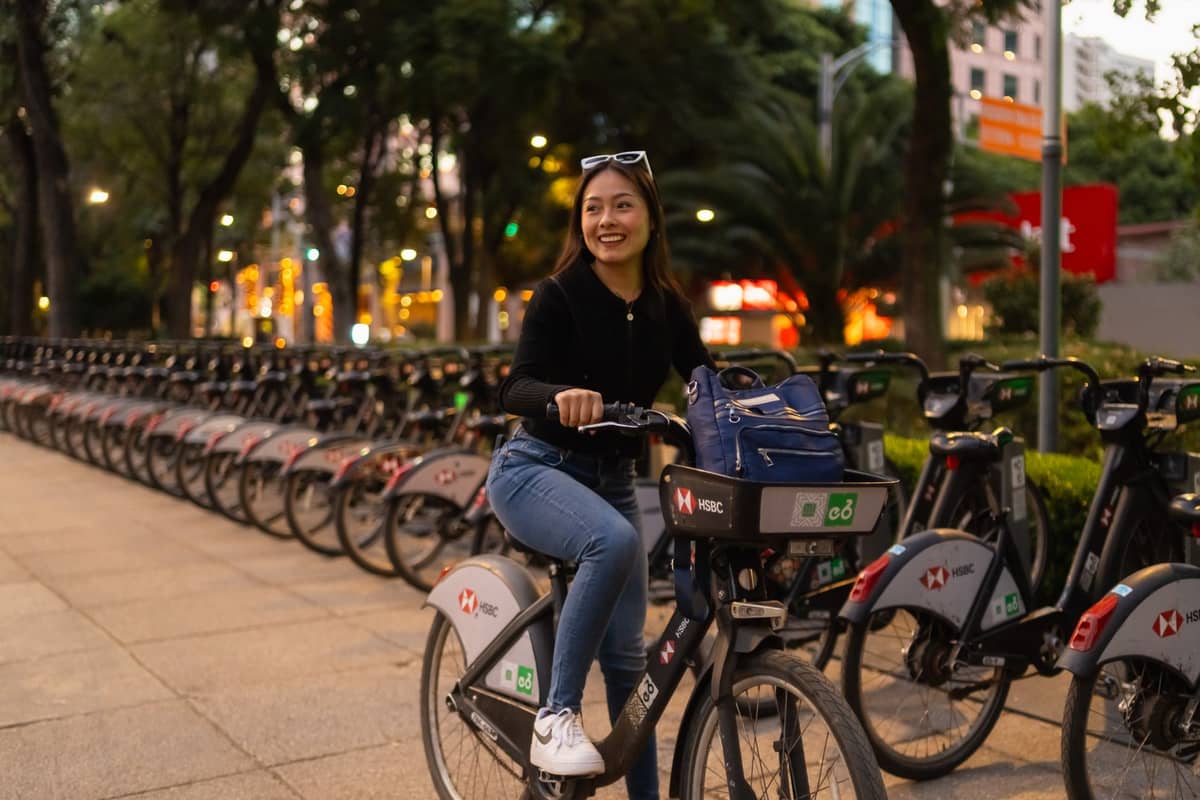
Buenos Aires has invested heavily in cycling infrastructure over the past decade. The Ecobici bike-share network has more than 100 docking stations across the city and operates 24 hours a day. Registration is done via the BA Ecobici app or in person at designated service points. The service is free for both residents and tourists, though specific usage rules and registration steps for foreign visitors should still be confirmed through the official city tourism portal (turismo.buenosaires.gob.ar) before you arrive.
Dedicated ciclovías (bike lanes) run along major corridors including Avenida del Libertador, Avenida Juan B. Justo, and sections of Palermo's park circuit. Cycling is particularly practical between Palermo and Recoleta, and for exploring the Bosques de Palermo. La Boca and the Microcentro are less bike-friendly due to traffic density and road surface quality.
Getting From the Airport to the City
Buenos Aires is served by two airports with very different logistics. Ministro Pistarini International Airport (Ezeiza, IATA: EZE) handles most international arrivals and sits around 32–35 km southwest of the city centre. Jorge Newbery Aeroparque (AEP) handles domestic flights and some regional routes from a location on the northern riverfront, roughly 8 km from the city centre and close to Palermo and Recoleta.
- From Ezeiza (EZE): remise or taxi The safest and most straightforward option is a pre-paid remise (private car service) booked at the official counters inside the arrivals hall before exiting. Prices are fixed and posted. Expect the ride to central Buenos Aires to take 40-60 minutes in normal traffic, and up to 90 minutes during peak hours.
- From Ezeiza (EZE): shuttle bus Tienda León and similar operators run direct coaches between Ezeiza and the city centre (Madero, Retiro). Cheaper than a private car, but stops are limited. Check current departure points and schedules directly with the operator.
- From Aeroparque (AEP): taxi or app The short distance to central neighborhoods makes taxis and ride-hailing apps practical. A metered taxi to Palermo or Recoleta takes around 10-15 minutes outside of rush hour.
- From Aeroparque (AEP): bus Colectivos run from Avenida Costanera Norte, a short walk from the terminal, but navigating with luggage during peak hours is awkward. Practical mainly for light travelers who know the routes.
⚠️ What to skip
Do not accept rides from touts who approach you inside the arrivals hall at Ezeiza. Only use official remise counters or pre-booked transfers. Unofficial drivers at international airports are a persistent scam targeting new arrivals.
Practical Notes: Fares, Safety, and Seasonal Patterns
Argentine peso fares change regularly, often multiple times a year, tied to inflation adjustments or government fare reviews. No printed guide can keep pace with this. Before travel, check the official Argentina.gob.ar SUBE fares page for the current AMBA transport tariff tables. The key figure to look for is the tarifa base for your registered SUBE on the Subte and bus network.
Transport safety in Buenos Aires broadly mirrors that of other large Latin American cities. Petty theft on crowded buses and at busy Subte stations does occur, particularly around Retiro and Florida street. Keep phones out of sight while standing at stops, and use the front-facing camera rather than holding your phone up openly. For a fuller picture of navigating the city safely, read the Buenos Aires safety guide.
Seasonally, transport demand peaks in December and January (local summer holidays), during Carnaval in February, and around Easter. In these periods, buses along the coast and into the suburbs run more frequently but are busier. The city's transport infrastructure runs year-round with no major seasonal shutdowns, though occasional strike action (paros) can affect Subte or bus lines with little advance warning. Check local news on the day if you have a time-sensitive commitment.
- Load your SUBE card with more credit than you think you need, especially before weekends when some reload points are closed.
- Keep a small amount of ARS cash for taxis if your card is declined or you're in a neighborhood without app connectivity.
- The Subte closes around 11pm on weekdays, with some lines running a bit later on Fridays and Saturdays and slightly earlier on Sundays. Plan night journeys around colectivos or taxis.
- Argentina uses 220V / 50Hz electricity with Type C and Type I plugs. Charge your phone fully each morning since you'll rely on mapping apps throughout the day.
- Google Maps works reliably for bus and Subte navigation across Buenos Aires. Download the offline map of the city as a backup.
If you plan to explore beyond the city limits, including day trips to the Tigre Delta or San Antonio de Areco, suburban rail lines depart from Retiro terminal and connect to the broader Buenos Aires province network. These trains use the SUBE card and are significantly cheaper than private transfers. The day trips from Buenos Aires guide covers logistics for the most popular excursions.
FAQ
Do I need a SUBE card to use public transport in Buenos Aires?
You no longer need a SUBE card exclusively. Contactless bank cards and mobile NFC/QR payments are now accepted on city buses and all Subte lines. That said, the SUBE is cheaper per trip (especially if registered to your ID), works on commuter trains where contactless bank cards may not, and is the most reliable option across the full network. For a visit of more than a few days, getting a SUBE card is still the practical choice.
How do I get from Ezeiza airport to central Buenos Aires?
The standard options are a pre-paid remise (fixed-price private car) booked at official counters inside the terminal, or a shuttle bus service to the city centre. Ride-hailing apps also work but require navigating the departures level pickup zone, which can be confusing on arrival. The journey takes 40-90 minutes depending on traffic. Avoid unofficial taxi touts inside the arrivals hall.
Is the Buenos Aires metro (Subte) safe to use?
Yes, the Subte is generally safe and used daily by millions of porteños. The main issue is petty theft in crowded carriages, particularly on Line B and at busy interchange stations like Pueyrredón and Carlos Pellegrini. Keep your phone in your pocket while on platforms, secure bags in front of you on crowded trains, and be aware of your surroundings during rush hours.
Can I use Uber in Buenos Aires?
Uber operates in Buenos Aires and is widely used, though its legal status has been disputed by local taxi unions. In practice, the app functions without major issues for tourists. Drivers typically ask passengers to sit in the front seat to avoid taxi-driver confrontations. Cabify and inDriver are alternatives that operate under different regulatory arrangements.
What is the cheapest way to get around Buenos Aires?
Colectivo buses with a registered SUBE card are the cheapest option for most journeys, with fares in the low hundreds of pesos per trip. The Subte costs a similar amount per ride. Both are dramatically cheaper than taxis or ride-hailing for regular urban travel. For context, the Argentine peso is subject to inflation, so specific fare figures date quickly: check the Argentina.gob.ar SUBE fares page for current prices.
Tickets & tours
Live prices and dates from our booking partner. If you book, we may earn a commission at no extra cost to you.
Planning a trip? Discover personalized activities with the Nomado app.