Buenos Aires Airports: Everything You Need to Know
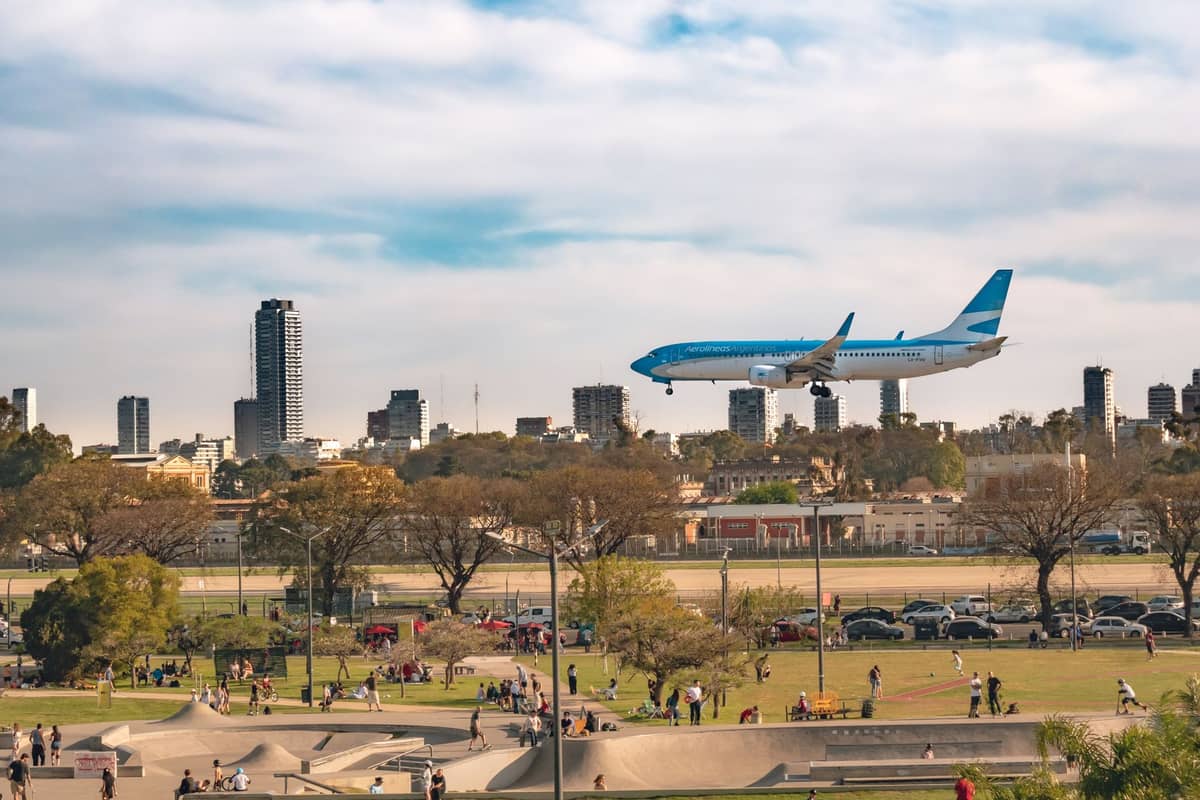
Buenos Aires has two airports serving very different purposes. Ezeiza (EZE) handles most long-haul international flights, while Aeroparque (AEP) sits close to downtown and covers domestic and regional routes. This guide breaks down both airports, how to get between them, and the best ways to reach the city center.
Tickets & tours
Live prices and dates from our booking partner. If you book, we may earn a commission at no extra cost to you.
TL;DR
- Buenos Aires has two airports: Ezeiza (IATA code EZE) for international long-haul flights, and Aeroparque Jorge Newbery (IATA code AEP) for domestic and regional South American routes.
- Ezeiza is around 30-35 km southwest of the city center; Aeroparque sits on the riverfront, just a few kilometers from neighborhoods like Palermo and Recoleta.
- Budget-conscious travelers can use city buses (colectivos) from both airports; Bus Line 8 connects Aeroparque directly to Ezeiza.
- Not all international flights land at EZE: some regional services to neighboring countries operate from Aeroparque.
- For full planning context, see the getting around Buenos Aires guide and tips on managing money in Buenos Aires.
The Two Buenos Aires Airports at a Glance
Argentina's capital is served by two airports, and confusing them is one of the most common and costly mistakes travelers make. They serve fundamentally different route networks, sit at very different distances from the city, and require completely different transport strategies.
- Ministro Pistarini International Airport (EZE) The main international gateway, located in the city of Ezeiza, roughly 30-35 km southwest of central Buenos Aires. Operated by Aeropuertos Argentina 2000. Handles flights from Europe, North America, Asia, and intercontinental connections. IATA code: EZE.
- Aeroparque Jorge Newbery (AEP) The city airport, situated on the northern riverfront along Avenida Rafael Obligado, a few kilometers from Retiro and Palermo. Handles domestic Argentine flights and many regional routes to neighboring countries including Brazil, Uruguay, Chile, and Paraguay. IATA code: AEP.
⚠️ What to skip
Always double-check which airport your flight departs from before booking ground transport. Regional flights to Montevideo, Santiago, or São Paulo sometimes operate from Aeroparque (AEP), not Ezeiza (EZE). Arriving at the wrong airport with a tight connection is not a recoverable situation.
Ezeiza International Airport (EZE): What to Expect
Ezeiza is the airport most international visitors arrive at first. The official name is Ministro Pistarini International Airport, but locals and taxi drivers universally know it as "Ezeiza." The airport code EZE appears on all ticketing and baggage systems. It operates multiple terminals, with terminal information published on the Aeropuertos Argentina official website. Flight and terminal information is published on the Aeropuertos Argentina official website.
The distance from Ezeiza to central Buenos Aires is roughly 30-35 km, but journey times depend enormously on traffic. During rush hours or holiday weekends, road congestion on the Autopista Ricchieri (the main access highway) can push transfer times past 90 minutes. In light traffic, the trip typically takes 40-60 minutes. Plan accordingly, particularly if you have a domestic connection at Aeroparque on the same travel day.
- Currency exchange counters are available in the arrivals hall, but rates at airport exchangers are typically less favorable than in the city. Withdraw only what you need for immediate transport costs.
- Argentina uses 220V mains voltage with Type C and Type I plugs. Pack an adapter if your devices use a different standard.
- The airport has ATMs, but withdrawal limits and fees change frequently. Verify current conditions before travel.
- Baggage claim can be slow on busy international routes. Factor extra time if connecting to a domestic flight at Aeroparque.
Aeroparque Jorge Newbery (AEP): The City Airport
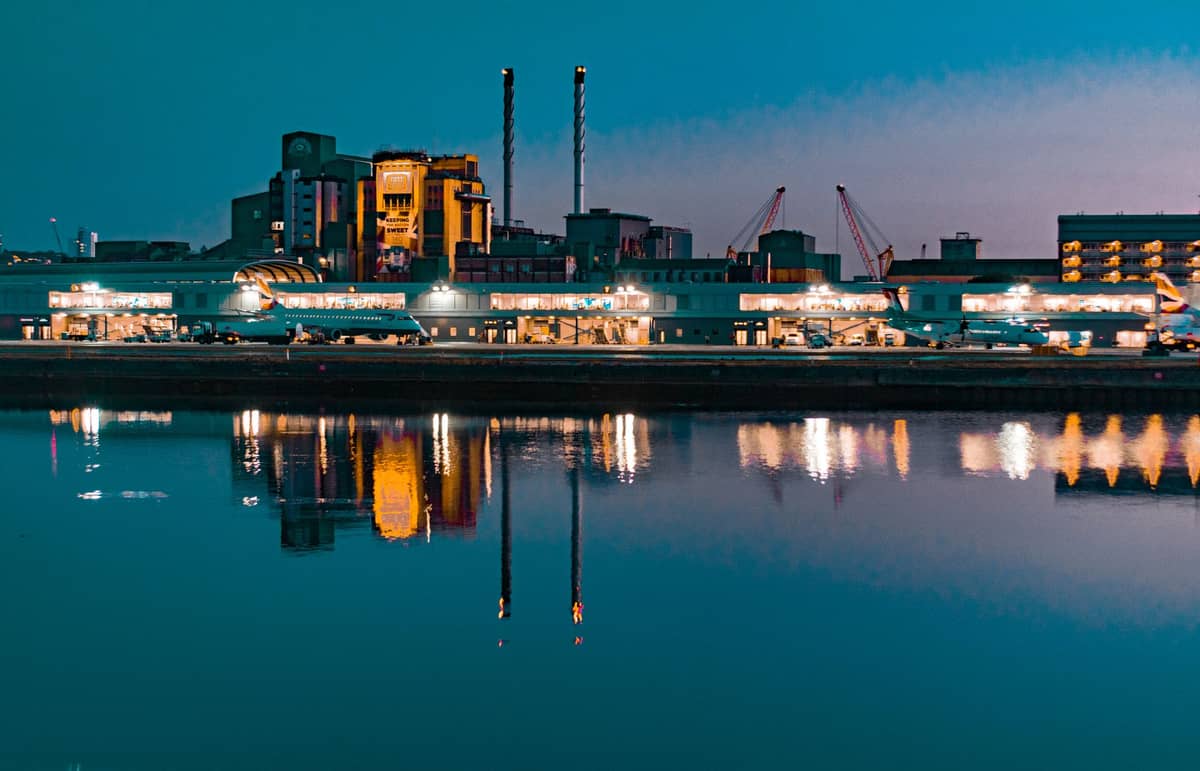
Aeroparque is the more convenient airport for most Buenos Aires itineraries because of its central location. It sits on the northern Costanera waterfront, immediately adjacent to the Palermo neighborhood and within easy reach of Recoleta and Retiro. If you are flying domestically within Argentina (to Patagonia, Mendoza, Córdoba, or Iguazú, for example), this is almost certainly your airport.
Bus stops at Aeroparque are located on Avenida Rafael Obligado, directly in front of sectors A and B of the terminal building. Multiple city bus lines (colectivos) depart from this stop, connecting the airport to Retiro, Microcentro, Palermo, and western suburbs. The SUBE rechargeable fare card is the standard payment method for public buses; you cannot pay with cash on most colectivo routes, so acquiring a SUBE card early in your trip is practical.
💡 Local tip
If you land at Ezeiza and have a domestic connection at Aeroparque the same day, budget at least 3-4 hours between flights. The transfer between airports via Bus Line 8 is cheap but not fast. A private remise or taxi transfer is significantly quicker but more expensive.
Getting from the Airports to the City Center
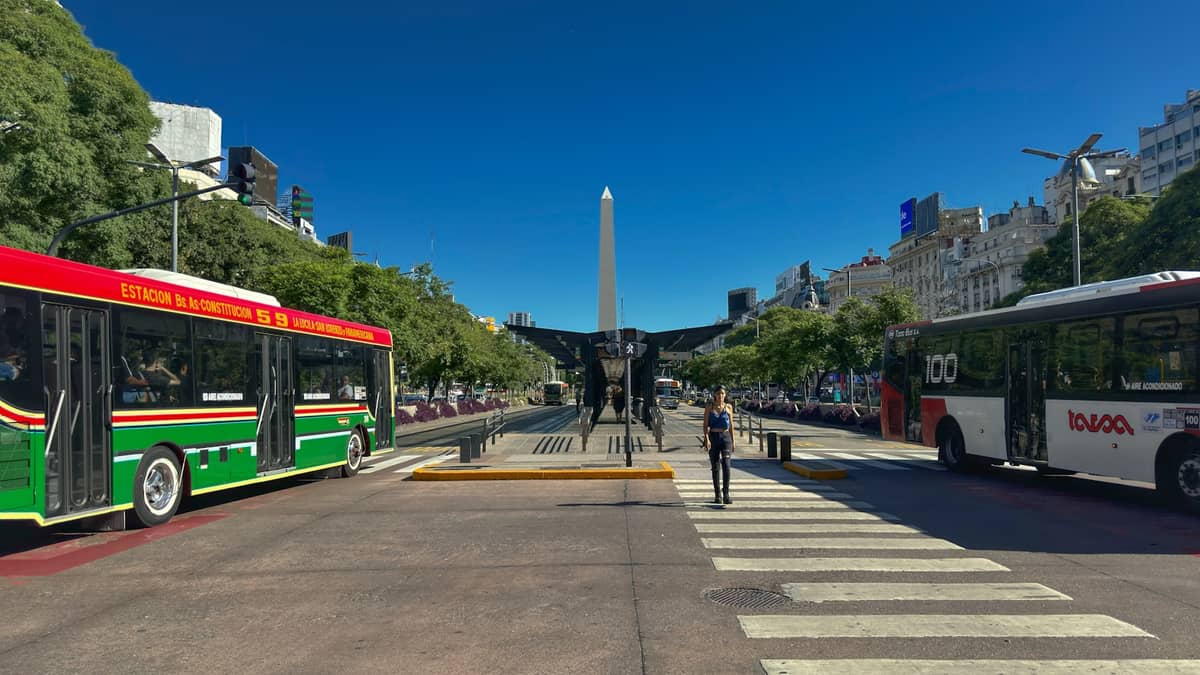
Ground transport from both airports comes in several tiers, ranging from budget colectivos to private door-to-door remises. The right choice depends on your priorities: cost, convenience, time of day, and how much luggage you are carrying.
Transport Options from Ezeiza (EZE)
- Official Taxi or Radio Taxi Available from the official taxi desk inside the arrivals hall. Pre-paid to avoid meter disputes. Journey to downtown takes 40-60 minutes in normal traffic. Use only the official desk inside the terminal, not street touts outside.
- Remise (Private Car Service) Slightly more expensive than a taxi but fixed-price, comfortable, and reliable. Many hotels and hostels can arrange a pre-booked remise pickup. Particularly worthwhile for late-night arrivals.
- Airport Shuttle Coach Shared shuttle services (tiered pricing by zone) depart from outside the arrivals terminal. Cheaper than a private taxi but slower, as they make multiple stops. Best suited for travelers with flexible schedules.
- Bus Line 8 The cheapest option, connecting Ezeiza to Aeroparque and central Buenos Aires via two branches (via Rivadavia and via the highway). Requires a SUBE card. Very slow during peak hours. Not practical with large luggage.
Transport Options from Aeroparque (AEP)
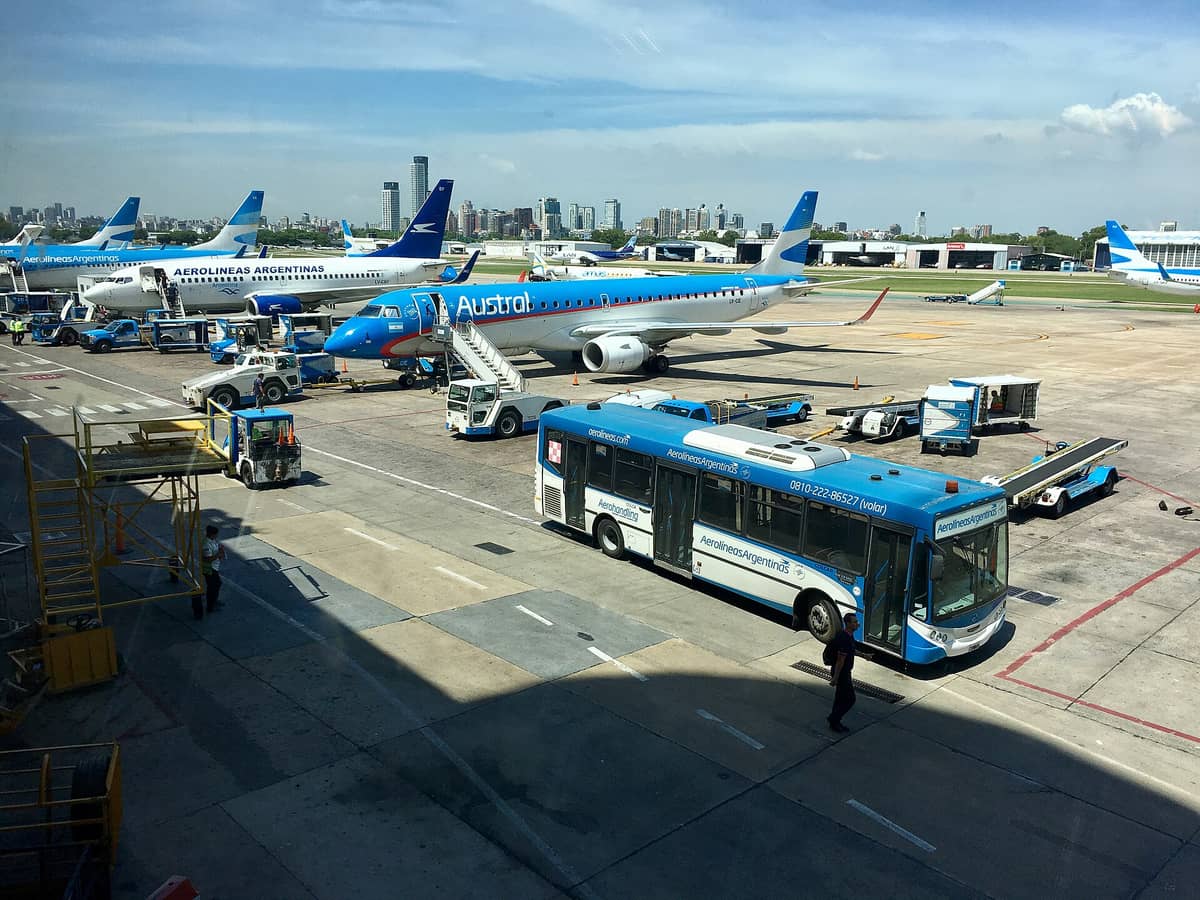
From Aeroparque, the city is genuinely close. Rideshare apps such as Uber and Cabify operate in Buenos Aires; from Aeroparque they typically reach central neighborhoods in 15–25 minutes, depending on traffic. City buses are the cheapest option at a fraction of the taxi fare.
- City Bus Lines from Aeroparque Lines 8, 33, 34, 37, 45, 114, 160, and 166 connect the airport with major destinations across the city. Line 45 links Aeroparque to Microcentro and Retiro in roughly 40-45 minutes. Line 33 covers Microcentro via Avenida Leandro N. Alem in around 45-70 minutes.
- Taxi or Rideshare Cabs are easy to find at the terminal exit. Rideshare apps work but note they must sometimes be booked from inside the terminal or from designated pickup zones to avoid friction with taxi operators.
- Bus Line 8 to Ezeiza The direct inter-airport connection. Low cost but slow. Only practical if you have plenty of time and minimal luggage.
✨ Pro tip
Negotiate nothing with unofficial taxi touts outside either terminal. At Ezeiza, use only the pre-paid taxi desk inside arrivals. At Aeroparque, licensed taxis queue at the official rank. Unsolicited offers in the arrivals zone are almost always overpriced, and occasionally involve more serious scams.
Transferring Between Ezeiza and Aeroparque
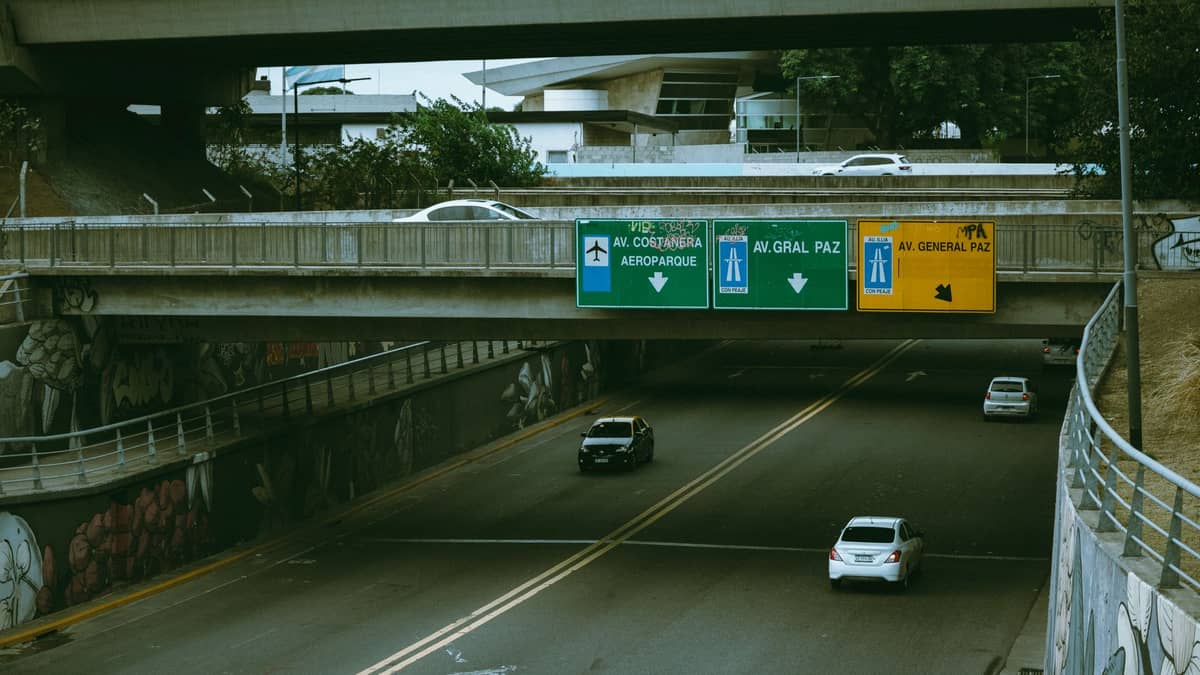
Inter-airport transfers are a reality for many visitors who fly into Ezeiza internationally and then need to catch a domestic connection at Aeroparque, or vice versa. The airports are not connected by any rapid transit system; all transfers are by road. The distance between the two airports is roughly 45-50 km by road.
Bus Line 8 provides the only direct public transit connection. It departs from both airports and runs via two routes: one through Rivadavia (slower, more stops) and one via the highway (faster in theory, but still subject to congestion). Total journey times can range from 90 minutes to over two hours in heavy traffic. For a same-day international-to-domestic connection, a remise or private transfer is the safer bet: journey times are typically 60-80 minutes in normal traffic.
ℹ️ Good to know
Buenos Aires sits in the UTC-03:00 time zone (Argentina Time, ART) with no daylight saving time currently observed. Factor this in when calculating connection windows across time zones, and double-check that flight times on your ticket are listed in local Argentine time.
Practical Tips for Arriving in Buenos Aires
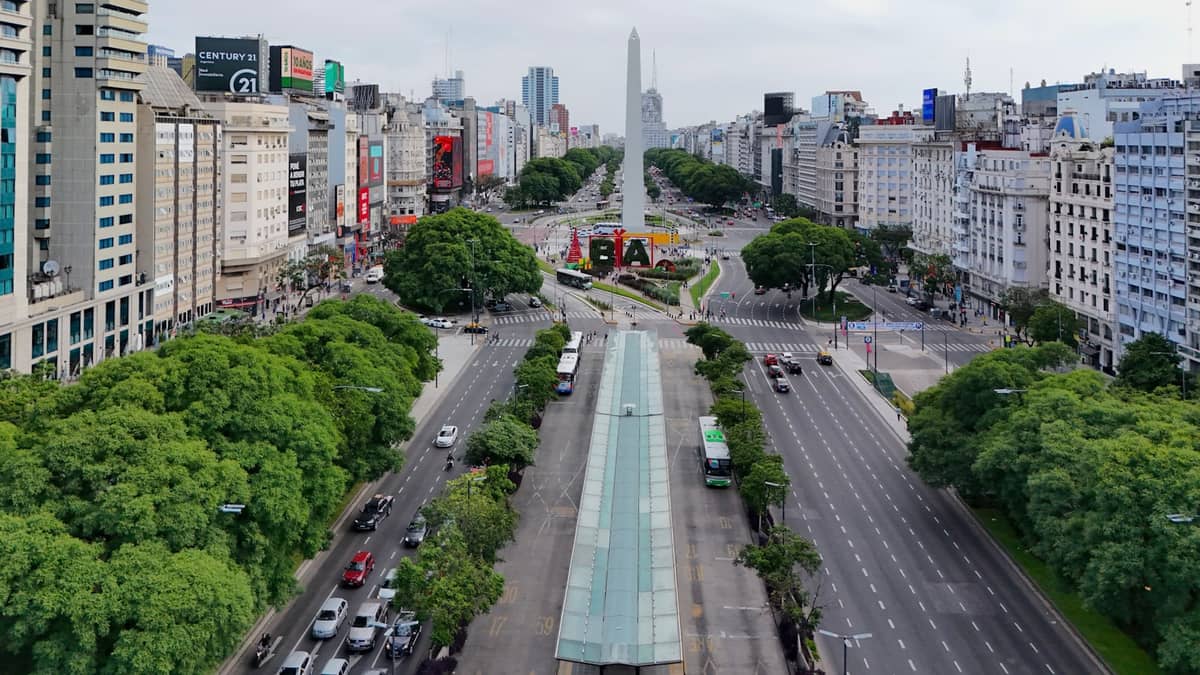
For first-time visitors, the sheer scale of Buenos Aires can be surprising. The metropolitan area houses more than 15 million people across dozens of distinct neighborhoods. The airport you land at will largely determine your first hour in the city, so plan your onward transport in advance. For more context on navigating the city once you arrive, the complete guide to getting around Buenos Aires covers the Subte, bus network, and SUBE card in detail.
Argentina's currency situation is complex and changes frequently. Exchange rates at airport counters are almost always less favorable than in the city. Before you travel, read the Buenos Aires currency and money guide to understand current options for exchanging foreign currency and accessing pesos.
Peak travel periods at both airports correspond to Argentine summer (December to February) and major holidays. If your trip aligns with peak season, check the best time to visit Buenos Aires for a breakdown of crowd patterns and pricing. Booking accommodation close to Aeroparque in neighborhoods like Palermo or Recoleta makes logistical sense for short trips that involve multiple domestic flights.
- Get a SUBE card as soon as possible after arrival if you plan to use public buses or the Subte metro. Cards are sold at kioscos (newsstands) and Subte stations.
- Argentina's international dialing code is +54. Buenos Aires area code is 11.
- The city uses 220V, 50Hz electricity with Type C and Type I plugs. European two-pin adapters work for Type C; Australian-style three-flat-pin for Type I.
- Tap water in Buenos Aires is treated municipal water. Many locals drink it; visitors with sensitive stomachs sometimes prefer bottled water during the first few days.
- Visa requirements vary significantly by nationality. Check with the Argentine consulate or official immigration authority (Dirección Nacional de Migraciones) before travel.
Safety awareness at both airports is standard urban common sense. Keep bags close, avoid displaying expensive electronics conspicuously, and use official transport. For a broader picture of safety across Buenos Aires neighborhoods, the Buenos Aires safety guide offers practical, grounded advice.
FAQ
What is the Buenos Aires airport code for the international airport?
The IATA airport code for Buenos Aires' main international airport is EZE. This refers to Ministro Pistarini International Airport, located in Ezeiza, about 30-35 km southwest of the city center. The second Buenos Aires airport, Aeroparque Jorge Newbery, has the code AEP and handles domestic and regional flights.
Which Buenos Aires airport do I fly into for international flights?
Most long-haul international flights (from Europe, North America, Asia) arrive at Ezeiza (EZE). However, some regional international flights to neighboring countries such as Uruguay, Chile, Brazil, and Paraguay operate from Aeroparque (AEP). Always confirm your arrival airport on your ticket before arranging ground transport.
How do I get from Ezeiza airport to central Buenos Aires?
The main options are: pre-paid official taxis (available inside the arrivals hall), private remise transfers (bookable in advance), shared shuttle coaches, and Bus Line 8 (cheapest, requires a SUBE card, very slow during peak hours). Journey times range from 40 minutes in light traffic to 90 minutes or more during rush hour. A private taxi or remise is the most straightforward option for first-time visitors.
How far is Aeroparque from downtown Buenos Aires?
Aeroparque Jorge Newbery (AEP) is just a few kilometers from central neighborhoods like Retiro, Recoleta, and Palermo. By rideshare or taxi, the trip to downtown typically takes 15-25 minutes in normal traffic. By city bus (lines 45 or 33), expect 40-70 minutes depending on the route and traffic.
Is there a direct bus between Ezeiza and Aeroparque?
Yes. Bus Line 8 runs directly between the two airports, with branches via Rivadavia and via the highway. It is the cheapest inter-airport transfer option but can take 90 minutes to over two hours depending on traffic. A SUBE card is required. For time-sensitive connections, a private remise or taxi is a more reliable choice.
Tickets & tours
Live prices and dates from our booking partner. If you book, we may earn a commission at no extra cost to you.
Planning a trip? Discover personalized activities with the Nomado app.