Is Buenos Aires Safe? A Practical Safety Guide for Travellers
Buenos Aires is a major world city with real risks that are manageable with the right knowledge. This guide breaks down neighbourhood safety, common scams, transport precautions, and official emergency resources so you can travel with confidence.
Tickets & tours
Live prices and dates from our booking partner. If you book, we may earn a commission at no extra cost to you.
TL;DR
- Buenos Aires is generally safe for tourists who stay alert, but petty theft and opportunistic crime are common in busy areas and on public transport.
- Neighbourhood safety varies significantly: Puerto Madero and Recoleta are lower risk, while La Boca requires caution outside the Caminito area.
- The city has dedicated tourist support: a Tourist Police unit at Av. Corrientes 436 and a Tourist Ombudsman in La Boca. Emergency line is 911.
- Seasonally, spring (September to November) and autumn (March to May) bring the most pleasant conditions and manageable crowds. See our best time to visit Buenos Aires guide for a full breakdown.
- Use a SUBE card for buses and the Subte, book taxis through apps or radio taxi services, and keep a photocopy of your passport separate from the original.
The Honest Answer: Is Buenos Aires Safe for Tourists?
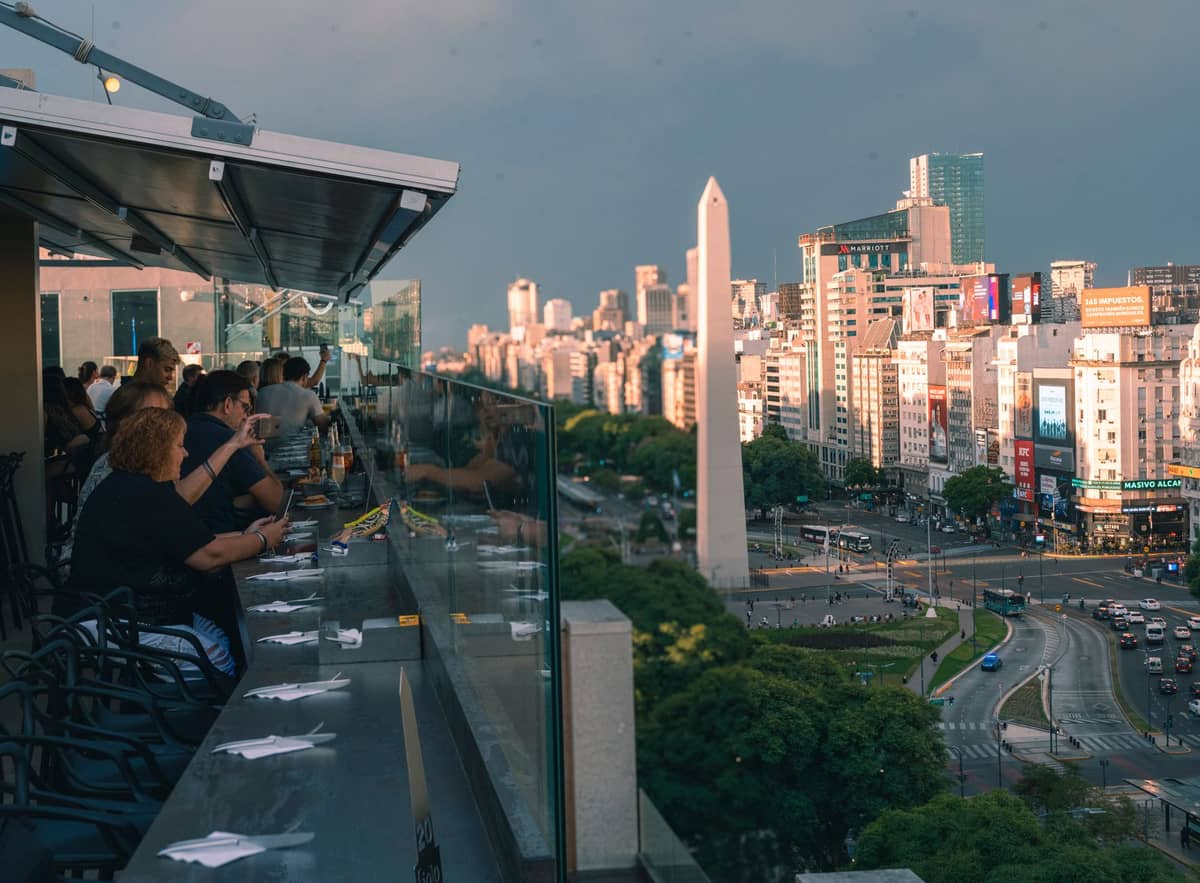
Buenos Aires safety is a topic that generates more anxiety than it probably deserves, but also more dismissiveness than the reality warrants. The city is the capital of Argentina, home to just over 3 million residents in the autonomous city proper and well over 15 million in the broader metropolitan area. At that scale, crime exists. The question is what kind, where, and how avoidable it is.
The dominant risk for tourists is opportunistic petty theft: phone snatching on busy streets, pickpocketing on the Subte, bag theft at outdoor restaurants. Violent crime against tourists is far less common and typically concentrated in areas most visitors have no reason to enter. Most travellers complete their trip without incident, but those who do experience problems often admit they were distracted, had valuables on display, or strayed into poorly lit areas at night without local knowledge.
Buenos Aires also has a functioning tourist support infrastructure that many visitors don't know exists. The city operates a Tourist Police unit (Comisaría del Turista) at Av. Corrientes 436, with multilingual assistance in English, Portuguese, French, Italian, and Japanese. The Tourist Ombudsman (Defensoría del Turista) operates at Museo Benito Quinquela Martín, Av. Pedro de Mendoza 1835, phone +54 11 4302-7816, with separate weekday and weekend/holiday opening hours. These are real, functional resources, not bureaucratic formalities.
ℹ️ Good to know
Emergency numbers in Buenos Aires: 911 (general emergencies), 101 (police), 107 (medical emergencies), 100 (fire), 103 (civil defense), 144 (gender-based violence), 145 (human trafficking), 102 (children's services). Save these before you land. You can also report incidents online at turistas.seguridadciudad.gob.ar, the city's official security and online reporting portal for tourists.
Neighbourhood Safety: Where to Be Careful and Where to Relax
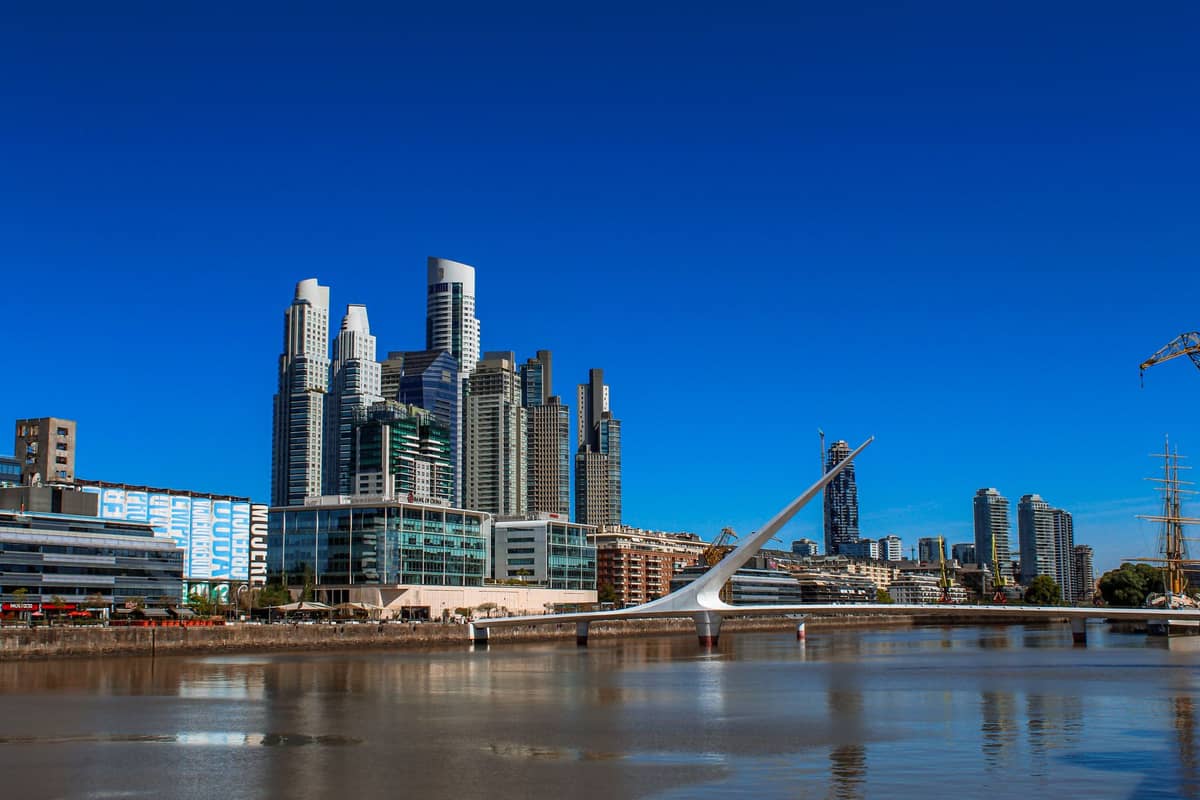
Buenos Aires safety varies more by neighbourhood than by any other factor. Puerto Madero is the most consistently low-risk area: a redeveloped waterfront district with modern infrastructure, good lighting, and a strong security presence. It is also expensive, which naturally limits foot traffic to a narrower demographic. Recoleta and the northern stretches of Palermo are similarly comfortable, though phone theft from outdoor café tables does occur in both.
San Telmo sits in a middle category. The cobblestone streets and historic architecture attract significant tourist traffic, especially around the Sunday fair at Plaza Dorrego. In crowded market conditions, pickpocketing risk rises sharply. The neighbourhood's edges, particularly to the south and west, are less polished and warrant more attention at night.
La Boca is the neighbourhood most frequently cited in safety warnings, and those warnings are not entirely misplaced. The Caminito pedestrian street is well-patrolled and genuinely fine to visit during daylight hours. The problem is that La Boca's tourist zone is a narrow corridor; venture a few blocks outside it and the context changes quickly. Going after dark without a clear plan is not advisable. Most visitors do La Boca as a daytime excursion and move on, which is the right call.
- Lower risk Puerto Madero, Recoleta, northern Palermo, Belgrano. Good lighting, active streets, tourist infrastructure.
- Moderate risk, manageable San Telmo (daytime), Microcentro (business hours), Retiro (near Plaza San Martín, not the bus terminal area at night).
- Requires caution La Boca beyond Caminito, southern San Telmo after dark, Retiro bus terminal surroundings late at night.
- Avoid without local guidance Outer neighbourhoods beyond the tourist circuit that have no reason to be on a standard itinerary.
The Most Common Scams and How to Avoid Them
Buenos Aires has a well-documented set of scams that recycle across tourist destinations worldwide but with local variations. Knowing them in advance removes almost all their power.
- The mustard or paint trick Someone 'accidentally' spills something on you, then a helpful stranger offers to clean it while an accomplice takes your bag or phone. If this happens, keep your hands on your belongings and walk away immediately.
- Fake bills in change Always check notes when receiving change, particularly at informal kiosks or from unlicensed money changers. Counterfeit ARS bills circulate, and tourists are an easy target.
- Unofficial money exchange Argentina's peso has historically had a volatile exchange rate and at times a significant parallel rate (the so-called 'blue dollar'). Using informal street exchangers exposes you to fraud, counterfeit notes, and legal risk. Use official channels or withdraw from ATMs and check current guidance on currency.
- Taxi overcharging Unofficial taxis and unmarked cars sometimes approach tourists at Ezeiza airport. Always use radio taxis or pre-booked remises from the official counters inside the terminal.
- Distraction theft On the Subte and in markets, one person distracts, another takes. Wear bags in front of your body in crowded conditions, and keep your phone in a pocket rather than your hand.
⚠️ What to skip
The area around Retiro bus terminal, particularly after 22:00, has a notably higher concentration of opportunistic crime compared with more central tourist neighbourhoods. If you're taking an overnight bus, arrive at the terminal with your bags secured and move directly to your platform. The terminal itself is managed, but the streets immediately outside are less so.
Getting Around Safely: Transport and Airport Transfers
Getting from the airport to the city safely is one of the most important logistical decisions you'll make. Buenos Aires has two main airports: Ministro Pistarini International (Ezeiza, IATA: EZE) located roughly 30 to 35 km southwest of the centre, and Aeroparque Jorge Newbery (IATA: AEP) on the northern riverfront within the city, around 7–8 km from the centre and close to Palermo and Recoleta. For the full transfer breakdown, see the Buenos Aires airport guide.
From Ezeiza, the safest and most straightforward option is a pre-paid remise (private car service) booked through the official counters inside the terminal arrivals hall. These are metered or have fixed-zone prices, and the process is transparent. Airport shuttle buses (Manuel Tienda León being the best-known operator) are also safe and cost less, dropping passengers at Retiro or Madero. Avoid anyone approaching you in the arrivals hall offering a ride: these are invariably unofficial and carry real risk of overcharging or worse.
Within the city, the Subte (metro) is fast and cheap but requires a SUBE card, a rechargeable fare card available from kiosks near station entrances. Buses (colectivos) run at all hours on many routes and also use the SUBE card. For route planning, the getting around Buenos Aires guide covers all your options in detail. During rush hours (roughly 07:30 to 09:30 and 17:30 to 20:00), the Subte is extremely crowded: keep bags in front of you and your phone in your pocket, not in your hand.
✨ Pro tip
App-based ride-hailing services operate in Buenos Aires (regulations have evolved over recent years, so check current status before travel). Many locals and tourists use these as a safer and more transparent alternative to hailing street taxis, since routes and fares are tracked and the driver is identified. Ask your accommodation for the currently preferred option when you arrive.
Practical Safety Habits That Make a Real Difference
The gap between a smooth trip and a frustrating one often comes down to a few behavioural habits. None of these require paranoia, just basic awareness applied consistently.
- Carry a photocopy of your passport and leave the original at your accommodation in the safe. Police may ask for ID, but a copy is generally accepted for routine checks.
- Don't walk with your phone held out in front of you. Phone snatching from pedestrians is the single most common crime against tourists in Buenos Aires.
- At outdoor restaurants, keep your bag on your lap or loop the strap around the chair leg. Do not hang it on the back of your chair.
- Use ATMs inside banks or in well-lit commercial premises during daylight hours. Avoid standalone ATMs in quiet areas or late at night.
- Dress down relative to what you'd wear at home. Expensive watches, visible cameras, and large amounts of jewellery attract attention.
- Tell your accommodation where you're going if you're heading to less-visited areas, especially at night.
- Argentina's country code is +54. If you need to call a Buenos Aires number from a local SIM within Argentina, remember that local landline numbers typically use the 011 area prefix.
For solo travellers, the risk profile doesn't change dramatically, but the margin for error shrinks. Going out alone at night in unfamiliar areas requires more planning. The Buenos Aires solo travel guide addresses this in more depth, including accommodation choices that reduce exposure and neighbourhood-specific advice by time of day.
Health, Currency, and Other Practical Safety Considerations
Buenos Aires currency and money management is its own subject given Argentina's historically complex exchange rate situation. Understanding this before you arrive is not just financially useful, it's a safety issue: confusion about money makes tourists easier targets. The Buenos Aires currency and money guide covers current exchange options and how to avoid the most common financial traps.
Tap water in Buenos Aires is treated by the municipal utility and is generally considered safe to drink by local standards, with recent studies showing the city's tap water meets national potable standards. Travellers with sensitive stomachs or those unaccustomed to changes in water supply sometimes prefer bottled water during the first few days. This is a personal choice rather than a hard rule, but it's worth knowing that bottled water is cheap and widely available. For food safety, Buenos Aires has a strong restaurant culture with high turnover and generally good hygiene standards, particularly in established establishments.
Argentina uses 220V electricity at 50Hz with Type C and Type I plugs (the Australian-style three-flat-pin format for Type I). If you're arriving from North America or the UK, you will need adapters. A surge protector is worth packing given occasional voltage fluctuations. For entry requirements, Argentina offers visa-free access to many nationalities, but the precise list, permitted stay durations, and any reciprocity fees must be verified against current Argentine immigration authority guidance before travel, as these conditions change.
💡 Local tip
If you are the victim of theft in Buenos Aires, report it first to the Tourist Police at Av. Corrientes 436 (phone +54 9 11 5050 3293 / 9260). They provide multilingual assistance and can issue a police report, which you will need for any travel insurance claim. You can also report online at turistas.seguridadciudad.gob.ar, the city's official security and reporting site for visitors.
FAQ
Is Buenos Aires safe for solo female travellers?
Buenos Aires is manageable for solo female travellers but requires the same baseline vigilance as any large Latin American city. The main risks are petty theft and, occasionally, unwanted attention in nightlife settings. Sticking to well-lit areas after dark, using app-based transport rather than street taxis, and staying in established tourist neighbourhoods significantly reduces risk. The city has a visible LGBTQ+ community and is generally socially tolerant, which many solo female travellers find reassuring.
Which areas of Buenos Aires should tourists avoid?
The standard advice is to stay within the tourist circuit during your first visit: Palermo, Recoleta, San Telmo, Puerto Madero, and the Caminito section of La Boca during daylight. The areas to approach with more caution include La Boca beyond Caminito after dark, the streets immediately around Retiro bus terminal late at night, and outer southern districts that have no tourist infrastructure.
What should I do if I'm robbed in Buenos Aires?
Do not resist a robbery. Hand over what is asked for and prioritise your physical safety. Afterward, go to the Tourist Police at Av. Corrientes 436 to file a report. Keep copies of your documents in a separate location from the originals, and photograph your valuables before travel so you have records for insurance. Contact your embassy or consulate if your passport is taken.
Is the Buenos Aires metro (Subte) safe?
The Subte is generally safe and is one of the most efficient ways to get around the city. The main risk is pickpocketing during peak hours on crowded trains. Keep bags in front of you, secure your phone, and avoid the Subte very late at night when platforms become quieter and less monitored. You need a SUBE card to use it, available from kiosks near station entrances.
Is Buenos Aires worth visiting despite the safety concerns?
Yes, and the concerns are manageable with basic preparation. Buenos Aires has world-class architecture, food, tango culture, museums, and neighbourhoods that reward exploration. The safety issues that do exist, mainly petty theft, are common to virtually every major city on earth and are not a reason to avoid the destination. Millions of tourists visit each year without incident. Going in informed rather than anxious is the right approach.
Tickets & tours
Live prices and dates from our booking partner. If you book, we may earn a commission at no extra cost to you.
Planning a trip? Discover personalized activities with the Nomado app.