Puerto Madero is Buenos Aires' youngest and most polished barrio, built on reclaimed docklands along the Río de la Plata. Restored red-brick warehouses face glass-and-steel towers across a series of yacht-lined canals, creating a neighborhood unlike anywhere else in the city. It's a place for waterfront walks, upscale dining, and a surprisingly wild nature reserve just steps from the corporate skyline.
Puerto Madero sits at the eastern edge of Buenos Aires, where the city meets the Río de la Plata in a redeveloped stretch of 19th-century docks. It's the city's most deliberately modern neighborhood: wider than a typical barrio, quieter than the centro, and built around a promenade that works best when you slow down and walk it end to end.
Orientation
Puerto Madero occupies a narrow strip of reclaimed land running roughly north to south along the eastern riverfront of Buenos Aires. It sits between the historic city centre (Microcentro and Monserrat) to the west and the Río de la Plata to the east, with the Reserva Ecológica Costanera Sur closing off the southern end. Its western boundary is defined by Avenida Ingeniero Huergo and Avenida Eduardo Madero, two wide arteries that separate it from the rest of the city grid.
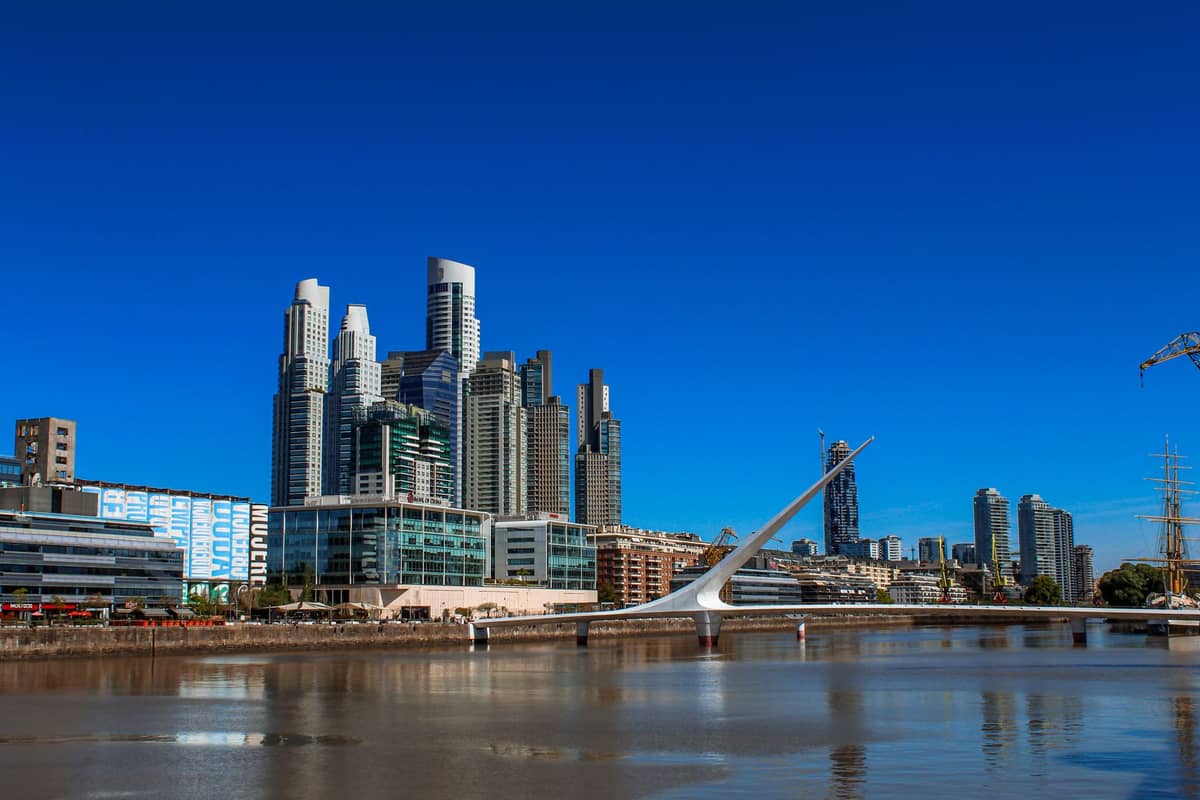
The neighborhood is organized around four interconnected dock basins, numbered Dique 1 through Dique 4 from south to north. The western side of each dique features the original red-brick warehouse row, now converted into restaurants and hotels. The eastern side, oriented around Avenida Juana Manso, is where the modern towers went up: glass residential buildings, corporate headquarters, and luxury hotels from international chains. Every street on the eastern side is named after a notable Argentine woman, making the street map here unlike any other in the city.
Walking north to south, the neighborhood is about 3 kilometres long but rarely more than 500 metres wide. It connects loosely to San Telmo via the southern tip near Parque Lezama and to the Microcentro financial district at its northern edge. The area around Dique 3 and Dique 4, closest to the centre, sees the heaviest foot traffic and contains most of the tourist-facing restaurants and the neighborhood's most photographed landmark, the Puente de la Mujer.
Character & Atmosphere
Early in the morning, Puerto Madero has an almost empty quality that surprises first-time visitors. The promenades along the docks are wide and well-maintained, and at 7 or 8am you'll find joggers and cyclists but few tourists. The light on the water is soft at that hour, and the red-brick warehouses glow in a way the glass towers cannot match. It's genuinely pleasant, and it gives you a sense of the scale of the place before the day heats up.
By midday, the corporate side of Puerto Madero asserts itself. Lunchtime crowds emerge from the office towers and fill the restaurant terraces along the dock. The atmosphere is polished but somewhat impersonal: suits alongside tourists, prices calibrated for expense accounts. This is not the Buenos Aires of neighbourhood corner stores and neighbourhood gossip. It is a district that was designed rather than accumulated, and that intentional quality shows in both its strengths (cleanliness, space, ease of navigation) and its weaknesses (limited local character, restaurants oriented toward high-spend visitors).
In the late afternoon, the light shifts dramatically. The sun drops behind the city to the west, and the reflections on the dock water turn orange and then deep blue. This is when the Puente de la Mujer looks its best, and when the walkway along Dique 3 gets genuinely atmospheric. Couples walk the bridge, photographers set up tripods, and the restaurant terraces fill again for dinner. After dark, Puerto Madero is well-lit and safe by any standard, but the nightlife is concentrated in a handful of upscale venues rather than a broad street scene. It winds down earlier than San Telmo or Palermo.
💡 Local tip
Walk the docks from south to north in the late afternoon to catch the best light on the water. The stretch between Dique 2 and Dique 4 is most photogenic from roughly an hour before sunset.
What to See & Do
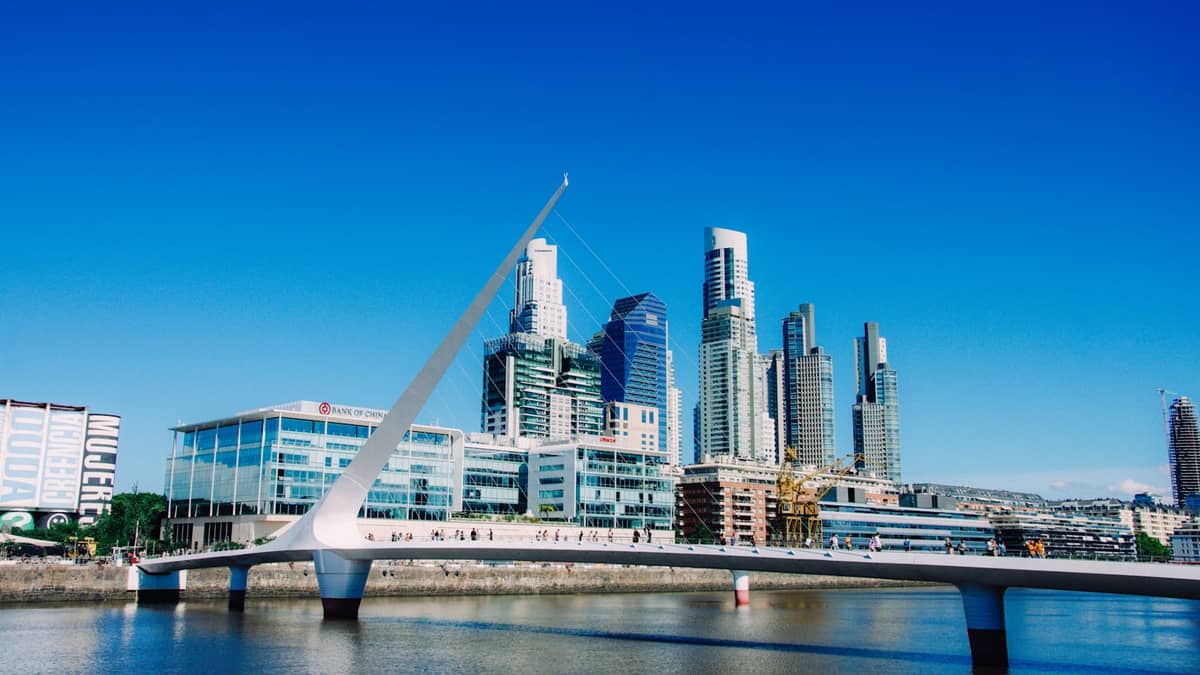
The most iconic structure in Puerto Madero is the Puente de la Mujer, a 160-metre pedestrian bridge designed by Spanish-Swiss architect Santiago Calatrava and completed in 2001. It spans Dique 3, connecting the warehouse row on the western bank with the tower district on the east. The white asymmetric mast and cable structure is meant to evoke a tango couple, which may or may not be obvious depending on the angle. What is clear is that it works as a piece of public infrastructure: it pivots to allow tall boats through, and it's in constant use by pedestrians, cyclists, and the inevitable queue of people photographing it.
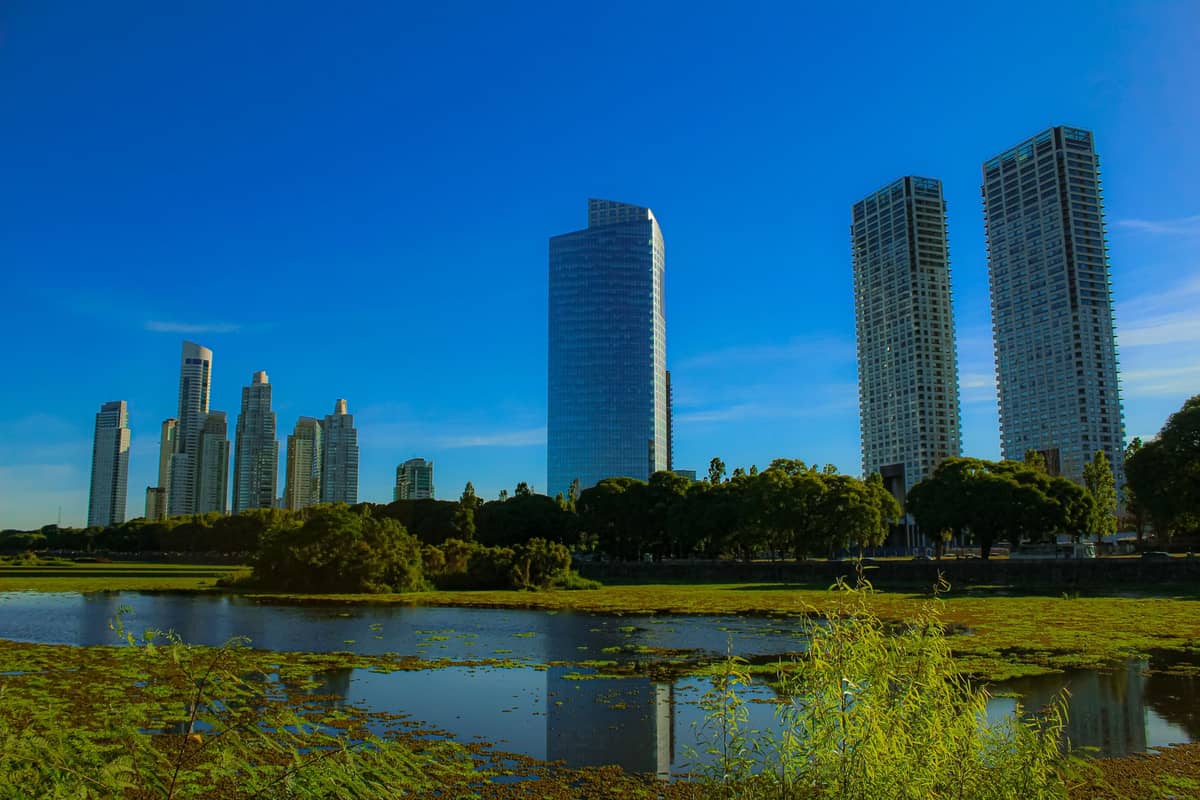
Directly east of the neighborhood, accessible on foot from the southern docks, lies the Reserva Ecológica Costanera Sur. This 350-hectare urban nature reserve came into existence after land reclaimed from the Río de la Plata in the 1970s was left undeveloped, and the ecosystem colonised it on its own. Today it contains grasslands, wetlands, and woodland patches that support over 300 bird species. Entry is free, the paths are flat and well-marked, and the contrast with the glass towers immediately to the west is extraordinary.
The warehouse buildings along the western docks have been converted with varying degrees of success. Some contain hotels, others house restaurants at street level with event spaces above. The brick architecture is genuine 19th-century port infrastructure, and worth a slow walk regardless of whether you stop to eat. Look for the old dock machinery and loading infrastructure still in place at several points along the walkway.
Puente de la Mujer: walk across it, photograph it, check for boat-rotation times if you want to see it pivot
Reserva Ecológica Costanera Sur: free entry, best in the morning, bring binoculars if you have them
Warehouse row (Dique 1–4 western bank): architecture walk along the original dock buildings
Avenida Juana Manso: the main commercial street on the eastern side, good for understanding the modern development scale
Río de la Plata waterfront: the easternmost edge of the reserve gives views across the wide estuary, which looks more like a sea than a river
ℹ️ Good to know
The Reserva Ecológica Costanera Sur is free to enter and open Tuesday to Sunday and public holidays, but hours vary seasonally. Check the Buenos Aires city government website for current access times before visiting.
Eating & Drinking
Puerto Madero has a concentration of restaurants along the warehouse row and around the docks that is genuinely impressive in scale. The cuisine runs from Argentine parrillas (grill restaurants) serving prime cuts of beef to international hotel dining rooms and casual cafés catering to the office lunch crowd. The quality is generally good. The prices are among the highest in Buenos Aires, calibrated for corporate expense accounts and international visitors accustomed to European or North American pricing.
The parrilla tradition is well-represented here, and several of the dock-side restaurants are known specifically for their beef. Ordering a bife de chorizo (sirloin) or an ojo de bife (ribeye) with chimichurri and a glass of Malbec is the quintessential Puerto Madero meal, and the setting on the water makes it work. What you are paying for, beyond the food itself, is the view and the postcard atmosphere.
For those keeping an eye on costs, the cafés within the hotel lobbies and along Avenida Juana Manso offer coffee and pastries at more reasonable prices. If you want an honest Buenos Aires café experience, though, you're better off heading a few blocks west into the Microcentro, where places like Café Tortoni on Avenida de Mayo represent a century-plus tradition of coffee culture that Puerto Madero simply cannot replicate.
The bar scene is limited and skews upmarket. Hotel rooftop bars offer cocktails with river views, and a few of the converted warehouses run wine bars in the evening. Puerto Madero does not have the depth or diversity of nightlife you'd find in Palermo or San Telmo, so if late-night exploration is a priority, treat this neighbourhood as a dining destination and move on afterward.
Getting There & Around
Puerto Madero has no metro station of its own. The closest Subte stops are on Line B (at Leandro N. Alem station) and Line A (at Perú and Plaza de Mayo stations), all of which are in the adjacent Microcentro. From any of these stops, the walk east to the dock area takes roughly 10 to 15 minutes on foot. For broader orientation on the city's public transport network, see the getting around Buenos Aires guide.
Multiple bus routes (colectivos) run along Avenida Eduardo Madero and Avenida Ingeniero Huergo, the western boundary avenues. These connect Puerto Madero with the southern barrios, the Microcentro, and points north. The SUBE card, a rechargeable transit card available at kiosks throughout the city, is required for all public bus and metro journeys. Fares are subsidised and inexpensive by international standards, though exact amounts change frequently and should be verified locally.
Within the neighborhood itself, the most practical way to get around is on foot or by bicycle. The dock promenades are flat, wide, and entirely pedestrianised in places. The city's public bike-share system (Ecobici) has stations on Avenida Juana Manso and along the boundary avenues, making it easy to cycle the length of the neighbourhood and continue into the parks to the north or south. Taxis and ride-hailing apps work normally throughout the area.
From Aeroparque Jorge Newbery, the city's domestic airport located a few kilometres north along the riverfront, Puerto Madero is around 15 to 20 minutes by taxi depending on traffic, making it a convenient first or last stop for domestic travellers.
💡 Local tip
The walk from Plaza de Mayo west through the historic core and across Avenida Eduardo Madero into Puerto Madero takes about 10 minutes and passes through the city's historic core. It's a logical way to connect both areas in a single morning.
Where to Stay
Puerto Madero is one of the most expensive places to stay in Buenos Aires. The accommodation here consists almost entirely of luxury and upper-midrange hotels, many in international chain properties. Several occupy the converted warehouse buildings on the western dock, giving them the best of both worlds: historic brick exteriors and modern interiors with dock or canal views. These are genuinely comfortable hotels, well-located for the central sights of Buenos Aires and for the Reserva Ecológica.
The tradeoff is that Puerto Madero is not an especially convenient base for exploring the city's more characterful neighbourhoods. It sits east of the main grid, meaning that getting to Palermo, Recoleta, or San Telmo requires either a taxi or a walk through the Microcentro first. For travellers primarily interested in the waterfront itself, or those attending events at the neighbourhood's corporate venues, staying here makes sense. For travellers who want to be embedded in everyday Buenos Aires, the location is more isolated than it first appears on a map.
Budget accommodation does not exist in Puerto Madero. For a wider overview of where to stay across the city at different price points, the where to stay in Buenos Aires guide covers all the main neighbourhoods with honest trade-off analysis.
Assessment: Who This Neighbourhood Is For
Puerto Madero works best as a half-day destination, not a base. The waterfront walk, the Puente de la Mujer, and the nature reserve together make a compelling itinerary that takes three to four hours at a relaxed pace. The restaurant scene is polished and enjoyable if you accept the prices. But the neighbourhood lacks the street-level texture and spontaneous character that makes Buenos Aires compelling in its older barrios.
It is not the Buenos Aires of cobbled streets and corner bakeries. That Buenos Aires is a short walk or taxi ride away, in San Telmo to the south or the Microcentro to the west. Pairing Puerto Madero with those areas in a single day is a sensible way to see both the city's historic core and its modern reinvention. For context on how this fits into a broader itinerary, the 3 days in Buenos Aires guide shows how to sequence the city's main neighbourhoods efficiently.
⚠️ What to skip
Puerto Madero's restaurant prices are genuinely high by Buenos Aires standards. Portions are large and quality is good, but budget travellers will find better value in San Telmo or the Microcentro. Check the menu pricing before sitting down, as tourist-facing restaurants here rarely display prices outside.
TL;DR
Puerto Madero is Buenos Aires' modern waterfront district: planned, polished, and unlike anywhere else in the city in terms of scale and finish.
The Puente de la Mujer and the Reserva Ecológica Costanera Sur are genuine highlights worth building a half-day around.
Restaurants are good but expensive; the neighbourhood works best as a dining destination or scenic walk rather than a base for exploring the city.
No metro access means getting in and out requires buses, taxis, or a 10–15 minute walk from the nearest Subte stations in the Microcentro.
Best suited to: business travellers, couples wanting a scenic waterfront dinner, and anyone combining a morning at the nature reserve with an afternoon in the historic centre.
Three days is enough to cover Buenos Aires' essential neighborhoods, landmarks, and cultural experiences, if you plan smart. This itinerary breaks the city into logical daily routes, with honest notes on timing, transport, and what the crowd-pleasing options actually deliver.
Buenos Aires delivers more than its size suggests as a museum city. From world-class fine art collections to intimate houses dedicated to Eva Perón and Carlos Gardel, the city's museums cover Argentina's full cultural range. This guide covers the best of them, organised by theme.
Buenos Aires works as a year-round destination, but the timing of your visit shapes everything from comfort to cost to what's actually happening on the street. This guide breaks down every season with real temperature data, crowd realities, and event timing so you can pick the trip that fits your priorities.
Buenos Aires has two airports serving very different purposes. Ezeiza (EZE) handles most long-haul international flights, while Aeroparque (AEP) sits close to downtown and covers domestic and regional routes. This guide breaks down both airports, how to get between them, and the best ways to reach the city center.
Buenos Aires spans more than three centuries of architectural history, from the Spanish colonial Cabildo on Plaza de Mayo to the sweeping art nouveau interiors of El Ateneo Grand Splendid and the glass towers of Puerto Madero. This guide breaks down the city's key styles, neighborhoods, and buildings worth seeking out, with practical tips on timing, logistics, and what to skip.
Buenos Aires takes its café culture seriously. The city has formally designated more than 80 establishments as bares notables, protecting them for their historic, architectural, or cultural significance. This guide covers the best historic cafés, what to order, neighbourhood coffee scenes, and practical advice for experiencing it all like a local.
Managing money in Buenos Aires is more nuanced than in most cities. Argentina's peso, evolving exchange rates, ATM fee structures, and the once-legendary 'blue dollar' all require a clear-headed strategy. This guide breaks down exactly how the Buenos Aires currency system works today, what's changed, and how to avoid the most common financial mistakes visitors make.
Eva Perón shaped Buenos Aires as much as any building or boulevard. This guide maps the key sites tied to her life and legacy, from the Museo Evita in Palermo to the Duarte family tomb in Recoleta Cemetery, with opening hours, entry prices, and a clear take on what is worth your time.
Buenos Aires has a well-earned reputation as one of South America's most romantic cities. This guide covers the best couples experiences, from tango dinner shows with verified pricing to waterfront dining, atmospheric neighborhoods, and practical advice for making your trip feel effortless.
Buenos Aires rewards those who go beyond the postcard. From a bookshop inside a theatre to a mosaic-covered alley in Barracas, these are the experiences that turn a good trip into an unforgettable one.
Buenos Aires nightlife runs on its own clock: dinner at 10 pm, bars filling after midnight, and clubs peaking at 3 am. This guide breaks down the best neighborhoods, venue types, price expectations, and the tango scene so you can stop guessing and start going out.
Buenos Aires offers genuine value for travelers who know the system. This guide covers everything from navigating the SUBE card and free museums to eating well for next to nothing — and where the city actually costs more than expected.
Buenos Aires is a major world city with real risks that are manageable with the right knowledge. This guide breaks down neighbourhood safety, common scams, transport precautions, and official emergency resources so you can travel with confidence.
Buenos Aires offers one of South America's most varied shopping landscapes, from grand European-style galleries and sprawling malls to weekend antique markets and independent designer stores. This guide breaks down where to shop, what to buy, and how to avoid the common tourist pitfalls.
Buenos Aires is one of South America's most rewarding solo destinations, with an extensive metro network, walkable neighborhoods, and a rich cultural scene. This guide covers everything from the safest areas to stay and how to navigate public transport, to money tips and the best times to visit as a solo traveler.
Buenos Aires is one of Latin America's most important cities for public art, with commissioned murals, mosaics, and political works spread across dozens of neighborhoods. This guide covers where to go, how to get there, which tours are worth booking, and what most visitors miss.
The Buenos Aires Tango Festival & World Cup (Tango BA Festival y Mundial) is one of the world's largest free tango events, drawing thousands of dancers and spectators each August. This guide covers how to get tickets, what to expect at the competition finals, which venues to prioritize, and how to make the most of two weeks of non-stop tango across the city.
Buenos Aires rewards those who look up and climb high. From a Dante-inspired skyscraper to a British clock tower overlooking the Río de la Plata, these are the city's finest viewpoints, street-level panoramas, and architectural frames worth seeking out.
Buenos Aires is one of the great walking cities of South America, with distinct neighborhoods close enough to link on foot and rich enough to fill a full day each. This guide breaks down the best self-guided walking routes by barrio, with practical details on duration, what to prioritize, when to go, and where to be careful.
Buenos Aires is a more family-friendly city than most first-time visitors expect. This guide covers the best kid-focused attractions, the most practical neighborhoods for families, how to get around with children, and what to skip — with honest notes on crowds, costs, and seasonal timing.
Buenos Aires delivers world-class culture, food, and architecture at a fraction of European city prices. But it rewards those who plan ahead. This guide breaks down costs, seasons, safety, and the neighborhoods that matter, so you can decide if it belongs on your itinerary.
Buenos Aires rewards slow exploration, but the city also sits within easy reach of some genuinely excellent escapes. This guide covers the top Buenos Aires day trips by distance, difficulty, and what you actually get for your time and money.
Buenos Aires is one of the world's great football cities, home to over 20 professional clubs and two of the most iconic stadiums on the planet. This guide covers everything you need to know: how to get match tickets, what stadium tours cost, when to visit, and how to avoid the most common tourist mistakes.
Buenos Aires rewards travelers who know where to look. The city has free-entry museums, landmark plazas, vast parks, and weekly market days that cost nothing at all. This guide covers 20 of the best free experiences across every corner of the city.
Buenos Aires has one of South America's most comprehensive urban transport networks. This guide covers every practical option for getting around the city, from the Subte metro and colectivo buses to ride-hailing apps, Ecobici bikes, and airport transfers from Ezeiza and Aeroparque.
Seven days is enough time to move through Buenos Aires properly, from the political heart of Plaza de Mayo to the cobblestones of San Telmo, the parks of Palermo, and a night at Teatro Colón. This day-by-day guide covers logistics, timing, and the trade-offs worth knowing before you go.
Buenos Aires is the birthplace of tango, and the city takes that seriously. This guide covers milongas, tango lessons, dinner shows, seasonal events, dress codes, and honest price breakdowns — everything you need to engage with tango culture on your own terms.
Buenos Aires rewards visitors who go beyond the obvious. This guide covers the city's top experiences across culture, history, food, and nightlife, organized by neighborhood and enriched with practical logistics, honest assessments, and local context to help you plan a trip that actually works.
Buenos Aires is one of South America's great eating cities, built on beef, Italian immigrants, and neighborhood traditions that stretch back a century. This guide covers the essential dishes, where to find them by neighborhood, what things actually cost, and how to navigate the city's food scene without wasting a meal.
Choosing where to stay in Buenos Aires shapes your entire trip. This guide covers the top neighborhoods for every travel style, from historic San Telmo to polished Recoleta, with practical advice on transport links, price ranges, and seasonal timing.