3 Days in Buenos Aires: The Perfect Itinerary
Three days is enough to cover Buenos Aires' essential neighborhoods, landmarks, and cultural experiences, if you plan smart. This itinerary breaks the city into logical daily routes, with honest notes on timing, transport, and what the crowd-pleasing options actually deliver.
Tickets & tours
Live prices and dates from our booking partner. If you book, we may earn a commission at no extra cost to you.
TL;DR
- Three days covers San Telmo, La Boca, Recoleta, Palermo, and the Microcentro comfortably if you organize by geography.
- Use the Subte and colectivos for most crosstown trips; get a SUBE card on arrival. See our getting around Buenos Aires guide for full logistics.
- Spring (September to November) and autumn (March to May) offer the most manageable temperatures for heavy walking days.
- Buenos Aires rewards slow exploration: factor in long lunches, unexpected plazas, and at least one evening of live tango.
- Book Teatro Colón tours and MALBA tickets in advance; same-day availability is not guaranteed.
Before You Go: Logistics That Will Make or Break Your Trip
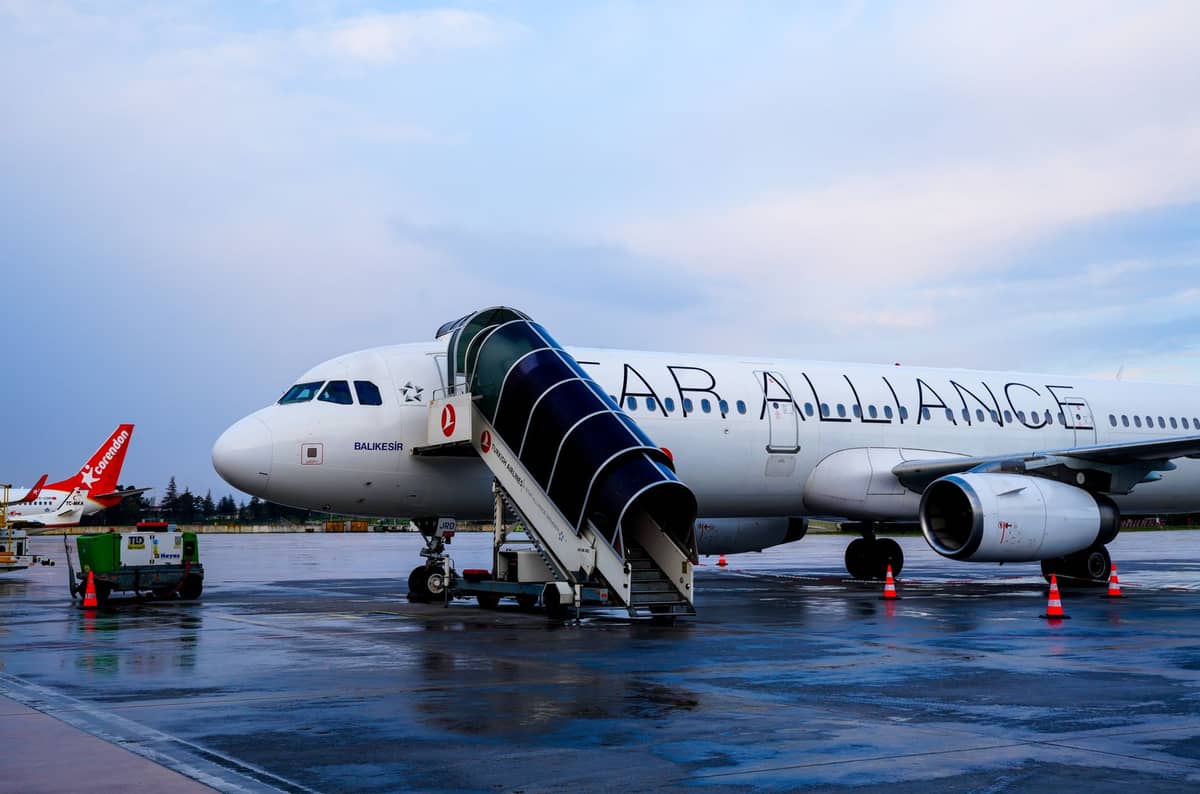
The first thing to sort out is how you're getting from the airport. Most international flights land at Ministro Pistarini International Airport (EZE), located around 30-35 km southwest of the city centre in Ezeiza. Pre-booked remises (private car transfers) are the most straightforward option for arriving travelers, with journey times ranging from 40 minutes to well over an hour depending on traffic. Domestic flights and some regional routes use Aeroparque Jorge Newbery (AEP), which sits on the northern riverfront just a few kilometres from Recoleta and Palermo.
Once in the city, the SUBE card is your best friend. It works on the Subte (metro), colectivos (city buses), and suburban rail lines. Pick one up at kiosks, Subte stations, or lottery shops (quinielas). As of mid-2026, a single Subte trip costs around ARS 1,526-2,526 depending on whether your SUBE is registered and how many trips you've taken that month. These fares update regularly due to inflation adjustments, so always check the current official tariff on the Buenos Aires city government website before you travel. Do not rely on older travel blogs quoting fares in single-digit pesos.
⚠️ What to skip
Currency in Buenos Aires is genuinely complex. The Argentine peso (ARS) has experienced sustained inflation, which affects everything from transport fares to restaurant prices. Always check current exchange options before and during your trip. Our Buenos Aires currency and money guide covers this in detail.
For accommodation, the choice of neighborhood shapes your entire experience. Staying in San Telmo puts you close to Day 1 sights but further from Palermo. Recoleta is central and well-connected. Palermo is best if you prioritize restaurant and bar access in the evenings. See our where to stay in Buenos Aires guide for a full neighborhood breakdown.
Day 1: The Historic South — San Telmo and La Boca
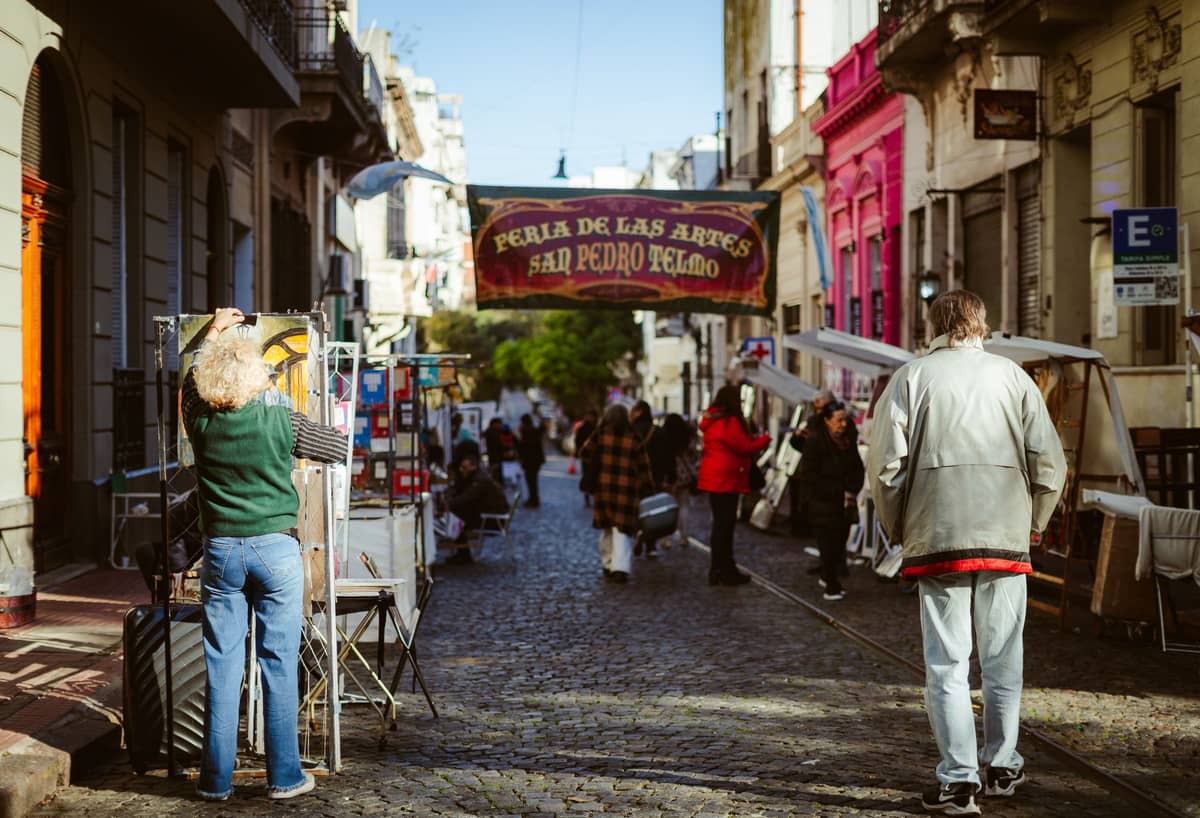
Start your Buenos Aires itinerary in the south, where the city's oldest and most atmospheric neighborhoods sit within easy walking distance of each other. The logical base for the morning is the Plaza Dorrego in San Telmo, a tree-lined square surrounded by café tables and antique dealers. On Sunday mornings, the Feria de San Telmo spills out from Defensa street into the plaza itself, creating one of the city's most genuinely local street markets. If you're there on a weekday, the indoor Mercado de San Telmo on Defensa 961 delivers a similar atmosphere without the crowds.
From San Telmo, walk south or catch bus 64 down to La Boca. The tourist focus here is Caminito, the short pedestrian street famous for its corrugated iron houses painted in vivid primary colors. It's worth seeing, but be clear-eyed about what it is: a curated tourist experience with tango performers and souvenir stalls. The real payoff in La Boca is the Museo Quinquela Martín, dedicated to the neighborhood's most famous painter, and the nearby Fundación Proa, one of the city's best contemporary art venues. Do not wander beyond the main tourist streets in La Boca after dark.
💡 Local tip
La Boca is best visited between 10am and 4pm on weekdays. Weekends bring large tour groups to Caminito that make the narrow street difficult to enjoy. If you're visiting on Sunday, do the Feria de San Telmo first and reach La Boca by midday before the afternoon rush.
Spend your afternoon back in San Telmo or walking north along Defensa toward the Microcentro. The evening in San Telmo is genuinely good: the neighborhood has a concentration of milongas (tango dance halls) and peñas (folk music venues) that operate from around 9pm onwards. This is a better option for a first tango night than the tourist dinner-shows, which tend to be polished but expensive and formulaic.
Day 2: Political Buenos Aires — Plaza de Mayo, the Microcentro, and Puerto Madero
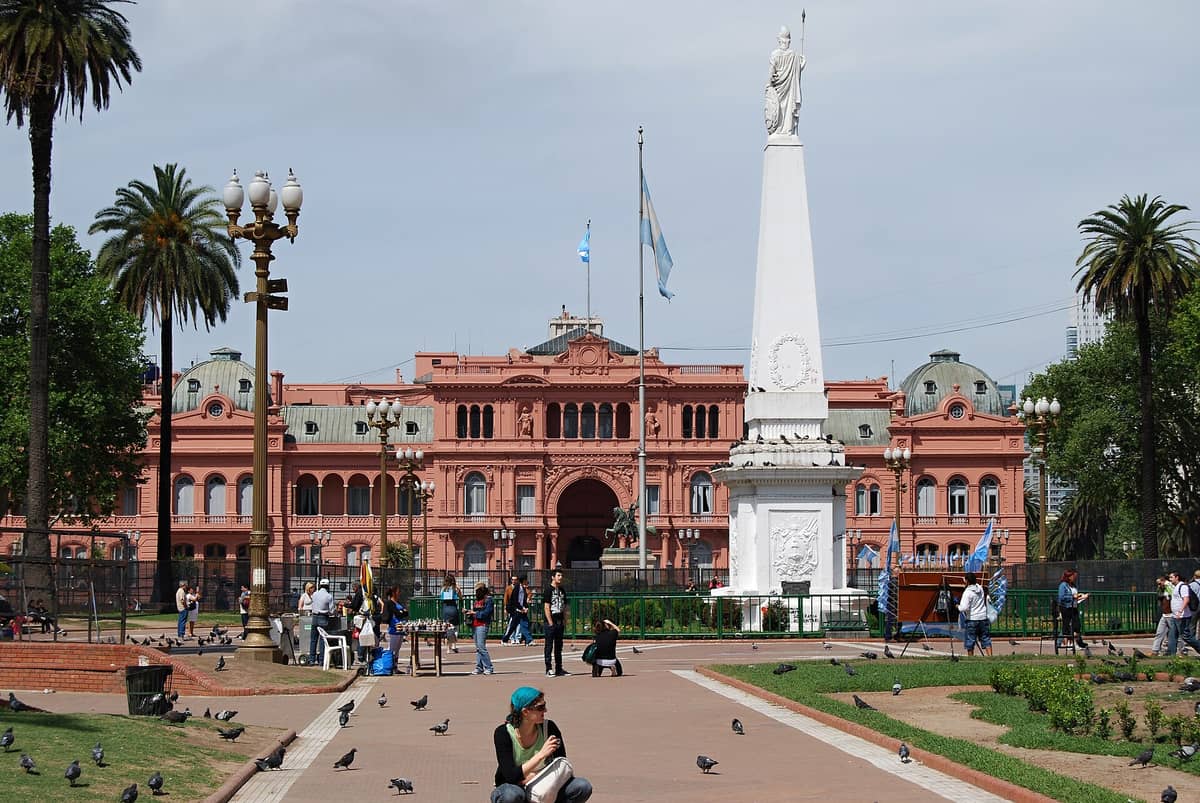
Day 2 covers the city's historic and political core. Start at Plaza de Mayo, the symbolic heart of Buenos Aires since the colonial era. The pink presidential palace, the Casa Rosada, anchors the eastern end of the square. Free exterior access is open at all hours; interior tours require advance booking and are subject to political scheduling. On the opposite end of the plaza stands the Cabildo, the colonial-era town hall that now functions as a small history museum, and the Catedral Metropolitana, which holds the tomb of General José de San Martín.
Walk west along Avenida de Mayo toward the Congreso. This 1.35 km boulevard was modeled on Parisian boulevards and contains some of the city's finest Belle Époque architecture, including the ornate Palacio Barolo at number 1370. Barolo's rooftop tour is one of the better architectural experiences in the Microcentro and needs advance booking. Stop for coffee at Café Tortoni on the same avenue, though be aware it functions largely as a tourist attraction now: prices are higher than average and queues form on weekends.
- Centro Cultural Kirchner (CCK) Argentina's largest cultural centre, housed in a restored Belle Époque post office building. Free entry to most exhibitions and the spectacular central hall. Worth at least an hour.
- El Ateneo Grand Splendid A working bookshop inside a converted theatre on Avenida Santa Fe. Genuinely impressive architecture; the café on the old stage is a nice stop. Best visited on weekday mornings before tour groups arrive.
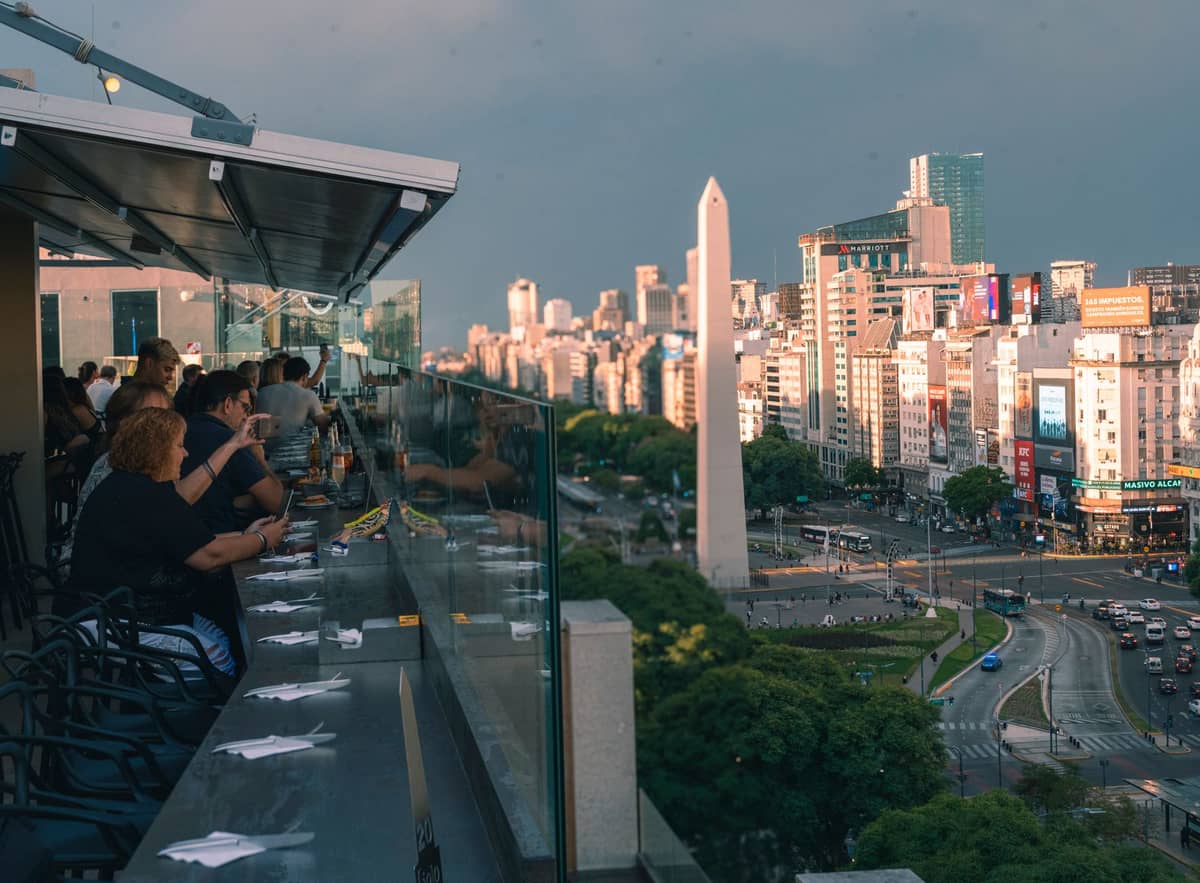
- Obelisco de Buenos Aires The 67-metre white obelisk at the intersection of Corrientes and 9 de Julio is the city's most recognizable landmark. It's best seen from street level; there is no interior access.
In the afternoon, walk or take a short taxi east to Puerto Madero, the redeveloped docklands. The area is clean, modern, and pleasant for a riverside walk, particularly along the Costanera Sur. The Puente de la Mujer, a rotating pedestrian bridge by Santiago Calatrava, is the architectural highlight. Puerto Madero's restaurants are expensive relative to the rest of the city; treat it as a walk and save dinner for San Telmo or Palermo.
Day 3: Recoleta, Palermo, and the City's Cultural Core
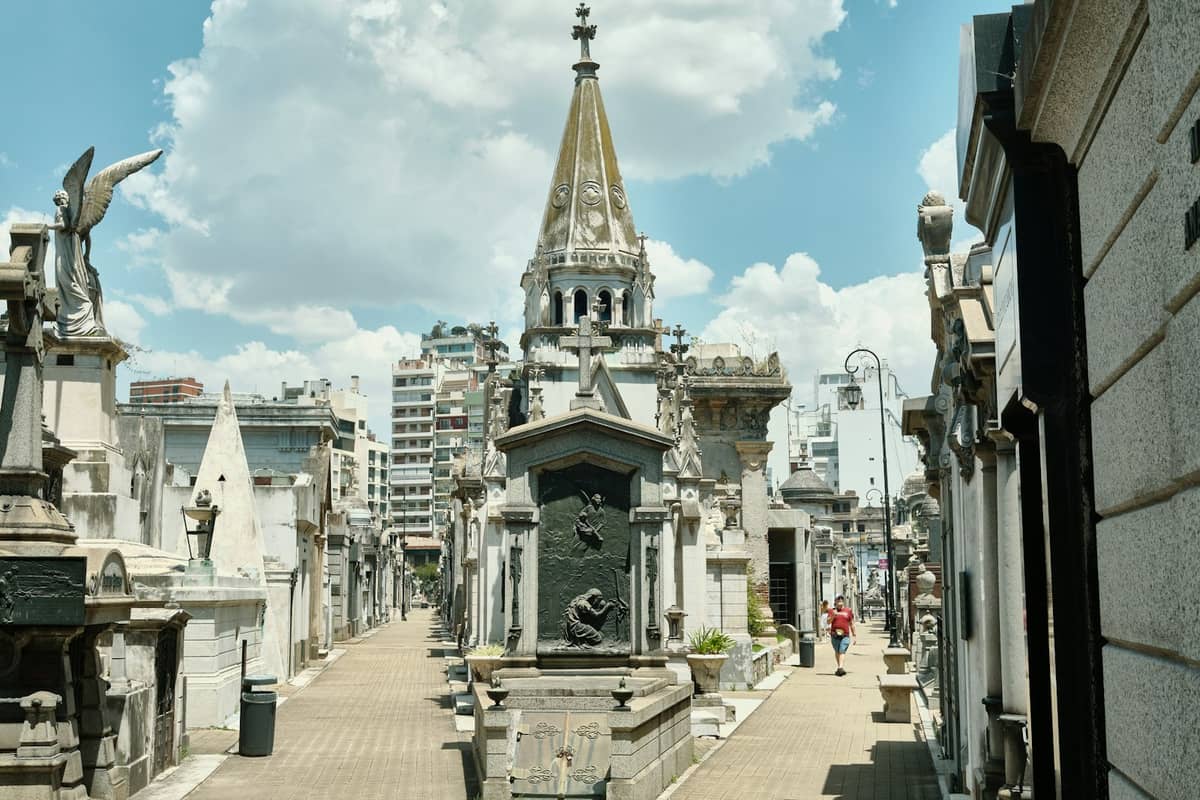
The third day of any solid Buenos Aires itinerary belongs to Recoleta and Palermo. Start early at the Cementerio de la Recoleta, one of the most architecturally extraordinary cemeteries in the world. Arrive when it opens (usually around 7am on weekdays) to walk the mausoleums without crowds. Evita Perón's tomb in the Duarte family vault is the most visited spot, but the cemetery rewards broader exploration: the neoclassical and Art Nouveau mausoleum architecture is the real draw.
A short walk from the cemetery brings you to the Museo Nacional de Bellas Artes, Argentina's premier fine arts museum. Admission is free and the permanent collection covers European masters alongside an excellent survey of Argentine art from the 19th century onward. For contemporary and Latin American art, the MALBA (Museo de Arte Latinoamericano de Buenos Aires) in Palermo is the stronger option, with a world-class collection of 20th-century Latin American work including pieces by Frida Kahlo and Xul Solar. Check current ticket prices on the official MALBA website; a resident/non-resident pricing structure applies.
Palermo's parks are a welcome counterpoint to a day of museums. The Bosques de Palermo contain several interconnected green spaces, including the Jardín Botánico Carlos Thays and the Jardín Japonés. These are popular with locals on weekend afternoons and offer a slower pace after a packed morning of sightseeing.
✨ Pro tip
Palermo Soho and Palermo Hollywood are where you want to be for dinner on your final night. The restaurant density along Thames, Honduras, and El Salvador streets is the highest in the city, with everything from traditional parrillas to creative Argentine cuisine. Porteños eat late: restaurants start filling around 9pm and peak around 10:30pm. Book ahead for anything with a good reputation.
What to Skip (and Why It Matters)
With only three days, prioritization is everything. A few experiences are heavily marketed to tourists but deliver poor value for your time. The dinner-tango shows in the Microcentro and San Telmo cost significantly more than a milonga entry and offer a performance designed for visitors rather than the real social dance culture. If tango is a priority, go to a milonga instead. Puerto Madero's restaurants charge a premium that rarely reflects the food quality. The neighborhood is better as an afternoon walk than a dining destination.
- Skip the Caminito souvenir stalls: the street itself is worth seeing but the goods are identical across every stall and overpriced.
- Avoid the unofficial money changers ('arbolitos') in the Microcentro: currency exchange has formal, legal options that are safer and transparent.
- Don't try to squeeze in a day trip (Tigre, Colonia del Sacramento, San Antonio de Areco) on a 3-day visit unless you drop one of the main neighborhoods. These require 6-8 hours minimum.
- Café Tortoni is a landmark worth a quick coffee, but don't book their tango show or spend more than 30 minutes there: better options exist at lower cost throughout the city.
Practical Notes for a 3-Day Stay
Buenos Aires operates on Argentina Time (ART), which is UTC-3 with no daylight saving time currently observed. The city runs on a late schedule: lunch starts at 1pm, dinner rarely before 9pm, and evening events are typically midnight affairs. Adjust your expectations accordingly. For a deeper look at safety considerations, our Buenos Aires safety guide covers neighborhood-by-neighborhood guidance without generalizing.
- Best months for this itinerary March to May and September to November. Summer (December to February) is hot and humid with temperatures reaching 30°C, which makes long walking days uncomfortable. Winter (June to August) is cool but manageable, averaging 7-15°C.
- Daily transport budget Using the Subte and colectivos for most journeys keeps daily transport costs low. Supplement with remises for airport transfers and late-night returns.
- Electricity and adapters Argentina uses 220V at 50Hz. Plug types are Type C (two round pins) and Type I (three flat pins in a triangle, the same as Australia). Bring a universal adapter.
- Language Rioplatense Spanish is the local variety: 'vos' replaces 'tú', and intonation has a noticeable Italian-influenced lilt. English is common in hotels and tourist areas but less so in markets and local restaurants.
ℹ️ Good to know
Many Buenos Aires museums are free on specific days or have reduced admission at certain times. The Museo Nacional de Bellas Artes is always free. Check individual institution websites before you go, as free days can be the busiest.
FAQ
Is 3 days enough to see Buenos Aires?
Three days covers the essential neighborhoods and major landmarks if you're organized by geography and realistic about pace. You will not see everything — Buenos Aires is a large metropolitan area of over 15 million people in the wider metropolitan area — but you can get a genuine sense of the city's character, food, culture, and history within that window.
What is the best neighborhood to stay in for a 3-day visit?
Recoleta is the most practical base for a 3-day itinerary: it's central, well-connected by Subte and bus, close to Day 3 sights, and has a wide range of accommodation options. San Telmo works well if you prioritize atmosphere and nightlife proximity. Palermo suits travelers who want the best restaurant and bar access.
How do I get around Buenos Aires on a budget?
The Subte and colectivos (city buses) are the most cost-effective options. Both use the SUBE rechargeable card, available at Subte stations and kiosks. Fares are low in international terms, though they change frequently due to inflation adjustments. Check the current official tariff on the Buenos Aires city government website before your trip.
What time of year is best for a 3-day Buenos Aires itinerary?
Spring (September to November) and autumn (March to May) offer the most comfortable temperatures for a walking-heavy itinerary, typically 13-26°C. Summer (December to February) is hot, humid, and coincides with local holiday periods, increasing crowds at popular sites. Winter (June to August) is cool but functional, with mild conditions compared to many Northern Hemisphere cities.
Do I need to book Buenos Aires attractions in advance?
For most outdoor sights and free museums, no advance booking is required. However, Teatro Colón guided tours, MALBA, and popular restaurants in Palermo book up quickly, especially on weekends. If visiting during October or November (spring festival season) or January to February (local summer holidays), advance reservations for shows, tours, and dining are strongly advised.
Tickets & tours
Live prices and dates from our booking partner. If you book, we may earn a commission at no extra cost to you.
Planning a trip? Discover personalized activities with the Nomado app.