Palacio Barolo: Buenos Aires' Most Architecturally Ambitious Building
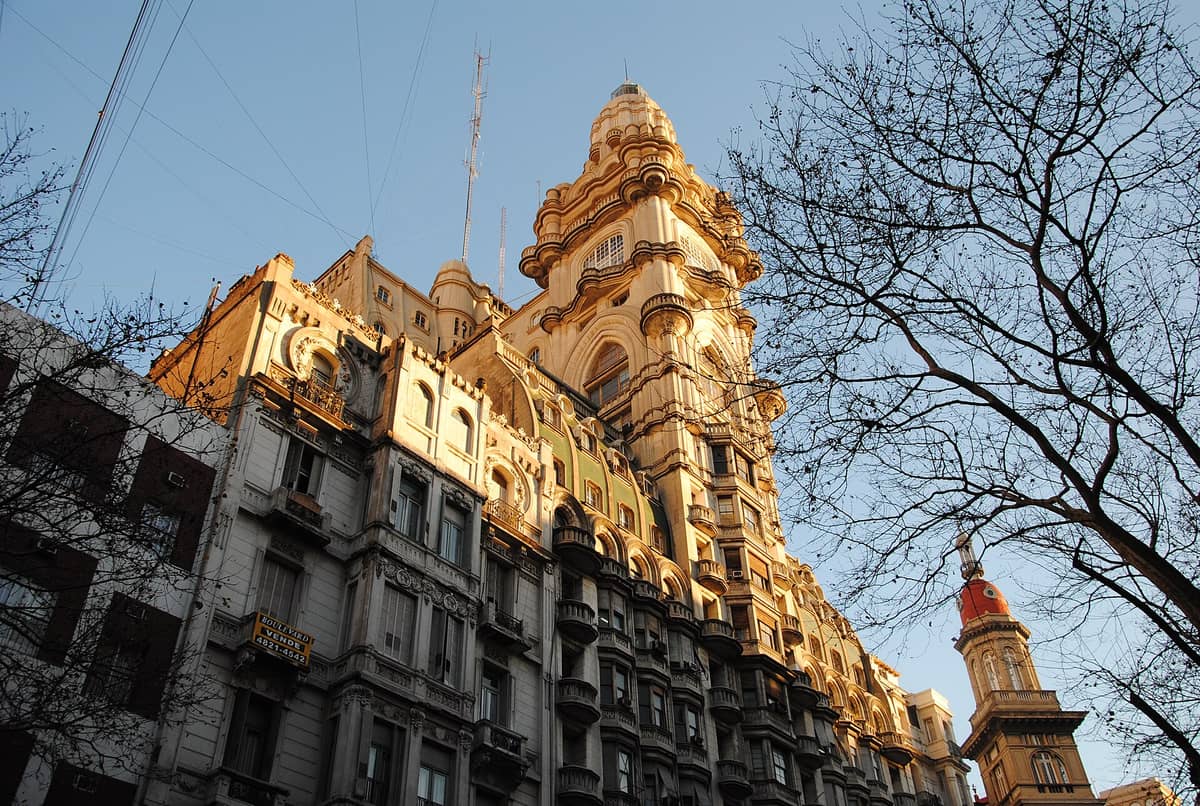
Palacio Barolo is a 100-metre tower on Avenida de Mayo built in 1923 and structured around Dante's Divine Comedy. Guided tours take visitors through floors that represent Hell, Purgatory, and Heaven, ending at a rotating lighthouse with panoramic views over central Buenos Aires.
Quick Facts
- Location
- Av. de Mayo 1370, Monserrat, Buenos Aires
- Getting There
- Subte Line A – Congreso or Lima stations
- Time Needed
- 1.5 to 2 hours (guided tour)
- Cost
- ARS 16,800 adults / ARS 12,700 students & seniors / Under 7 free (verify before visiting)
- Best for
- Architecture lovers, literary travellers, city panoramas
- Official website
- palaciobarolo.com.ar/sitio/en/visitas-guiadas
What Is Palacio Barolo and Why Does It Matter?
Palacio Barolo is not just another early-twentieth-century office building that aged well. It is one of the most deliberately conceived structures in South America, designed by Italian architect Mario Palanti and inaugurated in 1923 after four years of construction. The building rises 100 metres above Avenida de Mayo and was, at the time of its completion, the tallest building in Argentina and across all of South America. That record did not last long, but the architecture did, and it has been earning serious attention ever since.
The client was Luigi Barolo, an Italian textile merchant who had emigrated to Argentina and made a considerable fortune. Barolo shared with Palanti a reverence for Dante Alighieri, and together they embedded the structure of the Divine Comedy directly into the building's proportions, floor count, and symbolic divisions. The ground floors represent the Inferno, the middle section stands for Purgatory, and the tower and lighthouse above correspond to Paradise. Even the total floor count and specific measurements were reportedly chosen to match numerical references in Dante's poem.
ℹ️ Good to know
Palacio Barolo is a working office building. Access is via guided tours only — you cannot simply walk in off the street. Book in advance through the official site, especially for weekend evening tours, which sell out regularly.
The building sits on Avenida de Mayo, the grand ceremonial boulevard that connects the Casa Rosada to the Congreso Nacional. This placement was intentional. Standing at the Congreso end of the avenue, you can see the Barolo's distinctive crown loom over the perspective line. It is one of the few buildings in Buenos Aires designed to be read within an urban axis, not just as a standalone object.
The Architecture: Reading the Building Before You Enter
Before joining any tour, spend five minutes on the pavement outside. The facade combines neo-Gothic arches with Hindu-Buddhist ornamental forms and Roman travertine references, a stylistic eclecticism that reflects both Palanti's training and the cultural cross-currents of 1920s Buenos Aires. The entrance archway is layered with carved figures — serpents, eagles, and allegorical faces — that are easy to walk past without noticing. Up close, they reward attention.
The building is divided into three architectural zones that correspond to Dante's three realms. The commercial base (floors 1 to 14) uses heavier stone and lower ceiling heights, evoking weight and confinement. The middle section (floors 15 to 22) opens into larger office floors with more light. The tower above resolves into an octagonal lantern room and the rotating lighthouse at the summit. The progression is not just symbolic: it actually changes the quality of light and spatial compression as you move upward.
If Buenos Aires architecture interests you more broadly, the guide covers the wider context of the city's European-influenced building stock, from the Beaux-Arts period through to mid-century modernism.Buenos Aires architecture guide covers the wider context of the city's European-influenced building stock, from the Beaux-Arts period through to mid-century modernism.
Tickets & tours
Live prices and dates from our booking partner. If you book, we may earn a commission at no extra cost to you.
Madero Tango Show tickets with optional dinner
From 32 €Instant confirmationFree cancellationBuenos Aires small-group city tour with optional lunch and cruise
From 25 €Instant confirmationFree cancellationPiazzolla Tango Show VIP tickets with transfer and optional dinner
From 112 €Instant confirmationFree cancellationBuenos Aires shopping tour
From 15 €Instant confirmationFree cancellation
What Happens on the Guided Tour
Tours are led by guides fluent in Spanish and English, and they typically run for 90 minutes. The experience begins in the lobby, where the guide introduces the Dante connection and explains Palanti's intentions. The lobby itself is worth several minutes of attention: the original tile floor, the low vaulted ceiling, and the carved doorways establish the tone of everything above.
The elevator carries visitors up in stages, with stops at representative floors where the guide explains the symbolic program of each section. The middle floors still function as offices, so you pass through working corridors — a slightly surreal contrast between active commercial life and architectural pilgrimage. Some tours include access to a mid-level terrace that gives an angled view down Avenida de Mayo and across the low-rise rooftops of Monserrat.
The ascent to the lighthouse is the final and most physically demanding stage. A narrow, steep staircase winds up from the upper elevator landing to the lantern room. The stairs are not suitable for visitors with significant mobility limitations, and the guide will explain this clearly before you attempt them. Those who reach the top find a small circular room with the lighthouse mechanism at its centre, still operational, and windows on all sides.
⚠️ What to skip
The final staircase to the lighthouse is steep and narrow. Visitors with knee problems, vertigo, or limited mobility should confirm with staff before booking whether alternative viewing points are available.
The View from the Top: What You Actually See
At 100 metres, the lighthouse level sits above most of the surrounding Microcentro and Monserrat buildings, giving an unobstructed panorama in most directions. To the east, Puerto Madero's converted warehouses and the silver towers of the newest waterfront development are visible, with the Río de la Plata appearing as a pale grey band on clear days. To the west, the dome of the Congreso Nacional rises above the avenue, and the grid of the city stretches out toward the western suburbs with almost no vertical interruption.
The evening tour, which runs on select nights, is the more atmospheric option. The lighthouse beam still rotates, and it was originally calibrated so that on a clear night it could be seen from the Palacio Salvo across the Río de la Plata in Montevideo, Uruguay — a sister building also designed by Palanti. Whether you can see the corresponding beam from Montevideo depends on atmospheric conditions and is more legend than reliable fact, but the story is part of the experience.
Morning tours have better light for photography of the architecture itself. The low sun catches the carved stone facade from the south and illuminates the lobby details more clearly than midday overhead light. Evening tours have better city ambiance and cooler temperatures, especially relevant in the Buenos Aires summer when midday heat can make the upper floors uncomfortable.
💡 Local tip
Bring a wide-angle lens or use your phone's ultrawide mode for the interior vaults and lobby. Standard focal lengths struggle to capture the full height of the entrance arches from inside.
Getting There and Practical Logistics
The building is at Avenida de Mayo 1370, in the Monserrat neighbourhood of central Buenos Aires. The closest Subte stops are Congreso and Lima on Line A, both within a few minutes' walk. Line A runs beneath Avenida Rivadavia, parallel to Avenida de Mayo and one block north. Numerous bus lines also stop along Avenida de Mayo itself.
The surrounding area is worth combining with the visit. The Microcentro and Monserrat district contains several other significant early-twentieth-century buildings within walking distance, and Avenida de Mayo has retained much of its original built character. The Café Tortoni, Buenos Aires' oldest continuously operating café, is a few blocks east on the same avenue and makes a natural pairing for a half-day itinerary.
Tour schedules vary by day and season. The official website lists current tour times and accepts online bookings. Ticket prices reported in 2025 and early 2026 were ARS 16,800 for adults and ARS 12,700 for students and seniors, with children under seven admitted free. Argentine peso prices can shift significantly with inflation, so check the official site for current rates before visiting. The building is not accessible on a walk-in basis outside of scheduled tour slots.
Is It Worth Your Time?
Palacio Barolo delivers on its premise but requires the right expectations. The view from the lighthouse is good, not transformative. Buenos Aires is a low-to-mid-rise city across most of its area, so the panorama is broad but not dramatic in the way that views from true skyscrapers can be. What the building offers that no other viewpoint in the city provides is interpretive density: the combination of architectural detail, literary symbolism, and urban positioning makes it one of the few places where a guided tour genuinely adds something you could not get by looking for yourself.
Visitors who are indifferent to architectural history or who find Dante an obscure hook will likely find the experience long for what it is. The tour format means you move at a group pace, and the content is predominantly contextual rather than visual. If your main interest is simply a high viewpoint over the city, other options involve less structure. But for travellers who engage with cities through their buildings and the ideas behind them, Palacio Barolo is among the most intellectually serious sites Buenos Aires has to offer.
For a broader view of how to structure your time in the city, the 3 days in Buenos Aires itinerary places Palacio Barolo within a wider sequence of central-area sights.
Insider Tips
- Book the evening tour specifically for the lighthouse beam experience — daytime tours are fine architecturally, but the night ascent with the rotating light active is a meaningfully different experience.
- Ask your guide about the building's twin: Palacio Salvo in Montevideo, Uruguay, also designed by Palanti. The two lighthouses were supposedly calibrated to signal each other across the Río de la Plata. The guide's version of this story is better than anything you'll read online.
- The lobby is accessible independently from the courtyard during business hours on weekdays. You can examine the ground-floor arches and tile work without a tour ticket — useful if you want to preview the space before committing to a booking.
- Photography of the facade is best from the opposite pavement in the late morning, when the sun angle reveals the texture of the carved stone. Midday flattens it considerably.
- Tour groups are capped in size, and weekend evening slots fill up well in advance during spring and autumn. If you are visiting in October or November, book at least a week ahead.
Who Is Palacio Barolo For?
- Architecture and design enthusiasts who want to read a building as intentional text, not just a backdrop
- Literary travellers with an interest in Dante or the cultural transfer between Italy and Argentina in the early twentieth century
- Photographers looking for rooftop angles over the historic centre that differ from standard viewpoints
- Travellers on a longer Buenos Aires visit who have covered the major museums and want something more specific
- Those pairing the visit with a walk along Avenida de Mayo as part of a focused half-day in Monserrat
Nearby Attractions
Other things to see while in Microcentro & Monserrat:
- Avenida Corrientes
Avenida Corrientes is the cultural backbone of central Buenos Aires, a long avenue lined with independent bookshops, mid-century theatres, and late-night pizzerias. Free to walk at any hour, it rewards visitors who linger past midnight as much as those who arrive at noon.
- Avenida de Mayo
Stretching 1.35 km through the heart of Buenos Aires, Avenida de Mayo connects the seat of government at Plaza de Mayo to the National Congress. Inaugurated in 1894 and declared a National Historic Site in 1997, it remains the city's most architecturally dense corridor — free to walk, open at all hours, and best explored at a deliberate pace.
- Cabildo de Buenos Aires
Standing at the western end of Plaza de Mayo, the Cabildo de Buenos Aires is where Argentina's independence process began in May 1810. Today it operates as the Museo Nacional del Cabildo de Buenos Aires y de la Revolución de Mayo, offering free admission and a carefully curated look at colonial-era governance and revolutionary history. Few buildings in the country carry this much political and architectural weight.
- Café Tortoni
Founded in 1858 on Avenida de Mayo, Gran Café Tortoni is the oldest continuously operating café in Buenos Aires. Its marble counters, stained-glass ceilings, and literary history make it one of the city's most photographed interiors — though the lines outside and tourist-oriented service mean expectations need calibrating before you walk in.
Planning a trip? Discover personalized activities with the Nomado app.