Cabildo de Buenos Aires: Argentina's Most Significant Colonial Building
Standing at the western end of Plaza de Mayo, the Cabildo de Buenos Aires is where Argentina's independence process began in May 1810. Today it operates as the Museo Nacional del Cabildo de Buenos Aires y de la Revolución de Mayo, offering free admission and a carefully curated look at colonial-era governance and revolutionary history. Few buildings in the country carry this much political and architectural weight.
Quick Facts
- Location
- Bolívar 65, Plaza de Mayo, Monserrat, Buenos Aires
- Getting There
- Subte lines A, D, and E all serve stations adjacent to Plaza de Mayo; numerous colectivo routes stop on Avenida de Mayo
- Time Needed
- 45–90 minutes for the museum; longer if you combine with Plaza de Mayo
- Cost
- Free (admission is libre y gratuito; no entry fee is charged)
- Best for
- History enthusiasts, architecture lovers, first-time visitors to Buenos Aires
- Official website
- cabildonacional.cultura.gob.ar
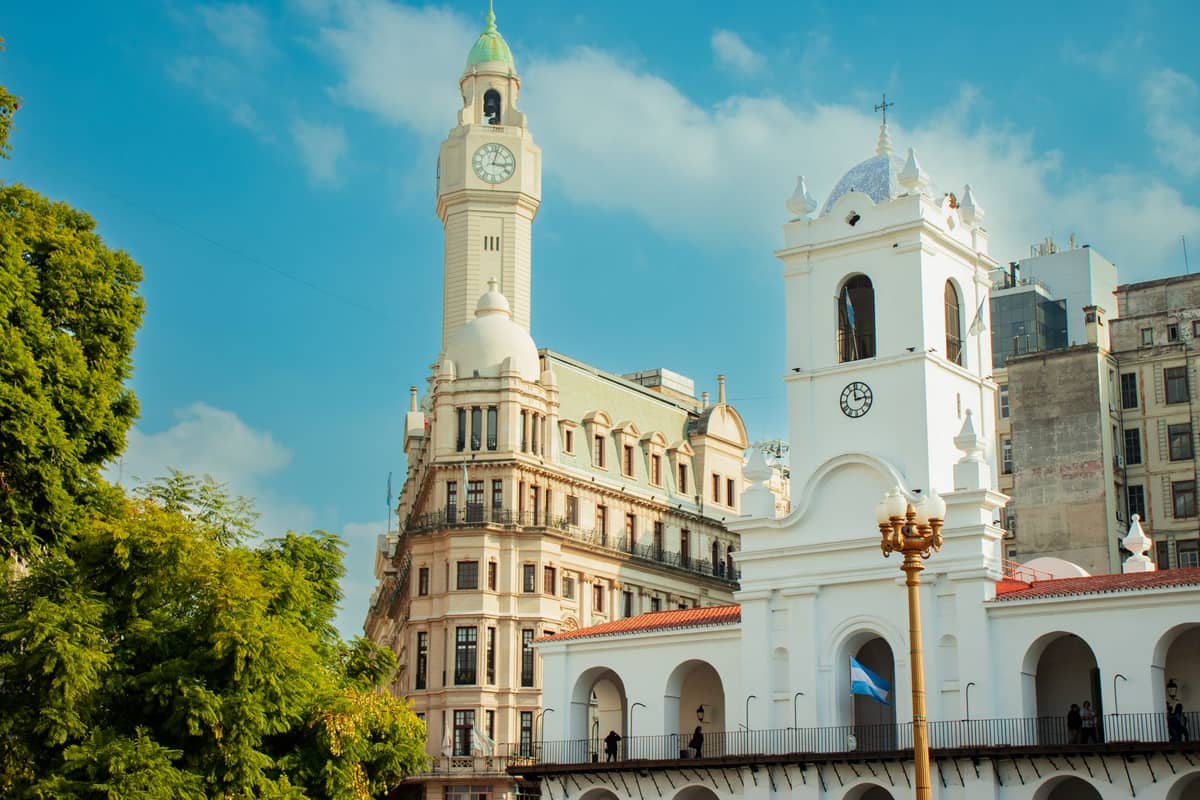
What the Cabildo Actually Is
The Cabildo de Buenos Aires is not simply an old building preserved behind velvet ropes. It is the physical address of a turning point. On 25 May 1810, the open town council that assembled here — the Cabildo Abierto — voted to remove the Spanish Viceroy from power, setting in motion the process that would eventually become Argentine independence. That vote took place in the council chambers on the upper floor, rooms that still exist and can be visited today.
The full official name is the Museo Nacional del Cabildo de Buenos Aires y de la Revolución de Mayo. It operates as a national museum under the Argentine Ministry of Culture, which explains both the free admission and the scholarly quality of the permanent collection. The building occupies the same site as the colonial administrative seat established after the refoundation of Buenos Aires in 1580, though the structure visible today reflects centuries of rebuilding, reduction, and restoration.
ℹ️ Good to know
Opening hours: Wednesday to Sunday, 10:30–18:00. Closed Monday and Tuesday. Admission is free (entrada libre y gratuita). Confirm on the official site before visiting, as schedules can change without notice.
Architecture and the Plaza de Mayo Setting
The Cabildo anchors the western axis of Plaza de Mayo with a white-painted colonial facade, a central tower, and a long arcade of semicircular arches at ground level. The style is Spanish colonial baroque in its bones, though the building has been substantially altered over its history. Most notably, arches were removed in the late 19th and early 20th centuries to make way for Avenida de Mayo and Diagonal Sur, reducing what was once a much longer structure to the compact form seen today.
Standing in the arcade, looking east across the square toward the Casa Rosada, gives a clear sense of the original spatial logic of colonial Buenos Aires: the plaza as the centre of civic and religious life, with the Cabildo (government), the cathedral (church), and the seat of executive power all arrayed around it. That geometry still holds. The flagstones underfoot in the arcade are worn smooth, and the proportions of the arches create a shaded, quiet corridor even on busy weekday mornings.
If you want to understand how the Cabildo fits into the broader colonial fabric of the city centre, the Avenida de Mayo stretches west from this same square and rewards a slow walk on its own terms. The architectural continuity between the two is easy to trace once you know what to look for.
Tickets & tours
Live prices and dates from our booking partner. If you book, we may earn a commission at no extra cost to you.
Buenos Aires small-group city tour with optional lunch and cruise
From 25 €Instant confirmationFree cancellationBuenos Aires shopping tour
From 15 €Instant confirmationFree cancellationBuenos Aires private city tour with lunch in Puerto Madero
From 90 €Instant confirmationFree cancellationPrivate city tour of Buenos Aires including the Old Underground Tunnels
From 314 €Instant confirmationFree cancellation
Inside the Museum: What You Will Find
The interior is organized across two floors and a central patio. The ground floor houses rotating exhibitions and a permanent collection of colonial-era objects: furniture, maps, religious artifacts, and portraits of figures connected to the May Revolution. The display cases are well-labeled in Spanish, with some English signage in key sections, though the depth of interpretation is stronger for Spanish readers.
The upper floor is the historical core of the building. The council chamber and adjoining rooms have been restored to approximate their 1810 appearance, with period furniture and written panels explaining the political events that unfolded here. The scale is domestic rather than monumental — these are relatively small rooms, which makes the weight of what happened in them more, not less, affecting. Standing at the window that overlooks the plaza, you can see almost exactly what the councillors would have seen when crowds gathered below on 25 May 1810.
The internal patio is a calm, shaded space with a small garden and seating. It is an underused area that most visitors pass through quickly on the way to exhibits, but it is worth pausing in, especially on summer afternoons when the temperature inside can be warm.
💡 Local tip
Photography is generally permitted in the museum's common spaces and patio. Flash is typically restricted near historic paintings and documents. Ask at the entrance desk if you are unsure about a specific exhibit.
How the Experience Changes by Time of Day
Weekday mornings, particularly from opening at 10:30 until around 12:00, are the quietest. The museum receives school groups throughout the week, but these tend to arrive mid-morning and move through efficiently. If you arrive at opening on a Wednesday or Thursday, you may have the upper-floor chambers largely to yourself, which noticeably changes how the space feels.
Weekend afternoons between 14:00 and 17:00 are the busiest periods. Plaza de Mayo draws large crowds on Saturdays in particular — families, tourists, and occasional political gatherings — and some of that foot traffic flows into the Cabildo. The museum is not unmanageably crowded by any measure, but if solitude matters to you, mornings on weekdays are clearly preferable.
The arcade along the front of the building catches good light in the morning, when the sun reaches the eastern side of the plaza. Photographers working with natural light will find the facade and the arched corridor most attractive in the hours after opening. By early afternoon, the front is in shadow, which can suit certain compositions but removes the warm-stone quality that makes the colonial exterior so photogenic.
Getting There and Practical Access
The Cabildo sits at Bolívar 65, directly on Plaza de Mayo in the Monserrat neighborhood. By Subte, lines A, D, and E all have stations within a few minutes' walk of the square. Dozens of colectivo routes serve Avenida de Mayo and the surrounding streets. The location is as central as anywhere in Buenos Aires gets, and walking here from San Telmo, Microcentro, or Puerto Madero is entirely practical.
Accessibility: a ramp entrance is available at Hipólito Yrigoyen 511, providing step-free access into the museum. Visitors or groups with specific accessibility requirements can arrange tailored guided visits by contacting the museum in advance via email. The internal spaces on the ground floor are accessible, though the upper floor involves stairs; confirm current arrangements with the museum directly before planning your visit.
Plaza de Mayo itself is an attraction worth understanding before you arrive. The Plaza de Mayo page covers the square's layout, the surrounding monuments, and the political events it has witnessed — context that makes a visit to the Cabildo considerably richer.
Cultural Context: Why This Building Matters
Argentina's national holiday on 25 May — Día de la Revolución de Mayo — directly commemorates the events that took place here in 1810. The Cabildo is not a peripheral footnote to that history; it is the literal room where the decision was made. That gives the building a status in Argentine civic culture roughly analogous to Independence Hall in Philadelphia, though it receives a fraction of the international recognition.
The museum opened to the public in 1939, initially with only the upper rooms accessible. Its location on the same square as the Casa Rosada and the Catedral Metropolitana means it sits within one of the most historically dense urban clusters in South America. These three institutions, all visible from a single vantage point, represent the colonial, ecclesiastical, and executive pillars of Argentine political history.
On 25 May each year, the square fills for official ceremonies, and the Cabildo becomes the backdrop for commemorative events. Visiting on this date offers a dramatic piece of living civic theater, but expect very large crowds and possible closures to the museum interior.
Is It Worth Your Time?
The Cabildo is not a large museum, and visitors expecting extensive collections on the scale of, say, the Museo Nacional de Bellas Artes will find it modest in scope. The permanent collection is focused and specific: colonial governance, the events of May 1810, and the material culture of that period. If those themes genuinely interest you, the museum is well worth 60–90 minutes. If you are primarily interested in art, fashion, or natural history, other institutions in the city will serve you better.
That said, for any first-time visitor to Buenos Aires trying to understand the country's foundational history, the Cabildo is one of the clearest entry points available — free, central, and directly legible even without extensive background knowledge. It is not overhyped by international travel media; if anything, it is undervisited by foreign tourists relative to its historical significance.
⚠️ What to skip
The museum is closed on Mondays and Tuesdays. Several travelers arrive expecting it to be open every day given its prominence on Plaza de Mayo — plan accordingly, and check the official site for any holiday schedule changes.
Insider Tips
- The arcade along the front of the building is publicly accessible even when the museum is closed — it is a useful spot to rest and observe plaza life without paying anything or joining any queue.
- Ask at the front desk about free guided tours, which run on certain days and are led by trained museum staff. These tours open up contextual detail that the exhibit panels alone do not convey, particularly around the political mechanics of the 1810 Cabildo Abierto.
- The museum's internal patio cafe (when operating) is a quieter alternative to the cafes on the plaza, which tend to be crowded and tourist-priced. Check availability on arrival.
- If you read Spanish, the museum's own website at cabildonacional.cultura.gob.ar has downloadable educational materials and a detailed history of the building that is worth reading before your visit rather than after.
- Combine your visit with the Catedral Metropolitana directly across the plaza — both are free, both take under 90 minutes, and together they form a coherent half-day itinerary in Monserrat without spending a peso on admission.
Who Is Cabildo de Buenos Aires For?
- First-time visitors to Buenos Aires who want grounding in Argentine history before exploring the rest of the city
- Architecture enthusiasts interested in colonial Spanish urban planning and the evolution of civic buildings
- Budget travelers: the combination of free admission and a central location makes it an efficient stop on any cost-conscious itinerary
- Travelers on a short visit who want to cover the Plaza de Mayo complex — Cabildo, Casa Rosada, and Cathedral — in a single morning
- Anyone visiting on or around 25 May who wants to understand the significance of the national holiday they are witnessing
Nearby Attractions
Other things to see while in Microcentro & Monserrat:
- Avenida Corrientes
Avenida Corrientes is the cultural backbone of central Buenos Aires, a long avenue lined with independent bookshops, mid-century theatres, and late-night pizzerias. Free to walk at any hour, it rewards visitors who linger past midnight as much as those who arrive at noon.
- Avenida de Mayo
Stretching 1.35 km through the heart of Buenos Aires, Avenida de Mayo connects the seat of government at Plaza de Mayo to the National Congress. Inaugurated in 1894 and declared a National Historic Site in 1997, it remains the city's most architecturally dense corridor — free to walk, open at all hours, and best explored at a deliberate pace.
- Café Tortoni
Founded in 1858 on Avenida de Mayo, Gran Café Tortoni is the oldest continuously operating café in Buenos Aires. Its marble counters, stained-glass ceilings, and literary history make it one of the city's most photographed interiors — though the lines outside and tourist-oriented service mean expectations need calibrating before you walk in.
- Casa Rosada
Standing at the eastern edge of Plaza de Mayo, Casa Rosada houses the offices of Argentina's national executive. Admission to the Museo Casa Rosada is free, guided tours are available, and the exterior alone is worth a dedicated visit.
Planning a trip? Discover personalized activities with the Nomado app.