Where to Stay in Buenos Aires: A Neighborhood-by-Neighborhood Breakdown
Choosing where to stay in Buenos Aires shapes your entire trip. This guide covers the top neighborhoods for every travel style, from historic San Telmo to polished Recoleta, with practical advice on transport links, price ranges, and seasonal timing.
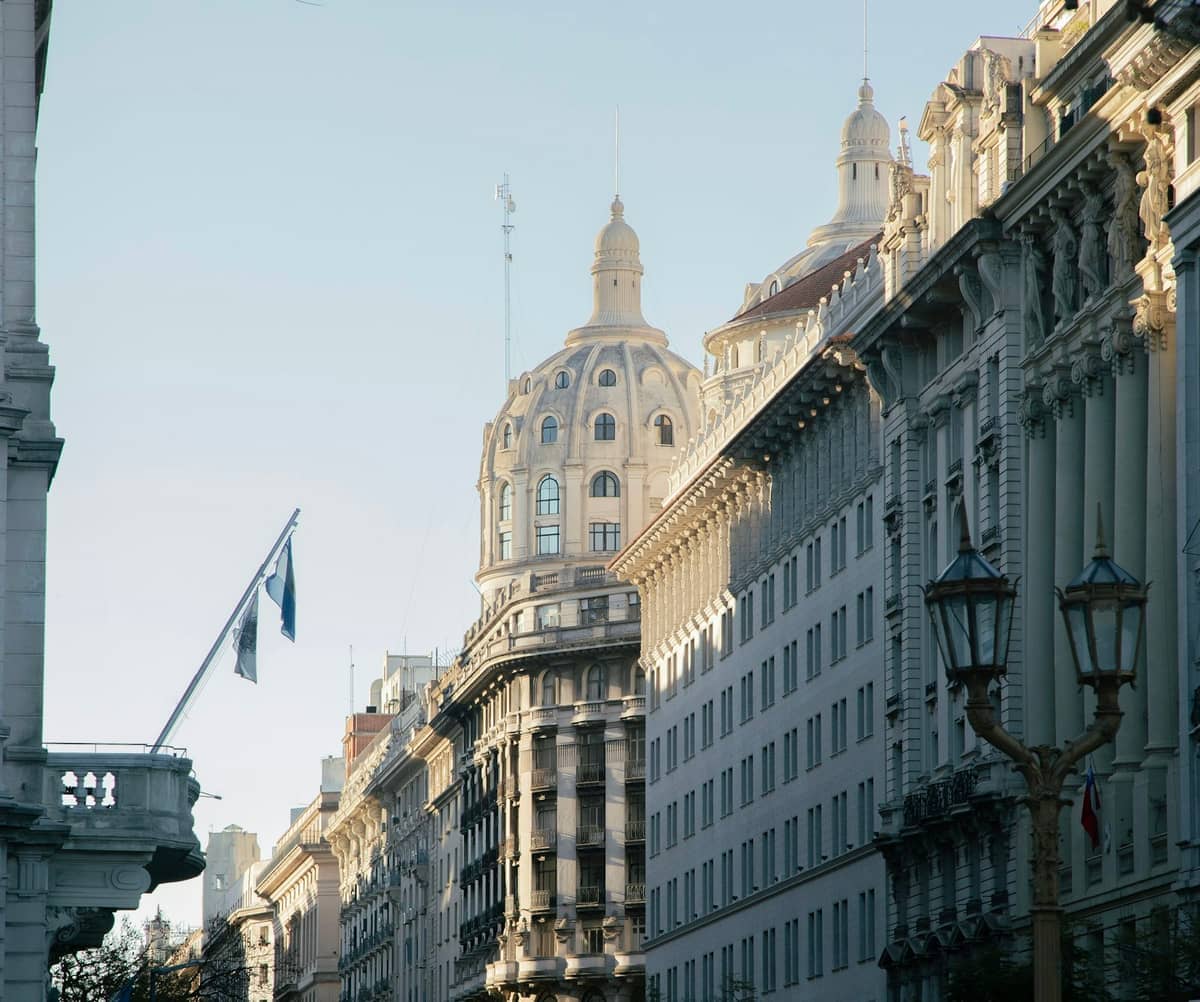
Tickets & tours
Live prices and dates from our booking partner. If you book, we may earn a commission at no extra cost to you.
TL;DR
- Buenos Aires has four main areas for visitors: Palermo, Recoleta, San Telmo, and Puerto Madero, each with a distinct character and price point.
- Palermo is the most flexible base: good transport on Subte lines B and D, plus a wide range of hotels from boutiques to budget options. See the full Palermo neighborhood guide for what to do once you're there.
- Recoleta suits travelers who want calm, central, and museum-heavy stays; Puerto Madero suits business travelers and those who want riverside luxury.
- Spring (September to November) and autumn (March to May) offer the most comfortable conditions for exploring on foot.
- Currency dynamics in Argentina can significantly affect your effective nightly rate, so read the Buenos Aires currency and money guide before booking.
How to Choose Where to Stay in Buenos Aires
Buenos Aires is a sprawling city of just over 3 million people in the autonomous city proper, with a metropolitan area exceeding 15 million. Its neighborhoods, known locally as barrios, vary enormously in atmosphere, walkability, safety reputation, and price. The right base depends on whether you prioritize nightlife access, museum proximity, historic character, transit convenience, or simply the best rate for your peso.
One common mistake first-timers make is booking purely on hotel star rating without considering location. A five-star in Puerto Madero, for example, keeps you isolated from street-level Buenos Aires unless you're deliberately seeking that separation. Conversely, staying in San Telmo puts you deep in cobblestoned history but further from Palermo's restaurant scene. Knowing what you're trading off is essential.
ℹ️ Good to know
Buenos Aires uses a rechargeable SUBE card for public transport (Subte, buses, and commuter rail). You can load it at kiosks and Subte stations. Without one, you cannot pay cash on most buses. Pick one up early in your stay, ideally at the airport or a central Subte station.
Palermo: The Most Versatile Base
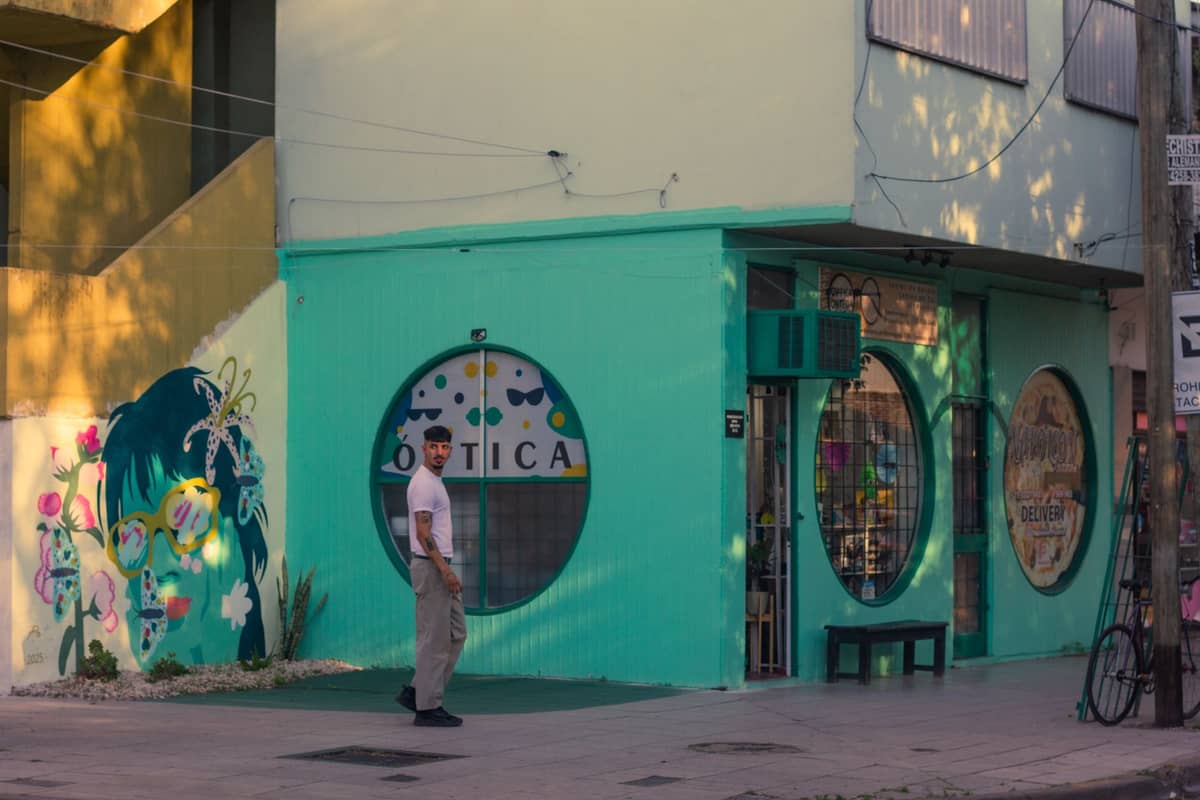
Palermo is Buenos Aires' largest barrio and the area that most visitors end up choosing, for good reason. It covers a wide footprint, running from the parks of the north down through Palermo Soho and Palermo Hollywood, each with its own commercial identity. The Bosques de Palermo and the Jardín Japonés give the neighborhood a green, unhurried quality that contrasts with the density of the Microcentro.
On transport: Subte line D runs through Palermo with stops at Plaza Italia and Scalabrini Ortiz, and line B touches the southern edge. Aeroparque Jorge Newbery (IATA: AEP), the domestic and some regional airport, is a short taxi or bus ride away, which is a significant practical advantage for travelers on multi-city itineraries. Palermo has the widest range of accommodation types in the city, from boutique design hotels to hostel-adjacent guesthouses, with mid-range options broadly aimed at international visitors.
The tradeoff: Palermo is large, and the experience differs significantly depending on which sub-zone you're in. The streets around Armenia and Thames in Soho are walkable and restaurant-dense. Further north toward Belgrano, the neighborhood becomes quieter and more residential. If nightlife is not your priority, staying in Palermo Hollywood can feel like a lot of noise for not much payoff.
Recoleta: Central, Elegant, and Museum-Dense
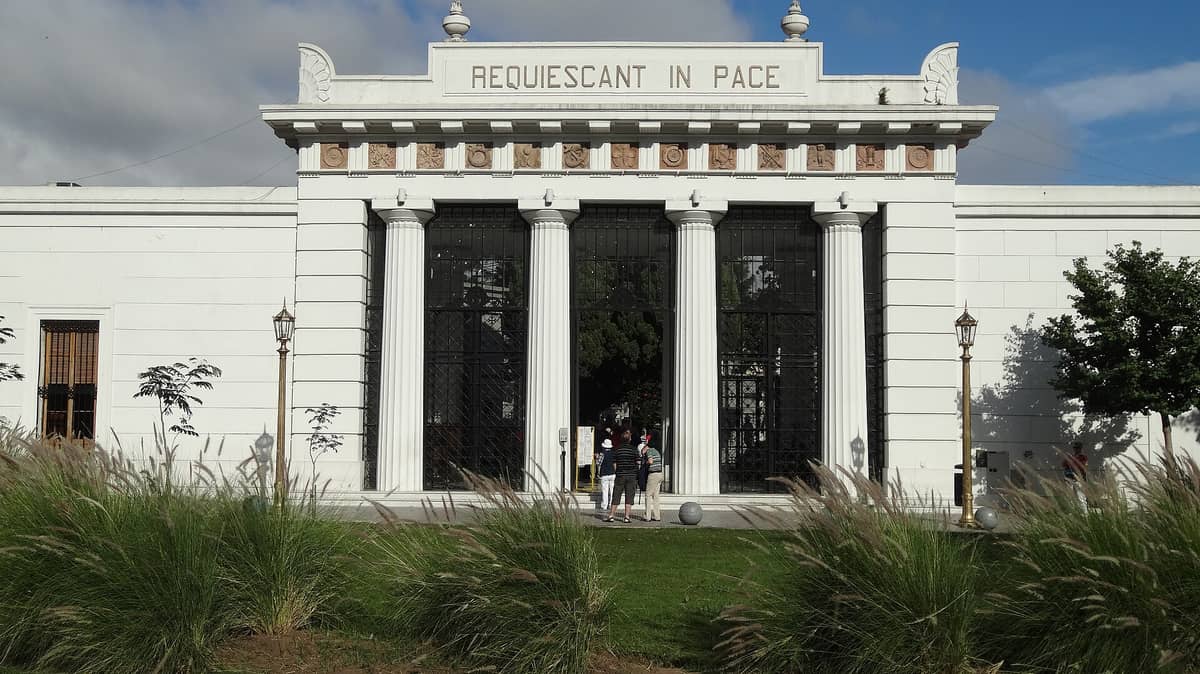
Recoleta is the barrio most associated with Buenos Aires' European architectural character. It sits just north of the Microcentro and east of Palermo, which gives it a genuinely central position without the commercial-district congestion. The Recoleta Cemetery and the Museo Nacional de Bellas Artes are both walkable from most hotels in the area.
Hotels in Recoleta skew toward the upper-mid and luxury categories. The neighborhood attracts travelers who want a quieter, more residential feel without sacrificing centrality. It is genuinely walkable to the Microcentro in around 20–25 minutes on foot, and Subte line H has improved access in recent years. For couples or travelers focused on culture and dining rather than nightlife, Recoleta consistently earns high marks as a base.
💡 Local tip
If you're visiting between March and May or September and November, Recoleta's tree-lined avenues are at their most pleasant for walking. Summer (December to February) brings heat and humidity that can make the long sidewalk stretches tiring by midday.
San Telmo: History, Tango, and Cobblestones
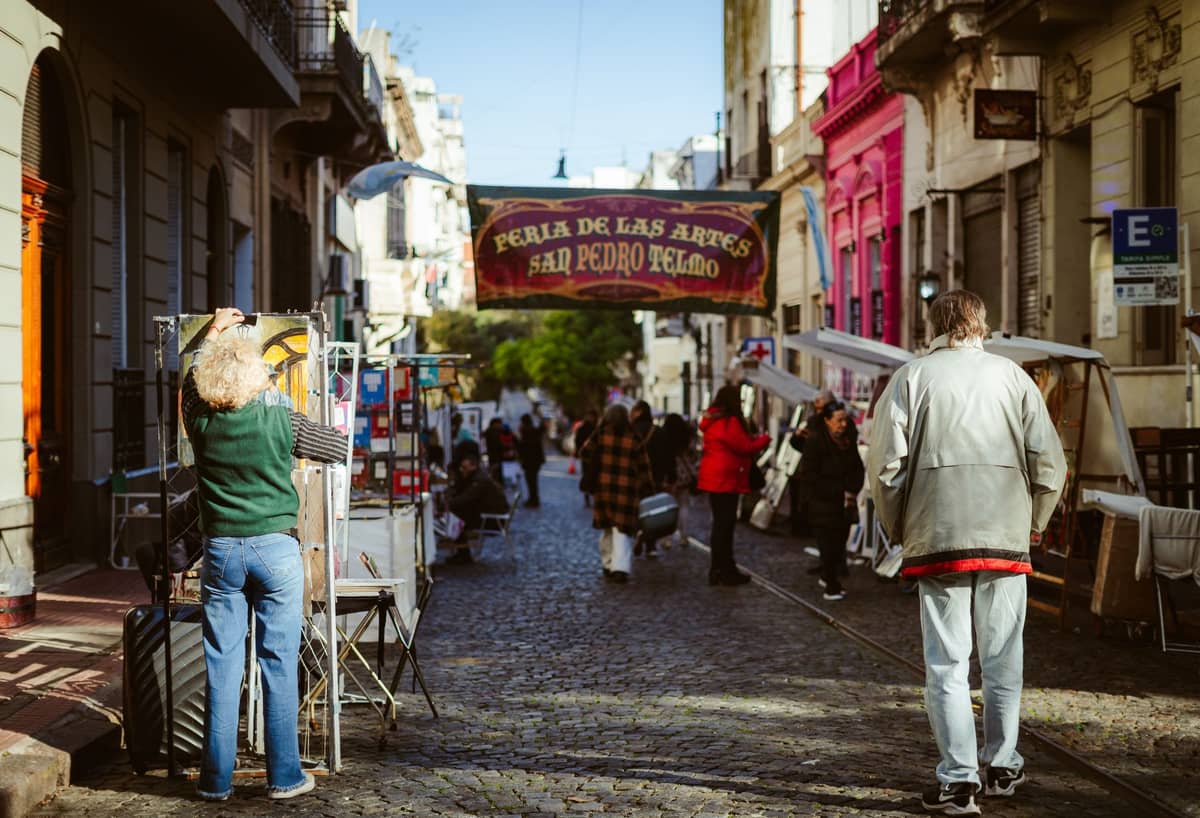
San Telmo is Buenos Aires' oldest surviving residential neighborhood, and it shows. The streets are narrow, the buildings are 19th-century colonial and Italian eclectic, and the weekend Feria de San Telmo at Plaza Dorrego draws both locals and visitors from across the city. If you want immediate immersion in the texture of old Buenos Aires, this is the neighborhood.
Accommodation in San Telmo tends toward boutique hotels in converted historic buildings, design hostels, and apartment rentals. Prices are generally lower than Recoleta or Puerto Madero at equivalent quality levels. The Subte does not run directly through San Telmo, though line C's Independencia stop is close. Buses cover the area well, but you'll walk more than in Palermo.
A candid note: San Telmo is not for everyone. Some travelers find it feels edgier than other barrios, particularly on the fringes near La Boca. Stick to the core around Defensa and Humberto Primo for the best experience. It is also genuinely noisy on weekend nights when tango bars and restaurants are operating at full volume.
Puerto Madero: Riverside Luxury and Business Travel
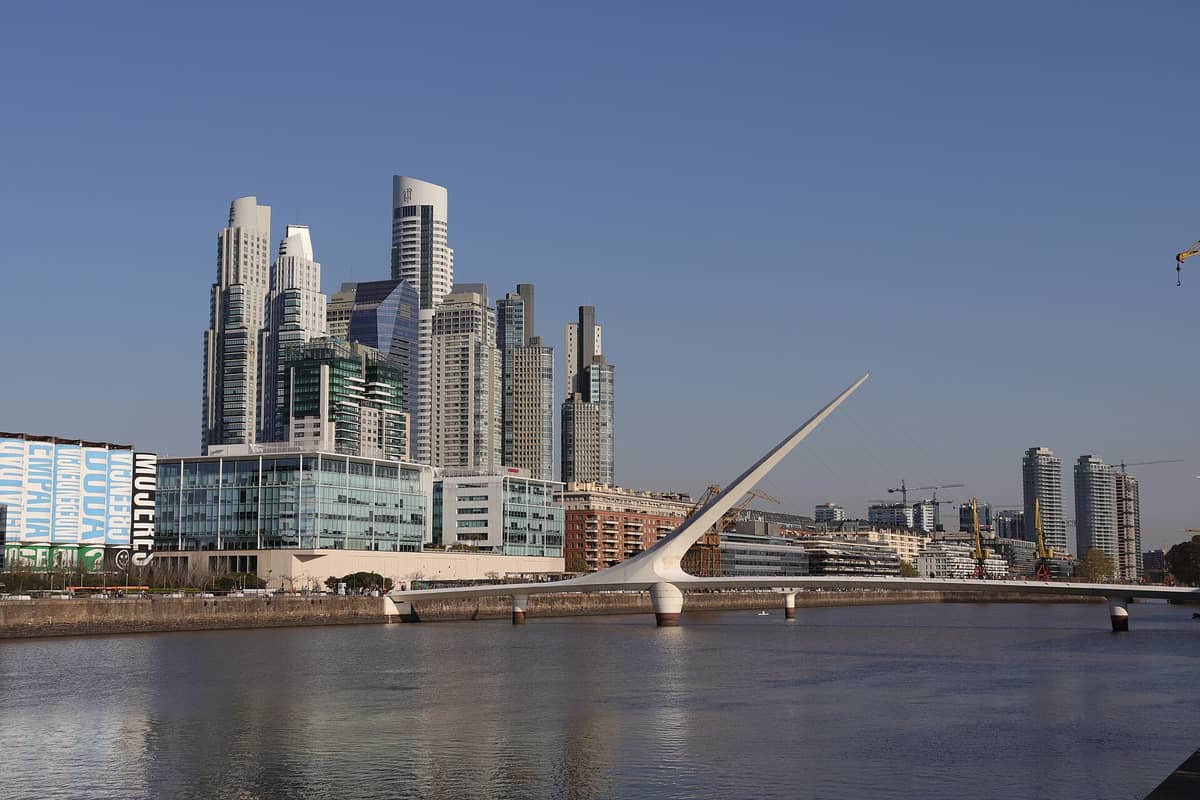
Puerto Madero is Buenos Aires' newest and most polished neighborhood, built on reclaimed docklands along the Río de la Plata. The architecture is modern high-rise rather than historic, and the area is dominated by international hotel chains, corporate offices, and upscale restaurants. The Puente de la Mujer is the neighborhood's architectural landmark. The Reserva Ecológica Costanera Sur is walkable from most hotels and offers an unexpected green escape.
Puerto Madero is honest about what it is: a comfortable, safe, somewhat sterile enclave. It is excellent for business travelers who need reliable infrastructure and proximity to the Microcentro (around 15-20 minutes on foot or a short taxi). It is less suited to travelers who want to feel the pulse of everyday Buenos Aires. There is no Subte station within Puerto Madero itself; taxis and ride-hailing apps are the practical way in and out. Nightly rates here are among the highest in the city.
Microcentro and Beyond: Other Options Worth Knowing
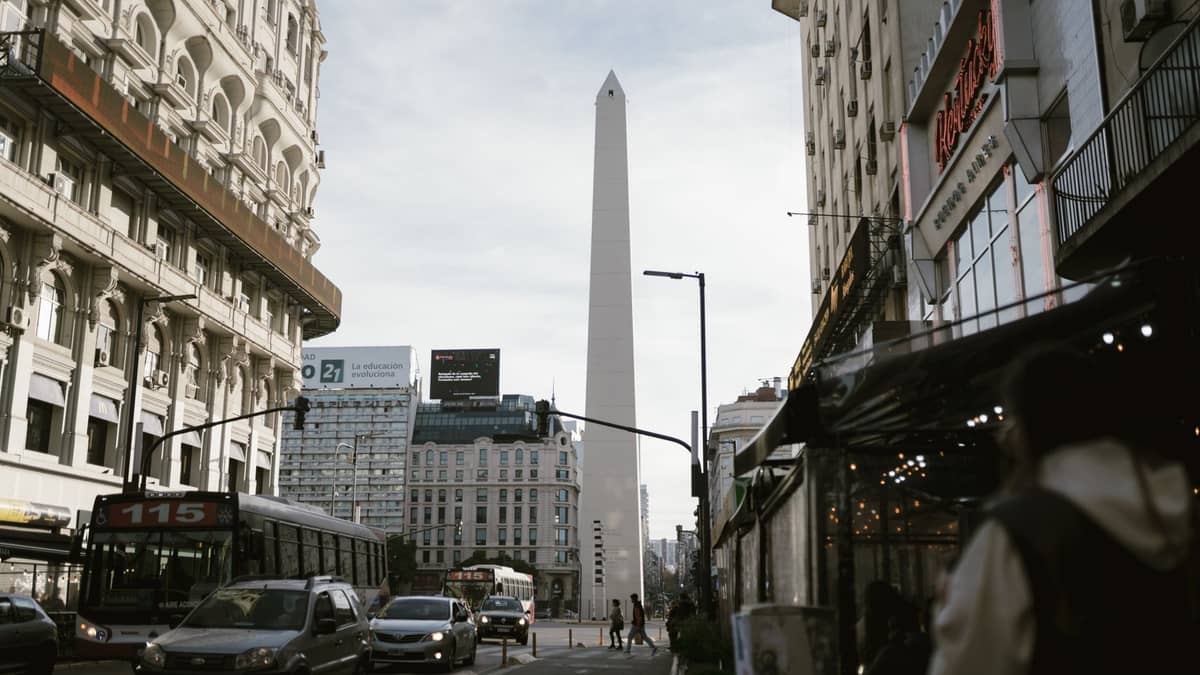
The Microcentro and Monserrat, the central business districts, have functional hotels at competitive rates. The area is well connected by every Subte line, is close to major sights like the Casa Rosada and Teatro Colón, and is useful for very short stays or transit-heavy trips. The downside is that the Microcentro quiets down sharply after business hours and on weekends, which can feel isolating.
Belgrano, in the north of the city, is worth considering if you're spending significant time at Aeroparque or want a quieter, more local residential base. It has its own commercial stretch on Cabildo Avenue and is home to the Barrio Chino. Hotels here are limited compared to Palermo but can offer good value for longer stays.
- Palermo Best for: first-timers, nightlife, restaurant access, Aeroparque proximity. Transport: Subte lines B and D. Price range: budget to luxury.
- Recoleta Best for: couples, museum-focused itineraries, quiet elegance. Transport: Subte line H, walkable to center. Price range: mid to luxury.
- San Telmo Best for: history lovers, tango culture, boutique and budget stays. Transport: buses, Subte line C nearby. Price range: budget to mid.
- Puerto Madero Best for: business travelers, luxury seekers, riverfront location. Transport: taxis and ride-hailing only. Price range: upper-mid to luxury.
- Microcentro / Monserrat Best for: short stays, transit access, sightseeing efficiency. Transport: all major Subte lines. Price range: budget to mid.
- Belgrano Best for: longer stays, local residential feel, Aeroparque access. Transport: Subte line D and commuter trains. Price range: budget to mid.
Seasonal Timing and What It Means for Hotel Rates
Buenos Aires has a subtropical climate. Summer (December to February) runs hot and humid, with daytime highs regularly around 28 to 30°C. This is peak season for domestic Argentine tourism and coincides with school holidays, which pushes rates up and availability down in popular neighborhoods. If you visit in summer, book early and expect to spend more time indoors during midday hours. For a detailed seasonal breakdown, the best time to visit Buenos Aires guide covers this thoroughly.
Spring (September to November) and autumn (March to May) are generally considered the most practical times to visit for hotel value and walking comfort. Temperatures are typically between 13°C and 26°C, the city is not in peak domestic holiday mode, and the parks and outdoor spaces in Palermo and Recoleta are at their most usable. Winter (June to August) brings mild, relatively dry conditions around 7 to 15°C, lower crowds, and often lower rates, particularly in mid-range properties.
⚠️ What to skip
Argentina's economic situation means hotel prices listed in pesos can shift dramatically over short periods. When booking Buenos Aires hotels, confirm whether rates are quoted in ARS or USD, and clarify payment currency with the property before arrival. Some hotels price in USD to maintain stable rates for international guests.
- Book directly with boutique hotels in San Telmo and Palermo; they often offer better rates than third-party platforms and sometimes accept USD cash.
- For Recoleta and Puerto Madero, international booking platforms frequently have competitive rates and better cancellation terms.
- Check whether breakfast is included: in Argentina, hotel breakfasts can be a genuinely cost-effective option given restaurant prices in tourist areas.
- If arriving at Ezeiza (EZE), factor in the roughly 30 to 32 km transfer distance. A remis (private car service) booked at the official airport counters is the safest option; confirm the fare before getting in.
- Aeroparque (AEP) is minutes from Palermo and Recoleta, making those neighborhoods logistically easier for domestic flight connections.
For budget travelers, Buenos Aires remains one of South America's most affordable capitals for accommodation when managed carefully. The Buenos Aires on a budget guide covers cost-saving strategies across transport, food, and lodging in more detail.
FAQ
Which area of Buenos Aires is best for first-time visitors?
Palermo is the most practical choice for first-timers. It has the widest range of accommodation, solid Subte connections on lines B and D, and the highest concentration of restaurants and bars. Recoleta is a close second if you prioritize quieter streets and museum proximity over nightlife.
Is Puerto Madero worth the premium for tourists?
For most leisure travelers, probably not. Puerto Madero hotels are among the most expensive in Buenos Aires and the neighborhood has limited street-level character. It makes more sense for business travelers or those who specifically want modern luxury in a controlled environment. If you want to feel like you're actually in Buenos Aires, base yourself elsewhere and visit Puerto Madero for a meal or a walk.
How far is the airport from the main hotel neighborhoods?
Ezeiza International Airport (EZE) is roughly 30 to 32 km southwest of the city center, around 30 to 60 minutes by road depending on traffic. Aeroparque (AEP), used for domestic and some regional flights, is on the northern riverfront and is around 15 to 25 minutes from Palermo and Recoleta. If your itinerary involves frequent domestic flights, staying near Aeroparque saves significant transit time.
Is San Telmo safe for tourists staying overnight?
The core of San Telmo, particularly the streets around Defensa, Plaza Dorrego, and Mercado de San Telmo, is well-trafficked and generally safe for tourists. The fringes closer to La Boca are less predictable, especially at night. Basic urban awareness applies: don't display expensive electronics openly, be cautious after midnight in quieter streets, and stick to lit, populated areas. San Telmo is not uniquely dangerous, but it rewards attentiveness more than Recoleta does.
What is the cheapest neighborhood to stay in Buenos Aires without sacrificing too much convenience?
San Telmo and the Microcentro both offer lower average nightly rates than Palermo or Recoleta, with reasonable transit access. San Telmo gives you more character; the Microcentro gives you better Subte connections. Belgrano is worth checking for longer stays, where you can find apartment-style accommodation at lower daily rates than in the more tourist-heavy barrios.
Tickets & tours
Live prices and dates from our booking partner. If you book, we may earn a commission at no extra cost to you.
Planning a trip? Discover personalized activities with the Nomado app.