Reserva Ecológica Costanera Sur: Buenos Aires' Urban Wilderness on the Río de la Plata
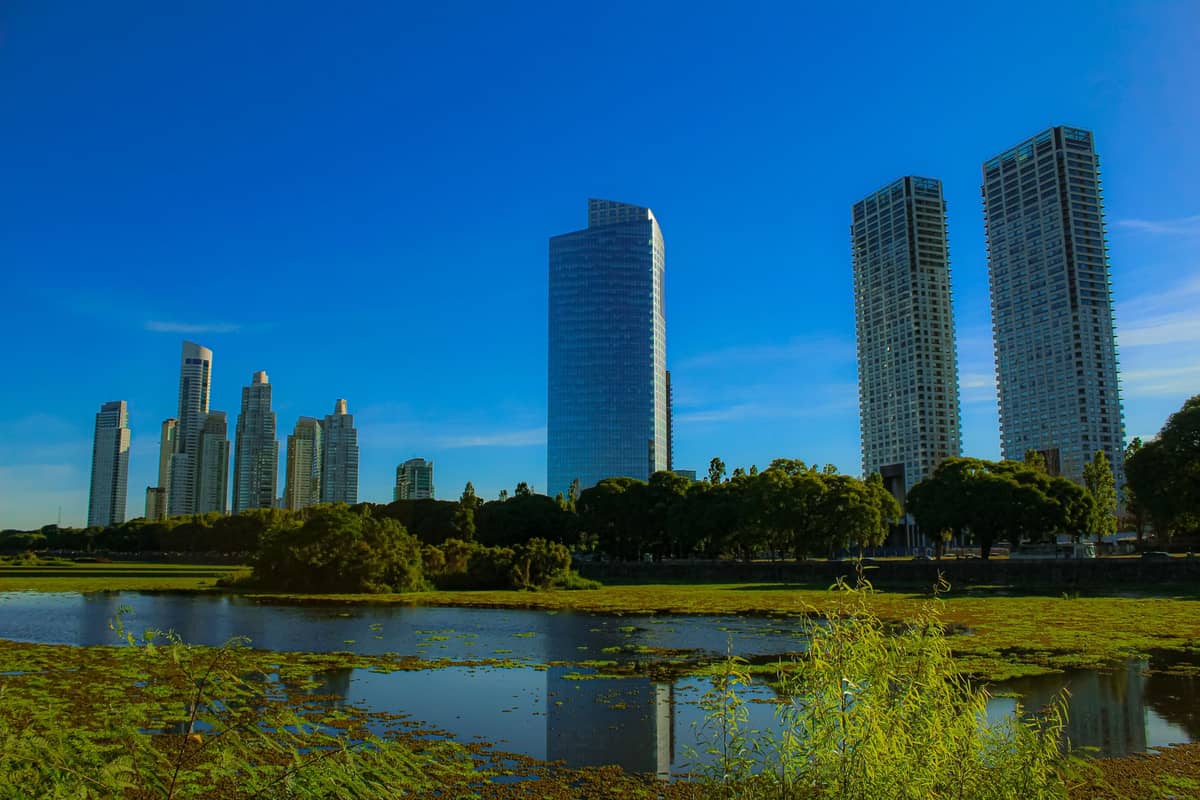
The Reserva Ecológica Costanera Sur is a 350-hectare nature reserve in Puerto Madero where lagoons, grasslands, and reed beds have reclaimed former landfill along the Río de la Plata. Entry is free, the birdlife is extraordinary, and the contrast with the surrounding city skyline is unlike anything else in Buenos Aires.
Quick Facts
- Location
- Av. Tristán Achával Rodríguez 1550, Puerto Madero, Buenos Aires
- Getting There
- Bus lines 2 and 4 (toward balneario/beach); walkable from Puerto Madero waterfront
- Time Needed
- 2–4 hours for a full circuit; 1 hour for a short walk along the main lagoon
- Cost
- Free admission (verified 2026)
- Best for
- Birdwatchers, joggers, families, urban nature lovers
- Official website
- www.reservacostanera.com.ar
What the Reserva Ecológica Costanera Sur Actually Is
The Reserva Ecológica Costanera Sur is one of the few urban nature reserves in South America where you can watch capybaras graze, spot dozens of bird species, and look back over your shoulder at a skyline of glass towers. Located directly east of Puerto Madero, the reserve covers 350 hectares of wetlands, grasslands, and secondary forest along the western shore of the Río de la Plata. Entry is free, and the birdlife is extraordinary, and the contrast with the surrounding city skyline is unlike anything else in Buenos Aires.
What makes the place unusual is its origin. This land didn't exist a century ago. From the 1970s, landfill operations extended the Buenos Aires coastline eastward into the estuary. When the project was abandoned, nature moved in faster than anyone expected. Reeds colonized the margins, birds followed, and by 1986 the city formally designated the area as an ecological reserve. The result is a patchwork of lagoons, reed beds, and scrubby woodland that feels genuinely wild, even though the Centro Cultural Kirchner and the Puerto Madero towers are visible from the trails.
ℹ️ Good to know
Opening hours vary by season. Opening hours vary by season. Winter (roughly April–September): Tuesday to Sunday, 08:00–18:00. Summer (roughly October–March): Tuesday to Sunday, 08:00–19:00. The reserve closes on Mondays and may close during severe weather events.
The Experience: What You See and Hear Inside
The main entrance on Av. Tristán Achával Rodríguez opens onto a broad dirt path that forks almost immediately. Left leads toward the Laguna de los Patos, right toward the Laguna de los Coipos (coipos are large semi-aquatic rodents you will almost certainly see swimming near the bank). The air changes within a few minutes of walking: instead of exhaust and asphalt, there's the smell of mud, wet grass, and river silt carried in from the estuary.
Birdsong is the reserve's defining sensory feature. In the early morning, before 09:00, the noise is layered and constant: southern lapwings call overhead, rufous horneros (Argentina's national bird) chatter from the scrub, and red-fronted coots move through the reed beds. Bring binoculars if you have them, but even casual visitors notice species they've never seen before. The reserve reportedly shelters many bird species across different seasons, making it one of the more productive urban birdwatching sites in Argentina.
Further into the reserve, the path reaches the riverbank itself. Here the Río de la Plata appears not as a dramatic river but as a vast, shallow, brownish expanse that looks more like a sea without the other coast. On clear days the horizon is uninterrupted water. On stormy afternoons the wind comes straight across with force, and the lagoons turn choppy. This riverfront section, away from the lagoons, is quieter and often nearly empty even when the main paths are moderately busy.
Tickets & tours
Live prices and dates from our booking partner. If you book, we may earn a commission at no extra cost to you.
Madero Tango Show tickets with optional dinner
From 32 €Instant confirmationFree cancellationBuenos Aires small-group city tour with optional lunch and cruise
From 25 €Instant confirmationFree cancellationPiazzolla Tango Show VIP tickets with transfer and optional dinner
From 112 €Instant confirmationFree cancellationBuenos Aires shopping tour
From 15 €Instant confirmationFree cancellation
How the Reserve Changes Through the Day
Early morning, from opening until around 10:00, is the best window for birdwatching and solitude. Joggers use the outer perimeter path, but the interior trails are quiet. The light is soft and comes in low from the east, which makes the lagoon surface photogenic and reduces glare.
By midday, especially on weekends and public holidays, the reserve fills with families, couples, and groups who spread out on the grassy areas near the entrance. The sound of birds competes with conversation and the occasional football being kicked around near the access road. In summer, temperatures inside the reserve can feel hotter than the street because the surrounding water raises humidity noticeably. Shade is inconsistent: the woodland sections offer relief, but the lagoon-side paths are largely exposed.
Late afternoon, in the hour before closing, the crowd thins again and the light becomes the most dramatic of the day. The Buenos Aires skyline to the west catches the sunset, and with the lagoon surface reflecting it, this is genuinely one of the better photo compositions available in the city without going to a rooftop. Arrive at least 90 minutes before closing to reach the inner areas without rushing.
💡 Local tip
For birdwatching, aim for weekday mornings in spring (September–November) or autumn (March–May). Temperatures are comfortable, bird activity is high, and crowds are minimal.
The Trails: A Practical Walkthrough
The reserve has no complex trail system requiring navigation: the main paths form rough loops around the two primary lagoons and connect to the riverbank. A full outer circuit takes roughly 90 minutes at a relaxed pace. A shorter loop staying near the Laguna de los Patos takes 40–50 minutes and suits families with young children or visitors with limited time.
Interpretive walkways have been added in recent years, designed to improve accessibility for older visitors, people with disabilities, and children. These sections have a more stable surface than the compressed-earth paths elsewhere in the reserve. That said, after heavy rain the main trails become muddy and slippery in patches, particularly the sections closest to the lagoon edges. Closed-toe shoes with grip are more practical than sandals for any serious walking.
The reserve sits at the southern end of Puerto Madero, and the access road doubles as a waterfront promenade. If you're combining the reserve with a broader afternoon in the area, the Puente de la Mujer is a 20-minute walk north along the dockside boulevard, past the converted red-brick warehouses that now house restaurants and offices.
Wildlife: What to Realistically Expect
Capybaras are visible most mornings near the lagoon margins, typically in small family groups. They are calm around humans and should not be approached closely. Coipos (a large semi-aquatic rodent resembling a beaver, also called nutria) are common in the water channels. Tegu lizards bask on the dirt paths on warm afternoons and can reach substantial lengths, which surprises visitors who don't expect reptiles of that size in an urban setting.
The bird list is long, and the species mix changes by season. Spring brings migratory birds from the north, and the reed beds host marsh birds year-round. Monk parakeets nest noisily throughout. Check the official reserve website for current schedules before your visit.
⚠️ What to skip
Mosquitoes are a genuine problem in summer (December–February) and after heavy rain. Bring repellent. The reserve is also exposed to strong winds from the Río de la Plata, which can make the riverbank section unpleasant in winter storms.
Practical Details: Getting There, Photography, and Who Should Skip It
Bus lines 2 and 4 stop near the reserve entrance; check current route maps on the official Buenos Aires transit site before your visit, as stops and numbers are subject to change. From the Puerto Madero waterfront, the walk to the main entrance takes around 15–20 minutes on foot along the river road. Taxis and ride-hailing apps can drop you directly at the entrance on Av. Tristán Achával Rodríguez.
Photography works best in early morning light on the lagoon side, and in the late afternoon on the riverbank facing west. A wide-angle lens captures the contrast between the reed beds and the city skyline. Telephoto or optical zoom is useful for birds at lagoon distance.
There is no café or food vendor inside the reserve, so bring your own water, especially in summer. For meals before or after, Puerto Madero's renovated dock buildings have numerous restaurants, though prices reflect the neighborhood's status as one of Buenos Aires' more upscale areas. For a broader sense of what to eat and drink in the city, the covers options at every price point. Bring your own water, especially in summer. For meals before or after, Puerto Madero's renovated dock buildings have numerous restaurants, though prices reflect the neighborhood's status as one of Buenos Aires' more upscale areas. For a broader sense of what to eat and drink in the city, the Buenos Aires food guide covers options at every price point.
Who should skip this? Visitors with only one day in Buenos Aires and a long list of cultural sites will find the reserve competes directly with time that could be spent at the Teatro Colón, the Recoleta Cemetery, or MALBA. The reserve is nature, not history or art. It's also not the right choice for anyone who finds unstructured green space underwhelming: there's no visitor center with exhibits, no guided audio tour, and no dramatic landmark to photograph and move on from. But for travelers who want contrast from the city grid, or who are specifically interested in urban ecology and birds, it earns its time completely.
If your travel window aligns with spring or autumn, the reserve pairs naturally with a walk through San Telmo in the morning and the reserve in the late afternoon, since both are reachable by bus without crossing the city. For a broader overview of how to structure several days in Buenos Aires, the 3-day Buenos Aires itinerary places the reserve in context alongside other priorities.
Insider Tips
- The south entrance (ingreso Brasil) is one of the two access points. If you're arriving by bus from the south of the city, this entrance can be more convenient for some routes.
- Birdwatching groups sometimes gather near the Laguna de los Patos in the first hour after opening on weekend mornings. Joining them informally often yields species identifications and local knowledge that no printed guide provides.
- After heavy rain, wait at least a full day before visiting. The clay-heavy paths near the lagoon edges become adhesive mud that can coat shoes completely. The reserve's ecology benefits from the rain, but the walking experience suffers noticeably.
- Bring a hat with a wide brim rather than a cap. The lagoon-side paths have minimal shade, and the river amplifies UV exposure. This is especially relevant in summer, when temperatures inside the reserve can be very warm.
- The reserve's official website (reservacostanera.com.ar) occasionally lists guided ecological walks and birdwatching events, some of them free. These are worth checking a week before your visit, as they are not promoted through general tourism channels.
Who Is Reserva Ecológica Costanera Sur For?
- Birdwatchers and wildlife photographers looking for accessible urban nature with genuine species diversity
- Families with children who want open space, animals, and free admission after the cost of a city trip
- Joggers and cyclists wanting a traffic-free route along the Río de la Plata
- Travelers on a tight budget who want a full half-day experience without spending anything
- Anyone needing a break from the noise and density of central Buenos Aires
Nearby Attractions
Other things to see while in Puerto Madero:
- Puente de la Mujer
Puente de la Mujer is a 170-metre rotating pedestrian bridge in Puerto Madero, designed by Spanish architect Santiago Calatrava and inaugurated in December 2001. Entry is free, access is around the clock, and the structure offers some of the most photogenic waterfront views in Buenos Aires.
Planning a trip? Discover personalized activities with the Nomado app.