Buenos Aires Currency & Money Guide: Pesos, ATMs, and Exchange Rates Explained
Managing money in Buenos Aires is more nuanced than in most cities. Argentina's peso, evolving exchange rates, ATM fee structures, and the once-legendary 'blue dollar' all require a clear-headed strategy. This guide breaks down exactly how the Buenos Aires currency system works today, what's changed, and how to avoid the most common financial mistakes visitors make.
Tickets & tours
Live prices and dates from our booking partner. If you book, we may earn a commission at no extra cost to you.
TL;DR
- Argentina's currency is the Argentine peso (ARS). As of mid-2026, the official and informal 'blue dollar' rates are nearly identical, with a gap of only 1-4%.
- Foreign cards at ATMs face low withdrawal caps (often around USD 100-200 per transaction) and fees of roughly 5-10% plus a fixed charge. Plan accordingly.
- Credit and debit cards are widely accepted in Buenos Aires and use the 'dólar tarjeta' rate, which now closely tracks the official market rate. See our Buenos Aires budget guide for how this affects your daily spend.
- The era of a dramatic 'blue dollar' advantage is over for now. The parallel market still exists, but offers minimal benefit compared to the risks involved.
- Exchange rates and local prices shift frequently due to ongoing inflation. Always check a real-time tracker close to your travel date.
Argentina's Currency: The Basics
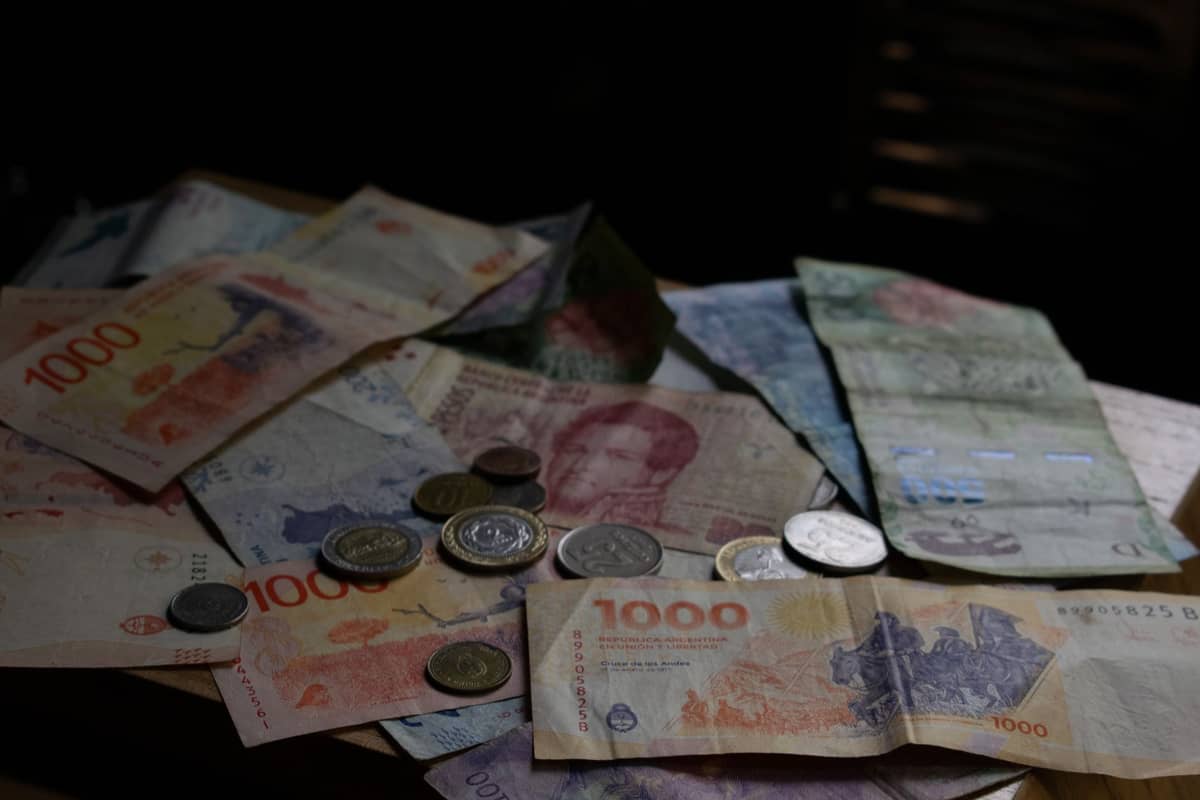
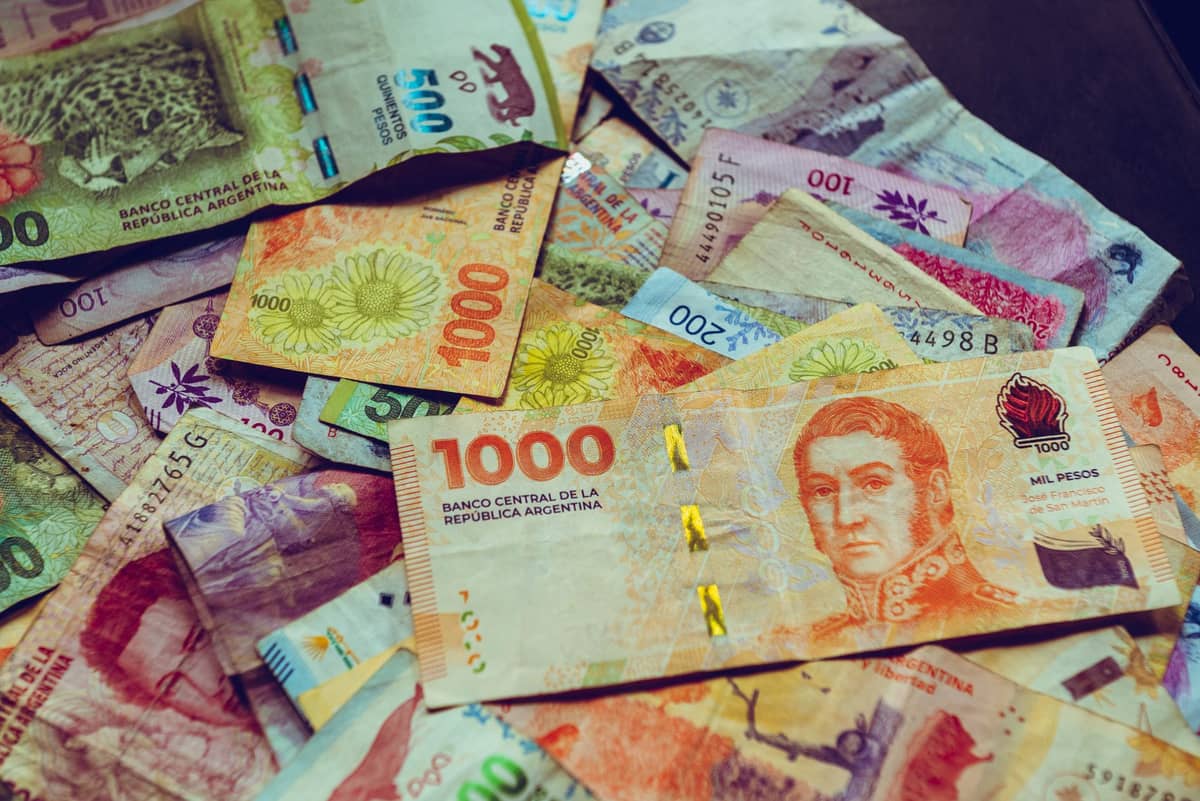
The official currency of Argentina is the Argentine peso, abbreviated as ARS and symbolized as $. Coins come in denominations of 1, 2, 5, 10, and 50 pesos, while banknotes run from 100 pesos up to higher denominations that have been introduced progressively to cope with inflation. In practical terms, coins are increasingly rare in everyday use — most small transactions now go through low-denomination bills or digital payment.
Buenos Aires operates entirely in pesos for local commerce: restaurants, markets, taxis, the Subte metro, and colectivo buses all price in ARS. Some tourist-facing businesses in areas like Puerto Madero or upscale Palermo may quote prices in USD informally, but payment in pesos is the norm and often works out better for the visitor depending on the rate applied.
ℹ️ Good to know
Argentina uses 220–230V electricity with Type C and Type I plugs (European two-pin and Australian-style three-flat-pin). If you're traveling from North America, bring a universal adapter and a voltage converter for sensitive electronics. This is separate from currency but equally easy to overlook before departure.
Understanding the Exchange Rate Landscape
Argentina's exchange rate situation has been one of the most complex in the world for international travelers. Historically, the country maintained strict capital controls that created multiple parallel exchange rates simultaneously. The most famous was the 'dólar blue,' an informal rate where USD cash could be exchanged at a significant premium over the official rate. At its peak in 2023, the blue dollar was more than double the official rate, meaning USD cash went extraordinarily far.
That era is largely over. As of mid-2026, following significant economic reforms and the gradual removal of currency controls, the gap between the official rate and the informal 'blue dollar' has narrowed to approximately 1–4%. The official retail rate sits around ARS 1,515 per USD, while the blue rate hovers between ARS 1,535–1,560 per USD. The theoretical advantage of seeking out informal exchange is now minimal and comes with real legal and safety risks that simply weren't worth it even when the gap was larger.
The Central Bank (BCRA) currently operates a crawl-like exchange rate band, meaning the peso depreciates gradually against the dollar rather than in sudden jumps. This mechanism adjusts based on inflation data, which means ARS prices can shift notably over months. The practical implication: a price list from six months ago may be significantly outdated in peso terms, even if the USD equivalent is stable.
⚠️ What to skip
The 'blue dollar' informal market still exists on streets like Florida in Microcentro, where you may be approached by cambistas (informal money changers). Aside from the minimal rate advantage today, the risks include counterfeit pesos, short-changing, and legal exposure. There is no practical reason for most visitors to use this market in 2024-2026 conditions.
ATMs in Buenos Aires: Fees, Limits, and Which Banks to Use
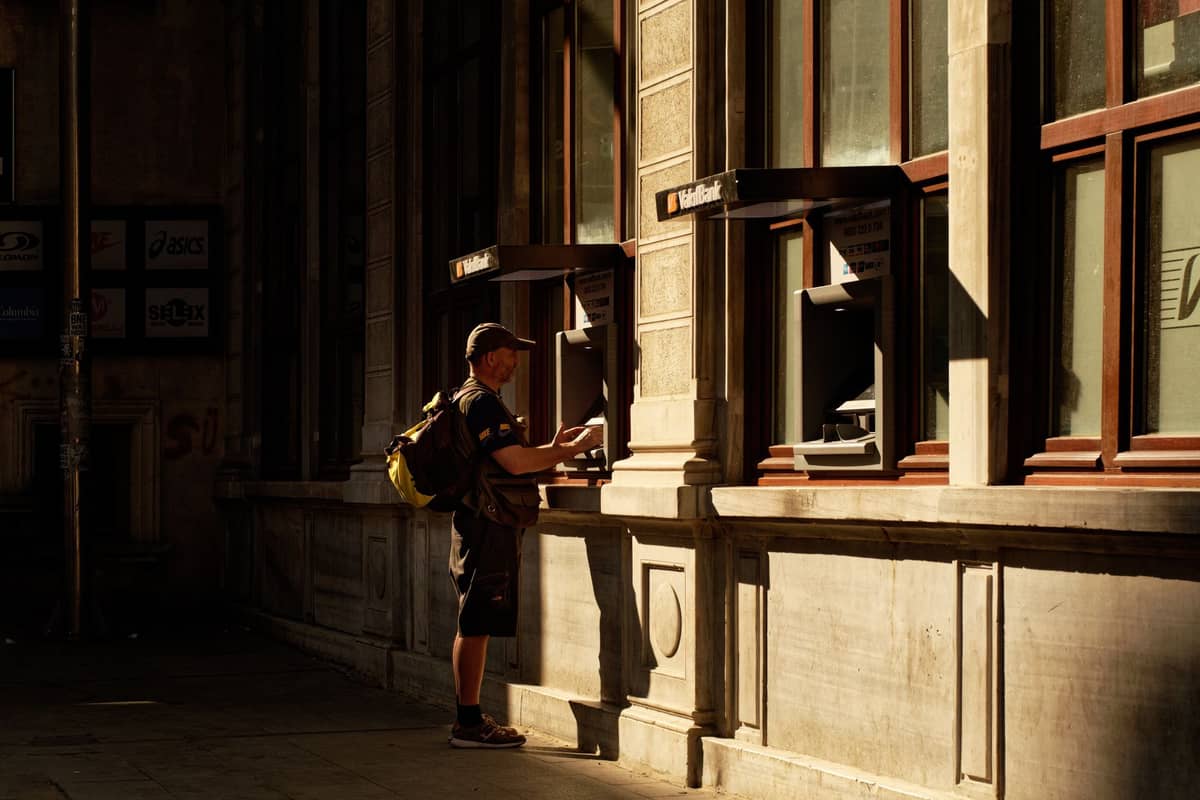
ATMs (called cajeros automáticos) are available throughout Buenos Aires, including 24-hour machines in most neighborhoods, shopping centers like Galerías Pacífico, and at both Ezeiza (EZE) and Aeroparque (AEP) airports. The machines generally accept Visa, Mastercard, and international debit networks. The critical issue for foreign visitors is the combination of low withdrawal limits and compounding fees.
- Withdrawal caps Most ATMs impose per-transaction limits for foreign cards in the range of ARS 15,000 to the equivalent of USD 100-200, depending on the bank and current settings. These caps change with inflation, so verify locally.
- Foreign card fees Expect a combination of a fixed fee (around USD 5-10 per transaction) plus a percentage charge of roughly 5-10%. This stacks with any foreign transaction fee your home bank charges separately.
- Banco Nación at Ezeiza The Banco Nación counter and ATMs at the international airport use the official rate with a fixed fee of approximately USD 5-10 per withdrawal. Limits are often lower than city ATMs (around USD 100-200 equivalent per transaction), so don't rely on this alone for your entire trip's cash.
- Banco Galicia These banks are frequently cited by travelers as having slightly higher withdrawal limits and more reliable machines for foreign cards in central areas. Availability changes, so try multiple machines if one fails.
The strategic implication: withdraw larger amounts less frequently to minimize fixed fees, but be aware of your daily card limit at home. If you're traveling on a tight budget, the fee structure at ATMs can meaningfully eat into your spending money over a week-long trip. A USD 8 fee on a USD 100 withdrawal is an 8% premium before your home bank adds its own charges.
Where to Exchange Money in Buenos Aires
Licensed casas de cambio (exchange offices) operate legally throughout Buenos Aires, concentrated in Microcentro along Florida Street and around Plaza San Martín. These exchange foreign currency at or near the official rate. You must present a valid passport to complete a transaction — this is not optional and is consistently enforced. Rates at licensed exchanges are usually competitive with what your card receives, and the process is straightforward.
Banks also exchange foreign currency at official rates, though queues at branch counters can be long, particularly around midday. If you're staying in Microcentro, you're within walking distance of most of the city's main exchange infrastructure. Branches in Recoleta and Palermo are generally less crowded.
Money transfer services like Western Union have been noted by some travelers as offering slightly favorable ARS rates compared with card withdrawals. As of mid-2026, rates around ARS 1,523 per USD were cited at Western Union, marginally above bank counter rates at the same time. This option is worth investigating if you can receive a transfer in-country, but the logistics add complexity most visitors won't want.
✨ Pro tip
Bring some USD cash from home in clean, undamaged bills. Exchanging USD at a licensed casa de cambio avoids ATM fees entirely and gives you flexibility. Older, damaged, or pre-2009 US bills are often refused or accepted at a discount — newer series bills in good condition are preferred.
Paying by Card: When It Works and When It Doesn't
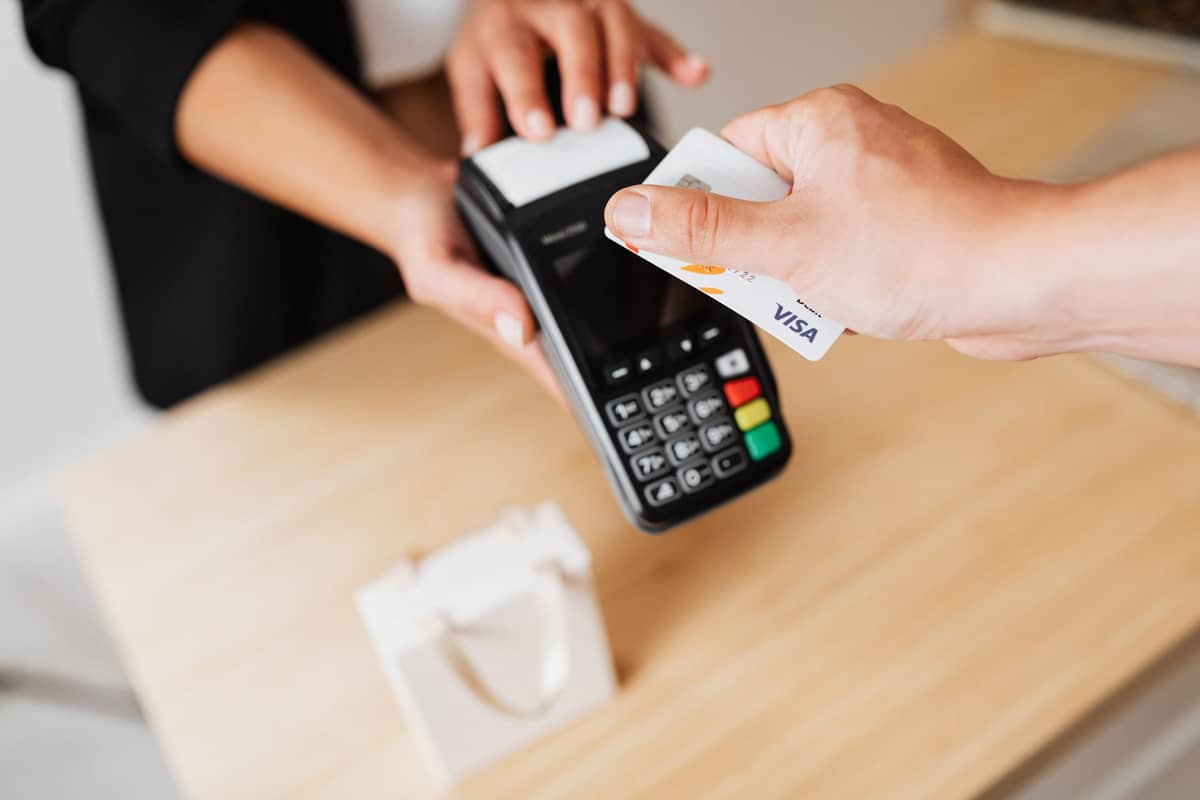
Card acceptance has improved significantly in Buenos Aires over the past several years. Most restaurants, hotels, supermarkets, and shops in tourist-frequented areas accept Visa and Mastercard. American Express has more limited acceptance. When you pay by foreign card, the transaction is processed at the 'dólar tarjeta' (card dollar) rate, which is the regulated financial rate and now closely tracks the official exchange rate. This makes card payment a reasonable option rather than the punishing choice it once was.
- Contactless card payment works at most major retailers and is increasingly common at cafes and restaurants.
- Smaller vendors, market stalls, colectivo buses, and many Subte vending machines are cash-only. Always carry some peso cash.
- Tipping at restaurants is expected and typically done in cash, even when paying the bill by card. Around 10% is a common benchmark, though practices vary.
- Some businesses apply a small surcharge for card payments (recargo). This is legal and should be disclosed before you pay — ask if unsure.
- Your home bank's foreign transaction fee (typically 1-3%) applies on top of the card rate, separate from any Argentine fees.
For practical day-to-day spending across neighborhoods, a combination approach works best: card for larger meals and hotel bills, cash for markets, street food, transport, and tips. If you're visiting the San Telmo Sunday market or street vendors in La Boca, cash is essential.
Practical Money Tips for Your Trip
Argentina's economic complexity means preparation matters more here than in most destinations. The good news is that the situation in 2024-2026 is considerably more straightforward than it was a few years ago — you don't need a complex multi-currency strategy or informal market contacts. A clear understanding of the current system is enough.
- Check rates before you travel Use real-time trackers like Tango Blue or Discover Buenos Aires to check the current official and blue rates in the week before your trip. Rates shift meaningfully month to month.
- Notify your bank Inform your home bank you're traveling to Argentina. ATM transactions in Buenos Aires sometimes trigger fraud alerts and card blocks, particularly for smaller banks.
- Use a low-fee travel card Cards like Wise or Revolut that offer interbank exchange rates minimize the conversion cost on card payments and cash withdrawals compared with standard bank debit cards.
- Don't rely on airport ATMs alone Ezeiza has ATMs and the Banco Nación counter, but limits are low. Take enough to cover your first day or two, then plan a city ATM run from your accommodation.
- Keep small denominations Breaking large bills can be difficult at small shops and market stalls. Try to keep a stock of lower-denomination peso notes for daily use.
If you're planning a longer stay and want to understand how the currency situation fits into the broader cost picture, the Buenos Aires on a budget guide breaks down daily costs across accommodation, food, transport, and activities. The getting around Buenos Aires guide covers the SUBE transit card, which requires pesos to load and is the cheapest way to use the Subte and colectivos.
💡 Local tip
The SUBE card (used on Subte trains and buses) must be loaded with Argentine pesos. You can top it up at Subte stations and many kiosks. Budget roughly ARS 1,000-2,000 for several days of transit use, and always have cash pesos on hand to reload it.
FAQ
Is the blue dollar still worth using in Buenos Aires?
In 2024-2026 conditions, not really. The gap between the official rate and the informal blue dollar rate has narrowed to roughly 1-4%, compared with 100%+ in 2023. The marginal benefit is outweighed by the risks: counterfeit bills, short-changing, and legal exposure. Stick to licensed casas de cambio, banks, and card payments.
What is the best way to get Argentine pesos in Buenos Aires?
A combination of USD cash exchanged at a licensed casa de cambio (no ATM fees) and ATM withdrawals from major banks like Banco Galicia covers most needs. If you use a low-fee travel card like Wise or Revolut, card payments at the 'dólar tarjeta' rate are also competitive. Avoid airport ATMs for large amounts due to low withdrawal caps.
How much does it cost to withdraw from an ATM in Buenos Aires with a foreign card?
Typically a fixed fee of around USD 5-10 per transaction plus a percentage charge of 5-10%, on top of any foreign transaction fee your home bank applies. Withdrawal limits per transaction are often in the USD 100-200 equivalent range. This fee structure makes large, infrequent withdrawals more cost-effective than frequent small ones.
Can I use credit cards everywhere in Buenos Aires?
Visa and Mastercard are accepted at most hotels, restaurants, supermarkets, and shops in tourist areas. However, smaller vendors, market stalls, buses, and some Subte machines are cash-only. Always carry some peso cash for tips, small purchases, and transit. American Express acceptance is more limited.
Do prices in Buenos Aires change a lot due to inflation?
Yes. Argentina has experienced sustained high inflation, meaning ARS prices can shift significantly over months. In USD terms, however, costs for travelers have been more stable because the exchange rate adjusts. Always check current rates close to your travel date using a real-time tracker, and treat any peso price quoted months in advance as a rough guide only.
Tickets & tours
Live prices and dates from our booking partner. If you book, we may earn a commission at no extra cost to you.
Planning a trip? Discover personalized activities with the Nomado app.