Buenos Aires on a Budget: How to See the City Without Overspending
Buenos Aires offers genuine value for travelers who know the system. This guide covers everything from navigating the SUBE card and free museums to eating well for next to nothing — and where the city actually costs more than expected.
Tickets & tours
Live prices and dates from our booking partner. If you book, we may earn a commission at no extra cost to you.
TL;DR
- Get a registered SUBE card as soon as you can: it unlocks eligibility for the lowest available fares and protections on buses and the Subte, and an unregistered card can miss out on discounts or pay more once differential pricing is applied.
- Buenos Aires has a strong free-attraction circuit: the Recoleta Cemetery, major national museums, and most city parks charge nothing at the entrance.
- Spring (September to November) and autumn (March to May) offer the most comfortable weather and typically lower accommodation rates than the peak summer season.
- Understanding the Argentine peso situation is essential: read a current currency and money guide before you arrive, since exchange rates and ATM fees shift frequently.
- Food costs are low if you eat where locals eat: panadería breakfasts, tenedor libre lunch buffets, and corner pizza slices keep daily food budgets manageable.
What Budget Travel Actually Looks Like in Buenos Aires
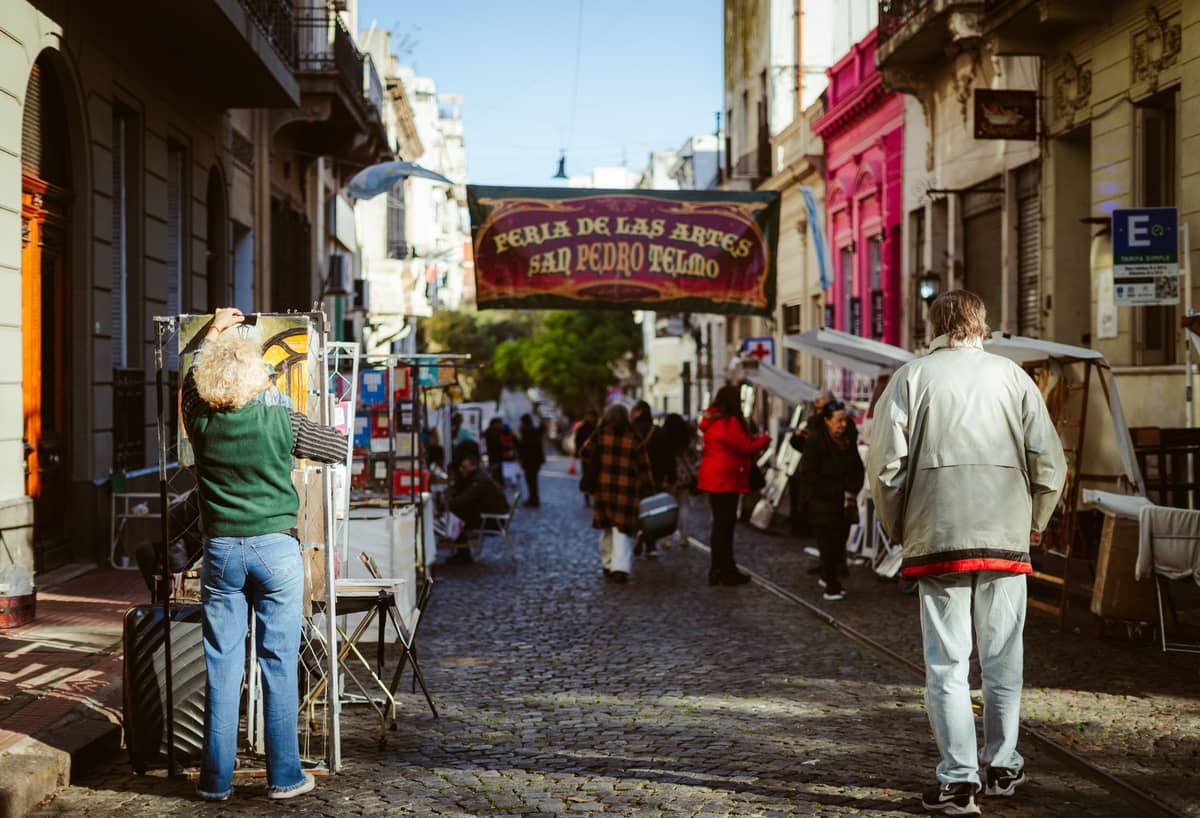
Buenos Aires on a budget is not a compromise. The city is genuinely affordable for travelers from countries with stronger currencies, and even on a tight daily spend there is enough to fill weeks with good food, culture, architecture, and nightlife. The challenge is understanding which parts of the city reward frugality and which ones quietly drain money if you're not paying attention.
A realistic daily budget for a solo traveler staying in a hostel dorm, eating at local spots, and using public transport sits somewhere around USD 30 to 50 per day at 2024 to 2026 exchange rates, though this shifts with Argentina's monetary fluctuations. A mid-range traveler in a private room, eating at sit-down restaurants, and taking occasional taxis can expect USD 70 to 120 per day. The biggest variable is always accommodation: Buenos Aires has a wide range of options, but the gap between a dorm and a decent private room in Palermo or San Telmo is significant.
⚠️ What to skip
Argentina's exchange rate and economic conditions change rapidly. Any specific peso prices in this guide should be treated as approximate. Always check an up-to-date source before you travel and verify current ATM limits and exchange options on arrival.
Getting the SUBE Card Right: The Foundation of Budget Transport
The SUBE card is the rechargeable fare card used across Buenos Aires for the Subte (metro), colectivos (urban buses), commuter rail lines, and the Premetro. Getting one and registering it in your name is the single most impactful transport decision a budget traveler can make. Registered cards qualify for the lowest available fares and benefits in the official fare tables, while unregistered cards may pay higher fares or miss out on discounts once differential pricing is enforced.
As of 2026, Subte fares for registered cards are structured on a tiered monthly usage model: fares start at around AR$1,684 per trip for the first 20 rides in a month, with lower per-trip costs at higher usage levels. AMBA bus fares start at approximately AR$852.90 for trips under 3 km with a registered card. These figures come directly from the official Buenos Aires transport and Argentina.gob.ar fare pages and are subject to periodic updates. For full details on getting around affordably, see the guide to getting around Buenos Aires.
- Where to get a SUBE card Kiosks (small convenience stores), post offices (Correo Argentino), and some Subte stations. Ask for 'la SUBE'.
- How to register it Visit sube.gob.ar or register at a Correo Argentino branch. Registration reduces your per-trip fare and allows balance recovery if the card is lost.
- How to top it up At kiosks, Subte booths, and some supermarkets. The card can run a small negative balance so you are never stranded mid-journey.
- Bus fare structure Colectivo fares are distance-based, not flat. Short hops cost less, so using buses for nearby destinations is more economical than taking them across the entire city.
💡 Local tip
Colectivos run 24 hours on many routes and connect nearly every neighborhood. For late-night travel between Palermo, San Telmo, and the center, buses are often the cheapest and most reliable option — far cheaper than a taxi after midnight.
Free and Low-Cost Attractions Worth Prioritizing
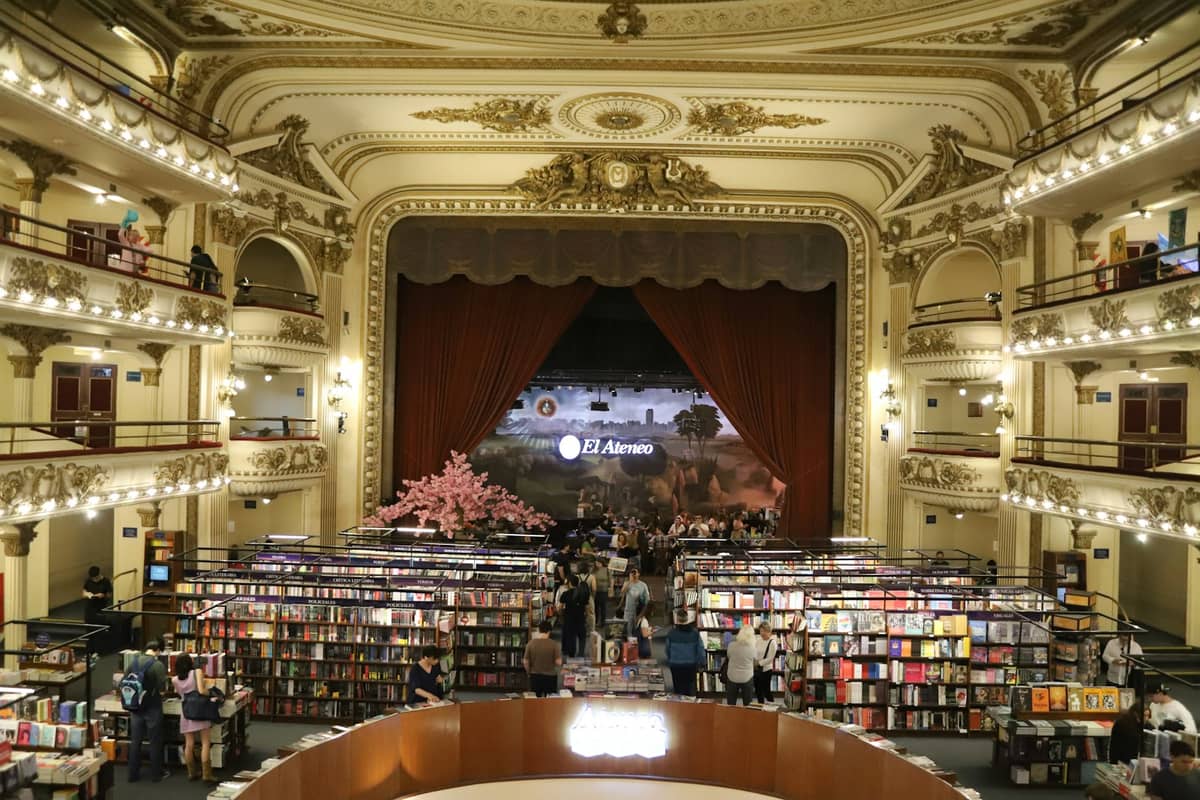
Buenos Aires has a surprisingly strong circuit of free attractions that are genuinely worth visiting, not just budget fillers. The Recoleta Cemetery is free to enter and is one of the most architecturally impressive spaces in the city. The Museo Nacional de Bellas Artes charges no admission, housing one of the largest fine art collections in Latin America. The same applies to the Centro Cultural Kirchner, a restored Belle Époque building with rotating exhibitions and concert spaces.
- Recoleta Cemetery: free entry for Argentine residents (foreign visitors pay a ticket), open daily — genuinely unmissable architecture and history
- Museo Nacional de Bellas Artes: permanently free for all visitors, permanent collection spanning European and Argentine masters
- Centro Cultural Kirchner (CCK): free entry, frequent free concerts and events
- Reserva Ecológica Costanera Sur: free urban nature reserve on the riverfront, great for early mornings
- Bosques de Palermo and Jardín Botánico: free public parks with lakes, roses, and greenhouse collections
- Plaza de Mayo and the surrounding Microcentro architecture: entirely free to walk and explore
- Caminito street art walk in La Boca: free to walk, though watch your belongings in this area
Many of the city's paid museums offer free entry on specific days. The MALBA (Museo de Arte Latinoamericano de Buenos Aires) offers free entry on Wednesdays. The Museo Evita and others occasionally run discounted or free entry periods. Check the official museum websites before visiting, as these policies change. For a broader overview of what the city has on offer, the guide to Buenos Aires museums breaks down admission costs and what each collection actually contains.
Eating Well Without Overspending
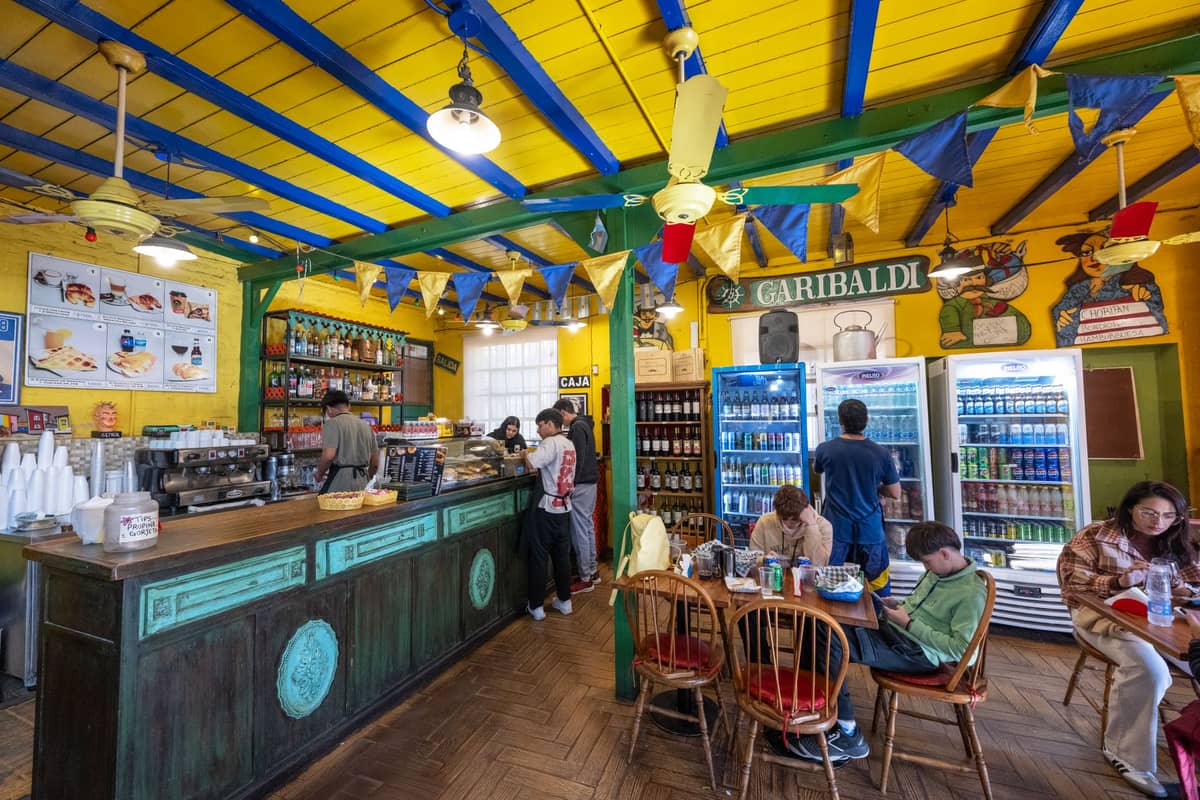
Argentine food culture is genuinely budget-friendly if you eat where residents eat rather than where the menu is printed in English. The city's panadería (bakery) network means breakfast is almost always cheap: a coffee and a medialuna (a slightly sweet croissant) at a neighborhood café costs a fraction of what a hotel breakfast charges. The café culture in Buenos Aires rewards those who sit down at the counter rather than a tourist-facing table.
For lunch, look for tenedor libre restaurants, which are all-you-can-eat buffets serving salads, hot dishes, and desserts at a fixed price. Quality varies, but the best ones in neighborhoods like Palermo and San Telmo offer substantial meals for around USD 6 to 10. Many restaurants also offer a fixed-price menu del día (daily lunch special) with two courses and a drink. This is the best value sit-down meal in the city.
- Panadería breakfast Coffee and two medialunas at a local panadería: roughly AR$1,500–2,500 depending on the neighborhood and year.
- Pizza by the slice Buenos Aires pizza is its own style — thick, cheese-heavy. A slice at a local pizzería costs very little and fills you up fast. El Cuartito and La Musa are well-known, but any neighborhood joint works.
- Tenedor libre lunch All-you-can-eat buffets in mid-range neighborhoods typically cost the equivalent of USD 6–12 per person including drinks.
- Empanadas Baked empanadas from a panadería or dedicated empanada shop are one of the city's best budget foods. Expect 3–6 to fill you up.
- Supermarket picnic The Disco, Coto, and Carrefour chains have good cheese, cured meats, bread, and wine at accessible prices — useful for hostel kitchens or park lunches.
Eating out in Puerto Madero or upscale parts of Recoleta costs noticeably more than the same quality food in Villa Crespo or Almagro. Wine is cheap throughout, but cocktail bars in Palermo Soho have started pricing like any global city. For a deeper look at what and where to eat, the Buenos Aires food guide covers the city's culinary landscape in detail.
✨ Pro tip
Tipping in Buenos Aires restaurants is customary but not obligatory. A 10% tip is standard at sit-down restaurants where you received table service. At panadería counters or empanada shops, tipping is not expected. Verify current norms on arrival, as economic pressures can shift local customs.
When to Visit for the Best Value
Buenos Aires has a humid subtropical climate with mild winters and hot, humid summers. The city sits at roughly 34.6° S, close to sea level on the western shore of the Río de la Plata. This means the seasons are the reverse of the northern hemisphere: December through February is summer (hot, humid, roughly 22–32°C), June through August is winter (cool, about 7–15°C), and spring and autumn fall in between.
From a budget perspective, the shoulder seasons of autumn (March to May) and spring (September to November) are generally better value than summer. The southern hemisphere summer coincides with Argentine school holidays and major international visitor peaks, which pushes accommodation prices up. Spring in particular, with temperatures around 18–26°C, tends to see fewer crowds, more comfortable conditions for walking, and slightly lower rates. For a detailed breakdown by month, the best time to visit Buenos Aires guide covers seasonal events, weather patterns, and cost variations.
Winter (June to August) is genuinely underrated for budget travelers. Accommodation is at its cheapest, the city remains fully operational, and there is very little rain relative to summer months. The trade-off is temperatures that can drop to around 7–10°C at night, which matters if you're spending evenings outdoors. Pack layers rather than a heavy coat and the cost savings are real.
Budget Neighborhoods: Where to Stay and How to Move Between Them
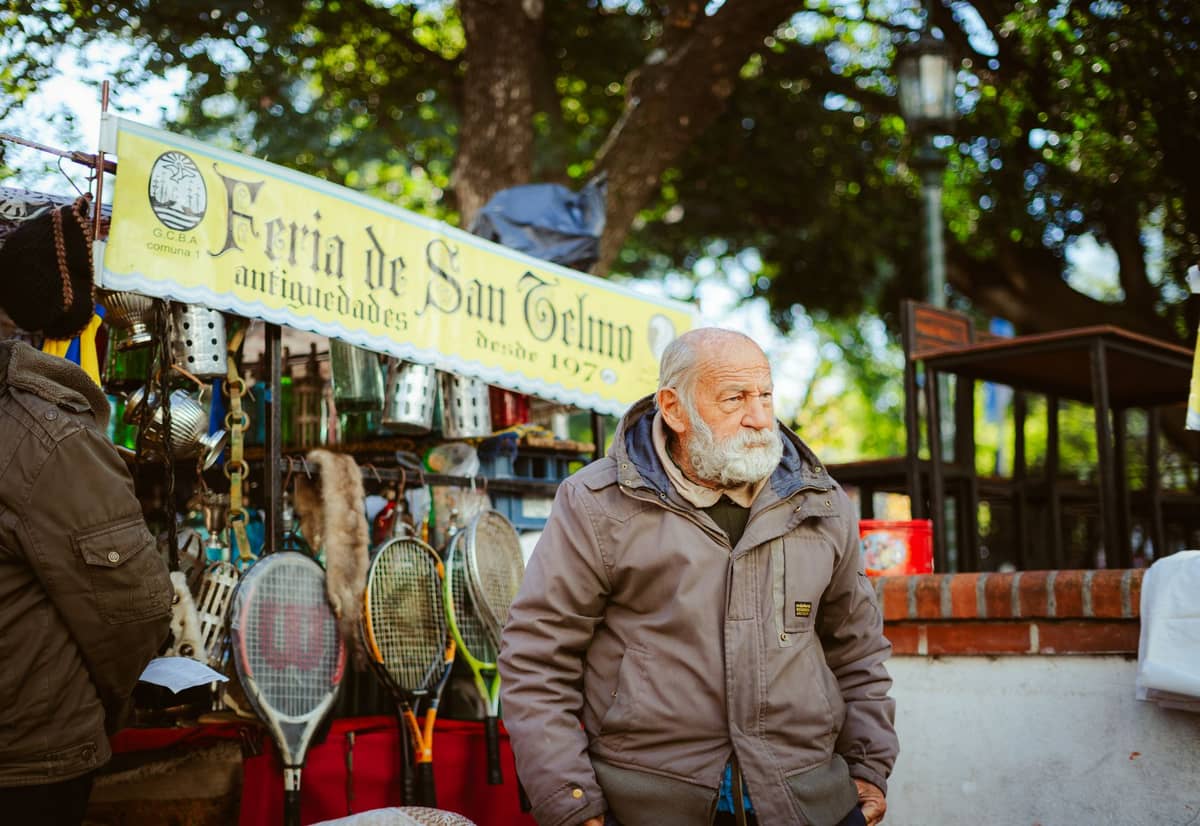
Where you sleep significantly affects your daily spend. San Telmo is the traditional budget traveler hub, with a high concentration of hostels, proximity to the historic center, and walkable access to free sights. It's not the quietest neighborhood, and the cobbled streets get crowded on Sundays when the Feria de San Telmo runs, but the location-to-price ratio is hard to beat.
Palermo is more expensive but offers better value at the mid-range level: the neighborhood has excellent transport links, diverse food options at various price points, and easy access to the parks. Belgrano to the north is a good option for quieter, more residential accommodation that is still well-connected by Subte. Avoid Puerto Madero entirely for budget accommodation: it is the city's most expensive district with few genuinely cheap eating or sleeping options.
ℹ️ Good to know
Argentina's voltage is around 220–230V at 50Hz, with Type C and Type I plug sockets (two round pins and three flat diagonal pins respectively). Most modern electronics handle dual voltage, but check your devices and bring a Type I (or C/I-compatible) adapter if you're coming from North America or the UK.
FAQ
Is Buenos Aires cheap for tourists?
By the standards of Western Europe or North America, yes. The combination of Argentina's peso and the exchange rate environment means that food, transport, and many cultural attractions cost significantly less than in comparable cities. However, costs vary: imported goods, Puerto Madero restaurants, and international-brand hotels are priced closer to global rates.
Do I need cash in Buenos Aires or can I use cards?
Both are useful. Cards are widely accepted at restaurants, supermarkets, and larger businesses. However, cash is needed for colectivo top-ups at some kiosks, street markets, smaller shops, and some smaller eateries. Argentina's currency situation means you should research current exchange options before arriving — withdraw or exchange strategically rather than relying solely on airport ATMs, which can have unfavorable rates and withdrawal limits.
What is the SUBE card and do I need one?
The SUBE is the rechargeable card required for all public transport in Buenos Aires: buses, Subte lines, commuter trains, and the Premetro. You cannot pay cash on buses. Get one at a kiosk or Correo Argentino on arrival, register it online or at a post office branch, and top it up at kiosks or Subte booths. A registered card generally qualifies for lower per-trip fares and benefits than an unregistered one.
Which Buenos Aires museums are free?
The Museo Nacional de Bellas Artes is permanently free. The Recoleta Cemetery charges no admission for Argentine residents but foreign visitors pay a ticket. The Centro Cultural Kirchner offers free entry for most exhibitions. MALBA offers free entry on Wednesdays for students, teachers, and retirees, with discounts for the general public. Many city-run museums, including the Museo Histórico Nacional, are free or have nominal fees. Check each museum's website before visiting as policies can change.
What time of year is Buenos Aires cheapest to visit?
June through August (winter) generally offers the lowest accommodation prices and fewest crowds. The weather is cool but manageable, and the city is fully active. Spring (September to November) is slightly more expensive but offers better weather for outdoor exploring, while still being cheaper than the December to February peak.
Tickets & tours
Live prices and dates from our booking partner. If you book, we may earn a commission at no extra cost to you.
Planning a trip? Discover personalized activities with the Nomado app.