Centro Cultural Kirchner (CCK): Buenos Aires' Grand Free Cultural Powerhouse
Housed in the former Central Post and Telegraph Office near Plaza de Mayo, the Centro Cultural Kirchner is one of the largest cultural centers in the world. Entry is free, the architecture alone rewards the visit, and the programming spans classical music, contemporary art, film, and dance.
Quick Facts
- Location
- Sarmiento 151, San Nicolás / Microcentro, Buenos Aires
- Getting There
- Multiple Subte lines and colectivo routes serve Plaza de Mayo, roughly 150 m away
- Time Needed
- 1.5 to 3 hours depending on exhibitions and events
- Cost
- Free general admission; some events require free advance booking
- Best for
- Architecture lovers, culture seekers, rainy-day visitors, first-time visitors to Buenos Aires
- Official website
- cck.gob.ar
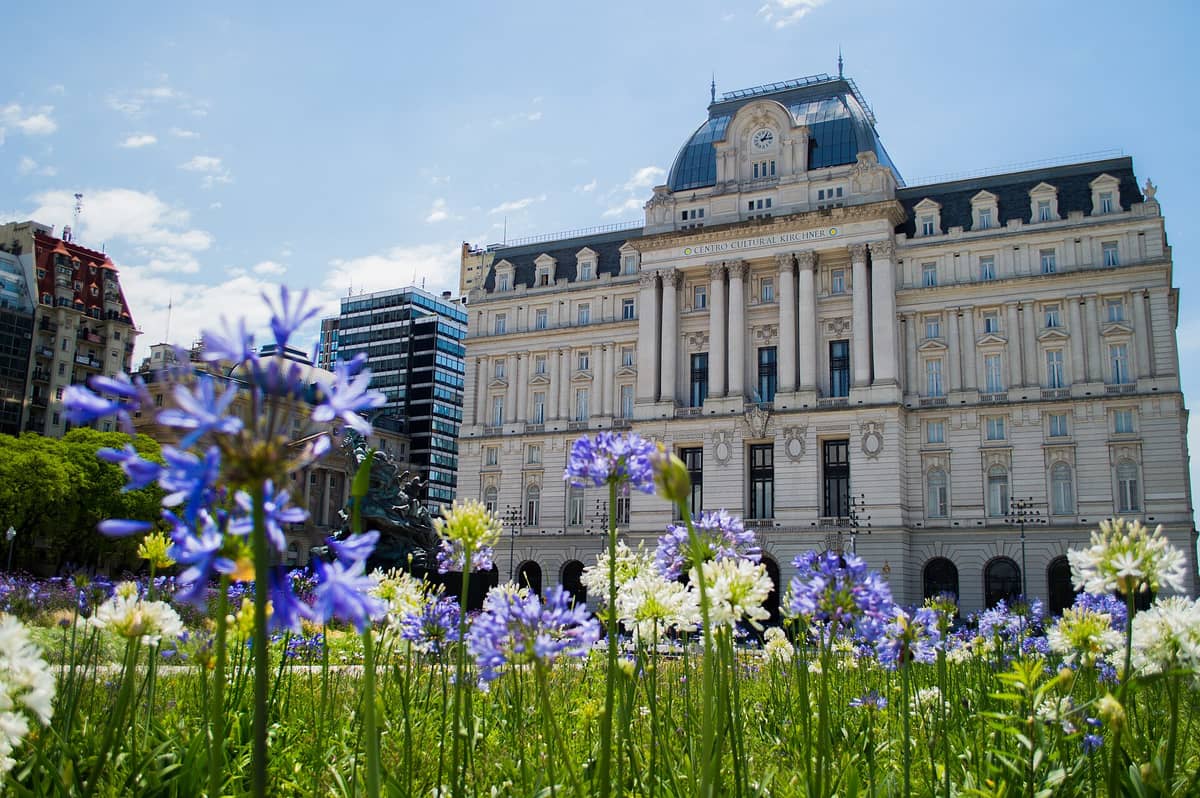
What Is the Centro Cultural Kirchner?
The Centro Cultural Kirchner, universally referred to as the CCK, occupies the former Central Post and Telegraph Office of Argentina at Sarmiento 151, a few steps from Plaza de Mayo. The building was declared a National Historic Monument in 1997 and was subsequently converted into one of the largest cultural centers in the world, opening to the public in 2015. Its programming covers classical music, contemporary visual art, cinema, dance, and digital culture, often running simultaneously across its many floors and halls.
Admission is free for the general public, Wednesday through Sunday, from 2:00 p.m. to 8:00 p.m. Most exhibitions and open spaces do not require advance reservation, but tickets for some performances and guided visits must be reserved in advance, so checking the official website before you go saves time at the door. The building is closed on Mondays and Tuesdays.
💡 Local tip
Book your free entry slot online at cck.gob.ar before visiting, especially for weekend guided tours and special events. Slots for popular concerts and the rooftop visits fill up days in advance.
The Building: A Monument Before It Was a Cultural Center
The structure that houses the CCK is an exercise in early twentieth-century Argentine ambition. Built to serve as the country's principal post and telecommunications office, the Beaux-Arts and French Renaissance revival building took decades to complete and was designed with the scale of a palace rather than a functional office block. Its central dome rises dramatically above the Microcentro skyline, and the ornate facade on Sarmiento feels almost disproportionately grand for a street of this width, which is part of the effect.
The interior is where the building truly speaks. The grand hall, with its soaring coffered ceilings and restored ironwork, evokes the weight of state infrastructure that once moved through this address. Walking in from the street, visitors often slow down involuntarily, looking upward before they do anything else. This quality puts the CCK in conversation with other remarkable adaptive reuse projects in the city, like the El Ateneo Grand Splendid, where historic architecture becomes the attraction itself rather than just a container for what is inside.
The rooftop terrace is a separate draw entirely. On clear afternoons, particularly in autumn and spring when the light over the Río de la Plata estuary turns amber before 6:00 p.m., the views across the Microcentro toward Puerto Madero are among the more unexpected panoramas available for free in the city. Access to the rooftop is typically via a guided visit; check availability at the information desk when you arrive.
Tickets & tours
Live prices and dates from our booking partner. If you book, we may earn a commission at no extra cost to you.
Madero Tango Show tickets with optional dinner
From 32 €Instant confirmationFree cancellationBuenos Aires small-group city tour with optional lunch and cruise
From 25 €Instant confirmationFree cancellationPiazzolla Tango Show VIP tickets with transfer and optional dinner
From 112 €Instant confirmationFree cancellationBuenos Aires shopping tour
From 15 €Instant confirmationFree cancellation
What to Expect Inside: Halls, Galleries, and the Ballena Azul
The CCK's exhibition floors rotate regularly, so the specific shows on any given visit will differ. What remains constant is the architectural drama of the spaces themselves. Galleries occupy rooms that were once sorting floors, telegraph offices, and administrative chambers. The contrast between the worn institutional bones of the building and contemporary art installations gives the place a texture that newer cultural centers rarely achieve.
The Sala Argentina, the main concert hall, seats hundreds and hosts performances by the Orquesta Sinfónica Nacional as well as visiting ensembles. Even if you are not attending a concert, the hall is occasionally open for viewing and is worth seeking out for its acoustics-optimized design set within a nineteenth-century shell. Guided visits sometimes include access to spaces not otherwise open to the public, including backstage areas and upper floors.
The Ballena Azul, the CCK's whale-shaped pipe organ installed in the central domed hall, deserves a mention of its own. Painted a deep blue and suspended within the dome, it is reportedly one of the largest organs in Latin America. Even when it is not being played, the visual impact of the instrument in that space is striking. On afternoons when organ recitals are scheduled, the acoustic effect in the dome is extraordinary.
How the Experience Changes by Time of Day
The CCK opens at 2:00 p.m., and the first hour tends to be the quietest. Arriving at opening time means you can move through the galleries without crowds and take photographs in the grand hall before school groups and afternoon visitors arrive. The light in the upper floors during early afternoon, when sun comes through the restored skylights, makes this the better window for interior photography.
By 4:00 to 5:00 p.m. on weekends, foot traffic increases noticeably. Buenos Aires residents treat the CCK as a genuine civic space rather than a tourist destination, so weekend afternoons draw local families, students with sketchbooks, and groups attending specific programming. This makes the atmosphere feel more genuine and less performative than many cultural centers, but it also means the most popular galleries can feel crowded.
Evening visits, closer to the 8:00 p.m. closing time, are worth considering on nights when concerts or film screenings are scheduled. The surrounding Microcentro empties of office workers by early evening, making the walk from the Subte or across Plaza de Mayo noticeably calmer and more pleasant than the midday commuter rush.
ℹ️ Good to know
The CCK is open Wednesday to Sunday, 2:00 p.m. to 8:00 p.m. It is closed on Mondays and Tuesdays. Hours for specific events may vary; verify at cck.gob.ar before your visit.
Getting There and Navigating the Microcentro
The CCK sits approximately 150 meters from Plaza de Mayo, making it walkable from several Subte lines. Lines A, D, and E all have stops within a short walk of the building. The broader Microcentro and Monserrat area is dense with colectivo routes, and the address on Sarmiento is straightforward to reach on foot from most central hotels.
The Microcentro during weekday business hours is genuinely congested, with narrow sidewalks on many streets filling with pedestrians and delivery traffic. If you are visiting on a weekday, the 2:00 p.m. opening coincides with post-lunch quieting of foot traffic, which makes the approach more comfortable. On weekends, the streets around Plaza de Mayo are significantly calmer. Comfortable shoes matter here: the floors inside the CCK are largely hard stone, and you will spend considerable time standing if you explore thoroughly.
Public transport in Buenos Aires uses the SUBE rechargeable card for buses and the Subte. Taxis and ride-hailing apps also serve the area well. Verify current fares and app availability locally, as these change frequently.
Practical Considerations and Who Should Skip
The CCK is one of the few world-class cultural spaces in Buenos Aires where cost is never a factor. For budget travelers, the combination of free entry, extraordinary architecture, and rotating exhibitions makes this one of the highest-value stops in the city. The building is also a practical refuge during Buenos Aires summers, when January and February temperatures regularly reach the low 30s Celsius and humidity climbs: the interior is cool and the programming continues year-round.
Accessibility programming at the CCK includes guided visits in Argentine Sign Language on some weekends and public holidays, which reflects a broader institutional commitment to inclusion. Confirm specific accessible programming details at cck.gob.ar before your visit. For visitors with mobility considerations, the building's scale means that a full visit involves substantial walking; plan which floors and halls matter most to you rather than attempting everything. If weather or a packed schedule has you reassessing priorities, the Café Tortoni is a few blocks away and pairs naturally with a CCK visit as a half-day Microcentro itinerary.
Travelers who prioritize outdoor experiences, street-level neighborhood texture, or nightlife will likely find the CCK less engaging. The building's limited hours mean it never becomes a late-night option. Those with only a single day in Buenos Aires might debate whether to allocate two or three hours here versus spending equivalent time in a neighborhood like San Telmo or La Boca with more varied street-level activity. The short answer is that the CCK rewards curiosity: visitors who engage with what is actually showing and who take time with the architecture consistently rate it higher than those who treat it as a box to check.
⚠️ What to skip
Photography policies for specific exhibitions may differ from the general building photography rules. Ask at the entrance desk before shooting in gallery spaces, particularly for touring international exhibitions.
The CCK in Context: Buenos Aires as a Cultural Capital
Buenos Aires has long supported a density of cultural institutions unusual for a city of its population. The CCK occupies a particular position in this ecosystem: it is government-funded, centrally located, and free, which means it functions as a genuinely democratic cultural space rather than one that skews toward a paying tourist or elite local audience. For visitors trying to understand how the city relates to its own artistic and intellectual life, the CCK is one of the clearest windows available. It sits near the Casa Rosada and the Catedral Metropolitana, forming part of a historic civic corridor that has defined Buenos Aires' public identity since the colonial period.
For travelers with a deeper interest in the city's cultural landscape, the best museums in Buenos Aires guide offers broader context for how the CCK fits alongside institutions like the MALBA and the Museo Nacional de Bellas Artes. The CCK tends to attract more contemporary and interdisciplinary programming than those museums, making it complementary rather than duplicative in a multi-day visit.
Insider Tips
- The rooftop terrace access is via guided visit only and slots are limited. Go directly to the information desk when you arrive to check availability rather than assuming you can walk up.
- Organ recitals in the domed hall are sometimes unscheduled additions to the program and listed only on the day. Ask at the entrance if anything is happening in the Ballena Azul space during your visit.
- The building's upper floors, accessed during full guided tours, contain rooms that reveal the original postal and telegraph infrastructure including ironwork and mechanical fittings that were preserved during the conversion. These details are easy to miss if you explore independently.
- Weekday visits at opening time (2:00 p.m.) offer the quietest experience. The grand hall and main staircase can be photographed without crowds for about the first 45 minutes.
- The CCK's schedule of free evening concerts, particularly in the Sala Argentina, is often overlooked by short-term visitors. Check the monthly calendar online and consider building your evening around a performance rather than a daytime gallery visit.
Who Is Centro Cultural Kirchner (CCK) For?
- Architecture enthusiasts who want to experience Beaux-Arts grandeur repurposed for contemporary use
- Budget travelers seeking world-class cultural programming without admission costs
- Visitors caught in Buenos Aires summer heat needing a cool, high-quality indoor option
- Classical music and performing arts fans who want to experience the Orquesta Sinfónica Nacional in one of its main Buenos Aires venues
- First-time visitors to Buenos Aires who want to understand the city's civic and cultural identity in a single stop
Nearby Attractions
Other things to see while in Microcentro & Monserrat:
- Avenida Corrientes
Avenida Corrientes is the cultural backbone of central Buenos Aires, a long avenue lined with independent bookshops, mid-century theatres, and late-night pizzerias. Free to walk at any hour, it rewards visitors who linger past midnight as much as those who arrive at noon.
- Avenida de Mayo
Stretching 1.35 km through the heart of Buenos Aires, Avenida de Mayo connects the seat of government at Plaza de Mayo to the National Congress. Inaugurated in 1894 and declared a National Historic Site in 1997, it remains the city's most architecturally dense corridor — free to walk, open at all hours, and best explored at a deliberate pace.
- Cabildo de Buenos Aires
Standing at the western end of Plaza de Mayo, the Cabildo de Buenos Aires is where Argentina's independence process began in May 1810. Today it operates as the Museo Nacional del Cabildo de Buenos Aires y de la Revolución de Mayo, offering free admission and a carefully curated look at colonial-era governance and revolutionary history. Few buildings in the country carry this much political and architectural weight.
- Café Tortoni
Founded in 1858 on Avenida de Mayo, Gran Café Tortoni is the oldest continuously operating café in Buenos Aires. Its marble counters, stained-glass ceilings, and literary history make it one of the city's most photographed interiors — though the lines outside and tourist-oriented service mean expectations need calibrating before you walk in.
Planning a trip? Discover personalized activities with the Nomado app.