Jardín Japonés Buenos Aires: What to Expect Before You Visit
A Japanese-style landscape garden set inside Palermo's Bosques de Palermo, the Jardín Japonés is one of the largest Japanese gardens outside Japan. This guide covers what the experience actually delivers, when to go, how to get there, and who will get the most out of a visit.
Quick Facts
- Location
- Av. Casares 3450, Bosques de Palermo, Palermo, Buenos Aires
- Getting There
- Subte Line D to Plaza Italia, then ~10-min walk; many bus lines stop nearby (10, 37, 59, 60, 67, 93, 130, and others)
- Time Needed
- 1.5 to 2.5 hours for a relaxed visit
- Cost
- ARS 24,000 (non-residents); ARS 8,000 (Argentine residents with ID); free for children under 12 and Argentine residents over 65 with ID. Verify current prices before visiting.
- Best for
- Peaceful nature walks, photography, families with children, a quiet break from the city
- Official website
- jardinjapones.org.ar/en/home
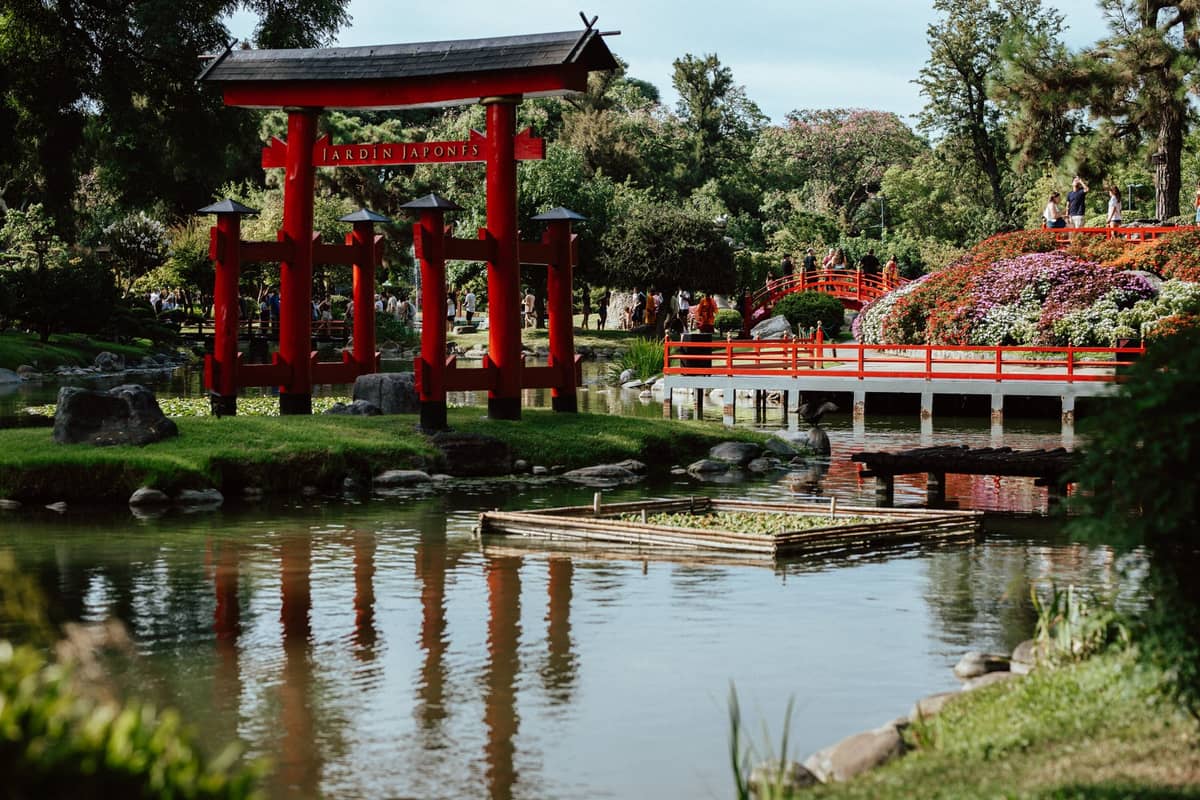
What the Jardín Japonés Actually Is
The Jardín Japonés de Buenos Aires is a fully enclosed Japanese-style landscape garden operating inside the Parque 3 de Febrero, the large urban parkland locally known as the Bosques de Palermo. It is managed by the Fundación Cultural Argentino Japonesa, a foundation that runs it as both a cultural institution and a living garden. The experience is distinct from simply walking through Palermo's public parks: once you pass through the entrance gate at Av. Casares 3450, you are inside a ticketed, curated space with its own architectural logic, sound environment, and rhythm.
The garden follows traditional Japanese landscape design principles: a central pond anchors the composition, arched wooden bridges cross the water at several points, stone lanterns punctuate the paths, and the planting is deliberate rather than naturalistic. Koi carp move through the pond in slow circuits, and the sound of water from a small waterfall is audible from multiple spots along the main circuit. None of this is accidental. Japanese garden design treats each element as meaningful, from the placement of rocks to the angle of a path.
For context on the wider park that surrounds it, see the guide to the Bosques de Palermo, which covers the lakes, cycling paths, and open green spaces that make up the broader Palermo parkland.
The Experience at Different Times of Day
Arriving close to opening time at 10:00 gives you the garden at its quietest. The light in the morning comes in at a low angle, catching the surface of the pond and casting long shadows across the stone paths. The air in the Bosques de Palermo at that hour often carries the smell of damp earth and cut grass from the surrounding parkland. Inside the garden, the main sounds are birdsong, the waterfall, and the occasional soft slap of koi at the surface. On weekday mornings, you may find yourself sharing the space with only a handful of other visitors.
By mid-morning on weekends, the character shifts considerably. Families with young children arrive in numbers after about 10:30, and the bridges and pond viewpoints fill up. The koi feeding area draws clusters of visitors, many of them with small children who are delighted by the fish surfacing near the edges. This is not a quiet retreat on a Saturday morning; it is a genuinely popular local attraction with a corresponding energy.
Late afternoon on weekdays, roughly from 15:30 to closing, offers a second window of relative calm. The light is warmer, the shadows longer, and the pace slower. Photographers working with natural light tend to find this the most rewarding period. The garden closes at 18:30, so late arrivals should be aware that they will have limited time to explore before closing.
💡 Local tip
Weekday mornings between 10:00 and 12:00 consistently offer the lowest crowds and the most peaceful atmosphere. If your schedule allows it, this is the most straightforward way to get the visit the garden is designed to deliver.
Tickets & tours
Live prices and dates from our booking partner. If you book, we may earn a commission at no extra cost to you.
Madero Tango Show tickets with optional dinner
From 32 €Instant confirmationFree cancellationBuenos Aires small-group city tour with optional lunch and cruise
From 25 €Instant confirmationFree cancellationPiazzolla Tango Show VIP tickets with transfer and optional dinner
From 112 €Instant confirmationFree cancellationBuenos Aires shopping tour
From 15 €Instant confirmationFree cancellation
Layout and What You Will See
The garden is compact enough to cover fully in under an hour if you walk directly, but the design rewards slower movement. The main circuit follows the perimeter of the central pond, crossing bridges at two or three points and passing a pagoda-style pavilion. Stone paths branch off the main loop toward smaller areas: a rock garden section, a tea house building (which functions as a restaurant and cultural space), and sections planted with bamboo that create a noticeably different acoustic environment when the wind moves through them.
The koi in the pond are large, some reaching over half a meter in length, and the variety of colors (white, orange, red, black, and patterned combinations) makes watching them at the surface a genuinely engaging activity. Small bags of fish food are sold near the entrance, and feeding the koi is one of the highlights for children. Be aware that the pond edges have low barriers in some sections, so parents with very young children should stay attentive near the water.
The cultural program at the Jardín Japonés extends beyond the garden itself. The foundation organizes workshops and events related to Japanese cultural practices, including ikebana (flower arranging), bonsai, and calligraphy. These are not always running on a given visit, but checking the official site before you go can add a layer to the experience if timing aligns.
Historical and Cultural Context
The garden was created within the Bosques de Palermo as a cultural gesture reflecting the historical relationship between Argentina and Japan, and it is promoted and maintained by the Fundación Cultural Argentino Japonesa. Buenos Aires has had a significant Japanese community since the early twentieth century, and the garden functions as a permanent expression of that presence in the city's cultural landscape. It is one of the largest Japanese gardens outside Japan, though exact rankings depend on the metric used.
The Bosques de Palermo itself has a long history as Buenos Aires's main urban park, developed in the nineteenth century and expanded over time into a network of lakes, gardens, and cultural spaces. The Jardín Japonés sits within this larger fabric. Nearby, the El Rosedal de Palermo and the Jardín Botánico Carlos Thays represent other specialized gardens in the same general area, each with a different character and design tradition.
Getting There and Practical Logistics
The most straightforward public transit route is the Subte Line D to Plaza Italia station. From the exit, the garden entrance at Av. Casares 3500 is about a 10-minute walk through the park. The walk itself passes through the Bosques de Palermo, which is pleasant in good weather. Alternatively, a large number of bus lines stop in the vicinity of the garden: routes 10, 15, 37, 59, 60, 67, 93, 95, 102, 108, 110, 118, 128, 130, 160, and 188 all have stops within reasonable walking distance.
The garden is open every day of the year, including Saturdays, Sundays, and public holidays, from 10:00 to 18:30. Admission for non-resident visitors is ARS 24,000. Argentine residents pay ARS 8,000 with valid ID. Children under 12 enter free when accompanied by an adult. Argentine residents over 65 also enter free with ID. These prices were verified for 2026 but should be checked on the official site before your visit, as Argentina's pricing environment is subject to change.
ℹ️ Good to know
Payment methods at the entrance may change. If you are relying on cash in Argentine pesos, confirm current exchange options before arriving. For general guidance on currency in Buenos Aires, the Buenos Aires currency and money guide covers the key considerations.
The garden has its main entrance at Av. Casares 3450. The official site lists accessibility provisions and provides a WhatsApp contact for visitors with specific requirements. For detailed step-free route information, contacting the garden directly before your visit is advisable.
Photography and Seasonal Considerations
The garden photographs well throughout the year, but autumn (March to May in Buenos Aires's Southern Hemisphere calendar) produces the most visually distinctive conditions: the maples and other deciduous plantings shift to red and gold, and the reflection of these colors in the pond creates images that are markedly different from any other season. Spring (September to November) brings softer greens and flowering plants, with cooler temperatures that make walking comfortable.
Summer visits (December to February) are possible but carry the full weight of Buenos Aires's humid heat. Temperatures regularly exceed 30°C in January and February, and the garden offers limited shade on the main circuit. If you visit in summer, early morning is not just preferable for crowds; it is genuinely more comfortable. Bring water.
For photography, the bridges over the pond are the most photogenic single elements, particularly when koi are visible in the water below. The pagoda and the bamboo sections provide good compositional variety. Reflections in the pond are clearest in the morning before the wind picks up. Long lenses are useful for isolating koi patterns without disturbing the water surface. The garden is not large enough to require a dedicated photography visit separate from a general visit; most of the key compositions are accessible on a single unhurried circuit.
If you are building a broader Palermo itinerary around parks and gardens, the Palermo neighborhood guide covers the full range of options in the area, including how to structure a day that combines the Japanese Garden with other nearby attractions.
Who May Want to Skip This
The Jardín Japonés is a genuinely pleasant space, but it is not a secret, and on weekend mornings it does not feel like one. Visitors expecting quiet contemplation on a Sunday afternoon will find instead a popular family destination with considerable foot traffic, selfie stops at the bridges, and the ambient noise of a well-attended public attraction. If that kind of environment diminishes the experience for you, the garden is better visited on a weekday.
The garden is also relatively small. Visitors who have recently seen major Japanese gardens in Kyoto, San Francisco, or Portland may find the scale modest. It is a well-executed example of the form, but within a limited footprint. Travelers with very little time in Buenos Aires who are weighing it against other options should factor this in. It rewards a slow pace; rushed visitors often feel underwhelmed.
Insider Tips
- The tea house restaurant inside the garden serves Japanese-influenced food and tea. It is a reasonable place for a mid-visit break and is generally less crowded than the main tourist cafes in the surrounding park area.
- Autumn foliage in Buenos Aires peaks roughly in April and early May. If you visit then, the maple colors reflected in the central pond produce the garden's most distinctive visual conditions of the year.
- The fish food sold near the entrance is worth buying if you are visiting with children. The koi respond immediately and dramatically to feeding, and it is one of the more memorable moments the garden offers for younger visitors.
- Check the official website before your visit for any scheduled cultural workshops (ikebana, bonsai, calligraphy). These sessions are open to visitors and significantly change the character of a visit when they coincide with your arrival.
- The walk from Plaza Italia Subte station passes through the Bosques de Palermo. In good weather, arriving this way rather than by taxi gives you a useful sense of the park's scale and the garden's position within it.
Who Is Jardín Japonés For?
- Families with children aged 4 to 12 who will engage with the koi pond and the bridges
- Photographers working with natural light, particularly in autumn or on weekday mornings
- Travelers wanting a quiet interlude within a Palermo parks day
- Anyone with an interest in Japanese landscape design or Argentine-Japanese cultural history
- Visitors who want a structured, enclosed green space rather than open parkland
Nearby Attractions
Other things to see while in Palermo:
- Bosques de Palermo (Parque Tres de Febrero)
Parque Tres de Febrero, universally known as Bosques de Palermo, is Buenos Aires' most expansive urban park. Spanning roughly 370 hectares of lakes, tree-lined avenues, a famous rose garden, and open lawns, it offers a genuinely different pace from the surrounding city, and it costs nothing to enter.
- Campo Argentino de Polo
Campo Argentino de Polo in Palermo is the spiritual home of world-class polo, hosting the prestigious Argentine Open each November. Whether you're drawn by the sport or simply curious about one of Buenos Aires' most dramatic spectacles, here is everything you need to plan a visit.
- Ecoparque Buenos Aires
Once the city's traditional zoo, the Ecoparque de la Ciudad de Buenos Aires has been gradually transformed since 2017 into an urban conservation and education center. Set across 18 hectares in Palermo, it offers a quieter, more thoughtful alternative to conventional animal attractions, with free entry for Buenos Aires City residents and some categories of visitors and easy access from the Plaza Italia Subte station.
- El Rosedal de Palermo
Tucked inside the sprawling Parque Tres de Febrero, El Rosedal de Palermo is a formal rose garden containing more than 18,000 roses arranged around a central lake. Free to enter and a short walk from Subte Line D's Plaza Italia station, it offers one of the city's most rewarding outdoor experiences, especially during spring and autumn bloom.
Planning a trip? Discover personalized activities with the Nomado app.