Campo Argentino de Polo: Buenos Aires' Premier Polo Ground
Campo Argentino de Polo in Palermo is the spiritual home of world-class polo, hosting the prestigious Argentine Open each November. Whether you're drawn by the sport or simply curious about one of Buenos Aires' most dramatic spectacles, here is everything you need to plan a visit.
Quick Facts
- Location
- Av. del Libertador 4096, Palermo, Buenos Aires
- Getting There
- Buses along Av. del Libertador and Dorrego; Palermo train station nearby
- Time Needed
- 2–4 hours for a polo match; 30 min to walk the exterior
- Cost
- Entry per event only; polo match tickets vary in ARS — verify current prices with the organizer
- Best for
- Sports enthusiasts, first-time visitors to polo, concert-goers
- Official website
- aapolo.com
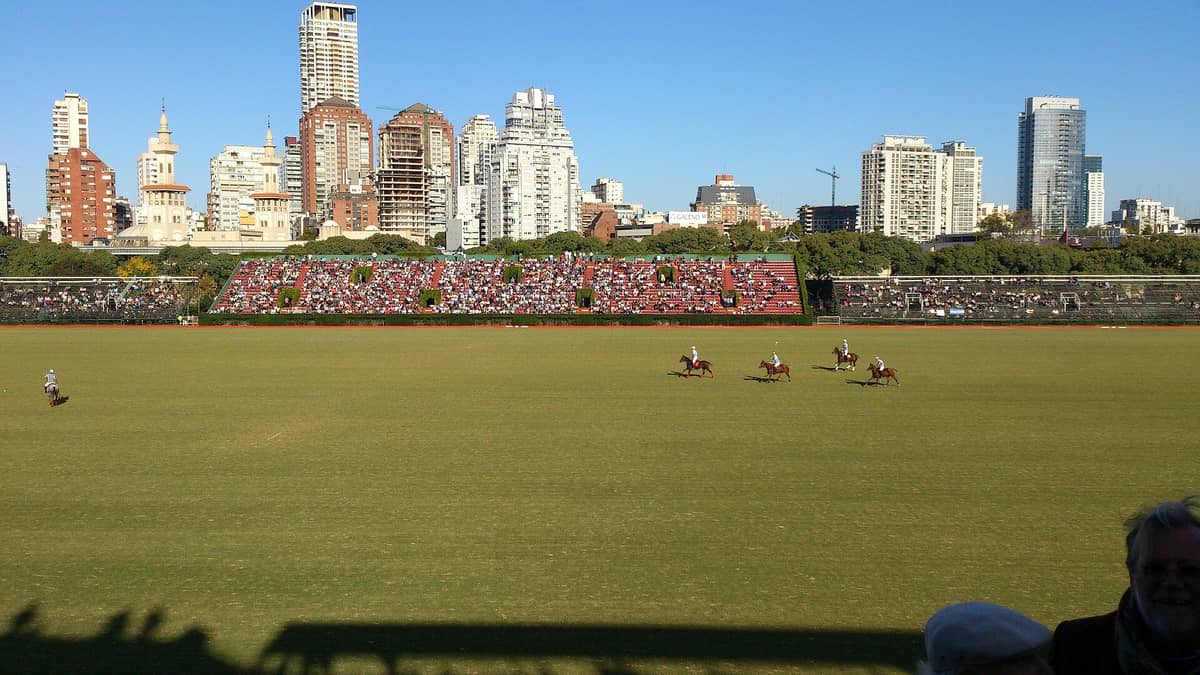
What Is Campo Argentino de Polo?
Campo Argentino de Polo, located at the corner of Avenida del Libertador and Avenida Dorrego in Palermo, is Argentina's most important polo venue and one of the most significant polo facilities in the world. The complex centers on Cancha Nº 1, the main ground, which holds approximately 15,000 spectators across multiple grandstands and field-level areas. The manicured grass pitch stretches to a scale that shocks first-time visitors: a regulation polo field is approximately 275 meters long and 150 meters wide, making a football pitch look modest by comparison.
This is not a museum or a public park. The Campo does not operate with fixed daily opening hours, and you cannot simply walk in off the street. Access is event-dependent, meaning the venue comes to life during the polo season and for occasional large-scale concerts, then falls quiet in between. Understanding that rhythm is the key to a worthwhile visit.
ℹ️ Good to know
The Campo is the home of the Campeonato Argentino Abierto de Polo (Argentine Open), held annually in November and December. This is widely considered the world's most prestigious polo tournament. Planning your Buenos Aires trip around this window dramatically increases your chances of seeing the venue at its best.
The Argentine Open: What to Expect on Match Day
During the Argentine Open, the transformation of Palermo around Avenida del Libertador is immediate and atmospheric. Spectators arrive in a mixture of smart-casual attire and genuine polo gear: paddock boots, linen jackets, sunhats. The smell of freshly cut grass mingles with the sharp scent of leather from saddles and mallets stacked near the stables. Horses shift and blow behind the scenes while grooms work with practiced efficiency. It is, by any measure, a world apart from Buenos Aires' usual urban energy.
Grandstand seating surrounds the main pitch, with ticket categories ranging from general field areas to VIP terraces. Match-day crowds are engaged and knowledgeable, though the Argentine Open also draws plenty of first-timers who arrive for the social spectacle as much as the sport. Between chukkers (the seven-minute playing periods), spectators are invited onto the field to tread in divots, a tradition borrowed from British polo etiquette and now firmly embedded in Buenos Aires match culture.
Matches typically begin in the afternoon, and the light over Palermo in November and December can be exceptional: golden-hour sun across the field makes for outstanding photography. Bring a long lens if you want sharp shots of the action, since even from the lower grandstands the field is wide. The sound of hooves on turf at full gallop carries across the entire ground in a way that no broadcast quite captures.
💡 Local tip
Tickets for the Argentine Open sell via authorized ticketing partners and at the venue box office on match days. Demand for high-profile matches rises sharply in the final rounds. Check the Asociación Argentina de Polo website (aapolo.com) for the official schedule and ticket links as the tournament approaches.
Tickets & tours
Live prices and dates from our booking partner. If you book, we may earn a commission at no extra cost to you.
Argentine flavors guided gastronomic Buenos Aires tour
From 80 €Instant confirmationFree cancellationGaucho private excursion to an Argentinian Estancia from Buenos Aires
From 156 €Instant confirmationFree cancellationMadero Tango Show tickets with optional dinner
From 32 €Instant confirmationFree cancellationBuenos Aires small-group city tour with optional lunch and cruise
From 25 €Instant confirmationFree cancellation
The History and Cultural Significance of the Venue
Argentina's relationship with polo is rooted in the estancias of the Pampas, where British immigrant ranchers introduced the sport in the nineteenth century. Over generations, Argentine polo players developed a reputation for unmatched skill, and by the mid-twentieth century Argentina had established dominance at the international level that continues today. The Campo Argentino de Polo in Palermo became the natural center of that world: the place where the best teams in Argentina, and by extension the world, compete each spring.
The Argentine Open has been held here for decades, and the venue's grandstands carry the layered memory of those tournaments. The polo complex sits within Palermo's broader park system, a district that also contains rose gardens, a botanical garden, a Japanese garden, and the city zoo site, now operating as an ecopark. This concentration of green space in a dense city makes the area feel genuinely open, and arriving at the Campo on foot or by bus from the park paths adds to the sense of occasion.
For context on Palermo's wider landscape, the Palermo neighborhood is one of Buenos Aires' most expansive districts, and the polo grounds are a natural anchor point within its northern section.
Visiting Outside Polo Season: Concerts and the Exterior
Between polo tournaments, Campo Argentino de Polo is used for large-scale concerts and live events. International artists across genres have performed here, and the field's open layout can accommodate major stage productions with standing field areas and grandstand seating. Event schedules are published by individual promoters and ticketing platforms, so checking ahead is essential.
If no event is scheduled during your visit, the exterior of the grounds along Avenida del Libertador is still worth a short detour. The scale of the facilities is visible from the street, and the surrounding park paths are pleasant for a walk. However, do not expect a visitor experience in the absence of a ticketed event: the interior is not accessible, and there is no permanent exhibition, museum, or public facility within the complex.
⚠️ What to skip
If you are visiting Buenos Aires outside of November and December, confirm well in advance whether any events are scheduled at the Campo. Arriving to find a locked and empty venue is a real possibility outside the polo season and major concert dates.
Getting There and Practical Logistics
The Campo sits at Avenida del Libertador 4096, in the northern section of Palermo. Multiple bus routes run along Avenida del Libertador and Avenida Dorrego, making the venue accessible from central Buenos Aires without a car. Palermo train station (on the San Martín commuter rail line) is within walking distance, offering connections from Retiro. On major event days, traffic on Avenida del Libertador can back up considerably, so public transport or a taxi drop-off several blocks away is often faster than arriving by car.
The Buenos Aires public transport system uses the SUBE card for buses and trains. For event days, particularly major polo finals, plan for crowds on the surrounding streets in the two hours before and after match time. Rideshare and taxi availability tends to thin out immediately after events, so either leave slightly early or be prepared to walk a block or two before hailing a ride.
For a broader overview of moving around the city, the guide to getting around Buenos Aires covers transit options in detail.
Weather and What to Wear
The Argentine Open falls in November and December, which is Buenos Aires' late spring and early summer. Temperatures during this period typically range from around 18°C at night to 30°C in the afternoon, with humidity rising as the season progresses. Afternoon matches in December can feel hot on exposed grandstands. A hat, sunscreen, and a light layer for the cooler evening rounds are practical investments.
Polo crowds in Buenos Aires tend to dress with care, particularly for final rounds when the social aspect of the event is as important to many attendees as the sport itself. Smart-casual is a safe register: nothing too formal, but an effort beyond beach-wear is generally appreciated. For concerts at the same venue, attire is entirely event-dependent.
For a full breakdown of when Buenos Aires' weather works in your favor across the year, see the best time to visit Buenos Aires guide.
Who Should Skip This Attraction
Campo Argentino de Polo is not an all-weather, walk-in attraction. Travelers who are in Buenos Aires for a short stay with no scheduled events at the venue, or who have no particular interest in polo or live events, will find little to reward a specific trip. The exterior along Avenida del Libertador is not dramatic enough on its own to justify crossing the city. If you are in Palermo anyway, a brief look is easy to fold into a walk through the parks, but it should not be a standalone destination unless an event is running.
Similarly, visitors expecting the kind of immersive sports experience offered by, say, a stadium tour with locker room access will be disappointed: the Campo does not currently operate a public tour program of that type. If a behind-the-scenes football experience is your priority, the dedicated museum and stadium tours at other Buenos Aires venues may serve you better.
For a contrasting large-stadium experience with public tours and a museum, the Estadio La Bombonera in La Boca offers regular public access through its Museo de la Pasión Boquense.
Insider Tips
- The final of the Argentine Open draws the largest crowds and the most intense atmosphere, but semifinal matches are often equally exciting with shorter queues and easier grandstand access. Check the bracket as the tournament progresses.
- Field-level general admission tickets offer the most immersive experience: you will be close to the action during play and can walk onto the pitch during the halftime divot-stomping tradition. Grandstand seats provide shade and a broader view, which is useful for understanding team formations.
- The stables and warm-up areas near the grounds are often more active in the hour before a match than during play itself. Arriving early to watch grooms preparing horses gives you a layer of the event that most spectators miss entirely.
- Buenos Aires' polo season coincides with the city's shoulder-to-peak tourism period. Hotel rates and restaurant reservations around Palermo fill up faster in November and December than in the winter months. Book accommodation well ahead if the Open is your primary reason for visiting.
- For concerts, the general field area can be quite exposed and the sound mix varies depending on your position relative to the stage. The mid-level grandstand sections tend to offer the best combination of sound quality and sightlines for large-scale productions.
Who Is Campo Argentino de Polo For?
- Sports travelers who want to witness elite polo in its most important competitive setting
- First-time visitors to Buenos Aires in November or December seeking a uniquely Argentine experience
- Concert-goers attending large international live events at an outdoor venue
- Travelers interested in Argentine social culture and the intersection of sport, fashion, and tradition
- Photographers looking for dramatic natural-light action shots during afternoon polo matches
Nearby Attractions
Other things to see while in Palermo:
- Bosques de Palermo (Parque Tres de Febrero)
Parque Tres de Febrero, universally known as Bosques de Palermo, is Buenos Aires' most expansive urban park. Spanning roughly 370 hectares of lakes, tree-lined avenues, a famous rose garden, and open lawns, it offers a genuinely different pace from the surrounding city, and it costs nothing to enter.
- Ecoparque Buenos Aires
Once the city's traditional zoo, the Ecoparque de la Ciudad de Buenos Aires has been gradually transformed since 2017 into an urban conservation and education center. Set across 18 hectares in Palermo, it offers a quieter, more thoughtful alternative to conventional animal attractions, with free entry for Buenos Aires City residents and some categories of visitors and easy access from the Plaza Italia Subte station.
- El Rosedal de Palermo
Tucked inside the sprawling Parque Tres de Febrero, El Rosedal de Palermo is a formal rose garden containing more than 18,000 roses arranged around a central lake. Free to enter and a short walk from Subte Line D's Plaza Italia station, it offers one of the city's most rewarding outdoor experiences, especially during spring and autumn bloom.
- Jardín Botánico Carlos Thays
The Jardín Botánico Carlos Thays is a free public botanical garden in Palermo covering several hectares of curated green space, Victorian-era glasshouses, and diverse plant collections. Named after the French-Argentine landscape architect who shaped much of Buenos Aires' park system, it offers a genuine respite from the city without costing a peso.
Planning a trip? Discover personalized activities with the Nomado app.