Ecoparque Buenos Aires: What the City's Reimagined Zoo Is Actually Like
Once the city's traditional zoo, the Ecoparque de la Ciudad de Buenos Aires has been gradually transformed since 2017 into an urban conservation and education center. Set across 18 hectares in Palermo, it offers a quieter, more thoughtful alternative to conventional animal attractions, with free entry for Buenos Aires City residents and some categories of visitors and easy access from the Plaza Italia Subte station.
Quick Facts
- Location
- Av. Sarmiento 2601, Palermo, Buenos Aires (main entrance at Plaza Italia)
- Getting There
- Subte Línea D – Plaza Italia station (1-minute walk)
- Time Needed
- 1.5 to 3 hours
- Cost
- Free for Buenos Aires City residents and for certain categories of Argentine residents (including many children under 12, seniors, and people with disabilities, subject to current rules). Argentine residents outside CABA and foreign visitors pay differentiated fees (verify current prices before visiting, as tariffs are updated periodically).
- Best for
- Families with children, nature-focused visitors, slow-travel days in Palermo
- Official website
- ecoparque.buenosaires.gob.ar
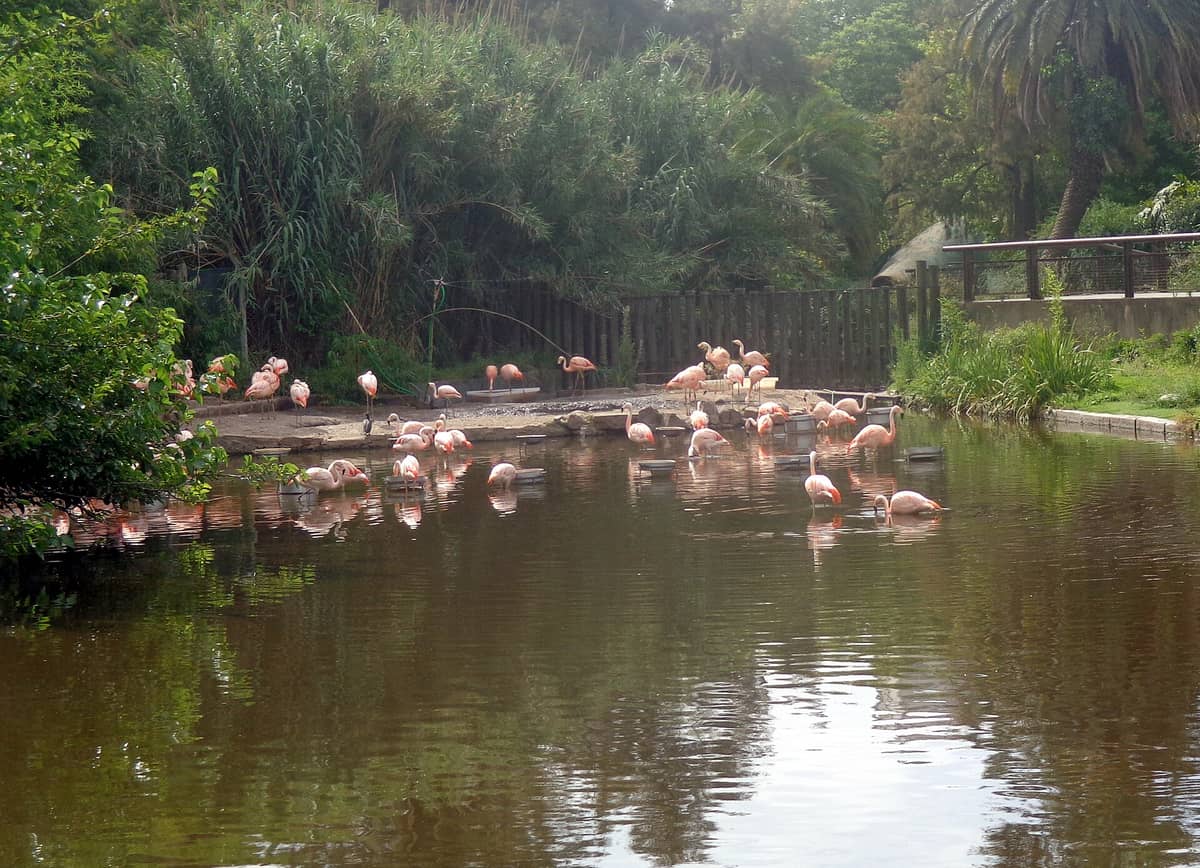
From Zoo to Ecopark: Understanding What This Place Has Become
The Ecoparque de la Ciudad de Buenos Aires is not a traditional zoo. That distinction matters, and understanding it shapes whether the visit meets your expectations. When the city government unveiled its General Transformation Plan in May 2017, it signaled a deliberate break from the zoo model: no more spectacle, no more concrete enclosures designed around visitor sightlines, and a gradual reduction in the number of species held in captivity. The goal was to redirect the 18-hectare Palermo site toward conservation, environmental education, and native biodiversity.
That transformation is still in progress. Visitors arriving expecting a fully realized natural sanctuary will find something more uneven: a mix of historic zoo architecture, some animals that remain on-site during relocation processes, educational circuits, and open green space. The atmosphere is noticeably calmer than a conventional zoo, with far fewer crowds and a deliberate educational tone in the signage and station layouts.
ℹ️ Good to know
The Ecoparque closes on Mondays and may close temporarily due to rain or adverse weather. Open Tuesday to Sunday and public holidays, 11:00 to 18:00. Last admission is around 17:15. Always check the official site before visiting.
The Physical Experience: What You Actually See and Hear
Entering from Plaza Italia, the most-used access point at Av. Las Heras and Av. Sarmiento, the first thing that strikes many visitors is the architecture. The original zoo opened in 1888, and the enclosure buildings that survive range from ornate Belle Époque pavilions to more utilitarian mid-century structures. Some of the older buildings have been repurposed as educational spaces or simply left in photogenic decay. The contrast between the historic stonework and the evolving ecological mission gives the place a layered, slightly unresolved character.
On a weekday morning, the grounds are genuinely quiet. You'll hear birds before you see them, and the background noise of Palermo's traffic fades quickly once you move past the entrance zone. The paths are largely flat and wide, which makes navigation straightforward for visitors with strollers or those who need level surfaces. Some of the historic structures do have steps or uneven stone approaches, so checking with staff at the entrance for the most accessible routes is worth doing.
Weekend afternoons bring a different crowd: local families with young children, groups of students on educational visits, and residents from the surrounding Palermo neighborhoods who treat it as a park extension. The open green areas fill up, particularly in spring (September to November) and the milder autumn months (March to May), when the city's humidity is more forgiving and outdoor exploration is genuinely comfortable.
Tickets & tours
Live prices and dates from our booking partner. If you book, we may earn a commission at no extra cost to you.
Buenos Aires small-group city tour with optional lunch and cruise
From 25 €Instant confirmationFree cancellationBuenos Aires shopping tour
From 15 €Instant confirmationFree cancellationBuenos Aires private city tour with lunch in Puerto Madero
From 90 €Instant confirmationFree cancellationPrivate city tour of Buenos Aires including the Old Underground Tunnels
From 314 €Instant confirmationFree cancellation
How the Experience Changes by Time of Day
Arriving when the gates open at 11:00 offers the most peaceful version of the Ecoparque. The morning light filters through the tree canopy across much of the central paths, temperatures are manageable even in summer, and the animal residents, where they remain, are generally more active before the midday heat sets in. Photography is better in the first two hours, when shadows are long and the grounds haven't filled with visitors.
By early afternoon on weekends, especially in the warmer months of December through February, the site becomes significantly more crowded near the main educational stations and any active animal enclosures. If you're visiting during Buenos Aires summer, early arrival isn't just aesthetically preferable, it's more comfortable. Temperatures can reach the low 30s Celsius, and shade is uneven across the grounds.
The last hour before closing, roughly 17:00 to 18:00, returns the space to a quieter state. The quality of late-afternoon light in spring and autumn is good for photography, particularly around the older buildings. That said, closing time is enforced, and staff will begin moving visitors toward exits well before 18:00.
Getting Here and Getting Around
The Ecoparque sits at the edge of the Palermo park district, one of the most accessible clusters of open space in Buenos Aires. Subte Línea D drops you directly at Plaza Italia, a one-minute walk from the main entrance on Av. Las Heras. Several bus lines also serve the plaza. For visitors exploring the broader area, the Bosques de Palermo and the Jardín Botánico Carlos Thays are both within walking distance, making it practical to combine them into a single half-day loop through Palermo's green corridor.
There are multiple entrance points: the main Plaza Italia access at Av. Las Heras and Av. Sarmiento, a second entrance from Av. del Libertador and Av. Sarmiento, and additional access points used in certain periods. If you arrive by Subte, the Plaza Italia entrance is the most direct. If you're coming from the Bosques de Palermo side or from Av. del Libertador, the northern entrance saves considerable walking.
The SUBE card, Buenos Aires' rechargeable transit card, is the standard way to pay for Subte and bus fares. Visitors who plan to use public transport during their stay should load one early, as it simplifies nearly every journey in the city.
The Conservation Mission: Context Worth Knowing
Understanding the Ecoparque's transformation adds real depth to a visit. What's happening here is not simply a rebranding exercise. The city government committed in 2017 to relocating animals to suitable sanctuaries and reserves over time, with the long-term aim of ending captive display. This process has moved at different speeds for different species, and the site reflects that gradual shift. Some animals remain while relocation is arranged or while they are deemed unsuitable for transfer due to age or condition. The architectural legacy of the original zoo, with its late 19th-century pavilions built in styles ranging from Moorish to Renaissance Revival, is also being preserved and adapted as part of the educational infrastructure.
Educational circuits run through the grounds with interpretive stations on native Argentine biodiversity, ecosystem relationships, and urban ecology. The signage is primarily in Spanish, which limits the experience somewhat for non-Spanish speakers, though the visual and spatial elements of the circuits are accessible regardless of language.
Ticket Prices and What to Know Before You Pay
Entry for Buenos Aires City residents is free, as is entry for many children under 12 who are Argentine residents, subject to current conditions. Visitors from other Argentine provinces and foreign tourists pay differentiated fees. As of mid-2026, reported figures placed the Argentine non-CABA adult rate at approximately ARS 9,871 and the foreign adult rate at approximately ARS 19,741, with lower rates for foreign minors. These figures are updated periodically and can change significantly given Argentina's inflation environment. Verify the current tariff on the official Ecoparque website or at the ticket office before entering.
Some guided visits and special activities carry additional charges classified as 'Entrada Especial' in the official tariff schedule. If you want a structured experience with a guide, factor in extra time to ask about these at the entrance, as they are not always prominently advertised.
⚠️ What to skip
Ticket prices in Argentine pesos change frequently due to inflation. Any price quoted online may be outdated within weeks. Check the official Ecoparque site or the Boletín Oficial tariff schedule as close to your visit date as possible.
Palermo's Green Quarter: Fitting the Ecoparque Into Your Day
The Ecoparque works best when it's part of a broader Palermo day rather than the sole destination for a full afternoon. A natural combination starts with the Jardín Japonés, which sits adjacent to the park complex and opens at 10:00, allowing you to visit before the Ecoparque opens at 11:00. From there, a loop through the Bosques and the Ecoparque, then south toward the restaurants and cafes of Palermo Soho, makes for a well-paced full day.
For visitors who want a more structured overview of how Palermo fits into the city, the Palermo neighborhood guide covers the full district, from the residential blocks to the lake area and commercial zones. The park complex as a whole is one of the more family-accessible parts of the city, with flat paths and open space that make it easier to manage with young children.
If you're planning a full schedule across multiple days in the city, the 3-day Buenos Aires itinerary positions the Palermo park zone well against other key attractions, including those in Recoleta and San Telmo.
Insider Tips
- Arrive when the gates open at 11:00 on weekdays for the quietest experience. Weekend afternoons draw local families and can feel congested near the educational stations.
- The historic zoo pavilions are among the most photogenic elements of the visit. The Moorish and Renaissance Revival structures date to the original 1888 zoo and are worth seeking out even if you have limited interest in the ecological mission.
- Bring water, especially in summer. There are limited refreshment options inside, and Buenos Aires summers (December to February) can push temperatures into the low 30s Celsius by early afternoon.
- The grounds are largely flat and generally suitable for strollers and wheelchairs, but some historic structures have steps or uneven stone paths. Ask staff at the entrance for the most accessible route if needed.
- Spanish-language signage dominates the educational circuits. If you read Spanish even at a basic level, taking time with the interpretive stations adds genuine context to what you're seeing and why the transformation is happening the way it is.
Who Is Ecoparque Buenos Aires For?
- Families with young children looking for open green space in Palermo without the intensity of a traditional zoo
- Travelers on a slower pace who want a thoughtful, low-pressure half-day activity
- Buenos Aires City residents, for whom entry is free and the site is a local park resource
- Anyone interested in urban conservation models and how cities are reconceiving animal attractions
- Visitors combining the Ecoparque with the Jardín Japonés or Jardín Botánico as part of a single Palermo green-corridor walk
Nearby Attractions
Other things to see while in Palermo:
- Bosques de Palermo (Parque Tres de Febrero)
Parque Tres de Febrero, universally known as Bosques de Palermo, is Buenos Aires' most expansive urban park. Spanning roughly 370 hectares of lakes, tree-lined avenues, a famous rose garden, and open lawns, it offers a genuinely different pace from the surrounding city, and it costs nothing to enter.
- Campo Argentino de Polo
Campo Argentino de Polo in Palermo is the spiritual home of world-class polo, hosting the prestigious Argentine Open each November. Whether you're drawn by the sport or simply curious about one of Buenos Aires' most dramatic spectacles, here is everything you need to plan a visit.
- El Rosedal de Palermo
Tucked inside the sprawling Parque Tres de Febrero, El Rosedal de Palermo is a formal rose garden containing more than 18,000 roses arranged around a central lake. Free to enter and a short walk from Subte Line D's Plaza Italia station, it offers one of the city's most rewarding outdoor experiences, especially during spring and autumn bloom.
- Jardín Botánico Carlos Thays
The Jardín Botánico Carlos Thays is a free public botanical garden in Palermo covering several hectares of curated green space, Victorian-era glasshouses, and diverse plant collections. Named after the French-Argentine landscape architect who shaped much of Buenos Aires' park system, it offers a genuine respite from the city without costing a peso.
Planning a trip? Discover personalized activities with the Nomado app.