Jardín Botánico Carlos Thays: Palermo's Green Refuge
The Jardín Botánico Carlos Thays is a free public botanical garden in Palermo covering several hectares of curated green space, Victorian-era glasshouses, and diverse plant collections. Named after the French-Argentine landscape architect who shaped much of Buenos Aires' park system, it offers a genuine respite from the city without costing a peso.
Quick Facts
- Location
- Santa Fe 3951, Palermo, Buenos Aires
- Getting There
- Subte Line D – Scalabrini Ortiz (approx. 4–5 blocks)
- Time Needed
- 1–2 hours
- Cost
- Free admission
- Best for
- Families, solo walkers, plant lovers, photography
- Official website
- turismo.buenosaires.gob.ar/en/atractivo/botanical-garden
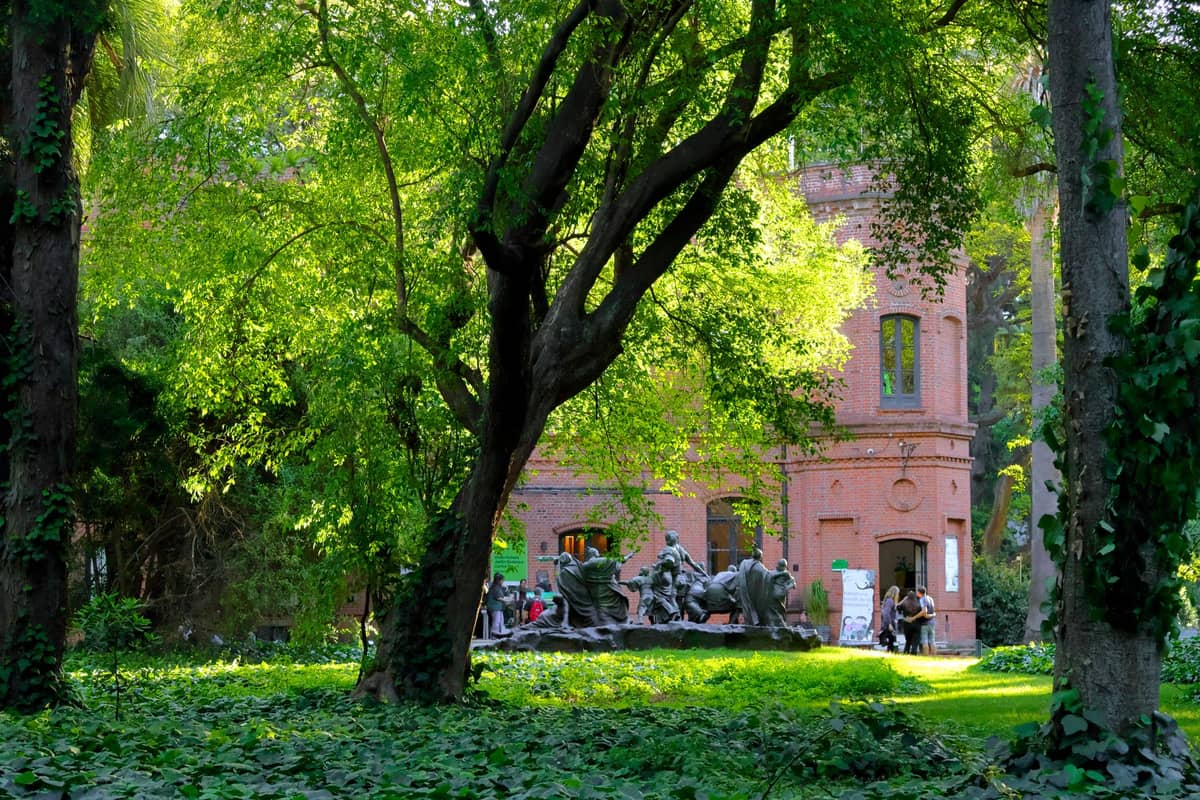
What the Jardín Botánico Carlos Thays Actually Is
The Jardín Botánico Carlos Thays is a municipal botanical garden set inside the larger green belt of Palermo, facing Avenida Santa Fe between Armenia and Gurruchaga. It is not a manicured showpiece designed for Instagram. It is a working botanical institution with labeled plant collections, research greenhouses, and genuine ecological variety packed into a relatively compact urban footprint. Visitors expecting a grand garden in the European tradition may be surprised by how intimate and slightly overgrown it feels, which is precisely the appeal.
The garden takes its name from Carlos Thays (1849–1934), a French-born landscape architect who emigrated to Argentina and became the most influential park designer in Buenos Aires history. He was responsible for shaping many of the city's major green spaces, including the Bosques de Palermo. His botanical garden reflects his philosophy: naturalistic planting over formal symmetry, with winding paths rather than rigid axes. Walking through it, you can trace the same spatial logic that runs through much of Palermo's park network.
ℹ️ Good to know
The garden is closed on Mondays. Public holiday hours can vary; always check before visiting on a holiday weekend, especially around January 1, May 1, and December 25. Always check before visiting on a holiday weekend.
How It Feels to Visit: Time of Day and Atmosphere
Arrive on a Tuesday or Wednesday morning and the garden is nearly quiet. The main gravel paths are broad enough for two people side by side and the surface is firm underfoot, but the narrower side trails between planting beds can be uneven, particularly after rain. At that hour, the dominant sounds are birdsong and the faint hum of traffic on Santa Fe, which fades quickly once you move toward the interior.
By late morning on weekends, the dynamic shifts. Families with strollers appear in number, students set up with sketchbooks near the Victorian iron-and-glass conservatory, and the garden's semi-resident cat population becomes active around the central lawns. The cats are not a quirk of online reviews; they are genuinely numerous, generally approachable, and cared for by a community group. If you are traveling with small children, this alone tends to make the visit memorable.
Late afternoon on weekdays, particularly in spring (September to November) and autumn (March to May), is arguably the best window. The light through the tree canopy is soft, temperatures in Buenos Aires hover between 15 and 25 degrees Celsius during these seasons, and the end-of-day quiet returns. Summer afternoons (December to February) can be oppressively humid, with temperatures reaching 30°C or higher. A morning visit is strongly advisable in summer.
💡 Local tip
Spring and autumn mornings offer the most comfortable temperatures and the best light for photography through the glasshouse structure. Avoid summer afternoons unless you can tolerate significant heat and humidity.
Tickets & tours
Live prices and dates from our booking partner. If you book, we may earn a commission at no extra cost to you.
Carlos Gardel Tango Show tickets with optional dinner
From 66 €Instant confirmationFree cancellationCarlos Gardel Tango Show VIP with transfer and optional dinner
From 88 €Instant confirmationFree cancellationPrivate tour of Palermo, the Japanese and Botanical Gardens
From 64 €Instant confirmationFree cancellationMadero Tango Show tickets with optional dinner
From 32 €Instant confirmationFree cancellation
The Plant Collections and Architectural Features
The garden organizes its collections by geographic origin, grouping plants from different world regions in distinct zones. You move through sections representing South American flora, Mediterranean species, Asian plants, and more, with each labeled in both common and scientific nomenclature. The labeling is consistent enough to be genuinely educational, though some signs show weather wear and could stand updating.
The centerpiece structure is a Victorian-era iron and glass conservatory that houses tropical and subtropical species. Its architectural form, with arched metal ribs and layered glass panels, gives it a 19th-century railway station quality. Inside, the air is noticeably warmer and damper than the garden exterior, and the smell of damp soil and dense foliage is immediate. The conservatory is one of the more photographically interesting spaces in Palermo, particularly when morning light hits the glass at an angle.
Beyond the conservatory, there are Japanese garden elements, a small rose section, and ornamental statuary scattered through the grounds. None of these are large enough to feel like separate attractions; they are integrated into the overall layout as points of visual variety rather than focal destinations. The overall effect is of a garden that rewards slow walking over systematic sightseeing.
Getting There and Practical Logistics
The most direct public transport option is the Subte Line D, alighting at Scalabrini Ortiz station, which places you roughly 4–5 blocks from the Santa Fe entrance. Multiple city bus routes also serve Avenida Santa Fe. If you are navigating Buenos Aires by public transport, a SUBE card (Buenos Aires' rechargeable transit card) will cover your Subte and bus fares; verify current fares locally as they change frequently.
The main entrance on Santa Fe 3951 is the most commonly used. Opening hours as of the latest available information are Tuesday through Friday 8:00 to 18:00, and Saturday, Sunday, and public holidays 9:30 to 18:00. Entry is free at all times. There are no timed entry slots or advance booking requirements.
The gravel pathways are generally smooth and suitable for strollers and wheelchairs, and the garden has accessible restrooms on site. The narrower secondary paths between planting beds are less predictable underfoot, especially after rainfall, so visitors with mobility considerations may prefer to stick to the main loop. Comfortable walking shoes are a sensible baseline regardless.
⚠️ What to skip
The garden closes during severe weather events. Buenos Aires experiences intense summer thunderstorms, particularly in January and February. If the sky darkens quickly, expect gates to close with little notice.
Photography Tips
The iron conservatory is the most structurally distinctive subject, and it photographs best from a low angle looking up toward the glass panels when the sun is at roughly 45 degrees in the morning. The botanical labeling stakes throughout the garden create an interesting compositional element if you want to shoot plant close-ups with contextual framing.
The cats, predictably, attract a lot of photographic attention. They tend to cluster near the central lawn and around benches in the late morning. A standard phone camera is entirely sufficient here; this is not a site that demands specialist equipment. Overcast days, which are common in Buenos Aires, produce excellent flat light for botanical detail shots without the contrast problems of direct midday sun.
Placing It in Palermo's Green Network
The Jardín Botánico sits within a cluster of parks and cultural spaces that make Palermo one of the most walkable green zones in the city. Immediately nearby are the Bosques de Palermo and the Jardín Japonés, which charges a separate admission fee and offers a more formally maintained Japanese garden experience. The El Rosedal de Palermo is also within comfortable walking distance, making it possible to link all three in a single morning if you keep a reasonable pace.
If botanical gardens and Palermo's green spaces are part of a wider Buenos Aires itinerary, they fit naturally into a broader Buenos Aires sightseeing plan. The neighborhood's café density also means you can break the walk with coffee at almost any point without backtracking.
For those specifically interested in how Carlos Thays shaped the city's outdoor spaces, the Buenos Aires architecture and design guide provides useful context on how the park network was planned and how it fits into the city's broader urban history.
Who Should Not Prioritize This Garden
If your Buenos Aires time is short and you are choosing between the botanical garden and the major cultural institutions, be honest about your interests. The garden is not a world-class botanical collection on the scale of Kew or the Singapore Botanic Gardens. Its value is as a calm, free, historically grounded urban green space, not as a destination in its own right for serious plant enthusiasts. It will not satisfy visitors who arrive expecting formal grandeur or elaborate floral displays.
Visitors with very limited mobility should be aware that the uneven secondary paths can be challenging, particularly after rain. The main gravel paths are generally manageable, but this is not a fully paved environment. Anyone hoping for dramatic city views or large-scale monuments will not find them here; the garden is deliberately inward-looking, designed for immersion rather than spectacle.
Insider Tips
- The garden's resident cat colony is maintained by a local volunteer group; they tend to be most visible and active around mid-morning, concentrated near the central benches. If cats are a draw for your group, Tuesday and Wednesday mornings see the fewest other visitors competing for space.
- The Victorian conservatory interior is noticeably warmer than the garden exterior year-round. In summer, the temperature difference can be significant; in winter, stepping inside feels like a genuine reprieve from the cool air outside.
- There is a small children's nature library (Biblioteca Popular de la Naturaleza para Niños) associated with the garden complex. If you are visiting with young children who read Spanish, it is worth checking whether it is open on your visit day.
- The Santa Fe entrance is the main access point, but the garden also has secondary openings on other bordering streets. If you approach from the Palermo park side rather than Santa Fe, you may find a different entrance that drops you directly into the interior without the initial formality of the main gate.
- Rainfall in Buenos Aires is unpredictable, particularly in summer. The garden's gravel paths drain reasonably well, but the uneven secondary trails become slick quickly. A light rain jacket takes up minimal space and means a passing shower does not cut the visit short.
Who Is Jardín Botánico Carlos Thays For?
- Families with young children who want outdoor space in central Palermo without an admission fee
- Photographers interested in Victorian architecture, botanical detail, and candid urban-nature shots
- Visitors who want a genuine break from the pace of the city without leaving the Palermo neighborhood
- Anyone combining the visit with the nearby Jardín Japonés, El Rosedal, or Bosques de Palermo in a single green-space morning
- Solo travelers and readers looking for a low-key place to sit for an hour without commercial pressure
Nearby Attractions
Other things to see while in Palermo:
- Bosques de Palermo (Parque Tres de Febrero)
Parque Tres de Febrero, universally known as Bosques de Palermo, is Buenos Aires' most expansive urban park. Spanning roughly 370 hectares of lakes, tree-lined avenues, a famous rose garden, and open lawns, it offers a genuinely different pace from the surrounding city, and it costs nothing to enter.
- Campo Argentino de Polo
Campo Argentino de Polo in Palermo is the spiritual home of world-class polo, hosting the prestigious Argentine Open each November. Whether you're drawn by the sport or simply curious about one of Buenos Aires' most dramatic spectacles, here is everything you need to plan a visit.
- Ecoparque Buenos Aires
Once the city's traditional zoo, the Ecoparque de la Ciudad de Buenos Aires has been gradually transformed since 2017 into an urban conservation and education center. Set across 18 hectares in Palermo, it offers a quieter, more thoughtful alternative to conventional animal attractions, with free entry for Buenos Aires City residents and some categories of visitors and easy access from the Plaza Italia Subte station.
- El Rosedal de Palermo
Tucked inside the sprawling Parque Tres de Febrero, El Rosedal de Palermo is a formal rose garden containing more than 18,000 roses arranged around a central lake. Free to enter and a short walk from Subte Line D's Plaza Italia station, it offers one of the city's most rewarding outdoor experiences, especially during spring and autumn bloom.
Planning a trip? Discover personalized activities with the Nomado app.