Things to Do in Buenos Aires: The Complete Guide
Buenos Aires rewards visitors who go beyond the obvious. This guide covers the city's top experiences across culture, history, food, and nightlife, organized by neighborhood and enriched with practical logistics, honest assessments, and local context to help you plan a trip that actually works.
Tickets & tours
Live prices and dates from our booking partner. If you book, we may earn a commission at no extra cost to you.
TL;DR
- Buenos Aires has no single identity: it is equally a city of grand opera, Sunday street markets, football obsession, and late-night dining. Plan for at least 4-5 days to scratch the surface. See our 3-day Buenos Aires itinerary for a focused starting point.
- Spring (September-November) and autumn (March-May) offer the most comfortable weather, with temperatures between 13-26°C and lower humidity than summer.
- The SUBE card covers the Subte, buses, and commuter trains — no tourist transport pass exists or is needed. Read our full guide on getting around Buenos Aires before you arrive.
- Many of the best experiences here are free or very low-cost: the Obelisco, Casa Rosada exterior, most parks, and Palermo’s public spaces cost nothing to visit, while Recoleta Cemetery now charges an entrance fee for most foreign visitors but remains free for Argentine residents.
- Buenos Aires is far more than tango and steak — though both are worth doing properly. Check the Buenos Aires food guide and the tango guide for depth on each.
Understanding Buenos Aires Before You Go
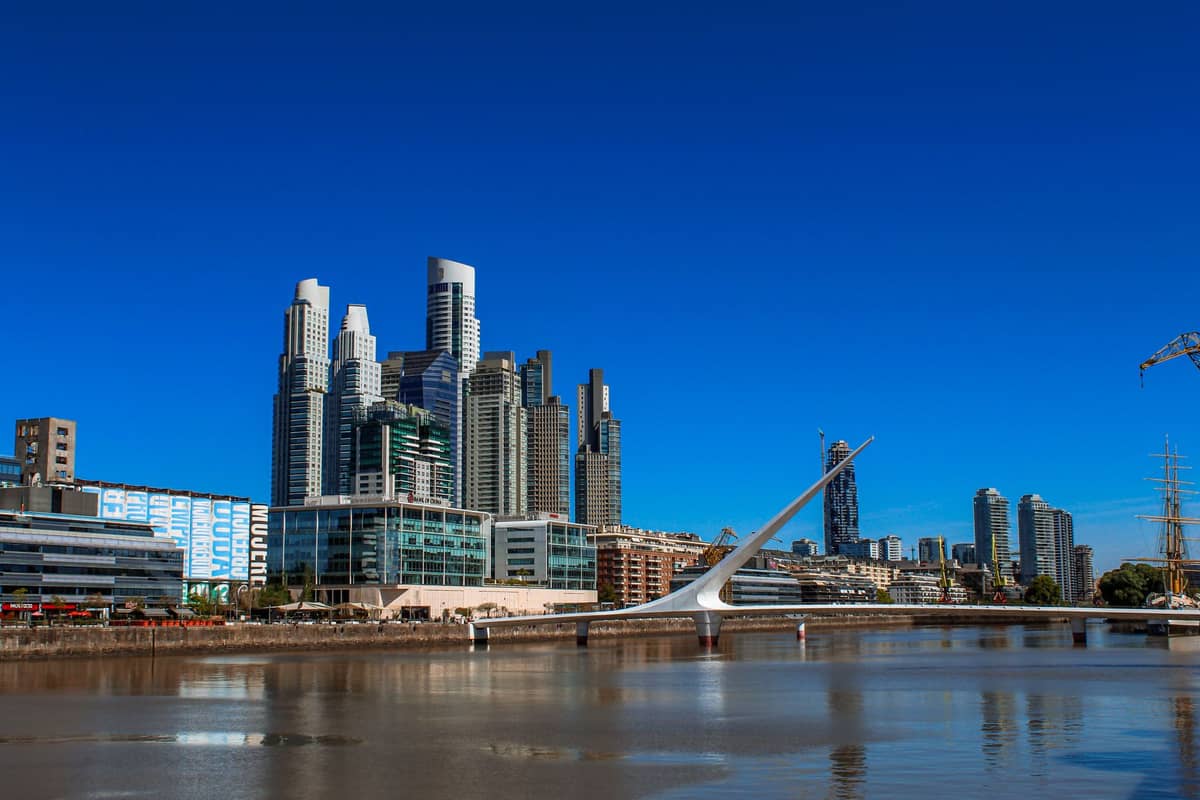
Buenos Aires is the Ciudad Autónoma de Buenos Aires (CABA), Argentina's capital and a city of just over 3 million people within city limits and around 15 million in the greater metro area. It sits on the western shore of the Río de la Plata at roughly 20–25 metres above sea level, which gives it a flat, sprawling layout that surprises visitors expecting a hilly South American capital. The city covers approximately 203 km² and is divided into 48 official barrios, though travelers mostly move between 10 to 12 of them.
The local language is Rioplatense Spanish, distinct from Castilian Spanish in both vocabulary and intonation. Locals say "vos" instead of "tú" and use a lilting, almost Italian-influenced cadence that reflects the city's heavy European immigration history. In tourist-facing settings, English is widely spoken. Argentina's international dialing code is +54, and the country runs on 220V electricity with predominantly Type C plugs, so travelers from North America and the UK will need adapters.
ℹ️ Good to know
Buenos Aires operates on Argentina Time (ART), UTC-03:00, with no daylight saving time observed since 2009. Keep this in mind when booking flights or coordinating with home — the offset from Europe and North America shifts throughout the year on their end, not Argentina's.
The Neighborhoods You Need to Know
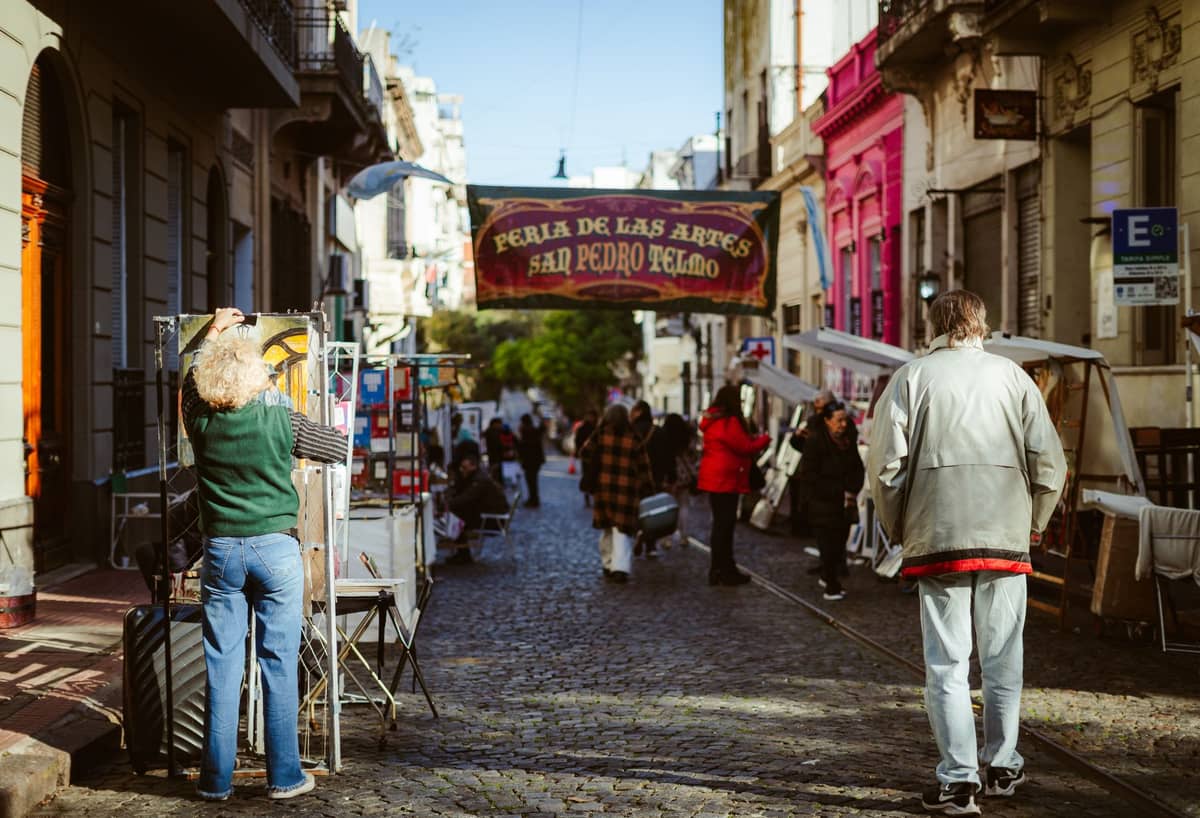
Buenos Aires is a city of barrios with distinct characters. Understanding where things are saves a lot of time. San Telmo is the oldest neighborhood: cobbled streets, 19th-century architecture, antique shops, and the famous Sunday market at Plaza Dorrego. It is the most historically dense part of the city and pairs naturally with a walk south to La Boca and its photogenic pedestrian street, the Caminito.
- Microcentro / Monserrat The central business district, home to Casa Rosada, Plaza de Mayo, and the Teatro Colón. Dense with history and administrative landmarks, but quieter on weekends when offices empty out.
- Recoleta Upscale residential district with French-inspired architecture, the famous cemetery, top museums, and some of the city's best cafes. Walkable from the city center.
- Palermo The largest barrio, subdivided into Palermo Soho (design shops, restaurants), Palermo Hollywood (media companies, bars), and the parks area. Most international visitors spend significant time here.
- Puerto Madero Redeveloped docklands with modern towers and a riverside promenade. Expensive restaurants and hotels, but also free access to the Reserva Ecológica Costanera Sur, one of the city's best nature escapes.
- Belgrano Northern residential neighborhood with its own Chinatown (Barrio Chino), museums, and a more local, less tourist-focused atmosphere.
The Non-Negotiable Cultural Experiences
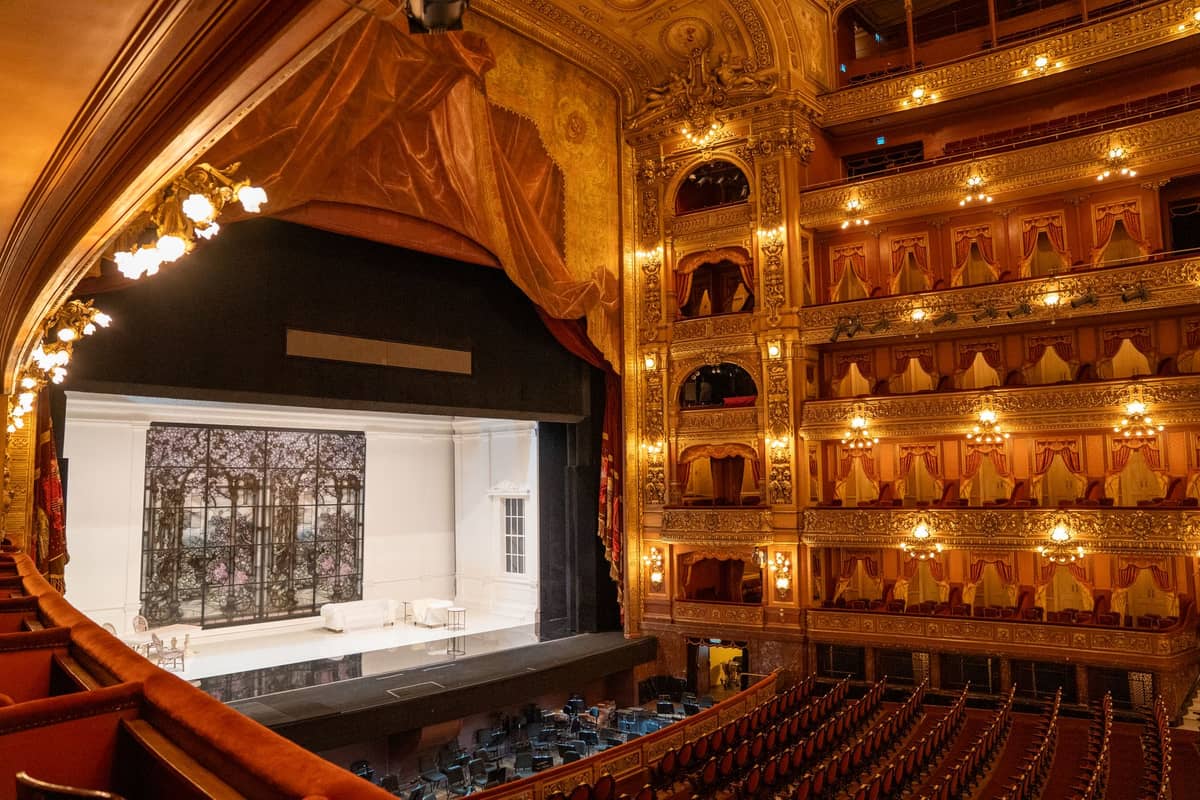
The Teatro Colón is genuinely one of the great opera houses of the world, not just by Argentine standards. If a performance is out of budget or schedule, the guided tours are an excellent alternative: departures run every 15 minutes between 10:00 and 16:45 daily (except May 1, December 24–25, 31, and January 1). Tickets can be bought online or at the Tucumán 1171 box office, which is open Monday to Saturday 09:00-20:00 and Sundays 09:00-17:00. General admission for the guided tour is ARS 34,000 as of 2024-2025, with discounts for students, retirees, and Argentine residents, and free entry for children under 7.
The Recoleta Cemetery is free to enter and far more interesting than it sounds. It is effectively a city of mausoleums, with elaborate Art Nouveau and neo-Gothic tombs housing Argentina's political and cultural elite. Evita Perón's tomb (officially María Eva Duarte de Perón) draws the biggest crowds; go early on weekdays to avoid tour groups. The cemetery is open daily, with general visiting hours currently running approximately 08:00 to 18:00 and tourist visiting hours around 09:00 to 17:00.
For books and architecture in one place, El Ateneo Grand Splendid is a converted 1919 theatre on Avenida Santa Fe that now operates as a bookshop. The stage is a café. The boxes are reading alcoves. It regularly appears on lists of the world's most beautiful bookshops, and the claim holds up in person. Entry is free — buying a coffee or a book is optional but encouraged.
💡 Local tip
If you want to see a tango performance rather than just a tourist dinner show, look into the milongas in San Telmo and Almagro — these are the real community dance halls where locals actually dance. They run late (midnight onwards) and cost a fraction of the polished dinner shows in Puerto Madero. The Buenos Aires City Tourism portal includes a section listing current milonga schedules.
History, Politics, and Public Spaces
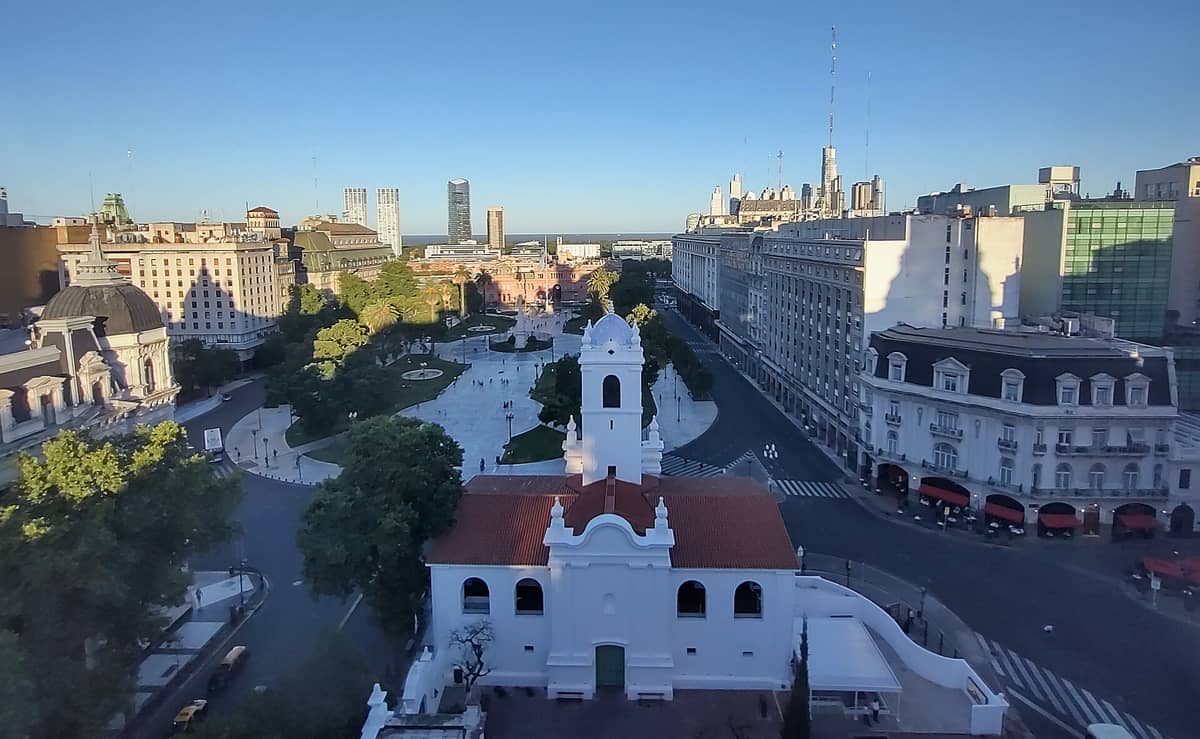
The Plaza de Mayo is the historical and political heart of the country. The Casa Rosada faces it from the east. The Cabildo, Argentina's former seat of colonial government, closes it from the west. Political demonstrations happen here regularly — it is worth understanding that before visiting, especially with large groups or young children. The plaza itself is always open and free.
The Obelisco de Buenos Aires on Avenida 9 de Julio is probably the city's most recognizable landmark. Avenida 9 de Julio itself is a study in urban scale: at around 140 metres wide, it is frequently cited as one of the world's widest avenues. Walk it once, photograph it from the pedestrian crossing, and move on — it is more impressive as a piece of urban infrastructure than as a destination in itself.
For context on Argentina's more difficult modern history, the Espacio Memoria (ex-ESMA) is a sobering but important site. The former Navy Mechanics School was used as a clandestine detention center during the 1976-1983 military dictatorship. It is now a human rights museum and memory space. Entry is free. This is not light sightseeing but it provides essential context for understanding Argentina's contemporary society.
Parks, Nature, and Time Away from the City Grid
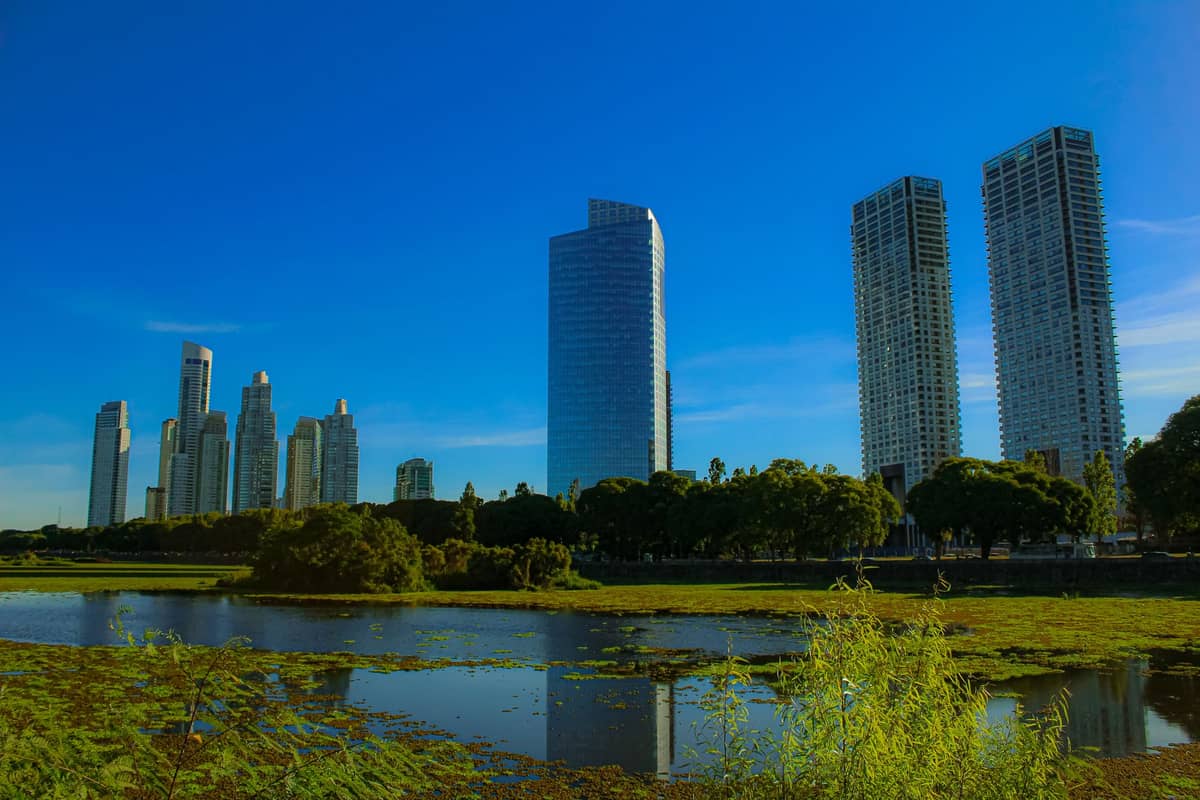
Buenos Aires is a flat city, but it has real breathing space. The Reserva Ecológica Costanera Sur is 350 hectares of rewilded land right on the riverfront, reclaimed from landfill in the 1970s and now home to over 300 bird species. It sits at the edge of Puerto Madero and is free to enter. Early morning visits in spring and autumn are particularly good for birdwatching. It closes on Mondays.
In Palermo, the Bosques de Palermo area contains several distinct parks: the rose garden El Rosedal, the Jardín Botánico Carlos Thays, and the Jardín Japonés. All are walkable from each other and form a pleasant half-day loop. Weekends draw local families in large numbers; weekday mornings are calmer. The Japanese Garden charges a small admission fee; the others are free.
⚠️ What to skip
La Boca's Caminito is worth visiting but keep the visit focused. The colorful buildings and street art are genuine, but the surrounding neighborhood has security considerations for tourists who stray beyond the well-trafficked core. Stick to the main pedestrian area, especially with cameras and valuables. Read the Buenos Aires safety guide before your trip.
Practical Planning: Timing, Transport, and Budget
Buenos Aires has a humid subtropical climate with an annual mean temperature around 18°C. The most comfortable months for sightseeing are March-May (autumn) and September-November (spring), when typical temperatures sit between about 13-26°C and humidity is lower. January and February are hot and sticky, with highs regularly reaching around 29-30°C. June through August are cool (roughly 7-15°C) but generally mild by international standards and considerably cheaper for flights and hotels.
The city has two airports: Ministro Pistarini (Ezeiza, IATA: EZE) handles most international traffic and sits roughly 30–32 km southwest of the city center, meaning transfers take 45-90 minutes depending on traffic. Aeroparque Jorge Newbery (AEP) is a few kilometres north of downtown and handles most domestic and regional flights. From Ezeiza, official taxis and remises (pre-booked private cars) are the most reliable options; agree on the price before departure and use official airport counters rather than approaches on the arrivals floor.
Within the city, the SUBE card is the single transport tool you need. It covers the Subte (metro), all colectivos (buses), and commuter trains. There is no dedicated tourist transport pass that offers better value — the standard SUBE card is what locals use and it works fine. Buy one at Subte stations, kiosks, or Tourist Assistance Centers. For a detailed breakdown of routes and costs, see the guide to getting around Buenos Aires.
- Free or low-cost: Casa Rosada exterior, Plaza de Mayo, Obelisco, Caminito, Reserva Ecológica, most Palermo parks, Jardín Botánico, Feria de San Telmo (Sunday market), street art tours in Palermo; Recoleta Cemetery is free for Argentine residents but now charges an entrance fee for most foreign visitors.
- Budget to mid-range (roughly $10-30 USD equivalent): Teatro Colón guided tour, Jardín Japonés, MALBA (Museo de Arte Latinoamericano), Museo Nacional de Bellas Artes, Museo Evita, day trip to Tigre Delta
- Splurge: Teatro Colón live performances, tango dinner shows in Puerto Madero, high-end parrilla restaurants, guided private city tours
✨ Pro tip
Argentina's currency situation means it is worth understanding how money actually works here before you travel. Exchange rates and ATM policies shift frequently. The Buenos Aires currency and money guide covers the practical mechanics in detail — read it before you depart, not after you land.
FAQ
What are the best things to do in Buenos Aires for first-time visitors?
First-timers should prioritize: a morning at Recoleta Cemetery (free for Argentine residents, currently open from around 08:00 with tourist visiting hours usually between 09:00 and 17:00), the Teatro Colón guided tour (book in advance), El Ateneo Grand Splendid bookshop, the Sunday Feria de San Telmo market, and an evening walk through Palermo Soho. These five experiences cover the city's architectural, cultural, and social highlights without requiring a heavy logistical commitment.
How many days do you need in Buenos Aires?
Three days is enough to hit the major landmarks. Five to seven days lets you explore multiple neighborhoods properly, take a day trip to Tigre or Colonia del Sacramento, and attend a live cultural event. Buenos Aires is a large, dense city — most visitors who stay less than three days feel they missed the substance of it.
What is the best time of year to visit Buenos Aires?
March-May and September-November are consistently the most comfortable, with mild temperatures and manageable rainfall. July (winter) is also a good time: fewer crowds, lower prices, and the city's residents celebrate winter school holidays with free cultural programming. January-February are the hottest months and can feel oppressive for walking-heavy sightseeing.
Is Buenos Aires safe for tourists?
Buenos Aires is a major metropolitan city where basic urban awareness applies. Most visitor experiences in well-trafficked neighborhoods like Palermo, Recoleta, San Telmo, and the Microcentro are straightforward. Petty theft (pickpocketing, bag snatching) is the most common issue. Some neighborhoods, including parts of La Boca beyond the Caminito tourist zone, warrant more caution. Check current travel advisories and read a dedicated safety guide specific to Buenos Aires before your trip.
Are there good free things to do in Buenos Aires?
Yes, significantly so. The Recoleta Cemetery, most Palermo parks, the Jardín Botánico, the Reserva Ecológica Costanera Sur, the Centro Cultural Recoleta, the Museo Nacional de Bellas Artes, and the Sunday San Telmo market all cost nothing or very little. The city's public spaces are genuinely interesting, not consolation prizes for those skipping paid attractions.
Tickets & tours
Live prices and dates from our booking partner. If you book, we may earn a commission at no extra cost to you.
Planning a trip? Discover personalized activities with the Nomado app.