Espacio Memoria y Derechos Humanos (ex-ESMA): A Complete Visitor's Guide
Built on the grounds of one of Argentina's most notorious clandestine detention centers, Espacio Memoria y Derechos Humanos (ex-ESMA) is a 17-hectare memorial complex in northern Buenos Aires dedicated to human rights and collective memory. Entry is free, the site has regular daily opening hours, and a visit here is one of the most sobering and important experiences the city offers.
Quick Facts
- Location
- Avenida del Libertador 8151, Núñez, Buenos Aires
- Getting There
- Mitre Line (Tigre branch) to Rivadavia station; buses 15, 28, 29, 117, 130
- Time Needed
- 2–4 hours depending on which buildings you visit
- Cost
- Free admission to the site and ESMA Museum (Museo Sitio de Memoria ESMA)
- Best for
- History travelers, human rights awareness, thoughtful solo visitors
- Official website
- http://www.espaciomemoria.ar
What This Place Is — and Why It Matters
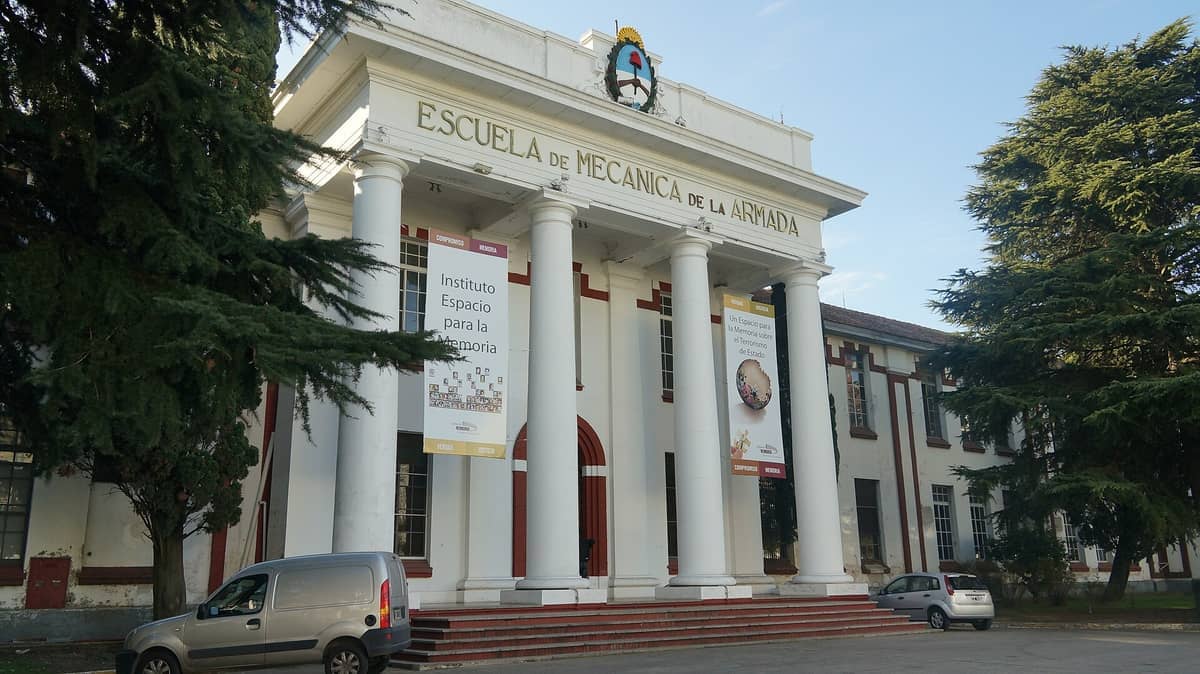
Espacio Memoria y Derechos Humanos (ex-ESMA) occupies 17 hectares along Avenida del Libertador in the Núñez neighborhood of northern Buenos Aires. The site was formerly the ESMA: the Escuela de Mecánica de la Armada, or Navy Mechanics School. During Argentina's last military dictatorship, which lasted from 1976 to 1983, ESMA operated as one of the largest and most active clandestine detention, torture, and extermination centers in the country. Estimates suggest more than 5,000 people were held here during that period, the vast majority of whom were killed or forcibly disappeared.
In 2004, President Néstor Kirchner ordered the site transferred from the navy to the national and city governments, to be converted into a space for memory and human rights promotion. What exists today is a campus of multiple institutions: archives, museums, cultural organizations, and human rights offices sharing the same grounds where atrocities once occurred. The physical buildings have not been demolished or entirely renovated — that tension between preservation and transformation is central to the experience.
ℹ️ Good to know
The ESMA Museum and Site of Memory (Museo Sitio de Memoria ESMA) is the core institution for understanding what happened here. It is open Tuesday–Sunday, 10:00–17:00. Guided tours in Spanish run on Saturdays and Sundays at 11:00 and 14:00, with limited capacity and no prior reservation needed. Audio guides in Spanish, English, and Portuguese are available for self-guided visits. Admission is free.
The Physical Experience: Entering the Site
The entrance on Avenida del Libertador opens onto a wide, tree-lined campus that, at first glance, carries the quiet formality of an old military institution. The buildings are large, institutional structures from the early and mid-twentieth century — the kind of architecture that communicates authority without embellishment. Grass areas and internal roads give the complex a park-like feel that is quietly disorienting given what the grounds once contained.
Morning visits on weekdays tend to be sparse and contemplative. You may hear only birdsong and distant traffic from Libertador. Weekends, particularly Saturday and Sunday afternoons around tour times, draw more visitors, including school groups and Argentine families. The atmosphere throughout is serious and respectful — no vendors, no audio noise competing for attention. Even the signage is restrained.
The centrepiece of the site is the Casino de Oficiales, the officers' quarters where detainees were held, interrogated, and tortured. The building has been preserved substantially as it was, which is both the most important and most difficult part of the visit. Peeling paint, bare rooms, and narrow corridors carry weight precisely because they have not been sanitized into a conventional exhibition space.
⚠️ What to skip
The ESMA Museum's content involves graphic documentation of torture, forced disappearance, and state violence. It is explicitly not recommended for children under 12, and those between 12 and 15 may only enter when accompanied by an adult. The emotional weight of the visit is significant — many adult visitors find it deeply affecting. Come prepared.
Tickets & tours
Live prices and dates from our booking partner. If you book, we may earn a commission at no extra cost to you.
Madero Tango Show tickets with optional dinner
From 32 €Instant confirmationFree cancellationBuenos Aires small-group city tour with optional lunch and cruise
From 25 €Instant confirmationFree cancellationPiazzolla Tango Show VIP tickets with transfer and optional dinner
From 112 €Instant confirmationFree cancellationBuenos Aires shopping tour
From 15 €Instant confirmationFree cancellation
The Museum and Its Permanent Exhibition
The Museo Sitio de Memoria ESMA, which occupies the Casino de Oficiales building, is distinct from other human rights museums you may have visited. The space itself is the exhibit. Plaques, photographs, testimonies, and survivor accounts are layered into the actual rooms where events occurred — the basement holding areas, the attic known as the Capucha where detainees were hooded and shackled, the internal staircases. The effect is that history is not presented at a remove.
Photographs of the disappeared line the walls alongside documented survivor testimonies. The museum contextualizes individual stories within the broader political framework of Operation Condor and state terrorism across South America in the 1970s. It does not shy away from naming perpetrators or detailing methods — this is documentation intended to prevent denial and ensure legal accountability, not to generate tourist sentiment.
If you are visiting Buenos Aires with an interest in this period of history, pairing the ESMA site with the Parque de la Memoria — a riverside monument to the victims of state terrorism located a short distance away along the same avenue — creates a more complete picture of how Buenos Aires has chosen to memorialize this era.
Beyond the Museum: The Wider Campus
The Espacio Memoria complex contains more than just the museum. The 17-hectare site houses institutions including the Centro Cultural de la Memoria Haroldo Conti, which runs art exhibitions, film screenings, and cultural events with a human rights focus. There is also the CIPDH (International Centre for the Promotion of Human Rights), the National Archives of Memory, and several other organizations. Visiting on a day when an exhibition or public event is scheduled adds another dimension to the experience.
The outdoor areas between buildings allow for a slower, quieter kind of visit. Walking the internal roads of the campus, past the trees and the original structures, gives you a sense of the site's scale that is harder to grasp from inside a single building. It also makes visible the ongoing presence of active institutions — cars parked outside offices, staff coming and going — which reinforces that this is not a preserved ruin but a working human rights space.
For broader context on Argentina's political and cultural history as expressed through architecture and public space, the Buenos Aires architecture guide covers the city's relationship with memory, power, and built form across several eras.
Getting There and Getting Around
The site sits on Avenida del Libertador 8151 in the Núñez neighborhood, in the northern part of the city. The most straightforward public transit option is the Mitre commuter rail line (Tigre branch), alighting at Rivadavia station, which puts you within easy walking distance. Several bus lines also serve the Libertador corridor directly: routes 15, 28, 29, 117, and 130 all pass nearby. If you are coming from central neighborhoods like Recoleta or Palermo, a taxi or ride-hailing app offers a direct, uncomplicated journey of around 20–30 minutes depending on traffic.
The site's general visiting hours for the predio are Monday through Friday, 09:00–20:00, and Saturday through Sunday, 09:00–21:00. The ESMA Museum itself operates Tuesday through Sunday, 10:00–17:00. Hours for individual institutions within the campus can vary, so checking the Espacio Memoria website before you visit is worthwhile, particularly if you want to attend a specific exhibition or event at the Haroldo Conti Cultural Centre.
💡 Local tip
Guided tours of the ESMA Museum run on Saturdays and Sundays at 11:00 and 14:00 and do not require advance booking, but capacity is limited. Arriving 15–20 minutes early on weekend tour days gives you the best chance of joining a group. The guided experience adds significant depth to the visit — survivor testimony and historical context are woven in throughout.
Photography, Conduct, and Practical Notes
Photography policies within the museum building should be confirmed with staff on arrival, as they can vary by exhibition and area. The outdoor campus may be photographable, but requests to take photographs or film within the predio generally require prior authorization. Throughout the site, a respectful tone is both expected and appropriate — this is not a place where casual tourism behavior fits the context.
Wear comfortable shoes: the campus is large enough that you will cover considerable ground if visiting multiple buildings. The outdoor areas are unpaved or lightly paved in parts, which can be uneven. In summer (December through February), temperatures in Buenos Aires can reach the low 30s Celsius, and there is limited shade between buildings — bring water. In cooler months, the interiors of the older structures can feel cold.
Given Argentina's complex recent history, reading background material before visiting will make the experience significantly more meaningful. The Buenos Aires Evita guide and broader reading on Argentina's twentieth-century political history provide useful framing, though the ESMA and the dictatorship period are distinct from the Peronist era.
Who This Attraction Is For — and Who Might Not Find Value Here
This is not a conventional tourist attraction. There is no spectacle, no curated entertainment, and no attempt to make the subject matter comfortable. Visitors who approach it as a checkbox on a sightseeing itinerary will likely find the experience either too heavy or too quiet for that purpose. The site rewards visitors who come with some prior knowledge, a willingness to engage with difficult content, and enough time to move slowly.
For travelers whose Buenos Aires itinerary is focused on food, nightlife, or architecture, the Espacio Memoria is a significant detour in tone and geography. That does not mean it should be skipped — but it does mean scheduling it on a separate half-day, not sandwiched between a market visit and a tango show. If you are planning a fuller itinerary, the 3-day Buenos Aires itinerary can help you allocate time thoughtfully across different kinds of experiences.
Visitors traveling with young children should be aware that the ESMA Museum content is not appropriate for children under 12, and visitors between 12 and 15 may only enter when accompanied by an adult in parts of the exhibition. The wider campus grounds can be walked with older children, but the emotional register of the entire site is not suited to family visits with young kids.
Insider Tips
- The Saturday and Sunday guided tours of the ESMA Museum (at 11:00 and 14:00, with limited capacity) fill up quickly. Arrive at least 15 minutes before the 11:00 or 14:00 start time — there is no reservation system, so physical presence is the only way to secure a spot.
- The Haroldo Conti Cultural Centre, housed in one of the campus buildings, runs rotating contemporary art exhibitions and film cycles that are free and open to the public. Check the Espacio Memoria agenda online before visiting — a scheduled event can make the experience richer without adding cost.
- Audio guides are available in English for self-guided visits to the museum — a strong option if you prefer to move at your own pace or the Spanish-language tour is full. Ask for one at the entrance to the Casino de Oficiales building.
- The site is located on Avenida del Libertador, one of Buenos Aires's major northern arteries. Combining this visit with the Parque de la Memoria, a short trip away along the same avenue, creates a coherent half-day focused on memory and human rights without requiring complicated extra transit.
- Weekday mornings between 10:00 and noon are the quietest time to visit the museum. School groups tend to arrive later in the morning or in the afternoon, and weekend tours draw larger crowds. A Tuesday or Wednesday morning visit allows for a more personal, unhurried experience.
Who Is Espacio Memoria y Derechos Humanos (ex-ESMA) For?
- Travelers with an interest in modern Latin American history and political memory
- Those who want to understand contemporary Argentina beyond its tourist surface
- Solo travelers and pairs seeking a substantive, reflective experience
- Students, journalists, and researchers with a human rights or policy focus
- Visitors on extended stays who have time to engage with the city's more difficult history
Nearby Attractions
Combine your visit with:
- Cementerio de la Chacarita
Larger and less visited than its famous counterpart in Recoleta, Cementerio de la Chacarita is a vast urban cemetery spanning multiple city blocks in the Chacarita neighborhood. Free to enter, it holds the tombs of cultural icons including tango legend Carlos Gardel, and its monumental mausoleums, wide internal avenues, and layers of Argentine social history make it one of the most atmospheric and underappreciated sites in the city.
- Colonia del Sacramento (Uruguay)
Colonia del Sacramento, Uruguay's oldest city and a UNESCO World Heritage Site, sits just across the Río de la Plata from Buenos Aires. Its Barrio Histórico packs cobblestone lanes, Portuguese-era walls, and a working lighthouse into a compact quarter that most visitors can absorb in a single afternoon.
- Estadio Monumental (River Plate)
The Estadio Más Monumental Antonio Vespucio Liberti is more than a football ground. Home to Club Atlético River Plate and the largest stadium in South America, it holds around 85,000 spectators and carries decades of Argentine football history. Whether you visit on a quiet Tuesday morning or a roaring match day, the scale and atmosphere of El Monumental is unlike anything else in Buenos Aires.
- Feria de Mataderos
The Feria de Mataderos is Buenos Aires' premier showcase of Argentine rural and folkloric culture, held every Sunday at the intersection of Av. Lisandro de la Torre and Av. de los Corrales in the working-class barrio of Mataderos. Free to enter and far removed from the tourist trail, it offers handcrafted goods, traditional folk music and dance, and some of the most authentic street food in the city.
Planning a trip? Discover personalized activities with the Nomado app.