Eva Perón in Buenos Aires: A Complete Guide to Following Evita's Story
Eva Perón shaped Buenos Aires as much as any building or boulevard. This guide maps the key sites tied to her life and legacy, from the Museo Evita in Palermo to the Duarte family tomb in Recoleta Cemetery, with opening hours, entry prices, and a clear take on what is worth your time.
Tickets & tours
Live prices and dates from our booking partner. If you book, we may earn a commission at no extra cost to you.
TL;DR
- The three essential Evita sites are the Museo Evita (Palermo), the Casa Rosada and its museum (city center), and the Duarte family tomb at Recoleta Cemetery.
- Entry to the Museo Casa Rosada is free. Recoleta Cemetery is free for Argentine residents; foreign visitors pay admission. The Museo Evita charges around ARS 9,000 for adults (subject to change due to inflation).
- Eva Perón is NOT buried at Casa Rosada or in a church. Her remains are in the Duarte family mausoleum at Recoleta Cemetery.
- The Museo Evita building was never her home. It was a residence run by her Social Aid Foundation for women and children.
- All three sites are open year-round. Plan around public holidays, and see the best time to visit Buenos Aires for seasonal context.
Why Evita Still Defines Buenos Aires
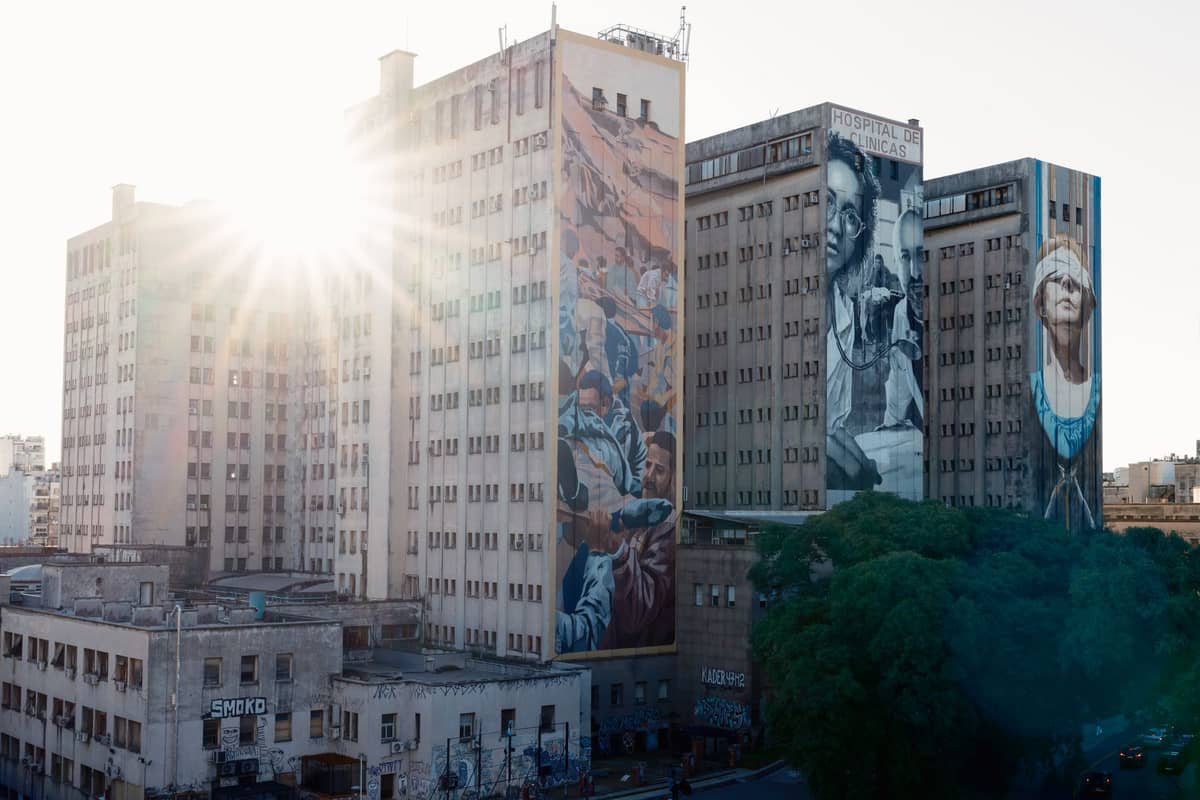
Eva Perón died in 1952 at 33 years old. More than seven decades later, her face appears on murals in San Telmo, in the permanent collections of multiple museums, and in the daily conversation of porteños who remain divided about her legacy. For visitors, that enduring tension makes tracing her story across Buenos Aires one of the most intellectually rewarding itineraries the city offers. This is not a theme-park version of history. The sites are real, the debates are unresolved, and the emotions are genuine.
Born María Eva Duarte in Los Toldos, a small town in Buenos Aires Province, she rose from poverty and provincial obscurity to become First Lady under President Juan Domingo Perón and the most powerful woman in Argentine political history. Her campaigns for women's suffrage (granted in 1947), workers' rights, and social welfare programs built a cult of loyalty that neither her death nor subsequent military governments could fully erase. To understand Buenos Aires politically and culturally, you need to engage with Evita. Start by reading our broader overview of things to do in Buenos Aires to fit this itinerary into a wider trip.
Museo Evita: The Best Place to Start
The Museo Evita at Lafinur 2988, Palermo, is the logical first stop for anyone tracing Eva Perón's story. It occupies a 1920s building that her Social Aid Foundation converted into a residence for homeless women and children. A common misconception is that this was her private home. It was not. She lived in the Unzué Palace (demolished in 1955). The building's actual history adds a layer of meaning to the museum: it was operational Peronist social policy, not personal residence.
The collection spans photographs, personal effects, haute couture gowns (her meticulous appearance was deliberate political strategy), archival footage, and documents tracing her political career. The permanent exhibition covers her early life in the provinces, her arrival in Buenos Aires as a teenager seeking an acting career, her relationship with Perón, and her compressed but extraordinary time in power. The audioguide, included at around ARS 9,000 for adults, is genuinely useful given the volume of context required to make sense of the exhibits. Reduced rates apply for residents, students, and retirees.
💡 Local tip
Museo Evita is open Tuesday to Sunday, 11:00–19:00. It is closed on Mondays, January 1, May 1, and December 24–25 and 31. The on-site restaurant in the patio is a decent option for lunch before or after your visit. Advance booking via platforms like Civitatis is available but only valid for your selected time slot, so don’t book speculatively.
Palermo is a logical base for this visit, with good transport links and plenty of surrounding attractions. The museum sits within walking distance of the Jardín Botánico Carlos Thays and the Museo MALBA, so you can build a full half-day in the northern Palermo area around the Museo Evita visit.
Casa Rosada: The Balcony That Made History
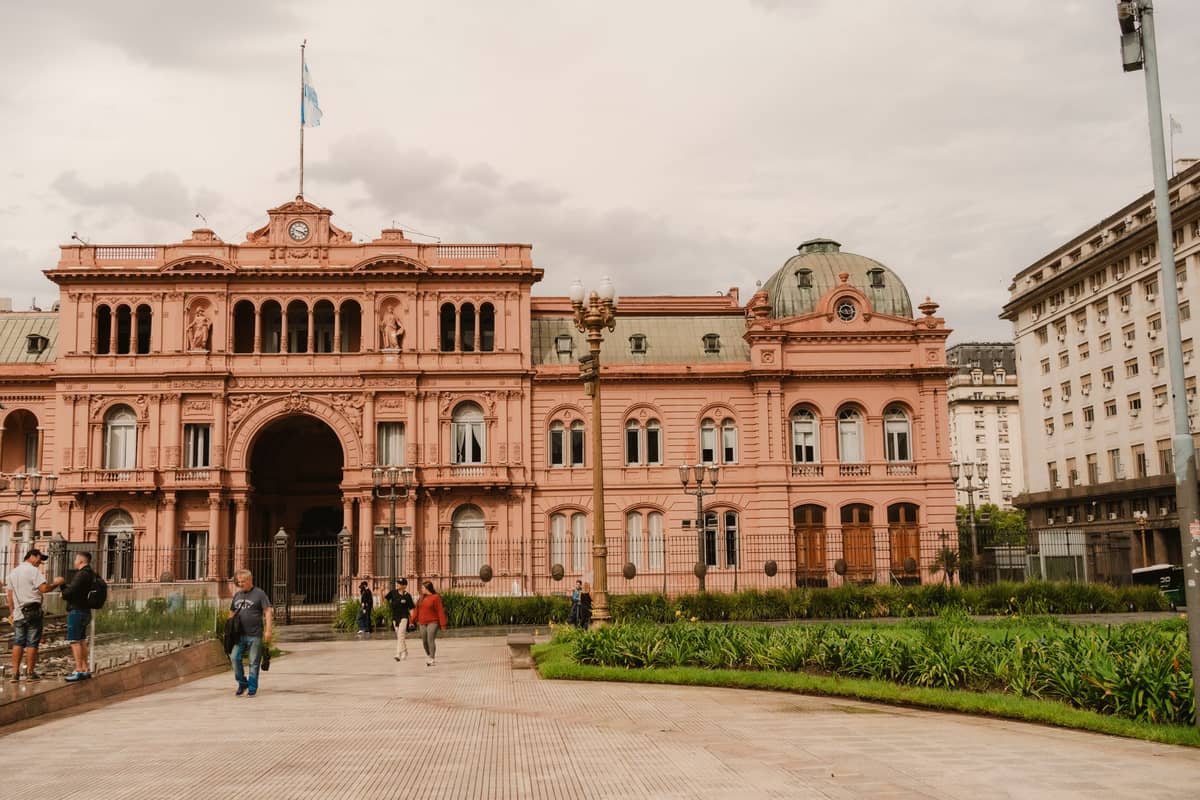
The Casa Rosada, the pink presidential palace on Plaza de Mayo, is where Eva Perón addressed enormous crowds from the balcony. The image is iconic, reproduced in films, musicals, and street art worldwide. Standing in Plaza de Mayo and looking up at that balcony is one of those Buenos Aires moments that requires no embellishment.
Inside the complex, the Museo Casa Rosada is free to enter and open Wednesday through Sunday, 11:00–18:00 (last entry 17:30), closed Monday and Tuesday. The museum holds rotating and permanent exhibitions on Argentine political history, including materials related to the Perón era. Free guided tours of the main exhibition run Friday through Sunday at 16:00, with a special tour on Saturdays at 14:00. Group and institutional visits require advance registration. Guided tours of the Casa Rosada building itself require an online reservation with a valid passport or ID. The Casa Rosada sits on the eastern edge of Plaza de Mayo, which is the symbolic center of Argentine civic life and worth time in its own right.
⚠️ What to skip
Plaza de Mayo is regularly used for political demonstrations, which can affect access to the surrounding area, including Casa Rosada. Check local news before visiting, particularly around national anniversaries (October 17 is a major Peronist date). The area is safe for tourists but can be crowded and loud during rallies.
Recoleta Cemetery: Finding the Duarte Tomb
Eva Perón's remains are in the Duarte family mausoleum in Cementerio de la Recoleta, not in a church, not at Casa Rosada. Her body had an extraordinarily complicated posthumous history: embalmed after her death in 1952, hidden during the military dictatorship of the 1950s and 60s, buried secretly in Milan under a false name, and only returned to Argentina in 1974. She has been interred in the Duarte tomb in Recoleta since 1976.
The cemetery is open daily from 08:00 to 18:00, and entry is free. The Duarte mausoleum is among the most visited graves and is signposted on most maps distributed at the entrance. It is not particularly large or ornate compared to neighboring monuments, which surprises some visitors expecting something grander. That understated quality is part of what makes it affecting. Free Spanish-language guided tours run Tuesday to Friday at 11:00 and 14:00, and Saturday, Sunday, and holidays at 11:00 and 15:00, though schedules can shift, so confirm on arrival. The Recoleta Cemetery is also one of the finest examples of neoclassical funerary architecture in South America, so even without the Evita connection, it merits a visit.
✨ Pro tip
Visit the cemetery in the morning on a weekday. Weekend afternoons see the highest tourist volume, and the narrow alleys between mausoleums become genuinely difficult to navigate. Summer (December to February) heat in the cemetery can be intense by midday with little shade, so a 08:30 arrival is practical.
Planning Your Evita Itinerary: Logistics and Order
These three sites are in different neighborhoods and require some planning to combine efficiently. The Museo Evita in Palermo and the Casa Rosada in the city center are roughly 6 km apart. Recoleta Cemetery sits between them, about 2 km from Palermo and 3 km from Plaza de Mayo. A logical sequence is: morning at the Museo Evita (opens at 11:00), walk or taxi to the cemetery for early afternoon, then make your way to Plaza de Mayo for the late afternoon, catching the Museo Casa Rosada before its 18:00 close.
- Museo Evita (Palermo) Lafinur 2988. Open Tue–Sun, 11:00–19:00. Around ARS 9,000 adults. Allow 1.5–2 hours.
- Cementerio de la Recoleta Junín 1760. Open daily 08:00–18:00. Free entry. Free guided tours Tue–Fri 11:00 & 14:00, Sat–Sun 11:00 & 15:00. Allow 1–1.5 hours.
- Casa Rosada and Museo Casa Rosada Balcarce 50, Plaza de Mayo. Museum open Wed–Sun, 11:00–18:00. Free entry. Guided tours Fri–Sun 16:00, Sat also 14:00. Reserve building tours online in advance. Allow 1 hour.
Getting between Palermo and Recoleta on foot takes about 25 minutes at a comfortable pace. From Recoleta to Plaza de Mayo, expect roughly 30 minutes walking or a short taxi ride. Buenos Aires has an extensive bus network (colectivos) and the Subte metro, both of which cover this corridor. For details on navigating the city between these neighborhoods, see the guide to getting around Buenos Aires.
Beyond the Big Three: Other Evita Connections
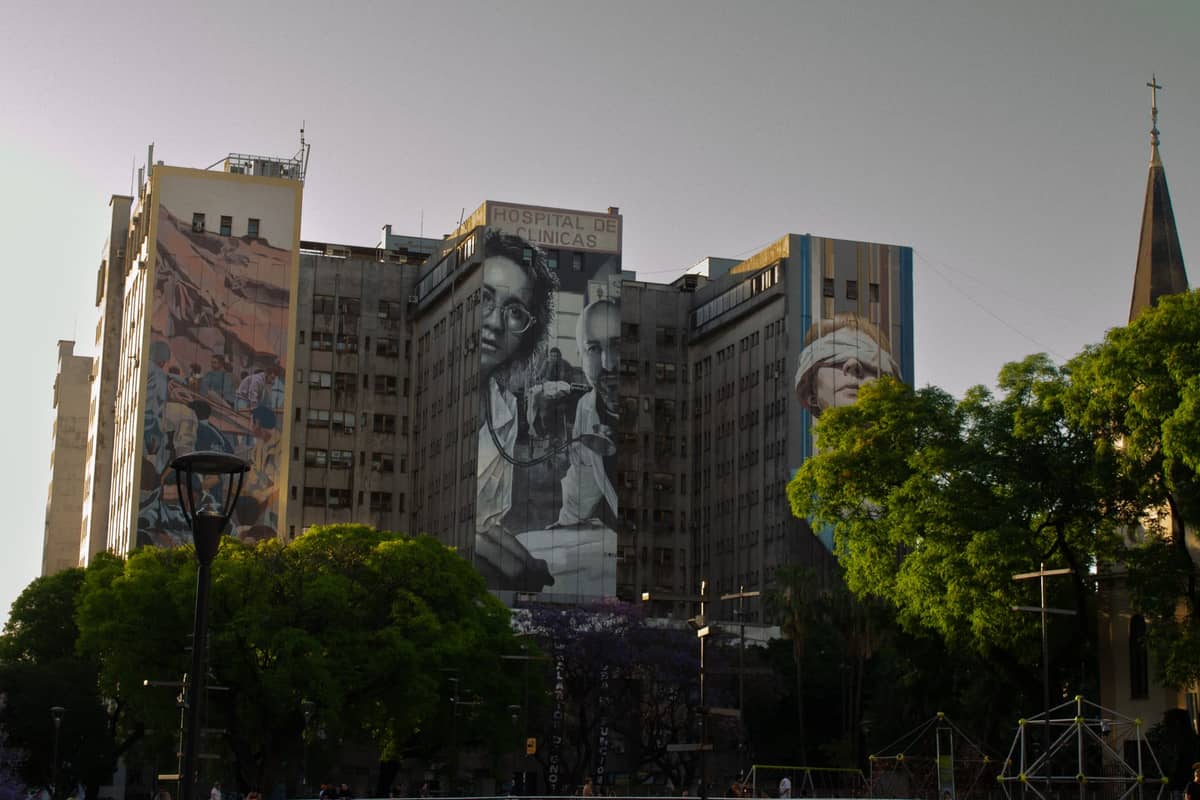
The three main sites absorb most of a day and cover the essential story. But for those who want to go deeper, Buenos Aires offers additional layers.
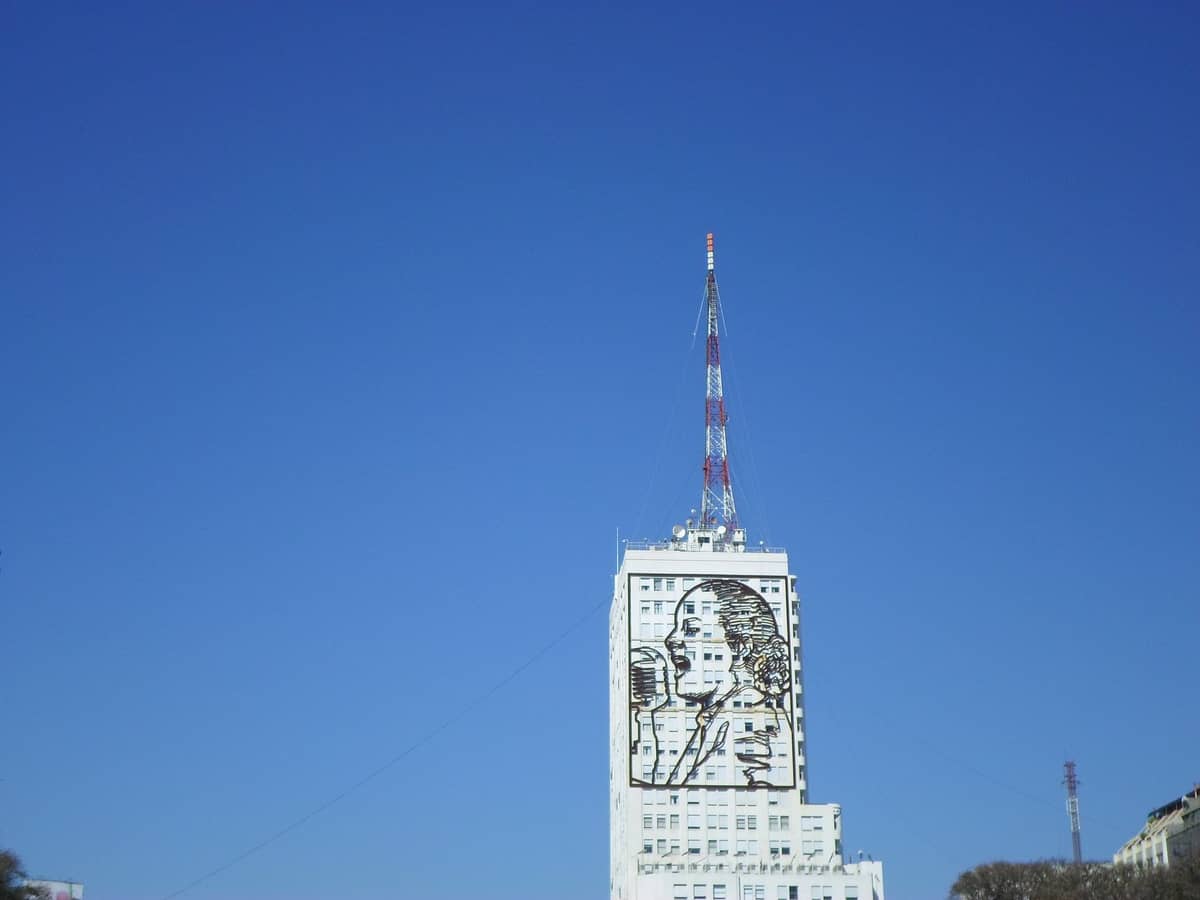
- The Avenida de Mayo, the grand boulevard connecting Congress and Casa Rosada, was the route of major Peronist marches. Walking its length gives a sense of the scale of public demonstrations Eva Perón addressed.
- The Teatro Colón, where she was notably excluded from upper-class cultural events early in her career, illustrates the class tensions central to her political identity. The opera house is also one of the finest in the world and worth visiting independently.
- Street murals across the city, particularly in San Telmo and La Boca, frequently feature Evita's image as part of ongoing political expression. The Buenos Aires street art scene treats her as a recurring subject.
- The Biblioteca Nacional Mariano Moreno sits near the site of the demolished Unzué Palace, her actual former residence, though no physical trace of the building remains.
- For context on the broader Peronist political legacy, the Espacio Memoria (former ESMA site) provides harrowing documentation of what followed the movement's suppression under military rule.
If you are combining this itinerary with general sightseeing, the 3 days in Buenos Aires itinerary and the Buenos Aires walking tours guide both offer complementary structures for organizing your time. For those on a tight budget, note that Museo Casa Rosada is free; Recoleta Cemetery is free only for Argentine residents, while foreign visitors pay admission.
ℹ️ Good to know
All three main Evita sites are open year-round. Public holidays, particularly those in late December and major national dates like May 25 (National Day) and July 9 (Independence Day), can affect museum schedules. October 17, known as 'Día de la Lealtad' (Loyalty Day) and central to Peronist memory, may see additional visitors and events around Plaza de Mayo.
FAQ
Where is Eva Perón buried in Buenos Aires?
Eva Perón is buried in the Duarte family mausoleum at the Cementerio de la Recoleta, Junín 1760, in the Recoleta neighborhood. Foreign visitors pay admission (about ARS 24,030 as of mid-2026, card only); Argentine residents enter free with DNI. Tourist hours are daily 09:00–17:00. The tomb is signposted and included in the free Spanish guided tours. She is not buried at Casa Rosada or in any church.
Is the Museo Evita worth visiting?
Yes, for anyone interested in Argentine political history or the life of Eva Perón. The museum provides essential context that makes visits to Casa Rosada and Recoleta Cemetery more meaningful. The collection covers her early life, rise to power, political work, and the mythology surrounding her death. The audioguide adds significant value. If you have only limited time, prioritize the cemetery (free, very moving) and the museum over Casa Rosada.
Is entry to Casa Rosada free?
Entry to the Museo Casa Rosada inside the presidential palace complex is free, open Wednesday to Sunday, 11:00–18:00. Free guided tours of the museum run Friday to Sunday at 16:00. However, tours of the Casa Rosada building itself require advance online booking with a valid ID or passport, and availability can be limited. Book well in advance if you want the full building tour.
How long does it take to visit all three Evita sites in Buenos Aires?
A full day is the realistic estimate. The Museo Evita requires 1.5 to 2 hours, the cemetery 1 to 1.5 hours, and Casa Rosada and the museum around 1 hour. Add travel time between Palermo, Recoleta, and the city center (roughly 30 minutes between each). Starting at the Museo Evita when it opens at 11:00 and ending at Casa Rosada by 17:30 is achievable if you move efficiently.
What is the best time of year to visit the Evita sites in Buenos Aires?
Spring (September to November) and autumn (March to May) offer the most comfortable conditions, with temperatures roughly between 15 and 26 degrees Celsius. The Recoleta Cemetery visit benefits most from cooler weather, as the alleys are exposed and summer heat (December to February) can be intense by midday. All three sites operate year-round with stable hours, though always verify public holiday closures before your visit.
Tickets & tours
Live prices and dates from our booking partner. If you book, we may earn a commission at no extra cost to you.
Planning a trip? Discover personalized activities with the Nomado app.