Estadio Más Monumental: Inside South America's Largest Stadium
The Estadio Más Monumental Antonio Vespucio Liberti is more than a football ground. Home to Club Atlético River Plate and the largest stadium in South America, it holds around 85,000 spectators and carries decades of Argentine football history. Whether you visit on a quiet Tuesday morning or a roaring match day, the scale and atmosphere of El Monumental is unlike anything else in Buenos Aires.
Quick Facts
- Location
- Av. Presidente Figueroa Alcorta 7597, Núñez, Buenos Aires
- Getting There
- City buses along Av. del Libertador; taxi or rideshare from central Buenos Aires recommended. Subte Line D stations such as Congreso de Tucumán and Juramento are within walking distance but require a short walk or connection.
- Time Needed
- 2–3 hours for the full stadium tour and museum
- Cost
- Stadium tour prices at the gate change frequently due to inflation; verify current ARS rates before visiting. Discounts for students, retirees, and minors are usually available. International booking platforms list packages from around USD 40.
- Best for
- Football fans, sports architecture enthusiasts, and anyone curious about Argentine popular culture
- Official website
- www.cariverplate.com.ar/el-monumental
What Is El Monumental?
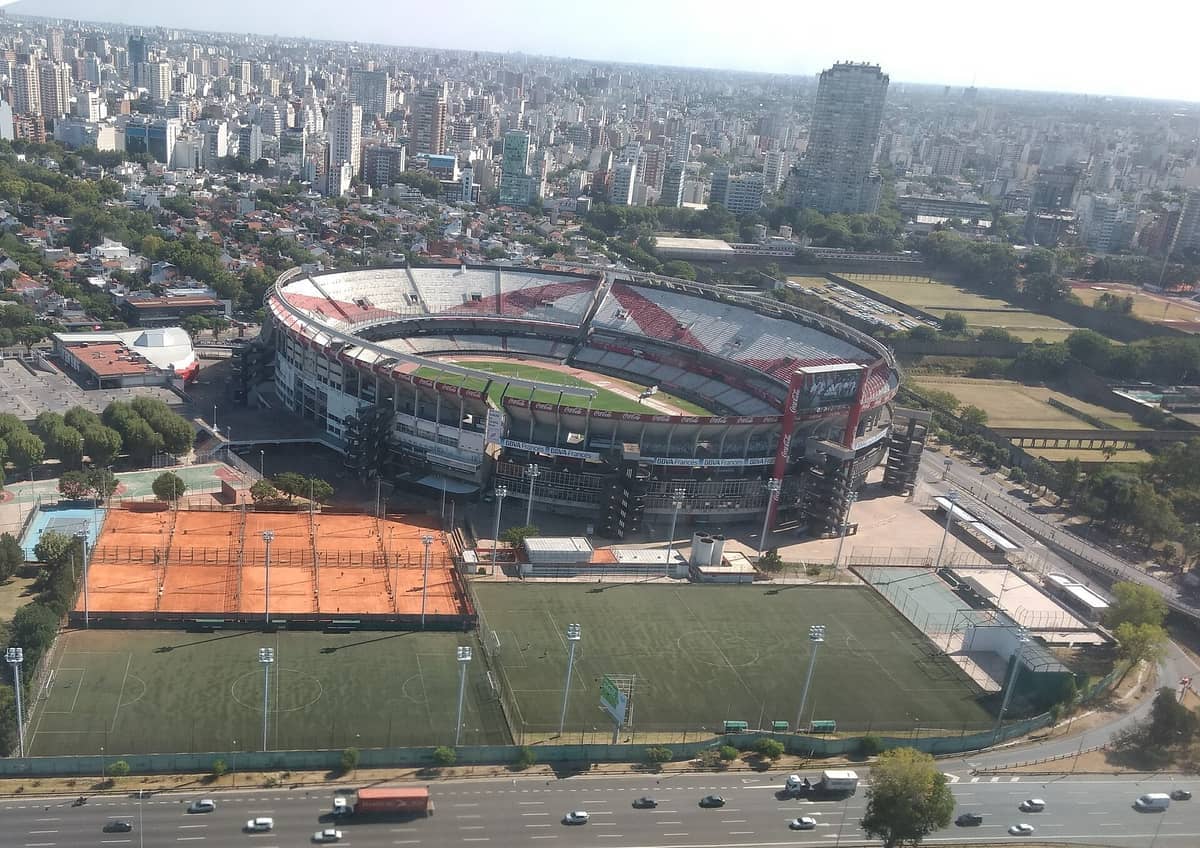
The Estadio Más Monumental Antonio Vespucio Liberti, universally known as El Monumental, is the home ground of Club Atlético River Plate and the largest stadium in South America by capacity. Seated in the northern residential district of Núñez, within the broader Belgrano area, the stadium has hosted World Cup finals, Copa Libertadores showdowns, and decades of Argentine Primera División football. The sheer scale of the structure announces itself from blocks away: a continuous oval bowl rising above the rooftops, its exterior walls and ramps giving a sense of something built to outlast its era.
The stadium takes its official name from Antonio Vespucio Liberti, a former River Plate president instrumental in its original construction. The name El Monumental, though, needs no explanation when you stand inside the lower tier and look up at seating that extends in an unbroken arc for what feels like half a kilometer in every direction. This is not a ground that whispers its identity.
⚠️ What to skip
The museum and stadium tours are generally not available on days when River Plate plays a home match. Always check the club's fixture list before planning your visit. Hours can also shift on training days.
The Stadium Tour: What You Actually See
Guided tours run Monday through Sunday, from 10:00 to 19:00, with the final stadium tours finishing around 17:45 and the ticket office closing shortly before that. The tour typically takes visitors through areas that are closed to the general public on match days: the press box, the players' tunnel, the dugout benches, and the edge of the pitch itself. Standing in the concrete tunnel with the pitch visible at the far end, with the grass field measuring 105 metres long and 68 metres wide, gives a physical sense of the distances these players cover.
On a non-match morning, the stadium is quiet in a way that can feel almost eerie. The seats are empty, the air carries the faint chemical smell of turf treatment, and the acoustic properties of the bowl mean that a conversation in the lower tier echoes softly upward. That quietness is itself revealing: you understand, standing in it, what the space becomes when it is full.
The viewing areas from the upper tiers are among the most dramatic vantage points in the city. From the top of the stands, you look south across the roof line of Núñez toward downtown Buenos Aires, and on a clear day the Río de la Plata is visible in the distance. Bring a light jacket even in summer, as the upper-level corridors channel river wind.
💡 Local tip
Photography tip: The best light for shooting the interior bowl falls in the mid-morning, when sun enters from the east and illuminates the lower seating without the harsh overhead glare of midday. Arrive at 10:00 for the first tour slot if photography matters to you.
Tickets & tours
Live prices and dates from our booking partner. If you book, we may earn a commission at no extra cost to you.
The River Plate Museum: Football as Social History
Integrated into the stadium complex, the club museum is a genuine archive of Argentine football history rather than a simple merchandise showroom. Jerseys from different eras hang in lit cases alongside trophies, photographs, and documents charting River Plate's evolution from a working-class Boca Juniors rival into what its supporters call Los Millonarios, a nickname that arrived after a run of expensive player signings in the 1930s.
The collection spans the club's founding in 1901 and covers moments that go well beyond sport. The rivalry with Boca Juniors, probably the most intense club fixture in world football, is documented here with a directness that tells you something about how seriously Argentines take this divide. If you want context before you visit, the guide to football in Buenos Aires is worth reading beforehand. It explains the social geography behind the River-Boca split and helps you arrive with some understanding of what you are looking at.
Allow at least 45 minutes in the museum if you have any interest in the material. If you are not a football fan, the exhibit on Argentine football's role in national identity during the twentieth century, including the country's World Cup victories, adds genuine cultural weight to the visit.
Match Day: A Completely Different Experience
Attending a River Plate home match at El Monumental is categorically different from a tour visit. The stadium holds around 85,000 supporters and on significant fixtures it is close to full. The sound is physical, not metaphorical. Chants from the popular terraces (the lower standing areas behind the goals) create a pressure wave you feel in your sternum. The smell of food vendors outside, the sharp scent of smoke from flares released in the stands, the river of red-and-white scarves moving along Avenida del Libertador before kick-off: this is a complete sensory environment.
Match tickets for tourists are best secured through official channels or reputable tour operators in advance. For practical orientation, the football guide covers ticket-buying logistics, stadium etiquette, and what to expect as a visiting spectator.
⚠️ What to skip
Public transport options near the stadium are significantly more crowded on match days. Consider arriving by taxi or rideshare well before kick-off and plan your exit route before the game ends. The streets around Núñez fill quickly after the final whistle.
Getting There: Practical Directions
The stadium sits at Av. Presidente Figueroa Alcorta 7597, a few blocks from Av. del Libertador in the Núñez district. There is no Subte station directly at the stadium; the nearest Line D stations leave you with a significant walk or a short bus or taxi connection. City buses running along Av. del Libertador pass close to the stadium, and several routes connect the area with central Buenos Aires, though journey times from the Microcentro area typically run 30 to 50 minutes depending on traffic.
For most visitors, a taxi or rideshare from central Buenos Aires or from nearby neighborhoods like Belgrano is the most practical option. The neighborhood of Núñez itself is a quiet residential district with little to see apart from the stadium and its surroundings, so combining this visit with a stop in Belgrano makes geographic sense. Rideshare apps are widely used in Buenos Aires; if you are unfamiliar with payment options, the currency and money guide has current guidance.
Practical Details and Limitations
Opening hours for the tour and museum are approximately 10:00 to 19:00 daily, with the final stadium tours finishing around 17:45, but these are subject to change on match days and training schedules. Always verify directly with the club or your tour operator before traveling to the stadium. The official club website at cariverplate.com.ar is the most reliable source.
Admission prices are in Argentine pesos and shift frequently due to inflation. At the time of research, adult stadium tours were priced at a few thousand pesos at the gate, with discounts of approximately 50 percent for students, retirees, and minors. International booking platforms list tour packages starting from around USD 40, which typically include guided commentary and sometimes transfers. Given Argentina's economic volatility, peso prices especially should be treated as indicative and verified before your visit.
Accessibility information for visitors with reduced mobility is not comprehensively published on public tourism channels. If you require specific accommodations, contact the club directly or book through a tour operator who can confirm available facilities before your visit.
If your football interest extends to the other side of Buenos Aires, La Bombonera in La Boca offers a very different physical experience: a smaller, almost vertically stacked stadium with a famous bounce effect in the upper terraces. The contrast between the two grounds tells you something real about the different identities of the two clubs.
Who Might Want to Skip This
If football holds no interest for you and you have limited days in Buenos Aires, the tour visit will likely underwhelm. An empty stadium is an impressive structure, but the experience is primarily for those with some connection to the sport or to Argentine popular culture. The Museo de Arte Latinoamericano, the Cementerio de la Recoleta, or the Teatro Colón will offer richer returns for visitors focused on art, history, or architecture without a football dimension.
The surrounding Núñez neighborhood also offers very little for the non-football visitor: no significant restaurants, markets, or architectural landmarks in the immediate vicinity. Unlike Caminito in La Boca or the streets around Plaza Dorrego in San Telmo, the stadium does not sit within a neighborhood that rewards wandering.
Insider Tips
- Book the earliest tour slot (10:00) if you want the best interior light for photography and the fewest other visitors in the stadium bowl.
- The ticket office accepts Argentine pesos in cash; verify current card payment options in advance, as acceptance can vary.
- Some tour operators bundle combined visits to El Monumental and La Bombonera in a single day. This is feasible but long: allow at least 6 hours and book a private transfer between the two stadiums rather than navigating public transport.
- On the walk from Av. del Libertador toward the stadium entrance, you will pass informal vendors selling River Plate merchandise at lower prices than the official club shop inside. Quality varies significantly.
- If you are visiting Buenos Aires during the Argentine football calendar's high-intensity period (typically April to June and August to November), check fixtures weeks in advance. Tour cancellations on match days are non-negotiable and the club's schedule changes.
Who Is Estadio Monumental (River Plate) For?
- Football fans who want to understand Argentine club culture beyond the TV screen
- Travelers interested in Latin American sports architecture and stadium design
- Sports history enthusiasts, particularly those interested in South American football
- Parents with football-mad children looking for a memorable interactive experience
- Visitors who have already seen La Bombonera and want to compare the two great Buenos Aires stadiums
Nearby Attractions
Combine your visit with:
- Cementerio de la Chacarita
Larger and less visited than its famous counterpart in Recoleta, Cementerio de la Chacarita is a vast urban cemetery spanning multiple city blocks in the Chacarita neighborhood. Free to enter, it holds the tombs of cultural icons including tango legend Carlos Gardel, and its monumental mausoleums, wide internal avenues, and layers of Argentine social history make it one of the most atmospheric and underappreciated sites in the city.
- Colonia del Sacramento (Uruguay)
Colonia del Sacramento, Uruguay's oldest city and a UNESCO World Heritage Site, sits just across the Río de la Plata from Buenos Aires. Its Barrio Histórico packs cobblestone lanes, Portuguese-era walls, and a working lighthouse into a compact quarter that most visitors can absorb in a single afternoon.
- Espacio Memoria y Derechos Humanos (ex-ESMA)
Built on the grounds of one of Argentina's most notorious clandestine detention centers, Espacio Memoria y Derechos Humanos (ex-ESMA) is a 17-hectare memorial complex in northern Buenos Aires dedicated to human rights and collective memory. Entry is free, the site has regular daily opening hours, and a visit here is one of the most sobering and important experiences the city offers.
- Feria de Mataderos
The Feria de Mataderos is Buenos Aires' premier showcase of Argentine rural and folkloric culture, held every Sunday at the intersection of Av. Lisandro de la Torre and Av. de los Corrales in the working-class barrio of Mataderos. Free to enter and far removed from the tourist trail, it offers handcrafted goods, traditional folk music and dance, and some of the most authentic street food in the city.
Planning a trip? Discover personalized activities with the Nomado app.