Museo Quinquela Martín: La Boca's Port Painter, Up Close
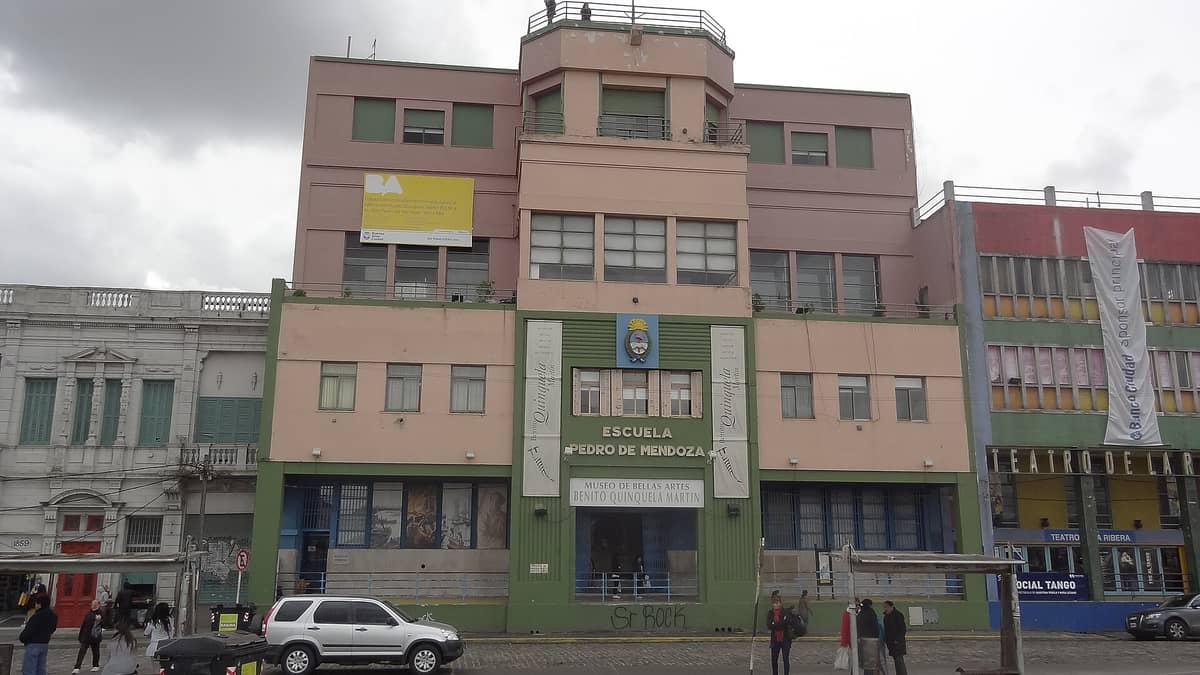
The Museo Benito Quinquela Martín preserves the former home and studio of Argentina's most celebrated port painter, holding a substantial collection of his intense industrial canvases, a gallery of Argentine figurative art, and a remarkable assembly of antique ship figureheads. The building itself overlooks the Riachuelo waterway in La Boca, with rooftop terraces that frame the neighborhood's corrugated iron skyline.
Quick Facts
- Location
- Av. Don Pedro de Mendoza 1835–1843, La Boca, Buenos Aires
- Getting There
- No Subte line reaches La Boca directly; arrive by colectivo (bus) or taxi/remis from San Telmo or the city centre
- Time Needed
- 1.5 to 2.5 hours
- Cost
- ARS 10,000 general; ARS 2,000 for Argentine residents or foreign residents with local DNI; free Wednesdays for Argentine residents; free for under-12s, retirees, Malvinas veterans, university students with ID, people with disabilities plus one companion, and public school groups (verify before visiting)
- Best for
- Art lovers, architecture enthusiasts, anyone wanting to understand La Boca beyond Caminito
Who Was Quinquela Martín, and Why Does This Museum Exist?
Benito Quinquela Martín was born in 1890, abandoned at the La Boca orphanage as an infant, and adopted by a local coal merchant family. He grew up among the dockworkers, immigrants, and industrial noise of the Riachuelo waterfront, and that environment became his obsession. His paintings depict stevedores hauling cargo in orange and black smoke, tugboats dragging barges through murky water, and furnaces backlit against iron skies. The work is not picturesque. It is heavy, physical, and specific.
Quinquela Martín became internationally recognized during his lifetime, exhibiting in Italy, the United States, and Spain. He used his earnings not to leave La Boca but to transform it: he funded the construction of a school, a hospital, and this building itself, which he donated to the city of Buenos Aires along with his collection. He died here in 1977. The Museo Benito Quinquela Martín is therefore not a retrospective assembled after the fact. It is the place he chose to work, to collect, and ultimately to leave behind.
The Collection: Three Floors With Very Different Personalities
The building occupies several floors above street level, and each level has a distinct character. The main painting galleries hold the core of Quinquela Martín's output: large-format oils in which the port of La Boca is rendered as a landscape of labor rather than tourism. Up close, the paint is thick and deliberately rough, applied with palette knives as much as brushes. The color palette is narrow but intense: ochres, deep reds, dense blacks, and sudden bursts of orange flame. Spend time here rather than rushing toward the terrace.
A separate gallery holds works by other Argentine figurative painters of the twentieth century, providing useful context for how Quinquela Martín's style fits within a broader national art movement rather than existing as an isolated phenomenon. The quality is uneven across the collection, but there are strong individual works worth finding.
The most unusual section of the museum is the collection of mascarones de proa: antique ship figureheads, many of them carved wooden figures that once adorned the prows of vessels working the Río de la Plata. These are displayed in a dedicated space and are genuinely rare. Most visitors underestimate this room before entering it and leave surprised. Allow time for it.
💡 Local tip
The figurehead collection is easy to miss if you follow the crowd straight to the terrace. Look for the dedicated mascarones de proa room before heading upstairs.
Tickets & tours
Live prices and dates from our booking partner. If you book, we may earn a commission at no extra cost to you.
Boca Juniors Museum skip-the-line tickets
From 17 €Instant confirmationFree cancellationTour to La Boca Jrs and River Plates Stadiums and museums
From 99 €Instant confirmationFree cancellationRiver Stadium and Museum Official Guided Tour
From 33 €Instant confirmationFree cancellationParque de la Costa amusement park tickets with transfer
From 79 €Instant confirmationFree cancellation
The Rooftop Terrace: Best Light, What to Expect
The upper terrace is the reason many visitors make the trip, and it delivers, though not in a conventional way. The view is not of gleaming skyline towers or panoramic water. Instead you look over the corrugated iron rooftops and painted facades of La Boca, with the Riachuelo below and the industrial port infrastructure beyond. On clear mornings, the light from the east catches the water and the colors of the neighborhood's painted zinc houses, making the whole scene look almost like one of the paintings downstairs. In the afternoon, the angle shifts and the light flattens.
For photography, morning visits produce better results on the terrace. If you arrive around opening time, you will also have the upper levels largely to yourself before tour groups arrive, typically between 11:30 and 13:00.
💡 Local tip
Visit on a weekday morning, ideally by 11:00, to reach the terrace before organized tour groups. The terrace becomes congested by midday on weekends.
Getting to La Boca: Practical Logistics
La Boca has no Subte station. The neighborhood sits southeast of the city centre, accessible by colectivo from San Telmo and the Microcentro. Several bus lines serve the area along Av. Don Pedro de Mendoza; check the Moovit app or Google Maps for current routes from your starting point, as line numbering and stops shift periodically. Taxi and remis services are the most straightforward option for first-time visitors, especially if arriving with luggage or in a group.
The museum sits about half a block from Caminito, the pedestrian street that draws the bulk of La Boca's tourist traffic. Combining both in a single half-day is realistic: the museum will take 1.5 to 2.5 hours depending on how closely you engage with the collection, and Caminito adds another 30 to 45 minutes. Factor in the sensory contrast: Caminito is noisy, crowded, and commercially oriented; the museum is noticeably quieter and more considered.
⚠️ What to skip
La Boca's tourist zone is concentrated around Caminito and this museum. Wandering beyond these blocks without local knowledge or a guide is not recommended. Consult current safety guidance before your trip.
For broader safety context in Buenos Aires, the Buenos Aires safety guide covers neighborhood-by-neighborhood advice that applies directly to La Boca.
Hours, Admission, and What to Verify Before You Go
The museum is closed on Tuesdays. Published hours have varied across official sources: one GCBA page lists Monday 11:00 to 16:00, Wednesday through Sunday 11:00 to 18:00; another official listing shows longer evening hours on weekends. Because these discrepancies exist in government sources, confirm current hours directly via the GCBA museum page or by phone before making a dedicated trip.
Admission as of 2026 is ARS 10,000 for the general public and ARS 2,000 for Argentine residents or foreign residents with local DNI. Free entry applies on Wednesdays for Argentine residents, and is permanent for children under 12, retirees, Malvinas veterans, university students with accredited ID, people with disabilities plus one companion, and public school groups. Fees in Argentine pesos shift with inflation; verify the current figure at the GCBA museum page before your visit.
ℹ️ Good to know
Wednesday is free admission day for Argentine residents. If you hold a local SUBE card or Buenos Aires ID, bring it to confirm residency status at the entrance.
Accessibility and Practical Details
The museum occupies multiple floors, and the rooftop terrace requires ascending stairs. Detailed step-free route information is not published on official pages. Visitors with mobility considerations should contact the museum directly before visiting to confirm which sections are accessible and whether elevator access is available for all levels.
The museum is one of several significant cultural institutions in Buenos Aires worth building a dedicated art itinerary around. For a broader picture of what the city's museum landscape looks like, the best museums in Buenos Aires guide puts this collection in context alongside others across the city.
How This Museum Fits Into La Boca More Broadly
La Boca as a neighborhood has a complicated tourist geography. La Boca built its identity on Italian immigrant labor, the Riachuelo waterfront, and the corrugated iron and timber architecture that locals began painting in bright colors using surplus ship paint. Quinquela Martín was both a product and a shaper of that identity: his paintings made the neighborhood internationally legible while he simultaneously funded infrastructure that kept it functioning.
A visit to this museum makes Caminito more meaningful rather than less. The painted facades and street art of the pedestrian street can seem like pure performance without context. After spending time with Quinquela Martín's heavy industrial canvases, the neighborhood's visual culture reads differently. If you are combining this with a football visit, the La Bombonera stadium is within walking distance and can anchor a full afternoon in La Boca.
Who should probably skip this: travelers with no interest in painting or art history who are visiting La Boca primarily for the color and atmosphere of Caminito will find the collection demanding of attention in a way that may not suit a fast-paced itinerary. The building is also not ideal for visitors with significant mobility limitations until official accessibility details are confirmed.
Insider Tips
- Arrive at opening time on a weekday to reach the rooftop terrace before organized tour groups. By 11:30 on weekends the upper floors are noticeably more crowded.
- The ship figurehead collection (mascarones de proa) is consistently underestimated by visitors who head straight for the paintings. Block time for this room specifically.
- Morning light from the east makes the rooftop terrace far more photogenic than afternoon visits. If photography matters to you, plan accordingly.
- Admission fees are priced in Argentine pesos and are subject to inflationary adjustment. Always check the current rate on the GCBA museum page rather than relying on third-party listings, which may be months out of date.
- Tuesday is the closure day. This catches visitors who assume all city museums follow the same Monday-closure pattern common in other countries.
Who Is Museo Quinquela Martín For?
- Art and painting enthusiasts who want to engage with Argentine figurative art in its original context
- Architecture and history travelers curious about La Boca's immigrant and industrial past
- Photographers seeking a rooftop angle over La Boca's painted rooftops and the Riachuelo
- Visitors who want to understand the neighborhood beyond Caminito's tourist surface
- Travelers building a full Buenos Aires museum itinerary across multiple days
Nearby Attractions
Other things to see while in La Boca:
- Caminito
Caminito is a 150-metre pedestrian alley in La Boca where corrugated iron tenements, painted in clashing primary colours, line a street that doubles as an open-air museum. Entry is free, the atmosphere is theatrical, and the history behind it runs deeper than the photo opportunity suggests.
- Estadio Alberto J. Armando (La Bombonera)
La Bombonera is the home ground of Club Atlético Boca Juniors, one of Argentina's most storied football clubs. Located in the working-class neighborhood of La Boca, the stadium is as much a cultural institution as a sports venue, drawing tens of thousands of visitors every year who come not just for matches but for the architecture, the museum, and the atmosphere that has made it iconic.
- Fundación PROA
Fundación PROA is a contemporary art center at Av. Pedro de Mendoza 1929, steps from Caminito in La Boca. Spread across three floors with four exhibition halls, a multimedia auditorium, a bookshop, and a rooftop restaurant overlooking the Riachuelo, it presents rotating modern and contemporary art shows of genuine international caliber. Entry is free every Wednesday.
- Museo de la Pasión Boquense
Attached to the legendary La Bombonera stadium in La Boca, the Museo de la Pasión Boquense (Boca Juniors Museum) traces over a century of the club's history through trophies, jerseys, and an immersive circular gallery. Whether you follow football or not, the museum offers a genuine window into Argentine popular culture and the intense identity of one of the world's most recognized clubs.
Planning a trip? Discover personalized activities with the Nomado app.