Fundación PROA: La Boca's Contemporary Art Anchor on the Riachuelo
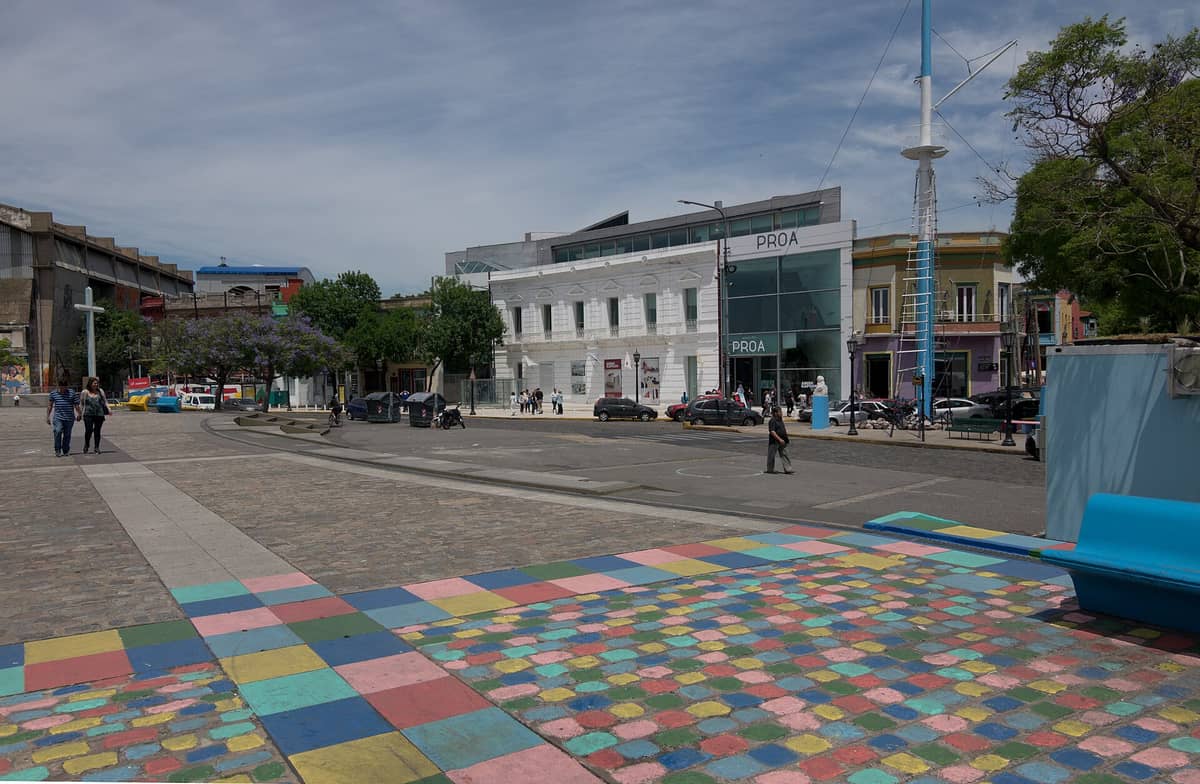
Fundación PROA is a contemporary art center at Av. Pedro de Mendoza 1929, steps from Caminito in La Boca. Spread across three floors with four exhibition halls, a multimedia auditorium, a bookshop, and a rooftop restaurant overlooking the Riachuelo, it presents rotating modern and contemporary art shows of genuine international caliber. Entry is free every Wednesday.
Quick Facts
- Location
- Av. Pedro de Mendoza 1929, La Boca, Buenos Aires
- Getting There
- City buses to La Boca; taxi or ride-hail recommended from central neighborhoods
- Time Needed
- 1.5 to 2.5 hours for exhibition + rooftop
- Cost
- ARS 4,000 general; ARS 2,000 students/teachers/retirees; free under 12; free Wednesdays (verify before visiting)
- Best for
- Contemporary art lovers, architecture admirers, cultural travelers
- Official website
- http://proa.org
What Fundación PROA Actually Is
Fundación PROA is not a city museum in the traditional sense. It is a privately funded contemporary art foundation that operates with the programming ambition of a mid-size European kunsthalle: rotating thematic exhibitions, international loans, and a clear editorial vision that favors dialogue between Argentine and global art movements. The building sits directly on the waterfront at Av. Pedro de Mendoza 1929, where La Boca's characteristic painted facades give way to the grey-brown water of the Riachuelo. From the outside, the structure reads as a confident piece of contemporary architecture inserted into one of Buenos Aires's most historically loaded neighborhoods.
The facility spans three floors and contains four dedicated exhibition halls, a multimedia auditorium used for film screenings and talks, a specialized art bookshop, and a rooftop restaurant with views toward the river and the old port cranes. It is open Wednesday through Sunday, 12:00 to 19:00, and closed on Monday and Tuesday. The free Wednesday admission policy makes it one of the more accessible quality art venues in the city.
💡 Local tip
Every Wednesday, admission is free for all visitors. If your schedule allows it, this is the best day to visit: the galleries are well-attended but rarely overcrowded, and you can use the savings for lunch at the rooftop.
The Experience Floor by Floor
Arriving at PROA from Caminito, which runs adjacent to the entrance, you pass through the shift from tourist-dense street life into a quieter, more contemplative space within a few steps. The entrance level is clean and well-lit, with staff who tend to be genuinely informed about the current show rather than just present for crowd management. The bookshop near the entrance stocks serious art publications, exhibition catalogs, and critical theory titles in both Spanish and English, and it is worth browsing even if you are not buying.
The four exhibition halls are distributed across the building's levels. The spatial sequencing varies with each exhibition, so there is no fixed walkthrough order to memorize. What remains constant is the quality of the installation work: lighting is handled with care, wall text is concise, and the curators tend to leave enough breathing room between works that individual pieces can be read on their own terms. This is not a place that overwhelms you with quantity.
The rooftop restaurant has both covered and open seating areas, and on a clear afternoon the view toward the Riachuelo and the corrugated-iron rooftops of La Boca carries a specific low-key drama that is quite different from the panoramic views available elsewhere in the city. On weekends the rooftop fills up by early afternoon, so arriving at opening hour (noon) gives you the best chance at a table with a proper view. It has both covered and open seating areas, and on a clear afternoon the view toward the Riachuelo and the corrugated-iron rooftops of La Boca carries a specific low-key drama that is quite different from the panoramic views available elsewhere in the city. On weekends the rooftop fills up by early afternoon, so arriving at opening hour (noon) gives you the best chance at a table with a proper view.
Tickets & tours
Live prices and dates from our booking partner. If you book, we may earn a commission at no extra cost to you.
Madero Tango Show tickets with optional dinner
From 32 €Instant confirmationFree cancellationBuenos Aires small-group city tour with optional lunch and cruise
From 25 €Instant confirmationFree cancellationPiazzolla Tango Show VIP tickets with transfer and optional dinner
From 112 €Instant confirmationFree cancellationBuenos Aires shopping tour
From 15 €Instant confirmationFree cancellation
How the Visit Changes by Time of Day
La Boca is a neighborhood with a pronounced split personality depending on the hour. The streets around Caminito are busy with group tours in the late morning and early afternoon, peaking roughly between 11:00 and 14:00 on weekends. PROA opens at noon, which means the first hour of operation on a Saturday or Sunday places you in the middle of peak tourist flow for the surrounding area, though the museum itself remains calmer than the street.
By mid-afternoon, around 15:00 to 16:00, the group tours have largely dispersed and the neighborhood takes on a different character. This window, roughly 15:00 to 17:30, tends to produce the most relaxed visit inside the galleries. Natural light reaches the upper floors at an angle that suits photography. The rooftop is busy but not packed. The auditorium, if a talk or screening is scheduled, is usually at its best attendance during this window.
⚠️ What to skip
La Boca requires some street awareness beyond the immediate Caminito-PROA corridor. The colorful pedestrian zone is well-patrolled and heavily visited, but the surrounding streets transition quickly into residential areas that are less suited for aimless wandering, especially after dark. Plan your arrival and departure route in advance, and consider a taxi or ride-hail for the return.
The Building in Context: Architecture and Location
PROA's building was designed to respond to its waterfront setting rather than compete with the vernacular architecture of La Boca. The neighborhood's iconic sheet-metal facades painted in yellows, reds, and blues developed from the practical use of leftover marine paint by dockworkers and Italian immigrants in the late 19th and early 20th centuries. PROA sits at the edge of this area, facing the Riachuelo, the small river that once made La Boca a significant port of entry for Argentine immigration.
The foundation's programming has historically engaged with that immigrant and working-class history without being constrained by it. Past exhibitions have included major retrospectives of Latin American modernism, international loans of works by figures from European avant-garde movements, and shows examining photography, industrial design, and film alongside traditional fine art. For those building a broader picture of Buenos Aires's cultural infrastructure, PROA functions as a useful counterpoint to the encyclopedic collections at the Museo Nacional de Bellas Artes or the Latin American focus of the Museo MALBA in Palermo.
Getting There: Transit, Taxis, and Practical Logistics
La Boca is reached by surface bus, taxi, or ride-hail. Several colectivo lines connect La Boca to central neighborhoods including San Telmo and the Microcentro; the specific line numbers and routes should be confirmed through the official Cómo Llego journey planner or a current transit app, as schedules and stops change. Journey time from San Telmo by bus is typically under 15 minutes in light traffic.
Taxis and ride-hail services drop you directly at the Av. Pedro de Mendoza entrance with no navigation required. From San Telmo the fare is modest; from Recoleta or Palermo, expect a longer ride through city traffic. If you are combining PROA with a visit to Caminito or the Museo Quinquela Martín, all three are within a short walk of each other and can be covered in a single La Boca morning or afternoon.
There is no dedicated parking structure attached to PROA. Visitors arriving by private car should expect to plan parking in the surrounding blocks, which is easier on weekday afternoons than on weekend mornings. The walk from more distant parking areas through La Boca's residential streets requires the same street awareness noted above.
Photography, Accessibility, and What to Bring
Photography policies inside the galleries vary by exhibition depending on the terms negotiated for borrowed works. Generally, personal non-flash photography is permitted in some public areas, but specific exhibitions with international loans may restrict it. Check the current exhibition information on the official PROA website before visiting if photography is a priority.
The rooftop and exterior are photogenic and open to photography in many cases. The angle from the rooftop looking east along the Riachuelo toward the old port infrastructure provides a frame that most visitors do not anticipate from street level. Early afternoon light in autumn and spring (March to May, September to November) tends to be the most favorable for exterior shots.
Specific accessibility details for wheelchair users or visitors with mobility needs are available on PROA's official services page. The building has multiple levels, and visitors with specific requirements are advised to contact PROA directly by phone at +54 11 4104-1000 or through the official website before visiting to confirm current lift access and adapted facilities.
ℹ️ Good to know
The specialized bookshop at PROA stocks exhibition catalogs and art titles that are difficult to find elsewhere in the city. Even if you are not visiting the galleries, it is worth a look if you are in the area.
Who Will Get the Most from This Visit (and Who Won't)
Visitors with a genuine interest in contemporary art will find PROA rewarding regardless of which exhibition is running. The curatorial quality is consistently above the Buenos Aires average, and the combination of galleries, auditorium programming, and the bookshop creates a fuller cultural afternoon than most single-venue visits in the city. Travelers who are building a systematic picture of Buenos Aires's art scene, perhaps using the best museums in Buenos Aires as a framework, should include PROA alongside MALBA and the Bellas Artes.
Visitors who are primarily visiting La Boca for Caminito's colorful facades and street performance atmosphere may find PROA's interior program less relevant to their itinerary, but the rooftop restaurant and exterior views are worth a brief stop regardless. The free Wednesday admission removes the cost barrier for those who want to look in without committing to a full visit.
Travelers with young children will find the building manageable in terms of space, but the exhibition content is rarely designed with children in mind. PROA is not a science museum or interactive experience. Children under 12 enter free, which is a practical benefit, but managing young children through gallery spaces requires patience. Families with older children interested in art will have a more straightforward visit.
Insider Tips
- Check the PROA website's current exhibition page before visiting. The quality of the visit depends significantly on the specific show in rotation, and the program shifts several times a year. Some exhibitions have a clear international scope; others are more narrowly focused. Knowing what you are walking into improves the experience considerably.
- The rooftop restaurant operates independently from the museum, so you can have lunch there first and visit the galleries afterward, or reverse the order depending on hunger. The kitchen tends to slow down during peak weekend hours, so ordering before 14:00 or after 16:00 reduces wait times.
- Wednesday free admission is well-known locally but not always crowded. Mid-week afternoons at PROA are among the more pleasant gallery experiences in the city: good attendance without the compression of a weekend crowd.
- If you are visiting La Boca for a full afternoon, sequence your visit so that PROA comes after Caminito and the Quinquela Martín museum. By the time the tourist flow on Caminito peaks and thins out, PROA's galleries will be at their most settled.
- The auditorium hosts screenings, talks, and performances that are sometimes free or low-cost and are listed on the official website under the events section. If your timing aligns with a public event, it adds a dimension to the visit that guidebooks rarely mention.
Who Is Fundación PROA For?
- Contemporary art travelers who want serious programming beyond the mainstream museum circuit
- Architecture and urban culture enthusiasts interested in how modern institutions integrate into historic neighborhoods
- Budget travelers taking advantage of the free Wednesday admission policy
- Travelers combining a La Boca day with Caminito and Quinquela Martín for a full cultural afternoon
- Solo visitors or couples who want a calm, unhurried space inside one of Buenos Aires's most tourist-heavy neighborhoods
Nearby Attractions
Other things to see while in La Boca:
- Caminito
Caminito is a 150-metre pedestrian alley in La Boca where corrugated iron tenements, painted in clashing primary colours, line a street that doubles as an open-air museum. Entry is free, the atmosphere is theatrical, and the history behind it runs deeper than the photo opportunity suggests.
- Estadio Alberto J. Armando (La Bombonera)
La Bombonera is the home ground of Club Atlético Boca Juniors, one of Argentina's most storied football clubs. Located in the working-class neighborhood of La Boca, the stadium is as much a cultural institution as a sports venue, drawing tens of thousands of visitors every year who come not just for matches but for the architecture, the museum, and the atmosphere that has made it iconic.
- Museo de la Pasión Boquense
Attached to the legendary La Bombonera stadium in La Boca, the Museo de la Pasión Boquense (Boca Juniors Museum) traces over a century of the club's history through trophies, jerseys, and an immersive circular gallery. Whether you follow football or not, the museum offers a genuine window into Argentine popular culture and the intense identity of one of the world's most recognized clubs.
- Museo Quinquela Martín
The Museo Benito Quinquela Martín preserves the former home and studio of Argentina's most celebrated port painter, holding a substantial collection of his intense industrial canvases, a gallery of Argentine figurative art, and a remarkable assembly of antique ship figureheads. The building itself overlooks the Riachuelo waterway in La Boca, with rooftop terraces that frame the neighborhood's corrugated iron skyline.
Planning a trip? Discover personalized activities with the Nomado app.