One Week in Buenos Aires: The Complete 7-Day Itinerary
Seven days is enough time to move through Buenos Aires properly, from the political heart of Plaza de Mayo to the cobblestones of San Telmo, the parks of Palermo, and a night at Teatro Colón. This day-by-day guide covers logistics, timing, and the trade-offs worth knowing before you go.
Tickets & tours
Live prices and dates from our booking partner. If you book, we may earn a commission at no extra cost to you.
TL;DR
- Seven days is a solid window for Buenos Aires: enough to cover the major neighborhoods without rushing, and with room for one day trip.
- Spring (September to November) and autumn (March to May) offer the most comfortable temperatures, around 13–26°C. See the best time to visit Buenos Aires for a full seasonal breakdown.
- You do not need a car. A SUBE card for the subte (metro) and colectivos (buses) covers almost every stop in this itinerary.
- The Argentine peso (ARS) fluctuates significantly. Read the Buenos Aires currency and money guide before you arrive.
- Book Teatro Colón tickets and any tango show you want in advance, especially in peak season. Many sell out days or weeks ahead.
Before You Arrive: Planning Essentials
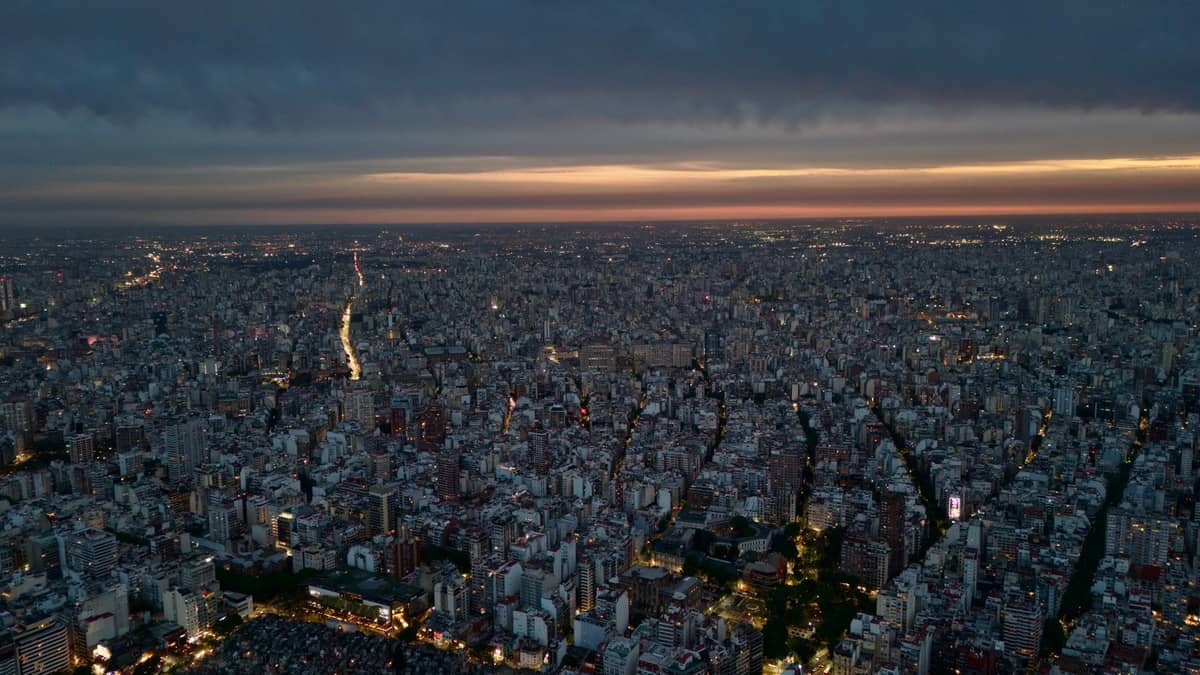
Buenos Aires is the Ciudad Autónoma de Buenos Aires (CABA), a city of just over 3 million people that operates as its own administrative unit, separate from Buenos Aires Province. The wider metropolitan area holds over 16 million people, making this one of the largest urban centers in the Americas. It sits roughly 30 m above sea level on the western shore of the Río de la Plata estuary, roughly at coordinates 34.6°S, 58.4°W, and runs on Argentina Time (ART, UTC-03:00) with no daylight saving. Flights arrive at two airports: Ministro Pistarini International (EZE), about 30–35 km southwest of the center and used for most international routes, and Aeroparque Jorge Newbery (AEP), just a few kilometers from Recoleta and Palermo, handling domestic and regional flights. For a full breakdown of transfers, terminals, and costs, the Buenos Aires airport guide covers both in detail.
The local Spanish variety is Rioplatense Spanish, which uses 'vos' instead of 'tú' and has a distinctive intonation influenced by Italian immigration. In hotels, restaurants, and tourist areas, English is widely spoken. Argentina uses 220V mains voltage at 50Hz, with Type C (two round pins) and Type I (three flat pins, Australian style) sockets. Most visitors from North America and parts of Europe will need an adapter. Tap water in Buenos Aires is treated municipal water; most visitors drink it without issue, but if you have a sensitive stomach, bottled water is inexpensive and widely available.
💡 Local tip
Buy a SUBE card as soon as you arrive. It works on all subte lines, colectivos, and suburban trains. You can pick one up at Tourist Assistance Centers and many kiosks (kioscos). Loading credit onto it is straightforward at machines throughout the network. Without one, you may not be able to board some public transport, and it remains the most practical way to pay.
Days 1–2: The Historic Center, San Telmo, and La Boca
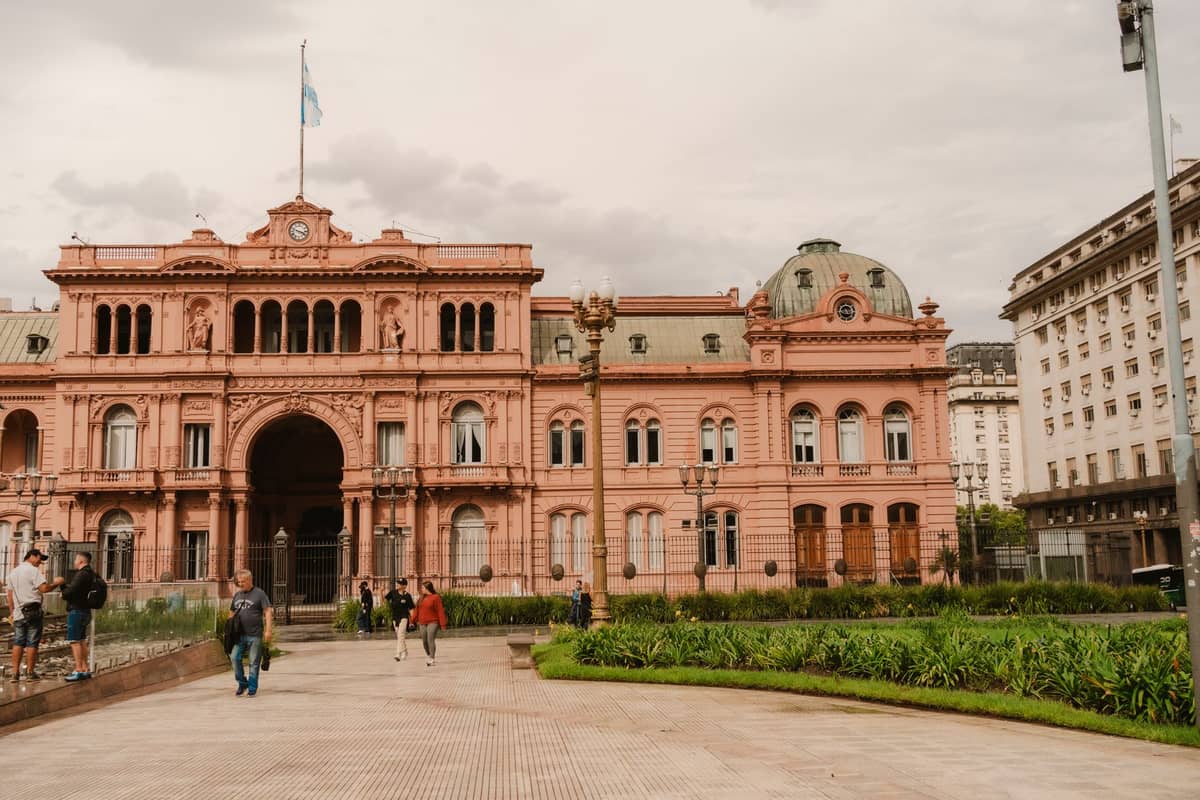
Start where Buenos Aires started. Plaza de Mayo is the political and symbolic heart of the city, flanked by the Casa Rosada (the presidential palace, free to visit on weekends), the Cabildo, and the Catedral Metropolitana where Pope Francis served as Archbishop. Spend a morning here, then walk south along Defensa into San Telmo, the city's oldest neighborhood.
San Telmo rewards slow walking. The Mercado de San Telmo on Defensa and Estados Unidos is a covered market from 1897 with food stalls, coffee bars, and antique dealers inside a cast-iron structure. On Sundays, the Feria de San Telmo takes over the entire length of Defensa Street with street performers, craft stalls, and tango dancers performing for crowds. If your itinerary includes a Sunday, anchor it here. On other days, Plaza Dorrego has antique dealers and outdoor cafes worth an hour.
On day two, head to La Boca. The neighborhood is famous for Caminito, a short pedestrian street of brightly painted corrugated-iron houses that became an open-air art museum in the 1950s. It is genuinely photogenic and historically interesting, but be honest about what it is: a tourist-facing street surrounded by souvenir stalls. Spend an hour, not three. The Fundación Proa at the end of the street is one of Buenos Aires' best contemporary art spaces and often overlooked. The Estadio La Bombonera is a short walk away. If you are a football fan, the stadium tour through the Museo de la Pasión Boquense runs daily and is well done even for casual visitors.
⚠️ What to skip
La Boca outside Caminito and the immediate tourist zone requires more awareness than other neighborhoods. Stick to the pedestrian streets and the area around Fundación Proa during daytime. Avoid wandering into residential side streets toward the port. This is not to alarm — it is a practical note that applies to most cities.
Days 3–4: Recoleta, Puerto Madero, and the Microcentro
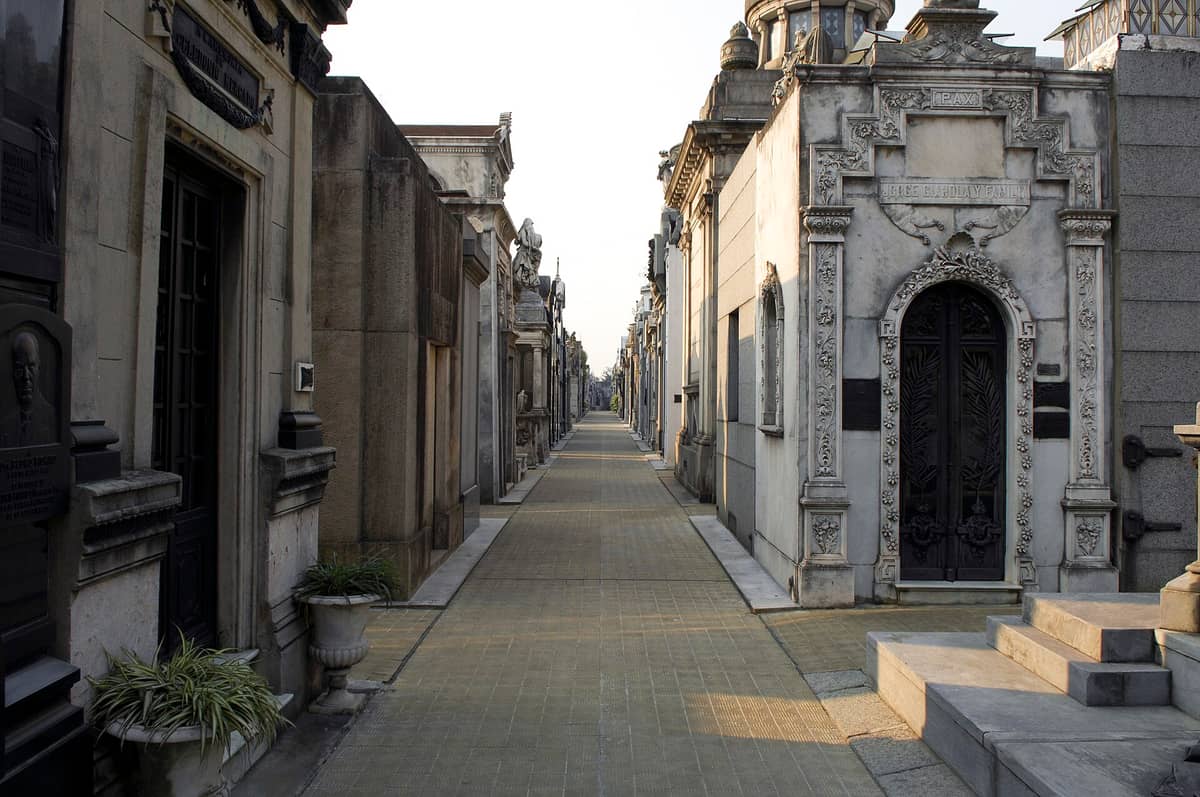
The Cementerio de la Recoleta is one of the most architecturally extraordinary cemeteries in the world. It opens daily at 8am (tourist visits run 9am–5pm) and admission is free. Plan at least 90 minutes to navigate the labyrinthine alleys of mausoleums designed by architects from across Europe. Eva Perón is buried here, and finding her tomb without a map is harder than it sounds. Guided tours are available at the entrance and worth taking on a first visit. Immediately adjacent, the Basílica Nuestra Señora del Pilar and the Centro Cultural Recoleta fill out the rest of the morning.
The afternoon brings you to Puerto Madero, the redeveloped docklands district along the riverfront. It is worth a walk for the architecture and the Puente de la Mujer, a rotating pedestrian bridge by Santiago Calatrava. Just beyond Puerto Madero, the Reserva Ecológica Costanera Sur is a 350-hectare urban nature reserve where over 300 bird species have been recorded. It opens Tuesday to Sunday, 8am–7pm in summer and 8am–6pm in winter, and entry is free. This is a genuinely good place to spend a quiet afternoon away from crowds.
On day four, give the Microcentro its due. The Teatro Colón on Tucumán street is one of the great opera houses of the world and earns the superlative. Guided tours run most days and are a reasonable way to see the interior without buying performance tickets, though attending a performance (opera, ballet, or concert) is the real experience. The box office is open Monday to Saturday 9am–8pm and Sundays 9am–5pm; tickets are also sold online through the official website. Book ahead. Two other stops nearby: the Palacio Barolo on Avenida de Mayo offers guided rooftop tours with some of the best city views in Buenos Aires, and El Ateneo Grand Splendid on Avenida Santa Fe is a 1919 theatre converted into a bookshop. It is frequently cited as one of the most beautiful bookshops in the world, and for once, that description holds up.
Days 5–6: Palermo, Museums, and Tango
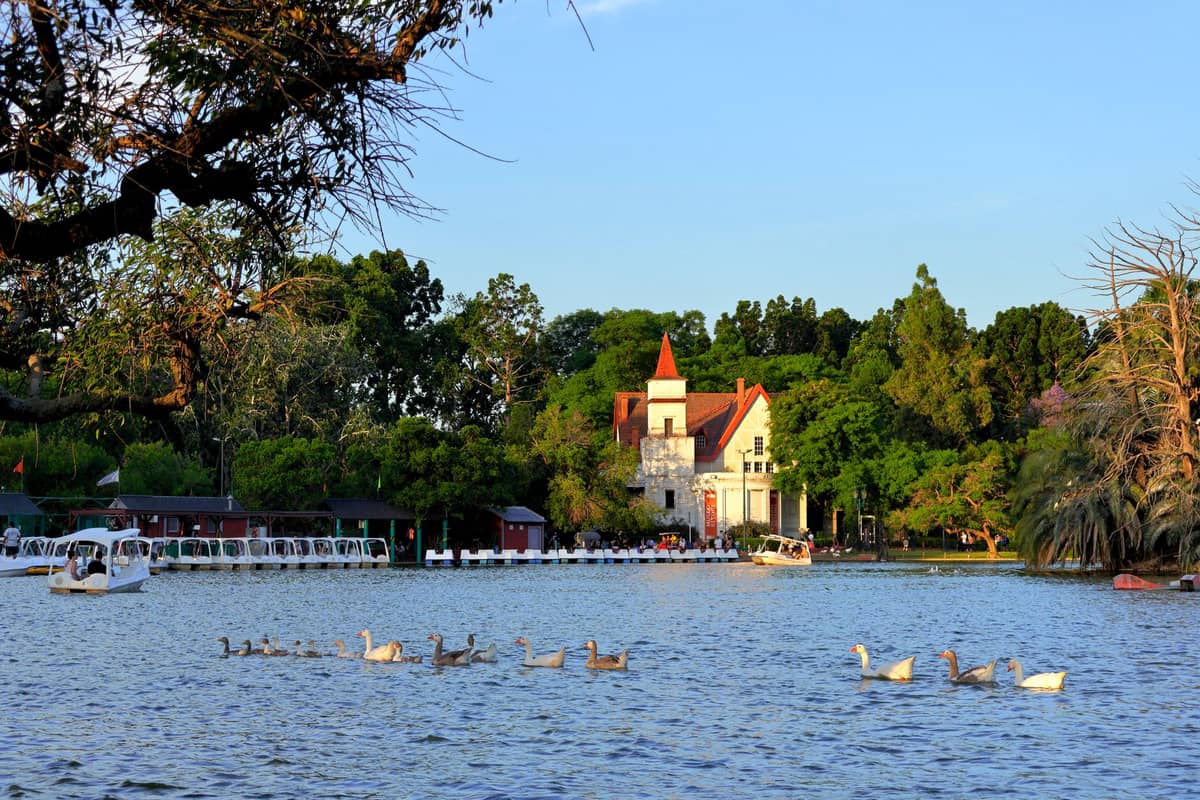
Palermo is the city's largest neighborhood, roughly divided into subsectors: Palermo Soho for boutiques and restaurants, Palermo Hollywood for media companies and nightlife, and the northern parks area around Bosques de Palermo. The parks are best on weekend mornings when porteños (Buenos Aires residents) come out in force to run, cycle, and sit by the lake. The Jardín Botánico Carlos Thays and the Jardín Japonés are both within this cluster and worth a couple of hours.
Palermo is also home to the city's best concentration of museums. The Museo MALBA (Museo de Arte Latinoamericano de Buenos Aires) on Avenida Figueroa Alcorta holds the strongest collection of 20th-century Latin American art in the region, with works by Frida Kahlo, Tarsila do Amaral, and Antonio Berni. It is genuinely world-class and rarely overcrowded. MALBA opens Thursday to Monday; verify current hours before visiting. For a more focused collection, the Museo Evita a few blocks away does an honest, well-curated job of contextualizing Eva Perón's life and political legacy. It avoids both hagiography and crude dismissal, which is harder than it sounds given the subject.
Save one evening this week for tango. Buenos Aires has two distinct tango experiences: milongas (social dance events where locals go to actually dance, usually late, starting after 11pm) and tango shows (theatrical performances aimed at visitors, starting around 9–10pm). For most travelers, a show is the practical entry point. Some shows include dinner; most are in San Telmo, Microcentro, or Palermo. Quality and price vary considerably, so read recent reviews. If you are curious about the social side, several venues run beginner classes earlier in the evening before the milonga begins. For a full picture of what to expect, the tango in Buenos Aires guide breaks down venues, styles, and realistic advice.
- MALBA Latin America's leading modern art museum. Strong permanent collection, good temporary exhibitions, and a cafe with a terrace. Budget 2–3 hours.
- Museo Nacional de Bellas Artes Free entry. Strong European and Argentine collection from the 19th and 20th centuries in a building near Recoleta. Underrated by visitors who skip it for MALBA.
- Museo Evita Compact but well-executed. Context-rich and honest about the complexity of Evita's legacy. About 1–1.5 hours.
- Centro Cultural Kirchner (CCK) A spectacular Beaux-Arts post office converted into a cultural center. Free entry, enormous scale, and often has excellent free concerts and exhibitions.
Day 7: Day Trip or Deep Dive into a Neighborhood
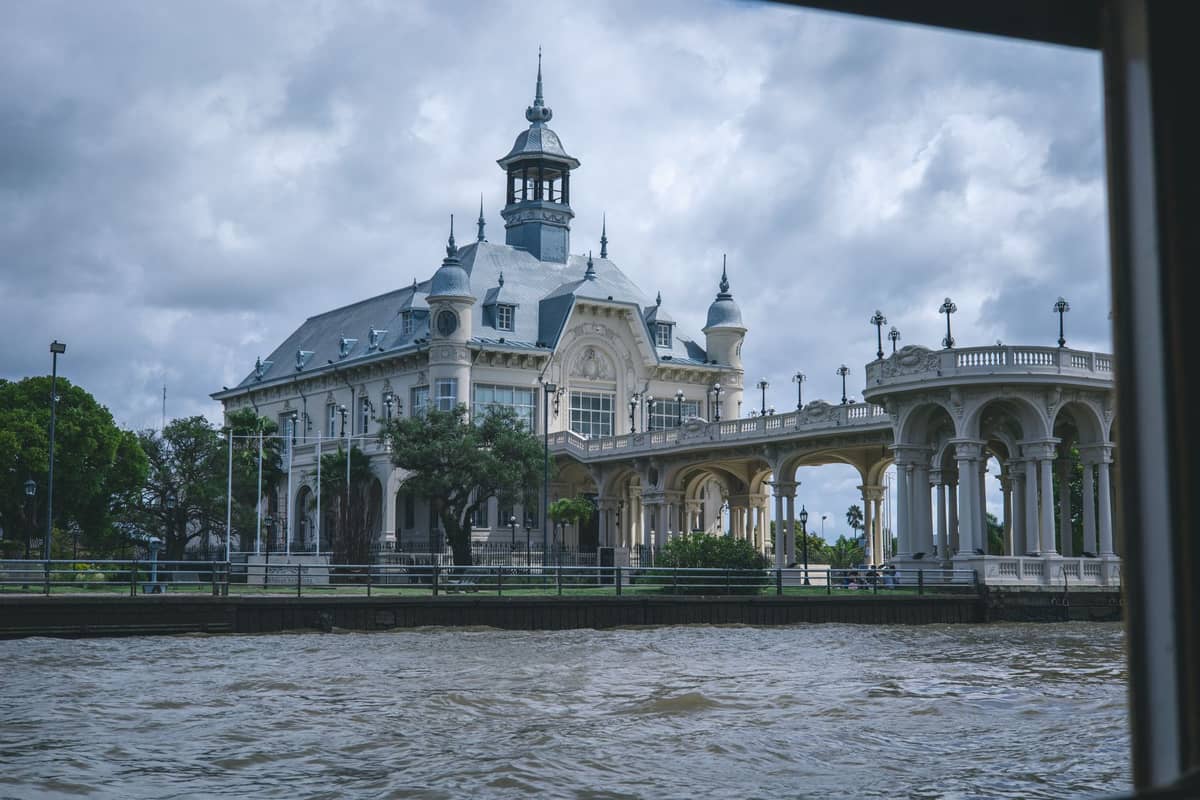
On your final full day, you have a genuine choice. The two most popular day trips from Buenos Aires are the Tigre Delta and Colonia del Sacramento in Uruguay. Tigre is about 30–40 minutes by commuter train from Retiro station, costs almost nothing, and puts you in a river delta of waterways, wooden launches, and weekend houses that feels entirely unlike the city. Colonia del Sacramento requires a ferry crossing (roughly 1 hour by fast boat) and is a Uruguayan colonial town with UNESCO World Heritage status. It is a full day minimum. Both are genuinely worth doing for different reasons. For more options, the guide to day trips from Buenos Aires covers logistics, costs, and timing.
If you would rather stay in the city, use this day for the areas your itinerary has not reached. Belgrano in the north has the Barrio Chino (Buenos Aires' Chinatown, compact but worth a meal), the Museo Larreta, and a quieter residential feel that reveals a less touristy side of the city. Alternatively, Feria de Mataderos in the western neighborhood of Mataderos runs on weekend afternoons and is one of the few remaining genuinely local craft and folk music fairs in Buenos Aires, far from the tourist circuit.
✨ Pro tip
The Feria de Mataderos runs on Sunday afternoons from around April to December (it may pause or change schedule during the hottest summer months and certain holidays). Check the current schedule before going, as it requires a dedicated trip to the western edge of the city. The colectivo ride is long but the fair itself is the most authentically local market experience in Buenos Aires.
Getting Around and Practical Logistics
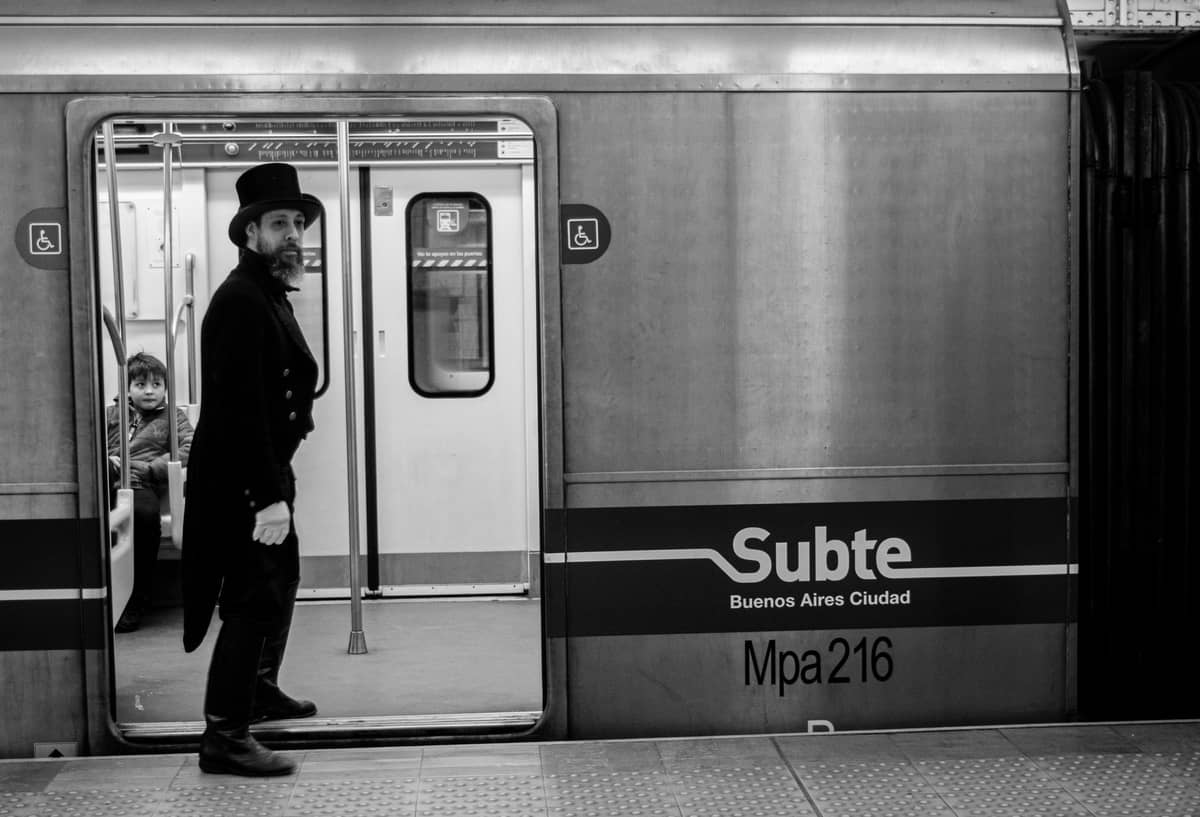
The subte has six lines (A through H, with some gaps) and connects the Microcentro with key neighborhoods in about 10–20 minutes. Buses (colectivos) run 24 hours on many routes and fill in the gaps the subte does not cover. Both require the SUBE card. Taxis and remises (private car services booked by phone or app) are plentiful and useful for late nights or when carrying luggage. Ride-hailing apps also operate in the city; check current availability as regulations have shifted over time. Renting a car is not practical or necessary for a city-only week. For a complete breakdown of routes and costs, getting around Buenos Aires covers every option.
- Buy your SUBE card on arrival at the airport or a tourist center. Load at least the equivalent of $10–15 USD to start.
- Subte hours are roughly 5:30am to 10:30–11pm depending on the line. After midnight, you are on buses or taxis.
- Buenos Aires traffic during peak hours (8–9:30am and 6–8pm) is heavy. Build extra time if you need to cross the city by road.
- Google Maps works well for bus and subte routes in Buenos Aires. The colectivo system can look intimidating but is easy to use once you have a SUBE card.
- Distances between neighborhoods are longer than they look on a map. San Telmo to Palermo is about 6 km — walkable in an hour, but most people take transport.
ℹ️ Good to know
Buenos Aires has a humid subtropical climate with an average annual temperature around 18°C (64°F). July is the coldest month (averaging around 7–15°C). January and February are hot and humid, often reaching around 30°C. Spring and autumn bring more rain than summer, despite feeling more comfortable. Pack a light waterproof layer regardless of when you visit.
FAQ
Is one week enough time for Buenos Aires?
Yes. Seven days is a comfortable amount of time to cover the major neighborhoods (San Telmo, La Boca, Recoleta, Palermo, the Microcentro) at a reasonable pace, see the key attractions, and still fit in one day trip or a couple of longer museum visits. Two weeks allows deeper exploration and more time in neighborhoods like Belgrano or Villa Crespo, but one week is genuinely sufficient for a first visit.
What is the best time of year for a one-week trip to Buenos Aires?
March to May (autumn) and September to November (spring) offer the most comfortable conditions, with temperatures typically between 13–26°C and lower humidity than summer. October and November are particularly good: warm enough for outdoor time, not yet humid, and the city's jacaranda trees are in flower. July is cold (7–15°C) but functional — museums and tango shows are uncrowded. January and February are peak southern summer: hot, humid, and popular with domestic tourists.
Do I need to book attractions in advance?
Teatro Colón performances sell out well in advance, especially for major productions. Book online through the official website as soon as your dates are confirmed. Tango shows, particularly the more popular ones, benefit from advance booking in high season. Most museums do not require advance booking, though some (like MALBA for special exhibitions) may. The Recoleta Cemetery charges foreign visitors an admission fee (about ARS 24,030 as of mid-2026, card only); Argentine residents enter free with DNI. Tourist hours are 09:00–17:00. Guided tours of the Casa Rosada and Palacio Barolo should be reserved ahead.
How do I get from Ezeiza airport to central Buenos Aires?
Ezeiza (EZE) is 30–35 km southwest of the center. Your main options are: official remises (private car services) booked at the official desks inside the arrivals hall, which offer fixed prices and are the most reliable option; shuttle bus services that drop at multiple points in the city and cost less but take longer; or ride-hailing apps, subject to current availability and regulations. Prices change with Argentina's economic conditions, so check recent traveler reports before arriving. The journey takes 45 minutes to over an hour depending on traffic.
Is Buenos Aires safe for tourists?
Buenos Aires is a large city and requires the same awareness you would apply anywhere of that scale. Petty theft (phone snatching, bag theft) is the most common issue for visitors, particularly on crowded transport and in tourist-heavy areas. La Boca outside the Caminito zone, and parts of the Microcentro at night, deserve more caution. The city is generally safe for walking during the day in the neighborhoods covered in this itinerary. For a practical and honest assessment, the Buenos Aires safety guide covers specific neighborhoods and common scenarios.
Tickets & tours
Live prices and dates from our booking partner. If you book, we may earn a commission at no extra cost to you.
Planning a trip? Discover personalized activities with the Nomado app.