Basílica Nuestra Señora del Pilar: Recoleta's Colonial Gem
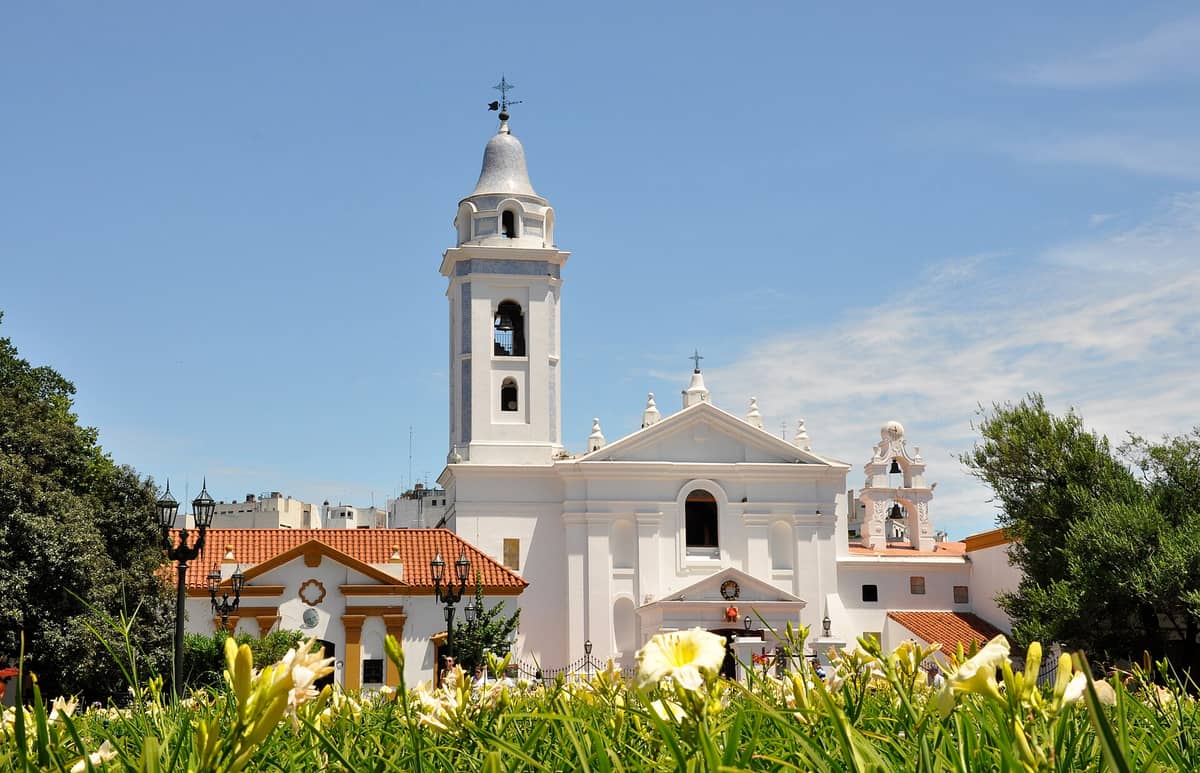
Standing directly beside the Recoleta Cemetery, the Basílica Nuestra Señora del Pilar is one of the oldest churches in Buenos Aires. Built in the 18th century as part of a Franciscan convent complex, it offers free entry, a small cloister museum, and a rare moment of quiet in one of the city's most visited corners.
Quick Facts
- Location
- Junín 1898, Recoleta, Buenos Aires
- Getting There
- Subte Line H at Las Heras is the nearest station; multiple bus lines also run along Av. Las Heras and Av. Pueyrredón
- Time Needed
- 30–60 minutes for the church; allow extra time if visiting the cloister museum
- Cost
- Free entry to the church; cloister museum hours should be confirmed on arrival as policies can change
- Best for
- History buffs, architecture enthusiasts, and anyone visiting the Recoleta Cemetery next door
- Official website
- basilicadelpilar.org
Why This Church Stands Apart
Most visitors to Recoleta come for the cemetery and barely glance at what stands right beside it. That's a mistake. The Basílica Nuestra Señora del Pilar offers something the cemetery, for all its drama, cannot: a functioning place of worship with an intact colonial interior, whitewashed walls that glow in the afternoon light, and a small cloister museum that documents early Buenos Aires with genuine care.
The church is one of the oldest in Buenos Aires, constructed in the 18th century as part of the Recoleta convent complex established by the Franciscan Recollect friars. The convent's cloisters and gardens were later repurposed and eventually transformed into what is now the Centro Cultural Recoleta next door, but the church itself remains an active parish. That ongoing religious life gives it a different quality from many historical buildings in the city — it is still a place where people come to pray, attend daily mass, and light candles.
💡 Local tip
If you're combining this visit with the Recoleta Cemetery, go to the basilica first. The cemetery queues build through the morning, and the church is quietest in the early hours. You'll also want the light: the sun hits the main facade most directly before noon.
The Architecture: Baroque Restraint in White and Gold
From the outside, the Basílica Nuestra Señora del Pilar is a study in colonial Baroque understatement. The facade is rendered in stark white, with a single tower rising above the entrance — modest by European cathedral standards, but striking in context when you consider that this was built on the then-peripheral edges of a colonial city in the early 1700s. The proportions are compact and the ornamentation restrained compared to the theatrical Baroque churches of Mexico or Peru, reflecting the more austere Franciscan tradition.
Inside, the nave opens into a single-aisle space lined with side chapels. The altars are gilded, and the main retablo features intricate silverwork that survived the city's turbulent 19th century largely intact. The wooden pews are worn smooth from generations of use. Natural light enters through high windows and shifts across the walls at different hours — early morning gives a cooler, bluish quality; late afternoon warms everything toward amber.
For travelers with a particular interest in colonial religious architecture, this basilica fits into a broader Buenos Aires pattern worth understanding. For context, the Catedral Metropolitana on Plaza de Mayo underwent repeated renovations and neoclassical overlays, meaning the Pilar preserves a rawer, less altered colonial character. The basilica's relative smallness and comparative obscurity have, paradoxically, protected it.
Tickets & tours
Live prices and dates from our booking partner. If you book, we may earn a commission at no extra cost to you.
Tigre delta trip and visit to Puerto de Frutos
From 54 €Instant confirmationFree cancellationPrivate Buenos Aires city tour with Tigre Delta ride
From 89 €Instant confirmationFree cancellationCarlos Gardel Tango Show tickets with optional dinner
From 66 €Instant confirmationFree cancellationCarlos Gardel Tango Show VIP with transfer and optional dinner
From 88 €Instant confirmationFree cancellation
The Cloister Museum: A Small but Serious Collection
Behind the church, accessible through the convent's surviving cloister, sits a compact museum that documents the religious and civic history of early Buenos Aires. The collection includes colonial-era religious art, liturgical objects, and items from the Franciscan community that once occupied the complex. It is not a large museum — a thorough visitor can see everything in under an hour — but the quality of the pieces and the calm of the cloister courtyard itself justify the detour.
The museum is open Tuesday through Thursday from 14:00 to 18:00, and on the first Sunday of each month from 15:00 to 18:00. Guided tours are offered on Tuesday through Thursday at 16:00. These hours are subject to change, so arriving earlier in the afternoon is the safer choice. Always confirm current hours directly with the parish before making a dedicated trip.
⚠️ What to skip
Hours for both the museum and guided tours shift periodically. The parish website (basilicadelpilar.org) is the most reliable source for current schedules. Do not rely solely on third-party aggregator listings, which are frequently outdated.
How the Experience Changes Through the Day
Mornings at the Basílica Nuestra Señora del Pilar are quiet in a way that surprises first-time visitors. The Recoleta Cemetery crowds have not yet fully assembled, and the church draws mostly local residents attending weekday mass. The air inside carries the faint scent of candle wax and old stone. Voices from the street are muffled. If you sit in one of the rear pews during or just after morning mass, the experience feels removed from the tourist circuit operating just outside the door.
By midday the church becomes a brief refuge for cemetery visitors stepping in to cool down and have a look. Traffic through the nave increases but rarely becomes crowded — the basilica never gets the volume of foot traffic that overwhelms larger city churches. Afternoons are when the light inside is most interesting: the gold of the altars catches it, and the shadows in the side chapels deepen. This is also when the museum is open, making the full afternoon the most rewarding time to visit if you want to cover both.
In the evening, In the evening, before the doors close at around 22:00, the church returns to its weekday neighborhood rhythm — parish activities, occasional private ceremonies, local worshippers. If you happen to be in Recoleta at dusk, the illuminated white facade against the darkening sky is one of the quieter photographic opportunities in the area.
Visiting the Basilica: Practical Walkthrough
The basilica stands at Junín 1898 in Recoleta, directly adjacent to the cemetery entrance. The nearest Subte station is Las Heras on Line H; the most practical public transport options also include the bus lines running along Avenida Las Heras and Avenida Pueyrredón. Taxis and ride-hailing apps drop off conveniently on the surrounding streets.
Entry to the church is free. You enter through the main door on Junín and step immediately into the nave. Dress modestly: shoulders and knees covered is standard for entering any active church in Buenos Aires, and while enforcement is informal, it is a matter of basic respect for an active place of worship. Photography inside is generally tolerated when mass is not in session, but avoid flash and be mindful of worshippers.
The basilica pairs naturally with the Recoleta Cemetery immediately next door and the Centro Cultural Recoleta a short walk away in the former convent buildings. Allocating a half-day for all three is entirely reasonable. If you want a broader understanding of the neighborhood's architecture and history, the Buenos Aires architecture guide provides useful context for reading the layers of the city visible from this single block.
ℹ️ Good to know
Accessibility note: The basilica is an 18th-century building with step access at the main entrance. Visitors with mobility limitations should contact the parish directly at basilicadelpilar.org before visiting to check current conditions.
Is It Worth Your Time?
For travelers doing the Recoleta Cemetery, spending 20 to 30 minutes inside the basilica is an easy yes — it costs nothing, requires no booking, and adds genuine historical depth to the visit. The colonial interior is one of the more authentic surviving examples of early Buenos Aires ecclesiastical architecture, and the contrast with the cemetery's elaborate 19th-century neogothic and neoclassical mausoleums is instructive.
For travelers with no particular interest in religious architecture or colonial history, the church alone probably will not justify a dedicated trip across the city. It is not a spectacle in the way that the Teatro Colón or the Palacio Barolo are spectacles. But if you are in the neighborhood — and Recoleta is a neighborhood many visitors find themselves in — the Basílica Nuestra Señora del Pilar is worth the few minutes it takes to step inside.
Travelers building a broader Recoleta itinerary might also consider the Museo Nacional de Bellas Artes, which is a short walk north, and the Floralis Genérica sculpture in the nearby plaza. Together these form a coherent half-day circuit without backtracking.
Insider Tips
- Tuesday through Thursday afternoons are the best time to access the cloister museum and potentially join a guided tour in Spanish. Arriving at 15:30 gives you time to see the church before the 16:00 tour begins.
- The basilica's white facade photographs best in soft morning light or at dusk when it is lit from below. Midday sun washes out the texture of the rendered walls.
- Sunday visits to the museum are only possible on the first Sunday of each month (15:00–18:00). If your travel dates include that Sunday, it is worth prioritizing.
- The small outdoor areas between the basilica and the Centro Cultural Recoleta are often overlooked. Walk through them to understand the original spatial relationship between the church and the convent it belonged to.
- Mass schedules affect access: if you arrive during a service, free self-guided visits may be limited or restricted. Check the parish website for current mass times before planning your visit around a specific morning slot.
Who Is Basílica Nuestra Señora del Pilar For?
- Visitors combining the Recoleta Cemetery with a broader neighborhood walk
- Architecture enthusiasts interested in colonial Baroque religious buildings
- Travelers looking for a free, quiet counterpoint to Recoleta's grander attractions
- History-focused visitors who want context for 18th-century Buenos Aires beyond the Cabildo and Plaza de Mayo
- Anyone attending or observing a traditional Catholic mass in an active colonial parish
Nearby Attractions
Other things to see while in Recoleta:
- Biblioteca Nacional Mariano Moreno
The Biblioteca Nacional Mariano Moreno is Argentina's main national library, a striking Brutalist landmark in Recoleta that has safeguarded the country's literary and documentary heritage since its founding in 1810. Entry is free, the building is architecturally significant, and the reading rooms offer a rare window into Buenos Aires intellectual life.
- Cementerio de la Recoleta
The Cementerio de la Recoleta is a 13-hectare open-air monument to Argentina's political elite, military heroes, and cultural icons, mapped out in streets of carved marble, wrought iron, and crumbling Art Deco grandeur. It is where Eva Perón is buried, but the cemetery rewards those who wander beyond her tomb. Few attractions in Buenos Aires deliver this much history, beauty, and quiet drama in a single visit.
- Centro Cultural Recoleta
The Centro Cultural Recoleta is a large public cultural center in Recoleta, Buenos Aires, offering rotating contemporary art exhibitions, film screenings, and live performances across 27 rooms and additional dedicated spaces. Entry is free for Argentine residents and low-cost for international visitors, making it one of the most accessible cultural institutions in the city.
- El Ateneo Grand Splendid
Once a grand theater, El Ateneo Grand Splendid on Avenida Santa Fe is now a working bookstore where the original stage, balconies, and painted dome have been preserved in full. Entry is free, the café sits where performers once stood, and the sheer scale of the space stops first-time visitors in their tracks.
Planning a trip? Discover personalized activities with the Nomado app.