Biblioteca Nacional Mariano Moreno: Argentina's National Library in Recoleta
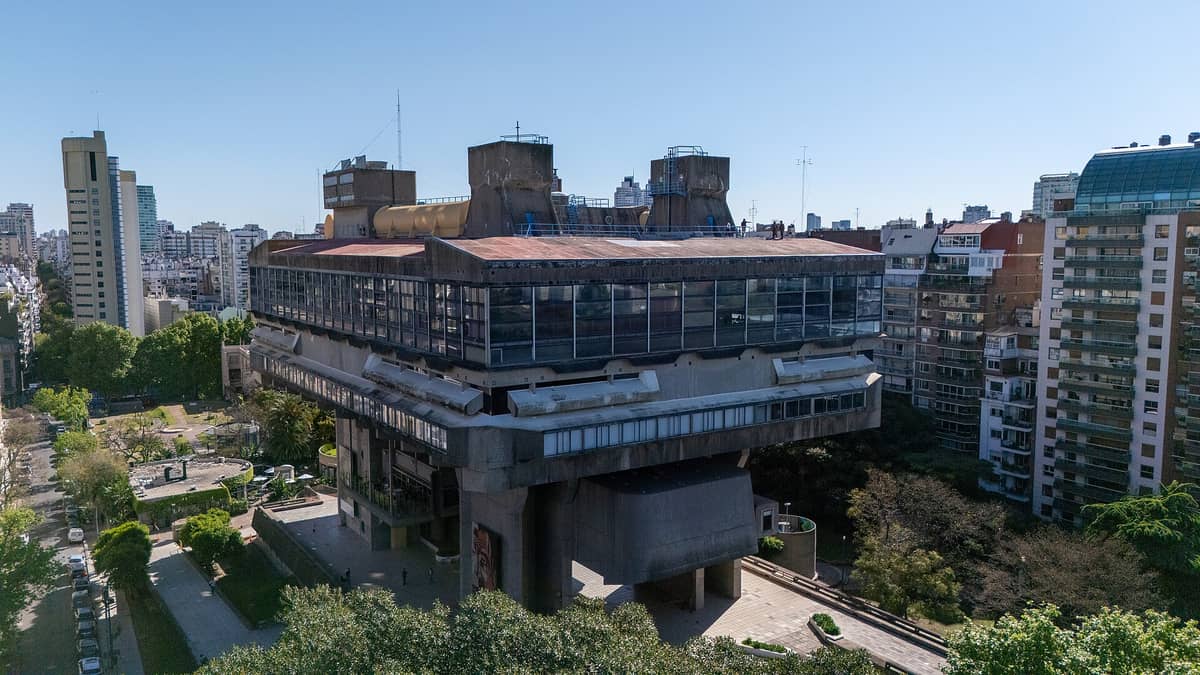
The Biblioteca Nacional Mariano Moreno is Argentina's main national library, a striking Brutalist landmark in Recoleta that has safeguarded the country's literary and documentary heritage since its founding in 1810. Entry is free, the building is architecturally significant, and the reading rooms offer a rare window into Buenos Aires intellectual life.
Quick Facts
- Location
- Agüero 2502, Recoleta, Buenos Aires
- Getting There
- Las Heras station, Subte Line H; multiple colectivo lines nearby
- Time Needed
- 1 to 2 hours for a general visit; longer if using reading rooms
- Cost
- Free entry to public areas
- Best for
- Architecture fans, book lovers, curious travelers, anyone avoiding the midday heat
- Official website
- www.bn.gov.ar
What the Biblioteca Nacional Mariano Moreno Actually Is
The Biblioteca Nacional Mariano Moreno de la República Argentina is the country's official national library, holding one of the largest archival and bibliographic collections in Latin America. Founded in 1810 as the Biblioteca Pública de Buenos Aires in the immediate wake of the May Revolution, it predates Argentine independence itself. The institution's name honors Mariano Moreno, a founding patriot and one of the intellectual architects of Argentine statehood, who was instrumental in the library's early establishment.
Today the library occupies a prominent position in Recoleta, both physically and culturally. Its current building, a monumental Brutalist structure completed in the 1990s, replaced a colonial-era building in the Montserrat neighborhood where Jorge Luis Borges once served as director. That literary connection is one reason the library carries a certain weight for international visitors: Borges, one of the most celebrated authors in the Spanish language, ran the institution during a turbulent period in Argentine history and is said to have gone blind while director here.
ℹ️ Good to know
Opening hours: Monday to Friday 9:00–21:00, Saturday and Sunday 12:00–19:00. Confirm on the official site before visiting, especially around public holidays.
The Building: Brutalism at Scale
The current library building is one of the more architecturally decisive structures in Buenos Aires. Designed by architects Clorindo Testa, Francisco Bullrich, and Alicia Cazzaniga, the structure is raised on pilotis above a large open plaza, lifting the main volume off the ground so that the surrounding parkland flows beneath it. The effect from the street is of a massive concrete form hovering over green space, with strong geometric lines and deeply shadowed recesses that make it read differently depending on the hour and light conditions.
Early morning, when the light hits from the east, the textured concrete surfaces show their full relief. By midday the building casts deep shade across the plaza below, which local residents use for walking and sitting. At dusk, with interior lights visible through the upper glazing, the reading rooms take on a warmer glow. The building is worth approaching from different angles: from Agüero, from the park behind, and from the elevated terrace level if you walk up through the entrance.
Visitors interested in the city's architectural range will find this a useful counterpoint to the European-inflected styles that dominate much of central Buenos Aires. For more context on the broader architectural landscape of the city, the Buenos Aires architecture guide covers the spectrum from colonial to contemporary.
Tickets & tours
Live prices and dates from our booking partner. If you book, we may earn a commission at no extra cost to you.
Madero Tango Show tickets with optional dinner
From 32 €Instant confirmationFree cancellationBuenos Aires small-group city tour with optional lunch and cruise
From 25 €Instant confirmationFree cancellationPiazzolla Tango Show VIP tickets with transfer and optional dinner
From 112 €Instant confirmationFree cancellationBuenos Aires shopping tour
From 15 €Instant confirmationFree cancellation
What You'll Find Inside
The interior is organized across multiple levels, with public reading rooms, archival services, exhibition spaces, and a bookshop. The reading rooms are genuinely functional spaces where students, researchers, and ordinary readers work quietly throughout the day. The atmosphere is studious without being unwelcoming: visitors who simply want to sit and look around are generally free to do so in the public areas.
The library holds millions of items including books, periodicals, manuscripts, maps, photographs, and audio-visual materials documenting Argentine cultural and political history. Most of these are in storage or restricted access, but rotating exhibitions in the ground-floor and gallery spaces bring selections of the collection into public view. These exhibitions change throughout the year and tend to focus on Argentine history, literature, art, and social memory.
The Formatos Accesibles service provides materials adapted for visitors with visual or other disabilities. This service operates Monday to Friday 10:00–18:00 and Saturday and Sunday 12:00–19:00. Visitors requiring specific assistance are encouraged to contact the library directly before their visit.
💡 Local tip
The library's ground-floor bookshop stocks Argentine literature, history, and cultural studies publications, often at prices lower than commercial bookshops. Worth a browse even if you're not a Spanish reader.
The Borges Connection
Jorge Luis Borges served as director of the National Library from 1955 to 1973. The appointment came shortly after Juan Perón's fall from power: Borges, who had been demoted from a librarian's position to a chicken inspector under the Peronist government, was reinstated and elevated to director. He reportedly described the experience of going blind while surrounded by hundreds of thousands of books as one of God's most elegant ironies.
Borges wrote directly about the library in several essays and poems, most famously framing it as a kind of labyrinth. For readers who know his work, visiting the institution carries a specific resonance, even though the building Borges actually worked in no longer exists. The current Recoleta structure was built after his tenure. Still, the institution itself is continuous, and the library maintains archives and commemorative materials related to his directorship.
The Recoleta neighborhood surrounding the library contains several other significant cultural sites. The Recoleta Cemetery is a short walk away, and the Museo Nacional de Bellas Artes is within easy walking distance along Avenida del Libertador.
When to Visit and How to Get There
Weekday mornings between 9:00 and 11:00 are the quietest time to visit. By late morning the building fills with students and researchers, and the reading rooms become more actively used. Weekend afternoons, particularly Sundays, draw a more relaxed crowd: families from the surrounding neighborhood, visitors combining this with a walk through the adjacent park. The building never reaches the kind of crowds you see at the Recoleta Cemetery, which is both a practical advantage and a sign of what to expect: this is not a spectacle, it's an institution.
Getting there by Subte, Buenos Aires' metro network, is straightforward: Line H stops at Las Heras, a short walk from the library entrance on Agüero. Multiple colectivo bus lines also stop in the immediate area. If you are coming from the Palermo parks or from the Recoleta Cemetery, the library is walkable from both, making it a natural addition to a half-day circuit of the neighborhood.
Buenos Aires has a well-developed public transport network. For route planning and fare card (SUBE) information, the getting around Buenos Aires guide covers the main options in detail.
💡 Local tip
The plaza beneath the elevated building offers shade even on hot summer days. Buenos Aires summers (December to February) are humid and can exceed 30°C, so the library's air-conditioned reading rooms are a practical midday refuge.
Photography and Practical Notes
The exterior of the building photographs well in the late afternoon when the sun angles across the concrete facade from the west. The elevated terrace level, accessible from the main entrance, offers a view back over the surrounding park and toward Recoleta. Interior photography is generally possible in public areas, but readers working in the reading rooms expect the same consideration you would give anyone in a functional library: keep noise low and avoid photographing individuals without consent.
There is no specific dress code for entry, but the library is a formal public institution. Standard city clothing is entirely appropriate. The building is physically accessible for wheelchair users via elevator, but visitors with specific mobility needs should verify current access arrangements directly with the library, as configurations within large institutional buildings can change.
⚠️ What to skip
The library closes on Argentine public holidays and may adjust hours for special events or institutional activities. Always check the official site at bn.gov.ar before making a dedicated trip.
Who This Is and Is Not For
The Biblioteca Nacional Mariano Moreno rewards visitors who come with some curiosity about Argentine intellectual history, Brutalist architecture, or the Borges connection. The building alone is worth seeing if you are already in Recoleta for other reasons. The exhibitions, when well-curated, offer genuine insight into Argentine cultural memory that you will not find in most tourist circuits.
Travelers with no particular interest in libraries, architecture, or Argentine history should be realistic with themselves about whether this is a good use of limited time. The building's interior does not offer the visual drama of, say, El Ateneo Grand Splendid, and the collections are largely inaccessible to casual visitors. This is not a museum designed to entertain; it is a working national library that happens to be housed in a remarkable building.
If you are trying to build a broader picture of Buenos Aires beyond the main tourist circuit, the Buenos Aires hidden gems guide offers further suggestions for less obvious but worthwhile stops across the city.
Insider Tips
- The library's rooftop terrace, when accessible, provides an unusual elevated view of Recoleta and the Palermo parks. Ask at the information desk whether it is open on the day you visit: it is not always signposted.
- Check the library's official events calendar at bn.gov.ar before visiting. The institution regularly hosts free literary talks, film screenings, and academic events that are open to the public and rarely appear in mainstream tourism listings.
- The plaza beneath the building connects informally to the green spaces along Avenida del Libertador. Walking through here in the early morning you will find Buenos Aires residents jogging and walking dogs, a completely different atmosphere from the afternoon tourist flow at the cemetery nearby.
- If you read Spanish, the library's ground-floor publication displays often include recent titles on Argentine history and politics at institutional prices. These make more considered souvenirs than most of what is sold near the Recoleta Cemetery.
- The building's pilotis structure means the open ground-floor plaza is sheltered from light rain. If you are caught in a summer afternoon shower, this is a reasonable place to wait it out without needing to enter the library proper.
Who Is Biblioteca Nacional Mariano Moreno For?
- Architecture enthusiasts drawn to mid-century and Brutalist design
- Borges readers or fans of Latin American literature seeking a connection to his directorship
- Independent travelers wanting a free, unhurried cultural stop in Recoleta
- Visitors looking for air-conditioned relief during Buenos Aires' summer heat
- Researchers or book lovers who want to see a functioning South American national library
Nearby Attractions
Other things to see while in Recoleta:
- Basílica Nuestra Señora del Pilar
Standing directly beside the Recoleta Cemetery, the Basílica Nuestra Señora del Pilar is one of the oldest churches in Buenos Aires. Built in the 18th century as part of a Franciscan convent complex, it offers free entry, a small cloister museum, and a rare moment of quiet in one of the city's most visited corners.
- Cementerio de la Recoleta
The Cementerio de la Recoleta is a 13-hectare open-air monument to Argentina's political elite, military heroes, and cultural icons, mapped out in streets of carved marble, wrought iron, and crumbling Art Deco grandeur. It is where Eva Perón is buried, but the cemetery rewards those who wander beyond her tomb. Few attractions in Buenos Aires deliver this much history, beauty, and quiet drama in a single visit.
- Centro Cultural Recoleta
The Centro Cultural Recoleta is a large public cultural center in Recoleta, Buenos Aires, offering rotating contemporary art exhibitions, film screenings, and live performances across 27 rooms and additional dedicated spaces. Entry is free for Argentine residents and low-cost for international visitors, making it one of the most accessible cultural institutions in the city.
- El Ateneo Grand Splendid
Once a grand theater, El Ateneo Grand Splendid on Avenida Santa Fe is now a working bookstore where the original stage, balconies, and painted dome have been preserved in full. Entry is free, the café sits where performers once stood, and the sheer scale of the space stops first-time visitors in their tracks.
Planning a trip? Discover personalized activities with the Nomado app.