Museo de Arte Español Enrique Larreta: Spanish Art and an Andalusian Garden in Belgrano
Housed in the former Belgrano residence of Argentine writer Enrique Larreta, this city-run museum holds one of Buenos Aires's most focused collections of Spanish art, from medieval religious pieces to Golden Age paintings. The Andalusian-style garden at its rear is quietly one of the most distinctive outdoor spaces in the northern neighborhoods.
Quick Facts
- Location
- Av. Juramento 2291, Belgrano, Buenos Aires
- Getting There
- Multiple colectivo lines on Av. Cabildo and Av. Juramento; Belgrano C and Belgrano R Mitre line train stations nearby
- Time Needed
- 1 to 2 hours for the museum; add 30 minutes for the garden
- Cost
- ARS 10,000 general; ARS 2,000 for residents with ID; free on Wednesdays for residents. Verify current rates before visiting.
- Best for
- Art lovers, architecture enthusiasts, travelers seeking a calm break from busier tourist circuits
- Official website
- buenosaires.gob.ar/museolarreta
What Is the Museo Larreta?
The Museo de Arte Español Enrique Larreta is a public museum dedicated to Spanish art, operating out of the early twentieth-century Belgrano residence that once belonged to Argentine novelist and diplomat Enrique Larreta (1875–1961). Larreta spent years in Spain and developed a deep attachment to the art and architecture of Castile and Andalusia. When he returned to Buenos Aires, he brought that obsession with him, filling his home with Spanish paintings, sculptures, ceramics, textiles, and religious objects spanning the medieval period through the seventeenth century.
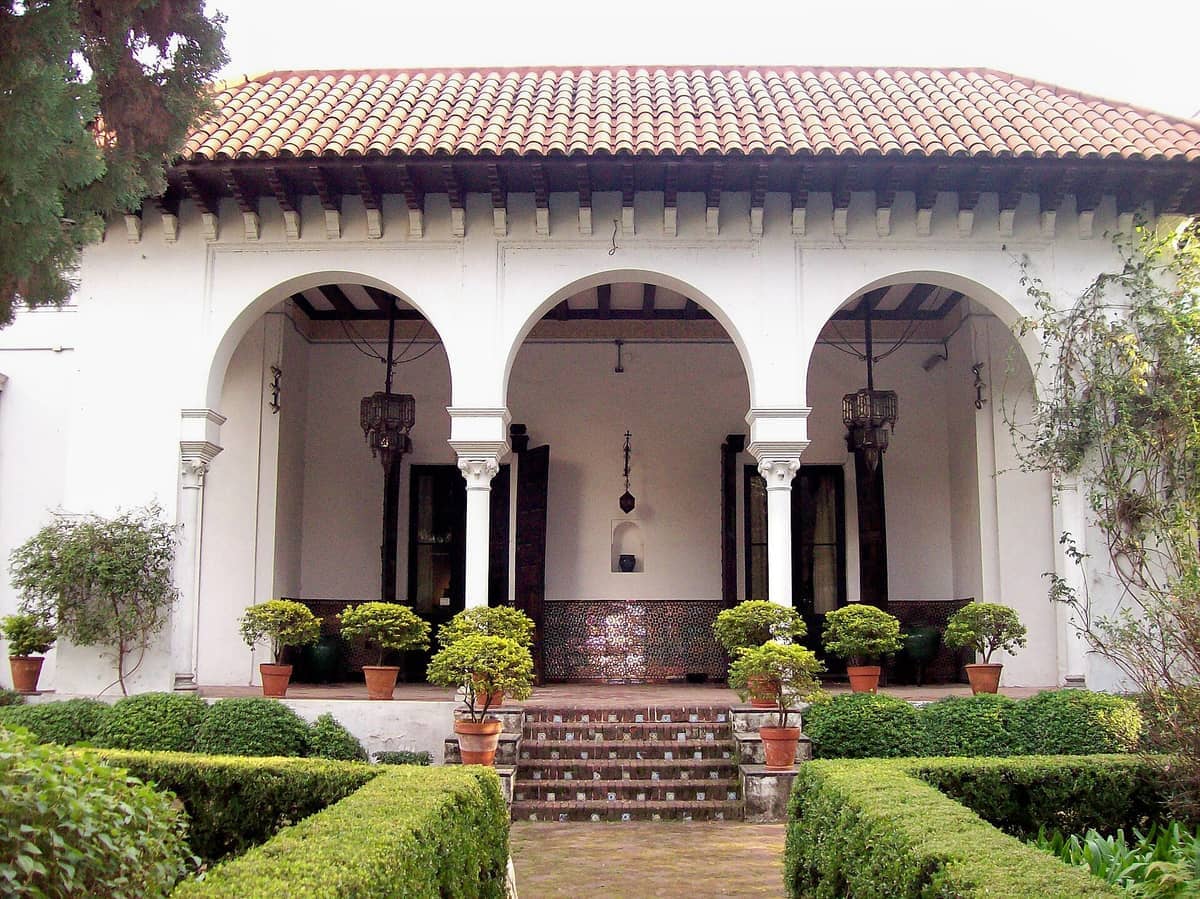
The city of Buenos Aires acquired the property and opened it as a museum in 1962, the year after Larreta's death. Today it functions as a branch of the city's network of municipal museums, sitting on Avenida Juramento directly across from Plaza Manuel Belgrano. The building itself is part of the experience: it was designed to evoke a Spanish colonial manor, with arched doorways, terracotta tiles, and whitewashed walls that feel deliberately removed from the surrounding Buenos Aires streetscape.
💡 Local tip
Wednesday is the best day for residents and budget travelers: admission is free for those presenting a valid Argentine residency DNI. The museum is closed on Tuesdays.
The Collection: What You'll Actually See
The collection is organized thematically and chronologically across the house's rooms, which retain much of their original arrangement. Religious art dominates the medieval and Renaissance sections: carved wooden altarpieces, polychrome sculptures of saints, and devotional panels painted on wood give those rooms a chapel-like gravity. The lighting inside is subdued, which suits the tone of the objects but means you'll want to lean in closely to catch the detail in darker canvases.
As you move through the house, the collection opens up to include tapestries, Moorish-influenced ceramics from Toledo and Talavera, decorative ironwork, and furniture. Some pieces are labeled with both Spanish and English descriptions, though the depth of commentary varies by room. Visitors with a background in Spanish Golden Age art will find the labeling sufficient; those coming in without prior context may want to do a quick read-up on Spanish art history beforehand to get more out of the experience.
The museum is not large by international standards, and the collection will not overwhelm a first-time visitor. What it offers instead is focus and coherence: you're seeing one man's curated obsession, and the personal scale of the house makes that legible in a way that larger encyclopedic museums often cannot replicate.
Tickets & tours
Live prices and dates from our booking partner. If you book, we may earn a commission at no extra cost to you.
Boca Juniors Museum skip-the-line tickets
From 17 €Instant confirmationFree cancellationTour to La Boca Jrs and River Plates Stadiums and museums
From 99 €Instant confirmationFree cancellationRiver Stadium and Museum Official Guided Tour
From 33 €Instant confirmationFree cancellationParque de la Costa amusement park tickets with transfer
From 79 €Instant confirmationFree cancellation
The Andalusian Garden: The Understated Main Event
Behind the house, a garden modeled on Andalusian courtyard traditions occupies a substantial portion of the property. There are clipped hedges, a central fountain, tiled pathways, and plantings that include jasmine, rosemary, and citrus trees. In spring (September through November) when the jasmine blooms, the scent carries through the entire space. In summer, the canopy of trees makes it noticeably cooler than the surrounding streets.
Garden hours are 11:00 to 18:00 on days when the museum is open. Weekday mornings are often nearly empty, which is the right time to visit if you want to sit on one of the stone benches and actually absorb the space. On weekend afternoons, the garden draws local families and couples looking for a quieter alternative to the busier parks nearby, and while it never becomes crowded in any stressful sense, the solitude of a weekday visit is notably different.
The garden was restored as part of broader infrastructure works on the property and is considered one of the more carefully maintained examples of Andalusian-inspired garden design in Buenos Aires. If this kind of cultivated historic outdoor space appeals to you, the Jardín Botánico Carlos Thays in Palermo and the Jardín Japonés offer different but comparable experiences in the city.
When to Visit and How It Changes Through the Day
The museum opens at 11:00 on all days it operates (except Tuesdays). Arriving close to opening on a weekday gives you the rooms essentially to yourself, and the morning light coming through the windows of the front-facing galleries is notably cleaner and warmer than the artificial lighting used when curtains are drawn later in the day. The building stays cool in summer mornings before the heat builds up outside.
Afternoons, especially on weekends, bring more visitors, though the numbers remain modest compared to more prominent city museums. School groups occasionally visit on weekday mornings, which can add noise to the smaller interior rooms. If a quiet contemplative visit matters to you, a weekday afternoon, after around 14:00, tends to be reliably calm.
Seasons affect the garden far more than the interior. Winter visits (June through August) are perfectly viable for the collection, but the garden loses much of its warmth and color. Spring and autumn offer the best combination of pleasant temperatures and garden character. Summer (December through February) can be very hot in Buenos Aires, and afternoons in the garden become uncomfortable; summer morning visits are fine.
ℹ️ Good to know
Opening hours: Monday, Wednesday, Thursday, Friday 11:00–19:00; Saturday, Sunday, and public holidays 11:00–20:00. Garden closes at 18:00. Closed Tuesdays, Good Friday, 1 May, 24–25 December, and 31 December–1 January.
Getting There and Practical Details
The museum is located at Av. Juramento 2291 in Belgrano, directly facing Plaza Manuel Belgrano. Belgrano is a well-connected northern neighborhood, and multiple colectivo lines run along Avenida Cabildo and Avenida Juramento. The Belgrano C and Belgrano R Mitre line train stations are within reasonable walking distance for those arriving from the city center via the Mitre line. It is a short walk from the Juramento station on Subte Line D, but bus or train is still the most practical option for many visitors coming from Palermo, Recoleta, or the Microcentro.
If you're spending a day in Belgrano, the museum pairs naturally with a walk through the neighborhood's main commercial and cultural spine. Barrio Chino, Buenos Aires's compact Chinese neighborhood, is a short walk to the east and makes for a very different but complementary half-day.
Public transport in Buenos Aires uses the SUBE rechargeable card for bus and rail fares; have one loaded before traveling. Ride-hailing apps and radio taxis are straightforward options from most central neighborhoods and will drop you directly at the Av. Juramento entrance.
⚠️ What to skip
Accessibility note: The main entrance on Av. Juramento 2291 is not accessible for visitors with motor disabilities. The accessible entrance is at Vuelta de Obligado 2155; notify security staff on arrival to have the door opened. The site is described as 'practicable with assistance' for motor, hearing, and visual impairments.
Is It Worth Your Time? A Clear Assessment
The Museo Larreta is not a major international draw, and it should not be treated as such. It is a specialized, mid-sized house museum with a coherent and well-preserved collection. If Spanish art history is genuinely interesting to you, or if you appreciate historic residential architecture and garden design, the museum will reward a couple of hours comfortably. The admission cost is low, the crowds are thin, and the garden alone justifies the trip on a good weather day.
Visitors primarily interested in Argentine art or contemporary work will find more to engage with elsewhere. The Museo MALBA in Palermo and the Museo Nacional de Bellas Artes in Recoleta cover Latin American and global art with considerably larger and more varied holdings. The Larreta is a different kind of experience: quieter, more personal, and deliberately narrow in scope.
Travelers who find themselves 'museumed out' but still want some cultural context during their Buenos Aires stay may actually prefer the Larreta precisely because of its small scale. You can move through it without fatigue, and the garden gives you a natural pause. That combination is not common in the city's museum circuit.
For a broader overview of what the city's museum scene offers, the best museums in Buenos Aires guide provides a useful framework for prioritizing your time.
Insider Tips
- Wednesday free admission for residents is a genuine draw, but it also attracts the largest midweek crowds. If you qualify but value quiet over savings, a Thursday or Friday morning is the better trade-off.
- The garden's jasmine blooms peak in September and October. If you're visiting in spring, the scent is strong enough that you'll notice it before you see the plants.
- Photography is generally permitted in the garden, but confirm the current policy for interior rooms at the entrance desk. Flash is typically prohibited near fragile textiles and works on paper.
- The accessible entrance at Vuelta de Obligado 2155 is not always staffed at the door; ring the bell or ask security proactively rather than waiting. Allow a few extra minutes if accessibility assistance is needed.
- The plaza in front of the museum, Plaza Manuel Belgrano, hosts a weekend artisan fair. Arriving on a Saturday or Sunday morning means you can take in both the fair and the museum in a single visit without backtracking.
Who Is Museo de Arte Español Enrique Larreta For?
- Travelers with a specific interest in Spanish medieval and Golden Age art
- Architecture enthusiasts drawn to early twentieth-century domestic design and Andalusian garden traditions
- Visitors staying in or exploring Belgrano who want a low-key cultural stop
- Anyone looking for a calm, uncrowded museum experience away from the main tourist circuits
- Budget travelers, particularly residents, who can take advantage of Wednesday free admission or the broad free-admission categories
Nearby Attractions
Other things to see while in Belgrano:
- Barrio Chino de Belgrano (Chinatown)
Barrio Chino de Belgrano is Buenos Aires' compact Chinatown district, centered on Calle Arribeños between Juramento and Blanco Encalada. Free to enter and open daily, it draws visitors for its Asian supermarkets, dumpling restaurants, tea shops, and the distinctive ceremonial arch at its entrance. Weekend crowds are significant; weekday mornings are a different experience entirely.
Planning a trip? Discover personalized activities with the Nomado app.