Mercado de San Telmo: The Iron Market at the Heart of San Telmo
Built in 1897, Mercado de San Telmo is a covered iron-frame market in Buenos Aires' oldest neighborhood, offering a mix of food stalls, antique dealers, and coffee bars under a single ornate roof. Entry is free, the atmosphere shifts dramatically between weekday mornings and Sunday afternoons, and it rewards visitors who linger rather than rush.
Quick Facts
- Location
- Defensa 963, corner of Carlos Calvo, San Telmo, Buenos Aires
- Getting There
- Independencia (Line C Subte); also walkable from Perú and Plaza de Mayo (Line A)
- Time Needed
- 45 minutes to 2 hours depending on whether you stop to eat
- Cost
- Free entry; food and purchases vary by stall
- Best for
- Food lovers, architecture enthusiasts, antique browsers, slow-travel visitors
- Official website
- www.mercadosantelmo.com.ar
What Is Mercado de San Telmo?
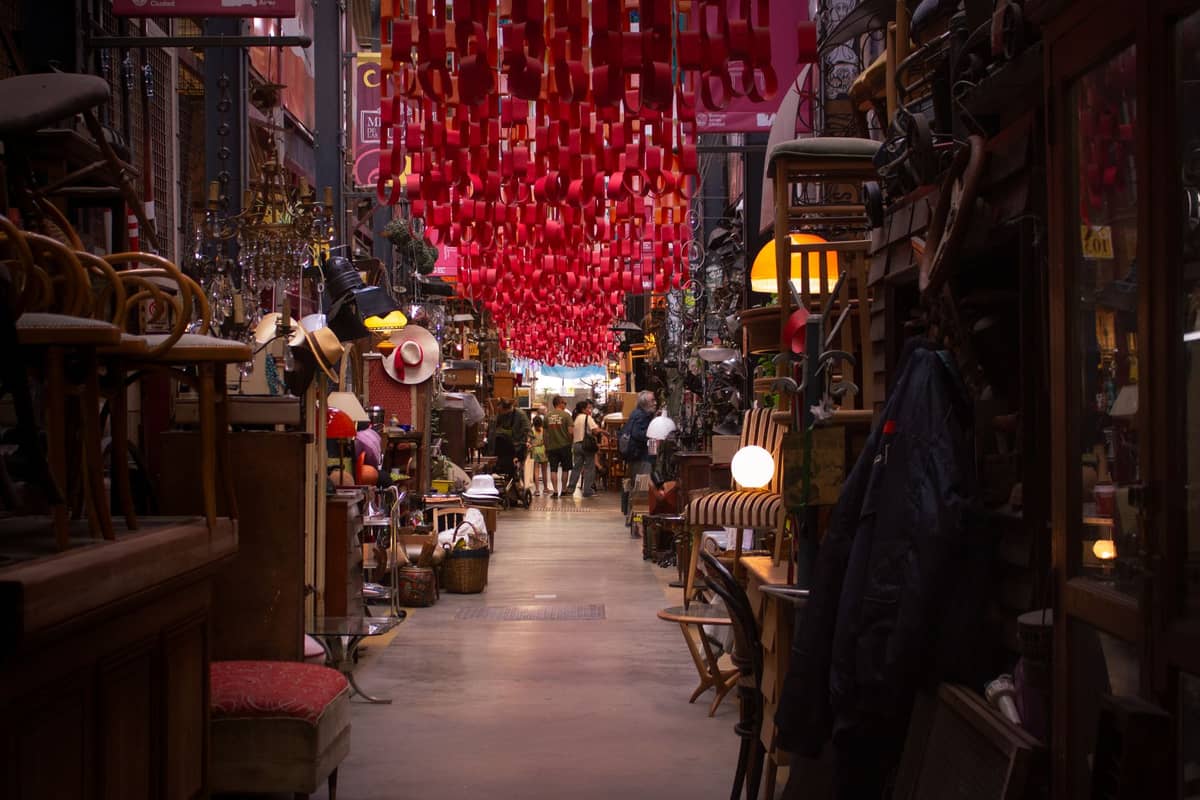
Mercado de San Telmo is a covered public market housed inside a 19th-century iron structure at Defensa 963, in Buenos Aires' oldest residential neighborhood. The building dates to 1897 and its exposed ironwork, high glass skylights, and tiled passageways give it a distinctly European market-hall character, more Parisian than South American at first glance. Inside, the stalls run the full spectrum from fresh produce sellers and butchers to espresso bars, antique furniture dealers, vinyl record collectors, and small restaurants cooking to order.
The market operates daily, though hours differ slightly depending on the day. The official market website lists 9:00 to 20:00 every day, while the City of Buenos Aires tourism portal notes it as open Tuesday to Friday 10:30 to 19:30 and on Saturdays, Sundays, and public holidays from 9:00 to 20:00. These sources conflict, so check the official website before planning an early arrival.
⚠️ What to skip
Hours listed online vary between sources. The safest approach: arrive after 10:00 on any day. Sundays are reliably the most active, with most stalls open from 9:00.
The Building: An 1897 Iron Hall Worth Examining
The structure itself is as much a reason to visit as anything sold inside. The market was built in 1897 and its restored iron frame, modeled on the covered market halls popular in late 19th-century Europe, spans an entire city block. Light filters through the glass roof panels at different angles depending on the time of day, casting shifting shadows across the tiled floors and iron columns below.
The wrought-iron detailing on the support columns and arched entryways reflects the influence of the same architectural wave that produced Buenos Aires' other grand public buildings of the era. Walking the interior perimeter and looking upward is worth the brief pause, even if you have no intention of buying anything. The building has been through various periods of restoration, and while some corners show wear, the core structure is well maintained.
San Telmo's architectural character extends well beyond this single building. If you find the market's structure interesting, the Buenos Aires architecture guide covers the broader context of the city's 19th and early 20th-century construction heritage.
Tickets & tours
Live prices and dates from our booking partner. If you book, we may earn a commission at no extra cost to you.
Walking private tour of Plaza de Mayo and San Telmo
From 38 €Instant confirmationFree cancellationSan Telmo and La Boca Bike Tour in Buenos Aires
From 43 €Instant confirmationFree cancellationBuenos Aires San Telmo and Mataderos Fairs private tour
From 62 €Instant confirmationFree cancellationSan Telmo and Mataderos Fairs guided tour
From 143 €Instant confirmationFree cancellation
Morning vs. Afternoon vs. Sunday: How the Atmosphere Changes
Weekday mornings before noon are the quietest window. A handful of locals stop by for coffee or groceries, the food stalls are setting up, and you can walk through the central aisles without stepping around other visitors. The sounds are low-key: espresso machines, the clatter of a butcher's prep work, a vendor arranging goods on a shelf. It is the best time to photograph the architecture without crowds in every frame.
By early afternoon on weekdays, the lunch crowd arrives and the eating and drinking end of the market wakes up. Counter-style restaurants along the interior fill with local office workers and a growing number of tourists. The noise level rises noticeably. Smells shift toward grilled meat and frying empanadas, and the narrow internal corridors can get tight, particularly around popular food counters.
Sundays transform the market entirely. The exterior of the building on Defensa Street becomes the spine of the weekly San Telmo street fair, which runs along Defensa from the Plaza Dorrego area south toward Parque Lezama. The market's entrances flow with foot traffic, and the antique and craft stalls inside reach peak activity. If you want atmosphere, Sunday delivers it clearly. If you want space to browse without pressure, any weekday morning is more comfortable.
💡 Local tip
Arrive by 10:00 on a Sunday to move through the market before the street fair crowds spill inside from Defensa. By noon, the main corridors are genuinely packed.
What to Eat and Drink Inside
The food offer inside Mercado de San Telmo has broadened considerably in recent years. Alongside traditional butcher counters and deli-style cheese and charcuterie vendors, there are counter bars serving cortado coffee, craft beer taps, wine-by-the-glass, and small plates. A few stalls specialize in local sandwiches and choripán-style options; others lean toward more international food trends. Quality varies by vendor, and prices at the eating counters are mid-range by Buenos Aires standards.
The market is not primarily a food hall in the modern sense, where every stall has been curated to a theme. It sits somewhere between a functioning neighborhood market and a tourist-friendly eating space, which means you will find a chorizo sandwich next to a specialty coffee bar next to a vendor selling old silverware. That mix is genuinely characteristic of San Telmo and worth accepting on its own terms.
Eating well in Buenos Aires extends beyond any single market. The Buenos Aires food guide covers the broader range of local dishes and neighborhoods worth exploring for a meal.
Antiques, Crafts, and What You Can Actually Buy
The antique dealers inside the market occupy a section of the interior that has changed relatively little over decades. You will find old porcelain, silverware, mate gourds, vintage photography, leather goods, and furniture pieces that would not fit in a carry-on. Some vendors are clearly priced for tourists; a few are genuinely interesting for collectors. Bargaining is possible on larger items but not always expected, and many vendors speak at least basic English.
Beyond antiques, there are stalls selling leather wallets and belts, Argentine crafts, mate kits, and small souvenirs. These fall on a spectrum from well-made to generic, and it takes a few passes through the market to distinguish them. If buying antiques or artisan goods is a priority for your visit, the Sunday street fair along Defensa expands the selection considerably, though at the cost of negotiating larger crowds.
Getting There and Practical Details
The market sits at Defensa 963, at the corner of Carlos Calvo, in San Telmo. The nearest Subte stop is Independencia on Line C, which connects the market area to the central Microcentro and continues south. The stops at Perú and Plaza de Mayo on Line A are also within reasonable walking distance, roughly 10 to 15 minutes on foot through the historic center. If you are coming from Recoleta or Palermo, a taxi or ride-hailing app is more practical than the Subte, which requires transfers.
Entry to the market is free. There is no ticket, no bag check, and no formal entrance queue. The building has multiple street-level entrances from Defensa, Bolívar, and the side streets, which helps manage flow on busy days. The interior floor is tiled and relatively flat, though the market's older passageways can be narrow and some threshold steps exist at certain entrances. Anyone with mobility considerations should check the current state of the building before visiting, as no official accessibility statement was available at the time of writing.
For context on how San Telmo fits into a wider Buenos Aires itinerary, the 3-day Buenos Aires itinerary covers how to sequence the neighborhood alongside other key areas.
ℹ️ Good to know
Argentina uses 220V electricity with Type C and Type I plugs. If you plan to charge devices or buy electronics at the market, bring an adapter. The Argentine peso (ARS) is the local currency; many market stalls prefer cash, though some accept cards.
Is Mercado de San Telmo Worth It?
For most visitors to Buenos Aires, yes, though the expectations need calibrating. This is not a pristine food market with high-end produce and immaculate presentation. It is a working market in a historic building that has adapted over 125 years to serve both locals and tourists, and that layering shows. Some stalls are polished; others feel like they have been in the same spot since the 1970s, which is arguably part of the appeal.
Visitors who approach it as a place to spend 30 minutes, take a few photos, and leave will likely find it underwhelming. Visitors who sit at a counter for a coffee, browse the antique section slowly, and pay attention to the building's details tend to get more from it. The market rewards patience.
Who should probably skip it: travelers who have very limited time and are choosing between this and a major museum, or anyone expecting the polished atmosphere of a European-style food hall. The market can feel commercialized on Sundays in particular, and if the antique or food elements do not interest you, the architecture alone may not justify a dedicated trip.
The neighborhood itself offers more than the market. The weekly Feria de San Telmo runs along Defensa every Sunday and pairs naturally with a market visit, effectively doubling the scope of a morning out in the area.
Insider Tips
- The bar counters inside the market that face the interior corridors are better for people-watching than the ones facing the walls. On busy days, grabbing a stool at one of these gives you a natural vantage point while you eat or drink.
- Photography is generally tolerated inside, but asking vendors before photographing their stalls directly is good practice and often leads to a more interesting interaction anyway.
- The Defensa 963 entrance is the main one and gets crowded. The entrances from Bolívar Street, on the eastern side of the block, tend to be quieter and bring you directly into the antique section.
- If you are visiting on a Sunday, the combination of the market and the outdoor Feria de San Telmo along Defensa makes for a natural half-day in the neighborhood. Start at the market when it opens, then work your way north along the street fair as the morning progresses.
- Cash is widely preferred by market vendors, particularly antique dealers. ATMs are available nearby but can have withdrawal limits. Check the current currency situation before visiting, as Argentina's exchange rate environment has changed frequently in recent years.
Who Is Mercado de San Telmo For?
- Travelers who enjoy markets as cultural spaces rather than shopping destinations
- Architecture and history enthusiasts interested in 19th-century Buenos Aires
- Food and coffee drinkers looking for a relaxed mid-morning stop in San Telmo
- Anyone combining a Sunday morning in the neighborhood with the Defensa street fair
- Antique and vintage collectors with time to browse without a set agenda
Nearby Attractions
Other things to see while in San Telmo:
- Feria de San Telmo (Sunday Market)
Every Sunday, Calle Defensa closes to traffic and around 300 registered vendors spread across Plaza Dorrego and the surrounding cobblestone streets. Antique silver, vintage maps, leather goods, and live tango performances compete for your attention. Entry is free — the cost is whatever you can't resist buying.
- Iglesia Ortodoxa Rusa de la Santísima Trinidad
Built in 1901 and tucked beside Parque Lezama in San Telmo, the Iglesia Ortodoxa Rusa de la Santísima Trinidad is one of Buenos Aires' most unexpected architectural landmarks. With its blue onion domes and Byzantine interior, it offers a rare glimpse into the city's Russian immigrant heritage — but access is tightly controlled and requires planning.
- Museo de Arte Moderno de Buenos Aires (MAMBA)
The Museo de Arte Moderno de Buenos Aires, often still referred to by its old acronym MAMBA, is the city's leading institution for modern and contemporary Argentine art. Housed on Avenida San Juan in San Telmo, its collection of more than 8,000 works spans the 20th and 21st centuries, and free Wednesday admission makes it one of the most accessible cultural experiences in the city.
- Museo Histórico Nacional
The Museo Histórico Nacional in San Telmo preserves Argentina's founding artifacts, from the colonial era to the wars of independence. It sits beside Parque Lezama on land traditionally linked to the city's first settlement, and entry is free every Wednesday through Sunday.
Planning a trip? Discover personalized activities with the Nomado app.