San Antonio de Areco: A Day in Argentina's Gaucho Heartland
Located 113 km northwest of Buenos Aires along Ruta Nacional 8, San Antonio de Areco is the self-declared Capital of Gaucho Tradition. Its cobbled streets, colonial church, riverside park, and silversmith workshops offer a window into Argentina that moves at a different pace entirely.
Quick Facts
- Location
- Km 113, Ruta Nacional 8, Buenos Aires Province, ~113 km from Buenos Aires city
- Getting There
- Bus from Terminal Retiro (~2 hrs); by car via Panamericana then Ruta 8
- Time Needed
- Full day (6–8 hrs); overnight recommended during Fiesta de la Tradición
- Cost
- Free to enter town; individual museums and estancias charge separate fees (verify locally)
- Best for
- Argentine culture, artisan crafts, colonial architecture, pampas scenery, day trips
- Official website
- www.sanantoniodeareco.com.ar
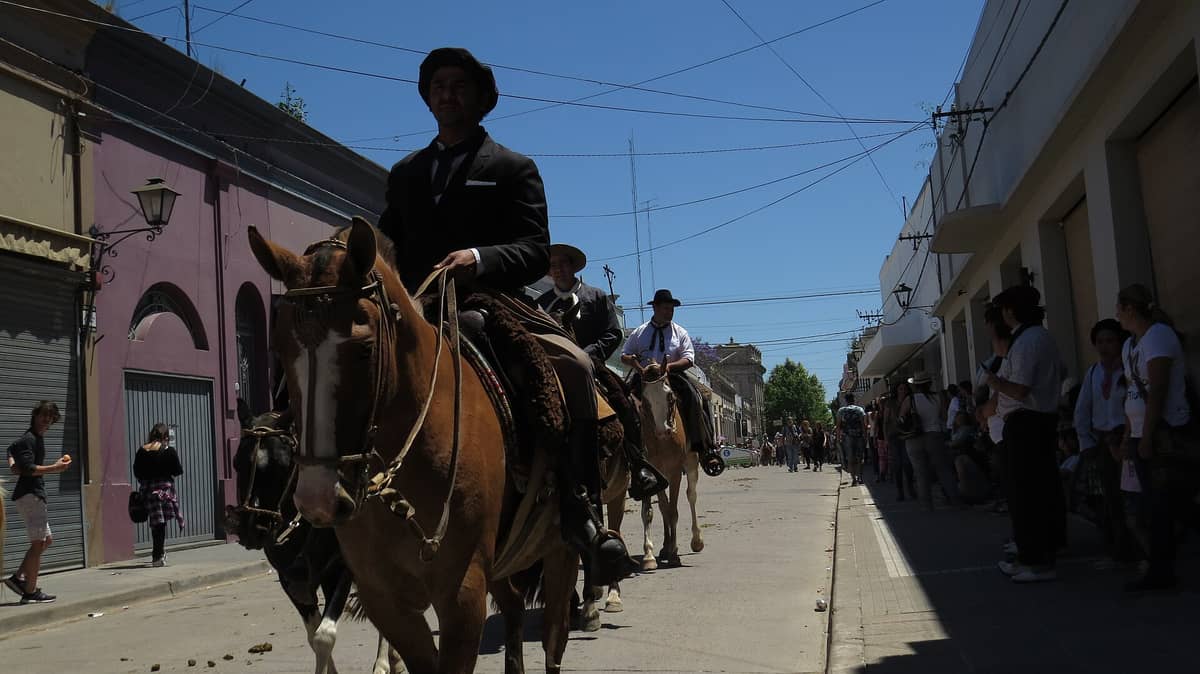
What San Antonio de Areco Actually Is
San Antonio de Areco is not a single monument or ticketed attraction. It is a working colonial town of roughly 25,000 people, and it has been the symbolic center of gaucho culture in Argentina for well over a century. The streets around Plaza Ruiz de Arellano are low-rise and largely unchanged in character since the late 19th century: cream-colored facades, iron-grilled windows, and the occasional horse tied outside a pulpería. The town sits on the banks of the Río Areco, and the water is never far from view or mind.
Gaucho identity in Argentina is not a performance put on for tourists, at least not primarily. The families here have ties to the pampas going back generations, and the workshops producing traditional silver mate accessories, facón knives, and leather goods are genuine craft operations, not souvenir factories. That said, the town is well aware of its appeal and has organized itself accordingly. The tourist infrastructure is functional without being intrusive.
ℹ️ Good to know
The town center is free to explore at all hours. Specific museums and estancias charge their own admission. Prices change regularly — confirm directly with each venue or at the Tourism Office on Boulevard Zerboni at Ruiz de Arellano before visiting.
Getting Here from Buenos Aires
The most straightforward route from Buenos Aires is by long-distance bus from the Terminal de Ómnibus de Retiro. Several companies make the run to San Antonio de Areco, and journey time is roughly two hours depending on the service and stops along the way. The bus terminal in Areco is small and within walking distance of the town center. This is the most practical option if you are not renting a car.
By car, take the Panamericana heading northwest, join Ramal Pilar, and continue on Ruta Nacional 8 until Km 113, where signs direct you into town. Driving gives you flexibility for exploring estancias and the surrounding pampas landscape outside the town center. The road itself, once clear of Buenos Aires traffic, passes through flat agricultural land — your first real introduction to the scale of the pampa.
San Antonio de Areco is one of the more rewarding options covered in our guide to day trips from Buenos Aires, particularly for travelers interested in Argentine rural culture rather than another city neighborhood.
💡 Local tip
Aim to arrive before 10:00. Workshops and small museums close for an extended midday break (roughly 13:00–16:00 in many cases), so morning is the most productive time to visit artisan studios and the Museo Gauchesco Ricardo Güiraldes.
Tickets & tours
Live prices and dates from our booking partner. If you book, we may earn a commission at no extra cost to you.
Madero Tango Show tickets with optional dinner
From 32 €Instant confirmationFree cancellationBuenos Aires small-group city tour with optional lunch and cruise
From 25 €Instant confirmationFree cancellationPiazzolla Tango Show VIP tickets with transfer and optional dinner
From 112 €Instant confirmationFree cancellationBuenos Aires shopping tour
From 15 €Instant confirmationFree cancellation
The Town on Foot: What You Will Actually See
The logical starting point is Plaza Ruiz de Arellano, the main square. The colonial-era Iglesia Parroquial de San Antonio de Padua anchors one side of the plaza, and the surrounding benches fill with locals in the late afternoon regardless of the season. In the morning, the square is quiet enough to hear pigeons and the occasional horse-drawn cart on the nearby streets. By mid-morning, artisan shops begin opening along the surrounding blocks.
Walking toward the river, Parque Criollo and the Museo Gauchesco Ricardo Güiraldes sit on the southern bank of the Río Areco. The museum is dedicated to the legacy of the writer who authored Don Segundo Sombra, a classic Argentine novel of gaucho life, published in 1926. The collection includes period estancia rooms, silver work, and traditional dress. The park itself is a large, tree-shaded space that functions as the ceremonial heart of the Fiesta de la Tradición each November.
The older bridge crossing the Río Areco, known locally as the Puente Viejo, is a handsome stone structure and one of the most photographed spots in town. Early morning offers low, flat light that falls across the water without crowds. By midday the bridge draws more visitors, and by late afternoon it becomes a popular point to watch the river with locals, particularly on weekends.
Gaucho Craft Workshops: What to Look For
The silversmith and leather workshops scattered through the streets east and west of the plaza are one of the main reasons serious travelers make this trip. Names like Draghi and Platería Güiraldes are internationally known within the world of traditional Argentine silver craft. Watching a platero work on a mate or a pair of espuelas (spurs) is a slow, precise process, and the workshops generally allow visitors to observe without pressure to buy.
Prices for high-quality handmade pieces are not cheap, but they reflect genuine craft hours rather than imported assembly. A well-made silver mate with traditional engravings, for instance, represents weeks of a single artisan's work. If you are considering a purchase, budget time to visit more than one workshop before deciding. The town's artisan offer is coherent but not identical across studios.
If craft shopping is part of your Buenos Aires trip more broadly, the Buenos Aires shopping guide covers the city's markets and design stores for useful comparison on what to buy where.
The Fiesta de la Tradición: When the Town Changes Completely
Every November, San Antonio de Areco hosts the Fiesta Nacional de la Tradición, Argentina's most important annual celebration of gaucho culture. The town's population multiplies several times over. Gauchos arrive on horseback from across the province and beyond. There are displays of jineteada (Argentine rodeo), traditional music, and processions through the streets in full period dress. If you have any interest in this aspect of Argentine culture, timing your visit to coincide with the festival is worth the extra logistical effort.
The tradeoff is practical: accommodation within town fills months in advance, prices increase significantly, and the town is genuinely crowded. If you prefer to observe the culture without the event-day intensity, a visit in October or early spring gives you the town in a calmer state while many of the same artisans and estancias remain open.
⚠️ What to skip
During Fiesta de la Tradición (usually held over a long weekend in mid-November), book accommodation in San Antonio de Areco or nearby towns many months ahead. Last-minute options are extremely limited and expensive.
Estancias and the Surrounding Pampas
Several working estancias in the area around San Antonio de Areco offer day visits and overnight stays. A day at an estancia typically includes a large traditional asado, horse riding, and demonstrations of gaucho skills on horseback. The quality and character vary significantly between properties, from formal and tourist-oriented to genuinely working farms that receive visitors as a secondary activity. Booking in advance is strongly recommended, as many estancias limit group sizes.
Even if you do not visit an estancia, driving or cycling a few kilometers outside town on the smaller provincial roads gives a clear sense of the flat pampas landscape: open sky, cattle, low windbreaks of eucalyptus, and occasional farmsteads. This is the physical context that produced gaucho culture, and it is worth at least an hour outside the town perimeter to understand it.
For more on how a day trip to San Antonio de Areco fits within a wider itinerary, see the one week in Buenos Aires itinerary, which builds in pampas time alongside city exploration.
Practical Details: Timing, Weather, and Accessibility
The most comfortable months to visit are March through May and September through November, when temperatures in Buenos Aires Province are mild and afternoon heat is not a factor. Summer visits (December through February) are viable but expect heat and humidity, and carry water if you plan to walk significant distances. The town itself offers reasonable shade along its tree-lined streets.
Accessibility across the town center is uneven. The streets and pavements are largely flat, but many are cobblestoned and uneven, which creates real challenges for wheelchair users or anyone with reduced mobility. The Tourism Office on Boulevard Zerboni can advise on the most accessible routes. The park around the Museo Gauchesco has grass paths that may be easier in places than the cobblestone streets.
Photography works best in the first two hours after sunrise and the hour before sunset. The low light on the cream-colored colonial facades, the stone bridge, and the river surface is particularly good. Midday light is flat and harsh. If you are traveling specifically to photograph the town, an overnight stay makes the early morning light accessible without a 5:00 departure from Buenos Aires.
Buenos Aires has a humid subtropical climate; for seasonal travel planning, the best time to visit Buenos Aires guide applies broadly to the province as well, with spring and autumn being the most comfortable periods for outdoor exploration.
Who Should Reconsider This Trip
San Antonio de Areco asks for genuine interest in Argentine rural culture and craft tradition. Travelers who are primarily interested in urban energy, modern art, or nightlife will find the town quiet to the point of feeling slow, particularly on weekday mornings outside of festival season. The museums are small and text-heavy in Spanish. Without at least basic Spanish, navigating the artisan workshops and understanding the context of what you are seeing requires some preparation.
The town is also not a good fit for a rushed half-day itinerary. Two hours here is not enough to absorb the pace or reach the riverside areas comfortably. A full day, or better, an overnight stay, is what gives the experience its proper weight.
Insider Tips
- Visit artisan workshops before 12:30 or after 16:00. Many close for a long midday break, and arriving without checking means finding locked doors in the middle of your visit.
- The pulperías (traditional taverns) around the plaza serve lunch and cold drinks. Ordering a picada (a shared plate of cured meats and cheese) and a cold local beer at one of these is a better use of time and money than most formal restaurant menus in town.
- The Puente Viejo (Old Bridge) is photographed from the riverbank rather than from the bridge itself. Walk down the embankment on the town side to find the angle that shows the full stone arch with the willows behind it.
- If you are visiting with a car, ask at the Tourism Office for the current list of estancias that accept day visitors without advance booking. Schedules change seasonally and a personal recommendation from the office is worth more than an outdated online list.
- The town is quietest and most atmospheric on weekday mornings outside of festival season. Weekend afternoons bring significant day-tripper traffic from Buenos Aires, which changes the character of the streets noticeably.
Who Is San Antonio de Areco For?
- Travelers curious about authentic Argentine gaucho culture beyond the tourist shows available in Buenos Aires
- Craft and design buyers looking for high-quality traditional silver and leather work from working artisans
- Photographers seeking colonial architecture and pampas river landscapes in soft morning light
- Couples or solo travelers wanting a genuinely slower pace for a day or two outside the capital
- Anyone visiting during November who can time their trip around the Fiesta Nacional de la Tradición
Nearby Attractions
Combine your visit with:
- Cementerio de la Chacarita
Larger and less visited than its famous counterpart in Recoleta, Cementerio de la Chacarita is a vast urban cemetery spanning multiple city blocks in the Chacarita neighborhood. Free to enter, it holds the tombs of cultural icons including tango legend Carlos Gardel, and its monumental mausoleums, wide internal avenues, and layers of Argentine social history make it one of the most atmospheric and underappreciated sites in the city.
- Colonia del Sacramento (Uruguay)
Colonia del Sacramento, Uruguay's oldest city and a UNESCO World Heritage Site, sits just across the Río de la Plata from Buenos Aires. Its Barrio Histórico packs cobblestone lanes, Portuguese-era walls, and a working lighthouse into a compact quarter that most visitors can absorb in a single afternoon.
- Espacio Memoria y Derechos Humanos (ex-ESMA)
Built on the grounds of one of Argentina's most notorious clandestine detention centers, Espacio Memoria y Derechos Humanos (ex-ESMA) is a 17-hectare memorial complex in northern Buenos Aires dedicated to human rights and collective memory. Entry is free, the site has regular daily opening hours, and a visit here is one of the most sobering and important experiences the city offers.
- Estadio Monumental (River Plate)
The Estadio Más Monumental Antonio Vespucio Liberti is more than a football ground. Home to Club Atlético River Plate and the largest stadium in South America, it holds around 85,000 spectators and carries decades of Argentine football history. Whether you visit on a quiet Tuesday morning or a roaring match day, the scale and atmosphere of El Monumental is unlike anything else in Buenos Aires.
Planning a trip? Discover personalized activities with the Nomado app.