Holmenkollen and Nordmarka form Oslo's green crown, a ridge-and-forest belt rising northwest of the city where world-class ski facilities meet hundreds of kilometres of hiking and ski trails. Reached by a single metro line from the city centre, this area is where Osloans come to breathe, regardless of the season.
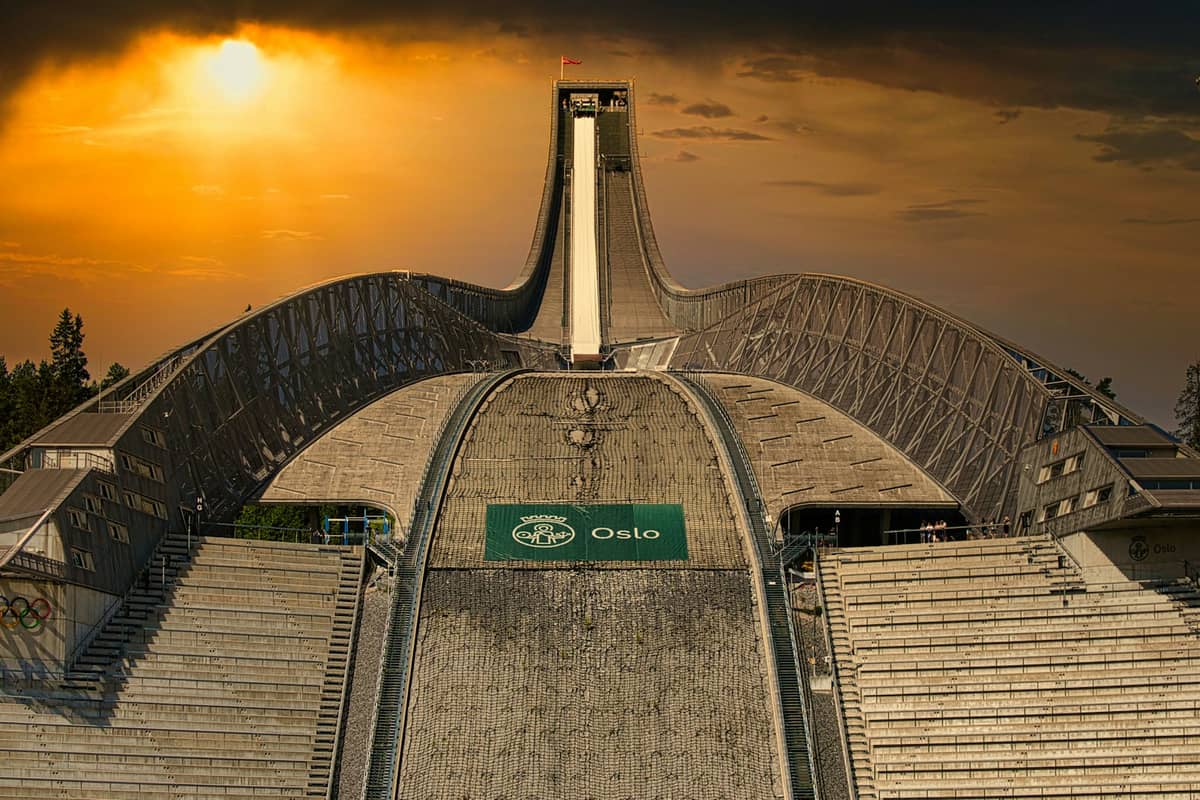
Holmenkollen is the hillside neighbourhood that gives Oslo its most iconic skyline silhouette, dominated by the great ski jump arching over the city below. Behind it stretches Nordmarka, a vast managed forest of lakes, ridges, and trails that stays inside Oslo's municipal boundaries for roughly 30 kilometres north. Together they represent something rare: genuine wilderness within easy reach of a European capital, connected by a metro line.
Orientation
Holmenkollen sits on a forested ridge roughly 10 kilometres northwest of Oslo's city centre, rising to around 370–375 metres above sea level The neighbourhood itself is quiet and residential, with detached houses and older wooden villas tucked between spruce trees along winding lanes. It is not a commercial district in any conventional sense: there is no main shopping street, no cluster of restaurants competing for your attention. What it has is elevation, clean air, and one of Norway's most visited single attractions.
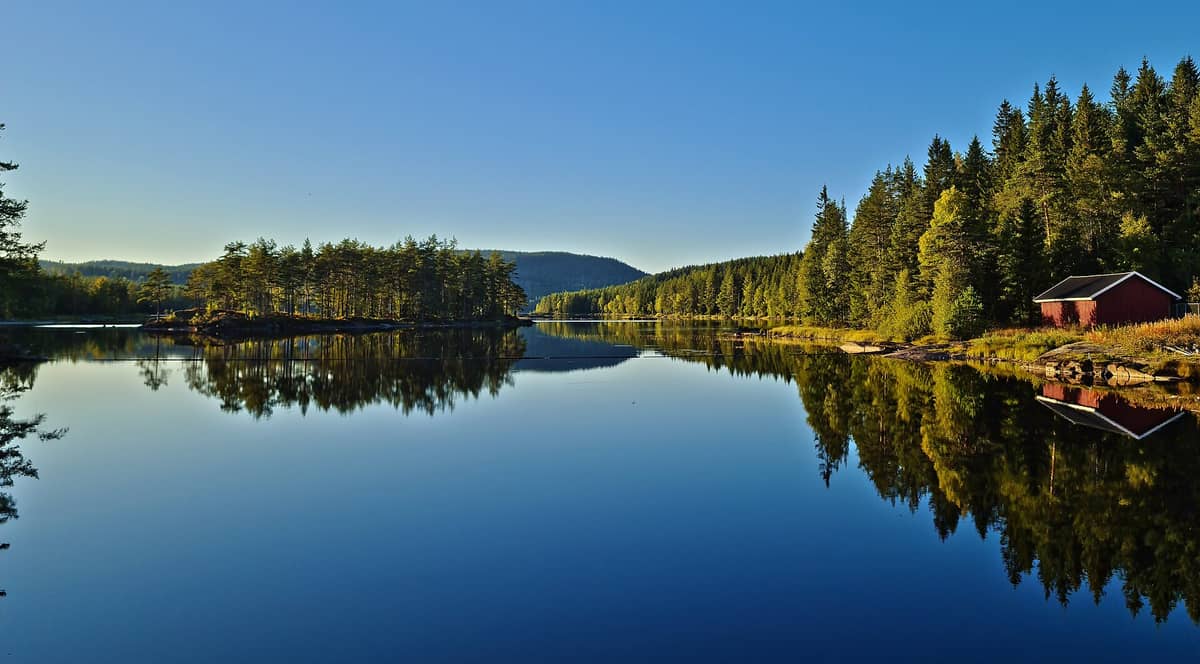
North of Holmenkollen, the city dissolves into Nordmarka, the southern section of the Oslomarka forest that wraps around the city. Nordmarka is not a neighbourhood in the urban sense but a managed natural area, criss-crossed by marked trails, gravel roads, and cross-country ski routes. Its southern entry points are the metro termini at Frognerseteren and Sognsvann, both within Oslo's city limits. From Frognerseteren, the forest stretches northward for around 30 kilometres before you reach the next town.
To build a mental map: think of the Oslo Metro Line 1 as a spine running from the city centre at Nationaltheatret, climbing through Majorstuen, Slemdal, and Voksenlia before reaching Holmenkollen station, then continuing for another 5–10 minutes to its hilltop terminus at Frognerseteren. A separate metro line terminates at Sognsvann lake, which marks the southeastern corner of Nordmarka. The city centre is 20 minutes away by metro, which means Holmenkollen functions both as a destination in its own right and as a gateway to the wider forest.
Character & Atmosphere
Holmenkollen on a weekday morning is almost silent. The metro deposits a handful of visitors at the station and immediately the sounds of the city fall away. The air smells of pine resin and, in winter, cold compressed snow. The streets up from the station are lined with older Norwegian wooden houses, many painted in the deep red and ochre tones typical of traditional timber architecture. The Holmenkollen Park Hotel, a grand structure with its ornate dragon-style roofline dating to 1894 and built in the ornate dragon-style timber architecture typical of the era, and gives the area a faintly alpine resort atmosphere that has nothing in common with central Oslo.
On winter weekends, the mood shifts entirely. The Holmenkollen Ski Festival, held each March, draws tens of thousands of spectators, and on those days the usually empty hill roads fill with people in ski gear, Norwegian flags, and the particular electric energy of a country watching its favourite sport. Outside of festival weekends, the ski jump tower attracts a steady flow of visitors year-round, but the crowds rarely feel overwhelming. You can usually reach the top of the tower observation deck, look down over the city and the Oslofjord glittering far below, and take your time.
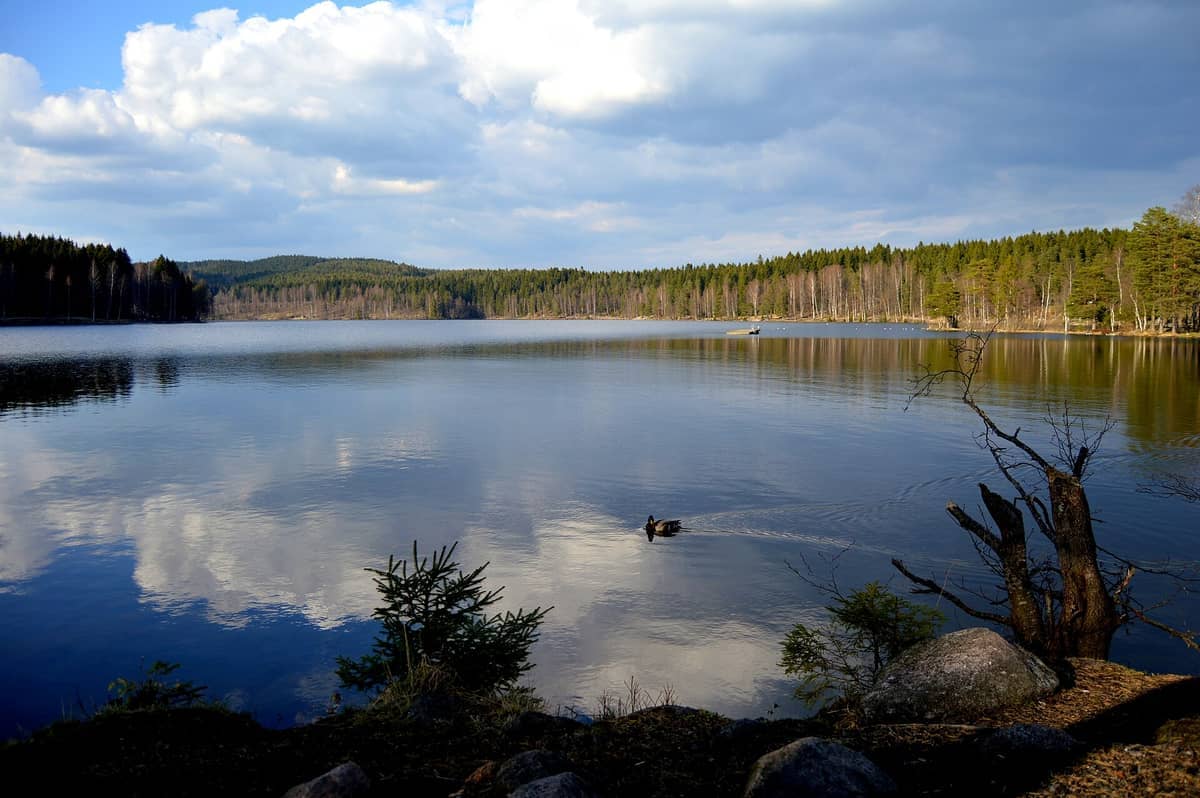
Nordmarka has a different character again. On summer mornings, particularly in July and August, joggers and cyclists are on the gravel paths from early, and families arrive with prams and small children heading for the nearest lake. By mid-morning on a warm day, Sognsvann lake is busy with swimmers, the grassy banks occupied by picnickers. Yet walk 20 minutes further north along any of the main trails and the crowd density drops sharply. By the time you reach the first proper ridge viewpoints looking back toward the city, you are likely to have the path to yourself except for a lone cross-country skier (in winter) or a couple with a dog.
ℹ️ Good to know
Nordmarka is used by Osloans year-round as an outdoor gym and social space. In winter the forest fills with cross-country skiers; in summer it shifts to hikers, trail runners, and wild swimmers. The trails are well-marked and well-maintained but they are designed for outdoor activity rather than sightseeing. Come prepared for whatever the weather is doing.
What to See & Do
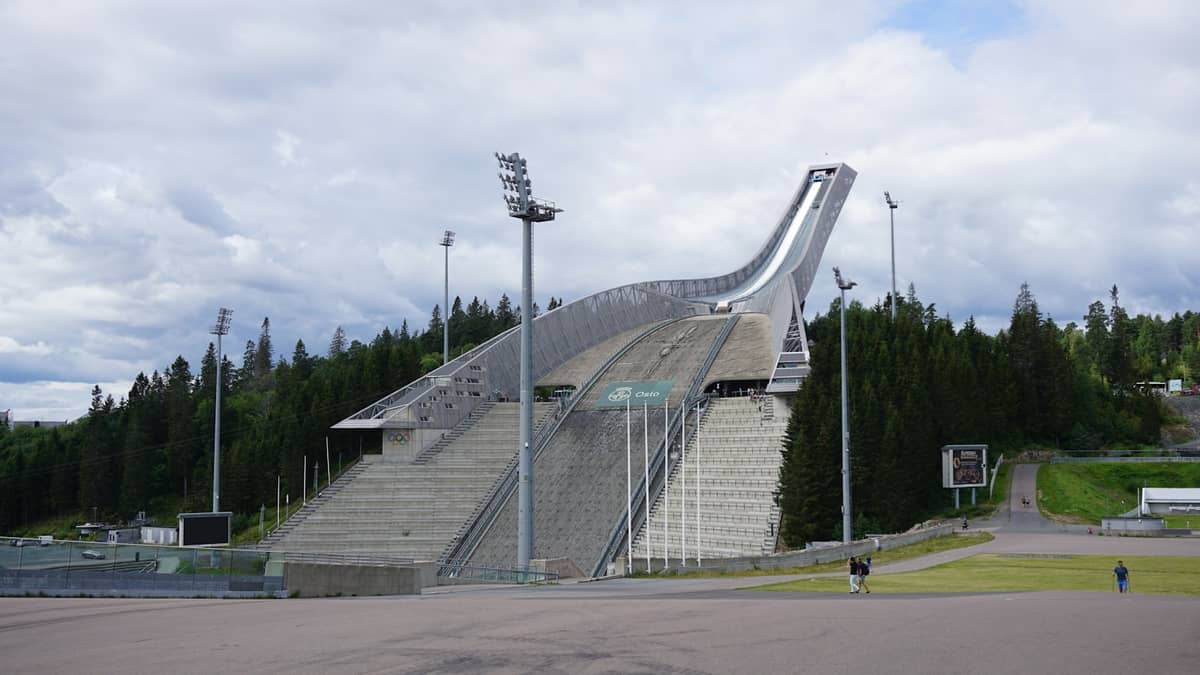
The Holmenkollen Ski Jump is the centrepiece. The current structure, entirely rebuilt for the 2011 Nordic World Ski Championships, is a striking piece of engineering: a curved concrete ramp that juts out over the hill with Oslo spread below it. You can take a lift to the observation deck at the top of the jump tower, from which the view extends across the entire city to the Oslofjord. The viewing angle is vertiginous even if you are not thinking about the mechanics of flying off it at speed. Admission includes entry to the Ski Museum at the base of the jump.
The Ski Museum at Holmenkollen is the oldest ski museum in the world, and it makes a convincing case for skiing as a cultural cornerstone of Norwegian identity rather than merely a sport. The exhibits trace skiing from Stone Age rock carvings over 4,000 years ago through Fridtjof Nansen's polar expeditions to contemporary Olympic competition. Even visitors with no interest in skiing tend to find it more engaging than expected. The ski simulator in the museum, which recreates the experience of launching off the jump, is a legitimate thrill.
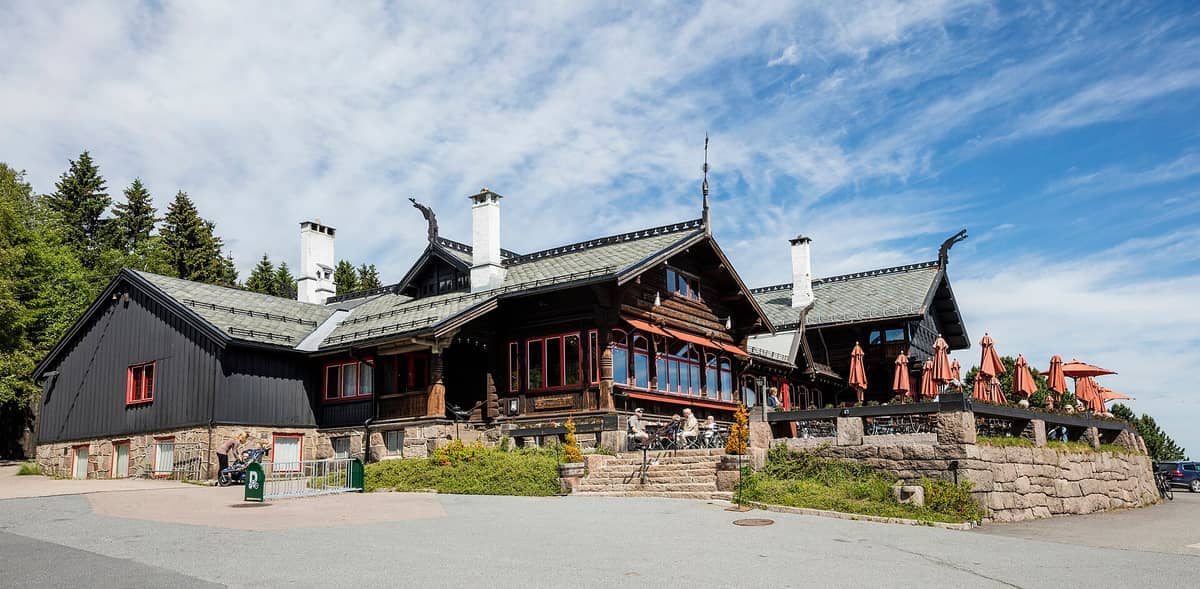
At the Frognerseteren terminus, the Frognerseteren restaurant and viewpoint offer a natural stopping point before heading into the forest. The hilltop building, another example of the dragon-style timber architecture that recurs through this area, dates to 1891 and is another example of the dragon-style timber architecture common in the area, The restaurant serves traditional Norwegian food including the famous apple cake that hikers speak about with unreasonable reverence. From the terrace, on a clear day, you can identify individual landmarks across Oslo.
For walking and hiking, Nordmarka's trail network is extensive. The most accessible entry is from Sognsvann, where a flat loop of about 3.4 kilometres around the lake is suitable for all ages. More demanding routes head north through the forest toward Kikutstua and Ullevålseter, the latter a traditional Norwegian mountain lodge roughly two hours on foot from Frognerseteren. In winter, the same routes become groomed cross-country ski tracks. For a broader introduction to Oslo's outdoor options, the Oslo hiking guide covers trail conditions, recommended routes, and seasonal advice.
Holmenkollen Ski Jump and observation deck tower: open year-round, with the best views on clear days
Ski Museum at Holmenkollen: exhibits on around 4,000 years of skiing history plus a jump simulator
Frognerseteren viewpoint and restaurant: traditional Norwegian architecture and city panoramas
Sognsvann lake: swimming and sunbathing in summer, skating and skiing in winter
Nordmarka trail network: marked routes ranging from one-hour lakeside loops to full-day forest traverses
Holmenkollen Park Hotel: the 1894 dragon-style hotel is worth seeing even if you are not staying
💡 Local tip
The Oslo Pass covers admission to the Holmenkollen Ski Museum and the jump tower, and it also includes unlimited metro travel, so you can ride Line 1 up to Holmenkollen and back at no extra cost. If you are planning to visit more than two or three Oslo museums in a day, the pass will pay for itself. Check current Oslo Pass pricing and inclusions before your visit, as the offer is occasionally updated.
Eating & Drinking
Holmenkollen is not an eating destination in the way that Grünerløkka or Aker Brygge are. The neighbourhood has very limited options for dining beyond the main institutions, and there is no equivalent of a high-street café culture here. This is partly a function of its residential character and partly the terrain: the few commercial premises are spread along the ridge rather than concentrated in a walkable strip.
The Frognerseteren restaurant sits at the top of the metro line and is the most atmospheric option in the area. It specialises in traditional Norwegian dishes, with an emphasis on hearty food suited to people who have been outside in the cold: reindeer, lamb, and various preparations of salmon feature regularly. The famous apple cake is available as a stand-alone café order and is genuinely good. Prices are at the higher end by Norwegian standards, which is saying something, but the setting is unique. Book ahead for dinner in the evening.
At Holmenkollen station itself, there is a simple café near the ski jump that serves hot drinks, sandwiches, and light meals at reasonable prices. This works well as a base for fuel before or after the tower visit, but it is not a destination in itself. Visitors who want a broader range of food and drink options are better served by going back down to Majorstuen or the city centre, both 15-20 minutes by metro.
In Nordmarka, the forest lodges are the eating and drinking culture. Ullevålseter, the main staffed cabin roughly two hours into the forest from Frognerseteren, serves traditional fare including porridge, open sandwiches, and hot drinks, and these lodges are maintained by the Norwegian Trekking Association and often operate on a mostly self-service or light-service model. Bringing your own food and a thermos is standard practice for longer days in the forest.
Getting There & Around
The most straightforward way to reach Holmenkollen is on the Oslo Metro (T-bane) Line 1, which runs from the city centre through Nationaltheatret and Majorstuen before climbing the ridge to Holmenkollen station. The journey from Nationaltheatret to Holmenkollen takes approximately 20–25 minutes. Line 1 continues to Frognerseteren at the top of the hill. A separate metro line terminates at Sognsvann, which is the better gateway for the southern shore of the lake and the trails that loop around it. For a full overview of getting around the city, the guide to getting around Oslo has transit maps, ticketing information, and advice on the Ruter network.
The metro runs frequently during the day, with trains every 10–15 minutes on Line 1 during off-peak hours and more often during peak times. Single tickets and day passes from Ruter cover all metro journeys including the Holmenkollen and Frognerseteren lines. There is no need to buy a separate ticket. The metro is the strongly preferred option over driving: parking near the ski jump is limited and is essentially non-functional during ski events and busy weekends.
Within Nordmarka itself, travel is on foot, by mountain bike, or on cross-country skis. The gravel service roads that run through the forest are the main arteries, with marked hiking trails branching off them. Mountain bikes are allowed on most forest roads. Note that bicycles are permitted on the Oslo Metro but only when space allows, and the transport guidance advises avoiding rush hours if you are bringing a bike onto the train.
⚠️ What to skip
The Holmenkollen Ski Festival in March is one of Norway's biggest Nordic skiing events and draws enormous crowds. On competition days, the metro to Holmenkollen runs packed trains and queues build at the station. If you are not attending the event, avoid the area on those specific days. Check the festival calendar before visiting in early to mid-March.
Where to Stay
Staying in Holmenkollen is a genuinely different experience from staying in central Oslo. The most famous option is the Holmenkollen Park Hotel, the 1894 landmark with its distinctive dragon-style timber architecture, which has operated continuously as a hotel and today functions as an upmarket full-service property. Rooms at the Park Hotel put you directly at the ski jump site and at the top of the metro line, but they come at a premium, and the neighbourhood offers very little in terms of evening entertainment once the ski facilities close.
For most visitors, staying in Holmenkollen makes most sense if you are in Oslo primarily for outdoor activities, particularly winter skiing or a multi-day hiking itinerary using Nordmarka as your base. You will wake up already at altitude with the trails accessible on foot. The trade-off is that every visit to the city centre requires a 20-minute metro ride each way, and the neighbourhood has minimal options for eating out, nightlife, or casual shopping.
Visitors who want the green surroundings without giving up central convenience might consider staying in Majorstuen or Frogner, both of which have good accommodation options and sit at the foot of the Line 1 metro corridor. From either area, Holmenkollen is around 10–15 minutes by train. For a broader overview of accommodation across Oslo's neighbourhoods, the guide to where to stay in Oslo covers the city's main districts and their relative merits.
Seasonal Considerations
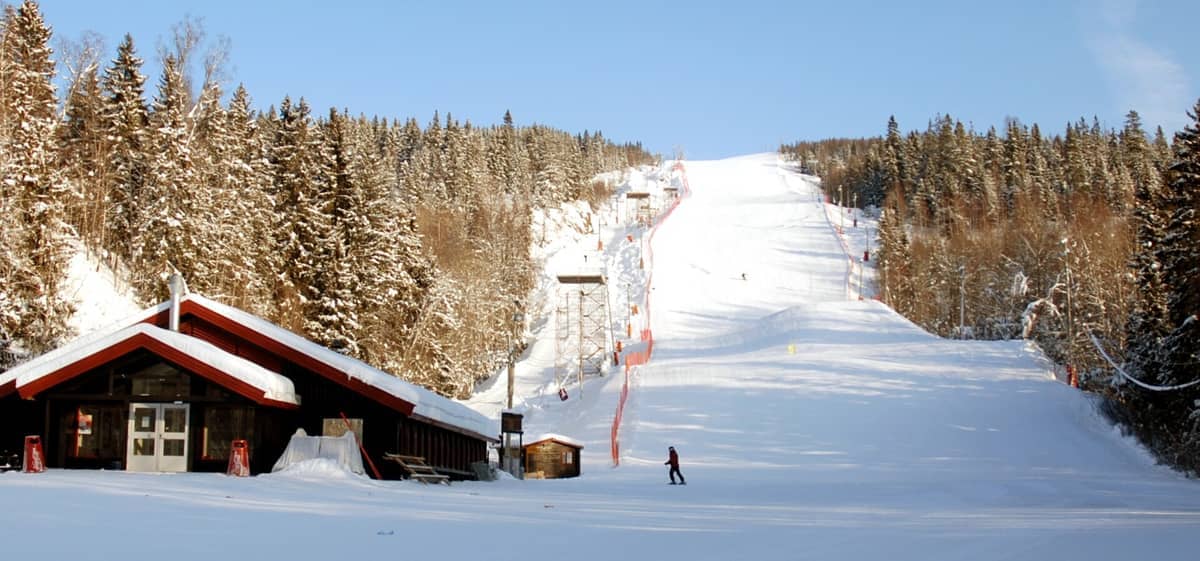
Holmenkollen and Nordmarka are among the few areas in Europe where a city neighbourhood genuinely transforms with the seasons rather than simply adjusting its café terrace furniture. In winter, typically from December through March, the ski jump hosts competitive events and recreational skiing takes over the forest trails. The groomed cross-country track network in Nordmarka is extensive and well-maintained, and Osloans use it frequently, much as residents of other cities might use a park. For advice on winter Oslo more broadly, the Oslo in winter guide covers conditions, clothing, and what to expect.
Summer brings an entirely different crowd. From June through August, Sognsvann and the scattered lakes in Nordmarka become swimming destinations, and the forest trails fill with joggers and families. The long daylight hours mean evening walks into the forest are perfectly feasible well past 9pm. The Holmenkollen jump tower offers its best views on clear summer mornings before any haze builds over the fjord. For ideas on making the most of Oslo's warmest months, see the Oslo in summer guide.
Autumn is arguably the most underrated season here. The birch and aspen stands in Nordmarka turn yellow and orange from mid-September, the summer crowds have gone, and the trails are quiet. Temperatures drop quickly after October, but on crisp clear days the ridge viewpoints from Holmenkollen toward the fjord are as good as any in the city. Spring is a transitional season: snow lingers at higher elevations into April, trail conditions can be muddy, and the forest lodges begin reopening from late March or April depending on the year.
Oslo's outdoor scene, including Nordmarka, is central to the city's identity. If you are curious about how Osloans engage with their natural surroundings across all seasons, the Nordmarka forest attraction page goes into more depth on specific trails and access points.
TL;DR
Holmenkollen is Oslo's premier outdoor neighbourhood: worth visiting for the ski jump tower, the Ski Museum, and the panoramic views over the city and Oslofjord, all reachable in about 20–25 minutes by Metro Line 1.
Nordmarka is a vast managed forest beginning directly behind Holmenkollen and stretching roughly 30 kilometres north, accessible from the Frognerseteren and Sognsvann metro termini, ideal for hiking, trail running, swimming, and cross-country skiing.
Best for: outdoor enthusiasts, winter sports visitors, families wanting accessible nature, and anyone interested in Norwegian ski culture and the Holmenkollen heritage.
Not ideal for: travellers primarily interested in restaurants, nightlife, shopping, or urban energy. The area is almost entirely residential and natural, with minimal commercial infrastructure.
Main drawback: the Ski Festival in March brings very large crowds and congested public transport. Outside of this period, the area is quiet to the point of feeling remote, which is its appeal and its limitation depending on what you want from Oslo.
Oslo's weather, daylight hours, and crowd levels shift dramatically across the year. This guide breaks down every season so you can pick the right time based on what you actually want to do, not just the warmest month.
Oslo sits at the centre of one of Europe's most rewarding day-trip networks. Within two hours you can reach a medieval fortified town, a world-class sculpture park in the forest, a 13th-century stave church, or an island fortress in the fjord. This guide covers the best day trips from Oslo, from quick ferry hops to full-day rail journeys.
Oslo has a reputation for being expensive, but the city's best experiences often cost nothing. From a marble opera house roof you can walk across to one of the world's great sculpture parks, here are 20 free things to do that locals actually love.
Oslo has one of the most integrated public transport networks in Scandinavia, but the ticket system trips up a surprising number of visitors. This guide covers everything from navigating the T-bane metro to getting from Oslo Airport (OSL) to the city center without overpaying — with real prices, journey times, and practical advice on what to skip.
Oslo is Norway's capital and one of Scandinavia's most complete city destinations, but it comes with a high price tag and sharp seasonal swings. This guide breaks down exactly what you get for your money, when to go, and whether the city lives up to its reputation.
Oslo holds the world's largest collection of Edvard Munch's work, split across two major institutions. This guide tells you exactly where The Scream is displayed, how to buy tickets, and what else to see beyond the famous painting.
Oslo's architectural story spans 800 years, from Akershus Fortress rising above the harbour to the tilted glass tower of the Munch Museum. This guide takes you through the city's most significant buildings, organised by era and theme, so you can trace how Norway's capital has reinvented itself across centuries.
Oslo transforms from late November through December into one of Scandinavia's most atmospheric winter cities. From the free central market at Spikersuppa to the traditional fair at Norsk Folkemuseum, this guide covers every Christmas experience worth your time, with practical advice on costs, crowds, and what to skip.
Norway's Constitution Day is the country's biggest national celebration, and Oslo is the place to be. This guide covers the parade route, crowd logistics, public transport disruptions, what stays open, and how to watch the Royal Palace balcony moment without getting trapped in the crowds.
The Oslofjord is Oslo's backyard playground: a 100-km stretch of water dotted with islands, beaches, and historic forts; the inner islands are all reachable in under 30 minutes from the city centre by public ferry. This guide covers public ferries, sightseeing cruises, the best swimming spots, and practical details on timing, pricing, and what to skip.
Oslo's floating saunas are one of Norway's most distinctive experiences, combining intense heat with cold fjord dips right in the heart of the city. This guide covers every major operator, realistic pricing, booking logistics, safety rules, and the best time to go.
Oslo rewards the curious traveler who ventures beyond the Opera House and Vigeland Park. From a barrel-vaulted mausoleum open only on Sundays to medieval ruins in a residential neighborhood, these are the experiences that most visitors completely miss.
Oslo is one of the few European capitals where you can step off a metro and be deep in forest within 30 minutes. This guide covers the best hiking trails in and around the city, from urban river walks to full-day routes in Nordmarka.
Summer transforms Oslo into one of Scandinavia's most enjoyable cities, with nearly 19 hours of daylight, warm fjord beaches, and a packed festival calendar. This guide covers what to expect from June through August, including the truth about the 'midnight sun', when each season peaks, and which events are worth planning around.
Oslo in winter is cold, short on daylight, and genuinely rewarding for travelers who come prepared. This guide covers the real temperatures, the best winter activities, how to get around, and what most visitors get wrong about visiting Norway's capital between December and February.
The Oslofjord islands are one of Oslo's best-kept open secrets: reachable on a standard public transport ticket, dotted with beaches, ruins, and free camping spots. This guide covers every ferry route, the best islands for each type of visit, and exactly how to plan a day on the water.
Three days is enough to cover Oslo's highlights without rushing. This itinerary covers the waterfront, Bygdøy peninsula, Vigeland sculpture park, and the city's best neighborhoods, with practical advice on transport passes, seasonal timing, and where to skip the tourist traps.
Oslo offers more than its size suggests when it comes to museums. Whether you're drawn to Edvard Munch's raw canvases, the story of Norway's WWII resistance, or the world's most ambitious open-air folk museum, this guide covers every essential collection in the city.
Oslo's nightlife scene is smaller than Berlin or London, but it's more focused and genuinely good. This guide covers the best bars, clubs, and live music venues by neighborhood, what drinks actually cost, when to go, and what first-timers consistently get wrong.
Oslo has a reputation as one of Europe's most expensive capitals, but that reputation is only half the story. With the right approach to transport, attractions, and timing, you can experience Norway's capital without the wallet damage most travelers fear.
The Oslo Pass bundles free museum entry and unlimited public transport into one time-based card. But at up to around 995 NOK for 72 hours, it only pays off under specific conditions. This guide breaks down exactly who should buy it, who should skip it, and how to calculate your own value.
Oslo's shopping scene rewards those who explore beyond the main drag. This guide covers the city's best streets, department stores, weekend markets, and where locals actually shop, with practical hours, neighborhood breakdowns, and practical advice on what to skip.
The Oslo to Bergen train is one of the great railway journeys in Europe, crossing high mountain plateaus and deep fjord valleys across 492 km of Norwegian landscape. This guide covers tickets, prices, timetables, seat choices, seasonal tips, and how to avoid the most common booking mistakes.
The journey from Oslo to Stockholm is one of Scandinavia's most popular intercity routes. This guide breaks down every transport option, from the direct SJ/Vy train to FlixBus, with practical advice on cost, comfort, and convenience.
The journey from Oslo to Tromsø covers roughly 1,700 km and takes under two hours by air, but knowing when to go and what to expect in Norway's Arctic capital makes all the difference. This guide covers every transport option, seasonal highlights, and key activities so you can plan confidently.
Oslo rewards those who look up, out, and across. From a marble rooftop you can walk into the fjord to a forested hilltop that inspired The Scream, the city offers an extraordinary range of panoramas. This guide covers the best viewpoints in Oslo, whether you want sweeping city skylines, fjord horizons, or intimate harbour scenes.
Oslo is one of Europe's most walkable capitals, and you don't need a guided group to explore it properly. This guide covers the best self-guided walking routes, top apps, free city maps, seasonal advice, and practical tips on what to skip.
Oslo offers more than its size suggests when it comes to family travel. From hands-on science museums and polar-exploration ships to free sculpture parks and island beaches, Norway's capital keeps children genuinely engaged. This guide covers the best family-friendly activities in Oslo, with real pricing, transport details, and practical advice on what's worth your time.
Oslo packs an extraordinary range of experiences into a compact, walkable city: world-class museums, a working fjord right at the city's edge, serious hiking terrain, and a food scene that has grown well beyond smørbrød. This guide covers the top things to do in Oslo, organized by category, with practical advice on what lives up to the hype and what you can skip.
Oslo sits at the heart of Viking history, but the famous ship museum is closed until 2027. This guide tells you exactly where to experience Viking Age Norway right now, from the Bygdøy peninsula to the city centre's best alternatives.
Oslo's food scene runs deeper than open-faced sandwiches and cinnamon rolls. This guide covers the essential Norwegian dishes to try, the best food halls and restaurants to find them, seasonal specialties, and honest price expectations for 2025.
Oslo's neighborhoods each offer a distinct experience, from the architectural showpiece of Bjørvika to the indie-café culture of Grünerløkka. This guide breaks down exactly where to stay in Oslo based on your travel style, budget, and priorities, with honest assessments of each district and what you'll actually pay.