Edvard Munch in Oslo: Museums, Locations & The Scream
Oslo holds the world's largest collection of Edvard Munch's work, split across two major institutions. This guide tells you exactly where The Scream is displayed, how to buy tickets, and what else to see beyond the famous painting.
Tickets & tours
Live prices and dates from our booking partner. If you book, we may earn a commission at no extra cost to you.
TL;DR
- The Scream exists in four versions, split between MUNCH (Bjørvika) and the National Museum. They rotate, so check before you visit.
- The main Munch institution is the MUNCH museum in Bjørvika, not the old Tøyen location, which is now closed.
- MUNCH offers free admission every Wednesday evening (18:00–21:00).
- Adults pay 280 NOK at MUNCH during day hours, or 220 NOK at the National Museum. Under-18s enter both for free.
- Book timed entry online in summer. Slots sell out, especially for The Scream gallery at the National Museum.
Why Oslo Is the Global Center for Munch
Edvard Munch was born in 1863 and spent most of his working life between Norway and Germany, but when he died in 1944, he left his entire estate to the City of Oslo. That bequest included around 1,100 paintings, 4,500 drawings, and over 15,000 prints. No other city comes close to this concentration of his work. Oslo did not become a Munch destination by accident. It is Munch's city by design and by inheritance.
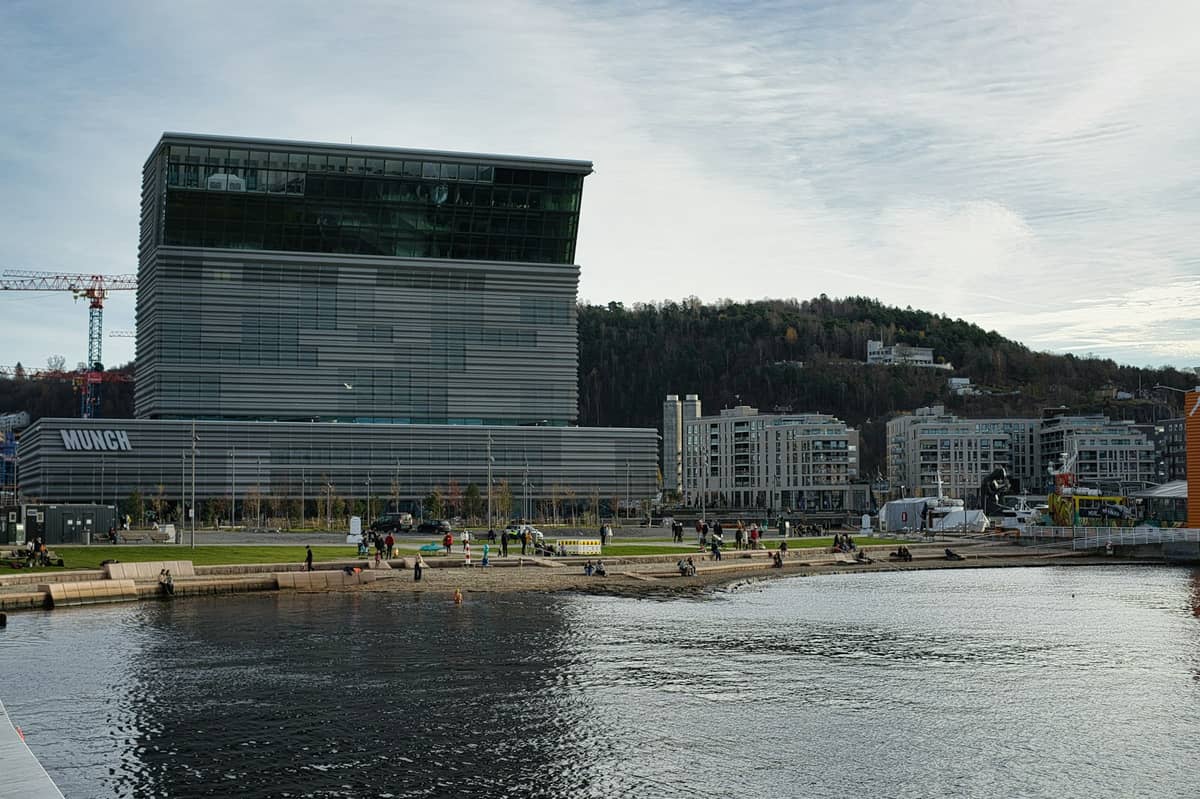
For decades, this collection was housed in a purpose-built museum in the Tøyen district. That building closed, and in 2021 a new institution opened on the waterfront in Bjørvika, directly beside the Oslo Opera House. The move brought Munch's work into a landmark building visible from across the fjord and placed it at the heart of Oslo's growing cultural waterfront district.
⚠️ What to skip
Several online articles and older guidebooks still direct visitors to Tøyengata 53, the former Munch Museum address. That building is closed. The collection is now at Edvard Munchs plass 1, Bjørvika. Double-check your maps app before heading out.
MUNCH Museum (Bjørvika): What to Know Before You Go
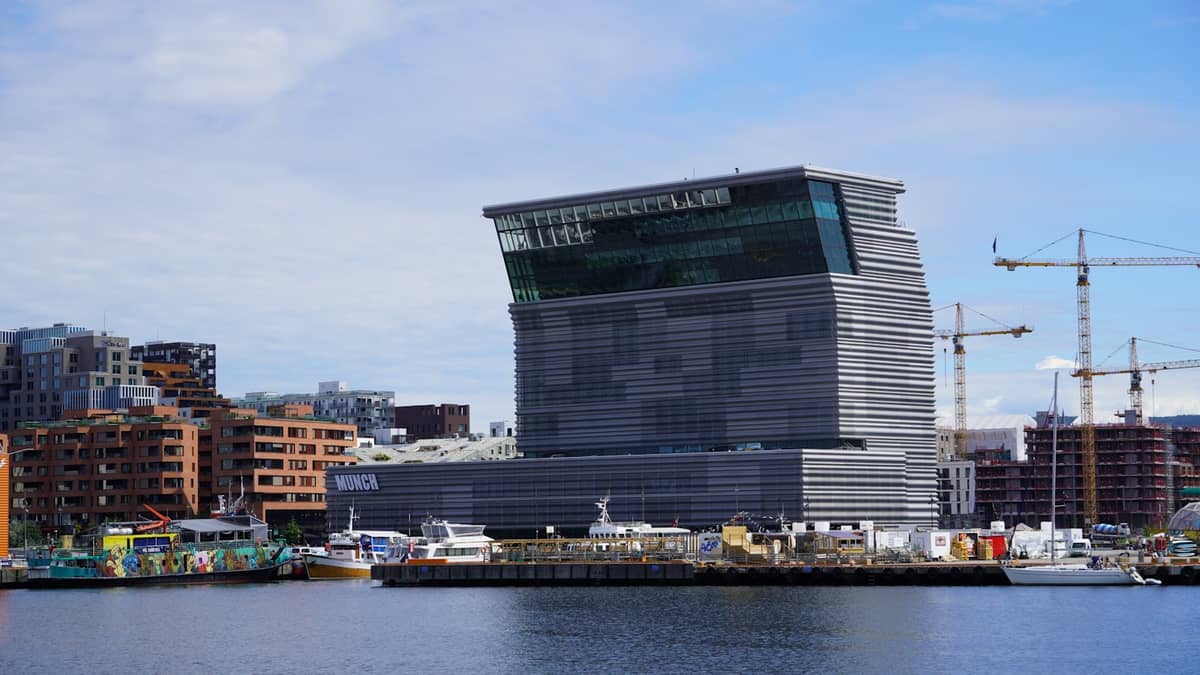
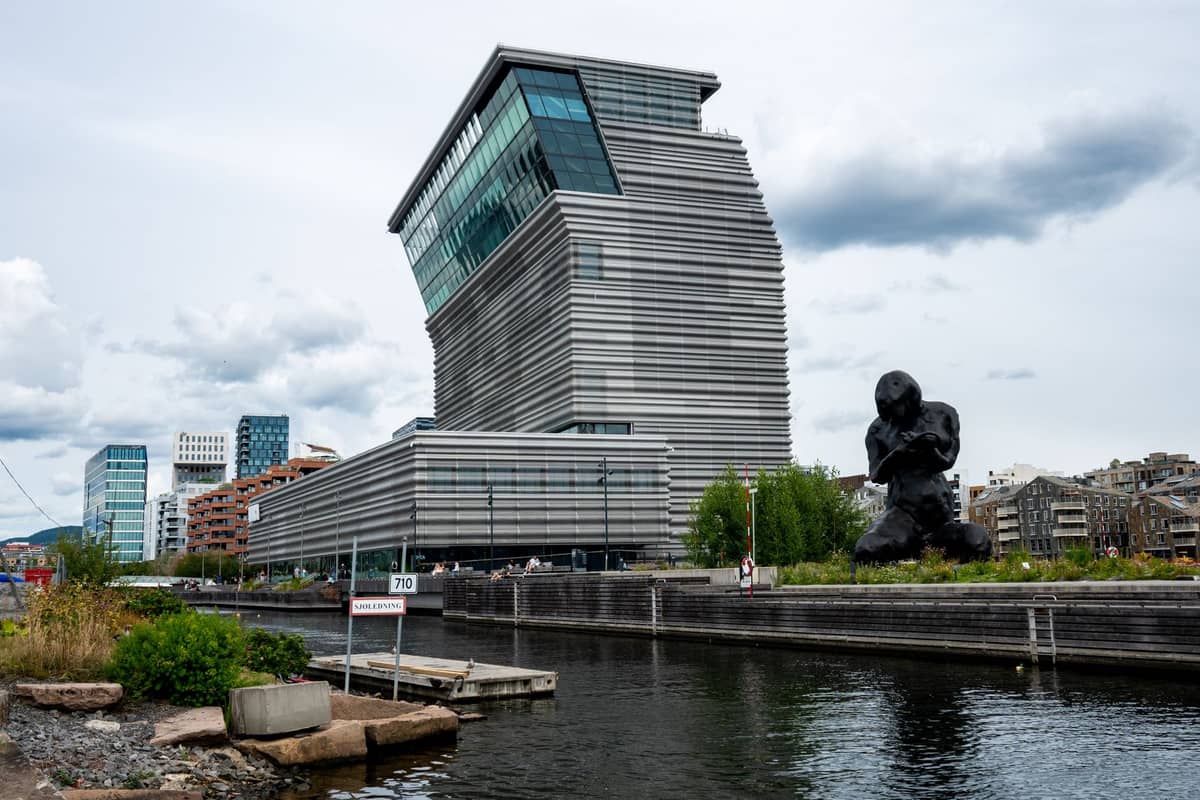
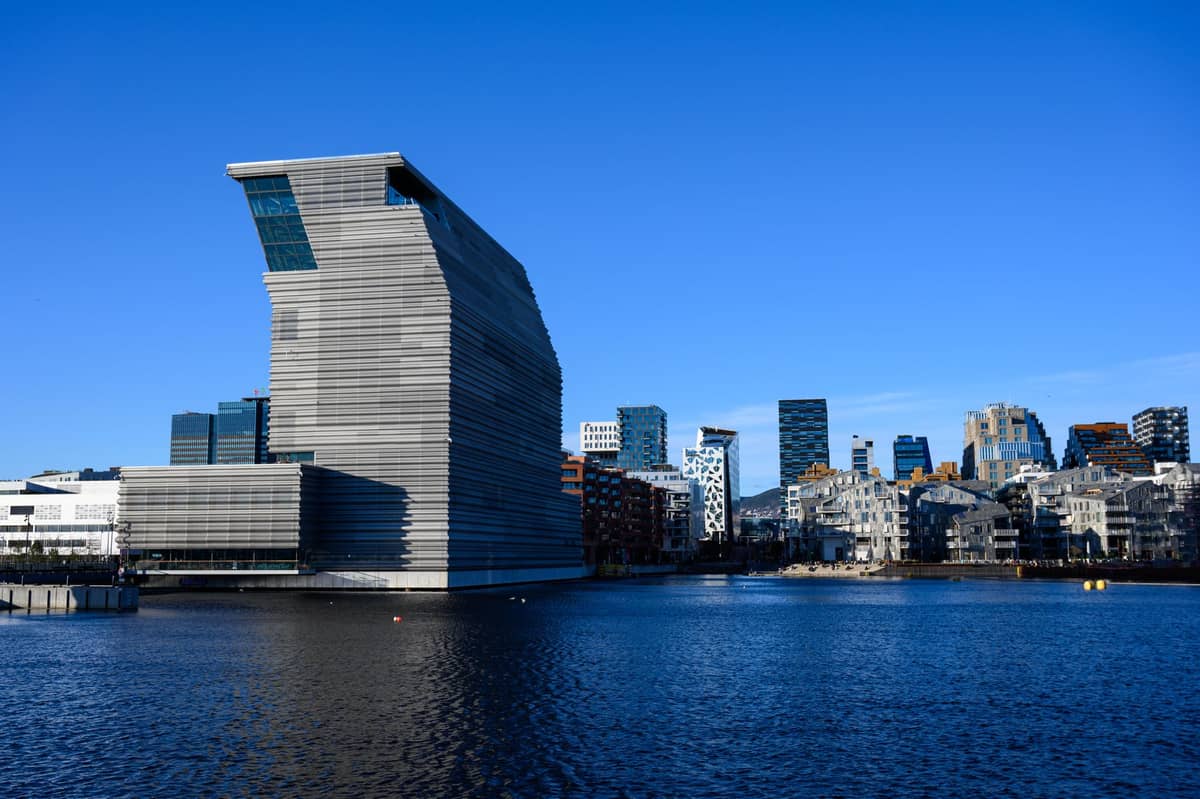
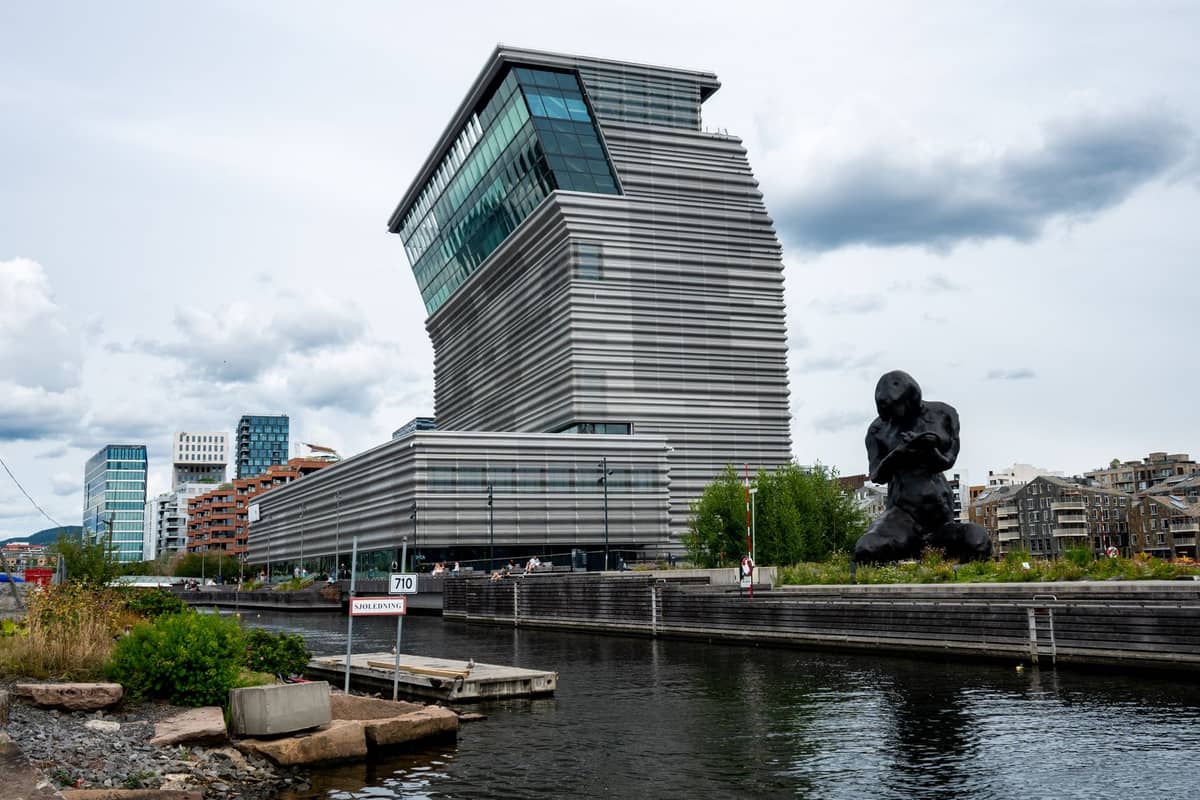
The MUNCH museum is the largest Munch institution in the world and the primary destination for anyone serious about his work. The 13-floor building was designed by the Spanish firm Estudio Herreros and is itself a point of architectural interest in Oslo. The upper floors offer views across the Oslofjord, and the building's asymmetric tower form has become a recognizable part of the Bjørvika skyline.
- Address Edvard Munchs plass 1, Bjørvika, Oslo. A 10-minute walk from Oslo Central Station (Oslo S).
- Opening hours (2026) Mon–Tue 10:00–18:00; Wed–Fri 10:00–21:00; Sat 10:00–21:00; Sun 10:00–18:00. Closed 1 May; reduced hours on 24 and 31 December. Confirm on the official website before visiting.
- Adult admission 280 NOK during day hours (10:00–18:00); 200 NOK for evening hours (18:00–21:00). Under-25s pay 100 NOK. Children under 18 enter free. Members free.
- Free entry Every Wednesday 18:00–21:00, except July and August when the discount does not apply.
- Guided tours 45-minute English-language tours run on summer weekdays. Advance booking required. Private group tours need at least 7 days' notice and must use museum guides.
The permanent collection is spread across multiple floors and rotates throughout the year, so no two visits are identical. Beyond the famous paintings, the museum holds tens of thousands of prints, drawings, and personal documents. If Munch is why you came to Oslo rather than just a box to tick, allow at least three hours. If you want to see a specific work, check the museum's online collection portal before booking your ticket, as some pieces are in storage at any given time.
✨ Pro tip
Visiting on a Wednesday evening gets you free admission and noticeably thinner crowds. The museum stays open until 21:00, and the city lights reflecting off the fjord make the building's upper floors worth lingering in well past sunset.
Where to Actually See The Scream: The Rotation Problem
The Scream is not one painting. Munch created four versions between 1893 and 1910, using different media: two paintings (tempera on cardboard), one pastel, and one lithograph print. The two most significant painted versions are held in Oslo, one at MUNCH and one at the National Museum. They are not displayed simultaneously; the institutions coordinate a rotation so that typically only one version is on public display at a time, with the other in climate-controlled storage. This is the detail that catches the most visitors off guard.
The National Museum of Norway on Brynjulf Bulls plass 3, near Aker Brygge, holds the 1893 tempera-on-cardboard version and displays it in a dedicated ground-floor gallery. This is the version most people have seen in reproduction: darker, with that unmistakable burnt-orange sky. The National Museum integrated Munch into its broader collection of Norwegian and international art when it opened in its new building in 2022.
MUNCH holds additional versions including the 1910 tempera and the 1895 pastel. Before your visit, check both museums' online collection pages to confirm which version is currently on display. This takes two minutes and saves a genuine disappointment. If seeing The Scream is the primary reason for your trip, the National Museum's dedicated Scream gallery is generally the more focused experience, while MUNCH gives you the broader context of Munch's entire career.
ℹ️ Good to know
The National Museum is open Tuesday–Sunday, with additional Monday opening between 1 June and 31 August. Adult admission is approximately 220 NOK; under-18s enter free. The Scream gallery is on the ground floor and well signposted from the entrance.
Munch's Oslo: Locations Beyond the Museums
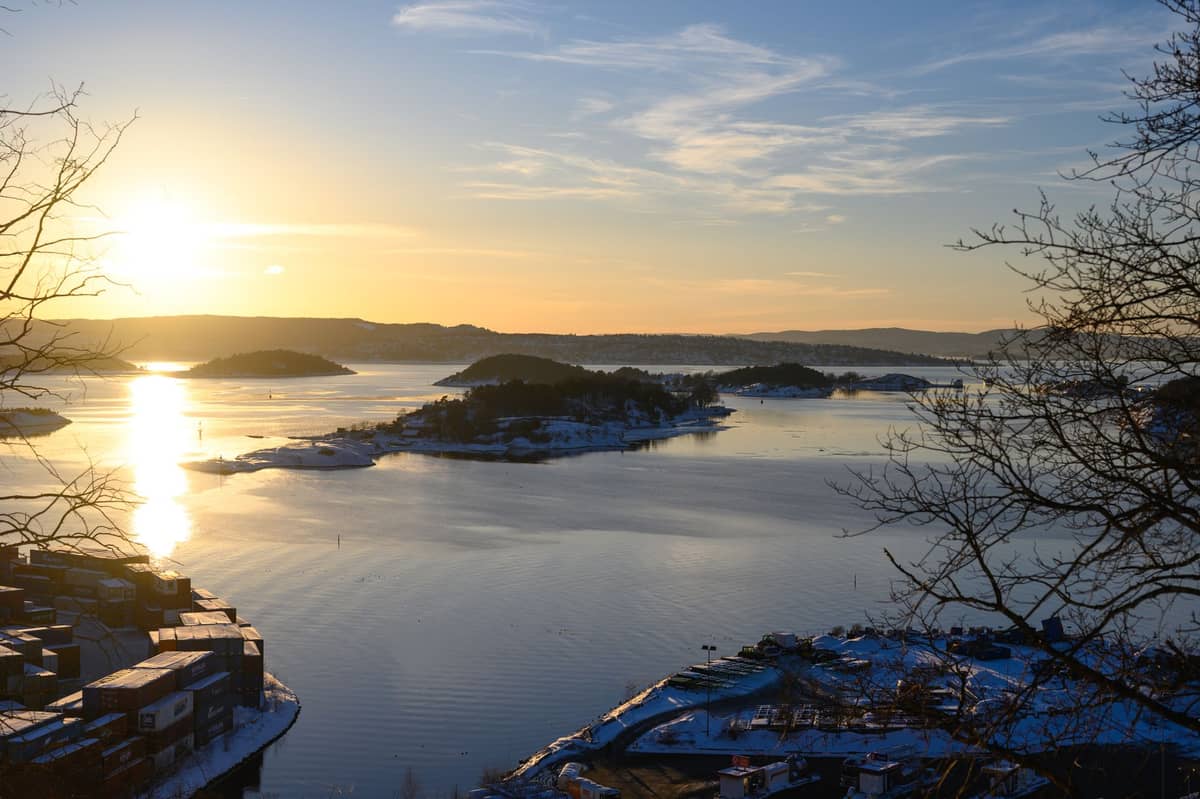
The landscape that inspired Munch is still visible if you know where to look. The Scream was reportedly conceived on a walk above the city, looking out toward the fjord. The viewpoint Munch described, an evening walk on a path above what is now Ekeberg, is accessible today. Ekebergparken, on the eastern heights above Bjørvika, offers the approximate vantage point and has been identified by art historians as the probable location where Munch felt what he later described in his diary as 'an infinite scream passing through nature.'
The Ekebergparken sculpture park now occupies those hillside grounds, with contemporary sculpture installations spread across the woodland paths. A dedicated information point marks the probable Scream viewpoint, and the sightline toward the fjord and city skyline remains compelling. It is a short tram ride from central Oslo and combines well with a visit to MUNCH in Bjørvika below.
Munch lived at multiple Oslo addresses across his life. His final home, Ekely in Skøyen, is now demolished, though parts of the garden survive. The neighborhood of Grünerløkka, where he spent time in the 1880s and 1890s, has retained much of its 19th-century street character. Walking these streets with his works in mind gives them a different weight. Several of his interior scenes and figure studies depict the sparse, working-class apartments of exactly this area.
Planning Your Munch Day in Oslo
A practical Munch itinerary combines both major institutions and, if time allows, a walk up to Ekeberg. Start at the National Museum in the morning when crowds are thinnest, then walk or take public transport to MUNCH in Bjørvika. Both institutions are in the western and central waterfront area respectively, making them reasonable to combine in a single day. For a wider view of what Oslo's art scene offers, the Astrup Fearnley Museum on Tjuvholmen is a 15-minute walk from the National Museum and covers contemporary international art.
- Book MUNCH tickets online in advance from June to August. Day-of tickets are often available in shoulder season (April, May, September, October) but not guaranteed.
- The Oslo Pass covers entry to MUNCH and reduces or covers admission at the National Museum. If you plan to visit multiple museums in a short trip, run the numbers before buying.
- Arrive at the National Museum before 11:00 on weekdays to avoid school group visits, which peak between 10:00 and 13:00.
- MUNCH's café on the upper floors is overpriced but the fjord view is worth a coffee stop. Budget alternatives are available in the streets around Oslo Central Station a 10-minute walk away.
- The Ekebergparken viewpoint is free to visit. Tram line 13 runs from central Oslo to Ekebergparken, journey time about 10 minutes from Jernbanetorget.
If you are building a longer cultural itinerary, Oslo's museum scene extends well beyond Munch. The Bygdøy peninsula clusters the Fram Museum, Norsk Folkemuseum, and Kon-Tiki Museum within walking distance of each other, making a half-day easy to plan. The Viking Ship Museum remains closed until about 2027. For visitors who want the full picture of Munch's historical context, the Viking history in Oslo guide covers the national narrative that shaped the cultural milieu Munch was reacting against.
Practical Logistics for Getting There
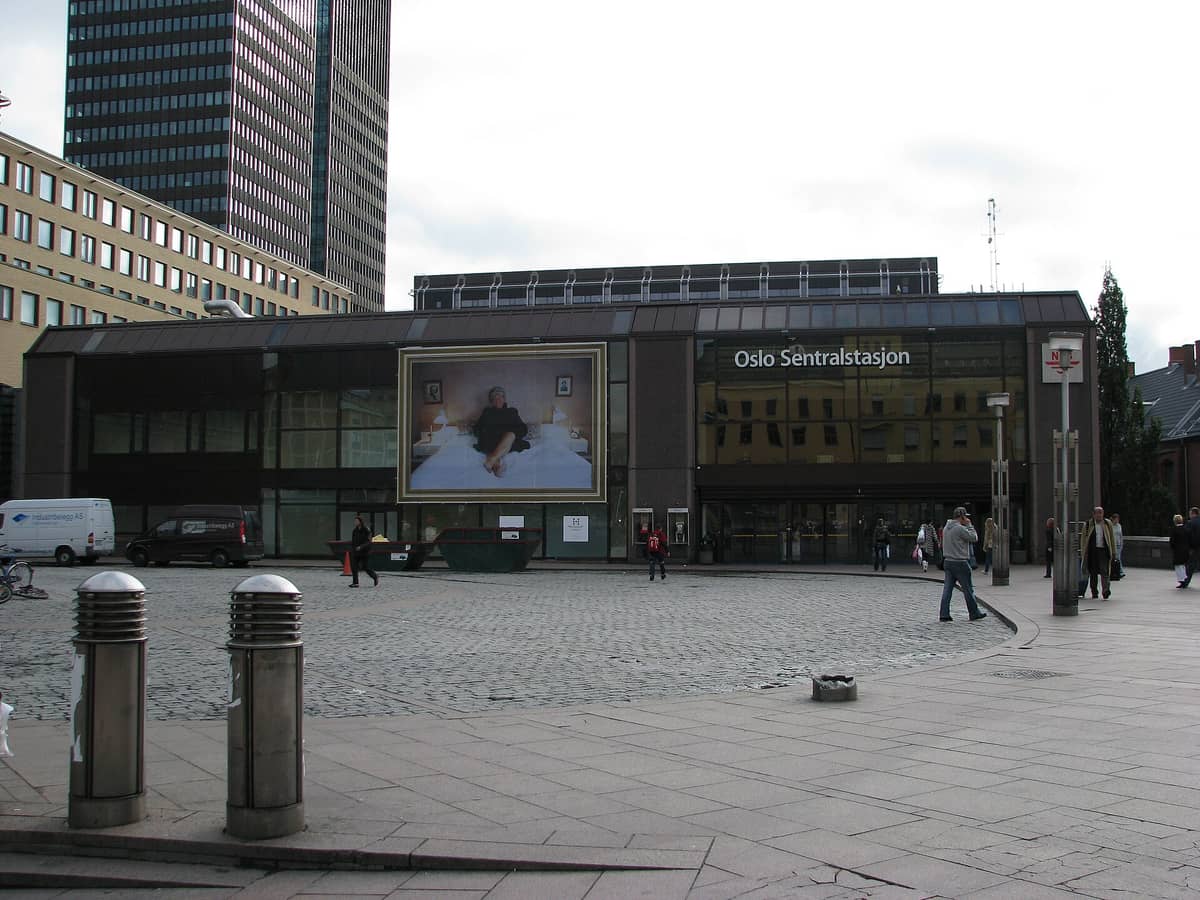
Both major Munch institutions are easy to reach without a car. MUNCH is in Bjørvika, a 10-minute walk from Oslo Central Station along the waterfront. The National Museum is near Aker Brygge, served by tram lines stopping at Aker Brygge or Nationaltheatret station. Oslo's public transport runs under the Ruter network; a single-trip ticket covers tram, metro (T-bane), and bus within the city zone.
Visitors arriving from Oslo Airport (OSL) at Gardermoen, about 45–50 km north of the city, can take the Flytoget express train to Oslo Central Station in around 19 minutes, or the slower but cheaper Vy regional train in around 23–30 minutes. From Oslo S, both museums are reachable on foot or by a single tram ride. For a full breakdown of how to move around the city, the getting around Oslo guide covers all transport options with current fare guidance.
FAQ
Which museum has The Scream in Oslo?
Both MUNCH (Bjørvika) and the National Museum hold versions of The Scream, but they rotate which is on public display. The National Museum's ground-floor gallery typically shows the 1893 tempera version, while MUNCH holds additional versions including the 1910 tempera and 1895 pastel. Check each museum's online collection before your visit to confirm which version is currently on display.
Is the old Munch Museum in Tøyen still open?
No. The former Munchmuseet at Tøyengata 53 closed when the collection moved to the new MUNCH building in Bjørvika in 2021. Any guide or article directing you to Tøyen for Munch is out of date. The address you need is Edvard Munchs plass 1, Bjørvika.
How much does it cost to visit MUNCH museum in Oslo?
As of 2026, adult tickets cost 280 NOK during day hours (10:00–18:00) and 200 NOK for evening slots (18:00–21:00). Visitors under 25 pay 100 NOK, and children under 18 enter free. Free admission is offered every Wednesday between 18:00 and 21:00. Prices are subject to change; verify on the official MUNCH website before booking.
Where did Munch paint The Scream? Can I visit the location?
The viewpoint described in Munch's diary is widely identified as a hillside path above Ekeberg, on the eastern heights of Oslo overlooking the fjord. Today this area is accessible as Ekebergparken, a public sculpture park with a marked information point near the probable Scream location. It is free to visit and reached by tram from central Oslo in about 15 minutes.
Is MUNCH included in the Oslo Pass?
Yes, the Oslo Pass covers entry to MUNCH. It also provides discounts or free entry at the National Museum and many other Oslo attractions, along with unlimited use of public transport within the city zone (Zone 1). Whether it saves money depends on how many paid attractions you plan to visit; use the Oslo Pass calculator on the Visit Oslo website to check before buying.
Tickets & tours
Live prices and dates from our booking partner. If you book, we may earn a commission at no extra cost to you.
Planning a trip? Discover personalized activities with the Nomado app.