National Museum Oslo (Nasjonalmuseet): The Complete Visitor Guide
The National Museum (Nasjonalmuseet) is Norway's largest museum for art, architecture, and design, housed in a landmark building on the Oslo waterfront. From Edvard Munch's original Scream to Norwegian design and painting and centuries of decorative arts, it holds the country's most significant cultural collections under one roof.
Quick Facts
- Location
- Brynjulf Bulls plass 3, 0250 Oslo (Sentrum, near Aker Brygge)
- Getting There
- T-bane or train to Nationaltheatret; Tram 12 to Aker brygge; Bus 33/81 to Dokkveien
- Time Needed
- 2–4 hours (full collection visit can fill an entire day)
- Cost
- Adults 200 NOK; young people 18–24: 120 NOK; students: 120 NOK; under 18: free
- Best for
- Art lovers, design and architecture enthusiasts, families with older children
- Official website
- www.nasjonalmuseet.no/en/visit/locations/the-national-museum
What Is the National Museum?
The National Museum — Nasjonalmuseet in Norwegian — is Norway's largest museum for art, architecture, and design. Opened in 2022 in its current building at Brynjulf Bulls plass 3 on the Oslo waterfront, it consolidates what were previously several separate institutions into a single, monumental venue. The collections span from medieval ecclesiastical objects and Renaissance paintings through to contemporary Norwegian design and international modernist works, with the original version of Edvard Munch's The Scream as the undisputed centerpiece.
For any traveler trying to understand Norwegian visual culture in one visit, there is no more complete starting point. The museum sits between the waterfront promenade at Aker Brygge and the grand axis of Nationaltheatret, placing it squarely within Oslo's cultural and civic core.
💡 Local tip
Opening hours currently run to 20:00 on Tuesdays and Wednesdays, making those evenings ideal for a quieter, less crowded visit after the main tourist rush subsides.
The Building: Architecture Worth Examining Before You Go In
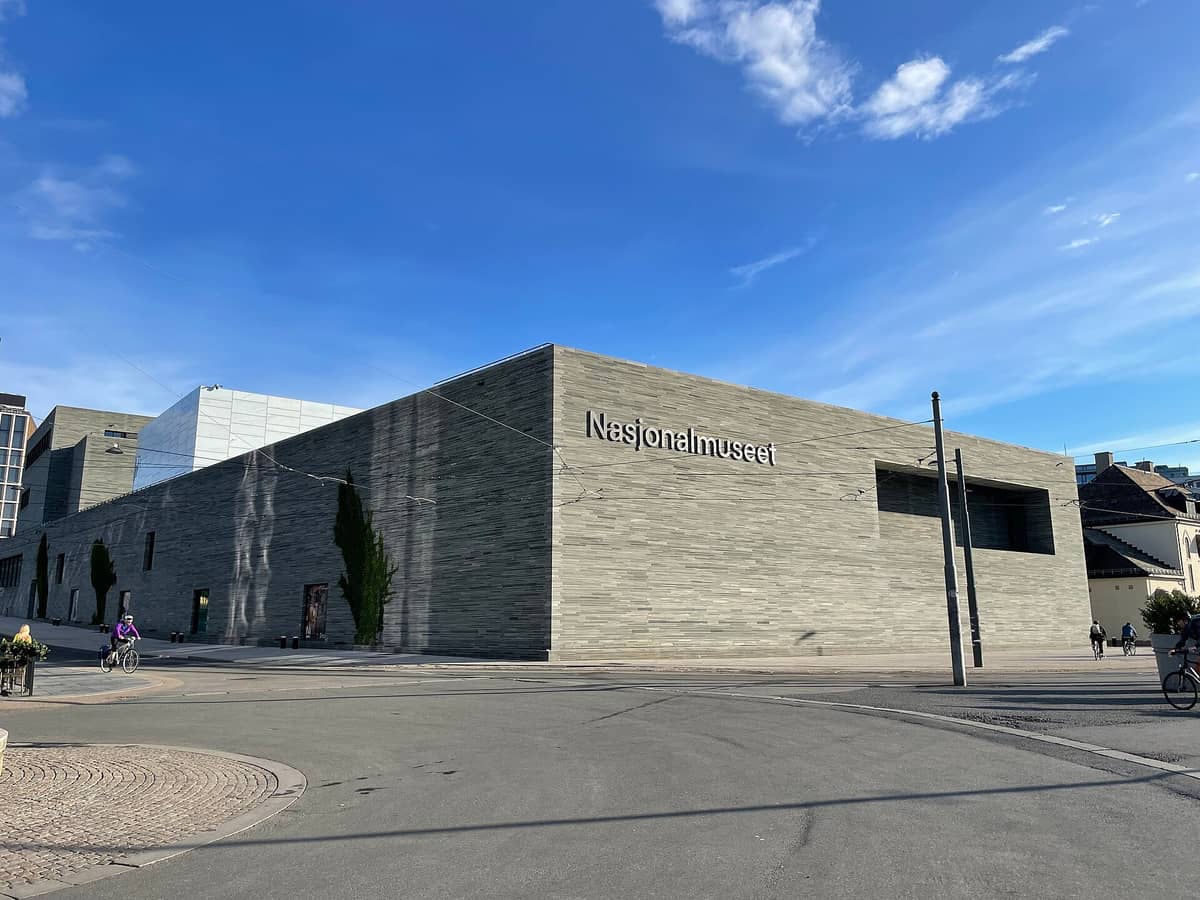
The museum's current building is itself a significant piece of Oslo's contemporary architectural story. The structure is massive in scale yet deliberately understated in its cladding, with large exterior surfaces in light stone that absorb and reflect the shifting Nordic light. On a bright June morning, the facade holds a warm, creamy tone; on an overcast November afternoon, it turns almost silver-grey. The scale signals importance without the ornamental excess of classical museum buildings.
The entrance plaza, Brynjulf Bulls plass, opens toward the fjord and offers a clear sightline to the water. Before entering, pause and look south toward Oslo City Hall and the harbor — it is one of the more satisfying urban sequences in central Oslo. The museum's positioning at the intersection of cultural institutions and the waterfront is deliberate and worth absorbing before you move inside. If you have time, approaching from Aker Brygge on foot gives the best sense of how the building anchors this part of the city.
Tickets & tours
Live prices and dates from our booking partner. If you book, we may earn a commission at no extra cost to you.
Inside the Collections: What to Expect Room by Room
The permanent collection covers multiple floors and several wings. The sheer volume can feel overwhelming on a first visit, so it helps to know what you are walking into. Norwegian painting from the nineteenth century occupies a substantial portion of the galleries, and the quality is consistently high. Landscape painters of the Romantic tradition — figures like Johan Christian Dahl and Thomas Fearnley — produced work of international caliber, though they remain less known outside Scandinavia.
The international collection includes old masters, French Impressionism, and a selection of works that contextualize Norwegian art within European movements. The decorative arts and design galleries are often underestimated by first-time visitors — Norwegian craft traditions in textiles, silver, and ceramics are displayed with serious scholarship, and the modern design section traces industrial and graphic design from the twentieth century to the present.
For those with a particular interest in Edvard Munch beyond The Scream, the museum holds additional works that reward careful attention. However, if Munch is your primary focus, the dedicated Munch Museum in Bjørvika holds the world's largest collection of his work and offers a deeper, more concentrated experience.
ℹ️ Good to know
The museum is open Monday, Thursday, Friday, Saturday, and Sunday from 10:00–17:00; Tuesday and Wednesday from 10:00–20:00. The museum closes on certain public holidays including 24–26 December and 31 December–1 January — verify on the official website before your visit.
The Scream: Managing Expectations and the Actual Experience
Edvard Munch's The Scream (1893) is displayed in a dedicated gallery with climate and light conditions calibrated to the work's conservation needs. The room is kept dimmer than the surrounding galleries. On busy weekend mornings between June and August, groups can form a substantial queue in front of the painting, and you may get only a minute or two of unobstructed viewing before the next wave arrives. On a Tuesday or Wednesday evening, the dynamic changes entirely — crowds thin noticeably, and it is often possible to stand in front of the work for several minutes without pressure.
The painting is smaller than many visitors expect. Its power lies in the distorted perspective and the expressionistic handling of color and line, qualities that reproduce badly and reveal themselves fully only in person. The orange-red sky that dominated the original was inspired by Munch's observation of an unusual atmospheric event — possibly the afterglow of the 1883 Krakatoa eruption, which was visible across Europe. Whether or not that specific interpretation is accepted, the work carries a historical weight that is palpable in person in a way that prints and digital reproductions simply do not convey.
⚠️ What to skip
Photography restrictions in certain galleries, including around The Scream, may apply. Check current museum policy at the entrance or on the official website before your visit.
How to Visit: Practical Walkthrough and Timing
Getting here by public transport is straightforward. The T-bane (all lines) and regional trains stop at Nationaltheatret, a roughly seven-to-ten minute walk from the museum entrance. Tram 12 stops at Aker Brygge, which places you a few minutes from the waterfront entrance. Buses 33 and 81 stop at Dokkveien, immediately adjacent to the museum on its Aker Brygge side. There is no reason to arrive by taxi or car; the transit connections are among the most direct of any Oslo attraction.
If you are using the Oslo Pass, confirm whether admission to the National Museum is included under current pass terms, as pass coverage for specific attractions can change between seasons.
Plan a minimum of two hours for a selective visit covering the highlights: Norwegian Romantic painting, The Scream, and a circuit of the design galleries. A comprehensive visit covering the full permanent collection plus any temporary exhibition will take closer to four hours, and serious visitors often return for a second session. The museum has a café and a restaurant on-site, so it is feasible to spend a full day without leaving the building.
Accessibility is well considered. The building is fully wheelchair accessible, with lifts between floors and wide gallery corridors. Disability parking spaces are available in Dokkveien on the Aker Brygge side of the building.
Seasons, Crowds, and the Best Windows to Visit
Summer (June through August) brings the largest crowds, particularly on weekends and public holidays. School groups arrive in organized waves on weekday mornings throughout the academic year. The quietest periods tend to be Tuesday and Wednesday evenings (when the museum stays open until 20:00), and weekday mornings in spring (April to early June) and autumn (September to October). Winter visits have their own character — the low light filtering through the museum's windows and the smaller crowds create a contemplative atmosphere that suits a slow, careful look at the paintings.
Oslo's weather rarely prevents a museum visit — that is, after all, part of the appeal of indoor cultural institutions in a city with a Baltic semi-continental climate. If you are planning a broader trip around the best conditions for outdoor activities alongside cultural visits, the best time to visit Oslo guide covers the seasonal trade-offs in detail.
Who Should Reconsider This Visit
Travelers looking for an immersive single-artist experience rather than a survey collection may find the format less focused than they want. Families with very young children will find the galleries less interactive than purpose-built children's museums — the content is rich but demands a certain attention span. If your time in Oslo is limited to one or two days and your interests lean strongly toward outdoor experiences, waterfront areas, or Viking history specifically, there are more concentrated options that may suit your priorities better.
For travelers specifically drawn to Viking-age material culture, the Viking history guide for Oslo outlines which collections and sites offer the most direct engagement with that period.
Insider Tips
- Tuesday and Wednesday evenings (open until 20:00 under the regular schedule) are consistently the least crowded times to visit. The museum empties noticeably after 17:00, and the galleries around The Scream become genuinely contemplative.
- Enter from the Brynjulf Bulls plass side (the main entrance facing the water) rather than approaching from Dokkveien — the plaza gives you a full view of the building's scale and its relationship with the harbor before you go in.
- The decorative arts and design floors are undervisited relative to the painting galleries. Budget time for them: Norwegian silver, textiles, and twentieth-century industrial design are displayed with scholarly depth that surprises most visitors.
- The museum's audio guide and app-based content add significant context to the Norwegian Romantic landscape paintings, which can appear merely scenic without knowing the nationalist cultural movement they were created within.
- If you are visiting in summer and plan to combine the National Museum with Aker Brygge or a fjord tour, arrive at the museum when it opens at 10:00, spend the morning inside, then move to the waterfront in the afternoon when the light on the fjord is at its best.
Who Is National Museum (Nasjonalmuseet) For?
- Art and design enthusiasts who want a comprehensive survey of Norwegian and international visual culture
- Travelers with a specific interest in Edvard Munch and Norwegian Expressionism
- Architecture followers interested in how a major contemporary museum building is integrated into an existing urban waterfront
- Visitors planning a cultural itinerary in central Oslo who want one high-quality, unhurried museum day
- Repeat Oslo visitors who have covered the Bygdøy museum peninsula and are ready to explore the national fine arts collections
Nearby Attractions
Other things to see while in Sentrum (City Centre):
- Akershus Castle and Fortress
Akershus Fortress (Akershus slott og festning) is a medieval royal stronghold that has guarded Oslo's harbour since around 1299. The fortress grounds are free to enter year-round, offering sweeping Oslofjord views, cobblestone courtyards, and a castle interior that spans seven centuries of Norwegian history.
- Damstredet & Telthusbakken
Two short streets in central Oslo preserve what the rest of the city lost to fire and modernisation: timber houses from the late 1700s and early 1800s, still inhabited, still cobbled. Free to walk at any hour, Damstredet and Telthusbakken offer a rare glimpse of pre-industrial Oslo just minutes from the parliament building.
- Historical Museum (Historisk Museum)
Housed in a grand early 20th-century building on Tullinløkka in central Oslo, the Historical Museum holds some of Norway's most remarkable ancient objects, from Viking gold jewelry to Egyptian mummies and Arctic indigenous artifacts. It is one of the most substantive indoor experiences the city offers, and it rewards visitors who take their time.
- National Theatre (Nationaltheatret)
Oslo's National Theatre, Nationaltheatret, has been the country's most prestigious stage since 1899. Occupying a grand neo-baroque building between the Royal Palace and the Storting, it stages everything from Ibsen classics to contemporary Norwegian drama. Even if you never buy a ticket, the building itself tells you something important about how seriously Norway takes its cultural institutions.
Planning a trip? Discover personalized activities with the Nomado app.