Historical Museum Oslo (Historisk Museum): Norway's Viking Treasures and Beyond
Housed in a grand early 20th-century building on Tullinløkka in central Oslo, the Historical Museum holds some of Norway's most remarkable ancient objects, from Viking gold jewelry to Egyptian mummies and Arctic indigenous artifacts. It is one of the most substantive indoor experiences the city offers, and it rewards visitors who take their time.
Quick Facts
- Location
- Frederiks gate 2, 0148 Oslo (Tullinløkka, Sentrum)
- Getting There
- Nationaltheatret station (metro lines 1–5; tram lines 11, 12, 13, 17, 18, 19); approx. 10-min walk
- Time Needed
- 1.5 to 3 hours, depending on depth of interest
- Cost
- Adults NOK 160 / Students NOK 100 / Seniors NOK 120 / Under 18 free (Oslo Pass holders free)
- Best for
- History enthusiasts, families with older children, archaeology lovers, rainy-day visitors
- Official website
- www.historiskmuseum.no/english
What Is the Historical Museum?
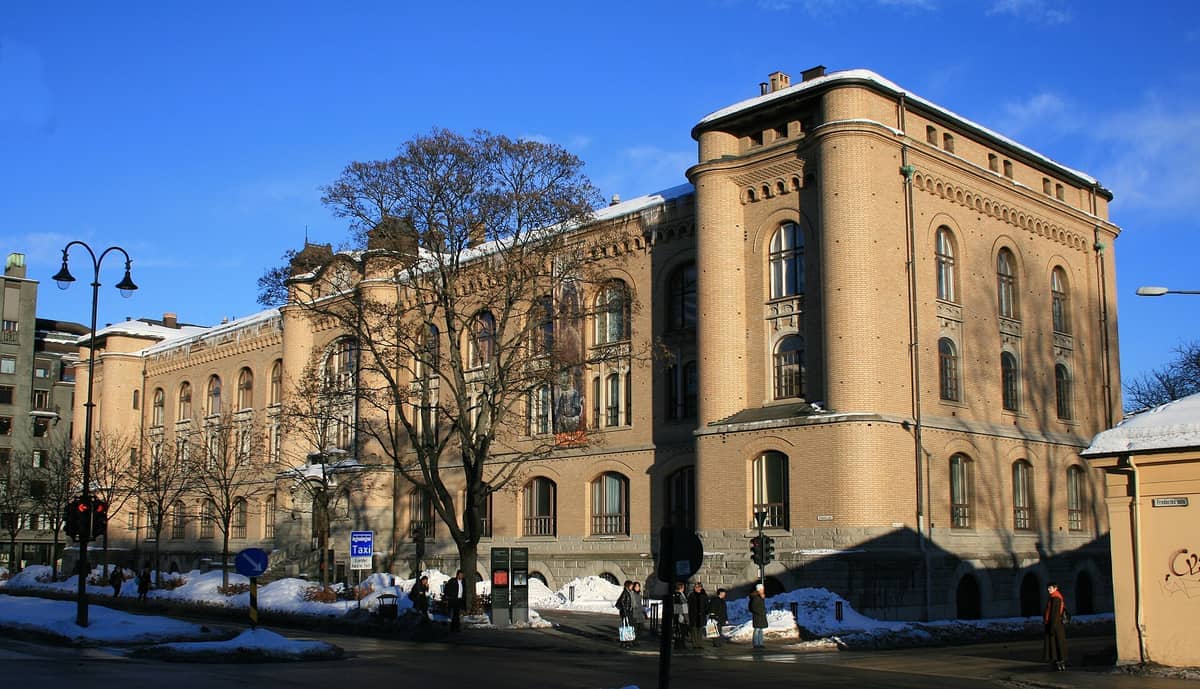
The Historical Museum, known in Norwegian as Historisk museum, is one of Oslo's most comprehensive cultural institutions. Managed as part of the University of Oslo museum network, it occupies an imposing national romantic-style building on Tullinløkka square in central Oslo, just a short walk from Karl Johans gate. The building itself dates from 1904 and announces its civic ambitions before you even step inside, with detailed stonework and a monumental entrance that feels deliberately different from the glass-and-steel cultural venues that have appeared elsewhere in the city in recent decades.
The collections span an enormous geographic and chronological range: prehistoric Norway, the Viking Age, medieval church art, ancient Egypt, the Arctic cultures of the Sami and Greenlandic peoples, and a numismatic collection of coins and medals that is among the largest in Scandinavia. Very few museums in Norway cover this breadth under a single roof. If you are trying to decide how Oslo fits into the longer arc of Norwegian and Nordic history, this building gives you a strong foundation. For those who have already spent time at the National Museum focusing on fine art, the Historical Museum offers a different kind of depth, one rooted in objects that were buried, worn, traded, or prayed over rather than painted or sculpted for aesthetic appreciation.
ℹ️ Good to know
Opening hours: Tuesday, Wednesday, Friday, Saturday, and Sunday 10:00–17:00. Thursday 10:00–18:00. Closed Mondays. Admission: Adults NOK 160, Students NOK 100, Seniors NOK 120, Children under 18 free (Oslo Pass holders free).
The Viking Age Collection: The Real Draw
The ground floor Viking Age galleries are the reason most visitors come here, and they largely justify the trip. The collection includes a significant quantity of gold and silver objects recovered from Norwegian burial sites, among them intricately worked arm rings, neck rings, and brooch pins whose craftsmanship still looks precise and intentional over a thousand years later. The detail on individual pieces, the way filigree wire has been twisted and soldered onto surfaces no larger than a coin, is the kind of thing that photographs poorly. You need to stand close to understand what was actually made.
The arrangement is largely thematic rather than purely chronological, which helps. Cases group objects around concepts like trade networks, belief systems, and political power rather than simply lining up artifacts by date. This makes the galleries more intellectually engaging than a simple timeline walk, though it does require reading the labels carefully to place individual objects in context. Labels are provided in Norwegian and English throughout, which matters for international visitors.
If you are arriving with a specific interest in the Viking period, it is worth pairing this visit with the ship halls on the Bygdøy peninsula. The Viking history in Oslo guide covers how the two experiences complement each other. The Bygdøy museums show you the scale and material culture of seafaring, while Historisk museum shows you the portable wealth and artistry that defined elite Viking society.
Tickets & tours
Live prices and dates from our booking partner. If you book, we may earn a commission at no extra cost to you.
Private historical walk through Oslo with a local
From 294 €Instant confirmationFree cancellationOslo Fjord sightseeing audio-guided electrical boat tour
From 35 €Instant confirmationFree cancellationFjord cruise with live jazz music
From 64 €Instant confirmationFree cancellationLuggage Storage in Oslo
From 6 €Instant confirmationFree cancellation
Medieval Church Art and the Forgotten Upper Floors
Many visitors spend most of their time on the ground floor and move on without fully exploring the upper levels, which is a genuine missed opportunity. The medieval church art collection contains painted wooden altar frontals, carved figures, and liturgical objects removed from Norwegian stave churches and rural parish churches over the centuries. Several of these pieces predate the Reformation and carry an intensity that is hard to explain in purely aesthetic terms. The colors, where they survive, remain striking: deep reds, greens, and gilded surfaces that were created to function in dim, candlelit interiors.
The church art collection provides important context for anyone visiting Heddal Stave Church or planning a broader tour of Norwegian medieval architecture. Seeing the portable objects here before or after visiting the structures they came from adds a layer of understanding that neither experience delivers alone.
Egypt, the Arctic, and the Coin Collection
The Egyptian antiquities wing contains genuine mummies and funerary objects acquired during the 19th century, a period when European universities and museums were actively building such collections. The display is reasonably well-contextualized by current standards, though it sits somewhat awkwardly within a museum whose primary focus is Norway and Scandinavia. For visitors with children in the 8-to-14 range, this section tends to generate real engagement, mummies reliably do, and the cases are positioned at an accessible height.
The Arctic ethnography galleries covering Sami and Greenlandic Inuit material culture deserve more attention than they typically receive from visitors. The objects, clothing, tools, and ceremonial items are carefully presented and the contextual information reflects a more thoughtful approach to indigenous collections than was standard even two decades ago. This section takes time to read properly, and the Thursday evening hours make it worth returning for if you want a quieter, less rushed experience.
The numismatic collection, spanning Norwegian and European coins across many centuries, is specialized and will primarily interest those with a background in economic history or coin collecting. It is substantial and well organized, but it is the kind of collection that rewards prior knowledge rather than casual curiosity.
Time of Day and Crowd Patterns
The museum receives steady but not overwhelming visitor numbers compared to Oslo's most-visited attractions. Saturday and Sunday mornings from around 11:00 to 13:00 are the busiest periods, particularly during the summer months from June through August. The Viking galleries can feel cramped when multiple school groups or tour groups are present simultaneously, and the cases are narrow enough that reading labels while others are waiting becomes uncomfortable.
Arriving at opening time on a Tuesday or Wednesday, or on Thursday afternoon heading into the later closing hour, gives you the best chance of unhurried access to the main galleries. The building has natural light in several rooms, particularly in the upper floors, which reads differently in the long Nordic summer daylight versus the shorter winter afternoons. Neither condition is dramatically better for viewing, but summer visits tend to feel less austere overall.
💡 Local tip
Thursday is the one weekday with extended hours until 18:00. Arriving around 15:00 on a Thursday means the morning crowds have thinned and you still have ample time before close. This is also the quietest window for the Viking gold cases.
Getting There and Practical Logistics
The museum sits on Tullinløkka square at Frederiks gate 2, in central Oslo's Sentrum district. The most straightforward approach from the city center is a ten-minute walk west from the main pedestrian shopping street, passing the Parliament building and the National Theatre area. Visitors using the T-bane should alight at National Theatre station (served by all five metro lines), then walk north for approximately eight to ten minutes. Tram lines 13 and 19 stop at Nationalteatret as well. For a broader orientation to getting around Oslo's central attractions on foot and by transit, the getting around Oslo guide covers the full public transport network in useful detail.
Accessibility: The museum building has lift access for wheelchair users, visitors with strollers, and others who require it. Because the historic building's main entrance has steps, visitors needing lift access should contact the museum directly at +47 22 85 99 13 before their visit to arrange entry via the accessible route. This is a genuine limitation worth planning around rather than discovering on arrival.
The museum is covered by the Oslo Pass, which provides free admission alongside most of the city's major museums and unlimited public transport. If you are planning to visit several museums across two or three days, the pass typically pays for itself quickly. The Oslo Pass guide breaks down the math depending on your itinerary.
⚠️ What to skip
The museum is closed every Monday. If Monday is your only free day in Oslo, plan around this. Also confirm current opening hours directly with the museum before your visit, as seasonal adjustments are possible.
Photography, What to Bring, and Honest Limitations
Personal photography without flash is generally permitted in the permanent galleries, and the low-profile cases with spot lighting create reasonable conditions for close-up shots of objects. A smartphone with a good low-light sensor performs adequately. The gold and silver pieces reflect light in a way that can wash out details if you shoot with flash or direct overhead light, so manual exposure adjustment helps if your phone allows it.
The museum shop near the entrance carries a reasonable selection of books on Norwegian archaeology and Viking history, including academic publications in Norwegian and some English-language titles. If you are traveling with a genuine interest in the subject, this is one of the better museum shops in Oslo for substantive reading material rather than souvenirs.
In terms of honest limitations: the building shows its age in places, and some gallery sections feel less polished in presentation than newer Oslo institutions like the Munch Museum in Bjørvika. Interpretive signage in certain rooms is denser and more text-heavy than modern museum design would typically recommend. Visitors who prefer experiential or interactive installations may find the format traditional. That said, the objects themselves carry the content, and the museum does not need to compensate with audiovisual spectacle when it has genuine Viking gold and thousand-year-old church paintings to show you.
Insider Tips
- The Viking gold room can be difficult to view comfortably when groups are present. Check the museum's calendar for any group booking schedules if possible, or arrive at the very start of opening on a weekday.
- The upper-floor church art collection is consistently undervisited. Budget at least 30 to 40 minutes here if medieval Norwegian painting and carving interests you, as these objects rarely appear in other Oslo venues.
- Thursday's extended closing time of 18:00 makes it the best day for a leisurely visit, especially if you want to read every label without feeling rushed by closing announcements.
- The Tullinløkka square outside the museum is a pleasant outdoor space flanked by the National Museum across the street. Combining both institutions makes for a full, logically connected day in central Oslo.
- For visitors under 18, admission is free and no proof of age is typically requested, but it is worth confirming current policy at the ticket desk for accompanying adults traveling in a group.
Who Is Historical Museum (Historisk Museum) For?
- History and archaeology enthusiasts who want to understand Norway's pre-Christian past through actual objects rather than reconstructions
- Families with children aged 8 and above, particularly for the Viking jewelry, Egyptian mummies, and Arctic ethnography sections
- Visitors spending multiple days in Oslo who want depth beyond the major art museums and waterfront attractions
- Rainy or cold-weather days when outdoor walking tours and fjord activities are less appealing
- Anyone building a broader understanding of Viking-age Norway before or after visiting the Bygdøy ship museums
Nearby Attractions
Other things to see while in Sentrum (City Centre):
- Akershus Castle and Fortress
Akershus Fortress (Akershus slott og festning) is a medieval royal stronghold that has guarded Oslo's harbour since around 1299. The fortress grounds are free to enter year-round, offering sweeping Oslofjord views, cobblestone courtyards, and a castle interior that spans seven centuries of Norwegian history.
- Damstredet & Telthusbakken
Two short streets in central Oslo preserve what the rest of the city lost to fire and modernisation: timber houses from the late 1700s and early 1800s, still inhabited, still cobbled. Free to walk at any hour, Damstredet and Telthusbakken offer a rare glimpse of pre-industrial Oslo just minutes from the parliament building.
- National Museum (Nasjonalmuseet)
The National Museum (Nasjonalmuseet) is Norway's largest museum for art, architecture, and design, housed in a landmark building on the Oslo waterfront. From Edvard Munch's original Scream to Norwegian design and painting and centuries of decorative arts, it holds the country's most significant cultural collections under one roof.
- National Theatre (Nationaltheatret)
Oslo's National Theatre, Nationaltheatret, has been the country's most prestigious stage since 1899. Occupying a grand neo-baroque building between the Royal Palace and the Storting, it stages everything from Ibsen classics to contemporary Norwegian drama. Even if you never buy a ticket, the building itself tells you something important about how seriously Norway takes its cultural institutions.
Planning a trip? Discover personalized activities with the Nomado app.