Akershus Fortress: Oslo's Medieval Castle on the Fjord
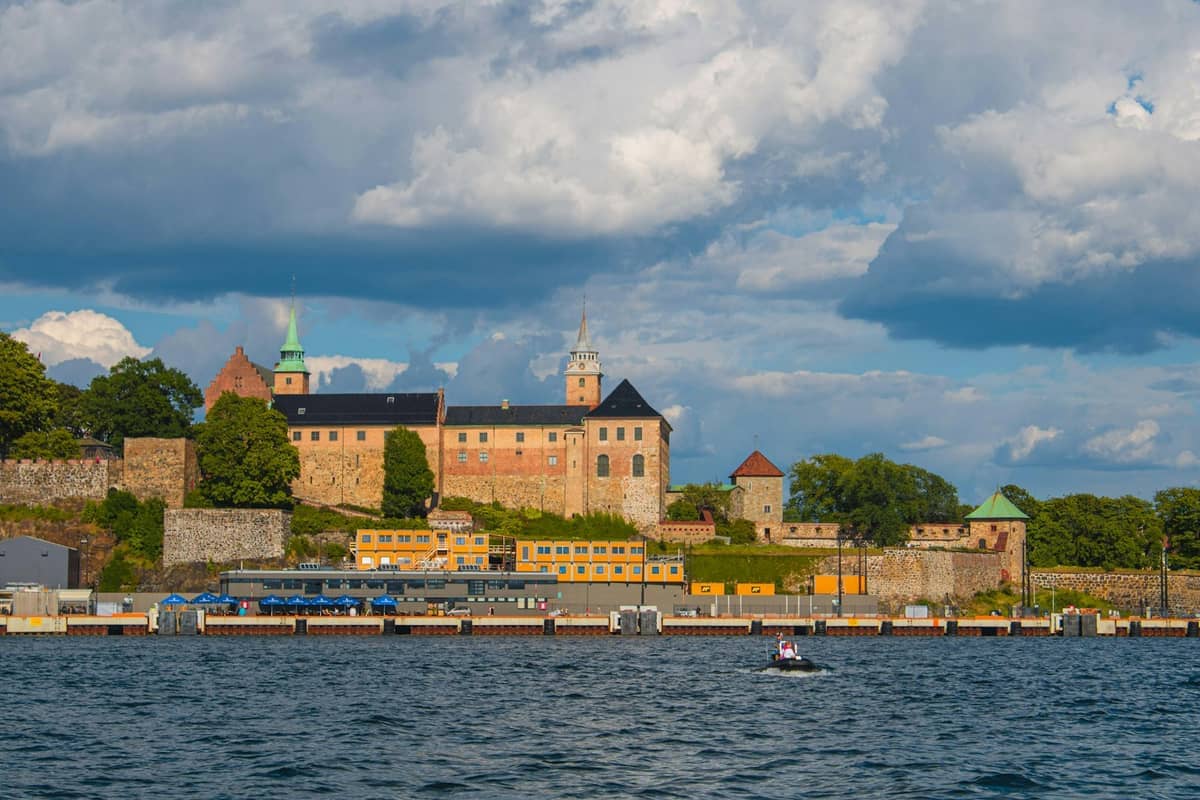
Akershus Fortress (Akershus slott og festning) is a medieval royal stronghold that has guarded Oslo's harbour since around 1299. The fortress grounds are free to enter year-round, offering sweeping Oslofjord views, cobblestone courtyards, and a castle interior that spans seven centuries of Norwegian history.
Quick Facts
- Location
- Akershus festning, 0150 Oslo (Sentrum, by the waterfront)
- Getting There
- About a 10-min walk from Oslo Central Station (Oslo S); nearest tram stop at Rådhusplassen (lines may change, check current Ruter route planner).
- Time Needed
- 1–2 hours for the grounds; 2.5–3 hours if including the castle interior and resistance museum
- Cost
- Fortress grounds: free. Castle interior: around NOK 150–160 adults; reduced prices for seniors, students, and children; family tickets available. Free with Oslo Pass and ICOM card.
- Best for
- History, architecture, Oslofjord views, family visits, photography
- Official website
- www.forsvarsbygg.no/en/festningene/akershus-fortress
What Is Akershus Fortress?
Akershus Fortress (Akershus slott og festning in Norwegian) is a medieval royal fortress and castle complex that has stood on a rocky promontory above Oslo's waterfront since around 1299. Built under King Håkon V, it served simultaneously as the seat of Norwegian royal power and as the city's primary military defence for several centuries. Today it remains an active military area managed by Forsvarsbygg, Norway's defence estates agency, while also functioning as one of the most accessible historical sites in the Norwegian capital.
What makes the fortress unusual is the combination of scale, accessibility, and setting. The grounds stretch across a substantial headland between the Pipervika and Bjørvika bays, giving every path through the complex a view of the Oslofjord. You do not need to pay a single krone to walk the ramparts, cross the courtyards, or stand at the water's edge. The castle interior itself requires a ticket, but even visitors who skip it leave with a clear sense of the site's weight in Norwegian history.
💡 Local tip
The fortress grounds are open from 06:00 to 21:00 daily year-round (main gate). If you arrive early on a summer morning, you will have the cobblestone lanes almost entirely to yourself for the first hour.
A 700-Year History in Outline
Construction of Akershus began around 1299 under Håkon V, who moved the Norwegian capital from Bergen to Oslo and needed a stronghold to control the fjord approach and defend the city. The original structure was a square tower fortress typical of late medieval Scandinavian military architecture. Over the following two centuries, it was expanded and reinforced repeatedly, particularly under Christian IV in the late 16th and early 17th centuries, when the fortress was transformed into a Renaissance-style castle with round towers, moats, and bastions — much of what visitors see today dates from that period.
The site has witnessed some of Norway's most consequential moments. It was besieged multiple times, including by Swedish forces in the 17th and 18th centuries, and served as a prison for centuries. During the German occupation in World War II (1940–1945), Akershus became the site of executions of Norwegian resistance fighters. Several of those executed are buried in the fortress grounds, and the Norway Resistance Museum (Norges Hjemmefrontmuseum) stands just inside the walls to document that period in detail.
The Norwegian royal family is still buried in the castle chapel. The crypt holds the remains of several 20th-century Norwegian monarchs, making Akershus an active site of national memory rather than purely a tourist attraction. For more context on how the fortress fits into Oslo's broader history, the Historical Museum of Oslo provides useful background before or after a visit.
Tickets & tours
Live prices and dates from our booking partner. If you book, we may earn a commission at no extra cost to you.
Oslo Fjord sightseeing audio-guided electrical boat tour
From 35 €Instant confirmationFree cancellationFjord cruise with live jazz music
From 64 €Instant confirmationFree cancellationLuggage Storage in Oslo
From 6 €Instant confirmationFree cancellationPicturesque dinner cruise in Oslo
From 137 €Instant confirmationFree cancellation
The Fortress Grounds: What You Actually See
Entering through the main gate from Festningsplassen, you cross a drawbridge over a dry moat before stepping into an outer courtyard. The stonework here is a layered record of different building phases: rough medieval masonry sits alongside more refined 17th-century masonry, and later military buildings from the 19th and 20th centuries occupy what were once open yards. The overall atmosphere is quieter and more austere than a typical tourist castle — there are no costumed performers or souvenir kiosks near the gate.
The most immediately striking feature is the view. Walking along the southern ramparts, you look directly down onto Oslo harbour, with Aker Brygge's waterfront buildings to the west and the Oslofjord opening southward. On clear days you can see across to the islands. The cobblestone paths on the ramparts are uneven and can be slippery when wet, so flat-soled shoes with grip are genuinely useful here.
Within the walls you will also find the Norway Resistance Museum, which documents the Nazi occupation of Norway from 1940 to 1945. It is one of the most carefully curated World War II museums in Scandinavia and deserves at least 45 minutes. If you are planning a more thorough visit to Oslo's museums, the Oslo museums guide helps prioritise the options.
ℹ️ Good to know
The grounds are an active military installation. Certain areas, particularly buildings in use by the Norwegian Armed Forces, are not open to the public. Signage makes these restrictions clear on-site.
The Castle Interior: Is It Worth the Ticket?
The castle interior (Akershus slott) is a separate visit requiring a ticket: around NOK 150–160 for adults, with reduced rates for seniors, students, groups of ten or more, children aged 6 to 18, and family tickets. Oslo Pass holders and ICOM cardholders enter free. Given the ticket price, the straightforward answer to whether it is worth it depends on your interest in interior architecture and Norwegian royal history.
The rooms inside are relatively sparse by European palace standards — Akershus was primarily a fortress and administrative centre rather than a lavish royal residence, and it shows. What you get is a series of vaulted stone halls, royal reception rooms from different centuries, the castle chapel, and access to the royal crypt. The crypt, which holds the remains of King Haakon VII and King Olav V among others, gives the place a sombre gravity that distinguishes it from most medieval castle tours. If architecture, funerary history, and Norwegian royal lineage interest you, the interior is worth the price. If your primary reason to visit is the view and the outdoor atmosphere, the free grounds deliver that without the ticket.
How the Experience Changes Through the Day and Season
Early mornings, particularly on weekdays, are the most peaceful time to visit. The gates open at 06:00, and before 09:00 the only sounds are seagulls, distant harbour traffic, and the occasional jogger using the fortress paths as part of their morning route. The light on the stone at that hour, especially in summer when the sun rises early over the fjord, makes for exceptional photography without anyone in the frame.
Midday in summer (June through August) brings the largest crowds. Tour groups from cruise ships often arrive between 10:00 and 14:00, filling the main courtyard and the rampart viewpoints. It is still manageable, but if you are sensitive to crowds, arriving before 09:30 or after 16:00 makes the experience noticeably calmer. The summer months also mean the fortress is used for outdoor concerts and events, occasionally restricting access to certain areas — check the Forsvarsbygg website before visiting if dates matter to you.
In winter, the fortress takes on a very different character. Foot traffic drops sharply. Side gates close earlier (from October through April many side entrances shut at 18:00), and some inner-castle tours may operate on reduced schedules. That said, a snow-covered Akershus with the fjord in the background is a genuinely striking sight, and the lack of crowds makes it one of the better times to photograph the architecture. Dress warmly: the wind off the fjord cuts through thin layers.
For a full picture of how weather shapes Oslo sightseeing across the year, the best time to visit Oslo guide breaks down what each season actually delivers.
Getting There and Getting Around the Site
Akershus Fortress sits immediately southwest of Oslo city centre, about a 10-minute walk from Oslo Central Station (Oslo S). Tram lines 12 and 13 stop at Rådhusplassen, from where the fortress entrance at Festningsplassen is a two-minute walk. If you are coming from Aker Brygge or Tjuvholmen, you can walk along the waterfront promenade directly to the fortress gates in under 10 minutes.
The site itself is moderately large and involves uneven cobblestone surfaces throughout, as well as steep ramps and stairs in several sections. Visitors with mobility limitations should note that not all areas are wheelchair accessible due to the historic nature of the terrain. The fortress visitor centre can provide specific accessibility information.
If you are planning a walking route through Oslo's central waterfront combining Akershus with other landmarks, the Oslo walking tours guide has a practical itinerary that connects the fortress with the Nobel Peace Center, Oslo City Hall, and Aker Brygge in a single loop.
💡 Local tip
Fortress grounds opening hours: Main gate 06:00–21:00 daily year-round. Side gates May 1–September 30: weekdays 07:00–21:00, weekends 08:00–21:00. October 1–April 30: 07:00–18:00 daily (main gate 06:00–21:00). Always verify current hours at forsvarsbygg.no before visiting.
Photography and Viewpoints
The southern ramparts, facing directly over the harbour, are the most-photographed spot on the site. For the classic wide-angle shot of the Oslofjord with castle walls in the foreground, position yourself on the south-facing walkway in the late afternoon when the sun is to the west, illuminating the water. The round towers at the corners of the castle photograph well from the inner courtyard at midday when the light is overhead and avoids deep shadow on the stonework.
Akershus also features on most lists of Oslo's best elevated viewpoints, though it is lower than the hill vantage points farther from the centre. For a comparison of the city's main viewpoints and what each offers in terms of panorama and access, see the Oslo viewpoints guide.
Who Will Get the Most From This Visit
Akershus rewards visitors who come with some curiosity about Norwegian history. The site layers medieval military architecture, Renaissance modifications, royal burial history, and World War II memory in a compact area, and understanding that layering makes the visit more than a backdrop for photos. The Norway Resistance Museum alone justifies the trip for anyone with an interest in the Second World War in Northern Europe.
For families, the free outdoor grounds are a practical win: children can run along the ramparts and explore open courtyards without any entry cost, and the harbour views hold most people's attention for at least an hour. The castle interior is less child-focused unless you have older children with a genuine interest in history.
Visitors who find the attraction less compelling tend to be those looking primarily for lavish interior decoration or a richly furnished palace experience. Akershus is spare and martial in its aesthetic. It is not Versailles or even a minor equivalent. If that is what you are after, the National Museum offers a richer visual experience indoors.
⚠️ What to skip
The cobblestone surfaces throughout the fortress are genuinely uneven. Sandals, flip-flops, or completely flat-soled shoes make walking the ramparts uncomfortable and slippery in wet conditions. Trainers or walking shoes are the practical choice.
Insider Tips
- The fortress grounds are used by Oslo residents for early-morning runs and lunchtime walks. If you arrive at 06:30 on a weekday in summer, you will share the space with joggers and dog-walkers but almost no other tourists — it is a genuinely different experience from midday.
- The Norway Resistance Museum (included within the fortress walls) often has a shorter queue than its reputation suggests because many day-trippers skip it. Budget 45–60 minutes here separately from the castle interior; the two are worth distinguishing as they cover very different history.
- If you have an Oslo Pass, the castle interior is free — it is one of the better value-for-money inclusions given the current adult ticket price, and the pass also covers trams to get you there.
- The eastern side of the fortress, facing Bjørvika and the Oslo Opera House, is less visited than the harbour-facing ramparts. The view of the Opera House from the fortress's eastern walls, with the Barcode buildings behind it, is one of the more architecturally interesting juxtapositions in the city.
- Avoid visiting during major public events at Festningsplassen — the square just outside the main gate is used for concerts and festivals that can make approaching or leaving the fortress on foot quite difficult. Check the events calendar on the official site if you are visiting in summer.
Who Is Akershus Castle and Fortress For?
- History and military architecture enthusiasts who want a site with genuine depth across several centuries
- Families seeking free outdoor space with views, where children can explore without admission gates
- World War II travellers, particularly in combination with the Norway Resistance Museum inside the walls
- Photographers looking for fjord views combined with medieval stonework, especially at dawn or in snow
- Oslo Pass holders who want to extract full value from the card on a central waterfront itinerary
Nearby Attractions
Other things to see while in Sentrum (City Centre):
- Damstredet & Telthusbakken
Two short streets in central Oslo preserve what the rest of the city lost to fire and modernisation: timber houses from the late 1700s and early 1800s, still inhabited, still cobbled. Free to walk at any hour, Damstredet and Telthusbakken offer a rare glimpse of pre-industrial Oslo just minutes from the parliament building.
- Historical Museum (Historisk Museum)
Housed in a grand early 20th-century building on Tullinløkka in central Oslo, the Historical Museum holds some of Norway's most remarkable ancient objects, from Viking gold jewelry to Egyptian mummies and Arctic indigenous artifacts. It is one of the most substantive indoor experiences the city offers, and it rewards visitors who take their time.
- National Museum (Nasjonalmuseet)
The National Museum (Nasjonalmuseet) is Norway's largest museum for art, architecture, and design, housed in a landmark building on the Oslo waterfront. From Edvard Munch's original Scream to Norwegian design and painting and centuries of decorative arts, it holds the country's most significant cultural collections under one roof.
- National Theatre (Nationaltheatret)
Oslo's National Theatre, Nationaltheatret, has been the country's most prestigious stage since 1899. Occupying a grand neo-baroque building between the Royal Palace and the Storting, it stages everything from Ibsen classics to contemporary Norwegian drama. Even if you never buy a ticket, the building itself tells you something important about how seriously Norway takes its cultural institutions.
Planning a trip? Discover personalized activities with the Nomado app.